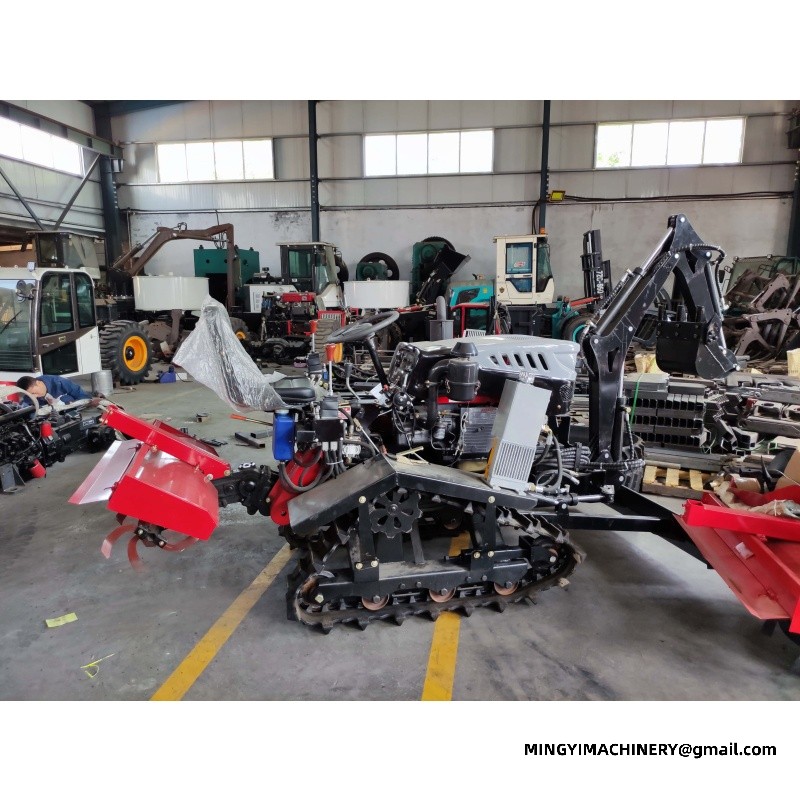
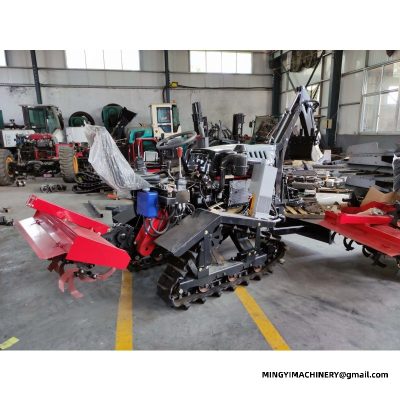
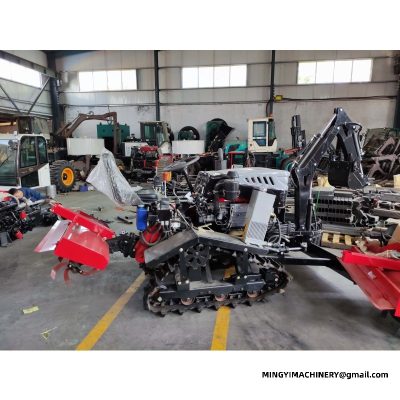
Track width, tilling depth and gearing decide whether a power tiller suits wet or dry ground.
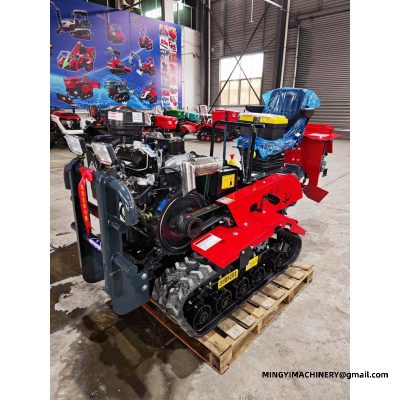
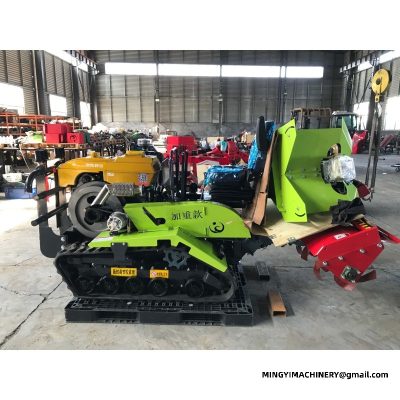
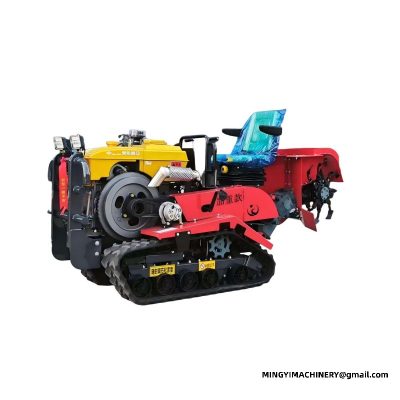
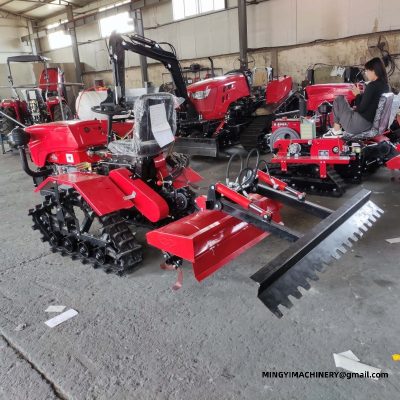
A power tiller is a soil-working machine driven by its own engine rather than towed behind a tractor. In the catalogues it appears under several names — rotary tiller, crawler tiller, track tiller — and the differences between those names are real: they describe how the machine reaches the soil and what ground it can cross, not merely what it is called.
A wheeled power tiller is cheaper, lighter and faster on dry, firm ground. In a paddy field it is the wrong machine: the wheels sink, the machine digs itself in, and the operator spends the day recovering it instead of working. A crawler tiller spreads its weight over tracks, and that is what makes it usable where the ground is soft, flooded or freshly ploughed.
Track width on this class of machine runs around 350 mm. Wide enough to float on wet paddy soil, narrow enough that the machine still fits between raised beds and through a field gate. It is a compromise figure, and it is the one to check first against the ground the machine will actually cross.
Paddy work and dry-field work put different demands on the same machine. In a flooded paddy the priority is flotation and the ability to work soil that is close to slurry; engine power in the 120 hp class is used to drive the tiller through standing water without bogging. On dry ground the priority shifts to depth control and finish: a 50 hp wet-and-dry machine is the usual starting point, and it is expected to leave a seedbed rather than a churned surface.
Buying one machine to do both is possible, and it is always a compromise. The question to settle is which condition the machine will meet most often in a season, because that is the condition it should be specified for.
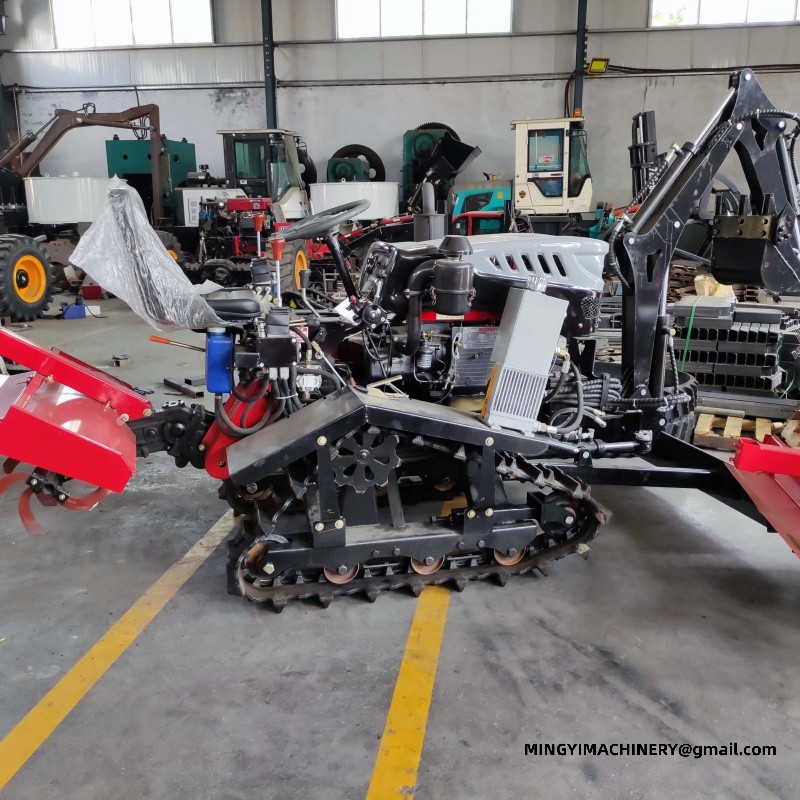
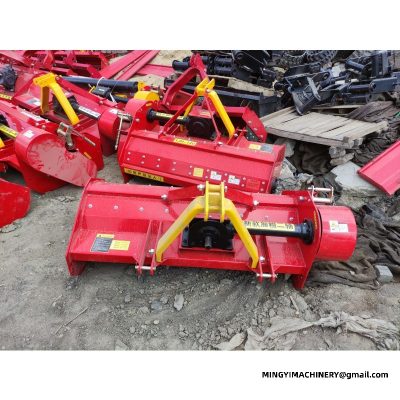
Depth is set by the tiller hood and the skids, and it is limited in practice by engine torque rather than by the adjustment. A machine asked to work deeper than its gearing supports will labour, overheat and leave an uneven bed. Gearing — not headline horsepower — is what lets a tiller hold a steady depth through a heavy clay patch without the operator sawing at the throttle.
| Figure | Paddy build | Wet-and-dry build |
|---|---|---|
| Engine class | 120 hp | 50 hp |
| Track width | 350 mm | 350 mm |
| Working condition | Flooded paddy | Wet and dry field |
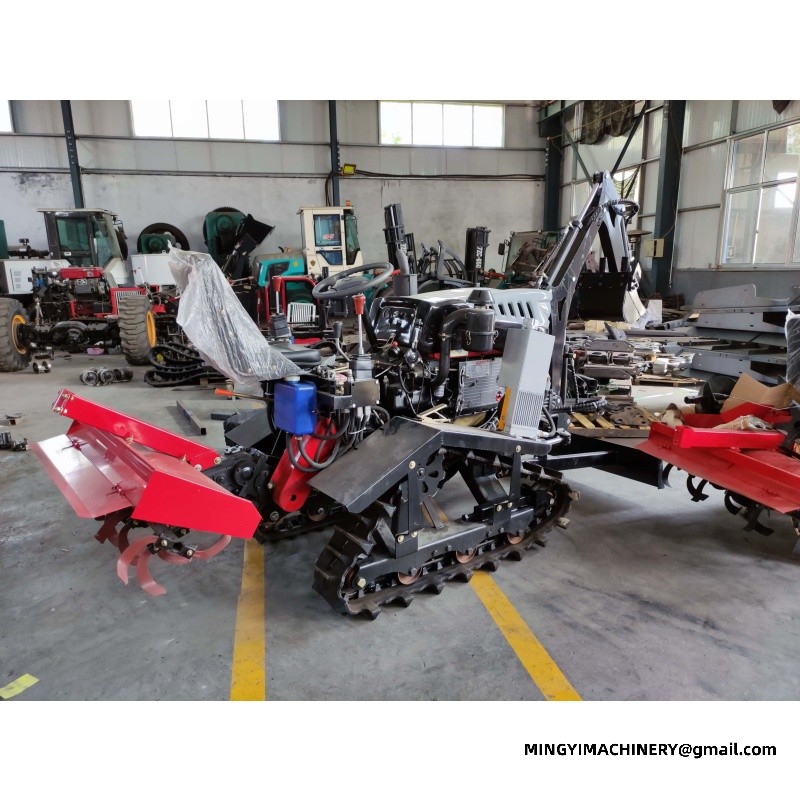
A tiller works in abrasive conditions by definition. The three items that fail first are the tiller blades, the track tension and the air filter. Blades wear on the leading edge and lose their bite before they lose their shape, so they are replaced on depth performance rather than on appearance. Track tension is checked after the first week and then weekly; a loose track on a crawler tiller jumps under load and takes the drive sprocket with it. In dry-field work the air filter is a daily item, not a weekly one.
Crop, ground condition (flooded, moist or dry), field size and the intended tilling depth settle almost every specification question. Send those four and the machine can be matched to the work rather than to a brochure page.
Request a power tiller quotation
Send the crop, ground condition, field size and working depth, and we will confirm the build.
Email: sales@mingycn.com | LINE (ID): mingyicn