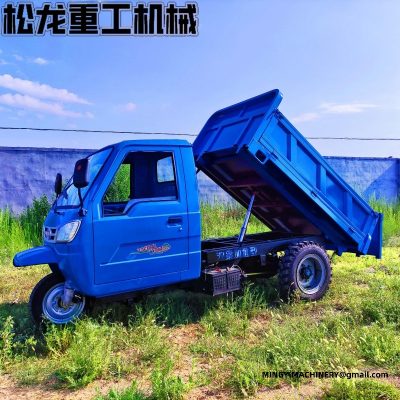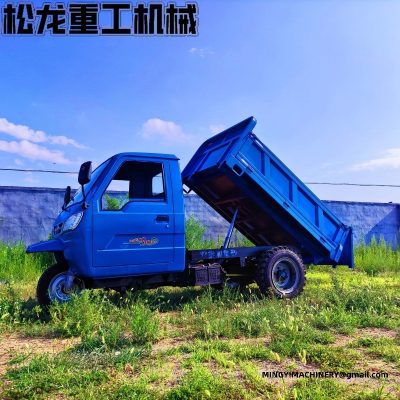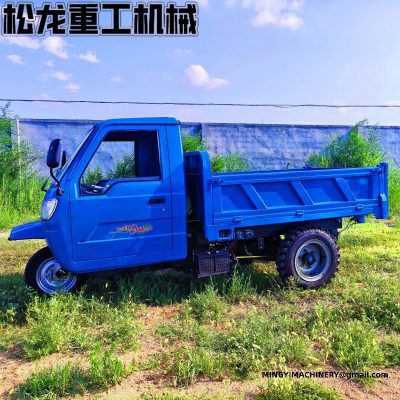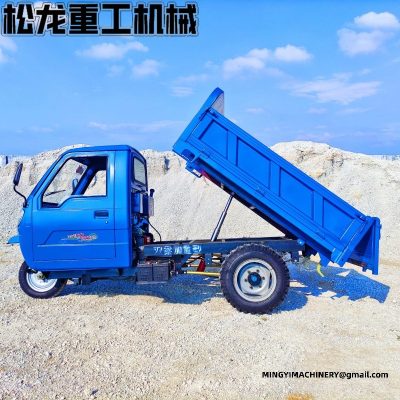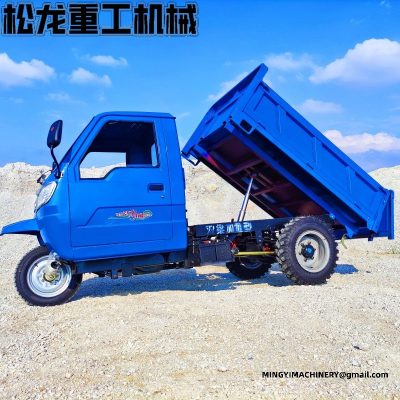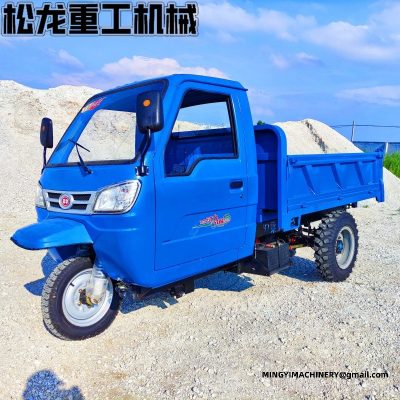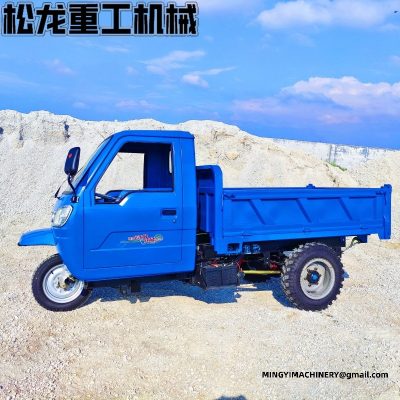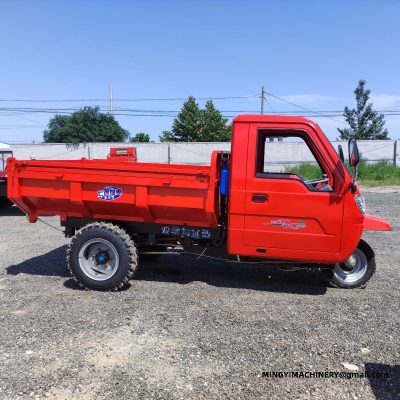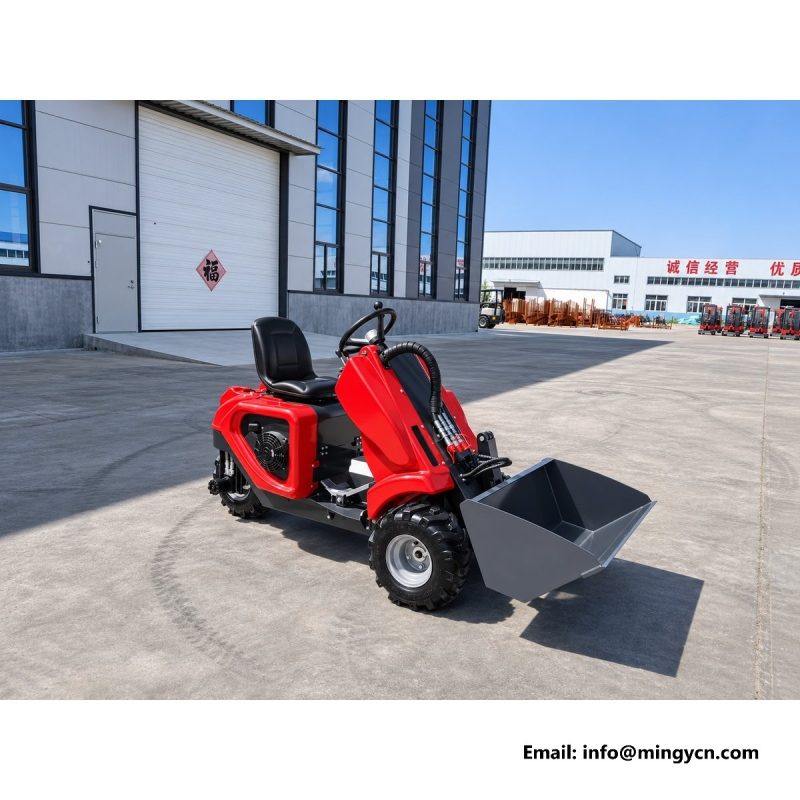
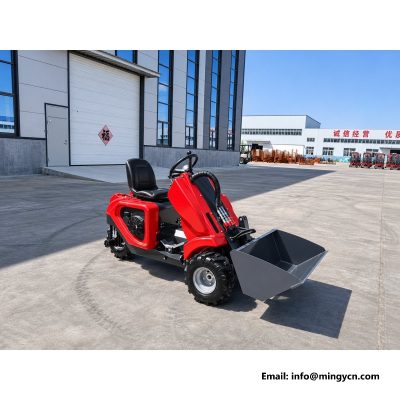
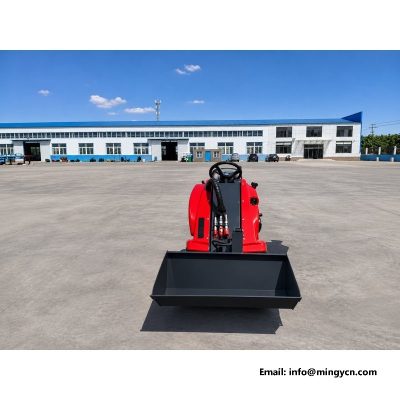
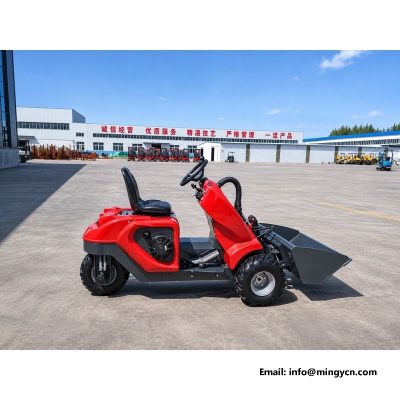
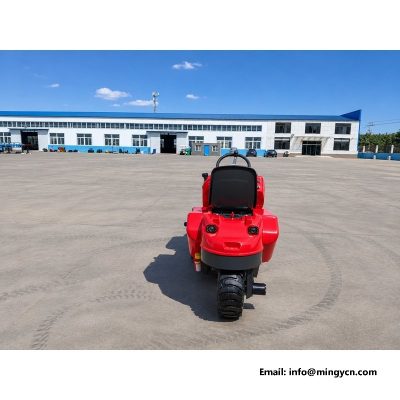
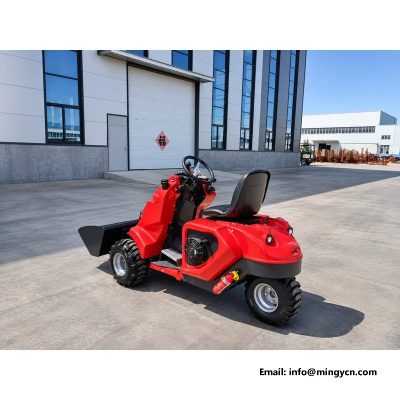
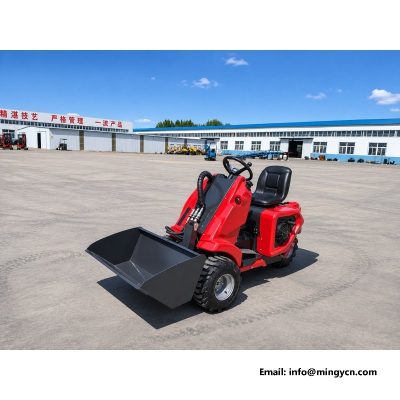
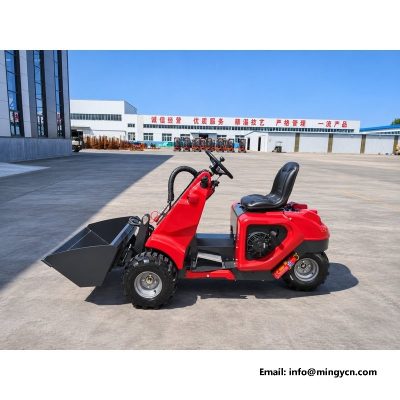
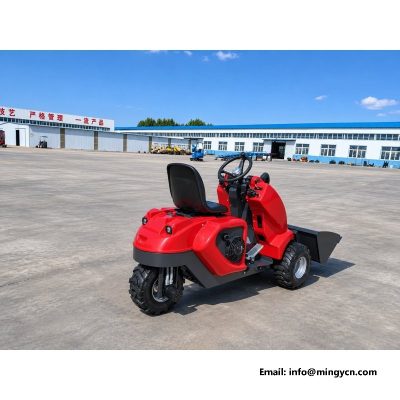
Diesel cargo tricycle with a tipping body for rural building material and farm haulage.
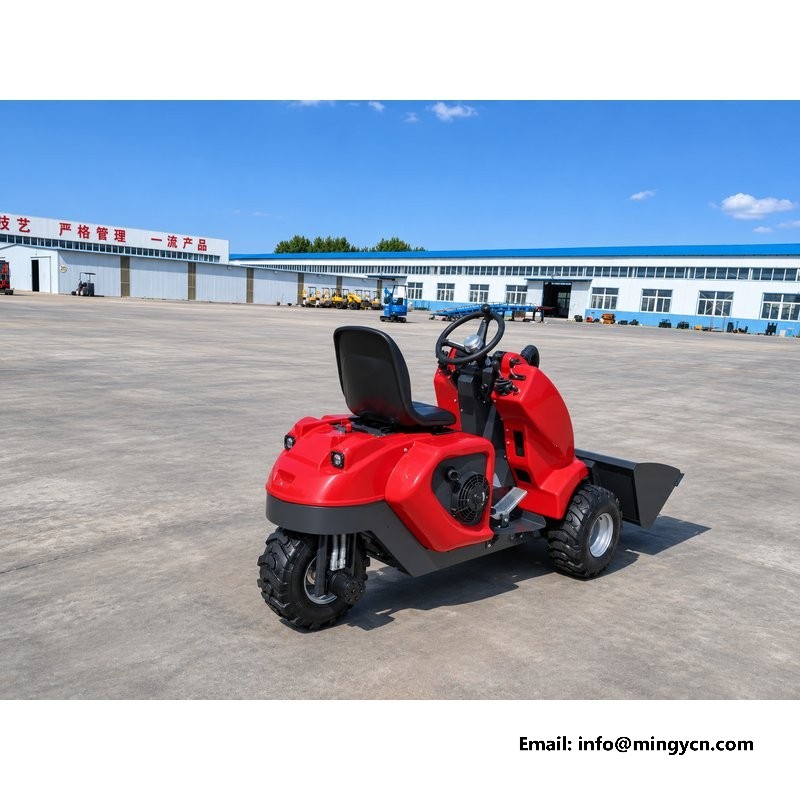
This page describes the diesel cargo tricycle with a tipping body, photographed in the works yard before dispatch. It is a narrow, simple machine intended for the last part of a delivery: building material into lanes and yards, feed and harvest around small farms, water and supplies where the road runs out. The build shown here has an open operator position and a steel tipping body. The sections below cover the work it suits, the handling advantage of the wheel layout, how the body discharges, the open driving position, diesel power under load, tyre and brake checks, load balance, the markets where the layout fits, running costs against a small truck and acceptance.
In rural construction and farming the last part of the journey is usually the hardest. A lorry can reach the village road, but not the house being built at the end of an alley, the orchard row between the trees, or the yard behind the shop. A diesel cargo tricycle is built for that last part. It carries bagged cement, sand, bricks, feed, fertiliser, harvest crates or water tanks over tracks that a four-wheeled vehicle cannot use, and it tips its body to unload without a gang of people and shovels. The machine is simple enough to be repaired in a village workshop, and small enough to be parked where a truck would block the lane. That combination is why the layout persists across so many markets. It is also cheap enough to be bought by a household rather than a company.
The layout is a single front wheel and a pair of rear wheels, and that arrangement gives the machine a turning behaviour a four-wheeled truck cannot match. Because the front wheel steers and there is no differential axle ahead of the driver, the machine can pivot almost about its own rear axle, which is what makes a tight alley, a gateway or an orchard row passable. The body is narrow enough to pass between a wall and a stack of bricks, and the driver can see the near-side wheel from the seat. In markets where lanes were laid out for carts rather than cars, this is not a convenience but a condition of doing the work at all. The same narrowness makes loading onto a small ferry straightforward. A narrow track also means less damage to field edges and to unfinished kerbs.
The cargo body is hinged at the rear and raised by a hydraulic ram, so the load leaves under its own weight when the body reaches the right angle. The tailgate opens as the body rises, or is released by hand on simpler builds, and the driver sets the pace with the body control. Sand and gravel run out quickly once the floor tilts; damp soil and wet clay want more tilt, and a brief creep forward helps the mass let go. Dusty material is better released with the body low and the machine turned away from the wind, so that fines do not blow back over the operator. Unloading on level ground keeps the load where it was intended and keeps the machine stable. The practice to avoid is tipping across a slope, or driving with the body raised to shake out a sticky load.
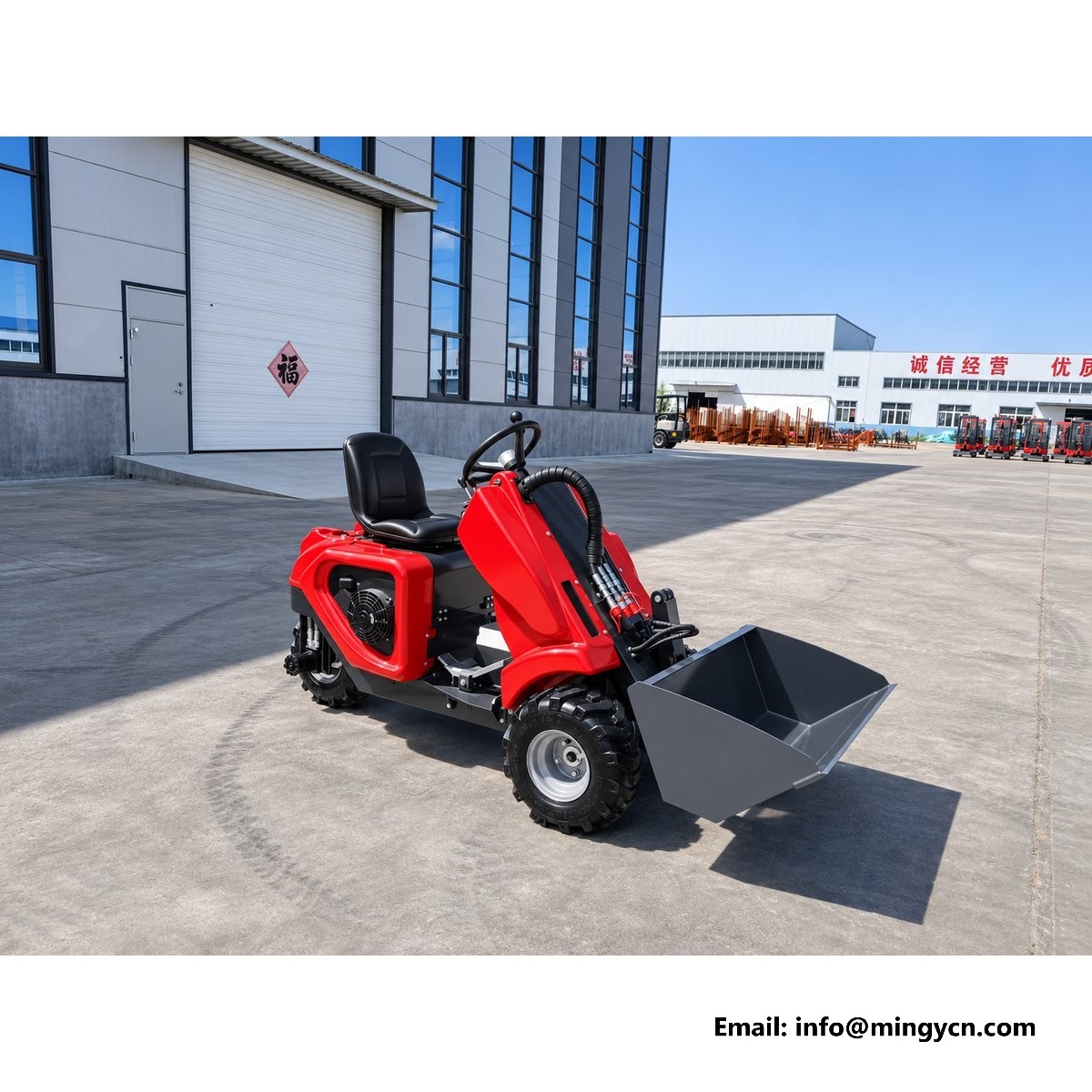
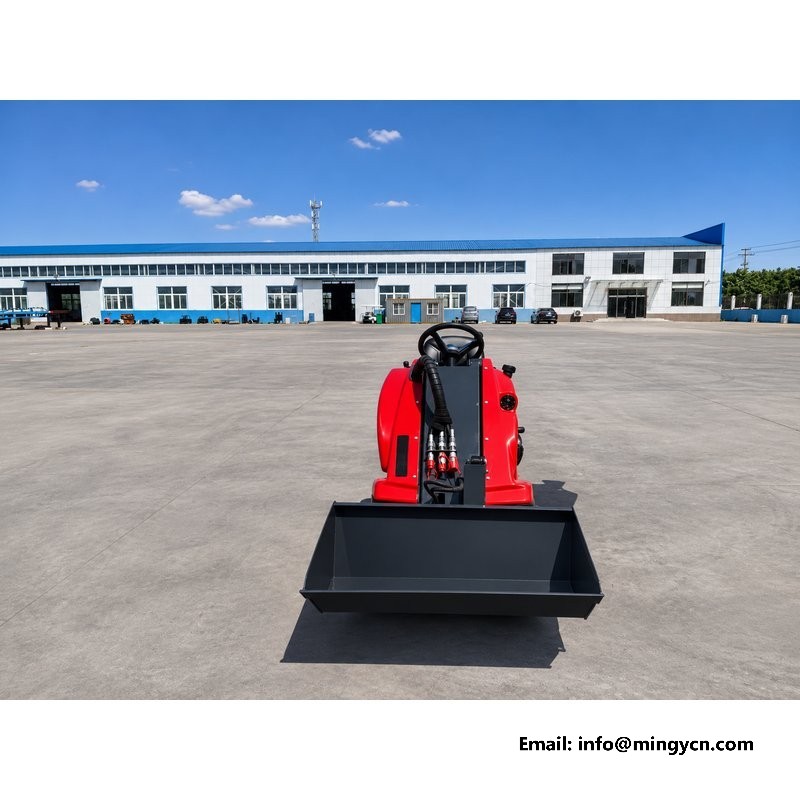
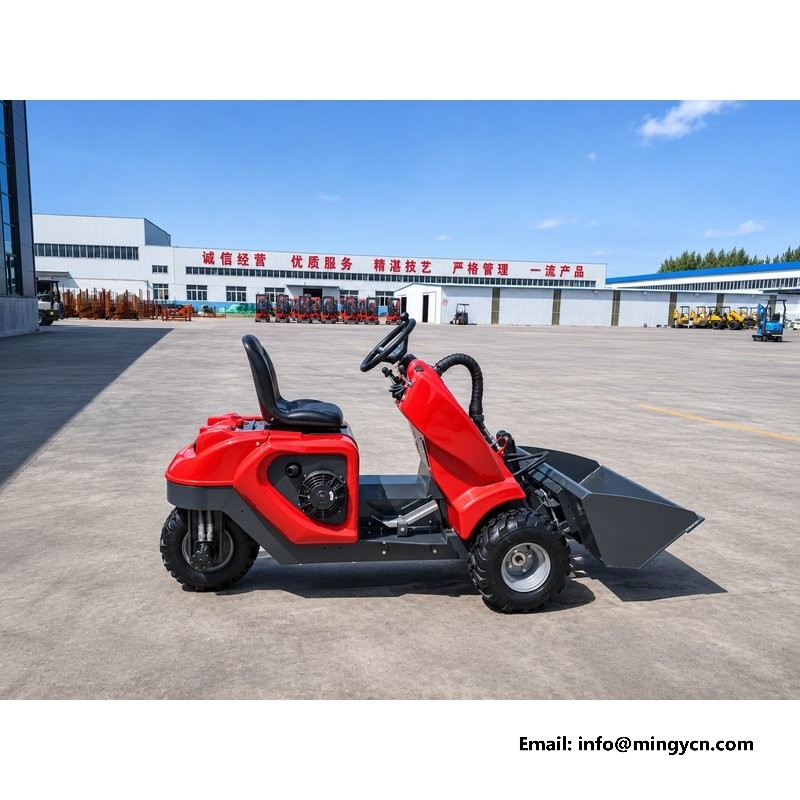
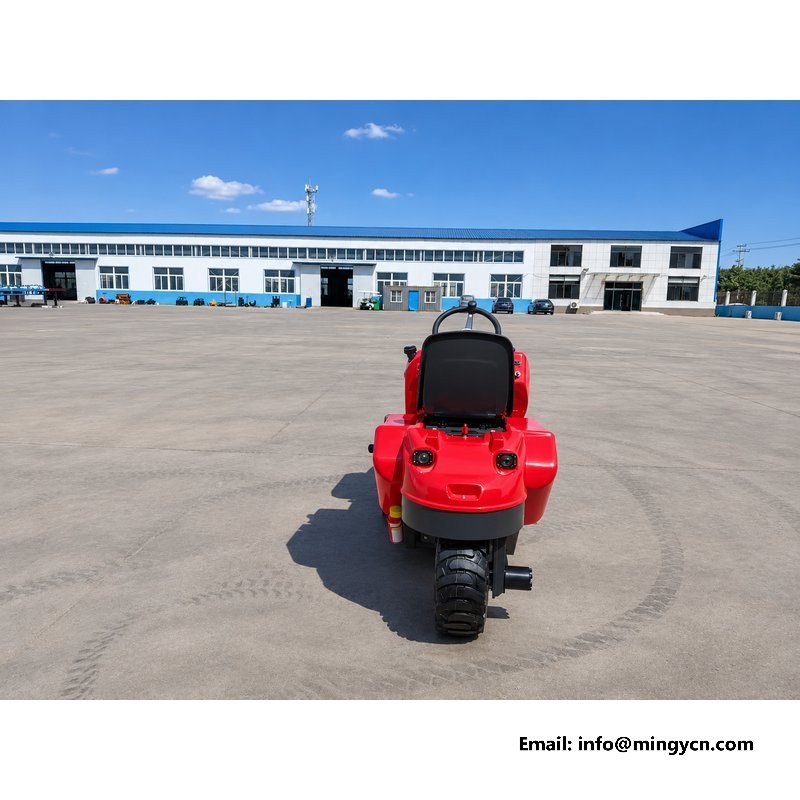
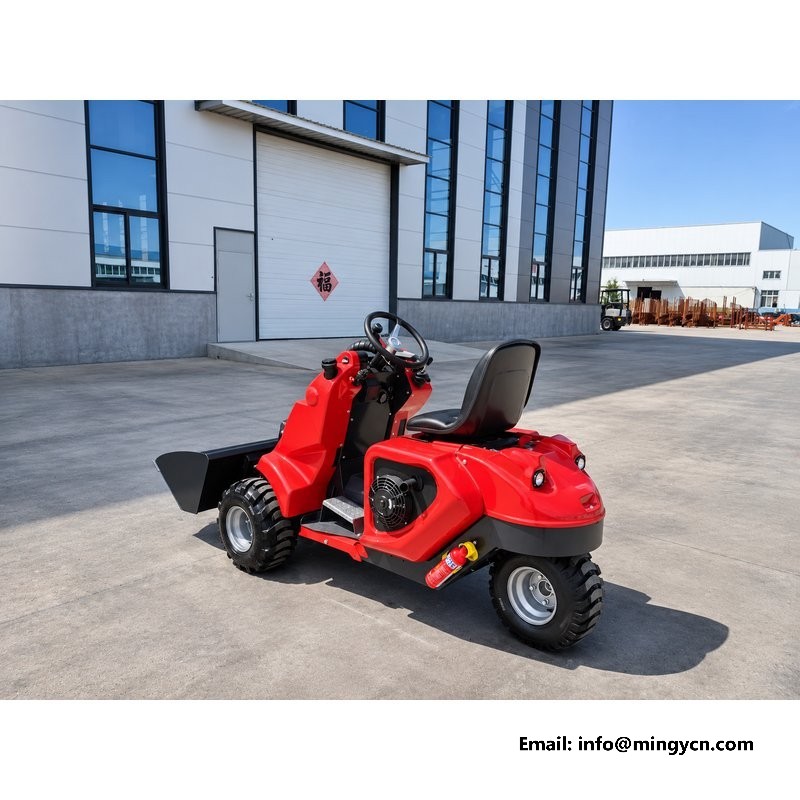
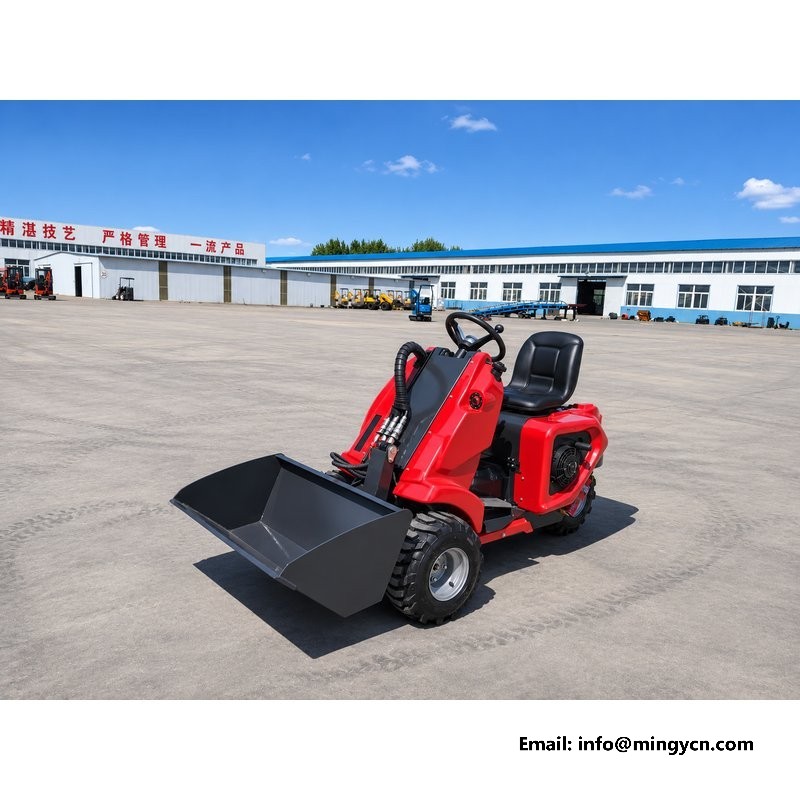
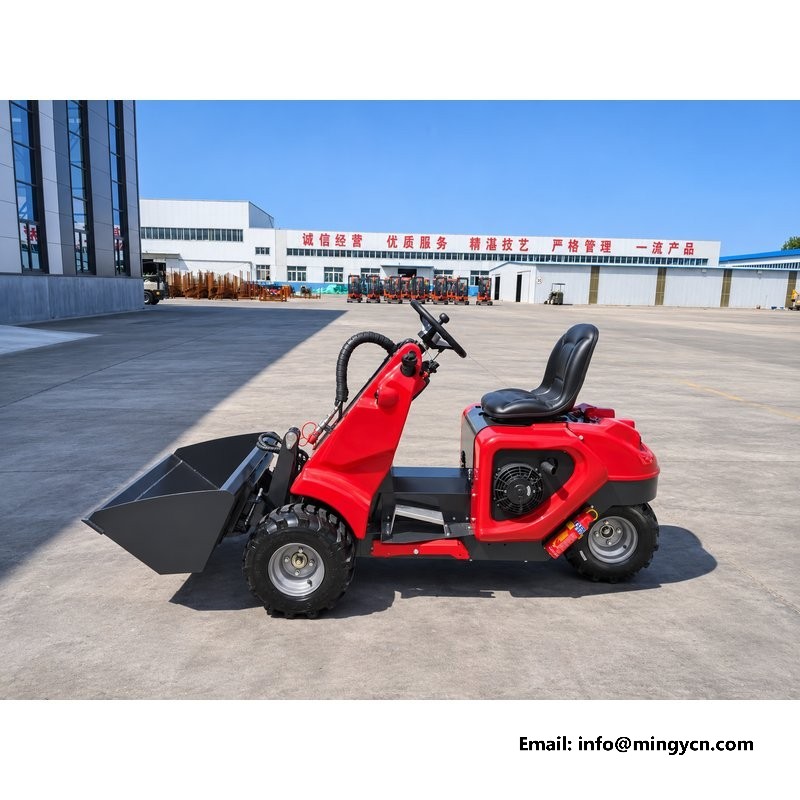
The driving position on this build is open, with no glass and no doors, and that has consequences the buyer should weigh. The operator gets an unrestricted view of the near wheel, the load and the ground, which is genuinely useful in a crowded yard. Against that, sun, rain, dust and wind are felt directly, and long shifts in bad weather are hard on the person at the controls. A wide hat, eye protection and a dust mask are working equipment here, not optional. Some operators fit a simple sunshade or a canvas top for the hot season, and some markets expect it from the factory. The photographs show a small scoop mounted ahead of the operator on this build, which adds a second job. Buyers should confirm whether that scoop is part of the quoted build or an extra.
Diesel is the usual choice in this class because of how it delivers torque rather than because of top speed. A loaded tricycle pulling away from a standstill on a loose surface, or climbing a ramp into a yard, needs turning force at low engine speed, and a diesel provides that without the driver slipping a clutch for long. The engine is also tolerant of the fuel and the servicing found in rural markets, provided the air filter is kept clean and the cooling fins or radiator are not packed with dust. Buyers should ask which engine family is fitted, whether the same unit is used in locally sold pumps or generators, and whether filters and injectors can be bought locally. A workshop that already services agricultural engines will usually know this family, which shortens any wait for repair.
On a tricycle the rear pair carries the load and does most of the braking, so those are the parts to inspect first. Both rear tyres should be the same size, the same tread pattern and at the same pressure, because a mismatch pulls the machine to one side under load and wears the final drive if one is fitted. Look for cracking in the sidewalls and for tread worn flat in the centre, which points to long periods of over-inflation. The brakes should be checked loaded rather than empty, on a slope, and the parking brake should hold the machine with the body full. Wheel nuts and the clamp bolts on the rear axle deserve a wrench at every service, not a glance. Keep a note of torque values in the cab, because the figure is easily forgotten between services.
Loading a tricycle well is a matter of keeping mass low and forward of the tailgate. The rear axle is designed to carry the body, but weight placed behind it levers the front wheel up and removes the steering and much of the braking. Bags and crates should be stacked flat and distributed across the floor rather than heaped in one corner. Long material should be tied down and flagged, and the tailgate should close properly before the machine moves. Passengers do not belong on the load, and the driver should not allow a second person to ride on the body to steady it. On sloping ground, load on the level and never work under a raised body held only by the ram. A prop or a mechanical stand costs little and removes the risk entirely when a body has to be raised for work.
The machine suits markets where the road network thins out before the delivery point. In Southeast Asia it moves building materials into lanes and onto sites where a lorry cannot turn, and it works alongside the small farms that surround the towns. In parts of Africa it carries water, feed, harvest and construction material over unpaved tracks, and its simple mechanical layout is repairable where dealer coverage is thin. In Latin America it serves the steep smallholder plots and the narrow streets of older town centres. What these markets share is a delivery pattern of many short trips over poor surfaces, with fuel and spare parts bought in small quantities. A machine built for that pattern does not need to be complicated. The same reasoning explains why the layout has survived so long: it can be maintained with hand tools and a little patience.
Set against a small four-wheeled truck, the tricycle costs less to buy, uses less fuel on short trips and costs less in tyres, because it runs on fewer wheels and a lighter structure. It also fits where the truck does not, which shortens the carrying distance at the end of the journey and can remove a whole manual unloading step. The trade is capacity per trip and comfort over distance: the tricycle is a shuttle machine, not a road haulier. Where the work is a long run on a highway, the truck wins clearly. Where the work is a repeated short cycle from a stockpile to a site entrance, the smaller machine usually completes more trips in a day. Insurance, registration and driver licensing also tend to be lighter for a machine that stays off the highway, though the rules vary by country.
Before a tricycle is shipped, ask for photographs and a short video that show the machine working rather than standing. The body should raise and lower through its full travel without judder, and the tailgate should open and close cleanly. Check the welds at the body hinges and at the ram mounts, and look at how the hydraulic hoses are routed and protected. Confirm the brakes hold the machine when loaded, that all lamps work, and that the tyres on the rear pair match. Ask for the engine and hydraulic part numbers, a spare parts list and a manual in a language the workshop can read. Finally, confirm how the machines are packed. A short video of the loading itself is worth more than any written assurance, and it should be taken before the container doors are closed.
Its advantage is access rather than capacity. The narrow body and single front wheel let it pass through lanes, gateways and orchard rows that a four-wheeled truck cannot enter, and it can turn in a space where a truck would have to reverse. That means material can be delivered closer to the work, which removes a manual carrying stage. It is a shuttle machine for short trips over poor surfaces, not a substitute for a truck on the highway.
The body is hinged at the rear and raised by a hydraulic ram, controlled from the driving position on most builds. The tailgate opens as the body rises or is released by hand. The driver raises the body until the load begins to slide, and controls the rate through the position of the control. Unload on level ground, keep people clear of the rear, and never work under a raised body held only by the ram.
Ordering and technical support
Email: sales@mingycn.com
LINE (ID): mingyicn
Tell us your working width, ground conditions and the attachment you need, and we will confirm the right configuration and shipping details.