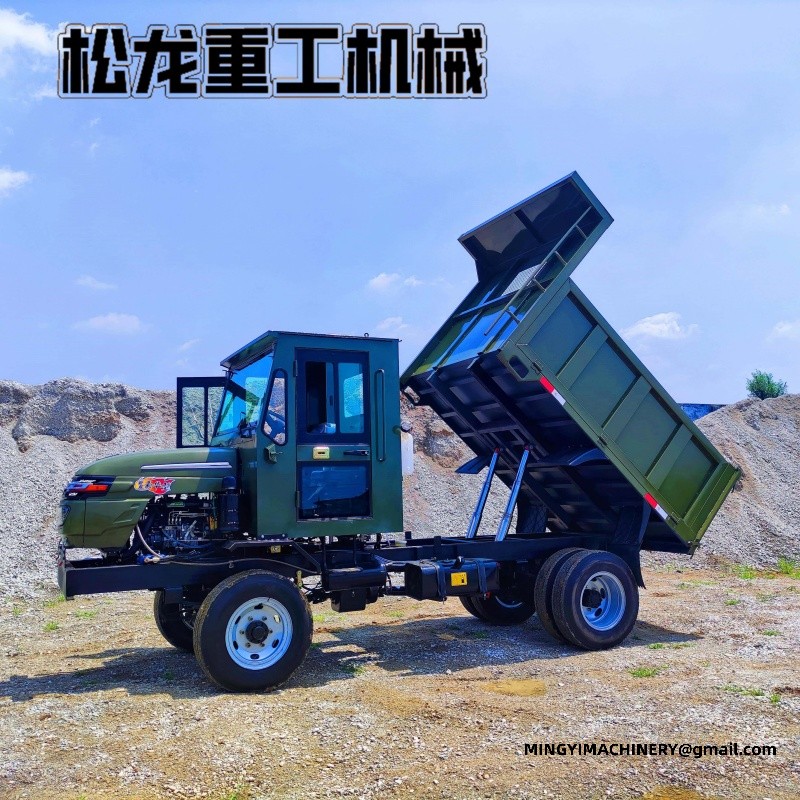
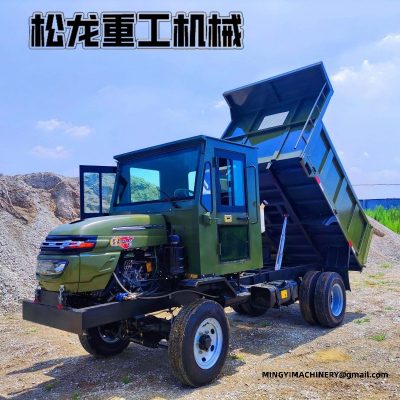
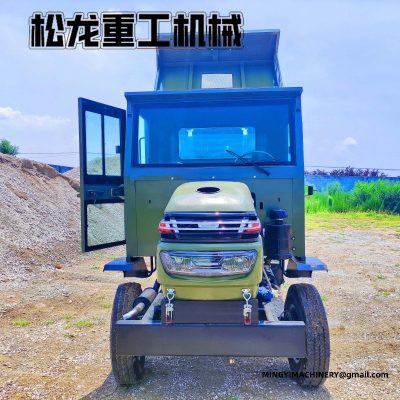
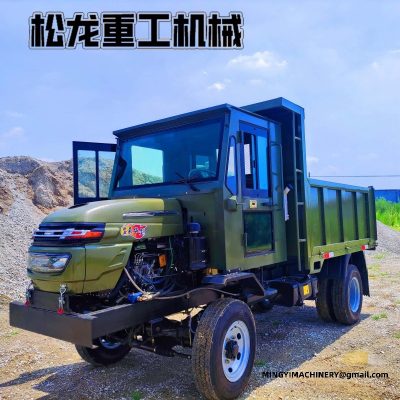
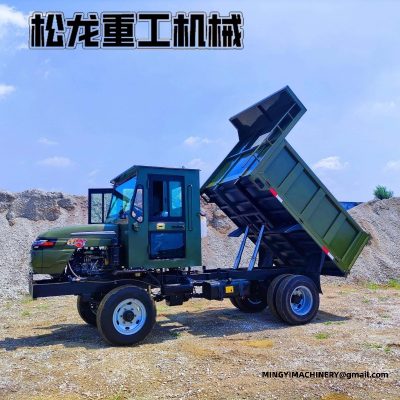
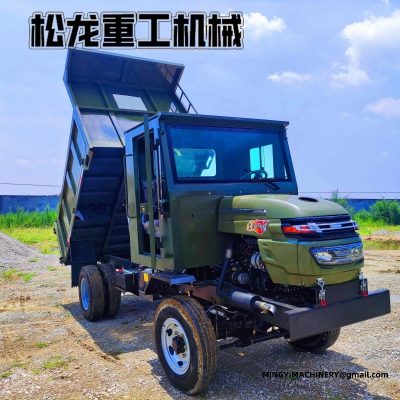
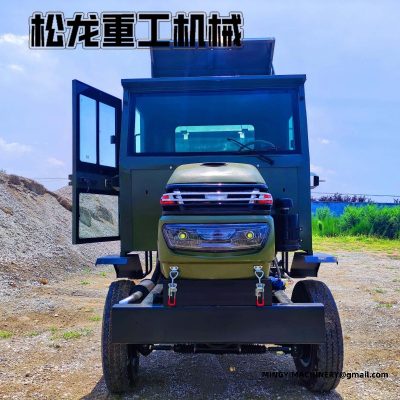
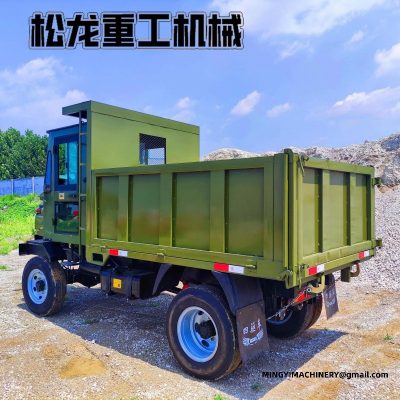
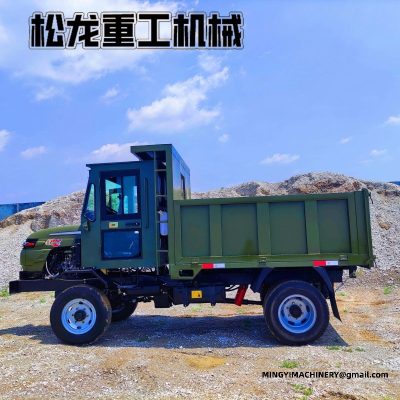
Construction 4x4 dumpers in this range are built on one platform. All four configurations share the same frame, the same axles, the same brakes, the same body and the same cab fittings, and the differences come down to three decisions: the engine, the cab and how many tyres the machine runs on. That makes choosing between them simpler than the sheet suggests, and it makes the questions that matter the ones about the job rather than the ones about the specification.
What the four configurations share
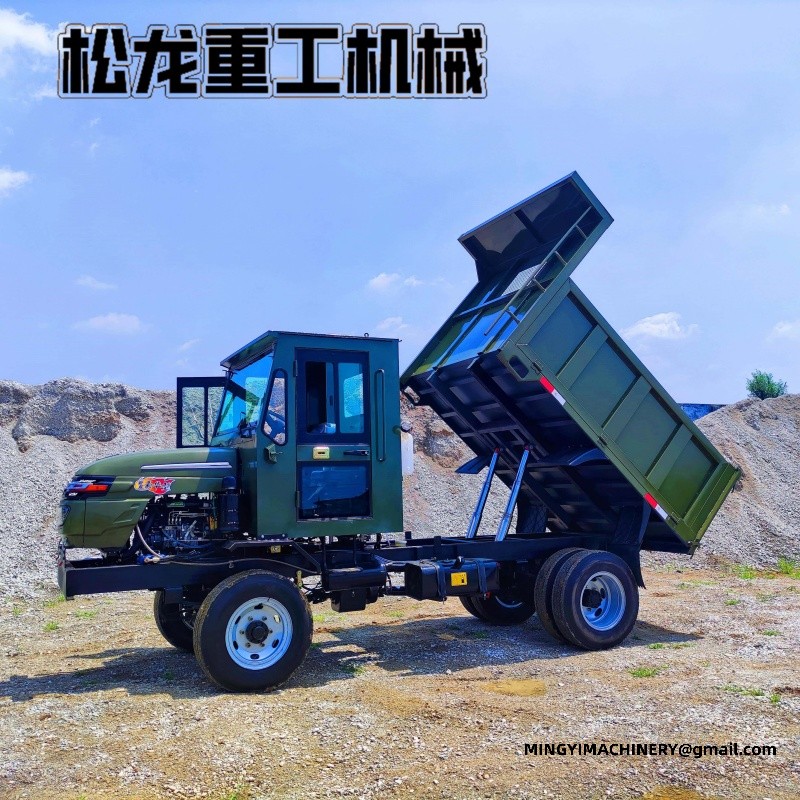
The common platform is worth understanding first, because it is most of what a buyer is getting. Every configuration here uses a full-time gearbox with four-wheel drive, high and low range with a crawler gear, oil brakes, a front axle 212 and a rear axle 130, the reinforced 60 x 140 mm square tube frame, and a rear body 2.2 m long by 1.5 m wide and 0.45 m high. Hydraulic power steering, twin hydraulic rams, a two-person comfort seat, twin-battery electric start and a tailgate with a self-dumping function are fitted across the range as well.
The engine decision
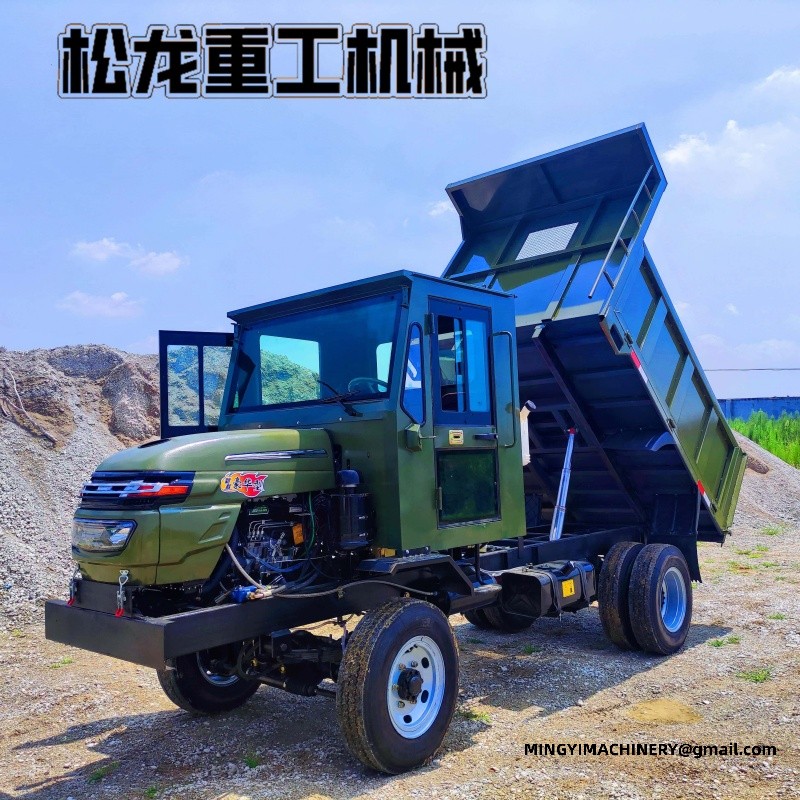
Three single-cylinder and two-cylinder ratings appear alongside one four-cylinder: a single-cylinder 28 hp on the 6.Standard, a single-cylinder 32 hp on the 9.Standard, a two-cylinder 38 hp on the 12.Standard, and a four-cylinder 490 on the 16.Upgraded. On a platform this size the engine is chosen from the haul rather than from the load. The single-cylinder machines suit short runs on firm ground and a machine that shares the work with other equipment. The two-cylinder suits a full day of mixed work, and the four-cylinder 490 is the one for a longer haul, a real gradient, or a machine that runs loaded for most of the shift.
The cab decision
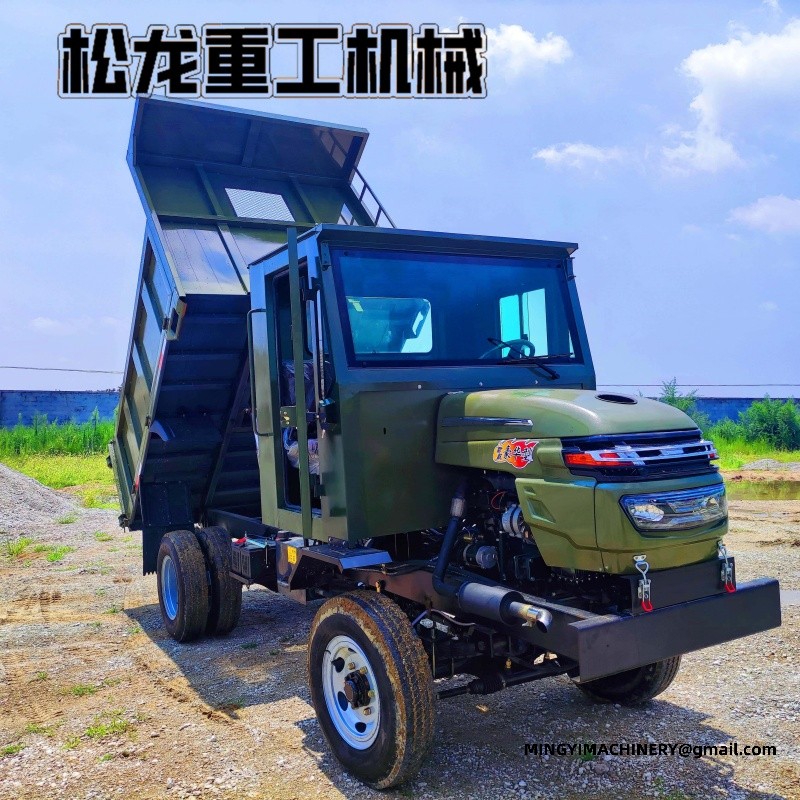
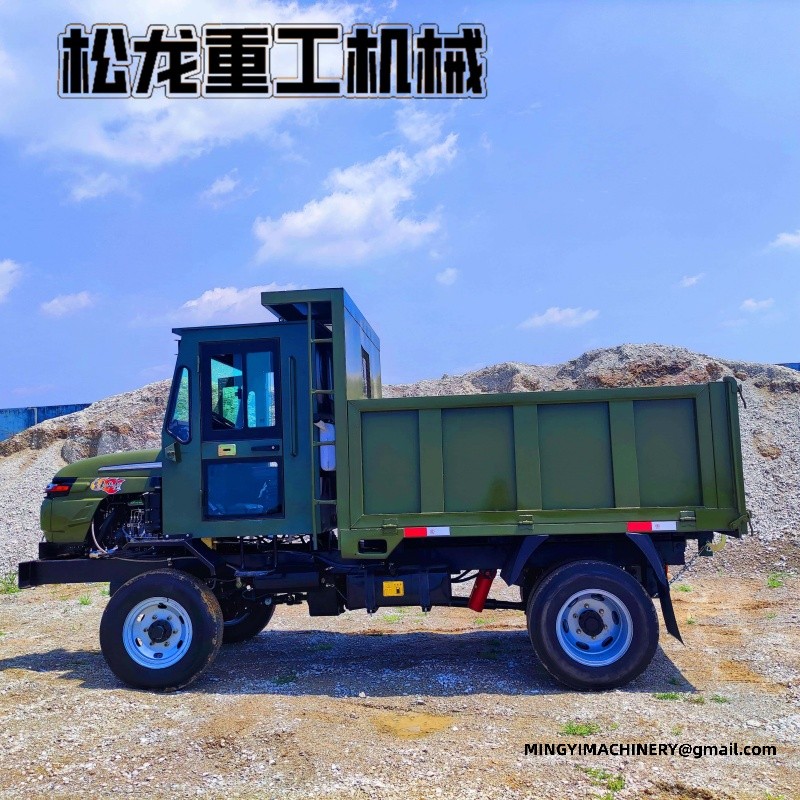
Only the 16.Upgraded leaves the factory with a fully enclosed cab; the other three have a simple cab. That is a straightforward question of hours and weather. A machine working a full shift through a winter, or one working in dust, wants the enclosure, and a machine that runs a few hours in reasonable weather does not need it. The seat, the steering and the electric start are the same either way, so this is the difference a driver notices first and the one that decides whether the last hour of the day is as productive as the first.
Four tyres or six
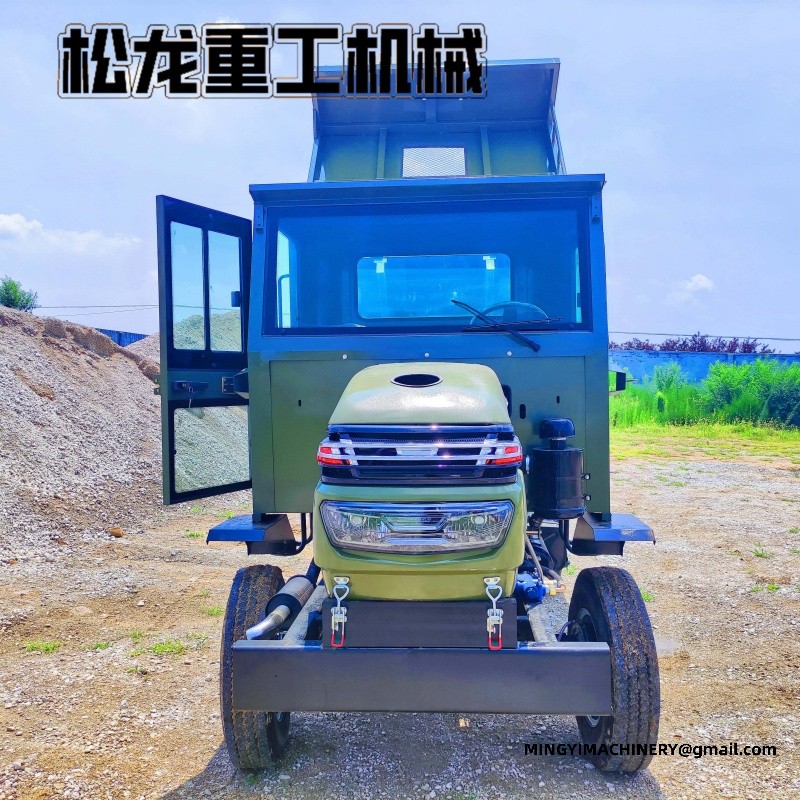
Tyre count is the third decision and the one most easily got wrong. The 12.Standard, the 6.Standard and the 9.Standard run four 700-16 mountain tyres; the 16.Upgraded runs six. Six contact patches spread the machine's weight across more ground, which is what keeps it moving on soft fill and what limits the damage a loaded machine does to a surface that has already been prepared. Four tyres turn tighter and are easier to move between sites. On soft ground the six-wheel machine is the answer; on firm ground the four-wheel one gives nothing away.
Bonnet shape and the view from the seat
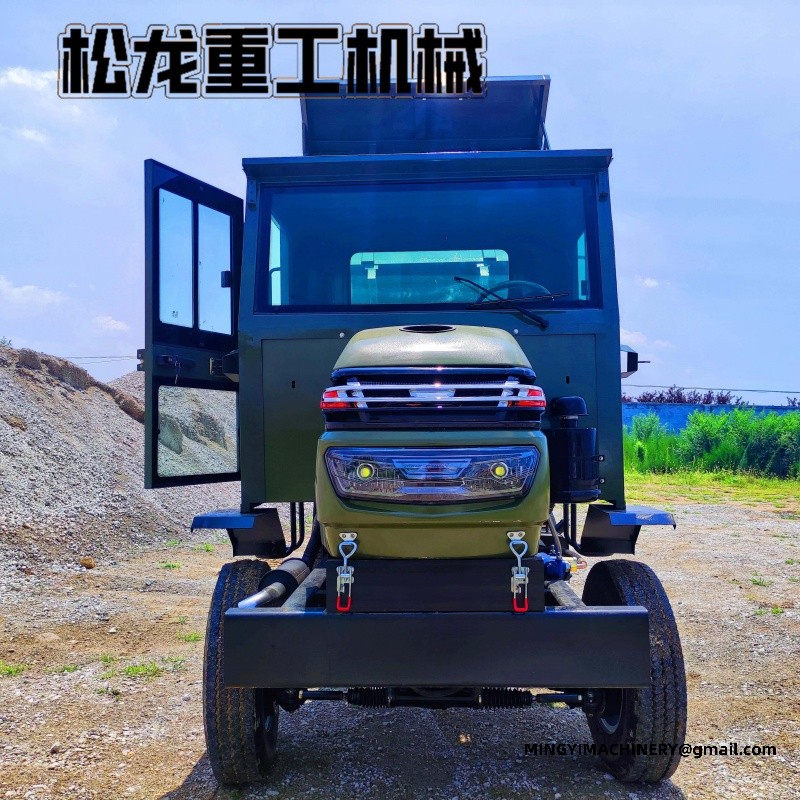
The 12.Standard and the 16.Upgraded keep the round-nose bonnet, and the 6.Standard and the 9.Standard use the square-nose. It is a small difference on a specification sheet and a real one in a tight bay, because the bonnet is the panel a driver sights over when placing the machine. Fleets running several of these machines usually prefer one shape, so that a driver moving between them is not relearning the sight lines on a Monday morning.
Where four-wheel drive earns its keep
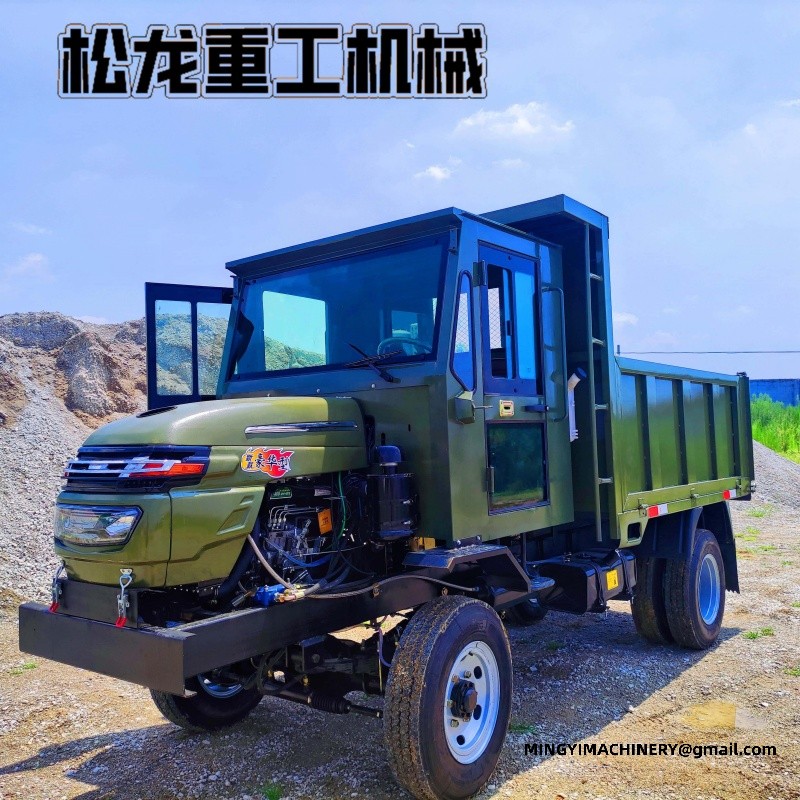
Four-wheel drive on a construction site is about the first metre of movement rather than about speed. A loaded machine starting on loose fill, on a ramp with a covering of mud, or on ground that has been worked wet is where drive at both ends matters, and a machine that cannot take that first metre needs a push. All four configurations here use a full-time gearbox, which means drive is always at both ends and the driver does not have to remember to engage it before the difficult part of the route.
Where four-wheel drive is not the answer
Drive at both ends does not compensate for a body that is too heavy for the ground, or for a haul road that has been allowed to break up. What a machine can move on soft ground is limited by what the ground will carry rather than by how many wheels are driving, and a driver who keeps a machine moving by carrying momentum across a bad surface is creating the conditions for the next one to get stuck. Grading the route is usually the more effective answer, and it is worth doing before concluding that the machine is the wrong one.
The crawler gear and low-speed work
High and low range with a crawler gear is fitted to all four, and low range is the gear for most of the work a construction dumper does. Placing a machine under an excavator bucket, moving along a trench edge and crossing a soft section are all low-speed jobs, and doing them in a low range keeps the machine under control without riding the brakes. The crawler gear is also what saves the clutch on a machine that stops and starts in a queue all day.
Body, tailgate and tipping
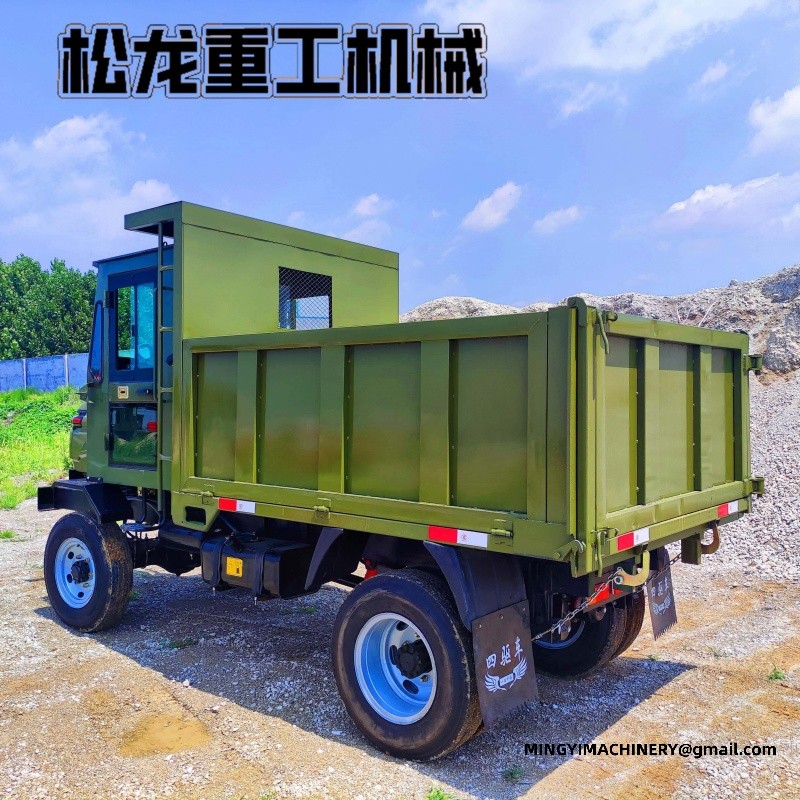
The body is 2.2 m long by 1.5 m wide and 0.45 m high on every configuration, lifted by twin hydraulic rams, with a tailgate that has a self-dumping function. The twin-ram arrangement is what allows a load that has shifted to one side to be lifted without twisting the body, which after a rough haul is the normal case rather than the exception. The self-dumping tailgate starts the load leaving before the body reaches full height, which shortens the time the machine spends raised at the tipping point.
Brakes and working on a gradient
All four use oil brakes. On a machine working a gradient with a loaded body, practice matters as much as hardware: plan the descent before the load goes in, choose the gear on the way up, and use the engine and the crawler gear on the way down. A loaded machine should never be relying on its brakes alone on a loose surface, and keeping the haul road graded is part of getting that right rather than a separate job.
Daily checks on this platform
Because the four configurations share a platform, the daily checks are the same whichever one is on site. A walk-around at the start of each shift should cover the body and ram mountings, the hydraulic hoses, tyre condition and pressures, brake response and fluid levels, and the tailgate latch. Air filtration needs more frequent attention in dust, and the body floor should be cleaned out rather than left carrying a skin of material from one load into the next.
Parts and service on a shared platform
A shared platform is a real advantage once a second machine is added. The frame, the axles, the brakes, the steering and the body are common across all four, which means one parts shelf and one service routine regardless of which configuration is on site, and a driver who can move between machines without relearning anything. Where duties differ enough to justify two machines, the useful split is one with the larger engine and the enclosed cab for the long day, and one of the smaller machines for the tight work.
Working alongside an excavator
On most sites this machine works to the pace of whatever loads it, and the cycle belongs to whichever half of the pair is slower. Matching the body to the excavator bucket is the practical way to think about it: a body that takes too many buckets to fill keeps the excavator waiting, and one that is filled in a single pass is carrying less than it could. Where the buyer knows which machine will load the dumper, that fact is worth stating when the order is discussed, because it settles whether the platform is being used well rather than merely used.
Moving the machine between sites
Owners who work across several sites should check the transport dimensions before ordering, because a machine that fits a standard trailer can be moved by any operator with a suitable vehicle, and one that does not narrows that choice and complicates every move. On this platform the body is the same across all four configurations, so the dimension to check is the machine as a whole rather than the differences between them. Settling it early takes nothing and avoids discovering the problem on a Friday afternoon.
Export packing and documentation
For export orders, packed dimensions, securing points and any dismantling required are settled before the machine leaves the factory. The commercial invoice, the packing list and any certificate the destination requires are agreed at order stage, because papers that arrive incomplete delay clearance longer than the voyage takes. Where several machines ship together, confirming how many fit a container is part of that planning rather than a surprise at the port.
What is checked before the machine ships
On our floor each machine is run before it is crated: the engine is brought to temperature, the tipping circuit is cycled under load, the brakes are tested with a load, and every function is checked against the build sheet. The sheet that travels with the machine records the configuration as delivered, which is what a workshop needs when a part is replaced years later, and what supports the value of the machine when it is eventually sold on.
Choosing between the four
In practice the decision comes down to two questions. Is the machine working a full day in all weather, which points to the 16.Upgraded with its enclosed cab and six tyres, or is it working shorter spells on firmer ground, which points to one of the three four-wheel machines. The second question is how long the haul is, and that settles whether the 28 hp, the 32 hp, the 38 hp or the four-cylinder 490 is the one to specify.
| # | 12.Standard | 16.Upgraded | 6.Standard | 9.Standard |
|---|---|---|---|---|
| 1 | Two-cylinder diesel engine, 38 hp | Four-cylinder 490 diesel engine | Single-cylinder diesel engine, 28 hp | Single-cylinder diesel engine, 32 hp |
| 2 | Full-time gearbox with four-wheel drive | Full-time gearbox with four-wheel drive | Full-time gearbox with four-wheel drive | Full-time gearbox with four-wheel drive |
| 3 | High/low range with crawler gear | High/low range with crawler gear | High/low range with crawler gear | High/low range with crawler gear |
| 4 | Simple cab | Fully enclosed cab | Simple cab | Simple cab |
| 5 | Oil brakes | Oil brakes | Oil brakes | Oil brakes |
| 6 | Four 700-16 mountain tyres | Six 700-16 mountain tyres | Four 700-16 mountain tyres | Four 700-16 mountain tyres |
| 7 | Front axle 212 | Front axle 212 | Front axle 212 | Front axle 212 |
| 8 | Rear axle 130 | Rear axle 130 | Rear axle 130 | Rear axle 130 |
| 9 | Reinforced 60 x 140 mm square tube frame | Reinforced 60 x 140 mm square tube frame | Reinforced 60 x 140 mm square tube frame | Reinforced 60 x 140 mm square tube frame |
| 10 | Rear body 2.2 m long x 1.5 m wide x 0.45 m high | Rear body 2.2 m long x 1.5 m wide x 0.45 m high | Rear body 2.2 m long x 1.5 m wide x 0.45 m high | Rear body 2.2 m long x 1.5 m wide x 0.45 m high |
| 11 | Tailgate with self-dumping function | Tailgate with self-dumping function | Tailgate with self-dumping function | Tailgate with self-dumping function |
| 12 | Hydraulic power steering | Hydraulic power steering | Hydraulic power steering | Hydraulic power steering |
| 13 | Twin hydraulic rams | Twin hydraulic rams | Twin hydraulic rams | Twin hydraulic rams |
| 14 | Two-person comfort seat | Two-person comfort seat | Two-person comfort seat | Two-person comfort seat |
| 15 | Twin-battery electric start | Twin-battery electric start | Twin-battery electric start | Twin-battery electric start |
| 16 | Round-nose bonnet | Round-nose bonnet | Square-nose bonnet | Square-nose bonnet |
For a specification discussion or a build sheet for this construction 4x4 dumper, contact sales@mingycn.com or reach us on LINE (ID: mingyicn).









