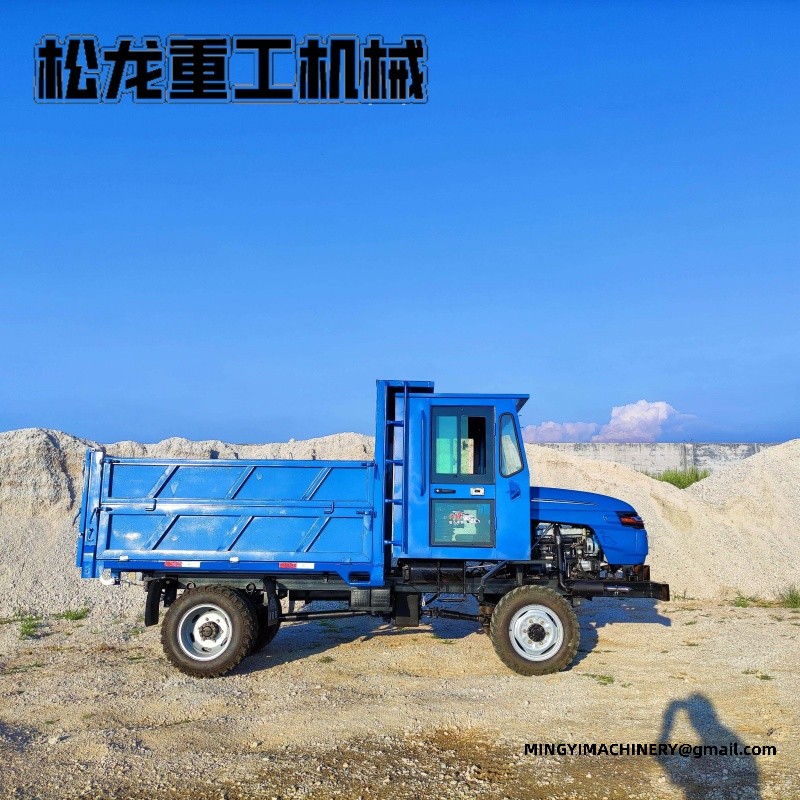
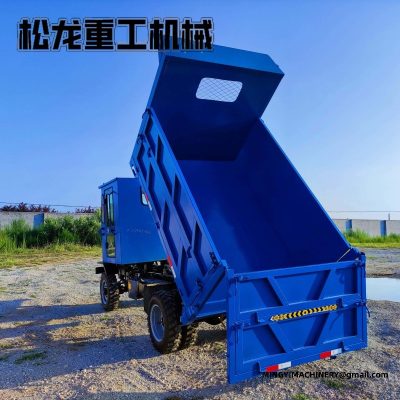
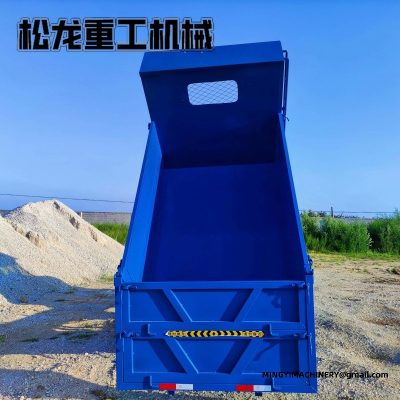
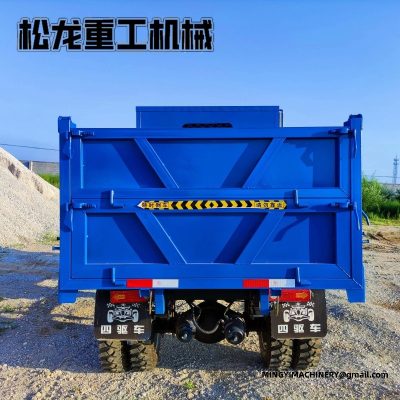
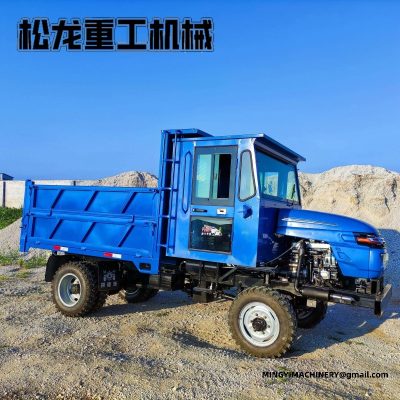
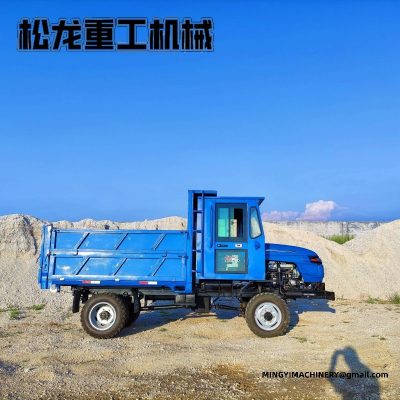
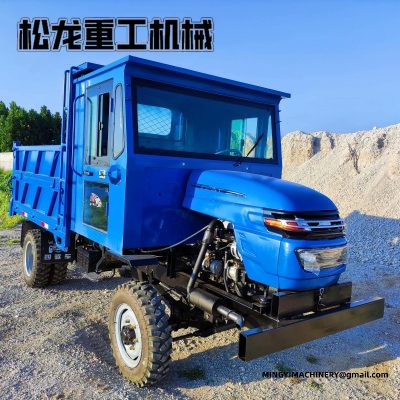
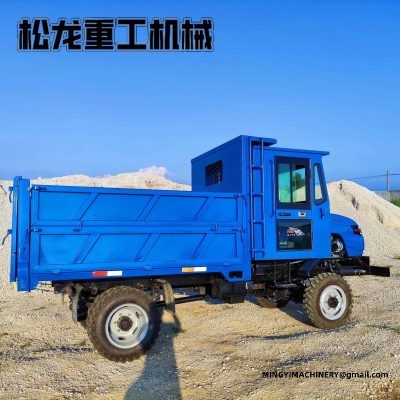
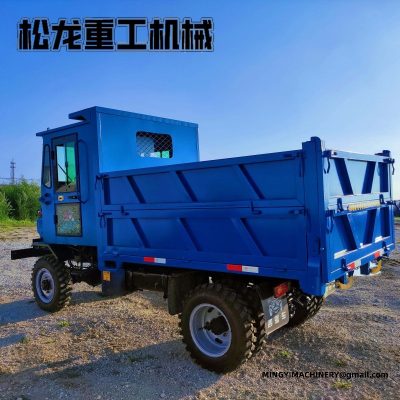
A low-speed high-torque dumper is bought for the part of the job where pulling power decides the day and travel speed does not. Steep ramps, soft haul roads, loaded starts on a gradient and short shuttles between a digger and a stockpile all belong to that category. This page sets out how the gearing changes the way the machine behaves, which build items carry the extra load, and what to settle before an order is placed, so the specification can be matched to the ground rather than guessed at.
What low speed and high torque actually change
The drivetrain is geared so the engine reaches its working range at a lower road speed than a general-purpose site truck of similar size. The effect is felt at the moment a conventional machine would struggle: when the body is full, the surface is loose and the exit from the loading point points uphill. Instead of slipping a clutch to coax the load moving, the geared machine takes the pull through the gearing and holds a steady crawl.
Torque at low speed also changes how much of the shift is spent repositioning. A machine that can start cleanly on a slope does not need a run-up, which means it can be loaded closer to where the material sits and emptied closer to where it is needed. On a site where the haul is measured in hundreds of metres rather than kilometres, that matters more than the top speed on a flat road.
Loaded starts and gradients
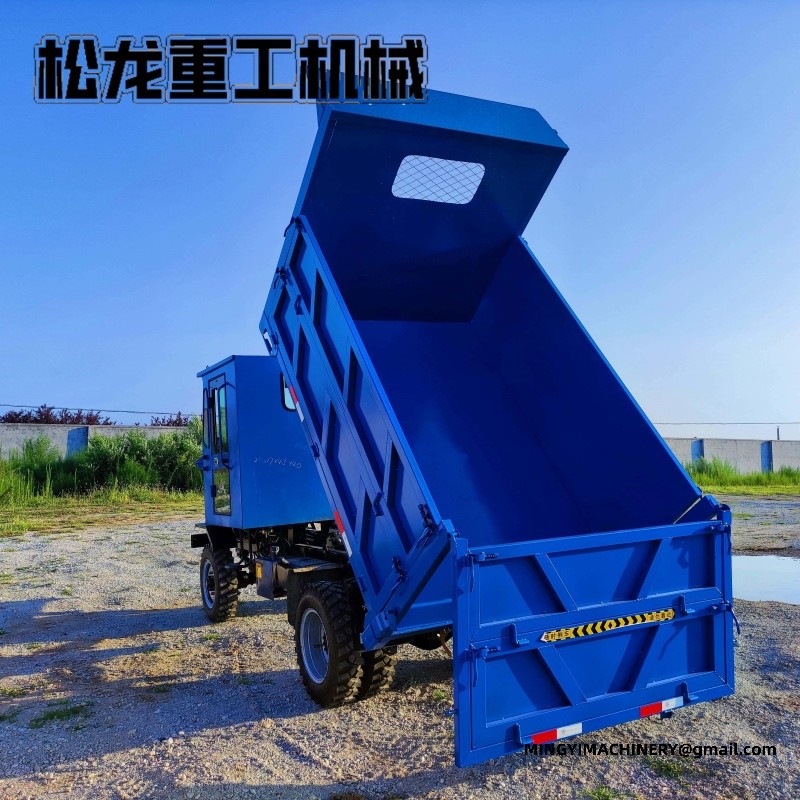
The worst moment for any dumper is the first metre of movement with a full body on an ascent. Low-range gearing removes the need to ride the clutch, which is what normally wears first on machines asked to do this repeatedly. Operators who work the same ramp every hour will notice the difference in clutch life before they notice it anywhere else.
Descending with a load is the other half of the same problem. Holding a low gear on the way down puts the engine and drivetrain to work as a brake and leaves the service brakes for the last part of the stop. Machines driven this way arrive at the bottom with cool brakes, which is the difference between a routine day and a scorched one on a long ramp.
High and low range with a crawler gear
The build sheet offers a high and low range with a crawler gear, and the three are meant for different parts of the same day. Low range covers loaded hauling and soft ground. High range covers the empty return and any road section between work areas. The crawler gear exists for the metres where precision matters more than progress: creeping up to a loading point, positioning under a chute, or easing out of a rut without spilling.
Buyers sometimes ask whether the crawler step is worth specifying. On work that includes ramps, bunds or loading under a fixed hopper, it usually is, because it lets the operator place the machine at low speed without riding the brakes or balancing on the clutch.
Axles, frame and brakes that carry the extra torque
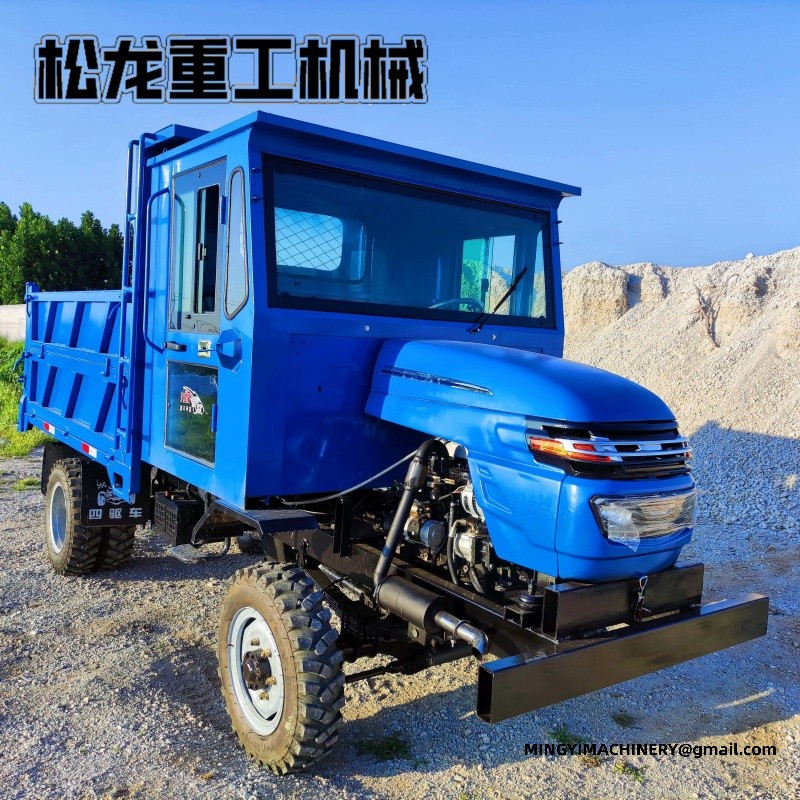
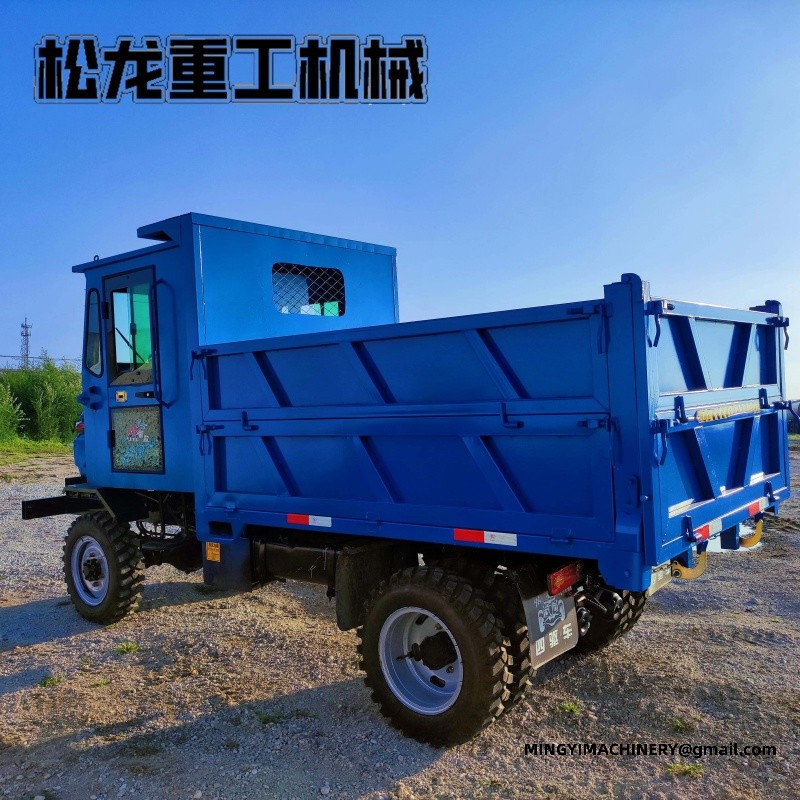
Gearing multiplies torque at the wheels, and the components behind it have to accept that multiplication. The reinforced 130 front axle and the reinforced ISUZU-pattern rear axle on this build are specified for that reason, as is the reinforced 60 x 140 mm square tube frame. A drivetrain that pulls harder needs a frame that resists twisting when one wheel drops into a rut with the body loaded.
Braking is specified the same way. Oil brakes and air cut-off brakes appear on the build sheet because a loaded machine on a slope needs a stopping system that behaves predictably when the surface is loose. The cut-off function is there for the case that matters most: bringing the machine to a hold on a gradient and keeping it there while the body tips.
Tyres and the front axle clutch
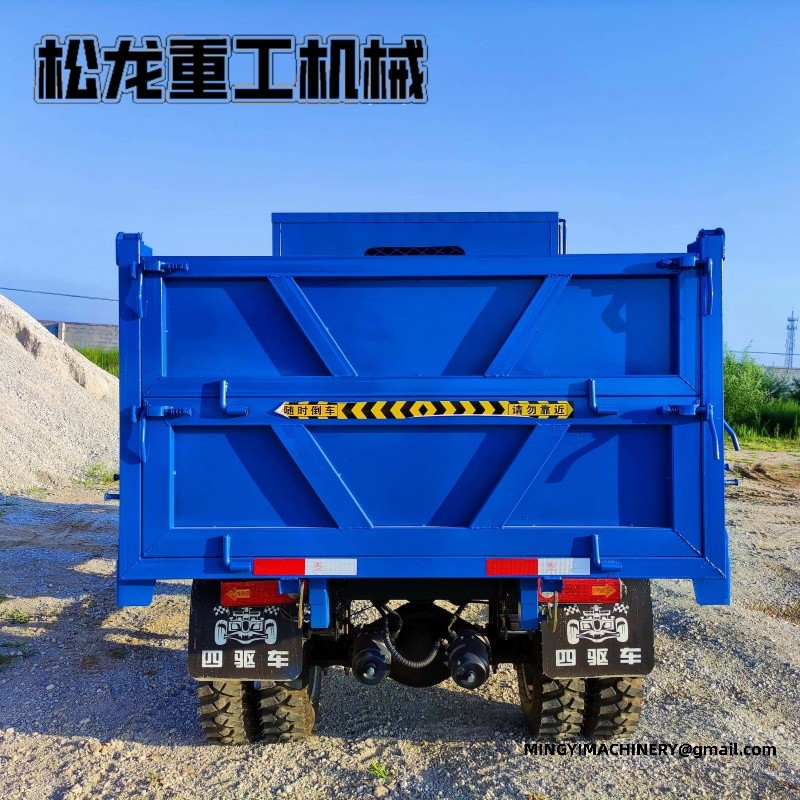
Torque only becomes movement through the contact patches, so tyre choice is part of the specification rather than an afterthought. The 700-16 mountain tyres used on this build carry a block pattern that clears mud and holds on loose stone, which is the surface most of this work happens on. Six-wheel and four-wheel configurations are both available, and the choice follows the ground: more contact area spreads the load and reduces rutting on soft haul roads.
The front axle clutch lets the operator disengage front drive when the machine is running empty on firm ground. Doing that on the return leg reduces tyre scrub and takes load off the front driveline, and it takes no extra effort to build into the routine. On soft ground or a loaded ascent the clutch stays engaged and all wheels pull.
Body dimensions and tipping
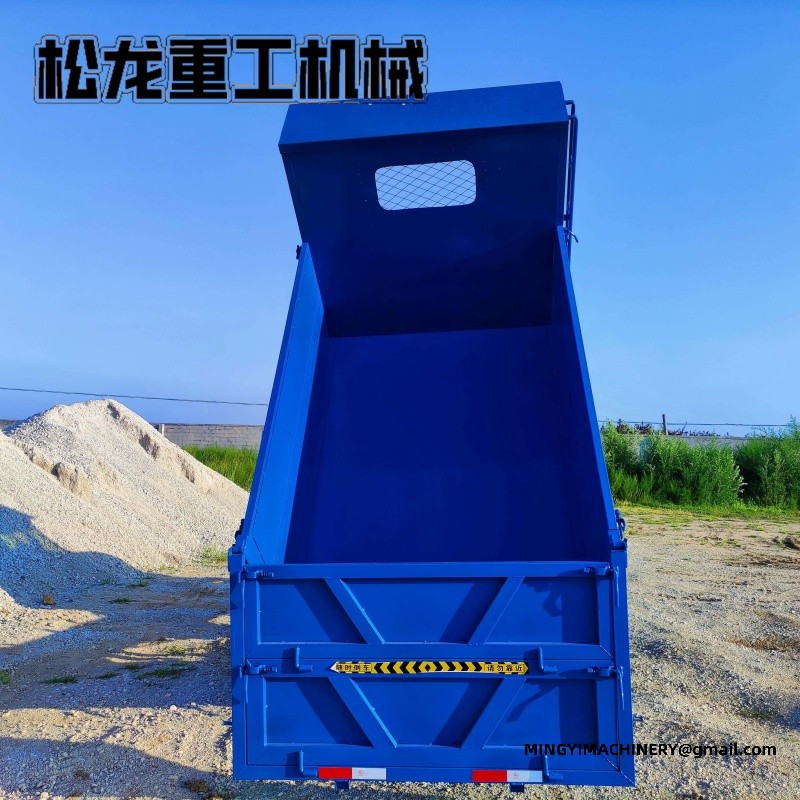
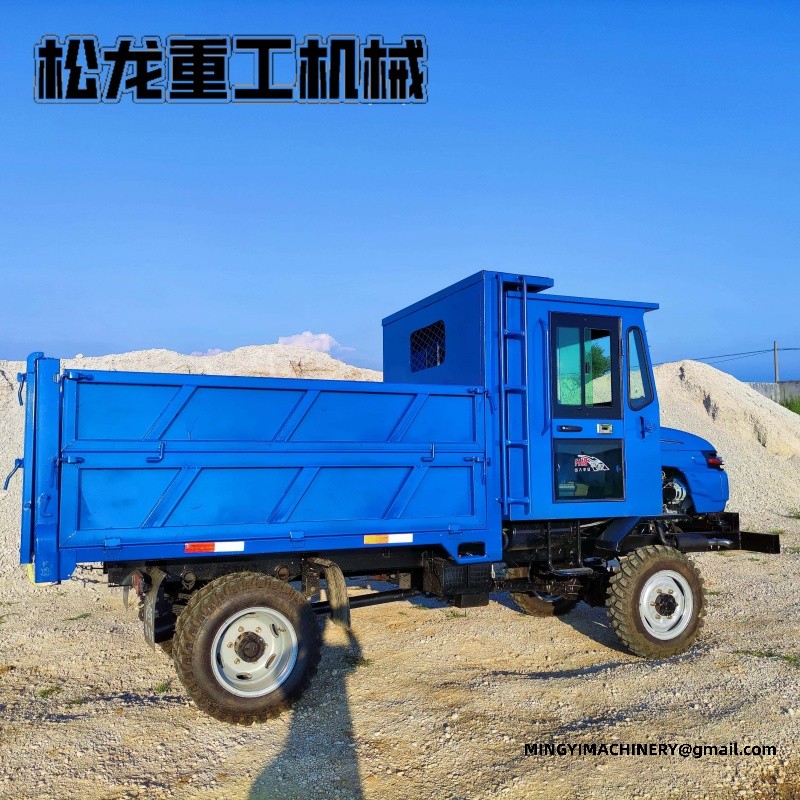
The rear body is built at 2.2 m long, with a choice of 1.8 m or 1.5 m width and a 0.45 m side height. The wider body suits bulky, light material such as green waste, brash or mixed demolition offcuts. The narrower body suits dense material and the gates, tracks and yard entrances where width is the constraint. Both are tipped by twin hydraulic rams rather than a single central ram, which keeps the load stable as the body rises.
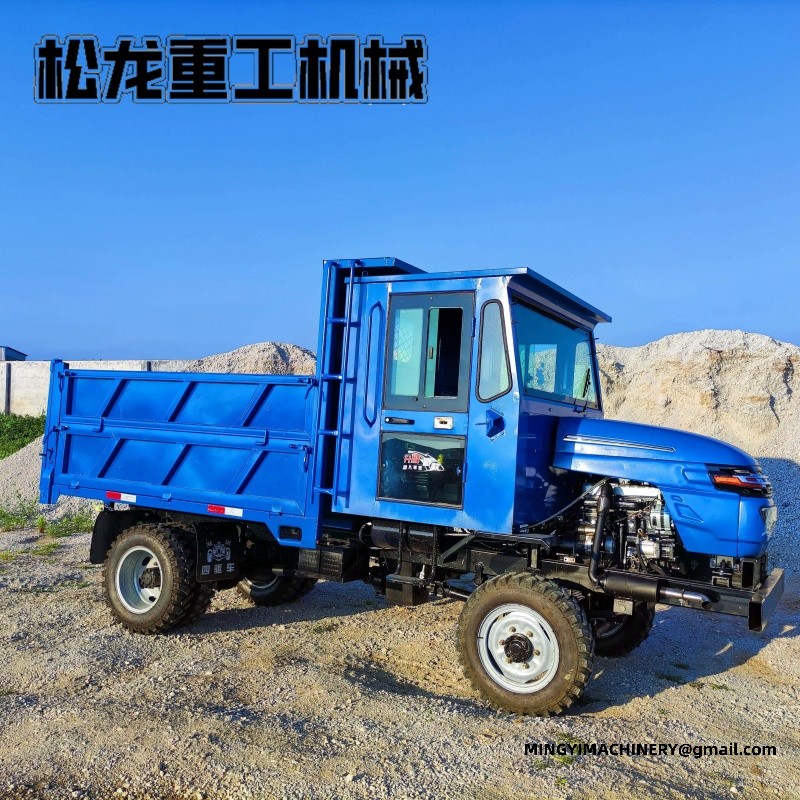
The tailgate is available with a self-dumping function so material can be spread as it leaves, or as a side-opening tailgate for work where the load has to be placed by hand or where the machine cannot reverse all the way to the tip face. Both are build items rather than dealer-fitted extras, and both are confirmed before production.
Cab, steering and the working position
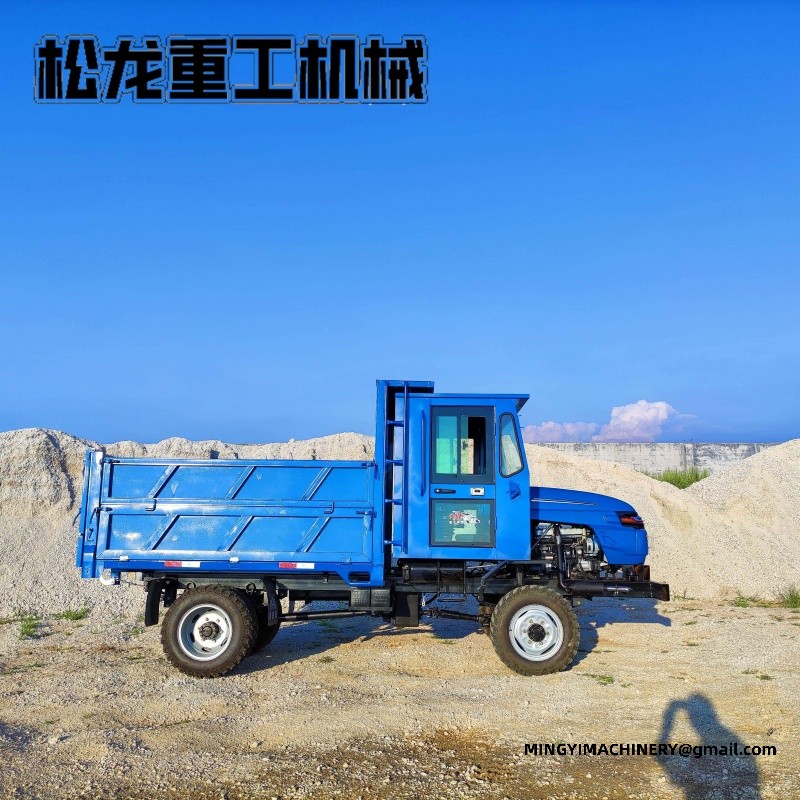
The fully enclosed cab is specified for the dust and weather that come with this duty, and the two-person seat reflects how these machines are actually used: a second person rides along when the job involves spotting, gate opening or a second pair of hands at the tip face. Hydraulic power steering is not a comfort item on a loaded low-speed machine. Steering effort rises sharply when the body is full and the surface is soft, and assistance keeps the machine placeable at crawling speed.
Visibility from the cab matters in the same way. Low-speed work happens close to people, edges and other plant, and the operator needs to see the ground immediately in front of the machine as well as the tip face behind it. Familiarisation should include the view from the seat with a loaded body raised, not only the controls.
Choosing the engine for a torque-led duty
Engine selection on this machine is usually decided by the workshop rather than the brochure. Two buyers can order the same dumper and sensibly choose different power units, because the better answer is the brand the local mechanic already carries parts for. Matching the engine to the duty matters more than the peak rating: a machine that spends its day at part load benefits from a different setup than one that works at full output.
Emissions documentation is part of engine selection for some destinations. Confirming which units can be supplied and documented for the destination country belongs at enquiry stage rather than after the build sheet is signed, because the answer can narrow the engine list.
Specifying the dumper against the job
The specification should be written from the job backwards. The gradient of the haul road, the state of the surface after rain, the material being carried, the number of trips per shift and the distance between load and tip all belong on that list. Writing them down first is what makes two supplier proposals comparable, and it is what prevents the common error of buying for the average month and discovering the shortfall in the busiest week.
Ground conditions deserve a survey rather than an assumption. Soft, wet or loose surfaces call for more contact area and a lower ground pressure, while hard standing allows a narrower machine that turns in less space. A route that is firm in a dry week can be impassable after two days of rain, and the difference shows up as lost trips rather than as a fault.
Fuel and the low-range duty cycle
Low-range work changes where the fuel goes. A geared machine running at reduced speed with a full body burns its fuel over a longer period per trip but with less wheel slip and fewer aborted attempts, and on soft ground that trade is usually favourable. Consumption should be measured over a full week of representative work rather than judged from a single trip, because idle time, queuing at the loading point and repositioning often account for the largest share.
Planning the work to reduce empty movement is the part that takes no extra effort. Fewer repositioning cycles means less fuel, less wear on tyres and driveline, and more of the shift spent carrying material.
Maintenance that follows a high-torque drivetrain
The service schedule for this machine follows the components that carry the multiplied load. Gearbox and axle oil, the clutch, the half-shafts and the frame fasteners deserve attention at the intervals in the handbook, and a machine working ramps every day sits at the demanding end of that schedule. Brake condition is checked with the body loaded rather than empty, because that is the condition the machine actually works in.
Fluid quality is a storage problem before it is a machine problem. Water and sediment in a drum will reach the injection system eventually, and a settling period is trivial next to a pump. Filters, belts, seals and tyres are the items worth holding on the shelf: they are easy to store, slow to source and certain to be needed.
Inspection, documents and delivery
Every machine is inspected on our floor before it is crated. The engine is run to temperature, the hydraulics are cycled through full travel, the brakes are tested with a load on the body, and each function is checked against the build sheet. The sheet that travels with the machine records the configuration as delivered, which is what the workshop needs when a part is ordered in year three rather than the generic catalogue description.
Export packing follows the same logic. The machine is secured against movement, exposed cylinders are protected, and the battery and fluids are left in the right state for the voyage. Packed dimensions, securing points and any dismantling required are settled before the unit leaves the factory, and confirming how many units fit a container is part of that planning.
Running this dumper alongside other machines
Where a fleet already includes dumpers of a different size, standardising on one engine brand and one axle pattern simplifies the parts shelf and the service schedule. Machines that share filters, belts and service intervals are easier to plan around, and a fleet with a documented service history is easier to sell on at replacement time. Replacement timing itself is worth planning: knowing the intended working life lets an owner sell while the machine still has value rather than after a major repair falls due.
The configurations below are the build sheets most often matched to this duty. Engine, gearbox, axles, frame and body dimensions are confirmed together, because the body size and the axle rating have to suit the load before the engine rating matters.
| # | 17.Luxury | 4.Upgraded | 5.Luxury | 7.Upgraded |
|---|---|---|---|---|
| 1 | Four-cylinder 490 diesel engine | Single-cylinder diesel engine, 25 hp | Single-cylinder diesel engine, 25 hp | Single-cylinder diesel engine, 28 hp |
| 2 | Part-time gearbox, selectable 2WD/4WD | Full-time gearbox with four-wheel drive | Part-time gearbox with four-wheel drive | Full-time gearbox with four-wheel drive |
| 3 | High/low range with crawler gear | High/low range with crawler gear | High/low range with crawler gear | High/low range with crawler gear |
| 4 | Fully enclosed cab | Front axle clutch | Enclosed cab | Front axle clutch |
| 5 | Six 700-16 mountain tyres | Fully enclosed cab | Six 700-16 mountain tyres | Fully enclosed cab |
| 6 | Reinforced 130 front axle | Oil brakes | Model 212 front axle | Oil brakes |
| 7 | Reinforced ISUZU-pattern rear axle | Four 700-16 mountain tyres | Model 130 rear axle | Four 700-16 mountain tyres |
| 8 | Air cut-off brakes | Front axle 212 | Air cut-off brakes | Front axle 212 |
| 9 | Reinforced 60 x 140 mm square tube frame | Rear axle 130 | Reinforced 60 x 140 mm square tube frame | Rear axle 130 |
| 10 | Rear body 2.2 m long x 1.8 m wide x 0.45 m high | Reinforced 60 x 140 mm square tube frame | Rear body 2.2 m long x 1.5 m wide x 0.45 m high | Reinforced 60 x 140 mm square tube frame |
| 11 | Tailgate with self-dumping function | Rear body 2.2 m long x 1.5 m wide x 0.45 m high | Tailgate with self-dumping function | Rear body 2.2 m long x 1.5 m wide x 0.45 m high |
| 12 | Side-opening rear body tailgate | Tailgate with self-dumping function | Side-opening rear body tailgate | Tailgate with self-dumping function |
| 13 | Hydraulic power steering | Hydraulic power steering | Hydraulic power steering | Hydraulic power steering |
| 14 | Twin hydraulic rams | Twin hydraulic rams | Twin hydraulic rams | Twin hydraulic rams |
| 15 | Two-person comfort seat | Two-person comfort seat | Two-person comfort seat | Two-person comfort seat |
| 16 | Heavy-duty leaf springs | Twin-battery electric start | Heavy-duty leaf springs | Twin-battery electric start |
| 17 | Twin-battery electric start | Square-nose bonnet | Twin-battery electric start | Square-nose bonnet |
| 18 | Round-nose bonnet | — | Square-nose bonnet | — |
Every line above is a build item rather than an optional extra, and the final sheet is confirmed against the destination, the ground and the load before production. For a specification discussion or a build sheet for this dumper, contact sales@mingycn.com or reach us on LINE (ID: mingyicn).









