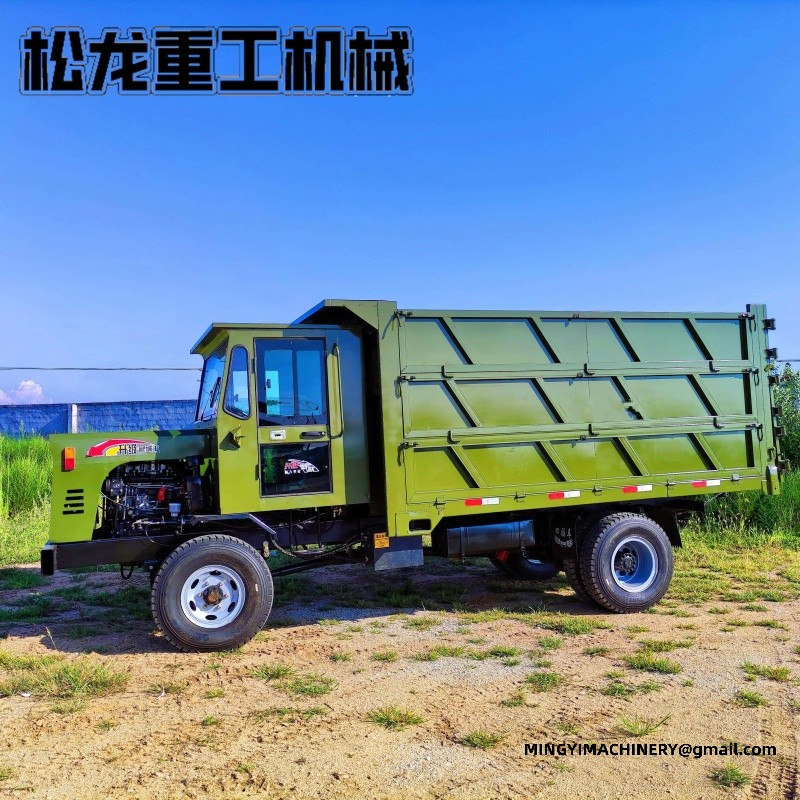
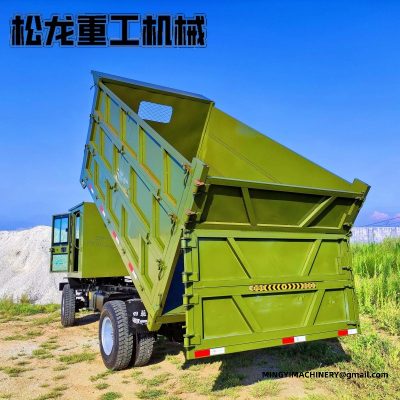
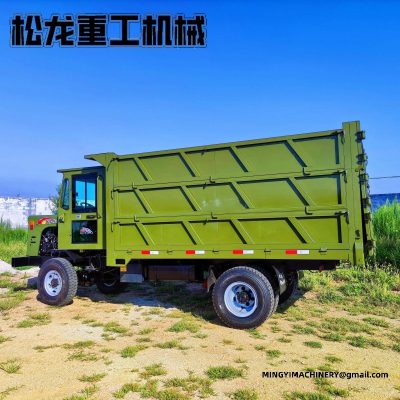
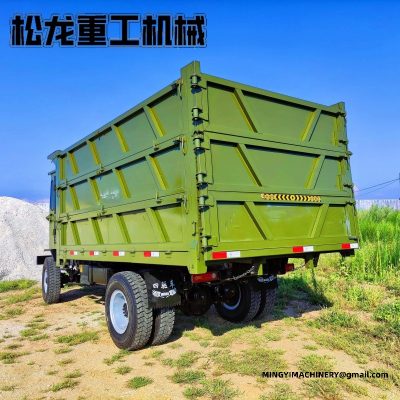
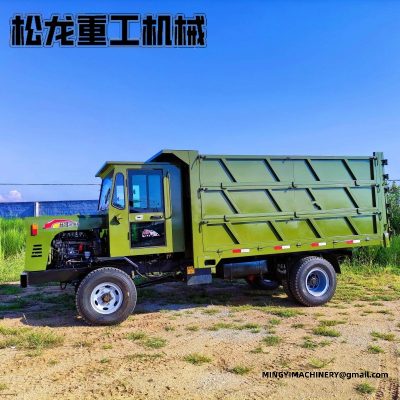
A site dumper is the machine that connects the other machines on a site. It takes whatever the excavator has dug to wherever it has to go, and its day is shaped less by its own capability than by the sequence of work around it. This page looks at what that means for the specification: which of the four configurations suits which part of a site, where the time in a shift actually goes, and the questions worth settling before an order is placed.
Where the shift actually goes
On most sites the dumper spends more of its shift waiting and manoeuvring than travelling. Queuing at the loading point, positioning under the bucket, reversing into a tipping bay and waiting for a route to clear are all part of the cycle, and on a congested site they are most of it. That is why engine rating matters less here than it does on a long haul: the machine that gains the most time is usually the one that is easiest to position rather than the one that travels fastest.
It also means the dimensions matter more than the output figures. A machine that turns in the space available and reverses into the bay without a shunt saves more minutes per cycle than a faster machine that needs three attempts. When a buyer describes a site, the useful details are the width of the route, the room at the tipping point and how many other machines are working the same ground.
Two halves of the range
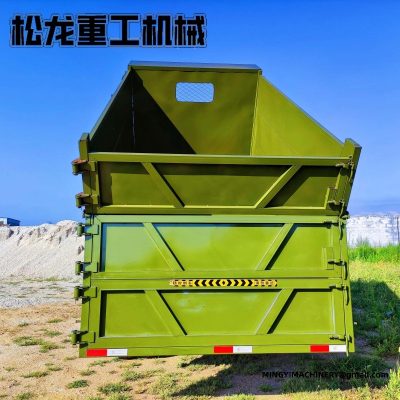
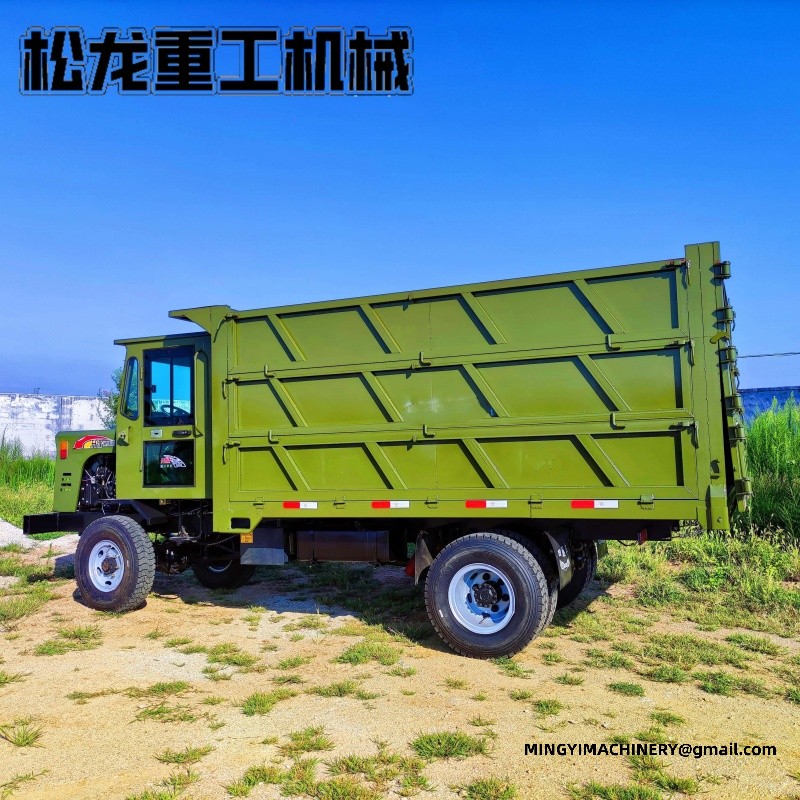
The four configurations divide cleanly into two sizes. The 7.Upgraded and the 8.Luxury sit on the reinforced 60 x 140 mm square tube frame with a rear body 2.2 m long by 1.5 m wide and 0.45 m high. The 18.Standard uses the reinforced 80 x 180 mm frame with a body of the same length and depth but 2.1 m wide, and the 24.Luxury the same frame with a 3.0 m by 2.2 m body. Small sites and tight routes take the first pair; open sites and long runs take the second.
Engines: two singles and two turbocharged fours
Two single-cylinder machines and two turbocharged four-cylinders appear here. The 7.Upgraded and the 8.Luxury use a single-cylinder 28 hp diesel, the 18.Standard a four-cylinder 4102 turbocharged engine and the 24.Luxury a four-cylinder 4108 turbocharged engine. The single-cylinder machines suit short runs, firm ground and a machine that shares the work. The turbocharged engines are the ones for a long haul, a real gradient, or a machine loaded for most of the day, because they hold their pulling power when the load and the slope arrive together.
Drive arrangements and the front axle clutch
The 7.Upgraded uses a full-time gearbox with four-wheel drive and adds a front axle clutch, which lets the driver disengage the front axle when the ground does not need it. The 8.Luxury uses a part-time gearbox selectable between two- and four-wheel drive, the 18.Standard the Model 140 part-time gearbox with four-wheel drive and the 24.Luxury the Model 145 with selectable drive. All four carry high and low range with a crawler gear, and low range is the gear used for positioning rather than travelling.
Brakes, tyres and the route
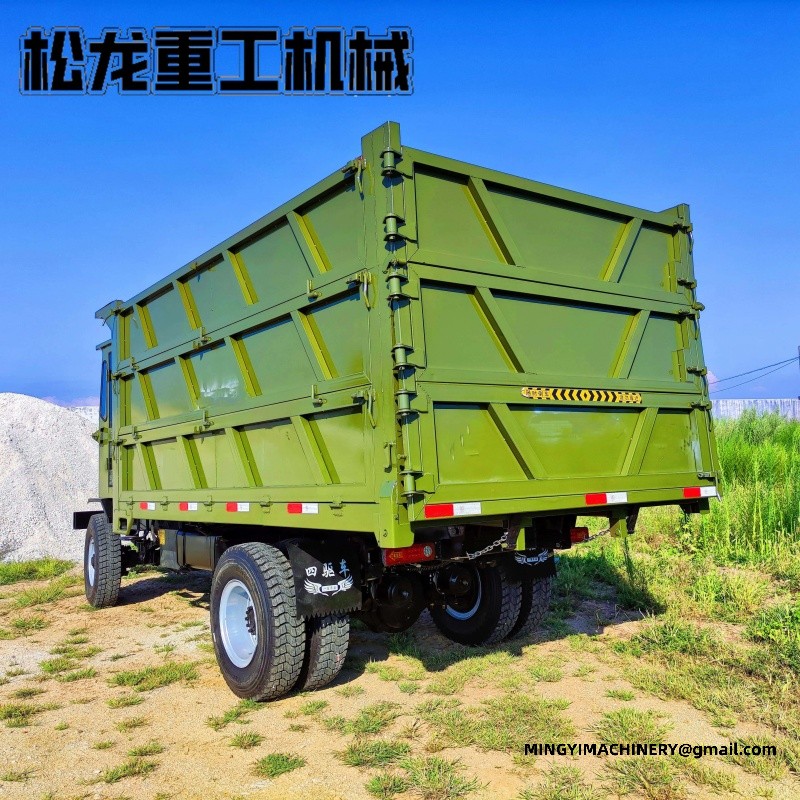
Air cut-off brakes are fitted to the 24.Luxury and the 8.Luxury; the 18.Standard and the 7.Upgraded use oil brakes. Tyres follow the size split: six 825R16 steel-belted radial tyres on the 24.Luxury, six 700-16 mountain tyres on the 18.Standard and the 8.Luxury, and four 700-16 mountain tyres on the 7.Upgraded. The mountain pattern clears mud and loose fill, which is what a site route that is not maintained needs; the radial suits a graded route where the machine covers distance.
Cab, tailgate and the tipping point
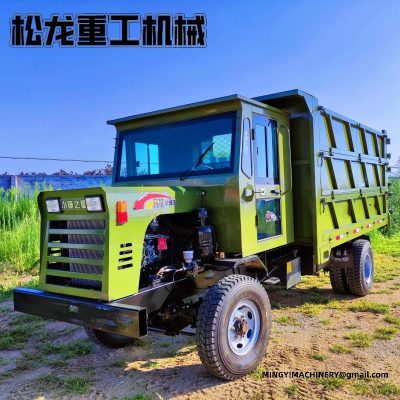
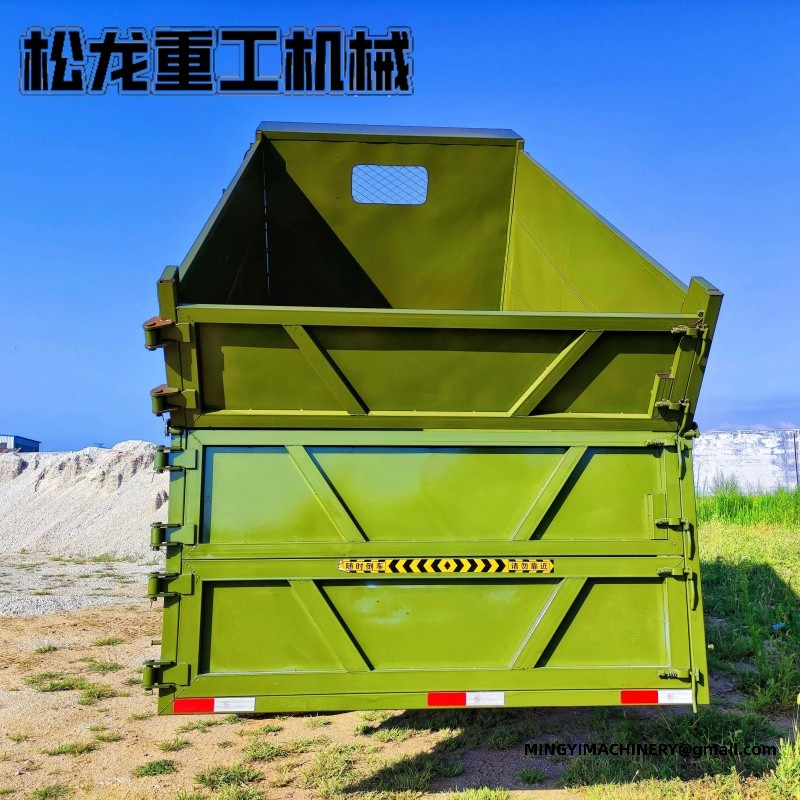
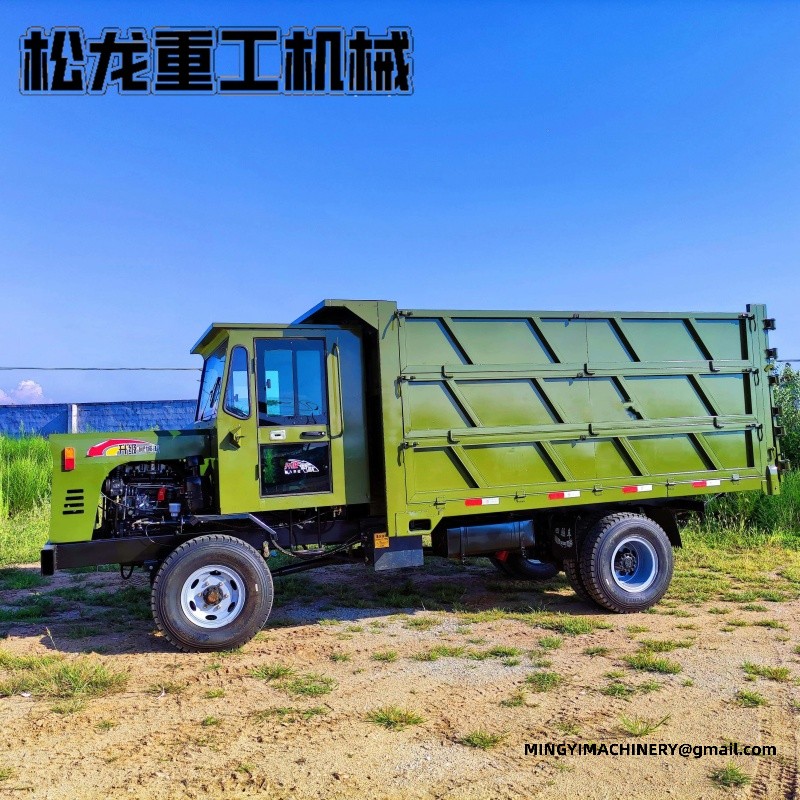
The 24.Luxury and the 7.Upgraded have a fully enclosed cab, the 8.Luxury an enclosed cab and the 18.Standard a simple cab. All four carry hydraulic power steering, a two-person comfort seat and twin-battery electric start. The 24.Luxury and the 8.Luxury add a side-opening rear body tailgate, and the 24.Luxury pairs it with a cab ladder, which lets a driver place material along an edge or into a trench and makes checking the body a practical job rather than a skipped one.
Tipping, reversal and the shape of the bay
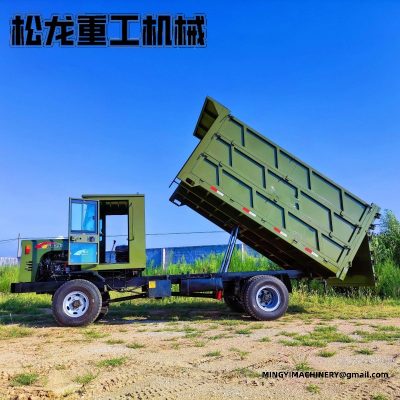
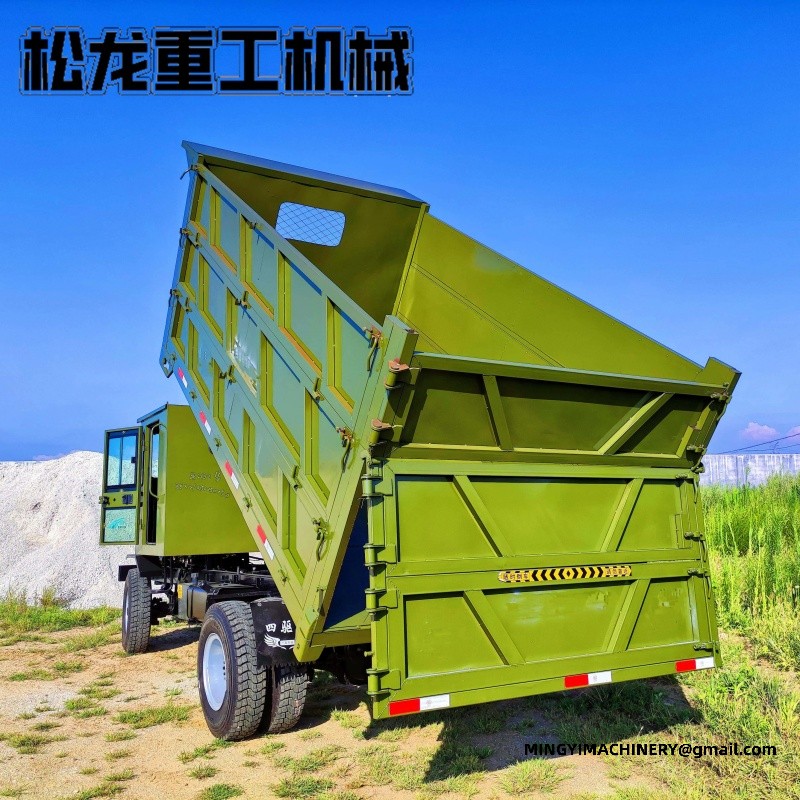
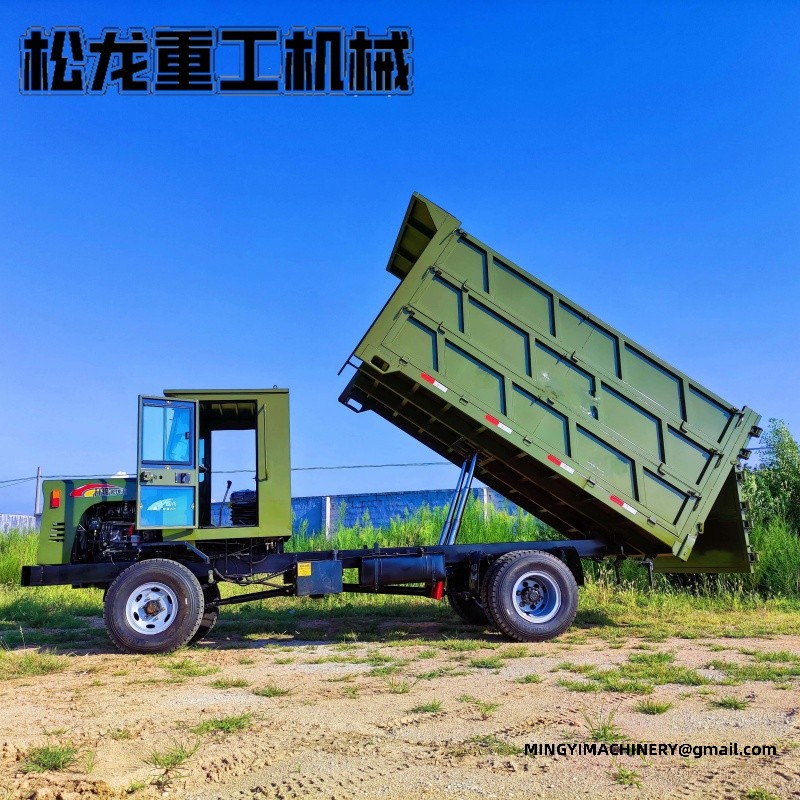
Most of the time lost at a tipping point is lost before the body goes up: reversing into the bay, squaring the machine and checking the ground. A body lifted on a camber puts the weight onto the downhill side, and the safe habit is to position pointing up or down the slope rather than across it. Every configuration has a tailgate with a self-dumping function, which starts the load leaving before the body reaches full height and shortens the time the machine spends raised.
Twin hydraulic rams lift the body on all four, which is what allows a load that has shifted to one side to be lifted without twisting the body. After a rough route that is the normal case rather than the exception, and it is the reason the ram mountings are the first thing to look at during a walk-around rather than the last.
Matching the body to the machine that loads it
A site dumper is half of a pair, and the cycle belongs to whichever half is slower. Matching the body to the excavator bucket is the practical way to size it: a body that takes too many buckets to fill keeps the excavator waiting, and one that is filled in a single pass is carrying less than it could. Where the buyer knows which machine will do the loading, that fact settles the body question more reliably than any rule of thumb about machine size.
Congestion and working alongside other trades
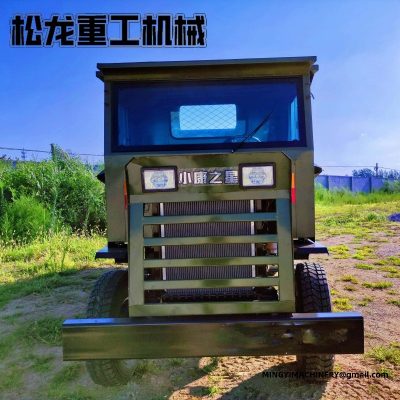
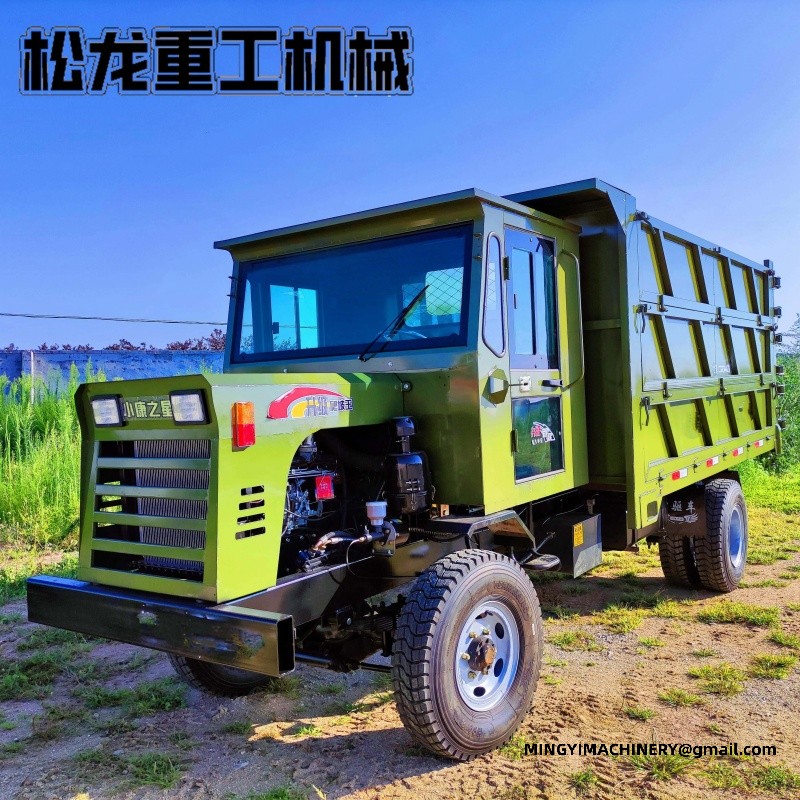
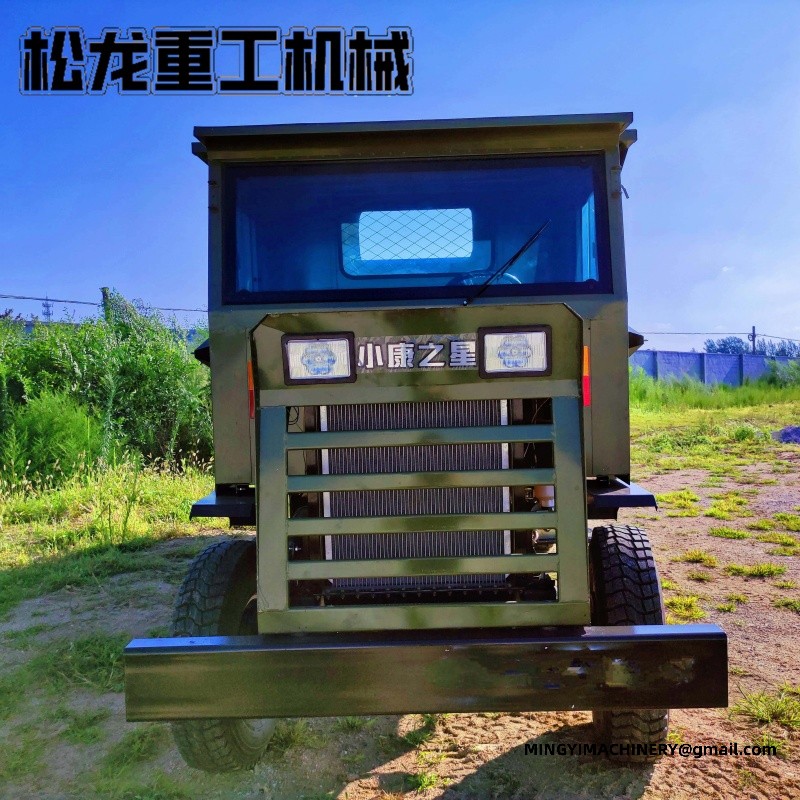
A dumper on a busy site shares the ground with deliveries, other trades and pedestrians, and the specification that helps is the one that makes the machine predictable: power steering, good sight lines and low speed control in the crawler gear. Bonnet shape plays a part here — all four use the square-nose bonnet, which is what a driver sights over when placing the machine. Heavy-duty leaf springs on the 24.Luxury and the 8.Luxury take the repeated impact of a loaded body landing.
Ground that changes during the job
The route on a site is rarely the same in week one and week six. Ground that started firm is worked into soft fill, a drain gets cut across the track, and the tipping point moves. A machine specified for the best condition will struggle in the worst, and the tyres and drive are the two decisions that are cheapest to get right at order stage. Where the ground is expected to deteriorate, the wider tyre footprint is the specification to ask for.
What a driver should be shown on day one
Most incidents with machines of this size happen in the first week, before a driver has learned where the machine loses stability and how it behaves with a raised body. The familiarisation worth giving covers three things: where the machine tips safely and where it does not, what the crawler gear and the low range are for, and how the tailgate behaves with a load that has stuck. Ten minutes on those three prevents the incidents that otherwise get put down to bad luck.
Daily checks on a busy site
A walk-around at the start of each shift should cover the body and ram mountings, the hydraulic hoses where they run past the body, tyre condition and pressures, brake response and fluid levels, and the tailgate latch. Air filtration needs more frequent attention in dust, and the body floor should be cleaned out rather than left carrying a skin of material. Those few minutes are what keep the machine working through a program rather than being the reason the program slips.
Keeping a second machine simple
Buyers who expect to add a second dumper should settle the driveline on the first order. One engine brand, one axle pattern and one cab mean one parts shelf, one service routine and a driver who can move between machines without relearning the controls. Where duties differ enough to justify two configurations, the useful split is one machine for the long haul and one for the tight work, rather than two sitting in the middle of the range.
Shipping, papers and the check before crating
Export orders add steps a domestic buyer never sees. Packed dimensions, securing points and any dismantling required are settled before the machine leaves the factory, and the commercial invoice, the packing list and any certificate the destination requires are agreed at order stage, because papers that arrive incomplete hold a consignment at the port longer than the voyage took. Before crating, each machine is run: the engine is brought to temperature, the tipping circuit is cycled under load, the brakes are tested with a load, and every function is checked against the build sheet that travels with it.
Which configuration to start from
The decision turns on the route rather than the machine. A tight site with soft ground and short runs points at the 7.Upgraded or the 8.Luxury, both on the smaller frame, and the 8.Luxury adds six tyres and the side-opening tailgate. A long run on a graded route points at the 24.Luxury with the larger body and radial tyres. A site that needs volume without the width points at the 18.Standard and its 2.1 m body.
| # | 18.Standard | 24.Luxury | 7.Upgraded | 8.Luxury |
|---|---|---|---|---|
| 1 | Four-cylinder 4102 turbocharged diesel engine | Four-cylinder 4108 turbocharged diesel engine | Single-cylinder diesel engine, 28 hp | Single-cylinder diesel engine, 28 hp |
| 2 | Model 140 part-time gearbox with four-wheel drive | Model 145 part-time gearbox, selectable 2WD/4WD | Full-time gearbox with four-wheel drive | Part-time gearbox, selectable 2WD/4WD |
| 3 | High/low range with crawler gear | High/low range with crawler gear | High/low range with crawler gear | High/low range with crawler gear |
| 4 | Simple cab | Fully enclosed cab | Front axle clutch | Enclosed cab |
| 5 | Oil brakes | Six 825R16 steel-belted radial tyres | Fully enclosed cab | Six 700-16 mountain tyres |
| 6 | Six 700-16 mountain tyres | Reinforced ISUZU-pattern front axle | Oil brakes | Model 212 front axle |
| 7 | Reinforced ISUZU-pattern front axle | Reinforced 1080 rear axle | Four 700-16 mountain tyres | Model 130 rear axle |
| 8 | Reinforced 1061 rear axle | Air cut-off brakes | Front axle 212 | Air cut-off brakes |
| 9 | Reinforced 80 x 180 mm square tube frame | Reinforced 80 x 180 mm square tube frame | Rear axle 130 | Reinforced 60 x 140 mm square tube frame |
| 10 | Rear body 2.2 m long x 2.1 m wide x 0.45 m high | Rear body 3.0 m long x 2.2 m wide x 0.45 m high | Reinforced 60 x 140 mm square tube frame | Rear body 2.2 m long x 1.5 m wide x 0.45 m high |
| 11 | Tailgate with self-dumping function | Tailgate with self-dumping function | Rear body 2.2 m long x 1.5 m wide x 0.45 m high | Tailgate with self-dumping function |
| 12 | Hydraulic power steering | Side-opening rear body tailgate with cab ladder | Tailgate with self-dumping function | Side-opening rear body tailgate |
| 13 | Twin hydraulic rams | Hydraulic power steering | Hydraulic power steering | Hydraulic power steering |
| 14 | Two-person comfort seat | Twin hydraulic rams | Twin hydraulic rams | Twin hydraulic rams |
| 15 | Twin-battery electric start | Two-person comfort seat | Two-person comfort seat | Two-person comfort seat |
| 16 | Square-nose bonnet | Heavy-duty leaf springs | Twin-battery electric start | Heavy-duty leaf springs |
| 17 | — | Twin-battery electric start | Square-nose bonnet | Twin-battery electric start |
| 18 | — | Square-nose bonnet | — | Square-nose bonnet |
For a specification discussion or a build sheet for this site dumper, contact sales@mingycn.com or reach us on LINE (ID: mingyicn).









