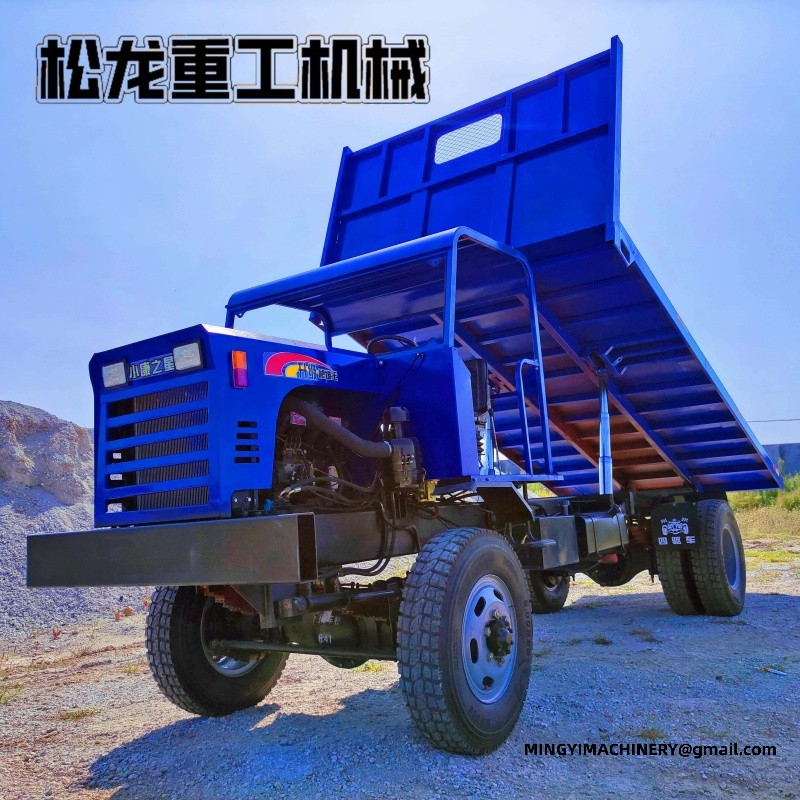
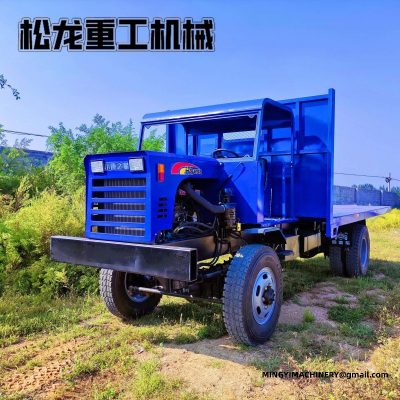
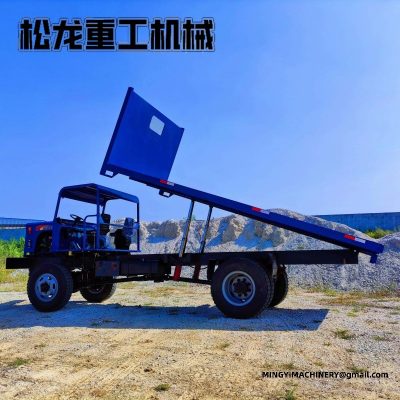
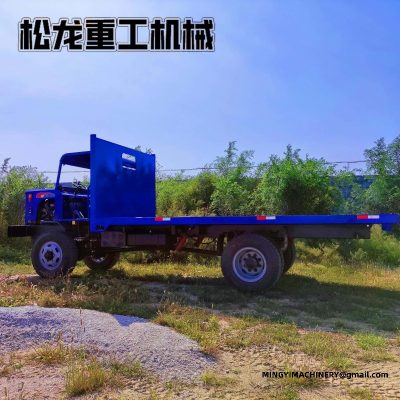
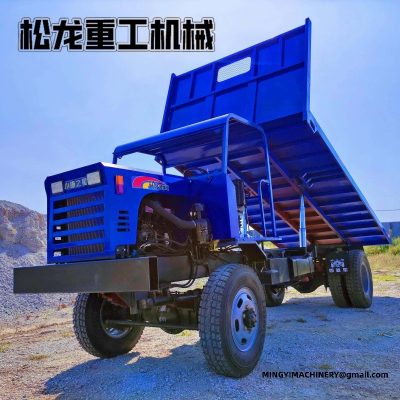
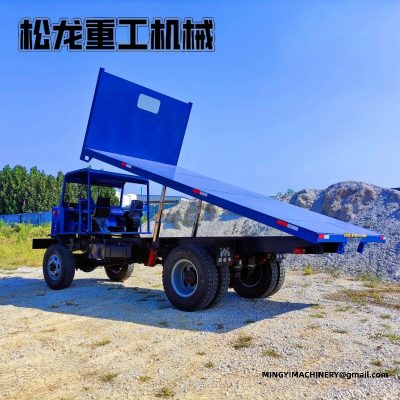
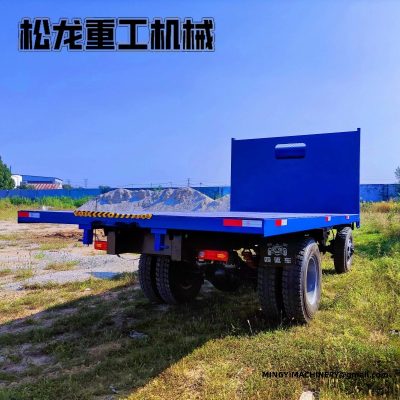
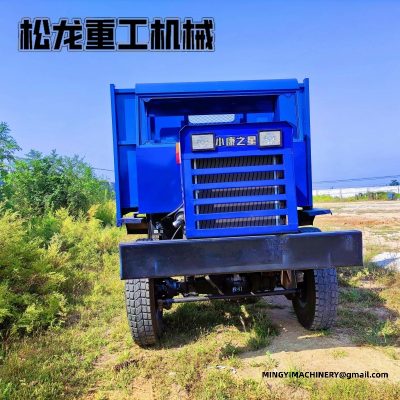
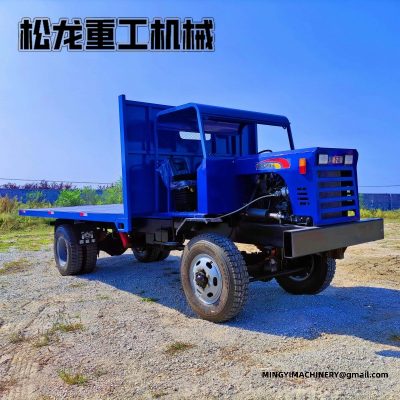
A farm transport truck with a tipping body does two jobs at once. It moves material from one part of a holding to another, and it puts that material where it is wanted rather than where it happens to fall. Both matter on a farm, where the same machine may carry feed in the morning, produce at midday and something altogether less pleasant in the afternoon. This page sets out what that asks of the specification and how the four configurations here differ.
What actually gets moved
The list is longer than it looks from a catalogue. Feed and bedding go out to stock, fertiliser and seed go to the field, produce comes in from it, muck goes to a heap or a spreader, and material for maintenance goes wherever the job is. Each of those is a different shape and a different weight, which is why the body matters more than the engine on this class of machine. The useful question to ask before ordering is which of them dominates, because it decides the body.
The tipping body as a placement tool
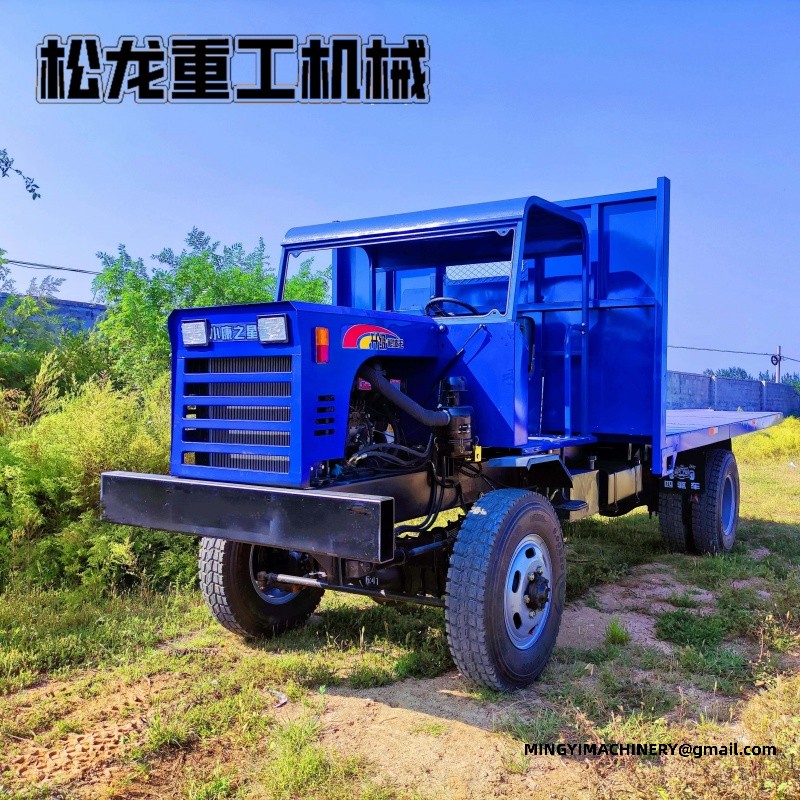
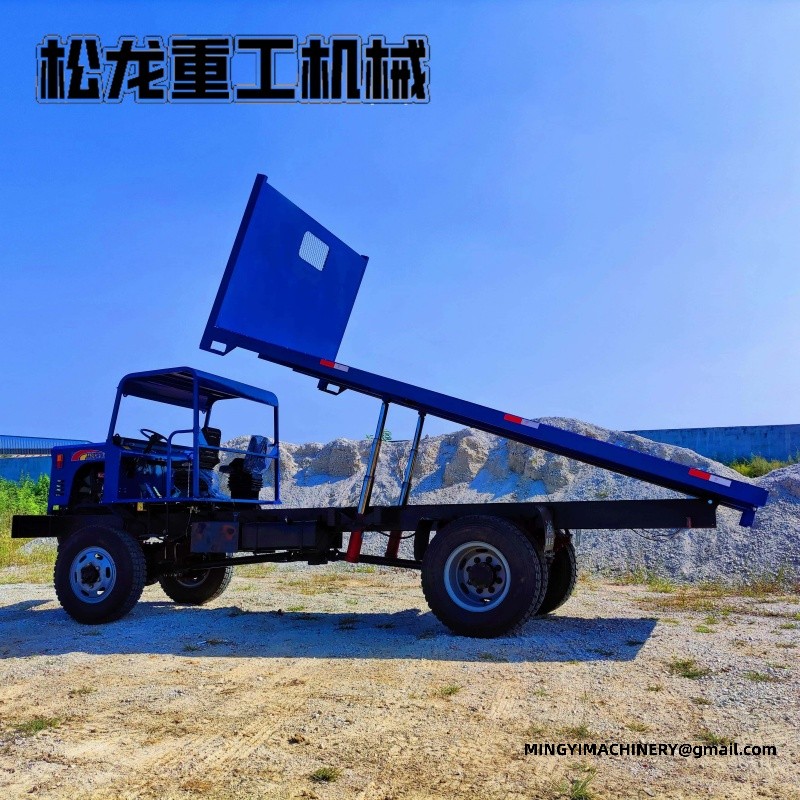
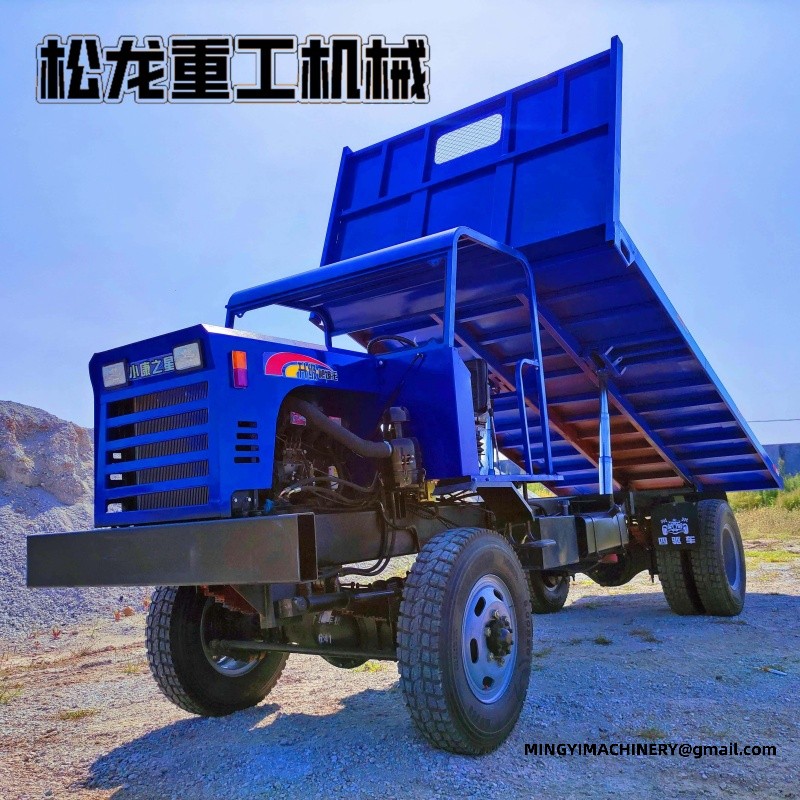
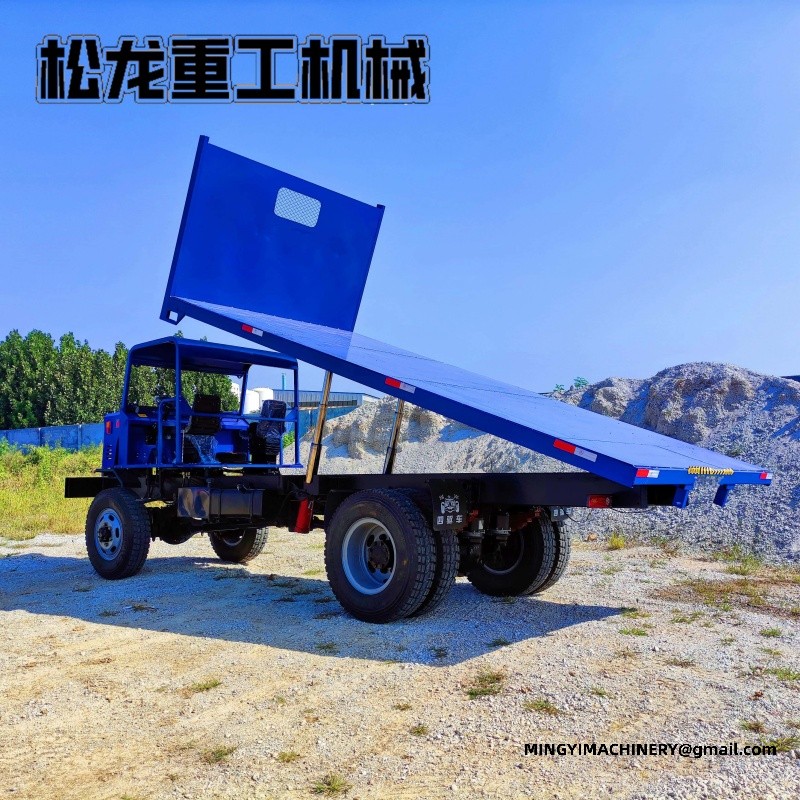
Tipping on a farm is usually about placing material rather than simply getting rid of it. A load tipped along a run rather than in one heap saves a second handling, and a body that can be raised while the machine creeps forward spreads material evenly rather than dumping it. Every configuration here has a tailgate with a self-dumping function, which starts the load leaving before the body reaches full height and gives the driver that control.
Twin hydraulic rams lift the body on all four, which is what allows a load that has settled to one side to be lifted without twisting the body. On a farm that is the common case: a load that was level when it left the yard is rarely level by the time the machine has crossed a field.
Four tyres or six
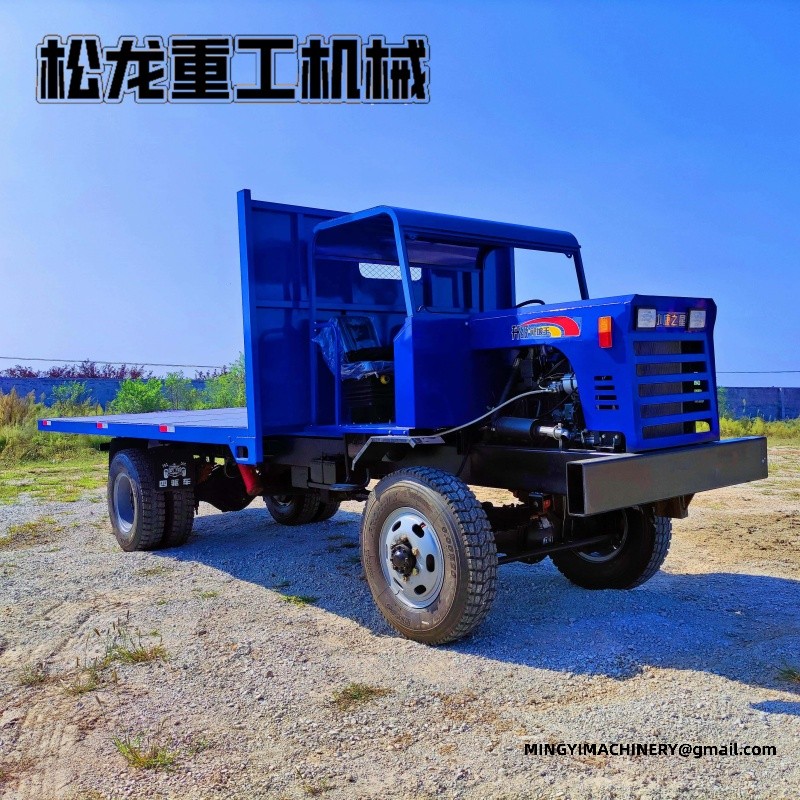
Tyre count is the clearest split in the range. The 12.Standard, the 3.Standard and the 4.Upgraded run four 700-16 mountain tyres; the 18.Standard runs six. Six contact patches spread the weight across more ground, which is what keeps a loaded machine moving on soft going and what reduces the damage it does to a field. Four tyres turn tighter and are easier in a yard. Where the machine works mostly on tracks and in buildings, four are enough; where it crosses fields, six are worth having.
The four configurations
Two engine ratings and one turbocharged four-cylinder appear. The 3.Standard and the 4.Upgraded use a single-cylinder 25 hp diesel, the 12.Standard a two-cylinder 38 hp, and the 18.Standard a four-cylinder 4102 turbocharged engine. The two single-cylinder machines suit yard work, short runs and a holding where the truck shares the work. The two-cylinder suits a full day of mixed transport, and the turbocharged four-cylinder is the one where the runs are long, the ground is soft or the machine works loaded for most of the day.
Drive arrangements and the front axle clutch
Three of the four use a full-time gearbox with four-wheel drive: the 12.Standard, the 3.Standard and the 4.Upgraded. The 18.Standard uses the Model 140 part-time gearbox with four-wheel drive. The 4.Upgraded also has a front axle clutch, which lets the driver disengage the front axle on firm ground, saving tyre and driveline wear on the road sections between fields. All four carry high and low range with a crawler gear, and on a farm the crawler gear is the one used for feeding and placing rather than for travelling.
Frame, body and the wider body
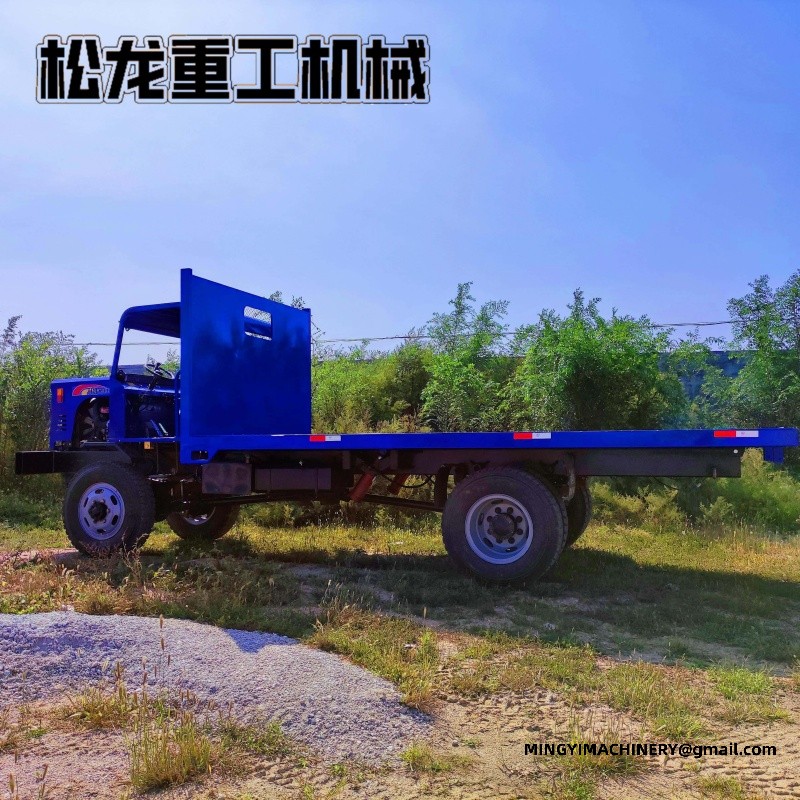
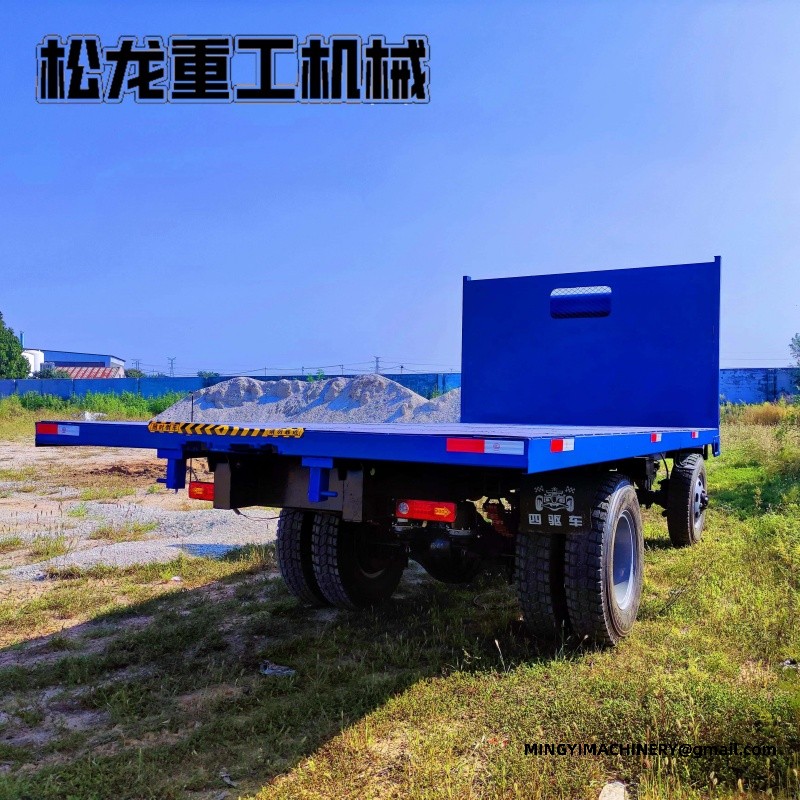
Three of the four sit on the reinforced 60 x 140 mm square tube frame with a rear body 2.2 m long by 1.5 m wide and 0.45 m high. The 18.Standard uses the reinforced 80 x 180 mm square tube frame with a body of the same length and depth but 2.1 m wide. A wider body suits bulky material — bagged feed, bundled items, anything that is wide rather than heavy — and it sits lower, which makes hand loading easier. The narrower body goes through a gateway and turns in a shed.
All four are oil-braked
Every configuration in this range uses oil brakes, which is worth stating plainly because a buyer comparing across a catalogue will see air cut-off brakes elsewhere. On a farm that is not usually the deciding factor: the gradients a farm truck meets are short, the speeds are low and the loads are moderate. What matters more is that the brakes are in good order and that the driver plans the descent before the load goes in rather than during it, using the engine and the crawler gear on the way down.
Cabs: three simple and one enclosed
The 12.Standard, the 18.Standard and the 3.Standard have a simple cab and the 4.Upgraded a fully enclosed cab. All four carry hydraulic power steering, a two-person comfort seat and twin-battery electric start. A simple cab suits a machine used in spells through the day and kept near a building; an enclosed one suits a machine that works a full day in whatever the weather is doing, which on a farm usually means February. Twin-battery start is fitted across the range, which is what makes a cold morning start dependable.
Bonnet shape and the view ahead
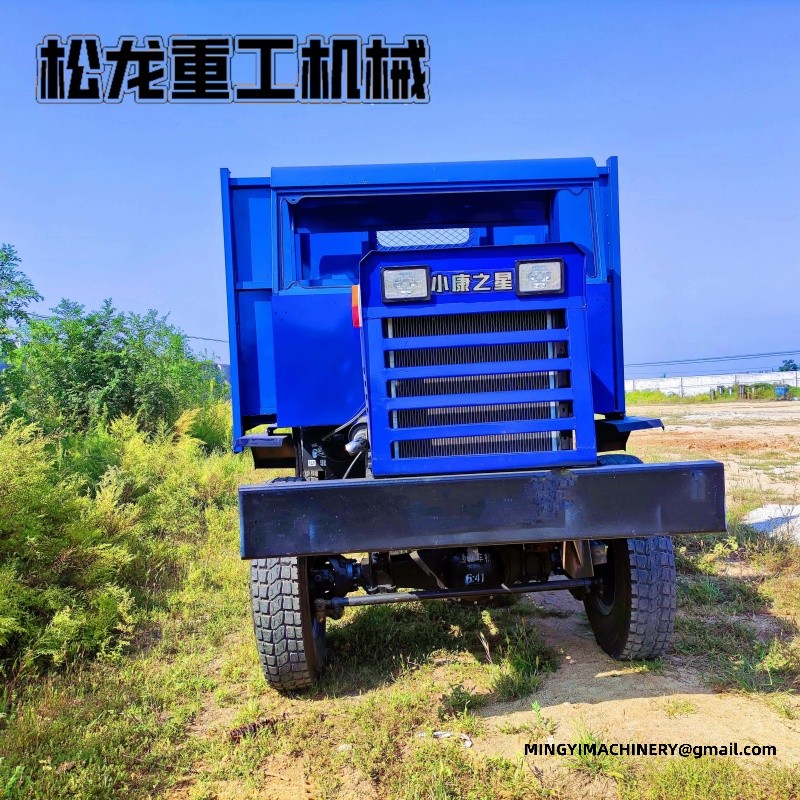
The 12.Standard keeps the round-nose bonnet and the other three use the square-nose. It is a small line on a specification sheet and a real one when reversing into a shed or placing the machine alongside a building, because the bonnet is what a driver sights over. Holdings running more than one machine usually prefer one shape, so that whoever is driving is not relearning the sight lines between vehicles.
Matching the body to what fills it
A farm truck is one half of a pair, and during the busy weeks the cycle belongs to whichever half is slower. Matching the body to the loader bucket is the practical way to size it: a body that takes too many buckets to fill keeps the loader waiting, and one that is filled in a single pass is carrying less than it could. Where the buyer knows what will load the truck, that fact settles the body question more reliably than a general rule about machine size.
A part-loaded body behaves differently
A body that is partly full behaves differently from one that is full, and on a farm it is partly full for much of the day. A light load sits differently, moves more when the machine crosses a rut, and leaves the body more readily than a heavy one. Loading evenly rather than heaping to one side is the habit that matters, and where the load is bulky rather than heavy the wider body is the one that keeps it settled. The same applies at the tip: raise the body according to how the load is behaving rather than by routine.
The busy weeks
During the busy weeks the truck is rarely idle and rarely driven by the same person two days running. That is when a specification either helps or does not: power steering, controls in the same place as on the other machines in the shed, and a body that discharges without the driver having to work at it. Those weeks are also when the daily checks are most likely to be skipped, which is the argument for keeping them to five items and doing them anyway.
Daily checks and seasonal storage
Most of these machines are looked after by the owner rather than under a contract, and the jobs worth doing are the ones that can be done in a shed. At the start of each day: the body and ram mountings, the hydraulic hoses, tyre condition and pressures, brake response and fluid levels, and the tailgate latch. Air filtration needs more attention during harvest dust, and the body floor should be cleaned out rather than left carrying material from one job into the next.
Clean hydraulic oil and greasing on schedule are most of what keeps a tipping body working. A machine that is cleaned and put under cover at the end of a season starts when it is next needed, and one that is left standing with a load in the body usually does not.
Parts, service and the local network
Parts availability usually decides the engine and the axle pattern, and a machine built around components the local network already carries is serviced from stock rather than ordered in. On a farm, a day lost in the wrong week is the difference between a job done and a job missed. Buyers running more than one machine should settle the driveline on the first order, because one engine brand and one axle pattern means one parts shelf and one service routine.
Shipping, papers and the check before crating
Export orders add steps a domestic buyer never sees. Packed dimensions, securing points and any dismantling required are settled before the machine leaves the factory, and the commercial invoice, the packing list and any certificate the destination requires are agreed at order stage, because papers that arrive incomplete hold a consignment at the port longer than the voyage took. Before crating, each machine is run: the engine is brought to temperature, the tipping circuit is cycled under load, the brakes are tested with a load, and every function is checked against the build sheet.
Which configuration to start from
The decision turns on what the machine carries and where. Yard work, short runs and a holding with narrow access point at the 3.Standard or the 4.Upgraded, and the enclosed cab on the 4.Upgraded is the one to specify where the machine works through a winter. A full day of mixed transport points at the 12.Standard and the two-cylinder engine. Bulky loads, soft going and long runs point at the 18.Standard, with the wider body and six tyres.
| # | 12.Standard | 18.Standard | 3.Standard | 4.Upgraded |
|---|---|---|---|---|
| 1 | Two-cylinder diesel engine, 38 hp | Four-cylinder 4102 turbocharged diesel engine | Single-cylinder diesel engine, 25 hp | Single-cylinder diesel engine, 25 hp |
| 2 | Full-time gearbox with four-wheel drive | Model 140 part-time gearbox with four-wheel drive | Full-time gearbox with four-wheel drive | Full-time gearbox with four-wheel drive |
| 3 | High/low range with crawler gear | High/low range with crawler gear | High/low range with crawler gear | High/low range with crawler gear |
| 4 | Simple cab | Simple cab | Simple cab | Front axle clutch |
| 5 | Oil brakes | Oil brakes | Oil brakes | Fully enclosed cab |
| 6 | Four 700-16 mountain tyres | Six 700-16 mountain tyres | Four 700-16 mountain tyres | Oil brakes |
| 7 | Front axle 212 | Reinforced ISUZU-pattern front axle | Front axle 212 | Four 700-16 mountain tyres |
| 8 | Rear axle 130 | Reinforced 1061 rear axle | Rear axle 130 | Front axle 212 |
| 9 | Reinforced 60 x 140 mm square tube frame | Reinforced 80 x 180 mm square tube frame | Reinforced 60 x 140 mm square tube frame | Rear axle 130 |
| 10 | Rear body 2.2 m long x 1.5 m wide x 0.45 m high | Rear body 2.2 m long x 2.1 m wide x 0.45 m high | Rear body 2.2 m long x 1.5 m wide x 0.45 m high | Reinforced 60 x 140 mm square tube frame |
| 11 | Tailgate with self-dumping function | Tailgate with self-dumping function | Tailgate with self-dumping function | Rear body 2.2 m long x 1.5 m wide x 0.45 m high |
| 12 | Hydraulic power steering | Hydraulic power steering | Hydraulic power steering | Tailgate with self-dumping function |
| 13 | Twin hydraulic rams | Twin hydraulic rams | Twin hydraulic rams | Hydraulic power steering |
| 14 | Two-person comfort seat | Two-person comfort seat | Two-person comfort seat | Twin hydraulic rams |
| 15 | Twin-battery electric start | Twin-battery electric start | Twin-battery electric start | Two-person comfort seat |
| 16 | Round-nose bonnet | Square-nose bonnet | Square-nose bonnet | Twin-battery electric start |
| 17 | — | — | — | Square-nose bonnet |
For a specification discussion or a build sheet for this farm transport truck with tipper, contact sales@mingycn.com or reach us on LINE (ID: mingyicn).









