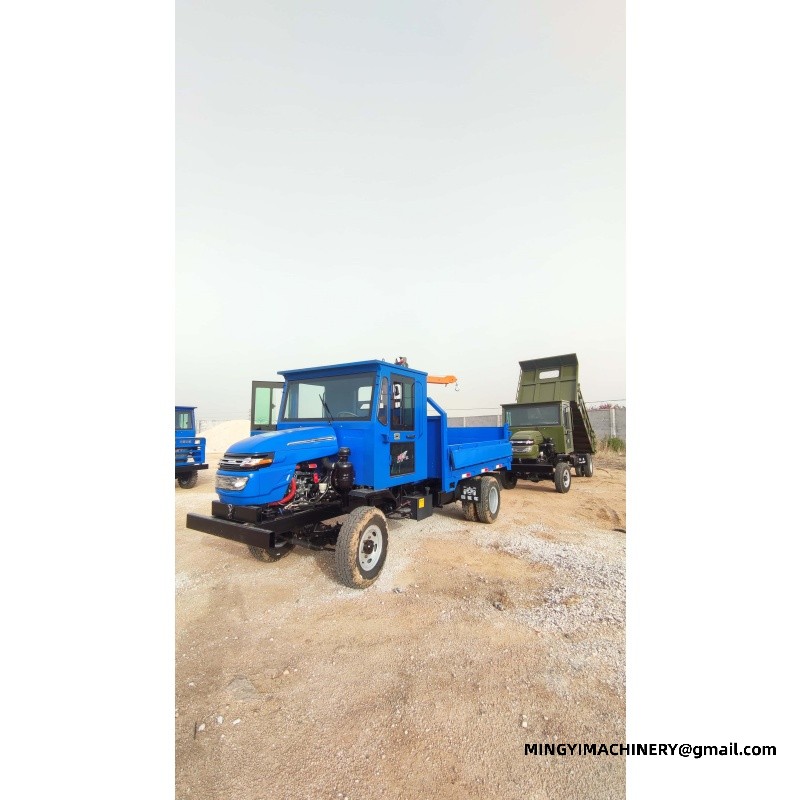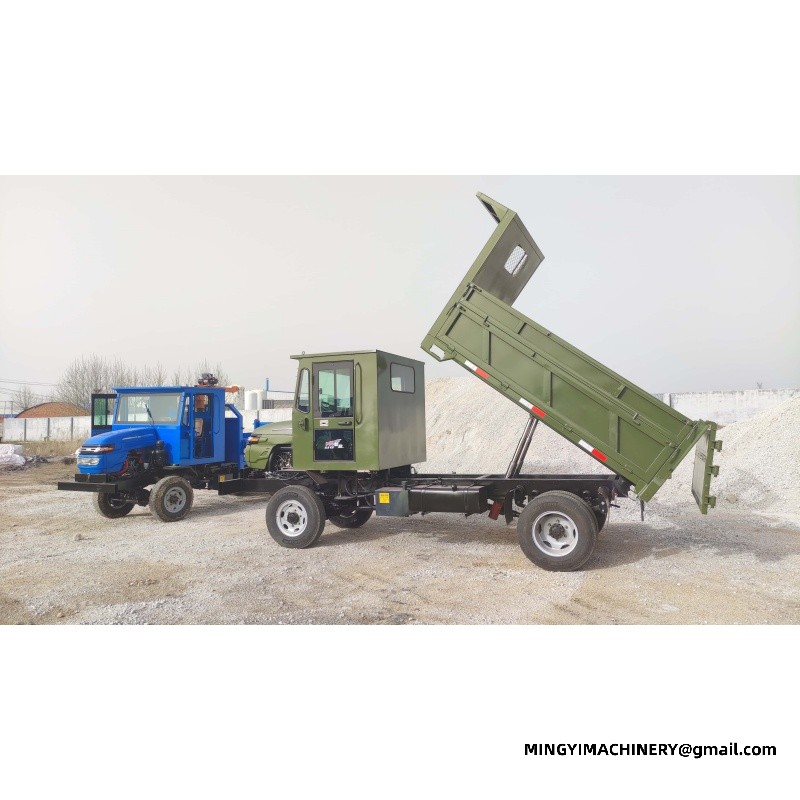
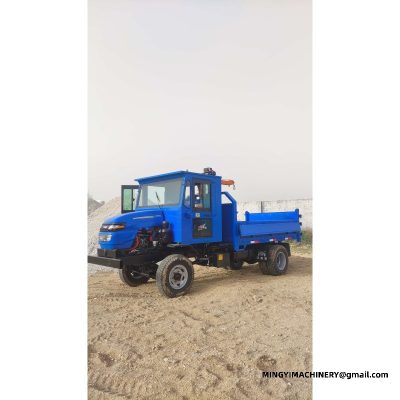
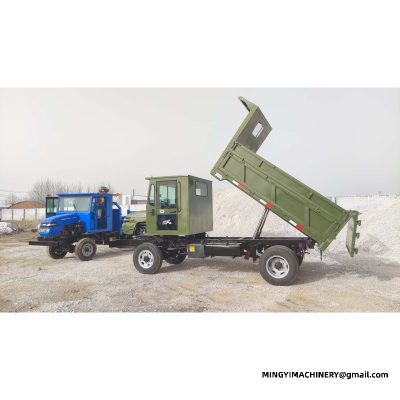
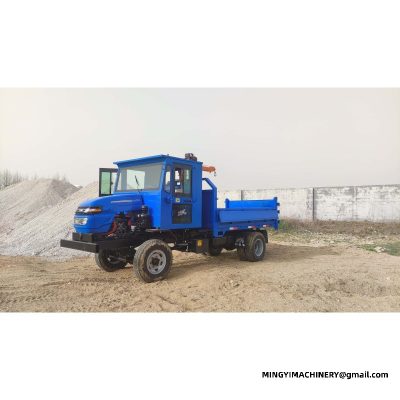
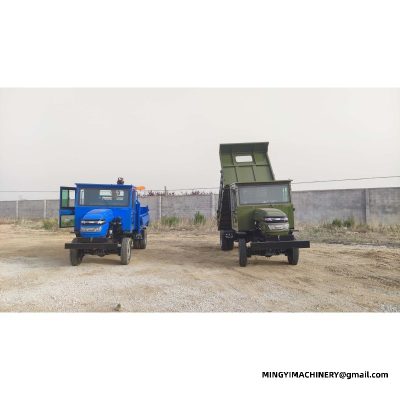
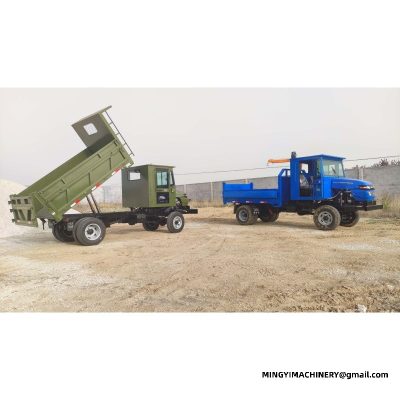
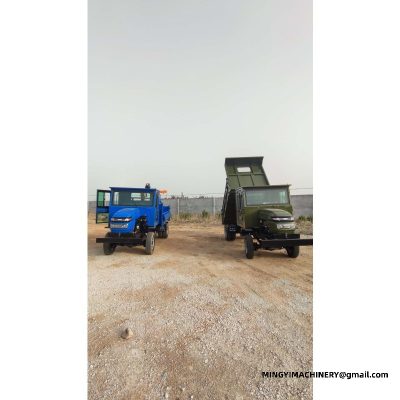
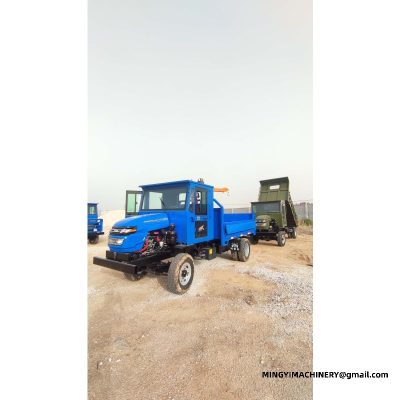
Model MY-4x4-4T · 4 t payload · 72 hp engine
Fitting a water tank to a 4x4 carrier turns it into a machine with a different job: moving water to where dust, seedbeds or a work face need it. The specification is no longer about the body alone. Tank volume, internal baffles, the spray arrangement, where the water is drawn from and how far it has to travel all decide whether the truck covers the ground it is meant to cover in a shift. This page sets out those questions, how the four configurations on the build sheet differ, and what to settle before an order is placed.
What the tank changes about the way the truck behaves
Water is a load that moves. A full tank sits low and behaves predictably, but a part-filled tank surges under braking, on a camber and through a dip, and that surge pushes the truck around in a way a load of aggregate never does. Baffles inside the tank are the answer, and they are specified with the tank rather than added later. Buyers who work sloping haul roads should say so at the ordering stage, because the baffle layout follows the ground the truck will actually run on.
The second difference is where the weight sits. A water load fills the whole footprint rather than piling in one place, so axle loading and brake demand change together. Braking distance with a full tank is not the same as with an empty one, and the driver who has only run the truck empty needs to be told that before the first loaded descent.
Sizing the tank against the run
Tank size is chosen from the run, not from the catalogue. The questions are how much water the job needs per pass, how far it is from the fill point to the spray point, and how many passes fit a shift. A tank that is too small spends the day commuting between the bowser point and the work face. A tank that is too large for the carrier wastes capacity on ground that will not carry it loaded.
The fill point deserves a look before the order is placed. A standpipe, a settlement pond, a river access or a site bowser each impose different hose lengths and different turnaround times, and a job that looked straightforward on paper can lose an hour a day to a difficult fill. Confirming where the water comes from is part of specifying the truck, not an afterthought.
Dust control work
Dust suppression is repetitive and time-critical. The value of the truck is measured in metres of road treated per shift, which depends on the spray width, the travel speed while spraying and the number of return trips. A spray bar mounted at the rear covers a consistent width and lets the driver work alone, while a hand-held lance suits spot work on stockpiles, stock edges and loading points where a truck cannot pass cleanly.
On haul roads the useful pattern is usually a light, frequent pass rather than a heavy one, because a soaked surface breaks up under traffic and a lightly wetted one binds. Operators find the right rate within a day on a given road, and the tank size should be chosen so that the pass rate can be held without running dry halfway through the route.
Irrigation, planting and green work
The same truck serves planting and green work, where the spray pattern matters more than the volume. Newly planted verges, saplings along an access road and reinstated verges after trenching all need water delivered gently and evenly rather than dumped. A lance or a low-pressure bar suits this work, and the tank is usually run part-filled so the truck can move slowly without surging.
Farm and estate buyers often combine the two duties: dust control on the track through the summer and water for stock or planting in the dry months. That combination is worth stating at the ordering stage, because it affects both the spray fittings and the choice of cab.
Choosing between the four configurations
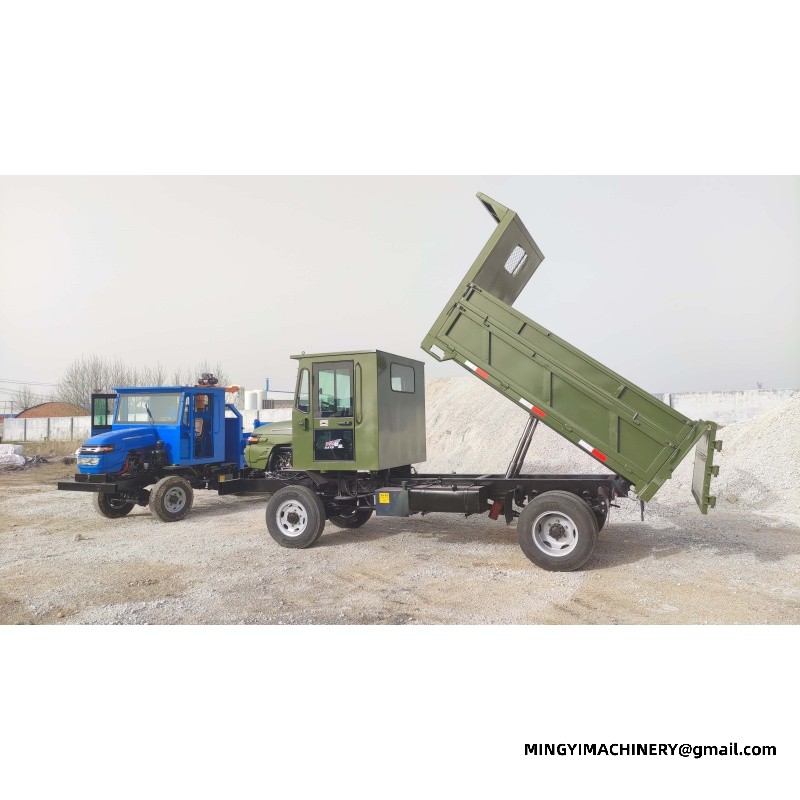
The build sheet lists four configurations, and the differences are practical rather than cosmetic. The two-cylinder 38 hp unit suits light estate and green work where the runs are short and the ground is firm. The four-cylinder 490 engine is the choice for longer haul roads and a tank that runs full most of the day. The single-cylinder 25 hp machine covers small holdings and orchard work where access is tight and the water point is close.
Drive arrangement differs as well. The full-time gearbox with four-wheel drive is specified for trucks that will spend the day on soft or loose ground. The part-time gearbox with selectable 2WD and 4WD suits trucks that travel a firm road between work areas and only need drive at both ends for the last part of the run. Running in two-wheel drive on the firm section saves tyre and driveline wear, and the choice is made from the route.
Cab, brakes and tyres for water work
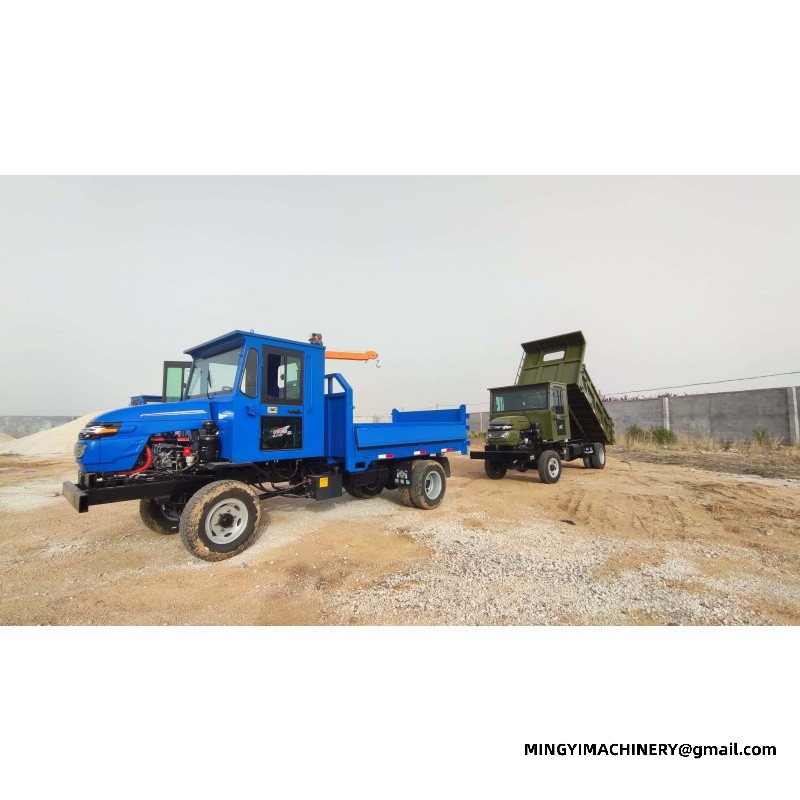
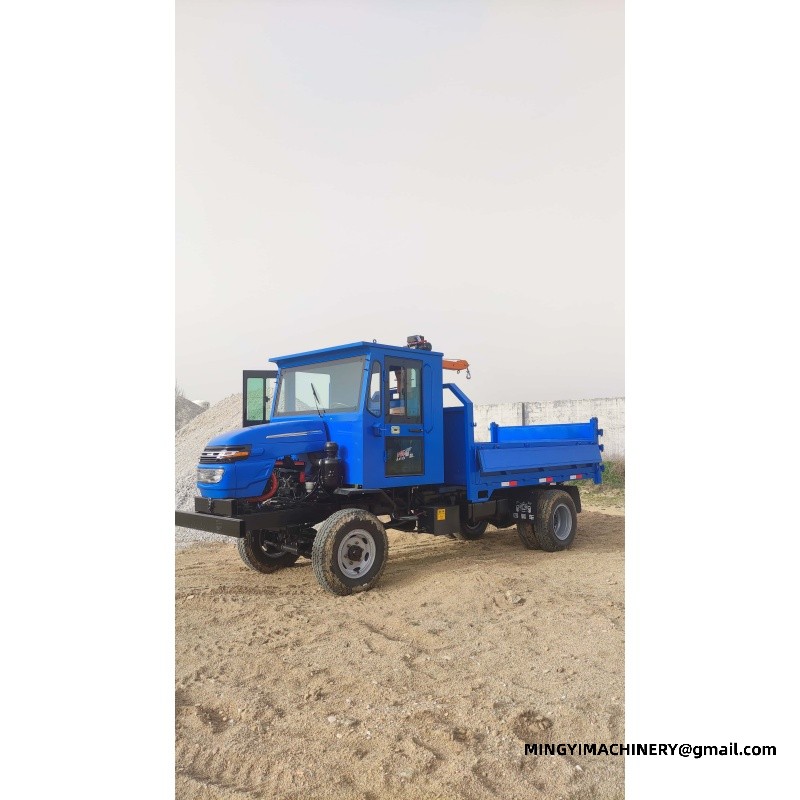
Cab choice follows the hours and the weather. The simple cab suits seasonal, fine-weather work and keeps the machine easy to work on. The fully enclosed cab on the 17.Luxury configuration is the one to specify for year-round dust control, because the driver spends the shift inside a cloud of the dust the truck is there to suppress.
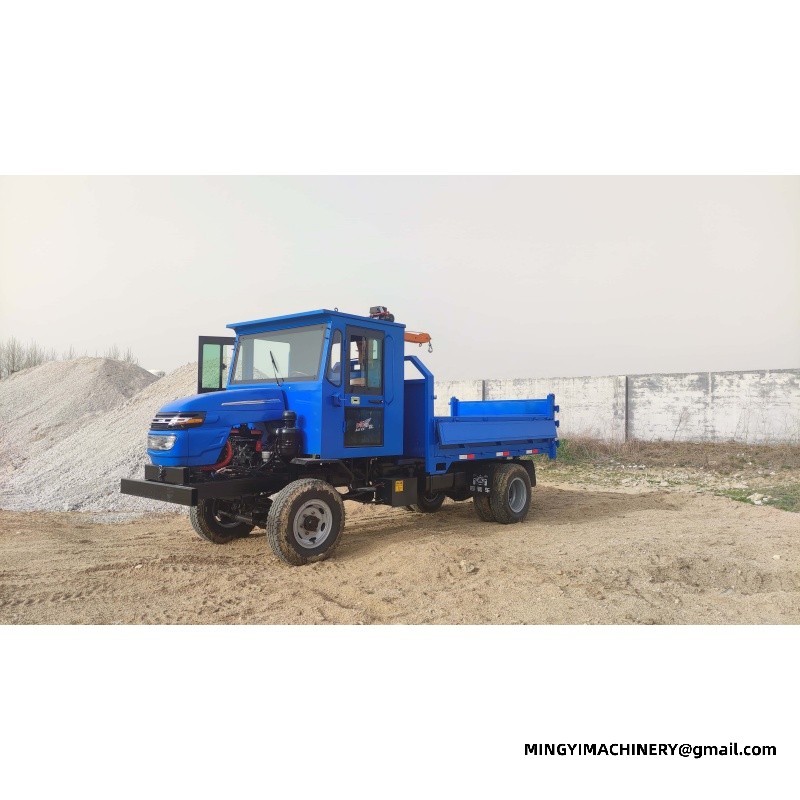
Brakes are specified the same way as the rest of the truck: oil brakes and air cut-off brakes appear on the build sheet because a loaded tank on a gradient needs a holding system the driver can trust. Tyres matter more than most buyers expect. The 700-16 mountain tyres clear the mud that a road pattern packs with, and on a water truck that is working wet ground by definition, the pattern is what keeps the truck moving.
Frame, axles and the body the tank sits on
The tank is mounted on the same reinforced 60 x 140 mm square tube frame used across the range, with the front axle 212 and rear axle 130 pattern, or the reinforced 130 front axle and reinforced ISUZU-pattern rear axle where the duty is heavier. Axle rating and tank size are confirmed together: the water, the tank shell and the frame have to be considered as one load before the engine rating is discussed.
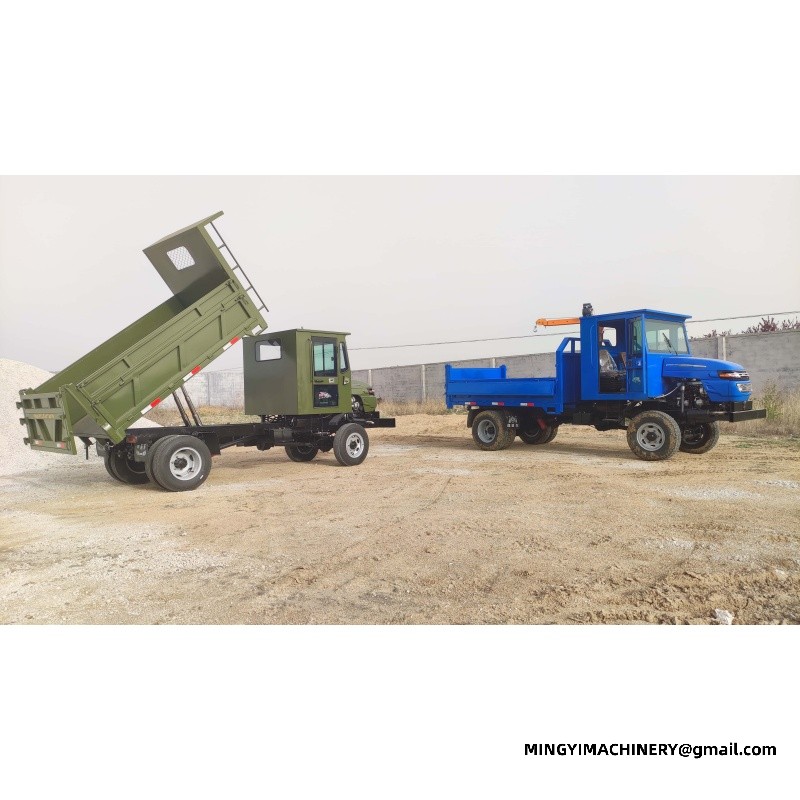
The rear body dimensions of 2.2 m long by 1.5 m or 1.8 m wide and 0.45 m high define the footprint the tank or the tipping body sits within. A tailgate with a self-dumping function is available where the truck is also used to carry material rather than only water, which is a common pattern on sites that need both.
Stability and the liquid load
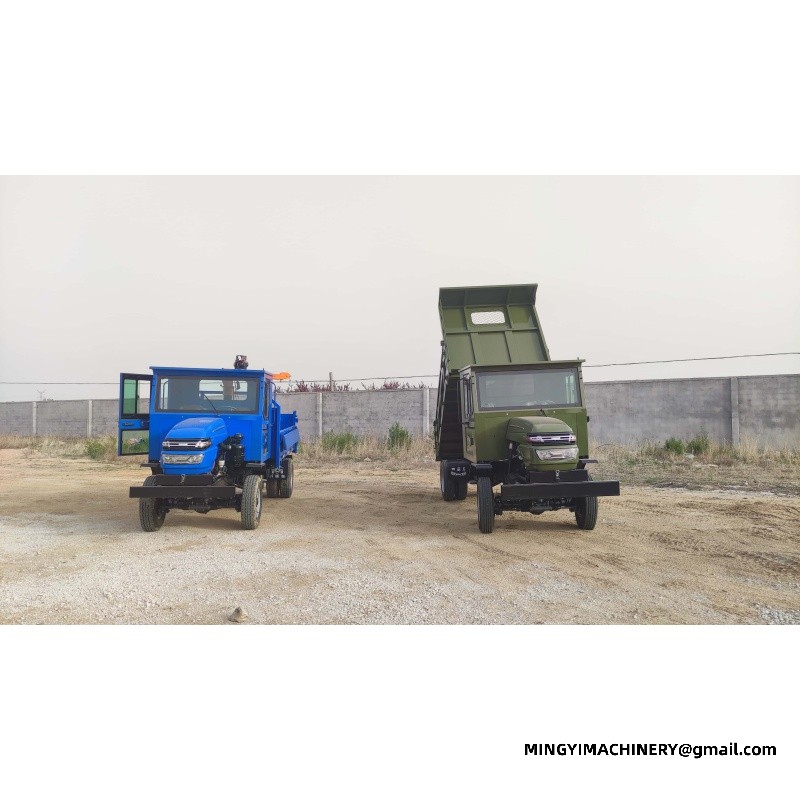
Stability on a water truck has an extra term that a tipping dumper does not: the free surface of the liquid. Carrying a part-filled tank across a camber or around a tight bend shifts weight sideways as the water moves, and the driver feels it as a truck that leans and then recovers. Baffles reduce it, but they do not remove it, and the sensible practice is to run either reasonably full or genuinely empty on sloping ground rather than half full.
Speed on the haul road should follow the load. On a route with cambers, dips or a tight turn at the bottom of a ramp, the conservative speed is the right one, and it takes less time than a spill or a truck that has to be recovered from a soft verge.
Frost, standing water and the off-season
Water is the one load that has to come out of the machine at the end of the season. A tank, a pump body and the low points of a spray line left full over a frost will split, and the split is usually discovered in the spring when the truck is needed again rather than in the autumn when it was parked. Draining the tank, the pump and the pipework, and leaving the valves open so nothing traps in a low section, is the whole of the winter preparation. On a truck that works intermittently through the cold months, the same draining applies to any week it stands unused.
Standing water leaves a film and then sediment inside the tank, and a truck that draws from a settlement pond or a river access builds that film faster than one fed from a standpipe. Rinsing the tank when the water source changes, and checking the strainer on the suction side before the pump is asked to prime, are short jobs that prevent a blocked spray line part way through a shift. Sediment that reaches the nozzles shows up first as an uneven spray pattern, which from the cab on a dust route is easy to miss and from the ground is obvious.
Daily checks that follow water duty
A water truck accumulates problems that a dry one does not. Tank mountings loosen with constant movement, valves and couplings leak, spray nozzles block, and any water left standing in a tank over a long idle period leaves sediment behind. A walk-around at the start of each shift should cover the mountings, the pipework, the spray fittings and the fluid levels, and it takes two minutes.
Filtration deserves attention on quarry and tunnel work, where the dust load is the reason the truck is there in the first place. Air filtration, brake condition and body wear all need checking more often in abrasive conditions, and the tank and pump should be drained and cleaned on a schedule rather than when something blocks.
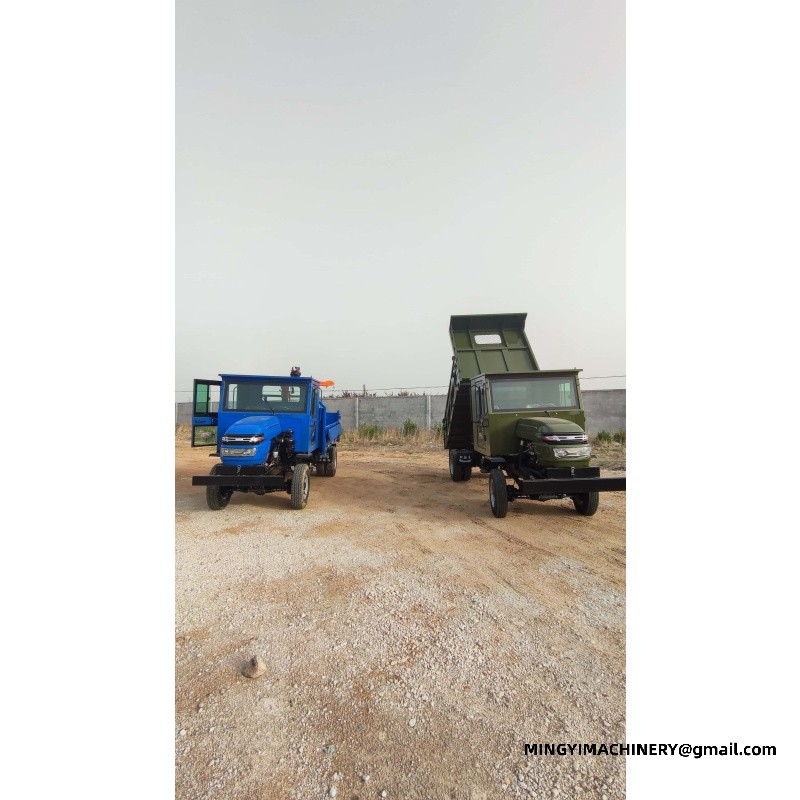
Documents, delivery and running the truck in a fleet
Every truck is inspected on our floor before it is crated: the engine is run to temperature, the hydraulics and the spray circuit are cycled, the brakes are tested with a load, and each function is checked against the build sheet. The sheet that travels with the truck records the configuration as delivered, which is what a workshop needs when a fitting is replaced in year three.
Export orders add steps a domestic buyer never sees. Packed dimensions, securing points and any dismantling required are settled before the truck leaves the factory, and confirming how many units fit a container is part of that planning. Where a fleet already runs machines from the same range, standardising on one engine brand and one axle pattern keeps the parts shelf and the service schedule simple, and a documented service history is what supports the resale value at replacement time.
| # | 12.Standard | 15.Standard | 17.Luxury | 3.Standard |
|---|---|---|---|---|
| 1 | Two-cylinder diesel engine, 38 hp | Four-cylinder 490 diesel engine | Four-cylinder 490 diesel engine | Single-cylinder diesel engine, 25 hp |
| 2 | Full-time gearbox with four-wheel drive | Full-time gearbox with four-wheel drive | Part-time gearbox, selectable 2WD/4WD | Full-time gearbox with four-wheel drive |
| 3 | High/low range with crawler gear | High/low range with crawler gear | High/low range with crawler gear | High/low range with crawler gear |
| 4 | Simple cab | Simple cab | Fully enclosed cab | Simple cab |
| 5 | Oil brakes | Oil brakes | Six 700-16 mountain tyres | Oil brakes |
| 6 | Four 700-16 mountain tyres | Four 700-16 mountain tyres | Reinforced 130 front axle | Four 700-16 mountain tyres |
| 7 | Front axle 212 | Front axle 212 | Reinforced ISUZU-pattern rear axle | Front axle 212 |
| 8 | Rear axle 130 | Rear axle 130 | Air cut-off brakes | Rear axle 130 |
| 9 | Reinforced 60 x 140 mm square tube frame | Reinforced 60 x 140 mm square tube frame | Reinforced 60 x 140 mm square tube frame | Reinforced 60 x 140 mm square tube frame |
| 10 | Rear body 2.2 m long x 1.5 m wide x 0.45 m high | Rear body 2.2 m long x 1.5 m wide x 0.45 m high | Rear body 2.2 m long x 1.8 m wide x 0.45 m high | Rear body 2.2 m long x 1.5 m wide x 0.45 m high |
| 11 | Tailgate with self-dumping function | Tailgate with self-dumping function | Tailgate with self-dumping function | Tailgate with self-dumping function |
| 12 | Hydraulic power steering | Hydraulic power steering | Side-opening rear body tailgate | Hydraulic power steering |
| 13 | Twin hydraulic rams | Twin hydraulic rams | Hydraulic power steering | Twin hydraulic rams |
| 14 | Two-person comfort seat | Two-person comfort seat | Twin hydraulic rams | Two-person comfort seat |
| 15 | Twin-battery electric start | Twin-battery electric start | Two-person comfort seat | Twin-battery electric start |
| 16 | Round-nose bonnet | Round-nose bonnet | Heavy-duty leaf springs | Square-nose bonnet |
| 17 | — | — | Twin-battery electric start | — |
| 18 | — | — | Round-nose bonnet | — |
Every line above is a build item rather than an optional extra, and the final sheet is confirmed against the destination, the ground and the duty before production. For a specification discussion or a build sheet for this water tank truck, contact sales@mingycn.com or reach us on LINE (ID: mingyicn).