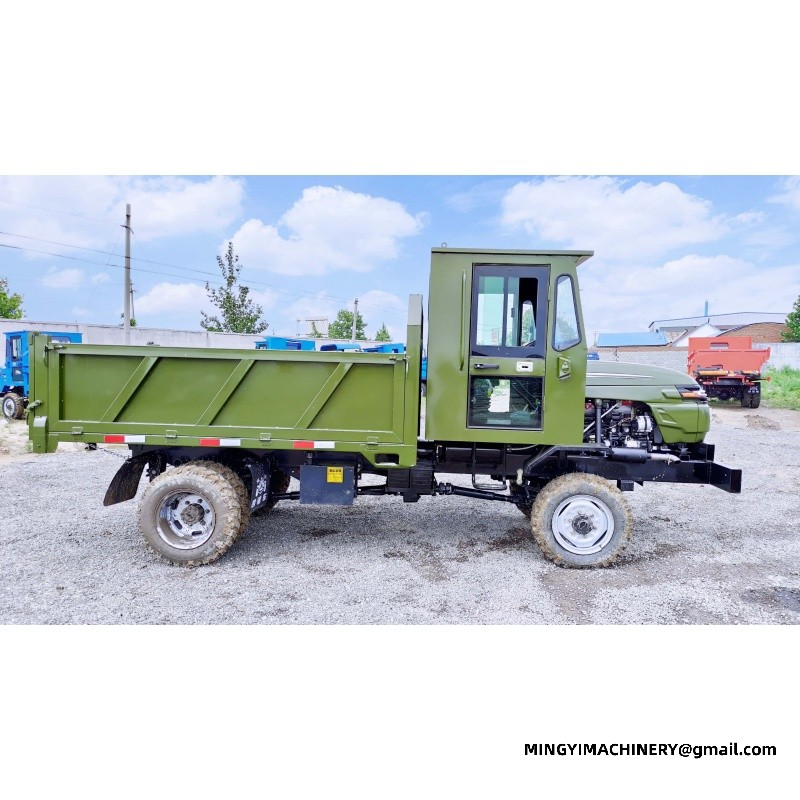
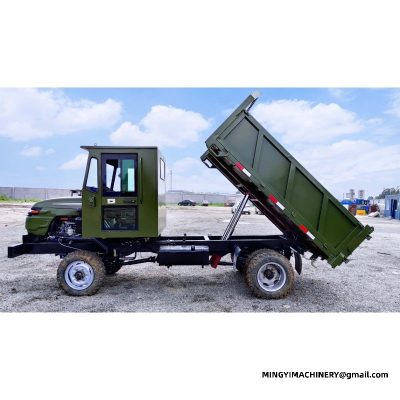
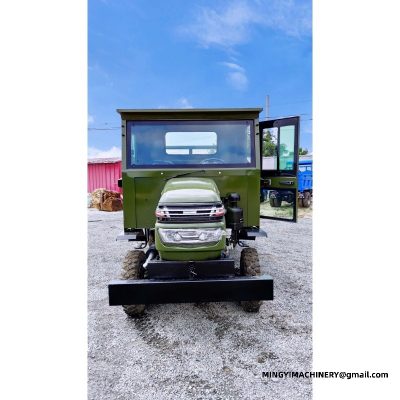
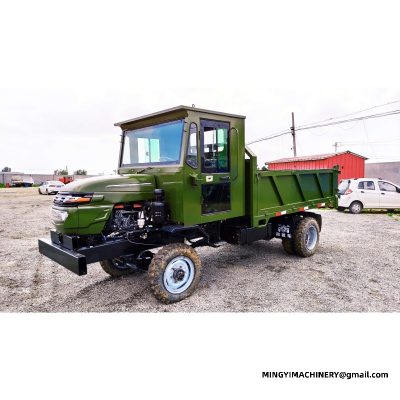
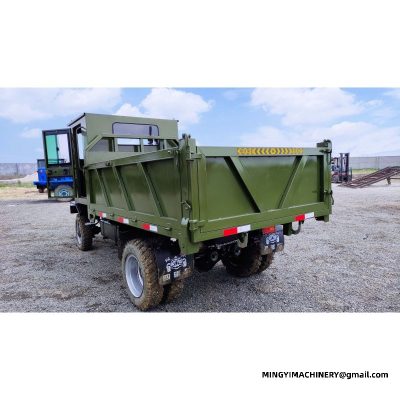
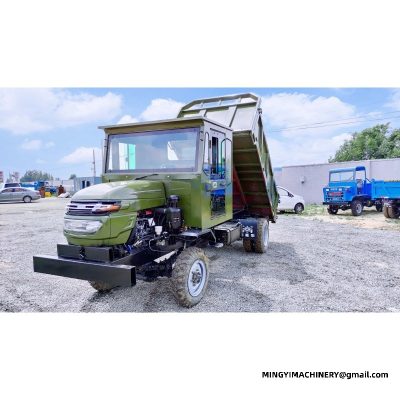
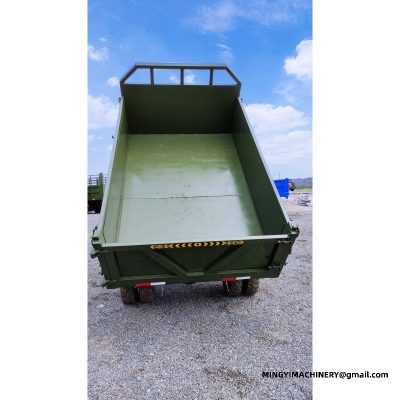
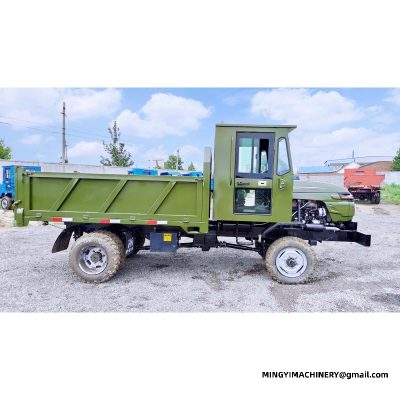
A utility vehicle earns its place by doing several jobs adequately rather than one job perfectly. On a site, an estate or a farm it carries whatever needs moving that day: fill in the morning, bagged material after lunch, tools and consumables at the end of the shift. This page sets out what that asks of the machine, the four configurations that are built and shipped here, and the questions worth settling with a manufacturer before an order is placed.
What utility actually means in use
Three characteristics separate a utility machine from a dedicated hauler. The body has to accept loads that are not all the same shape, which means a tailgate that opens usefully and a floor that is easy to clean. The machine has to work at low speed for part of the day, placing loads carefully rather than simply tipping them. And it has to be simple enough that more than one person can drive it without a briefing. Those three are what the configurations below are arranged around.
The four configurations
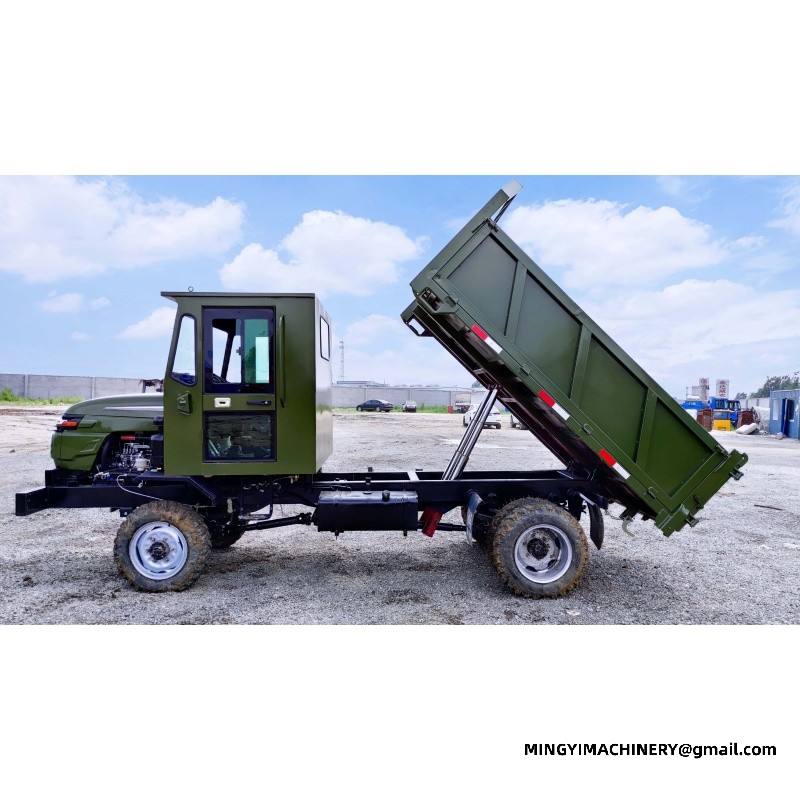
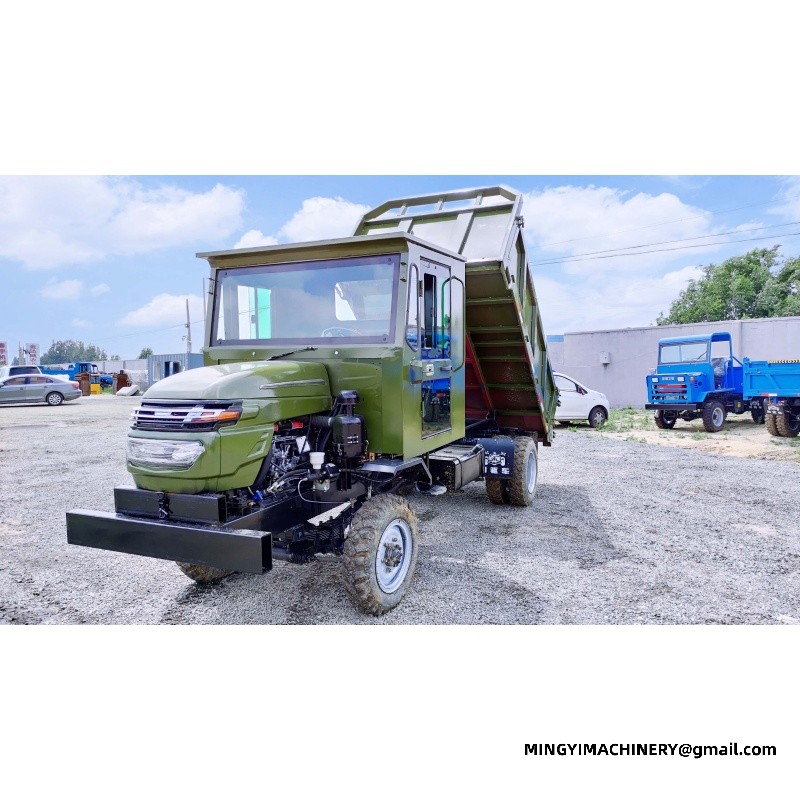
The range runs from single-cylinder machines to a turbocharged four-cylinder: a single-cylinder 28 hp on the 8.Luxury, a single-cylinder 32 hp on the 11.Luxury, a four-cylinder 4102 turbocharged engine on the 18.Standard and a four-cylinder 4108 turbocharged engine on the 24.Luxury. The single-cylinder machines suit short runs, firm ground and a machine that shares the work with other equipment. The two turbocharged engines are the ones for a long haul, a real gradient, or a machine that works a full day loaded.
Drive arrangements and who is driving
All four use a part-time gearbox. The 8.Luxury, the 11.Luxury and the 24.Luxury are selectable between two- and four-wheel drive, with the 24.Luxury using the Model 145 and the 18.Standard the Model 140 part-time gearbox with four-wheel drive. All four carry high and low range with a crawler gear. Selectable drive suits a utility machine because it is often moving between a firm track and a soft work area several times a day, and running in two-wheel drive on the firm sections saves tyre and driveline wear.
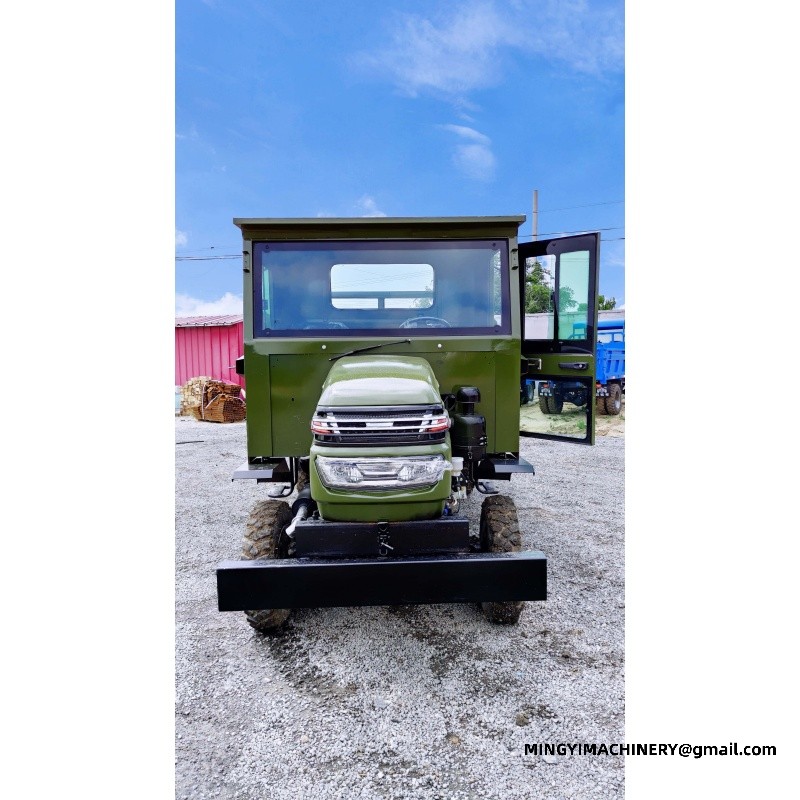
Simplicity matters here more than on a dedicated hauler, because a utility machine is the one most likely to be driven by whoever is free. A gearbox that is selectable rather than permanent, a cab that is familiar and controls that are in the same place on every machine in the range all reduce the chance of the vehicle being used incorrectly by someone who drives it twice a month.
Frame, body and the three sizes
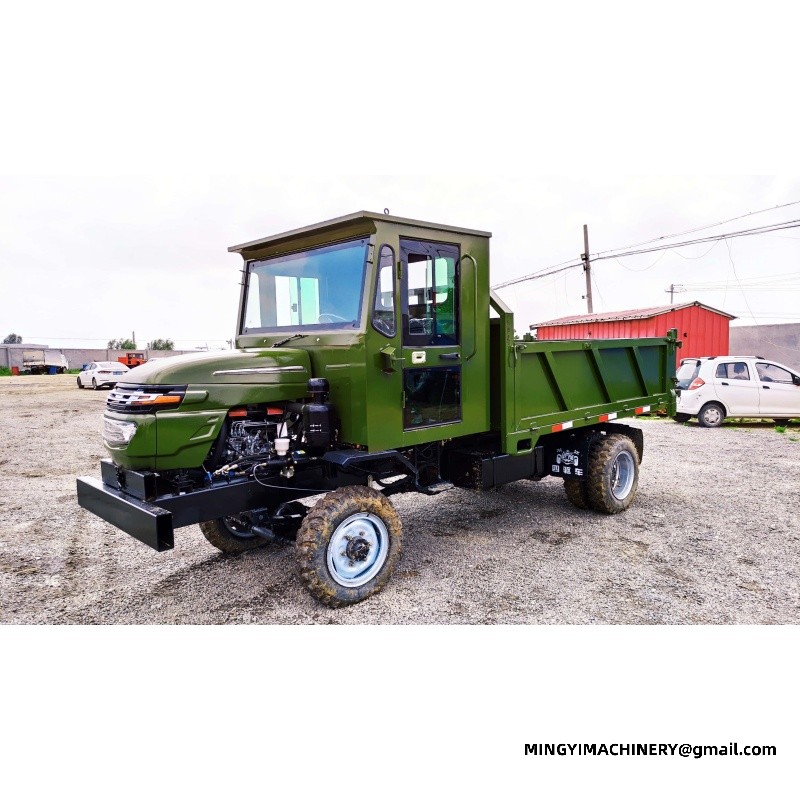
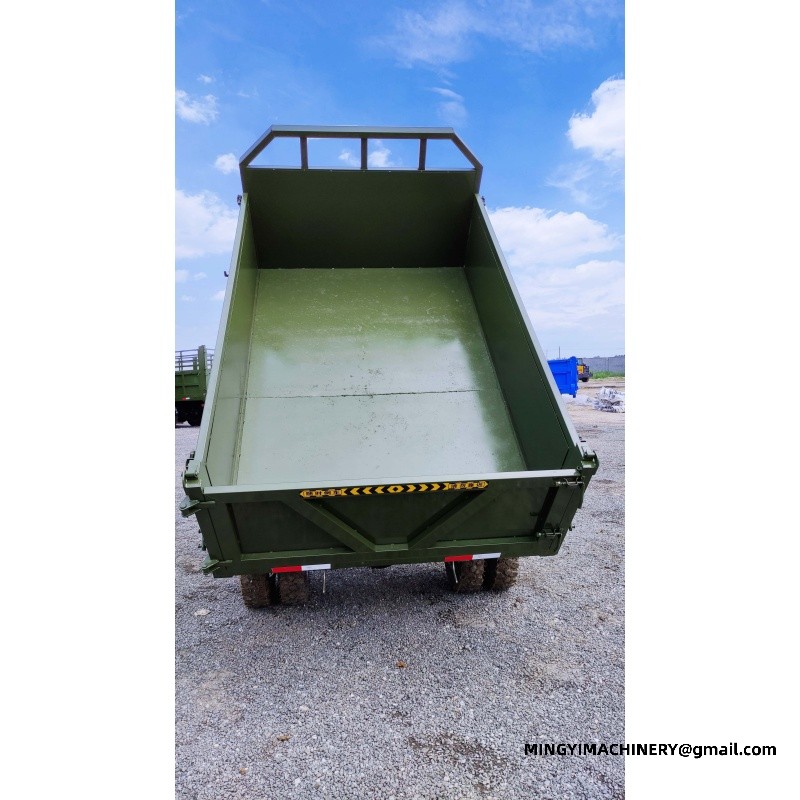
Three body combinations appear across the four. The 11.Luxury and the 8.Luxury sit on the reinforced 60 x 140 mm square tube frame with a rear body 2.2 m long by 1.5 m wide and 0.45 m high. The 18.Standard uses the reinforced 80 x 180 mm square tube frame with a body of the same length and depth but 2.1 m wide. The 24.Luxury uses the same larger frame with a 3.0 m by 2.2 m body. Width is the dimension that decides what the machine can carry besides loose material.
Carrying loads that are not loose fill
A utility machine spends part of its life carrying bagged material, bundled items, tools and consumables, and the wide shallow body on the 18.Standard is the one that suits that work best. Bagged and bundled loads sit lower and are easier to secure in a wider body, and they do not need the depth that fill does. Where a buyer knows the machine will carry more packaged material than loose, that fact belongs in the order discussion, because it points at the wider body rather than the longer one.
Brakes and tyres
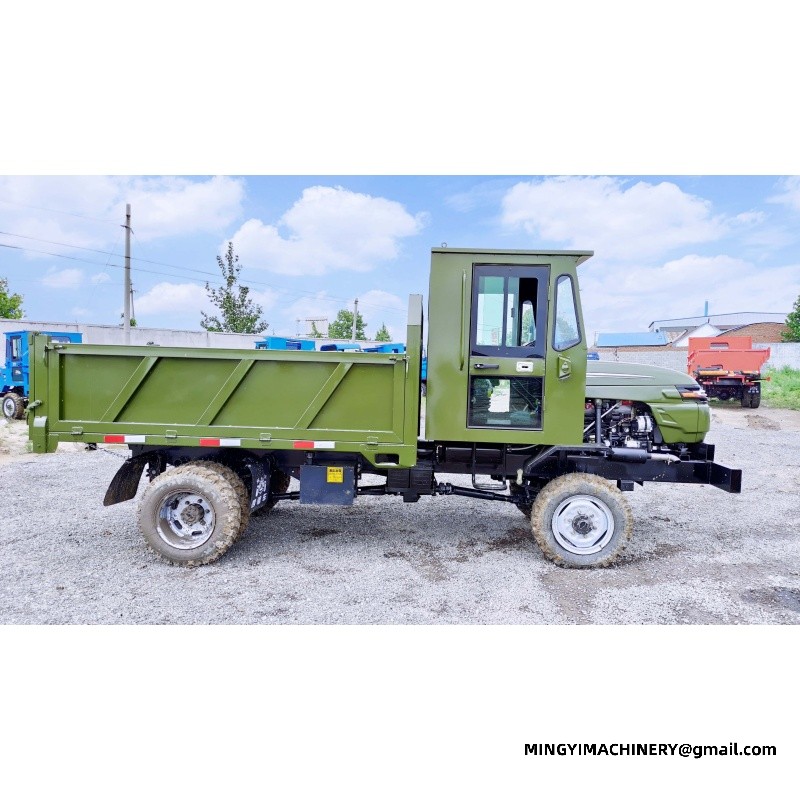
Air cut-off brakes are fitted to the 11.Luxury, the 24.Luxury and the 8.Luxury; the 18.Standard uses oil brakes. Tyres split by duty: six 700-16 mountain tyres on the 11.Luxury, the 18.Standard and the 8.Luxury, and six 825R16 steel-belted radial tyres on the 24.Luxury. The mountain pattern clears mud and loose fill and cuts through a wet surface to whatever is firm beneath, which is what an unmaintained track needs. The radial suits a graded route where the machine covers distance rather than fighting for grip.
Cab, ladder and the working day
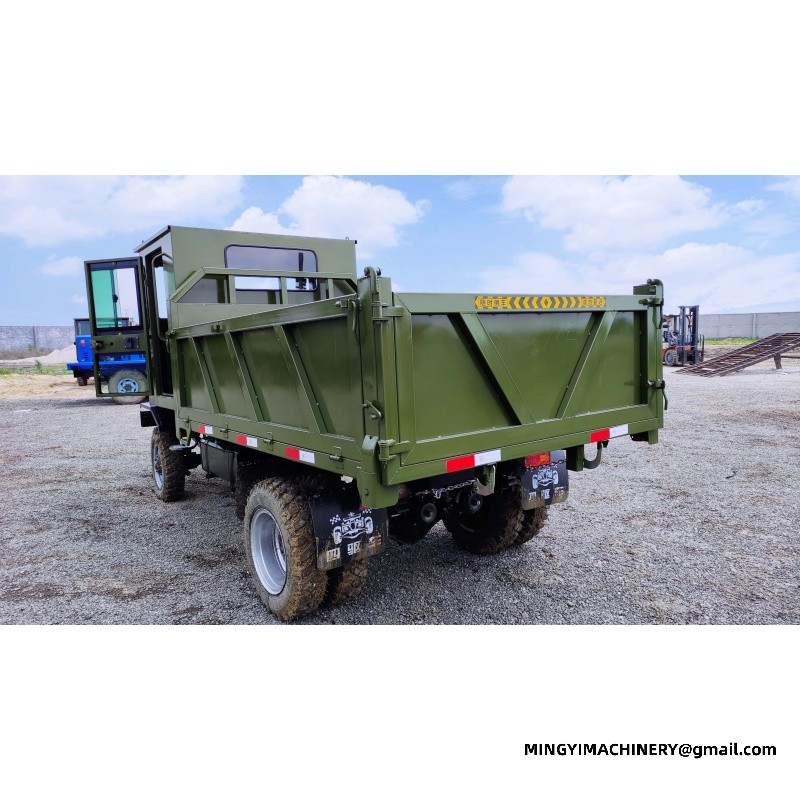
The 24.Luxury has a fully enclosed cab, the 11.Luxury and the 8.Luxury an enclosed cab, and the 18.Standard a simple cab. All four carry hydraulic power steering, a two-person comfort seat and twin-battery electric start. The 11.Luxury, the 24.Luxury and the 8.Luxury add a side-opening rear body tailgate, and the 24.Luxury pairs it with a cab ladder. A side-opening tailgate is what makes loading and unloading by hand practical rather than awkward, and the ladder is what makes checking the body a job that gets done.
Tipping and placing a load
Twin hydraulic rams lift the body on every configuration, which is what allows an uneven load to be lifted without twisting the body. Every configuration has a tailgate with a self-dumping function, which starts the load leaving before the body reaches full height and shortens the time the machine spends raised. On utility work the useful habit is to place the machine rather than to rush the tip: most of the loads that go wrong do so because the ground was not level rather than because the machine was too small.
Working at low speed for part of the day
A utility machine spends more of its time in low range than a dedicated hauler does. Moving a load along a track, positioning under a chute, working alongside another machine and placing material where it is wanted are all low-speed jobs, and doing them in a low range keeps the machine under control without riding the brakes. The crawler gear fitted to all four is the gear for that work, and it is what saves the clutch on a machine that stops and starts all day.
Ground that changes through the year
The ground a utility machine works on is rarely the same in April and in November. Summer dust and a hard surface suit a radial tyre and a long day; autumn and spring turn the same track soft and favour the mountain pattern and drive at both ends. Buyers who know the route changes should say so, because the tyre and drive decisions are the two that are cheapest to get right at the order stage and the most annoying to discover were wrong in week one.
Securing the load and reading the ground
Two habits do more for safety on a utility machine than any item on the specification sheet. The first is securing the load: anything bagged, bundled or stacked in the body moves when the machine crosses a rut, and a load that has shifted is harder to tip out than one that has not. The second is reading the ground before the tip, because the machine that gets into difficulty is usually the one positioned across a slope rather than the one that was too small. Both are habits rather than hardware, and both are worth covering when a new driver is shown the machine.
Daily checks on a shared machine
A machine that several people drive needs a walk-around that anyone can do. At the start of each shift: the body and ram mountings, the hydraulic hoses where they run past the body, tyre condition and pressures, brake response and fluid levels, and the tailgate latch. Air filtration needs more frequent attention in dust, and the body floor should be cleaned out rather than left carrying a skin of material. Those checks are what keep a shared machine available rather than mysteriously unavailable.
Parts, service and one driveline across a fleet
Parts availability usually decides the engine and the axle pattern, and a machine built around components the local network already carries is serviced from stock rather than ordered in. Buyers running several of these machines should settle the driveline on the first order: one engine brand, one axle pattern and one cab means one parts shelf, one service routine and a driver who can move between machines without relearning the controls.
Packing, papers and pre-shipment checks
For export orders, packed dimensions, securing points and any dismantling required are settled before the machine leaves the factory, and the commercial invoice, the packing list and any certificate the destination requires are agreed at order stage, because papers that arrive incomplete delay clearance longer than the voyage takes. Before crating, each machine is run: the engine is brought to temperature, the tipping circuit is cycled under load, the brakes are tested with a load, and every function is checked against the build sheet.
What a manufacturer should be asked
Three questions are worth putting to any manufacturer of this class of machine. Which parts are stocked locally and which have to come from the factory. What the build sheet records and whether it travels with the machine. And what happens before the machine is crated, in enough detail that it can be checked rather than taken on trust. A manufacturer who answers all three specifically is worth more than one whose answer is only about the machine itself.
Which configuration to start from
The decision usually turns on what the machine carries most often. Mostly loose material on a firm route points at the 24.Luxury with the larger body and radial tyres. A mix of loose and packaged loads on softer ground points at the 18.Standard with the wider body. Short runs and intermittent use on firm ground point at the 11.Luxury or the 8.Luxury, both of which have the side-opening tailgate that makes hand loading practical.
| # | 11.Luxury | 18.Standard | 24.Luxury | 8.Luxury |
|---|---|---|---|---|
| 1 | Single-cylinder diesel engine, 32 hp | Four-cylinder 4102 turbocharged diesel engine | Four-cylinder 4108 turbocharged diesel engine | Single-cylinder diesel engine, 28 hp |
| 2 | Part-time gearbox, selectable 2WD/4WD | Model 140 part-time gearbox with four-wheel drive | Model 145 part-time gearbox, selectable 2WD/4WD | Part-time gearbox, selectable 2WD/4WD |
| 3 | High/low range with crawler gear | High/low range with crawler gear | High/low range with crawler gear | High/low range with crawler gear |
| 4 | Enclosed cab | Simple cab | Fully enclosed cab | Enclosed cab |
| 5 | Six 700-16 mountain tyres | Oil brakes | Six 825R16 steel-belted radial tyres | Six 700-16 mountain tyres |
| 6 | Model 212 front axle | Six 700-16 mountain tyres | Reinforced ISUZU-pattern front axle | Model 212 front axle |
| 7 | Model 130 rear axle | Reinforced ISUZU-pattern front axle | Reinforced 1080 rear axle | Model 130 rear axle |
| 8 | Air cut-off brakes | Reinforced 1061 rear axle | Air cut-off brakes | Air cut-off brakes |
| 9 | Reinforced 60 x 140 mm square tube frame | Reinforced 80 x 180 mm square tube frame | Reinforced 80 x 180 mm square tube frame | Reinforced 60 x 140 mm square tube frame |
| 10 | Rear body 2.2 m long x 1.5 m wide x 0.45 m high | Rear body 2.2 m long x 2.1 m wide x 0.45 m high | Rear body 3.0 m long x 2.2 m wide x 0.45 m high | Rear body 2.2 m long x 1.5 m wide x 0.45 m high |
| 11 | Tailgate with self-dumping function | Tailgate with self-dumping function | Tailgate with self-dumping function | Tailgate with self-dumping function |
| 12 | Side-opening rear body tailgate | Hydraulic power steering | Side-opening rear body tailgate with cab ladder | Side-opening rear body tailgate |
| 13 | Hydraulic power steering | Twin hydraulic rams | Hydraulic power steering | Hydraulic power steering |
| 14 | Twin hydraulic rams | Two-person comfort seat | Twin hydraulic rams | Twin hydraulic rams |
| 15 | Two-person comfort seat | Twin-battery electric start | Two-person comfort seat | Two-person comfort seat |
| 16 | Heavy-duty leaf springs | Square-nose bonnet | Heavy-duty leaf springs | Heavy-duty leaf springs |
| 17 | Twin-battery electric start | — | Twin-battery electric start | Twin-battery electric start |
| 18 | Square-nose bonnet | — | Square-nose bonnet | Square-nose bonnet |
For a specification discussion or a build sheet for this 4x4 utility vehicle, contact sales@mingycn.com or reach us on LINE (ID: mingyicn).









