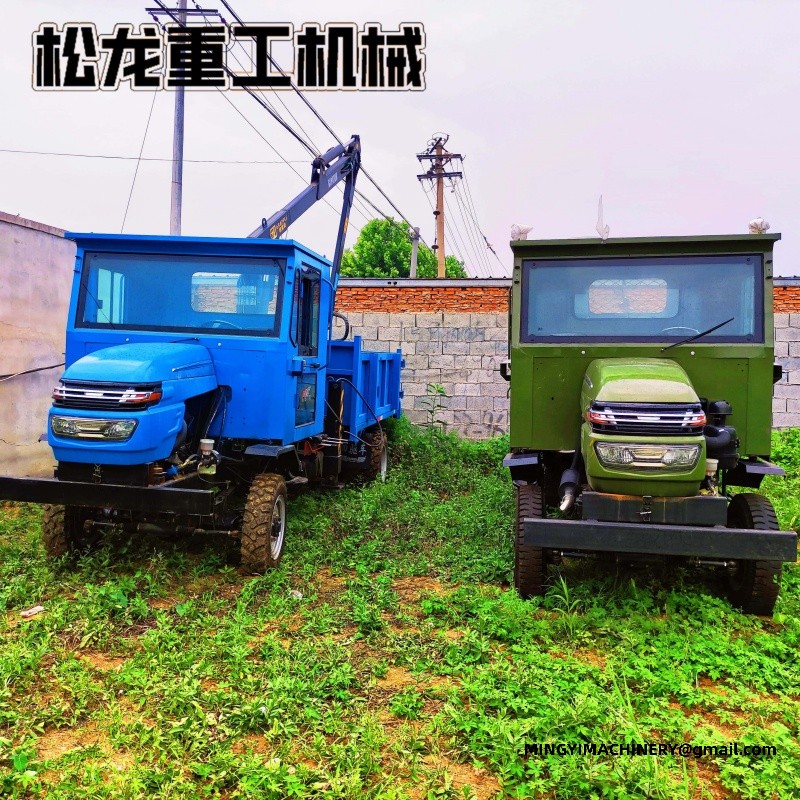
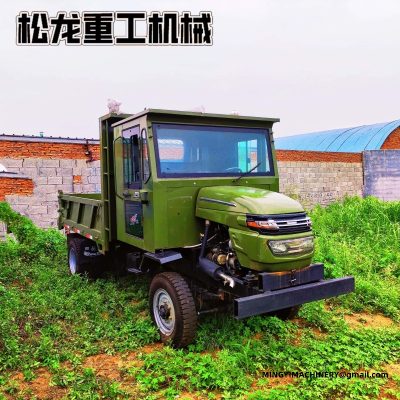
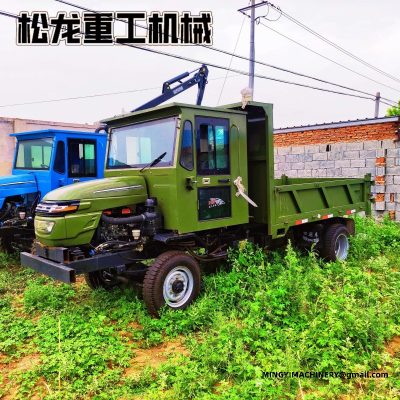
Model MY-4x4-6T · 6 t payload · 58 hp engine
Hydraulic tipping is the function a construction dumper is judged on. Loading is done by somebody else's machine, travelling is a question of ground and gearing, but the tip is the part of the cycle the driver controls and the part that decides how much material moves in a shift. This page covers the four configurations that are built and shipped, what the tipping gear does with different materials and different ground, and the questions worth settling before an order is placed.
What the tipping system has to do
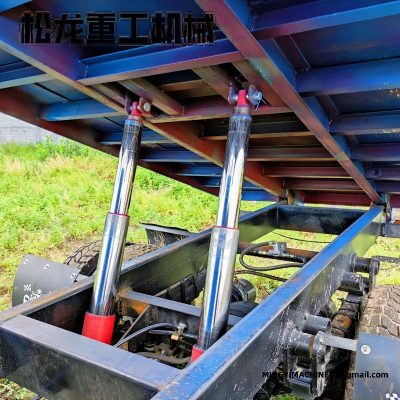
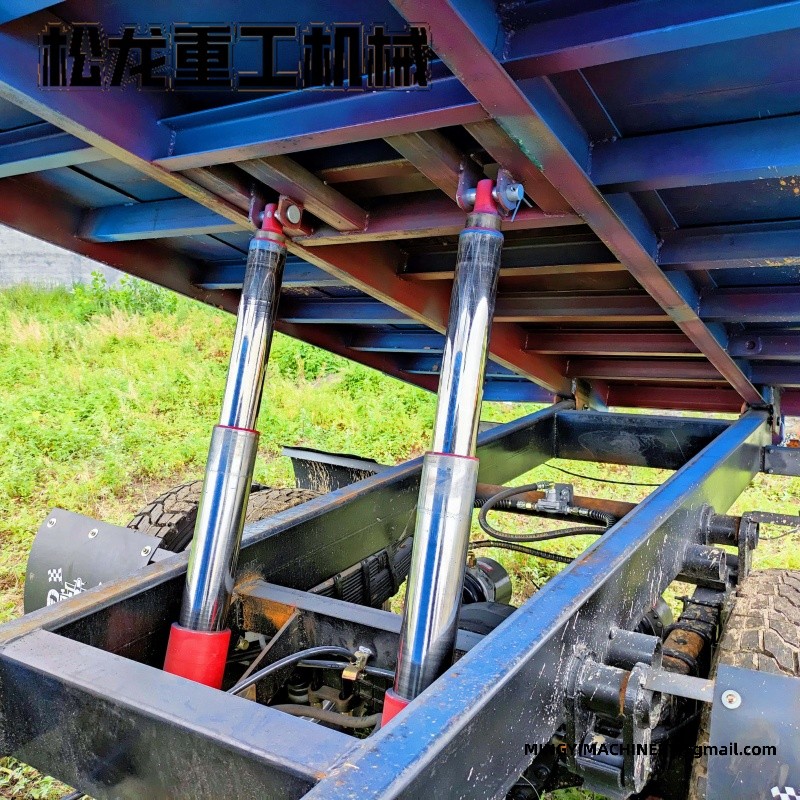
A tipping body lifts a load that is rarely where the driver expects it to be. Material loaded by an excavator lands where the bucket released it, and by the time the machine has crossed a rough haul road it has usually shifted to one side. Twin hydraulic rams, fitted to every configuration here, lift a body under that uneven load without the twist a single central ram would have to take. That is the mechanical reason the arrangement is specified, and it is also why the ram mountings are the first thing to look at on a walk-around.
Discharge is the second half of the job. A load of dry, free-flowing material leaves the body as soon as it lifts. Clay, wet fill and material with fines in it do not, and a driver ends up raising and lowering the body to shake it out or leaving the tip half loaded. Knowing which material the machine will carry is part of specifying it, and on sticky ground the body floor and the tailgate arrangement matter more than any figure on the engine line.
Tipping on sloping and uneven ground
Most tipping trouble happens on ground that is not level rather than on ground that is steep. A body raised on a camber puts the machine's weight onto the downhill side, and the combination of a raised body, a load that has stuck and a soft shoulder is what turns a routine tip into a recovery. The practice is to tip pointing downhill where the ground allows it, to keep the machine square to the slope rather than across it, and to lower the body before moving if the load has not cleared.
The self-dumping tailgate fitted to all four configurations helps here, because the load starts to leave before the body reaches full height. Where the ground is genuinely poor, the answer is to prepare a tipping bay rather than to find a better machine: a graded and drained pad is what makes the tip routine on a site where nothing else is.
Sticky material, wet fill and the body floor
Material behaviour decides more about the tip than the hydraulics do. Wet clay and material with a high fines content hold their shape and come out in one piece, often taking the body with them until the last moment. Sand and graded stone run out as soon as the angle is right. Buyers carrying sticky material should say so at the ordering stage, because the answer is usually a body floor that is kept clean and a discharge routine the driver is trained in, rather than a larger ram.
Cleaning the body at the end of a shift is part of that routine. A floor left with a skin of clay carries it into the next load, and within a week the body is carrying less than the one described on the specification sheet. A few minutes with a shovel and a water supply is what prevents it.
Engines on the four configurations
The range runs from a single-cylinder 28 hp unit on the 8.Luxury and a two-cylinder 38 hp unit on the 14.Luxury up to the four-cylinder 4102 turbocharged engine on the 20.Luxury and the 4108 turbocharged engine on the 23.Upgraded. The smaller engines suit short runs, firm ground and a machine that spends part of the day on other work. The turbocharged engines are specified where the haul is long or the gradient is real, because a turbocharged engine holds its pulling power when a loaded body meets a slope.
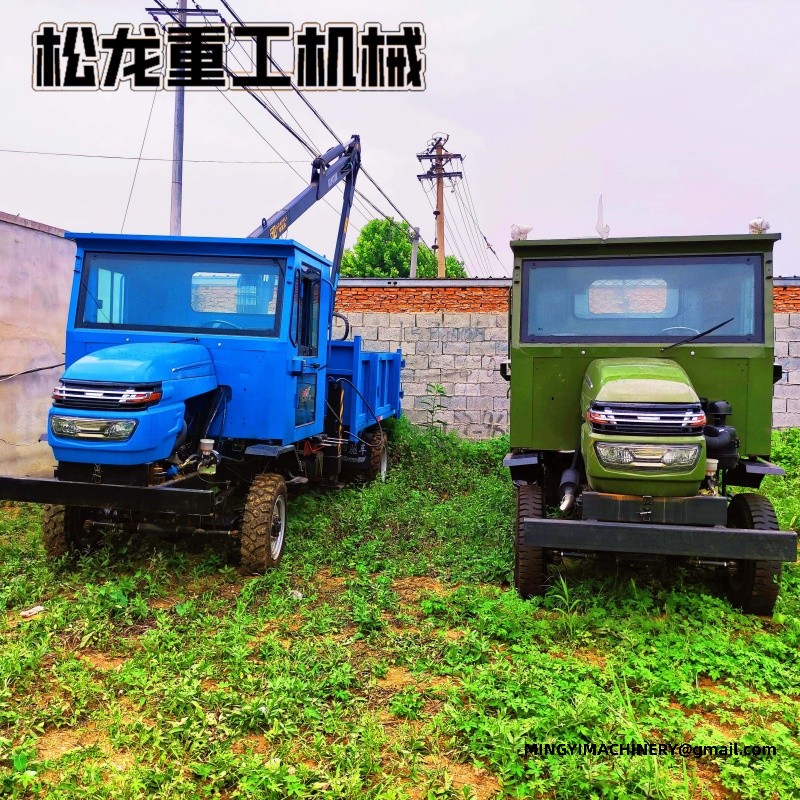
The 20.Luxury sheet also lists the wider selection: 4105 turbocharged, 4108 turbocharged, the four-cylinder 490, the 4102 turbocharged, and the single-cylinder 25 hp, 28 hp and 32 hp and the two-cylinder 38 hp units. That is the configuration to discuss when a fleet wants one driveline across several duties, or when an operator is replacing a machine and wants the new one to behave the same way on the same ground.
Gearboxes, drive and the crawler gear
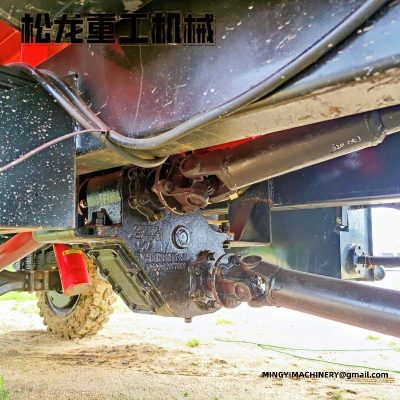
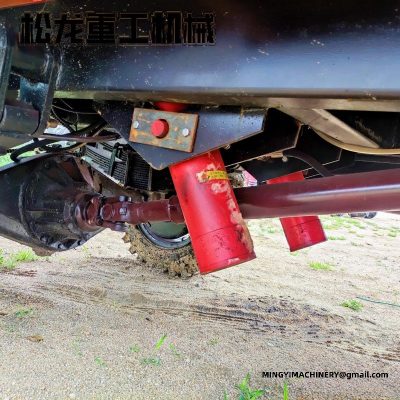
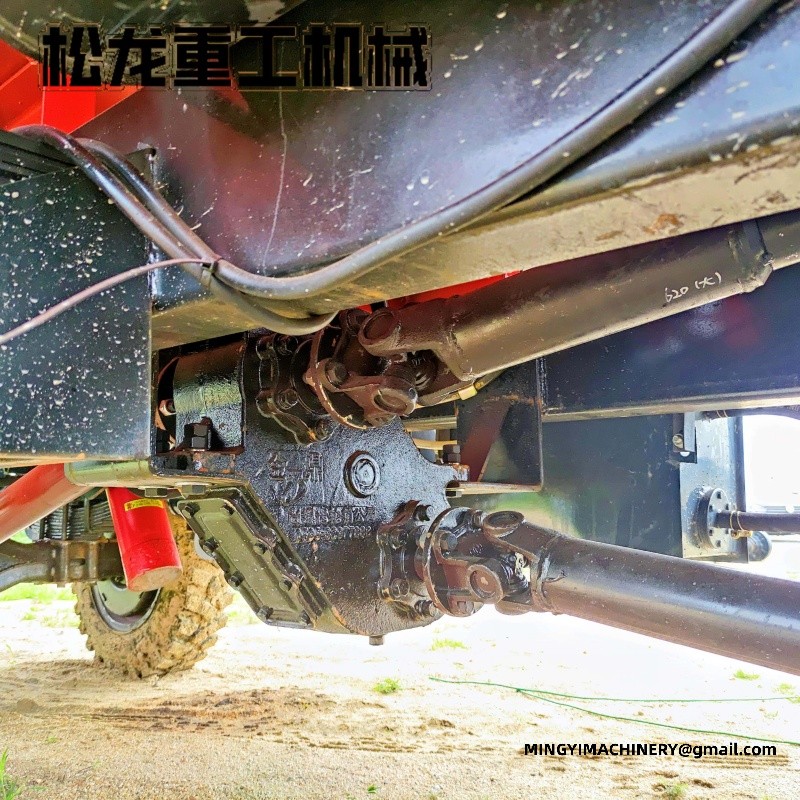
All four run a part-time gearbox. On the 8.Luxury and the 14.Luxury it is selectable between 2WD and 4WD, and on the 23.Upgraded the Model 140 offers the same choice; the 20.Luxury uses the Model 140 part-time gearbox with four-wheel drive. Selectable drive suits a machine that travels a firm haul road and needs drive at both ends only for the tipping area, and it saves tyre and driveline wear on the firm section. All four carry high and low range with a crawler gear, which is the gear used for a loaded start and for placing the machine on the tip.
Frame, body and the size decision
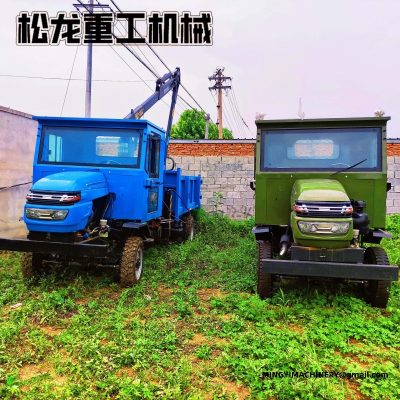
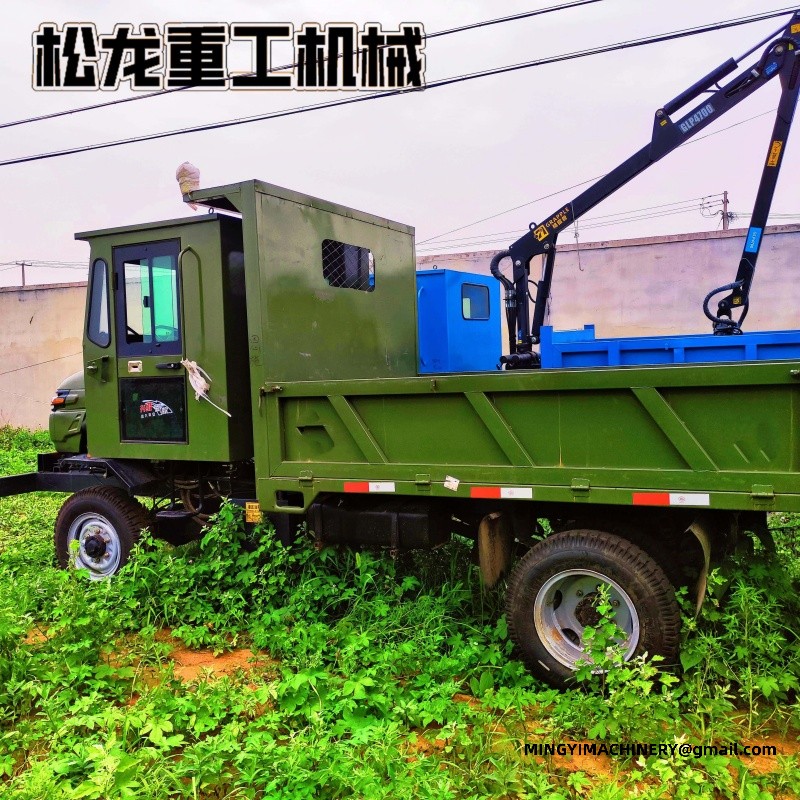
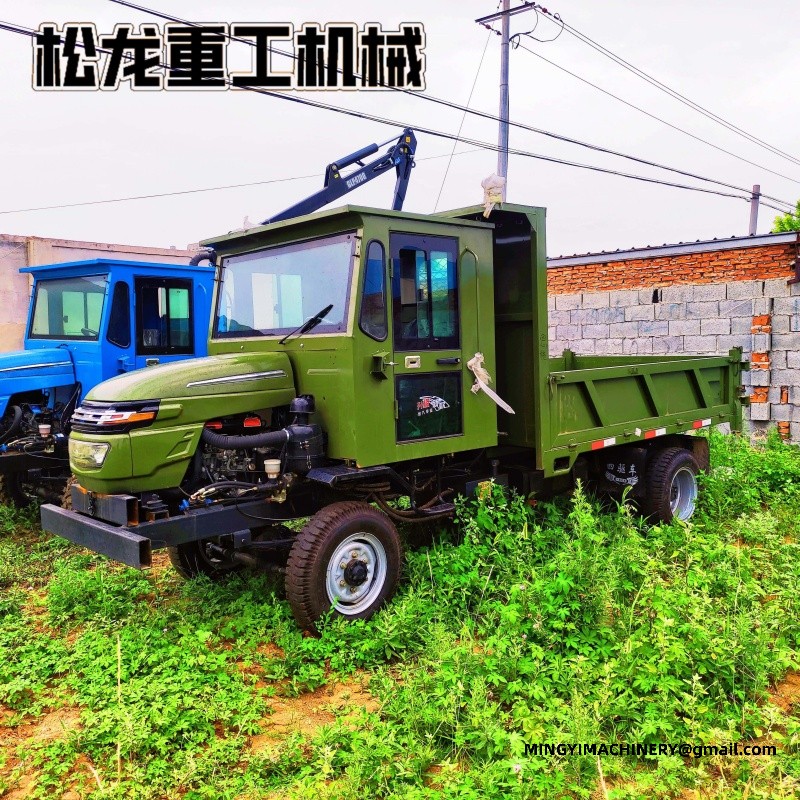
Two frame and body combinations appear here. The 14.Luxury and the 8.Luxury sit on the reinforced 60 x 140 mm square tube frame with a rear body 2.2 m long by 1.5 m wide and 0.45 m high. The 20.Luxury and the 23.Upgraded use the reinforced 80 x 180 mm square tube frame with a 3.0 m by 2.2 m body of the same depth. The larger body moves more per cycle, which is what a long haul wants; the smaller one turns in less space, which is what a tight site wants. Capacity is not free: a bigger body needs a wider road, a wider bay and more room to position the machine.
Cab, ladder and the driver's working position
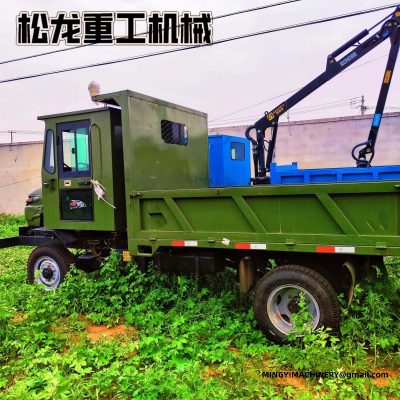
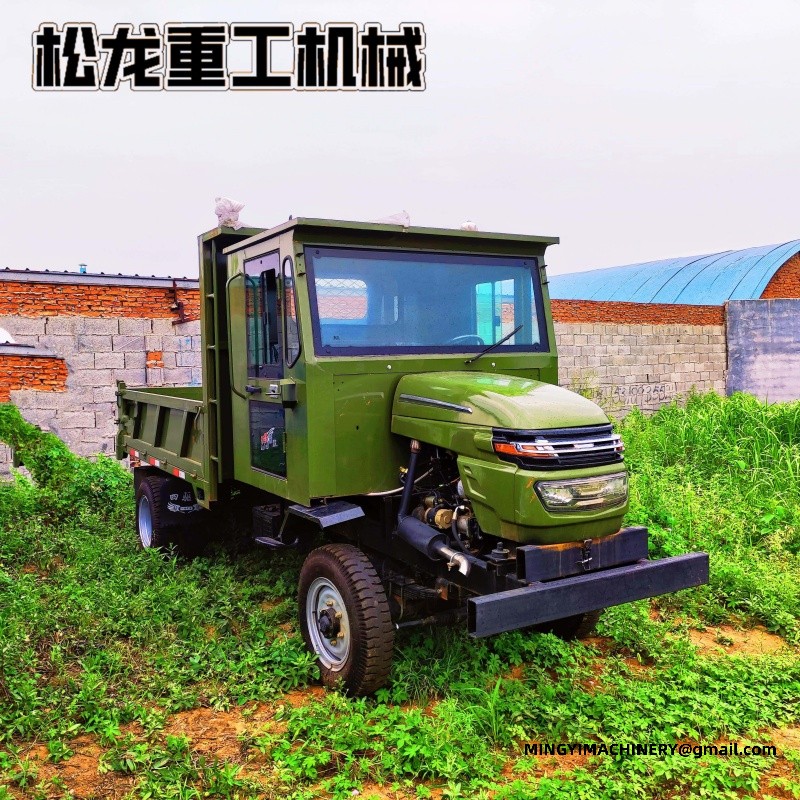
Cab specification follows the hours. The 20.Luxury has a fully enclosed cab, the 14.Luxury and the 8.Luxury an enclosed cab, and the 23.Upgraded a simple cab. All four carry hydraulic power steering, a two-person comfort seat and twin-battery electric start. The 20.Luxury and the 14.Luxury add a side-opening rear body tailgate, and the 20.Luxury pairs it with a cab ladder. The ladder is what makes the daily look at the body, the rams and their mountings a job that gets done rather than one that gets skipped.
Tyres and the run to the tipping point
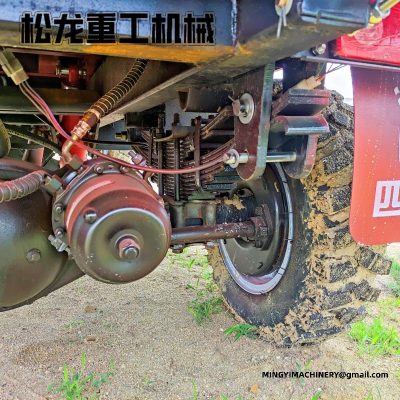
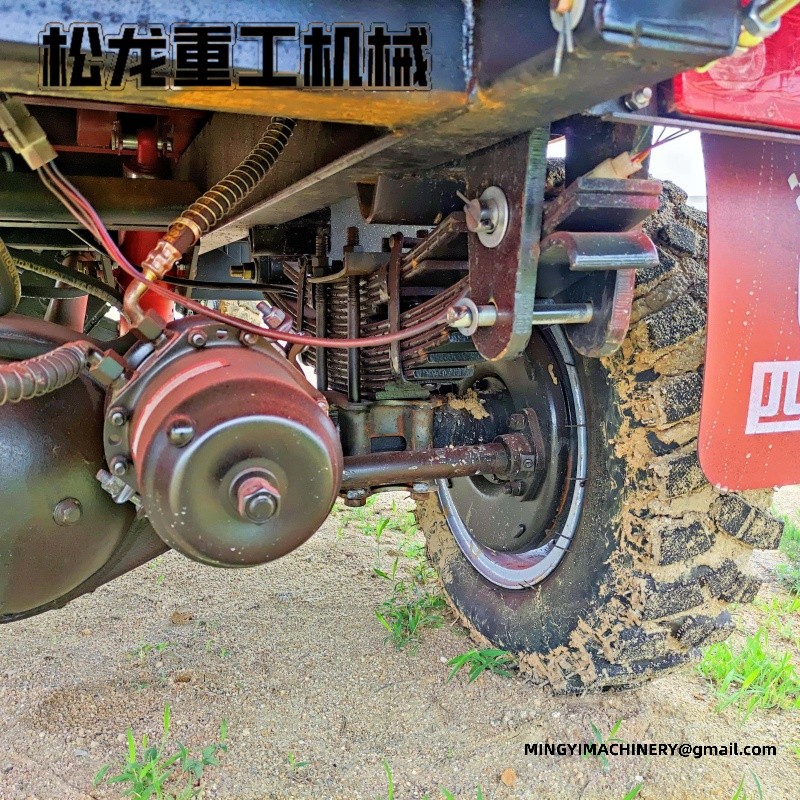
The 14.Luxury and the 8.Luxury run six 700-16 mountain tyres; the 20.Luxury and the 23.Upgraded run six 825R16 steel-belted radial tyres. The mountain pattern clears mud and loose fill, which is the condition on a haul road that is not being maintained. The radial suits a graded road where the machine covers distance rather than fighting for grip. Tyre life follows the road rather than the load: standing water, sharp fill and a surface that is never graded will wear out a set faster than hard loading does.
Brakes across the range
All four configurations leave the factory with air cut-off brakes, which is worth knowing because it sets what the driver can expect when holding a loaded machine on a gradient. The practice that goes with it is to plan the descent before the load goes in: choose the gear on the way up, use the crawler gear and the engine on the way down, and keep the haul road graded so that a loaded machine is never braking on a loose surface.
Suspension and bonnet shape
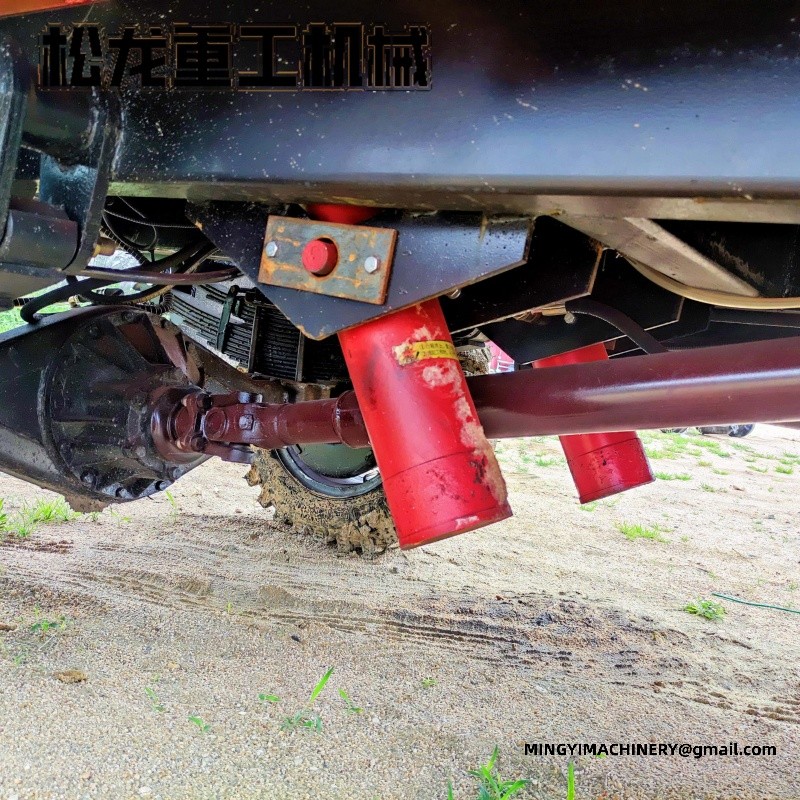
Leaf spring specification differs: heavy-duty thickened leaf springs on the 20.Luxury, and heavy-duty leaf springs on the 14.Luxury, the 23.Upgraded and the 8.Luxury. A machine loaded by an excavator takes the load as a series of impacts rather than as a steady weight, and the springs are what stop those impacts reaching the frame and the cab. Bonnet shape differs too: the 14.Luxury keeps the round-nose bonnet while the other three use the square-nose, which is the panel a driver sights over when positioning on the tip.
Looking after the hydraulic system
The tipping gear is the hardest-working system on the machine and the one that fails most visibly. A walk-around at the start of each shift should cover the rams for scoring and weeping, the hoses for chafing where they run past the body, the mountings for movement, and the oil level. Contaminated oil is what shortens the life of the pump and the rams, and on a dusty site the filler and the breather deserve as much attention as the filter. A small weep found on Monday is a hose; the same weep found on Friday is a machine off work.
Moving the machine and the export paperwork
Owners working across several sites should check the transport dimensions before ordering, because the wider body on the 80 x 180 mm frame narrows the choice of trailer and complicates every move. For export orders, packed dimensions, securing points and any dismantling required are settled before the machine leaves the factory, and the commercial invoice, the packing list and any certificate the destination requires are agreed at order stage — missing papers delay clearance longer than the voyage takes.
Parts, service and fleet standardisation
Parts availability usually decides the engine brand and the axle pattern. A machine built around components the local network already carries is serviced from stock, which is the difference between a day lost and a week lost. Fleets running several machines should standardise on one engine and one axle pattern where the duties allow it, because that keeps the parts shelf short and the service schedule simple. Remote diagnosis shortens most faults: a walk-around on video with the panels open usually identifies the cause without waiting for a visit.
What is confirmed before the machine is built
Every machine is inspected on our floor before it is crated: the engine is run to temperature, the tipping circuit is cycled through its full travel under load, the brakes are tested with a load, and each function is checked against the build sheet. The sheet that travels with the machine records the configuration as delivered, which is what a workshop needs when a ram seal is replaced in year three, and what supports the resale value at replacement time.
| # | 14.Luxury | 20.Luxury | 23.Upgraded | 8.Luxury |
|---|---|---|---|---|
| 1 | Two-cylinder diesel engine, 38 hp | Four-cylinder 4102 turbocharged diesel engine | Four-cylinder 4108 turbocharged diesel engine | Single-cylinder diesel engine, 28 hp |
| 2 | Part-time gearbox, selectable 2WD/4WD | Model 140 part-time gearbox with four-wheel drive | Model 140 part-time gearbox, selectable 2WD/4WD | Part-time gearbox, selectable 2WD/4WD |
| 3 | High/low range with crawler gear | High/low range with crawler gear | High/low range with crawler gear | High/low range with crawler gear |
| 4 | Enclosed cab | Fully enclosed cab | Simple cab | Enclosed cab |
| 5 | Six 700-16 mountain tyres | Six 825R16 steel-belted radial tyres | Six 825R16 steel-belted radial tyres | Six 700-16 mountain tyres |
| 6 | Model 212 front axle | Reinforced ISUZU-pattern front axle | Reinforced ISUZU-pattern front axle | Model 212 front axle |
| 7 | Reinforced 130 rear axle | Reinforced 1080 rear axle | Reinforced 1080 rear axle | Model 130 rear axle |
| 8 | Air cut-off brakes | Air cut-off brakes | Air cut-off brakes | Air cut-off brakes |
| 9 | Reinforced 60 x 140 mm square tube frame | Reinforced 80 x 180 mm square tube frame | Reinforced 80 x 180 mm square tube frame | Reinforced 60 x 140 mm square tube frame |
| 10 | Rear body 2.2 m long x 1.5 m wide x 0.45 m high | Rear body 3.0 m long x 2.2 m wide x 0.45 m high | Rear body 3.0 m long x 2.2 m wide x 0.45 m high | Rear body 2.2 m long x 1.5 m wide x 0.45 m high |
| 11 | Tailgate with self-dumping function | Tailgate with self-dumping function | Tailgate with self-dumping function | Tailgate with self-dumping function |
| 12 | Side-opening rear body tailgate | Side-opening rear body tailgate with cab ladder | Hydraulic power steering | Side-opening rear body tailgate |
| 13 | Hydraulic power steering | Hydraulic power steering | Twin hydraulic rams | Hydraulic power steering |
| 14 | Twin hydraulic rams | Twin hydraulic rams | Two-person comfort seat | Twin hydraulic rams |
| 15 | Heavy-duty leaf springs | Two-person comfort seat | Heavy-duty leaf springs | Two-person comfort seat |
| 16 | Two-person comfort seat | Heavy-duty thickened leaf springs | Twin-battery electric start | Heavy-duty leaf springs |
| 17 | Twin-battery electric start | Twin-battery electric start | Square-nose bonnet | Twin-battery electric start |
| 18 | Round-nose bonnet | Square-nose bonnet | — | Square-nose bonnet |
| 19 | — | Four-cylinder 4105 turbocharged | — | — |
| 20 | — | Four-cylinder 4108 turbocharged | — | — |
| 21 | — | Single-cylinder engine, 25 hp | — | — |
| 22 | — | Single-cylinder engine, 28 hp | — | — |
| 23 | — | Single-cylinder engine, 32 hp | — | — |
| 24 | — | Two-cylinder engine, 38 hp | — | — |
| 25 | — | Four-cylinder 490 engine | — | — |
| 26 | — | Four-cylinder 4102 turbocharged engine | — | — |
For a specification discussion or a build sheet for this hydraulic tipping construction dumper, contact sales@mingycn.com or reach us on LINE (ID: mingyicn).









