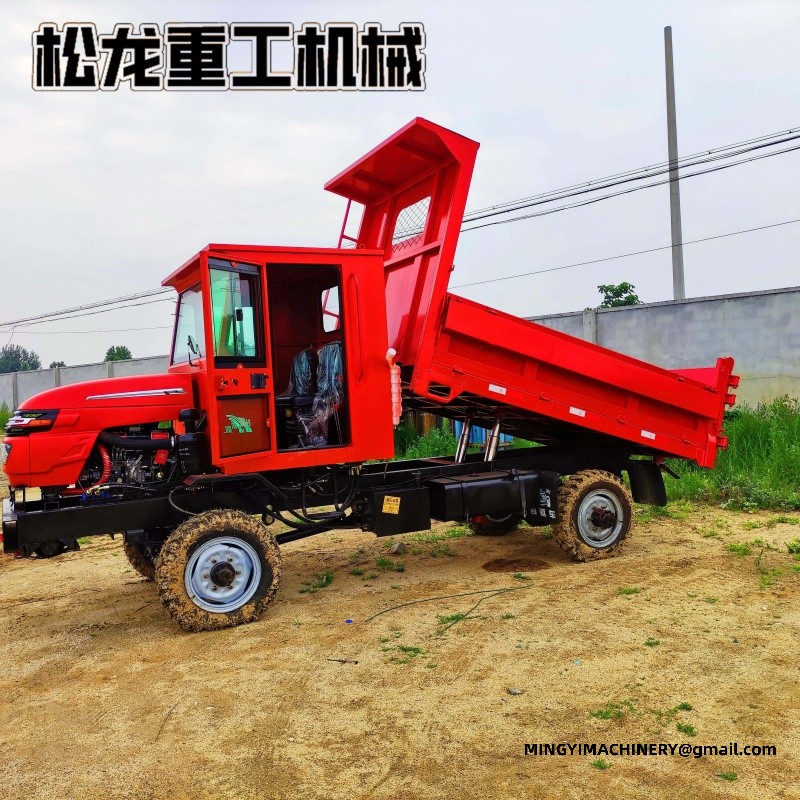
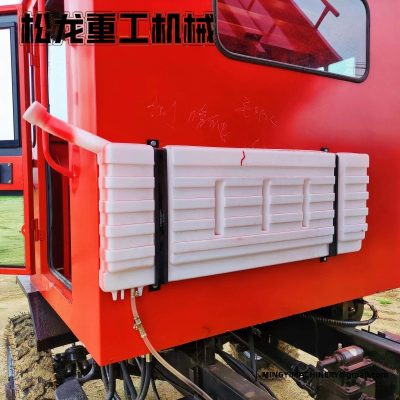
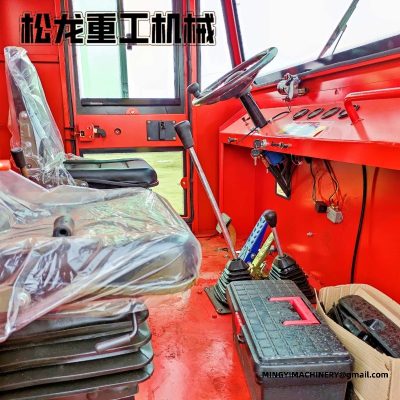
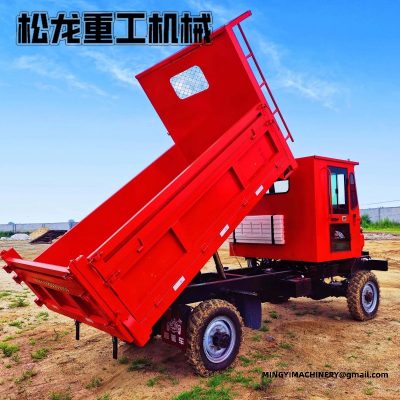
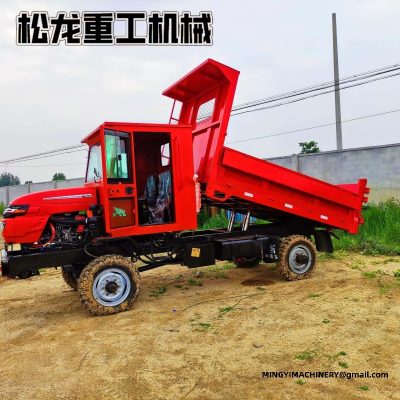
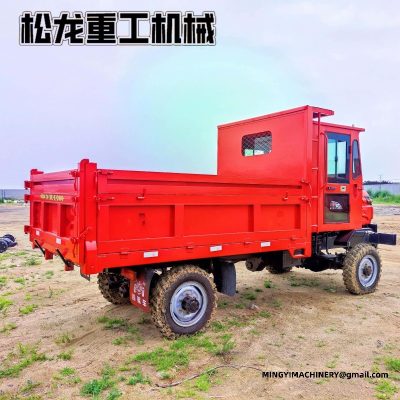
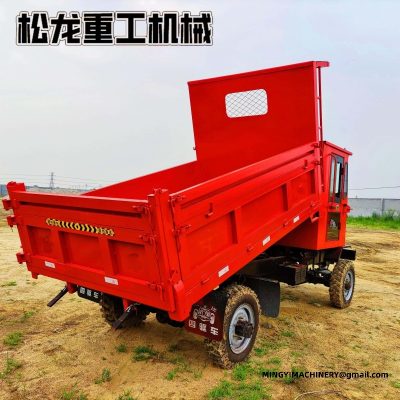
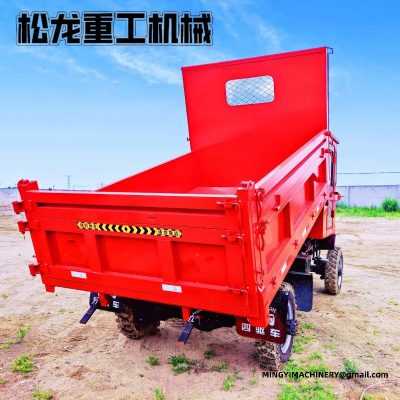
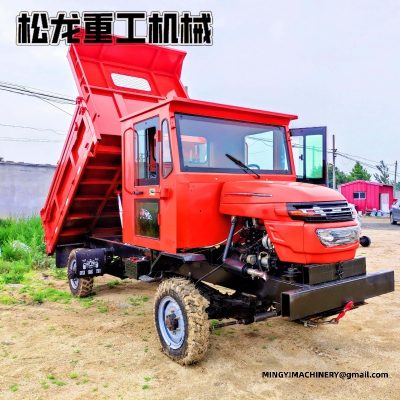
Buyers who search for an articulated dumper are usually describing the work rather than a mechanism: a machine that has to turn in a small space, work on ground that will not carry a larger one, and place a load where it is wanted rather than where it happens to land. This page sets out what that asks of a machine, the four configurations that are built and shipped here, and the ground each one suits.
What the requirement actually is
Three things sit behind the request. The first is turning: working in a bay, along a trench or inside a building where there is no room to swing. The second is ground: soft, loose or freshly filled surfaces where a heavy machine would bog and a lighter one with drive at both ends will not. The third is placement: putting material where it is needed rather than in a heap that has to be moved a second time. A specification that answers those three is worth more than the word on the label.
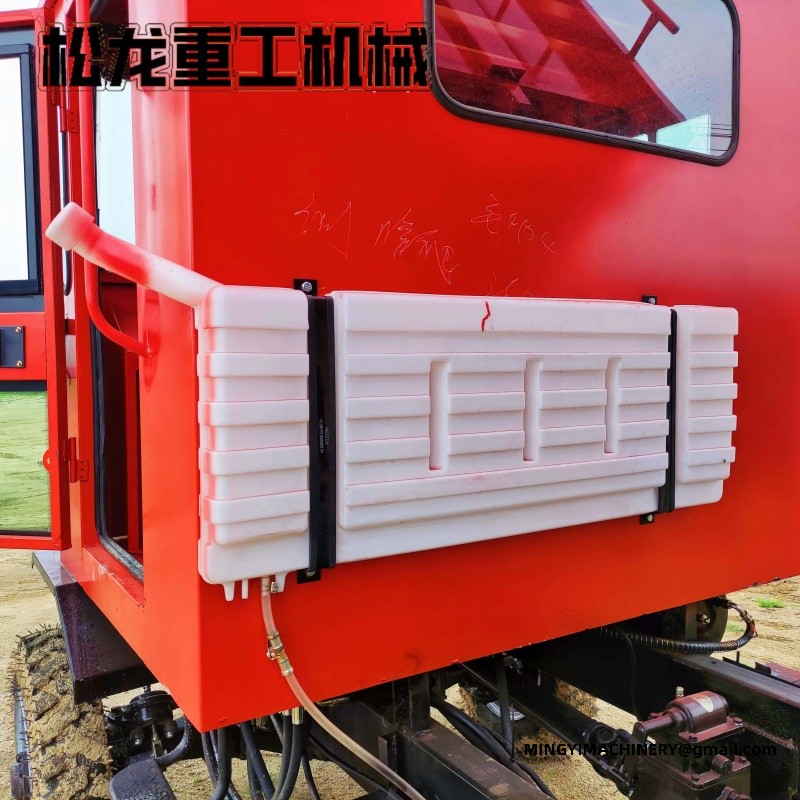
Turning and positioning on soft ground
Turning on soft ground is where machines of this class get into trouble, because the machine has to keep moving while it turns and a loaded body on a soft surface resists both. The answers are the ones on this sheet: drive at both ends, a low range that lets the machine turn slowly and deliberately, and a body short enough not to overhang the turn. The 2.2 m body on three of the four configurations is the one for tight work, while the 3.0 m body carries more per cycle and needs the room to place it.
The four configurations
The range runs from a single-cylinder machine to a turbocharged four-cylinder. The 11.Luxury uses a single-cylinder 32 hp diesel, the 16.Upgraded a four-cylinder 490, the 21.Upgraded a four-cylinder 4105 turbocharged engine and the 24.Luxury a four-cylinder 4108 turbocharged engine. The single-cylinder machine suits short runs, firm ground and lighter material; the 490 suits a full day of mixed work. The two turbocharged engines are the ones for a long haul, a real gradient or a machine that runs loaded most of the shift, because they hold their pulling power when the load and the slope arrive together.
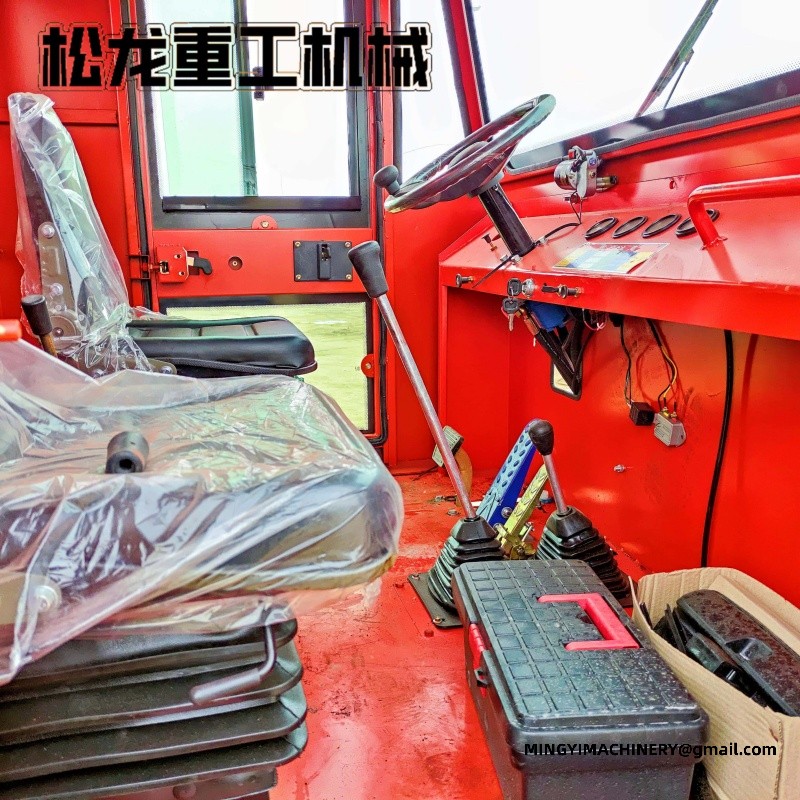
Drive arrangements across the range
Two arrangements appear. The 16.Upgraded uses a full-time gearbox with four-wheel drive, which is what a machine on soft or loose ground all day wants and what takes the decision away from the driver. The 11.Luxury uses a part-time gearbox selectable between two- and four-wheel drive, the 21.Upgraded the Model 140 part-time gearbox with four-wheel drive, and the 24.Luxury the Model 145 with selectable drive. All four carry high and low range with a crawler gear, and low range is the gear for turning and placing rather than for travelling.
Frame, body and the size decision
Two frame and body combinations appear here. The 11.Luxury and the 16.Upgraded sit on the reinforced 60 x 140 mm square tube frame with a rear body 2.2 m long by 1.5 m wide and 0.45 m high. The 21.Upgraded and the 24.Luxury use the reinforced 80 x 180 mm square tube frame with a 3.0 m by 2.2 m body of the same depth. The choice is a space question as much as a capacity one: the wider body moves more per pass but needs a wider route and a wider bay, and on a tight site that is usually what settles it.
Brakes and tyres
Air cut-off brakes are fitted to the 11.Luxury, the 21.Upgraded and the 24.Luxury, and the 21.Upgraded pairs them with a reinforced 1080 rear axle with air cut-off brake; the 16.Upgraded uses oil brakes. Tyres follow the same split by duty: six 700-16 mountain tyres on the 11.Luxury and the 16.Upgraded, and six 825R16 steel-belted radial tyres on the 21.Upgraded and the 24.Luxury. The mountain pattern clears mud and loose fill and cuts through a wet surface, while the radial suits a graded route where the machine covers distance rather than fighting for grip.
Cab, tailgate and the working position
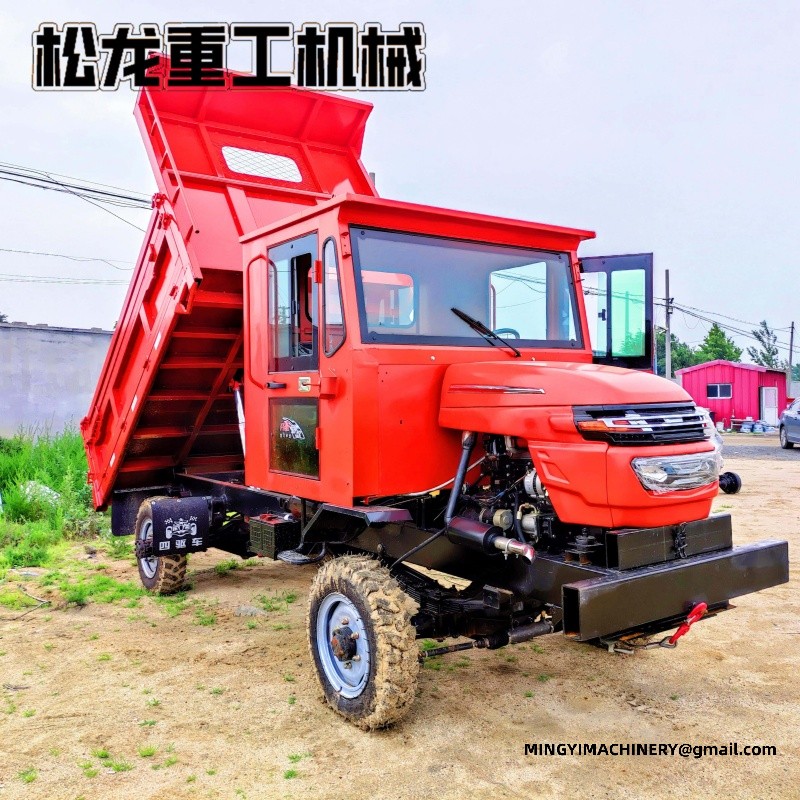
Cab specification follows the hours. The 16.Upgraded and the 24.Luxury have a fully enclosed cab, the 11.Luxury an enclosed cab and the 21.Upgraded a simple cab. All four carry hydraulic power steering, a two-person comfort seat and twin-battery electric start. The 11.Luxury and the 24.Luxury add a side-opening rear body tailgate, and the 24.Luxury pairs it with a cab ladder. A side-opening tailgate lets the driver place material to one side, which is what the placement requirement above is really asking for, and the ladder is what makes looking into the body a job that gets done.
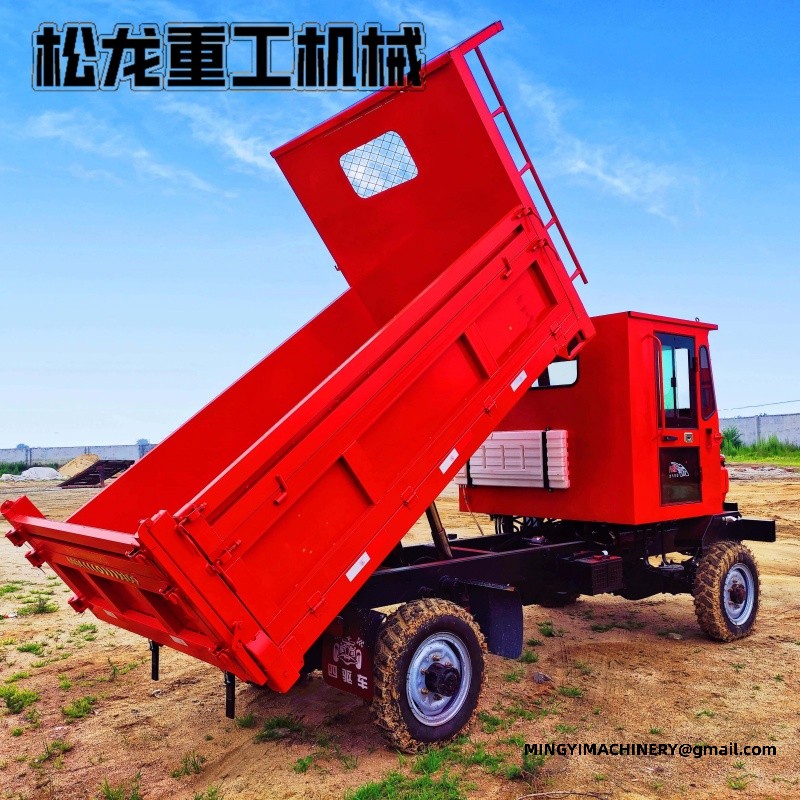
Tipping with a load that has shifted
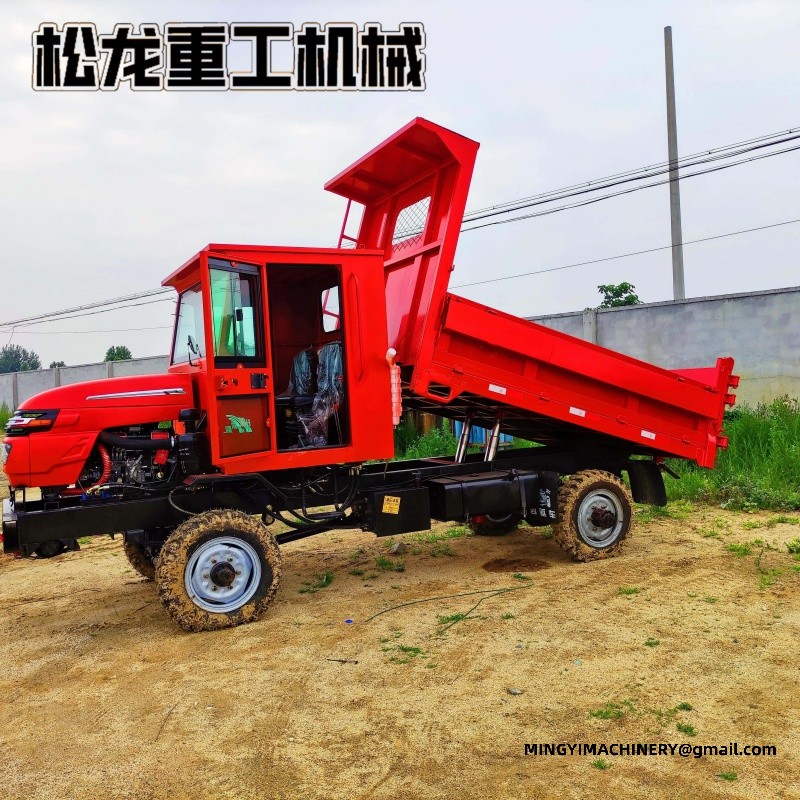
Twin hydraulic rams lift the body on every configuration, which is what allows a load that has shifted to one side to be lifted without twisting the body. That is not an unusual case: material loaded by an excavator lands where the bucket released it and has usually moved by the end of the haul. Every configuration has a tailgate with a self-dumping function, which starts the load leaving before the body reaches full height and shortens the time the machine spends raised on ground that may not be level.
Springs, bonnet and the small differences
Heavy-duty leaf springs are specified on the 11.Luxury, the 21.Upgraded and the 24.Luxury, which is what absorbs the repeated impact of a loaded body landing rather than a steady weight. Bonnet shape differs too: the 16.Upgraded keeps the round-nose bonnet while the other three use the square-nose, and that is the panel a driver sights over when placing the machine in a tight bay. Neither line decides a purchase on its own, and both are noticed every day.
Where this class of machine earns its keep
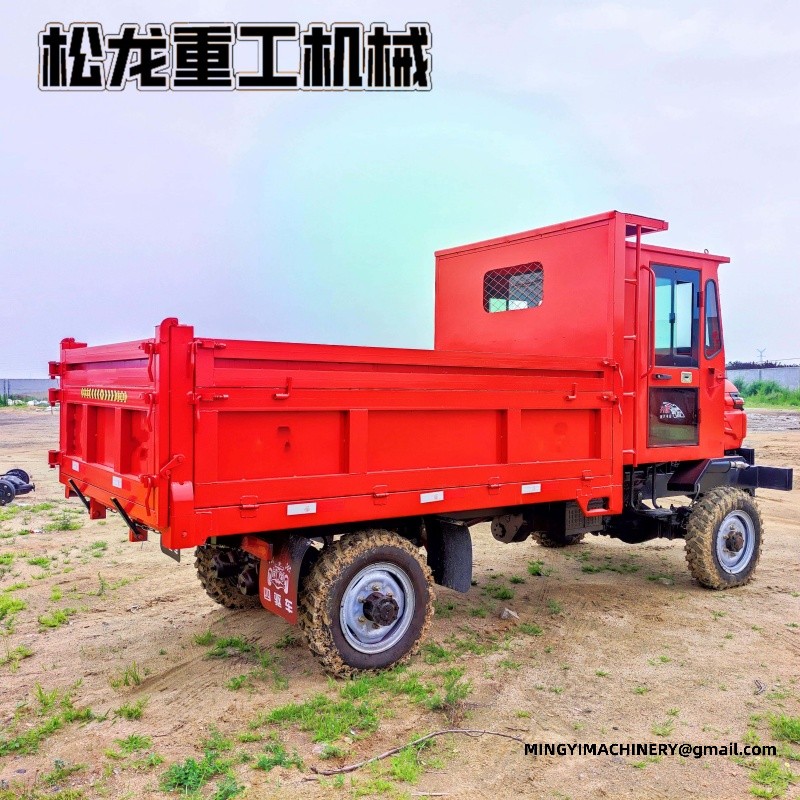
The work that suits a machine of this size is short-haul and repetitive: moving material from an excavation to a nearby tip, supplying a trench, feeding a small plant, or clearing behind another trade. It is not the machine for a long haul across a large site, where a larger body and a road-pattern tyre would cover the same ground in fewer passes. Buyers whose work is mostly short-haul and tight should say so when ordering, because it points at the smaller body rather than the larger one.
Matching the machine to the loader
A dumper is half of a pair, and on most sites the cycle belongs to whichever half is slower. Matching the body to the loader bucket is the practical way to size it: a body that takes too many buckets to fill keeps the loading machine waiting, and one that is filled in a single pass is carrying less than it could. Where the buyer knows which machine will do the loading, that fact belongs in the order discussion, because it settles the body question more reliably than any rule of thumb.
Ground that has been worked wet
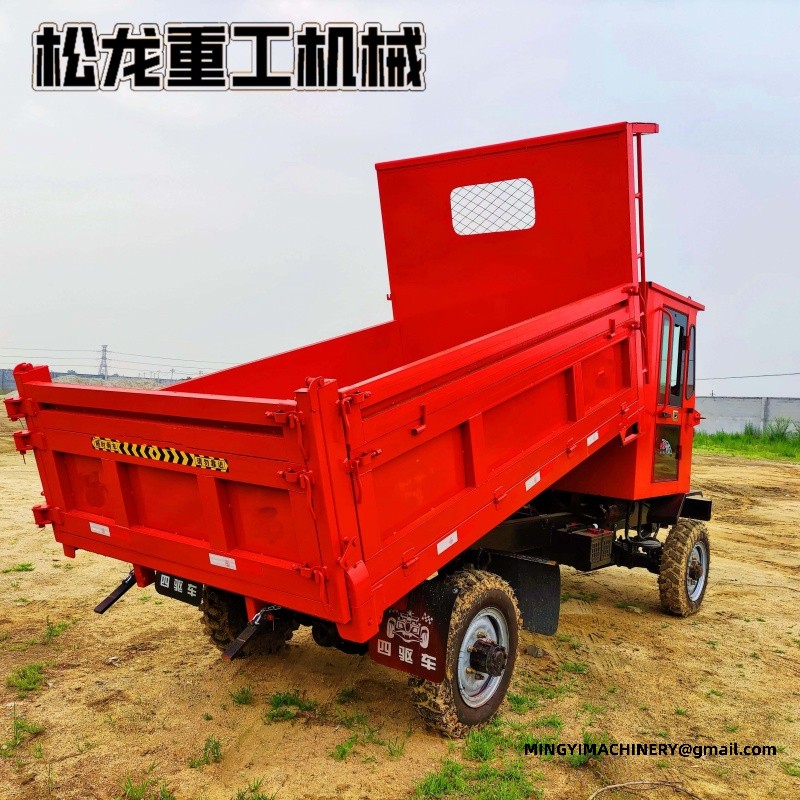
The difficult surface on a tight site is not usually mud but ground that has been worked wet until it has lost its structure. It looks firm enough to walk on and will not carry a loaded machine, and the machine that gets stuck on it is generally the one that stopped rather than the one that was too heavy. The answer is to keep moving, to use low range rather than wheelspin, and to plan the route so that a loaded machine is never required to restart on the worst section. Six tyres rather than four buys margin here.
Daily checks before the shift
A walk-around at the start of each shift should cover the body and ram mountings, the hydraulic hoses where they run past the body, tyre condition and pressures, brake response and fluid levels, and the tailgate latch. Air filtration needs more frequent attention in dust, and on machines working abrasive fill the body floor wears from the inside out. Those few minutes are what keep a machine working through a program rather than being the reason the program slips.
Parts, service and adding a second machine
Parts availability usually decides the engine brand and the axle pattern, and a machine built around components the local network already carries is serviced from stock rather than ordered in. Fleets that expect to add a second machine should settle the driveline on the first order: one engine brand, one axle pattern and one cab means one parts shelf and a driver who can move between machines without relearning the controls. Remote diagnosis shortens most faults, since a walk-around on video with the panels open usually identifies the cause without waiting for a visit.
Packing, papers and pre-shipment checks
For export orders, packed dimensions, securing points and any dismantling required are settled before the machine leaves the factory, and the commercial invoice, the packing list and any certificate the destination requires are agreed at order stage, because papers that arrive incomplete delay clearance longer than the voyage takes. Before crating, each machine is run: the engine is brought to temperature, the tipping circuit is cycled under load, the brakes are tested with a load, and every function is checked against the build sheet that travels with it.
Which configuration to start from
The decision usually comes down to the route rather than the load. A tight site with soft ground wants the shorter body, drive at both ends all day and the mountain tyre pattern. A longer haul on a maintained route wants the larger body, the selectable gearbox and the radial tyres. Saying which of those two describes the work is the fastest way to get a recommendation that can be checked against something rather than taken on trust.
| # | 11.Luxury | 16.Upgraded | 21.Upgraded | 24.Luxury |
|---|---|---|---|---|
| 1 | Single-cylinder diesel engine, 32 hp | Four-cylinder 490 diesel engine | Four-cylinder 4105 turbocharged diesel engine | Four-cylinder 4108 turbocharged diesel engine |
| 2 | Part-time gearbox, selectable 2WD/4WD | Full-time gearbox with four-wheel drive | Model 140 part-time gearbox with four-wheel drive | Model 145 part-time gearbox, selectable 2WD/4WD |
| 3 | High/low range with crawler gear | High/low range with crawler gear | High/low range with crawler gear | High/low range with crawler gear |
| 4 | Enclosed cab | Fully enclosed cab | Simple cab | Fully enclosed cab |
| 5 | Six 700-16 mountain tyres | Oil brakes | Six 825R16 steel-belted radial tyres | Six 825R16 steel-belted radial tyres |
| 6 | Model 212 front axle | Six 700-16 mountain tyres | Reinforced ISUZU-pattern front axle | Reinforced ISUZU-pattern front axle |
| 7 | Model 130 rear axle | Front axle 212 | Reinforced 1080 rear axle with air cut-off brake | Reinforced 1080 rear axle |
| 8 | Air cut-off brakes | Rear axle 130 | Air cut-off brakes | Air cut-off brakes |
| 9 | Reinforced 60 x 140 mm square tube frame | Reinforced 60 x 140 mm square tube frame | Reinforced 80 x 180 mm square tube frame | Reinforced 80 x 180 mm square tube frame |
| 10 | Rear body 2.2 m long x 1.5 m wide x 0.45 m high | Rear body 2.2 m long x 1.5 m wide x 0.45 m high | Rear body 3.0 m long x 2.2 m wide x 0.45 m high | Rear body 3.0 m long x 2.2 m wide x 0.45 m high |
| 11 | Tailgate with self-dumping function | Tailgate with self-dumping function | Tailgate with self-dumping function | Tailgate with self-dumping function |
| 12 | Side-opening rear body tailgate | Hydraulic power steering | Hydraulic power steering | Side-opening rear body tailgate with cab ladder |
| 13 | Hydraulic power steering | Twin hydraulic rams | Twin hydraulic rams | Hydraulic power steering |
| 14 | Twin hydraulic rams | Two-person comfort seat | Two-person comfort seat | Twin hydraulic rams |
| 15 | Two-person comfort seat | Twin-battery electric start | Heavy-duty leaf springs | Two-person comfort seat |
| 16 | Heavy-duty leaf springs | Round-nose bonnet | Twin-battery electric start | Heavy-duty leaf springs |
| 17 | Twin-battery electric start | — | Square-nose bonnet | Twin-battery electric start |
| 18 | Square-nose bonnet | — | — | Square-nose bonnet |
For a specification discussion or a build sheet for this articulated dumper, contact sales@mingycn.com or reach us on LINE (ID: mingyicn).









