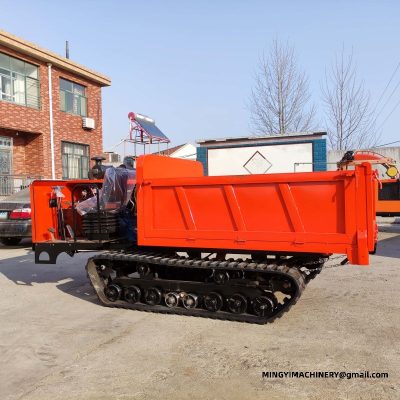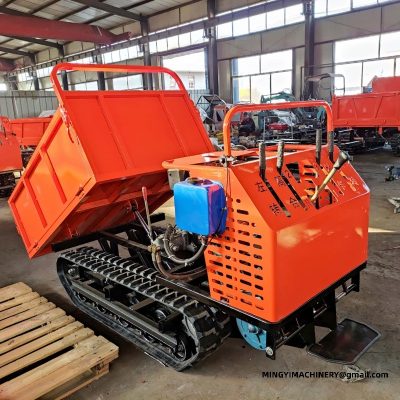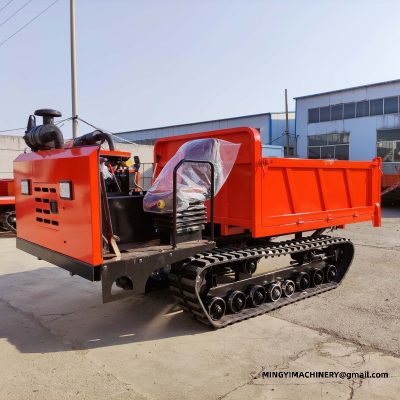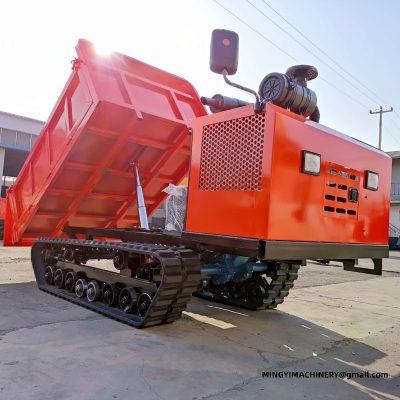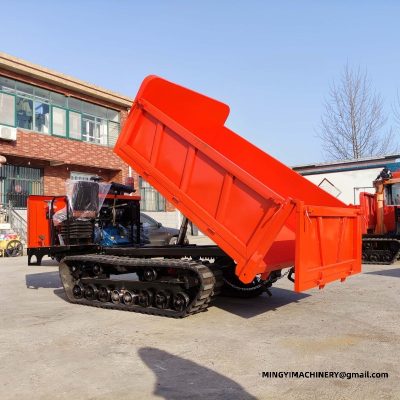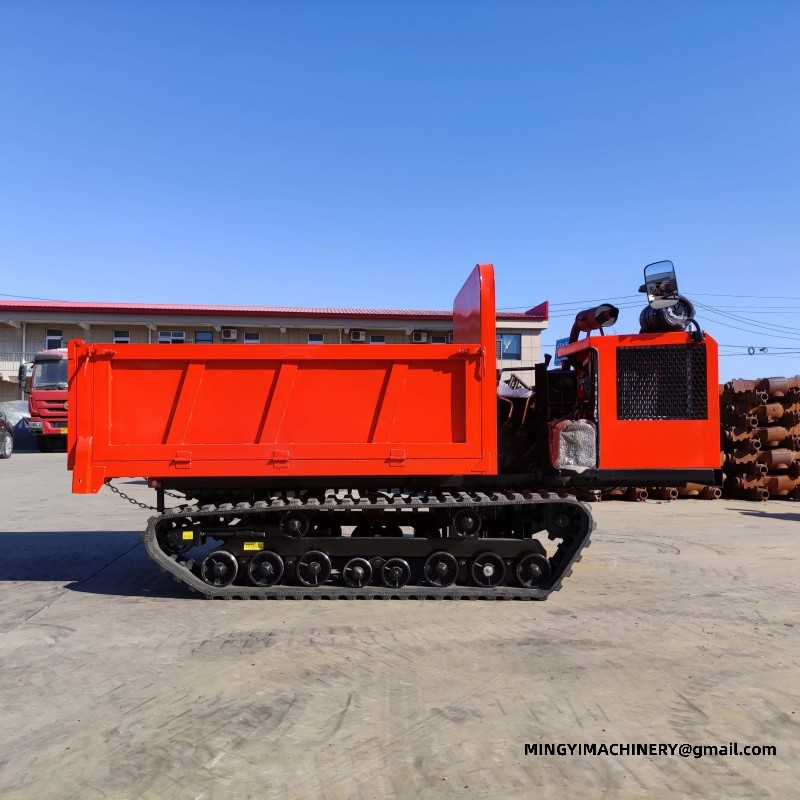
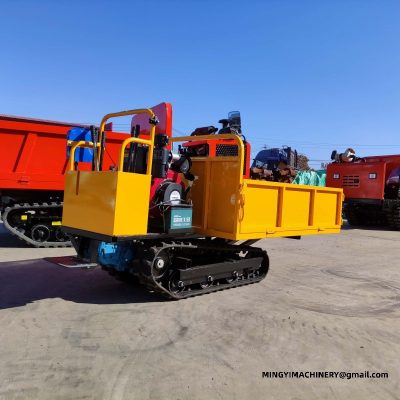
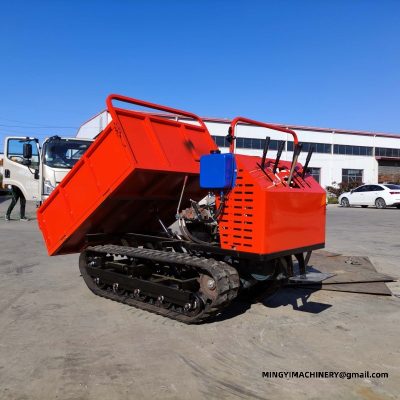
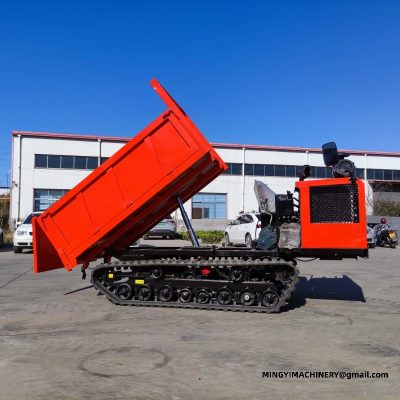
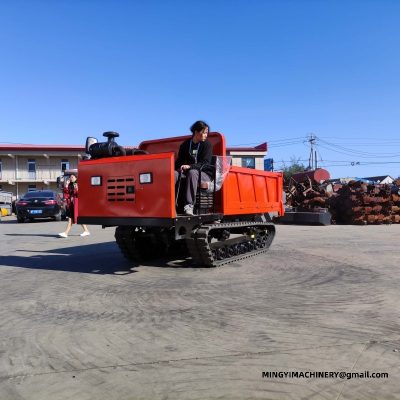
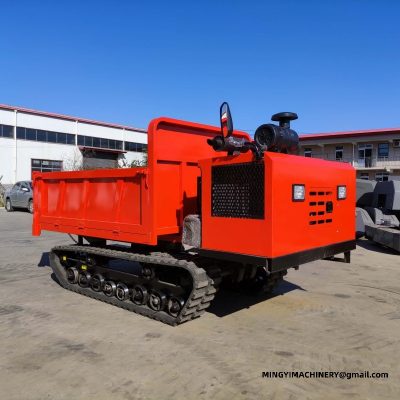
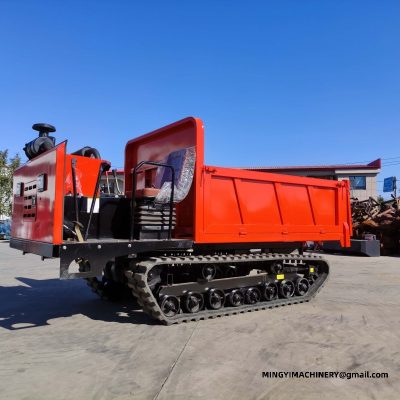
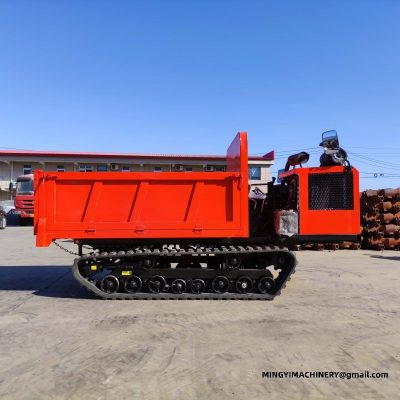
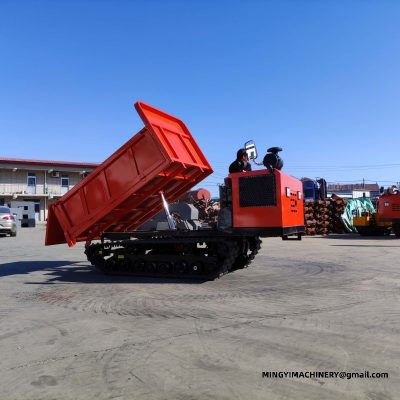
Two buyers can order the carrier for the same nominal job and receive different machines, because the ground and the access decide more than the workload does. The sections below explain which questions separate the two cases.
Daily checks and maintenance on crawler dumper
Service intervals exist because wear is predictable. Following the maker schedule on this class of machine takes far less time than repairing the damage that follows a missed oil change or a filter left in place past its life. A simple log helps. Recording hours, fuel and any adjustment made to the unit in daily use gives the workshop a history, and that history is what turns an intermittent fault into a one-visit repair instead of three.
Working hours and duty cycle of crawler dumper
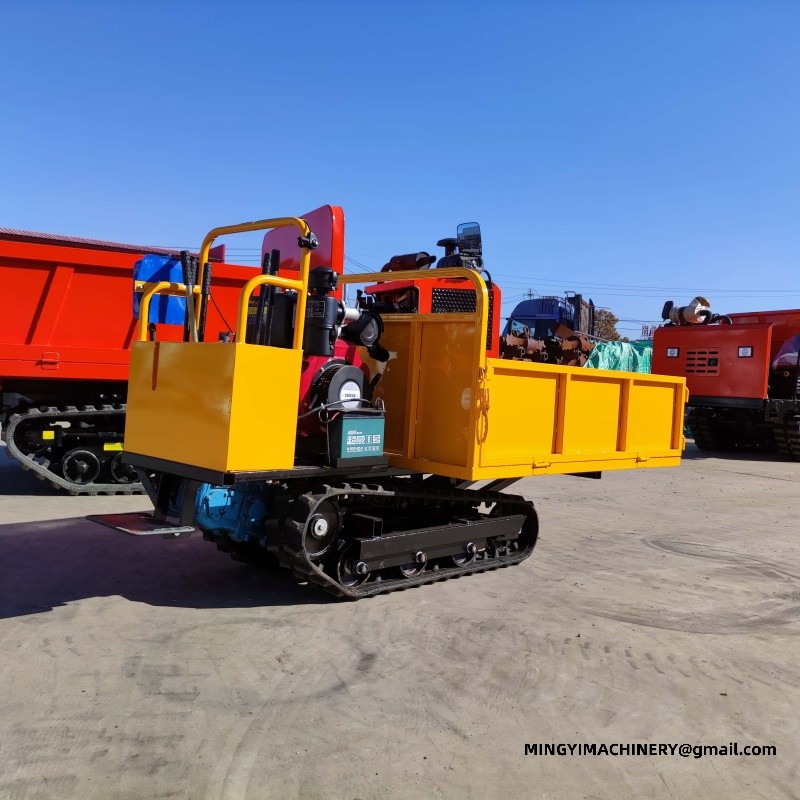
Duty cycle is the honest measure of a machine. A machine of this size working a few hours a week has different needs from one working two shifts, and the cooling, filtration and service intervals should follow the hours rather than the calendar. Hour planning helps at resale as well. The equipment on site with a recorded service history and a sensible hour count is easier to sell than one with the same hours and no records, whatever its condition.
Crane and self-loading options on crawler dumper
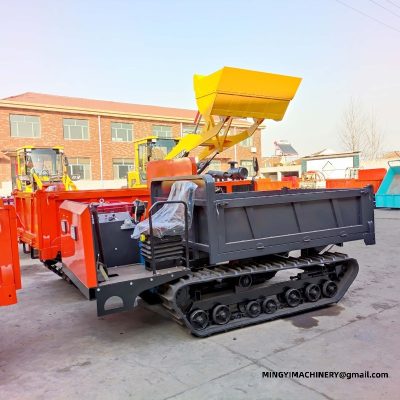
A crane turns a carrier into a loading machine. The machine itself fitted with a small hydraulic crane loads itself, which removes a second machine from the job and is often the reason for choosing one. Stability governs what the crane can lift. Ground condition, load radius and the weight on the tracks of the model in question decide the safe figure, and those are established before the lift rather than during it.
Storage and downtime care for crawler dumper
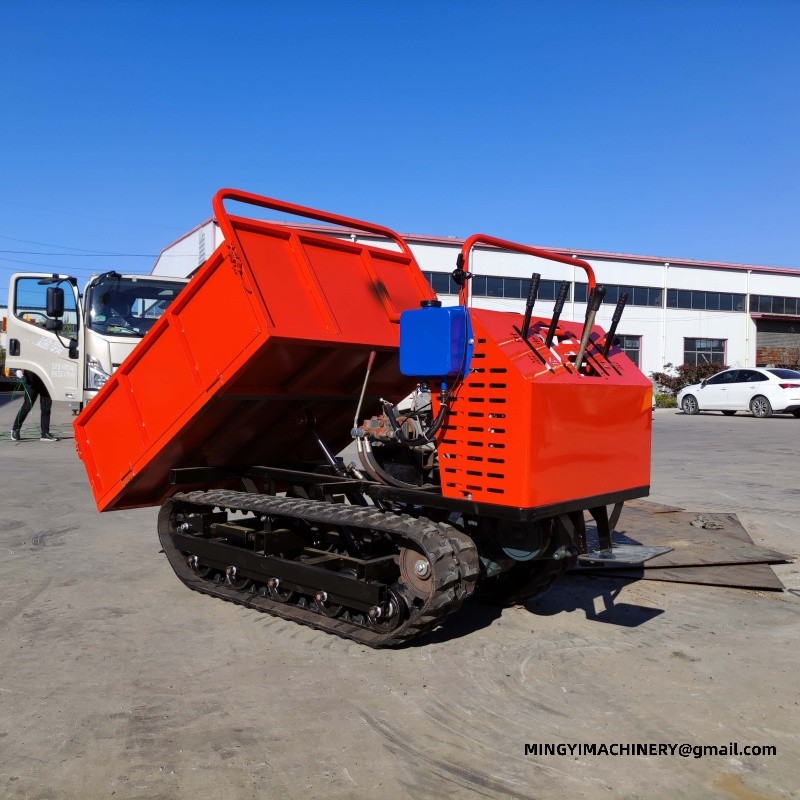
Standing still is hard on machinery. The machine in that duty left for weeks benefits from a clean, dry, covered space, a charged battery and a fuel system prepared for the layoff, and all three effort very little. A periodic start is better than none. Running the unit on the job to operating temperature during a long layoff keeps seals and the charging system in better condition than leaving it untouched until the next job.
Cold weather and low temperature work with crawler dumper
Cold changes how a machine starts and how it warms up. Allowing a machine built for the work to reach operating temperature before loading it, and using the correct grade of oil and fuel for the season, prevents most cold-start problems.
Handover and documentation for crawler dumper
Handover should include the documents as well as the keys. Parts list, service schedule and the operator notes for the equipment in service are what the workshop needs in month six, and they are much harder to obtain later.
Payload and loading a crawler dumper
Payload is the number that matters on a short haul. Specifying the carrier against the material and the number of trips per day gives a realistic figure, because a body that looks half full can already be at its limit with stone.
Upgrading and reconfiguring crawler dumper
Upgrades should be checked against the base machine. Hydraulic capacity, mounting interface and stability all limit what can reasonably be added to this class of machine, and confirming those limits avoids an unsatisfactory result.
Typical duties and working sites for the unit in daily use
Orchard and vineyard work is a natural fit. Narrow rows, soft ground and short hauls suit a machine of this size better than a truck, and the machine works where there is no room to turn anything larger. Farm and estate work uses the machine differently again. Feed, muck, aggregate and firewood across fields and tracks is the seasonal mix that the equipment on site handles without damaging the ground.
Parts, service and support for the machine itself
Support after delivery is a parts question. Filters, belts, hoses and the wearing items specific to the model in question are what a buyer should plan to hold before the first service interval rather than order after a failure. Parts availability usually decides the engine and the brand. A machine built around components the local network already carries is serviced from stock, which is the difference between a day lost and a week lost. Remote diagnosis shortens most faults. A walk-around on video with the panels open often identifies the cause on the machine in that duty without waiting for a visit, and avoids shipping a part that turns out not to be needed.
Warranty, commissioning and early checks
Commissioning is the point where most avoidable issues are found. Checking levels, fasteners and function on the unit on the job before it goes to work takes an hour and prevents a claim conversation later.
Lighting and low light operation of a machine built for the work
Planning helps more than extra lamps. Positioning the equipment in service so that the work is lit from the machine side, and keeping the route clear, does more for safety than adding light to a badly planned task.
Export packing and shipping of the carrier
Container loading is a planning exercise. Confirming how this class of machine is packed and how many units fit a container is what turns a per-unit freight estimate into a delivered figure the buyer can actually plan against.
Load, ballast and stability on the unit in daily use
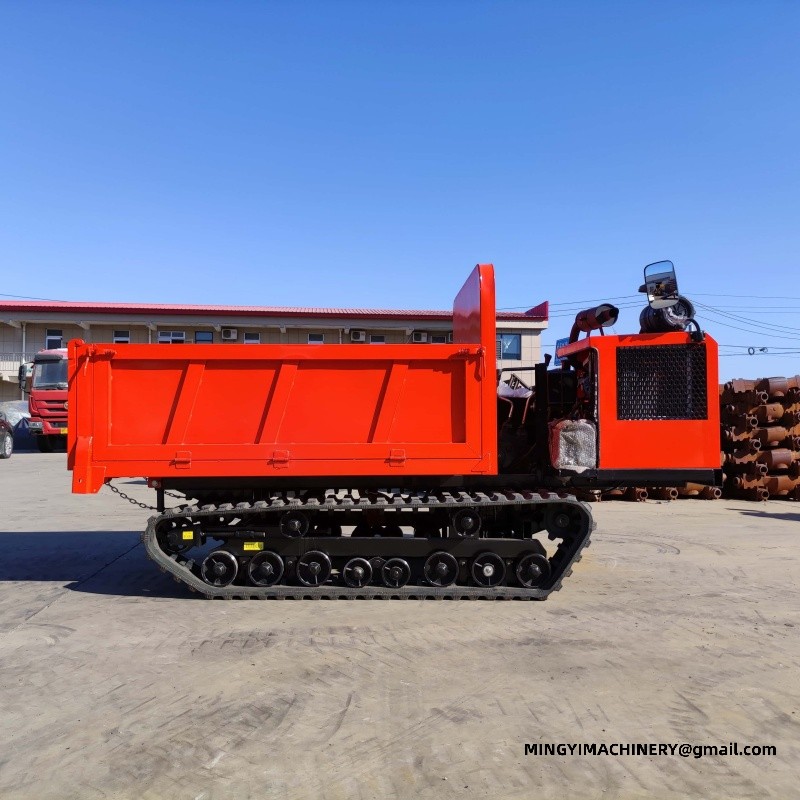
Ballast and attachment weight change the machine. Adding a heavy tool to a machine of this size moves the centre of gravity, and the counterweight or configuration should be matched to the tool rather than assumed.
Matching the equipment on site to ground conditions
Ground decides more of the outcome than power does. Soft, wet or loose surfaces call for a wider footprint and lower ground pressure, while hard standing allows a narrower machine that turns in less space and travels faster between tasks. The working surface should be surveyed before the model in question is specified. A machine that is stable on compacted gravel can be unusable on the same site after rain, and the difference shows up as lost days rather than as a fault. Traction and flotation are two separate questions. The machine itself may have the power for a slope and still not have the grip, so the surface, not the engine rating, is usually what limits the working day.
Wear items and life of the machine in that duty
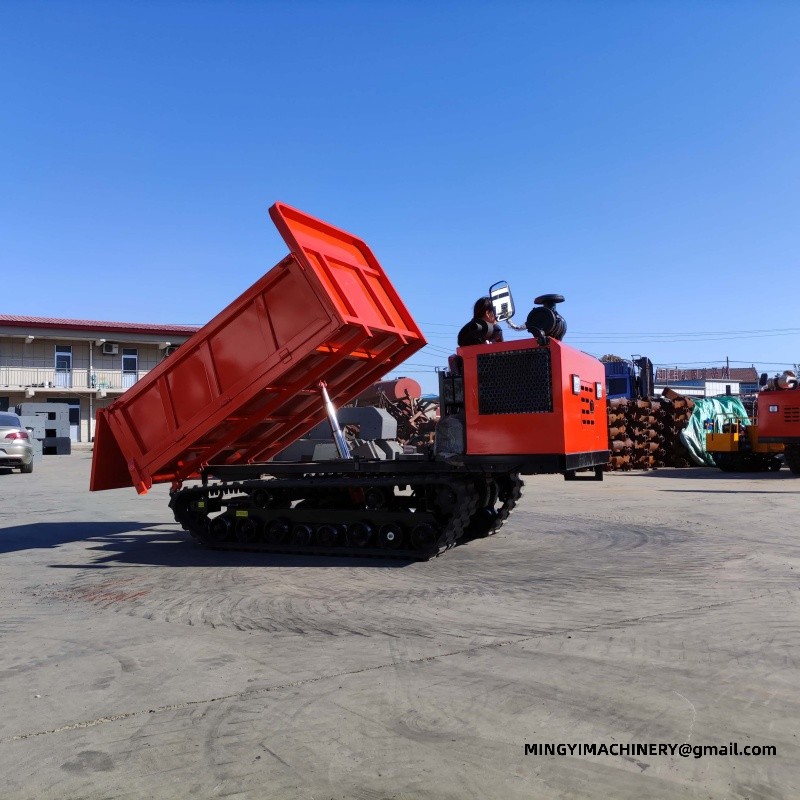
Certain parts are designed to be consumed. Knowing which items on the unit on the job are wearing parts, and roughly how long they last in the duty the machine sees, turns replacement into a plan rather than a breakdown.
Safe working practice around a machine built for the work
Slopes and edges deserve a separate check. The equipment in service that is stable on level ground behaves differently across a gradient, and the safe working angle is a number worth knowing rather than estimating.
Gradient, stability and control on the carrier
Gradient is where a crawler carrier earns its place. This class of machine with a low range climbs loaded where a wheeled machine would need a second run, and that decides whether a track is usable at all. Side slopes need respect. Turning a loaded the unit in daily use across a gradient is where stability is lost, and the safe habit is to keep the machine straight up and down the slope.
Ordering, lead time and delivery of a machine of this size
The order should state the configuration in writing. Engine, attachments, colour, documents and any market requirement are clearer on the build sheet for the equipment on site than in a conversation after delivery. Delivery planning includes the receiving end. Knowing whether the machine itself will be craned, driven or forked off, and whether the site can accept it, is settled before dispatch rather than on the day.
Running the model in question in a mixed fleet
Fleet value comes from interchangeability. Operators who can step between machines without retraining, and a workshop that stocks one set of filters, keep utilisation higher than a fleet of individually optimised units. Utilisation matters more than the purchase decision over a few years. The machine in that duty that sits idle ties up the same yard space standing still as one that earns, so the buying decision should follow the hours the machine will realistically work.
Customisation and build options for the unit on the job
Build options are where a standard machine becomes the right machine. Colour, guarding, lighting, seating and hydraulic provisions can usually be set at build time on a machine built for the work, and are far simpler then than as a retrofit. Customisation should still be limited to what the work needs. Each addition to the equipment in service is another item to maintain, so the useful question is not what can be added but what the job list actually requires.
Specifying the carrier against the job list
Buyers who specify this class of machine on paper before enquiring get specifications that can be compared. Without that list, two suppliers will propose two different machines and the simpler one is usually the smaller one, not the better value.
Reference data for the unit in daily use
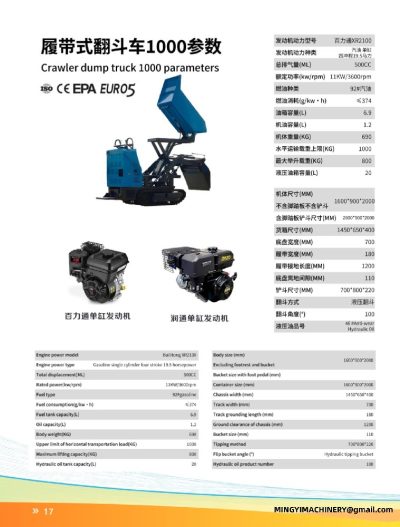
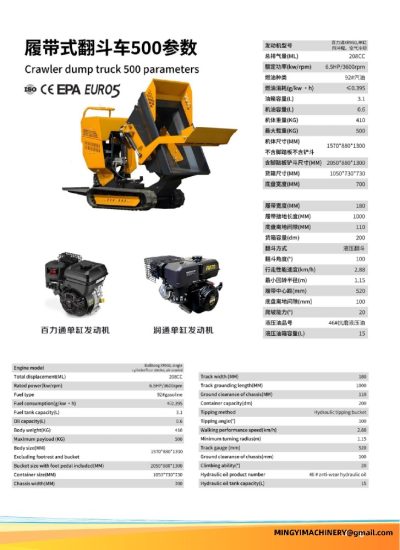
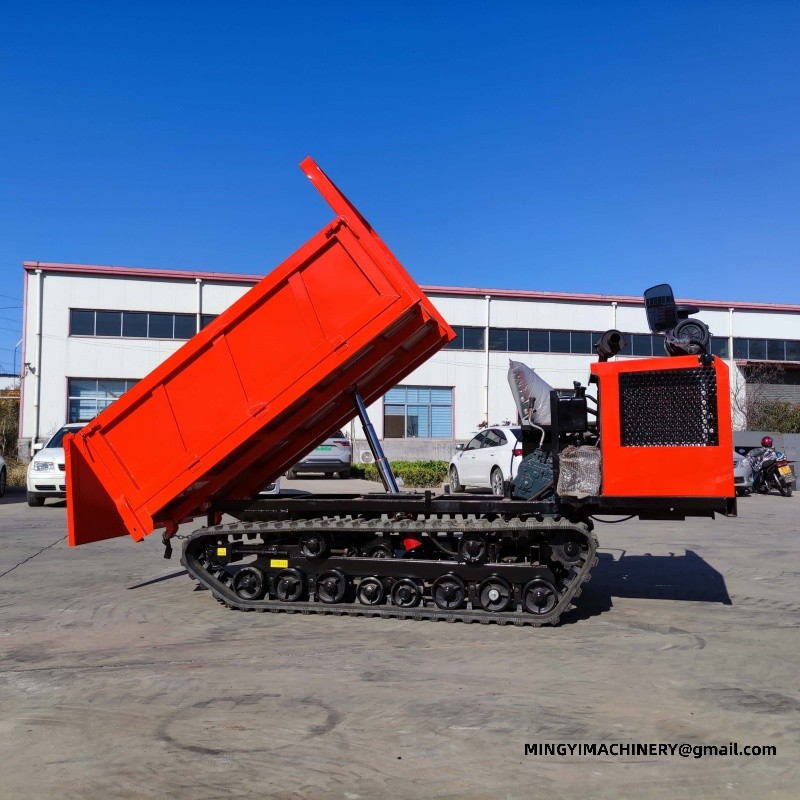
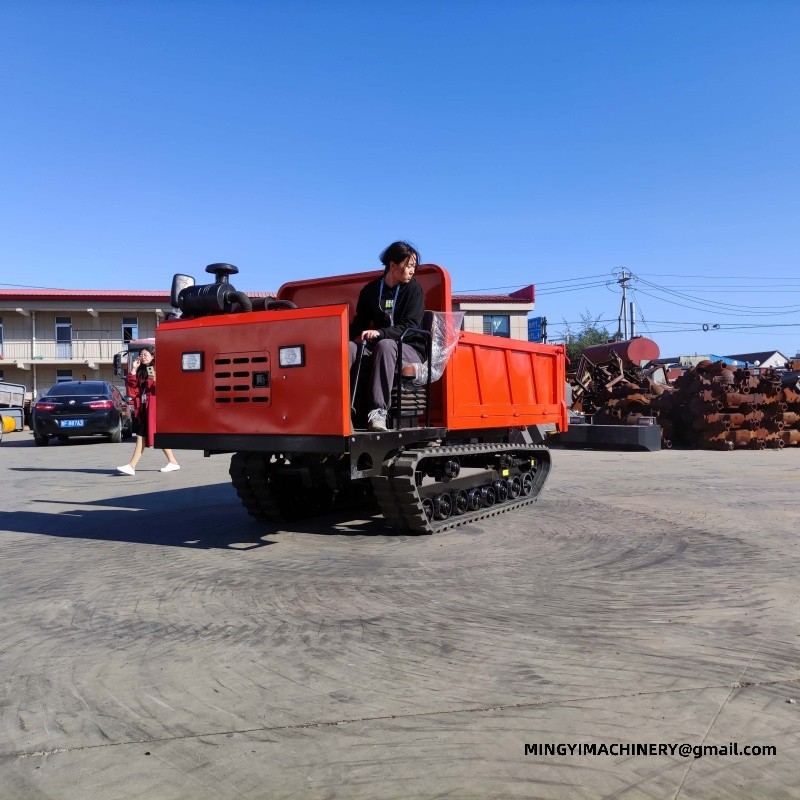
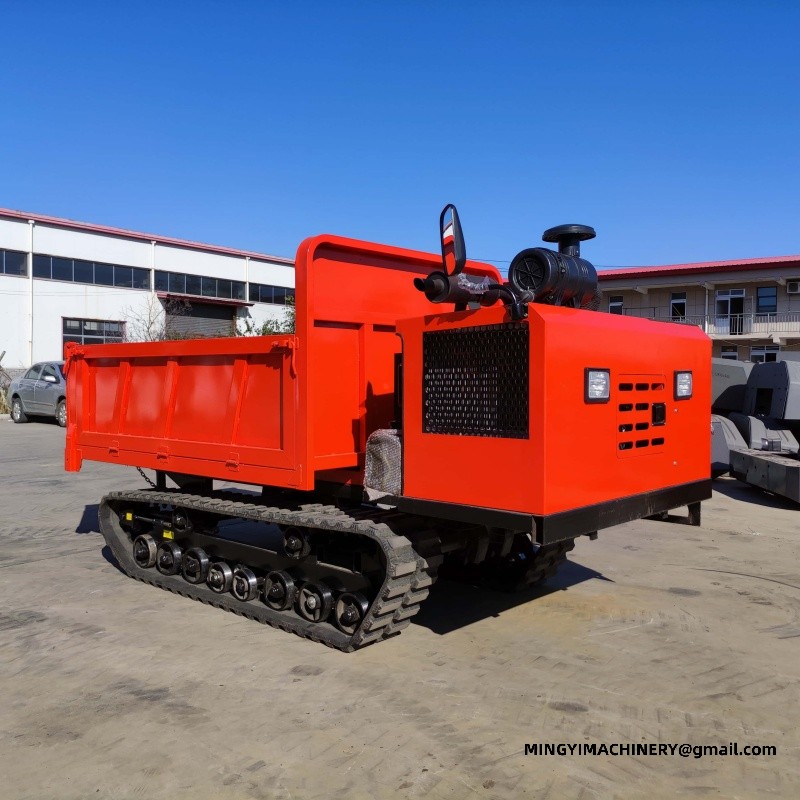
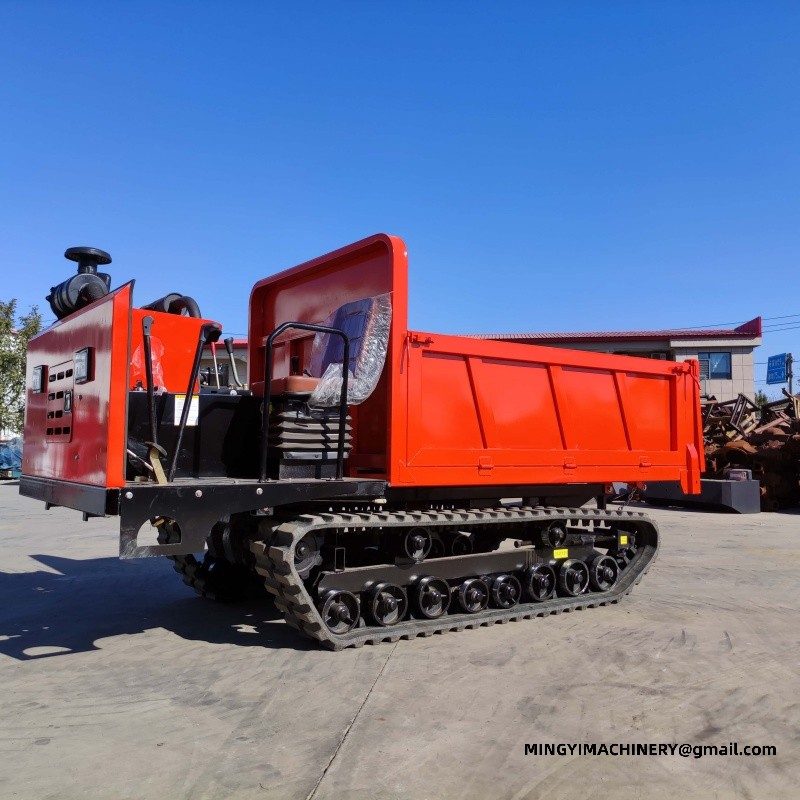
The engines and payloads below are the options offered on this crawler carrier. Output and payload are confirmed together with the route, because the gradient and the ground decide what the machine can carry before the engine rating matters.
| Output | Engine | Rated payload | Rated power |
|---|---|---|---|
| 85 hp | 4102 engine 85 hp | 650 kg / 750 kg | — |
| 25 hp | Engine 25 hp | 650 kg / 750 kg | — |
| 58 hp | 490 engine 58 hp | 650 kg / 750 kg | — |
| 8 hp | 178 engine 8 hp | 650 kg / 750 kg | — |
| 10 hp | 186 engine 10 hp | 650 kg / 750 kg | — |
| 106.08 hp | 4102 turbo 78 kw*1.36=106.08 hp | 650 kg / 750 kg | 78 k W |
| 12 hp | 192 engine 12 hp | 650 kg / 750 kg | — |
Options offered on a machine of this size
| Item | Note |
|---|---|
| Crane option | A 0.5 t or 1 t crane can be fitted for self-loading. |
| Track undercarriage | Rubber or steel track undercarriage is selected against the ground. |
| Canopy option | Simple canopy, semi enclosed canopy or fully enclosed cab. |
Fuel, oil and fluid quality for the equipment on site
The specification for oil is written for a reason. Using the grade and the change interval set for the machine itself keeps the engine and the hydraulic system inside the range they were designed for.
Pre-delivery inspection before the model in question leaves the shop
Inspection is a list, not a glance. Before the machine in that duty is released the fluid levels, belt tension, electrical connections and safety decals are each ticked off, and anything that fails stays in the shop rather than travelling with the machine.
Planning the season around the unit on the job
Workload is rarely even across the year, and the machine should be specified for the busy weeks. A machine built for the work sized only for the average month will be the limiting factor exactly when the work is worth the most.
Storage and long idle periods for the equipment in service
Standing still is harder on a machine than working. Preparing the carrier for a long idle period means clean fluids, a charged battery and protection for the exposed surfaces, because neglect is not the same as rest.
Keeping a service record for this class of machine
Service history also protects the warranty position. Evidence that the unit in daily use was maintained at the specified intervals and with the specified fluids settles questions that would otherwise be argued.
Reading the early symptoms on a machine of this size
Operators notice things first because they hear the machine every day. Encouraging the person on the equipment on site to report small changes, and acting on them, is the most effective maintenance programme there is.
Packing, loading and shipment of the machine itself
Container loading is a planning exercise. The overall dimensions and the operating weight of the model in question decide whether it ships whole, partly disassembled or with the attachment removed, and that decision is made before the booking.
Cold weather and winter care for the machine in that duty
Cold exposes weak batteries, thick oil and water in the fuel. Preparing the unit on the job for winter means the right grade of oil, a battery in good condition and fuel that will not wax in the tank overnight.
Handover and getting familiar with a machine built for the work
The first day with a new machine sets the pattern for the next five years. Handover for the equipment in service covers the control layout, the daily check points and the limits the operator needs to know before the first real load is lifted or carried.
Hot, humid and dusty conditions around the carrier
Heat and dust shorten service intervals rather than machine life. In these conditions the filters on this class of machine need attention more often, and the cooling surfaces need to be kept clear to hold the working temperature.
Every line above comes from the build sheet for the unit in daily use, and the final configuration is confirmed against the working conditions and the destination before production.
E-mail:sales@mingycn.com
LINE(ID):mingyicn
Related pages
rubber track transporter · mini tracked carrier · agricultural 4x4 dumper for mining and quarry work · Crawler Transportvehicle