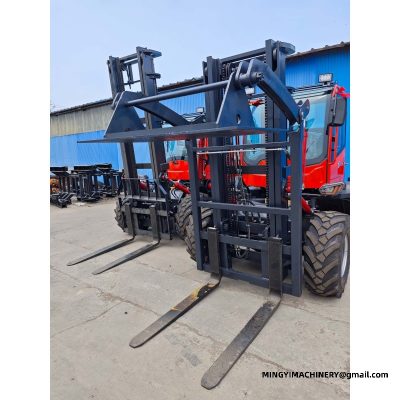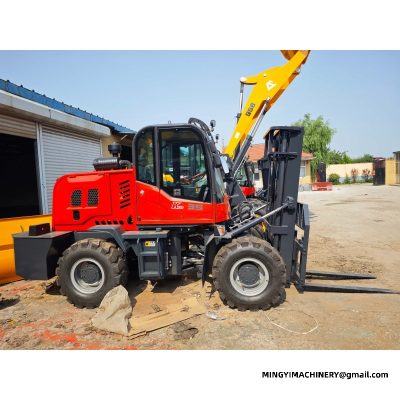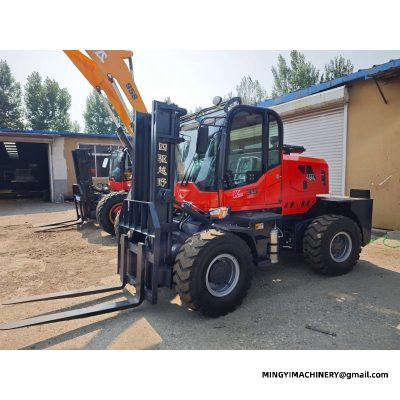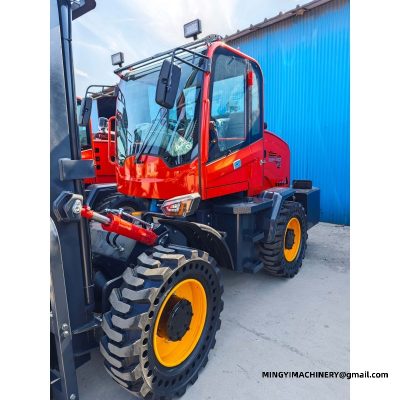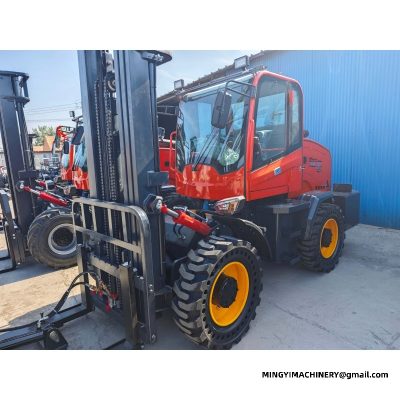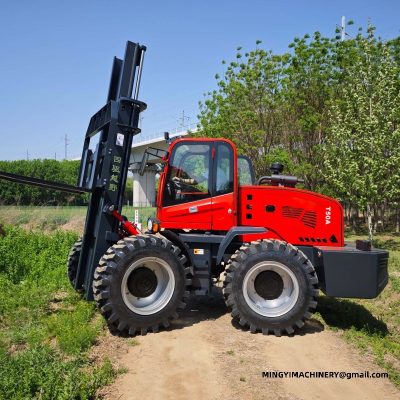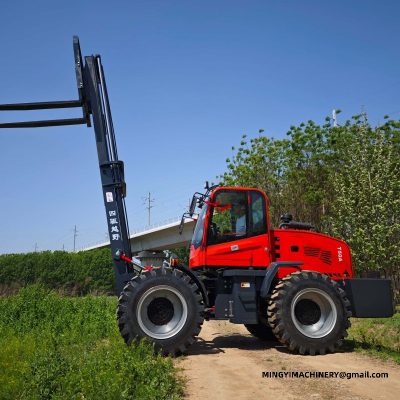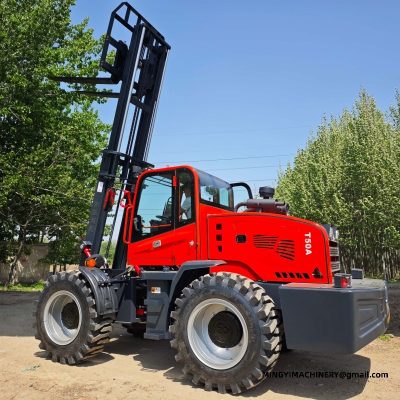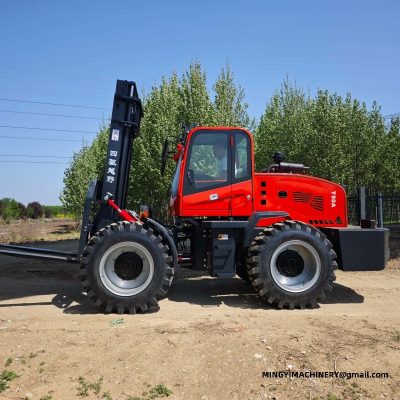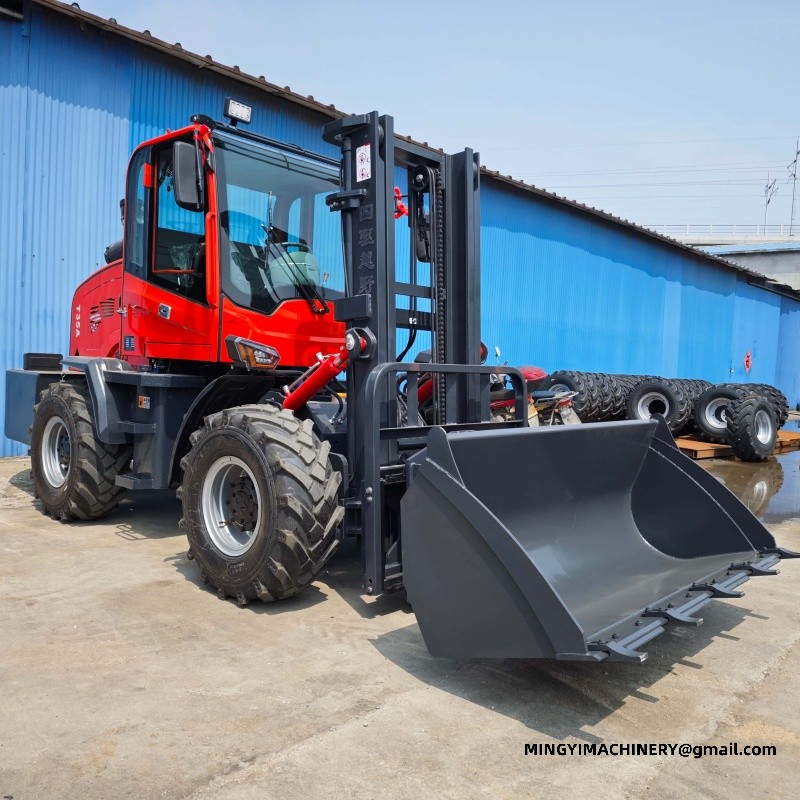
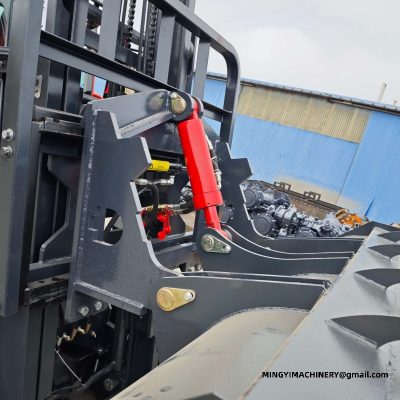
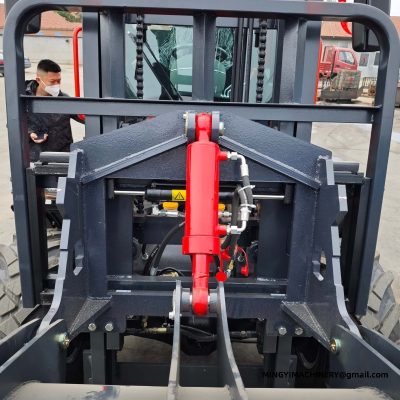
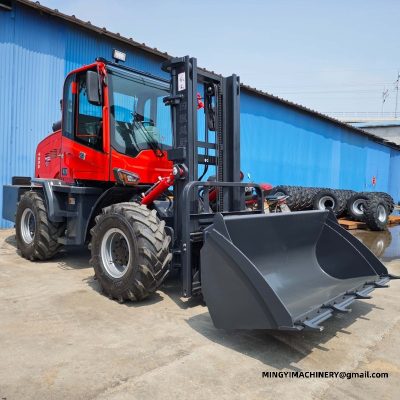
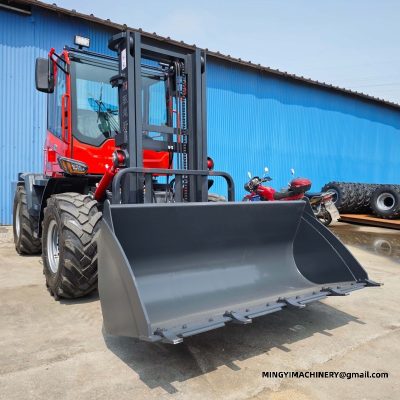
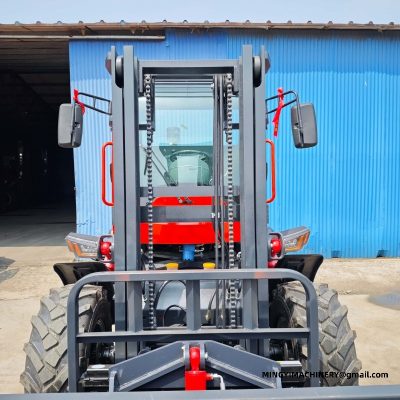
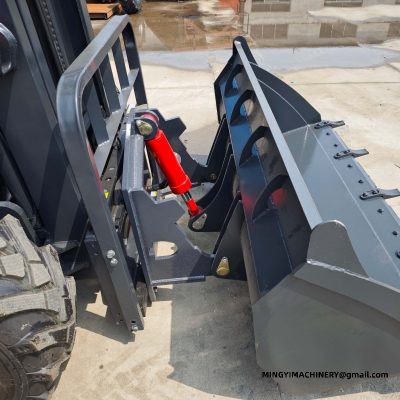
The range covered here includes the forklift in the configurations that are built and shipped. Rather than repeat a specification table on its own, the sections below explain what each figure means in use and where the trade-offs sit.
Operator technique and familiarisation
Familiarisation should cover the limits as well as the controls. Knowing where this class of machine loses stability, how it behaves at full reach, and what the warning lights mean prevents the incidents that are put down to bad luck. A short handover pays for itself. Operators who understand why the unit in daily use is set up the way it is will report a change in behaviour early, which is usually the point where a repair is simplest.
Stability and safe working practice around 4x4 rough terrain forklift
Stability is the first limit, not the last. Load, reach, ground and gradient together decide what a machine of this size can safely carry, and the conservative figure is the one that keeps the machine upright. People on foot are the real hazard. A plan that separates pedestrians from the working area of the equipment on site, with a banksman where visibility is poor, prevents the incidents that dominate site statistics. Seat belt, parking brake and a level load are basics that get skipped. On rough ground especially, the discipline of lowering the load before travelling on the machine itself is what prevents most tip-overs.
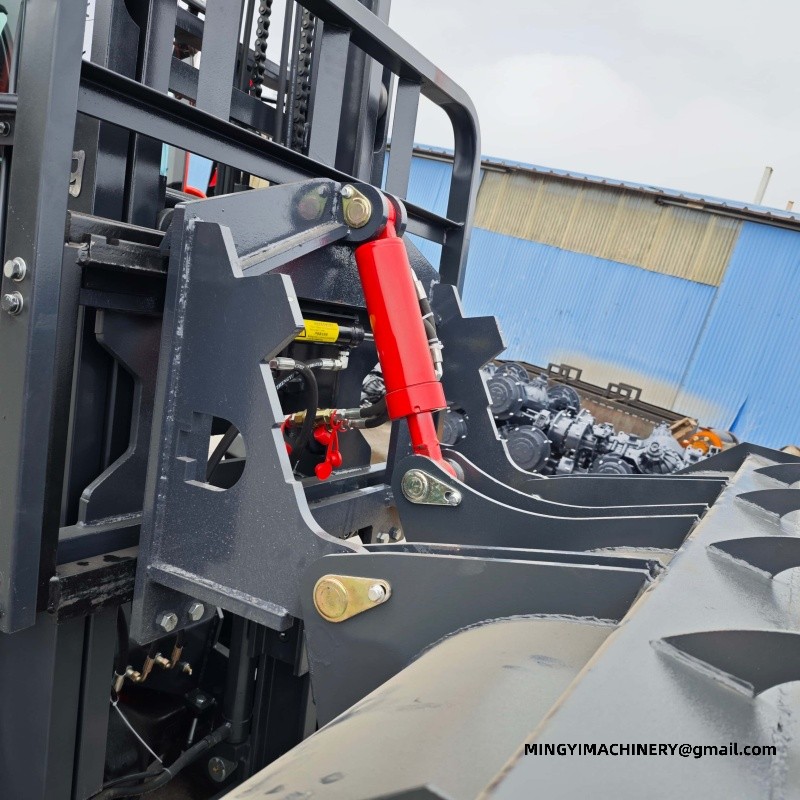
Brakes, steering and control on 4x4 rough terrain forklift
Steering response differs from a warehouse truck. Articulated steering on the model in question puts the rear of the machine somewhere unexpected for a new operator, and familiarisation belongs before the first real load.
Working hours and duty cycle of 4x4 rough terrain forklift
Duty cycle is the honest measure of a machine. The machine in that duty working a few hours a week has different needs from one working two shifts, and the cooling, filtration and service intervals should follow the hours rather than the calendar. Seasonal work changes the maintenance calendar. Machines that work hard for two months and stand for ten need preparation before storage and a check before returning to work, and both are simpler than the repairs they prevent. Hour planning helps at resale as well. The unit on the job with a recorded service history and a sensible hour count is easier to sell than one with the same hours and no records, whatever its condition.
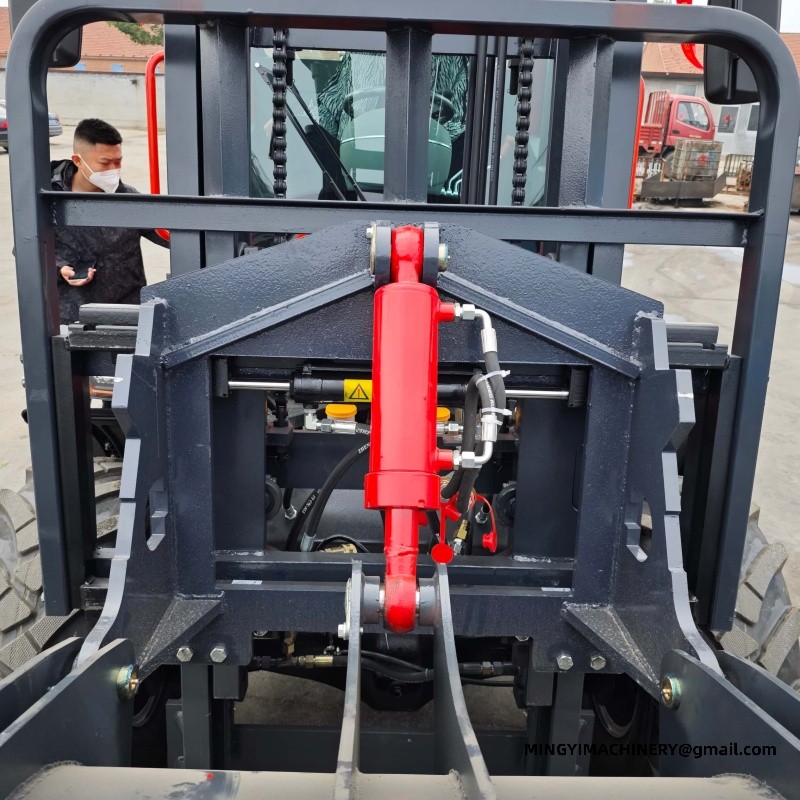
Upgrading and reconfiguring 4x4 rough terrain forklift
Upgrades should be checked against the base machine. Hydraulic capacity, mounting interface and stability all limit what can reasonably be added to a machine built for the work, and confirming those limits avoids an unsatisfactory result. The decision is economic as well as technical. Comparing the work of reconfiguring the equipment in service against a different machine is a short calculation that usually gives a clear answer.
Fitting 4x4 rough terrain forklift into the wider site plan
Access and storage are worth settling early. Where the forklift will be parked, refuelled and serviced on site affects the working day more than most specification details, and it takes nothing to plan.
Fuel use and running demands of 4x4 rough terrain forklift
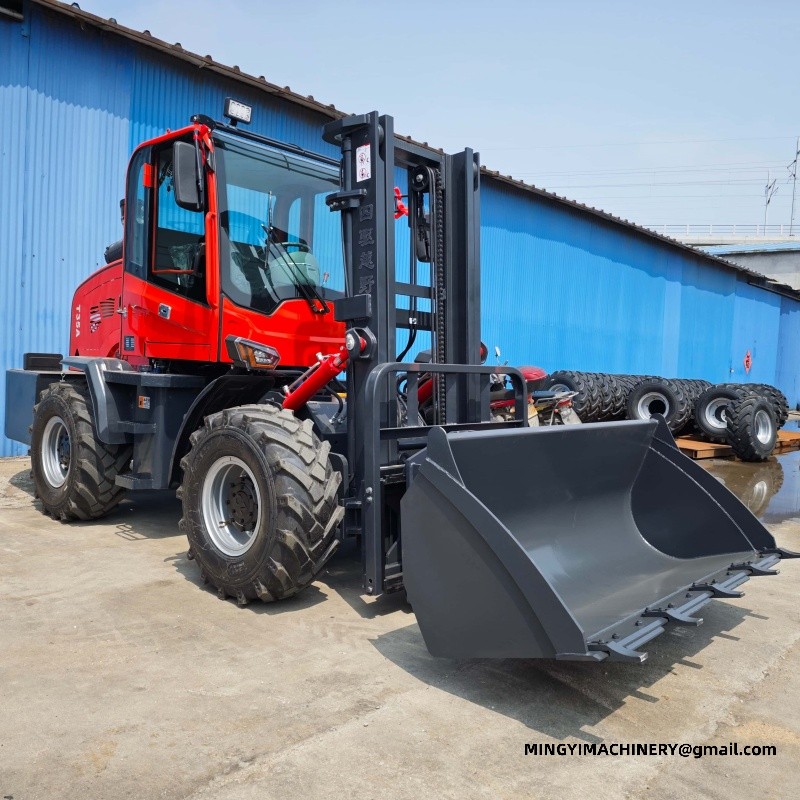
Fuel is usually the largest controllable running demand. Operating style, correct tyre or track condition and a clean air supply all move consumption on this class of machine by more than most buyers expect. Consumption is best measured over a full week rather than judged per hour. Idle time, repositioning and waiting for other trades are often the largest share of the fuel the unit in daily use burns on a site.
Engine and power options behind 4x4 rough terrain forklift
Emissions documentation is part of engine selection for some destinations. Confirming which units can be supplied and documented for the destination country is worth doing at enquiry stage rather than after the build sheet is signed. Matching the engine to the duty matters more than the peak rating. A machine of this size that spends its day at part load benefits from a different setup than one that works at full output, and the difference shows in fuel use over a season.
Customisation and build options for the equipment on site
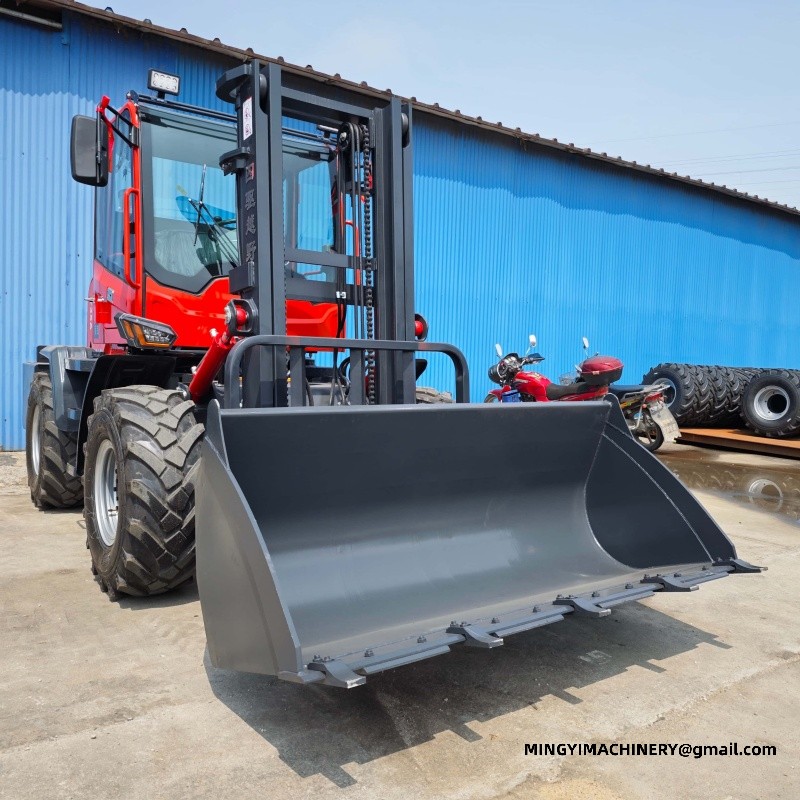
Build options are where a standard machine becomes the right machine. Colour, guarding, lighting, seating and hydraulic provisions can usually be set at build time on the machine itself, and are far simpler then than as a retrofit. Fleet buyers often want consistency rather than variety. Specifying the model in question so that several units share controls, filters and service points reduces training time and keeps the parts shelf small. Customisation should still be limited to what the work needs. Each addition to the machine in that duty is another item to maintain, so the useful question is not what can be added but what the job list actually requires.
Load chart, mast and lift height on the unit on the job
Capacity is a chart, not a number. The rating of a machine built for the work applies at a stated load centre and height, and the honest way to compare machines is to read the chart at the height and reach the work actually needs.
Matching the equipment in service to ground conditions
Traction and flotation are two separate questions. The forklift may have the power for a slope and still not have the grip, so the surface, not the engine rating, is usually what limits the working day.
Running this class of machine in a mixed fleet
Standardising where possible simplifies everything downstream. When several units of the unit in daily use share a service schedule and a parts list, the fleet becomes easier to plan and easier to sell on at replacement time.
Dust, mud and abrasive conditions around a machine of this size
Cleaning is maintenance, not appearance. Washing the cooling surfaces and clearing packed material from the equipment on site keeps temperatures where they should be and makes the next inspection quicker and more useful.
Service, parts and daily checks on the machine itself
Daily checks take five minutes and prevent most breakdowns. Fluid levels, tyres, mast chains and a brake test on the model in question catch the faults that otherwise appear under load at the worst moment. Mast chains and rollers are the wear items that get forgotten. Slack or uneven chains on the machine in that duty load the mast unevenly, and the correction is an adjustment rather than a repair if it is caught early.
Daily checks and maintenance on the unit on the job
Service intervals exist because wear is predictable. Following the maker schedule on a machine built for the work takes far less time than repairing the damage that follows a missed oil change or a filter left in place past its life.
Transporting the equipment in service to and between sites
Moving the machine is part of owning it. Overall length, width and height decide which trailer or container the forklift fits, and a machine that needs a permit or an abnormal load escort is a machine with a delivery delay built in.
Storage and downtime care for this class of machine
Standing still is hard on machinery. The unit in daily use left for weeks benefits from a clean, dry, covered space, a charged battery and a fuel system prepared for the layoff, and all three effort very little. A periodic start is better than none. Running a machine of this size to operating temperature during a long layoff keeps seals and the charging system in better condition than leaving it untouched until the next job.
Wear items and life of the equipment on site
Certain parts are designed to be consumed. Knowing which items on the machine itself are wearing parts, and roughly how long they last in the duty the machine sees, turns replacement into a plan rather than a breakdown. Replacing wear items early is usually simpler. Worn components on the model in question load the parts they run against, so a worn part left too long often becomes a major repair.
Reference data for the machine in that duty
The models below are the four-wheel drive rough terrain forklifts in this range. Capacity, mast, axle and dimensional data are read together, because the load chart at the working height is what the job is actually limited by.
| Model | Wheelbase | Rated lift capacity | Engine | cab | Gradeability | Axle | Overall size | Lift height |
|---|---|---|---|---|---|---|---|---|
| 3.5 tfront articulated | 2060 mm | 3500 kg | 49036.8 kw | new electrophoretic deluxe round canopy | 45 deg | heavy cast steel wheel-side reduction axle | 3950 x 1850 x 2380 mm | Lift height 3-6 m |
| CPCD-35 short wheelbase | 1875 mm | 3500 kg | 49036.8 kw | new electrophoretic deluxe round canopy | 45 deg | heavy cast steel wheel-side reduction axle | 3730 x 1850 x 2380 mm | Lift height 3-6 m |
| 4 tfront articulated | 2060 mm | 4000 kg | 410265 kw*1.36=88.4 hp | new electrophoretic deluxe round canopy | 45 deg | heavy cast steel wheel-side reduction axle | 4050 x 1950 x 2470 mm | Lift height 3-6 m |
| 3.5 trear articulated | 1875 mm | 3500 kg | 49036.8 kw | new electrophoretic deluxe round canopy | 45 deg | heavy cast steel wheel-side reduction axle | 3450 x 1850 x 2250 mm | Lift height 3-6 m |
| CPCD-50 short wheelbase | 2160 mm | 5000 kg | 4102 turbo 78 kw*1.36=106.8 hp | new electrophoretic deluxe round canopy | 45 deg | heavy cast steel wheel-side reduction axle | 4450 x 2150 x 2600 mm | Lift height 3-6 m |
Options most often specified with the unit on the job
| Item | Note |
|---|---|
| Tyre options | Chevron pattern, semi-solid and solid tyres are available; solid tyres suit scrap and foundry work, semi-solid suits mixed ground. |
| Attachments | Side shift, fork positioner, drum clamp, bale clamp and load stabiliser are the attachments most often specified with this range. |
| Mast and fork options | Two-stage 3 m / 3.5 m / 4 m / 4.5 m masts and three-stage 4.5 m / 5 m / 6 m masts are matched to the load chart before the truck is built. |
Reading the early symptoms on a machine built for the work
Temperature and pressure are the two things worth watching. The equipment in service that runs hotter than it used to, or whose pressure has drifted, is reporting a problem that is still simple to fix.
Cold weather and winter care for the forklift
Starting is only the first problem. Until this class of machine reaches working temperature the hydraulic response is slower and the seals are stiffer, and warming the machine before asking for full output avoids unnecessary strain.
Packing, loading and shipment of the unit in daily use
How a machine travels decides how it starts on arrival. Securing a machine of this size against movement, protecting the exposed cylinders and keeping the battery and fluids in the right state for the voyage all belong to the packing list.
A second operator for the equipment on site
Training is simpler than repair. An hour spent with a new operator on the machine itself, covering the limits and the awkward cases, is the least lengthy hour in the whole ownership.
Pre-delivery inspection before the model in question leaves the shop
Inspection is a list, not a glance. Before the machine in that duty is released the fluid levels, belt tension, electrical connections and safety decals are each ticked off, and anything that fails stays in the shop rather than travelling with the machine.
Keeping a service record for the unit on the job
Patterns show up in the record before they show up in the machine. Rising oil consumption or a filter that keeps blocking on a machine built for the work is obvious on paper long before it becomes a failure on site.
Handover and getting familiar with the equipment in service
A good handover covers the awkward cases, not just the easy ones. Starting the forklift on a slope, turning in a confined space and recovering from soft ground are the situations an operator should meet first with someone beside them.
Every line above comes from the build sheet for this class of machine, and the final configuration is confirmed against the working conditions and the destination before production.
E-mail:sales@mingycn.com
LINE(ID):mingyicn
Related pages
all terrain forklift · off road forklift · hydraulic skid steer loader · 4x4 Rough Terrain Forklift