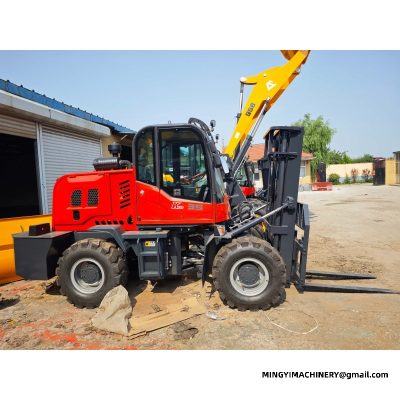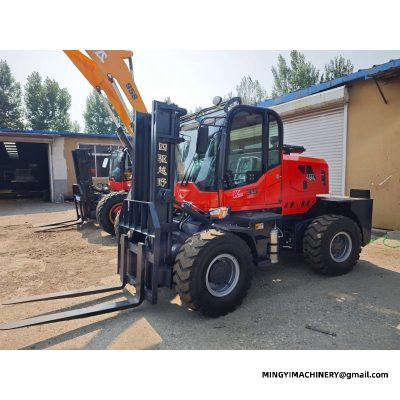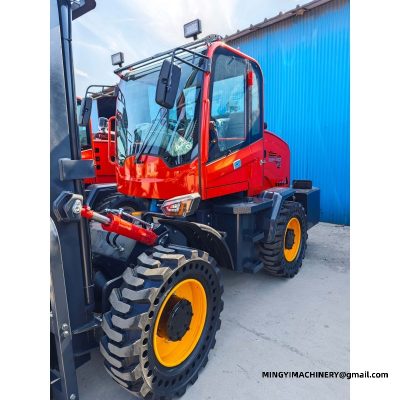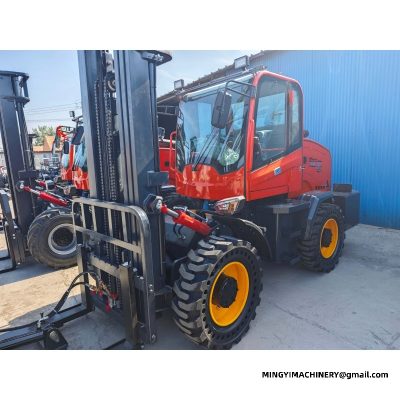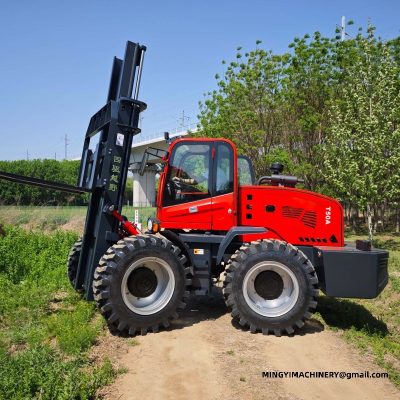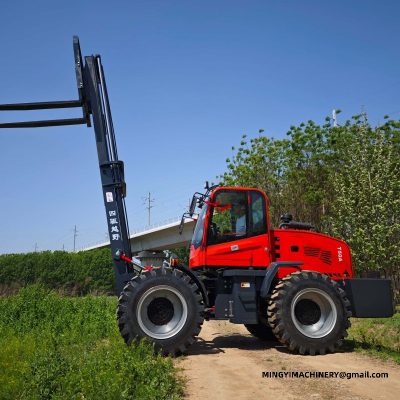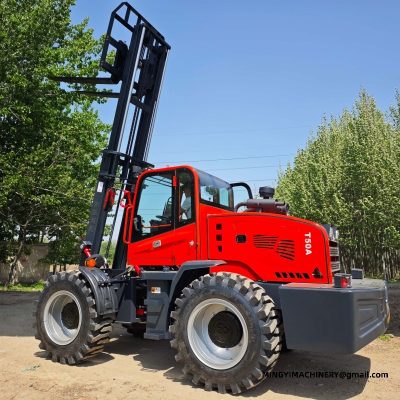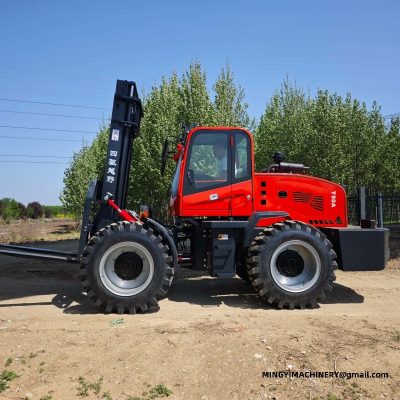
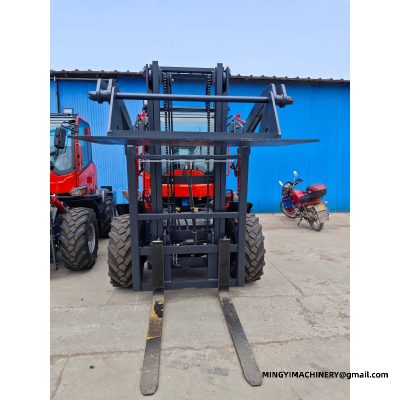
Two buyers can order the forklift for the same nominal job and receive different machines, because the ground and the access decide more than the workload does. The sections below explain which questions separate the two cases.
Specifying 4WD Rough Terrain Forklift against the job list
The specification should be written from the job backwards. Listing the loads, the ground and the hours first, then matching the unit in daily use to that list, avoids buying capacity the work never uses and avoids discovering a shortfall in the first week. A written duty list is the simplest part of the purchase. It takes an hour to note the material, the distance, the gradient and the hours per week, and it is what turns this class of machine enquiry into a machine that fits.
Attachments and working tools for 4WD Rough Terrain Forklift
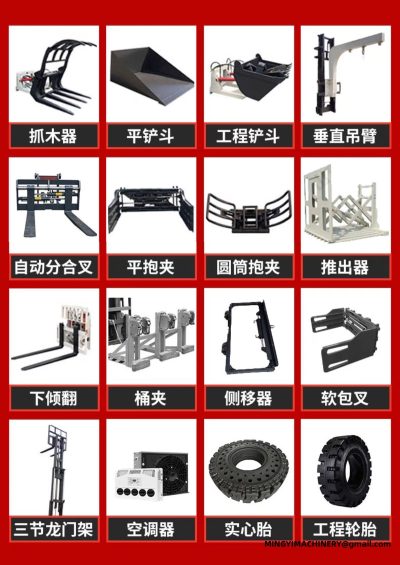
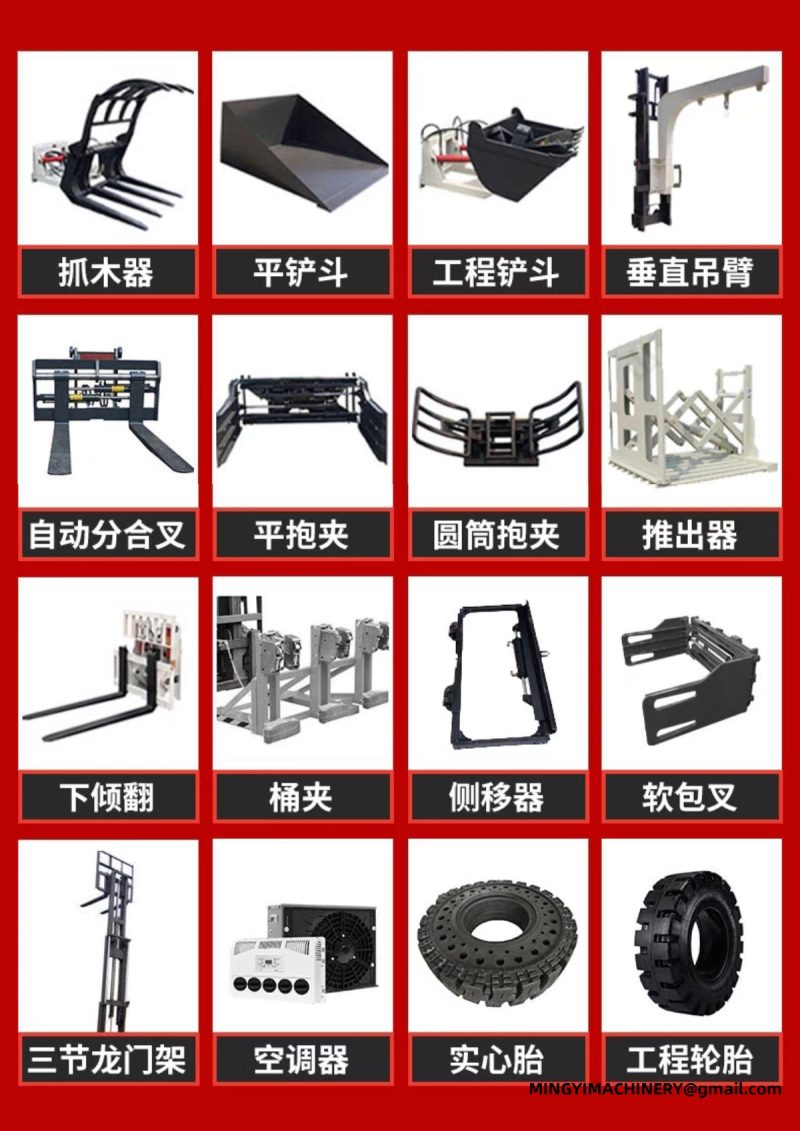
Every attachment changes the capacity. Adding weight and reach ahead of the carriage reduces what a machine of this size can lift, and the derated figure is the one that belongs in the working plan.
Cab, visibility and lighting on 4WD Rough Terrain Forklift
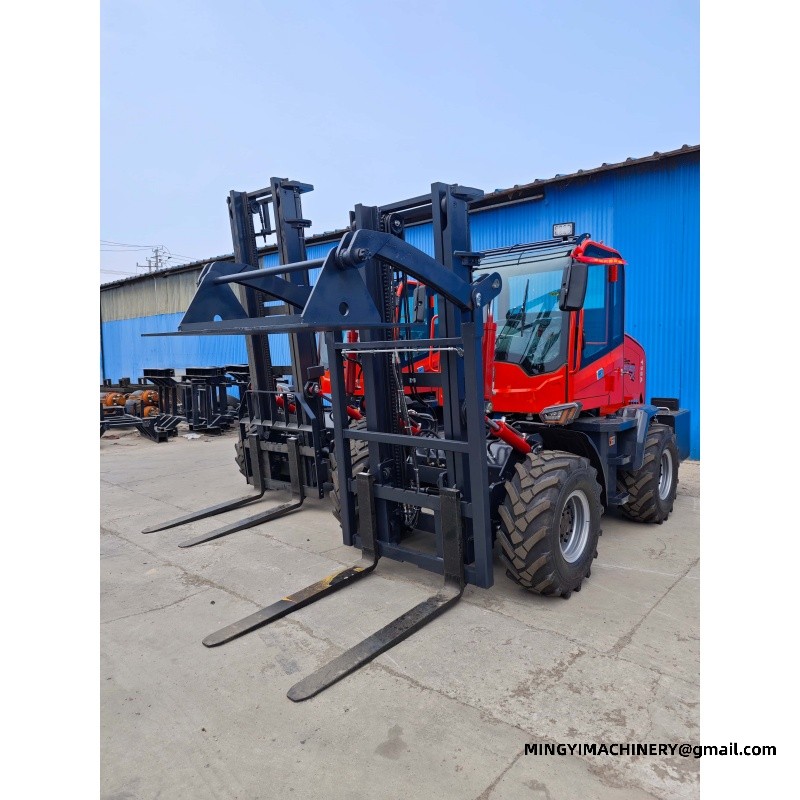
Lighting matters more than it appears. Work that starts before daylight or finishes after it is common on site, and the equipment on site with adequate forward and rear lighting keeps that work safe. A canopy or cab is a specification, not a luxury. Rain, sun and falling material are the daily conditions for the machine itself, and the enclosure is what keeps the operator working through them.
Storage and downtime care for 4WD Rough Terrain Forklift
Standing still is hard on machinery. The model in question left for weeks benefits from a clean, dry, covered space, a charged battery and a fuel system prepared for the layoff, and all three effort very little. Before-storage preparation prevents most return-to-work faults. Draining or treating fuel, protecting exposed rods and relieving pressure where the maker specifies it are the items worth an hour when the machine in that duty is parked. A periodic start is better than none. Running the unit on the job to operating temperature during a long layoff keeps seals and the charging system in better condition than leaving it untouched until the next job.
Tyres and running gear for 4WD Rough Terrain Forklift
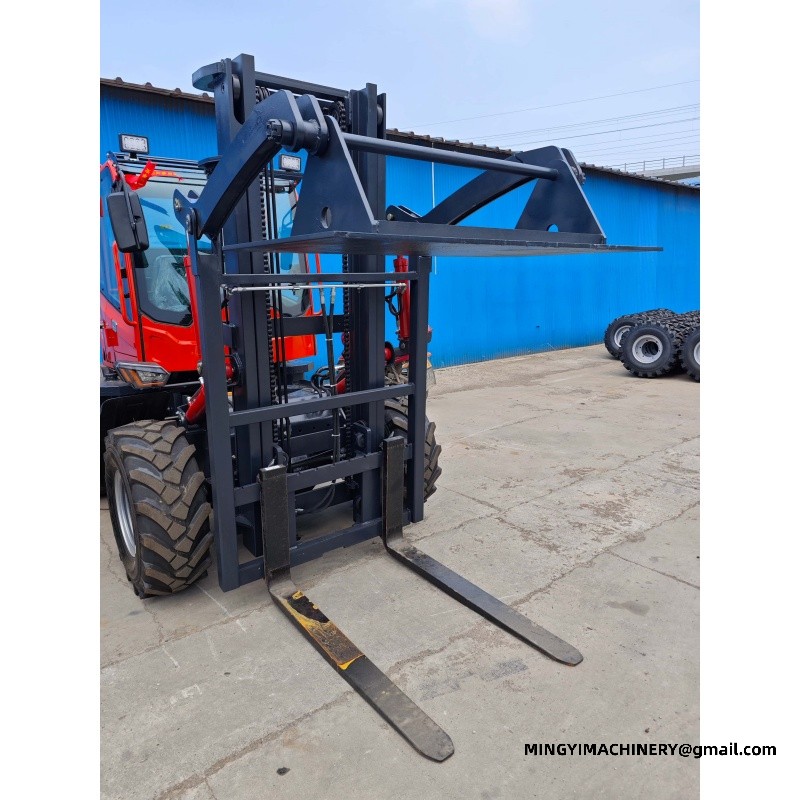
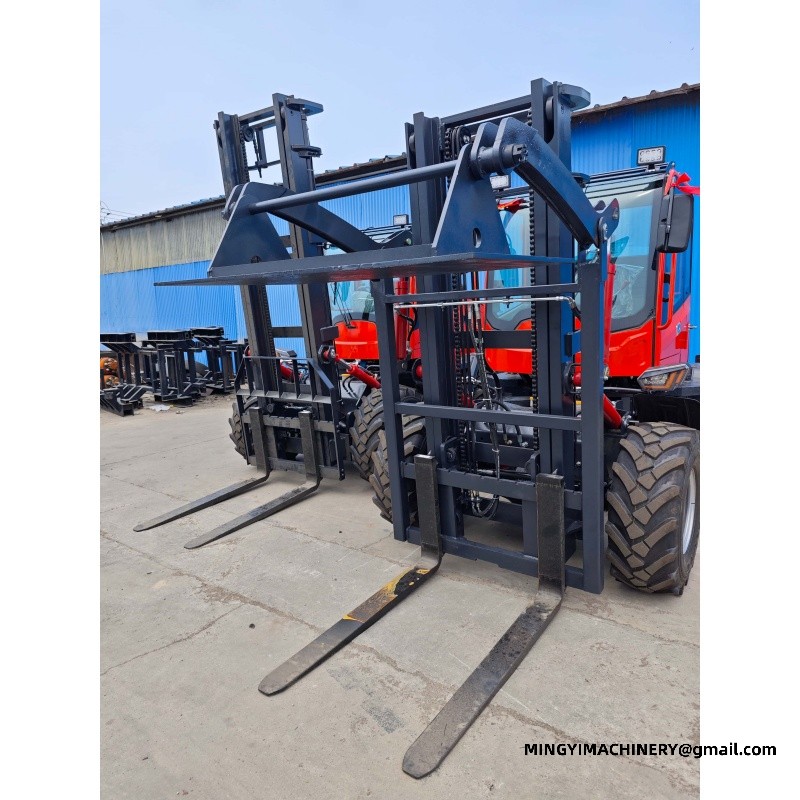
Tyre type follows the ground and the debris. Pneumatic chevron tyres suit soft ground, while semi-solid and solid tyres suit scrap, foundry and demolition work where punctures stop the day on a machine built for the work. Tyre condition is a daily check. Cuts, worn lugs and low pressure on the equipment in service change stability as well as traction, and a tyre that looks serviceable can still be the reason a load feels unstable.
Running 4WD Rough Terrain Forklift in a mixed fleet
Fleet value comes from interchangeability. Operators who can step between machines without retraining, and a workshop that stocks one set of filters, keep utilisation higher than a fleet of individually optimised units.
Cold weather and low temperature work with 4WD Rough Terrain Forklift
Cold changes how a machine starts and how it warms up. Allowing the forklift to reach operating temperature before loading it, and using the correct grade of oil and fuel for the season, prevents most cold-start problems.
Operator technique and familiarisation
Machine output varies more between operators than between brands. Smooth, planned movements put less load on the structure and use less fuel, and that difference is visible on the hour meter and in the service bills for this class of machine. Familiarisation should cover the limits as well as the controls. Knowing where the unit in daily use loses stability, how it behaves at full reach, and what the warning lights mean prevents the incidents that are put down to bad luck. A short handover pays for itself. Operators who understand why a machine of this size is set up the way it is will report a change in behaviour early, which is usually the point where a repair is simplest.
Load chart, mast and lift height on the equipment on site
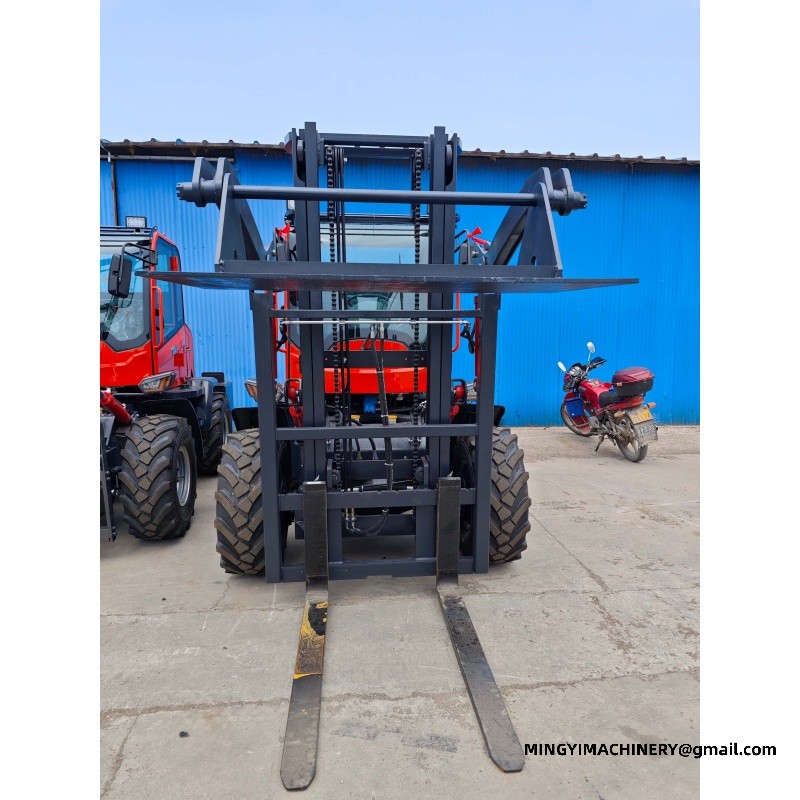
Mast choice follows the stacking height. The machine itself specified with a two-stage mast lifts lower and travels better under a doorway, while a three-stage mast reaches higher and gives up some residual capacity. Forks and carriage matter as much as the mast. Correct fork length and a carriage suited to the load on the model in question make the difference between a stable lift and one that has to be repeated.
Lighting and low light operation of the machine in that duty
Visibility from the seat is different at night. Reflections, shadows and glare all hide detail, so the unit on the job used after dark benefits from clean lenses, working wipers and a slower working pace. Planning helps more than extra lamps. Positioning the a machine built for the work so that the work is lit from the machine side, and keeping the route clear, does more for safety than adding light to a badly planned task.
Wear items and life of the equipment in service
Wear rate follows conditions far more than hours. The forklift working on abrasive ground or in mud will consume undercarriage or tyre life much faster than the same machine on clean ground.
Engine and power options behind this class of machine
Power unit choice is usually a parts question, not a performance one. Two buyers can order the same the unit in daily use and sensibly choose different engines, because the right answer depends on which brand the local workshop already supports.
Export packing and shipping of a machine of this size
Export orders add steps that domestic buyers never see. Packed dimensions, securing points, documentation and any dismantling required are all settled before the equipment on site leaves the factory, and each one affects the freight booking. Container loading is a planning exercise. Confirming how the machine itself is packed and how many units fit a container is what turns a per-unit freight estimate into a delivered figure the buyer can actually plan against.
Upgrading and reconfiguring the model in question
Reconfiguration can extend the useful life of a machine. The machine in that duty that no longer suits the current work may suit it again with a different attachment, guarding or control arrangement.
Rough ground, gradient and four-wheel drive on the unit on the job
Gradient limits are part of the specification. A machine built for the work working on a slope carries the load differently, and the safe practice is to keep the load uphill and to plan the route rather than the shortest line. Ground condition should be surveyed before delivery. Loose gravel, mud and ruts change what the equipment in service can do safely, and the site that works in dry weather may need a different route after rain.
Stability and safe working practice around the forklift
People on foot are the real hazard. A plan that separates pedestrians from the working area of this class of machine, with a banksman where visibility is poor, prevents the incidents that dominate site statistics.
Load, ballast and stability on the unit in daily use
Ballast and attachment weight change the machine. Adding a heavy tool to a machine of this size moves the centre of gravity, and the counterweight or configuration should be matched to the tool rather than assumed. Carrying and travelling with a load needs its own plan. Speed, gradient and surface all matter more once the equipment on site is loaded, and the safe combination is the conservative one.
Fitting the machine itself into the wider site plan
Sequencing avoids rework. Doing the work in the order that suits the ground and the following trades keeps the model in question productive and prevents finishing a task that then has to be opened up again.
Dust, mud and abrasive conditions around the machine in that duty
Cleaning is maintenance, not appearance. Washing the cooling surfaces and clearing packed material from the unit on the job keeps temperatures where they should be and makes the next inspection quicker and more useful. Sealed points and guarded areas deserve a look in these conditions. A machine built for the work working in abrasive dust benefits from checked boots, intact guards and clean breathers, all of which are quick to verify.
Reference data for the equipment in service
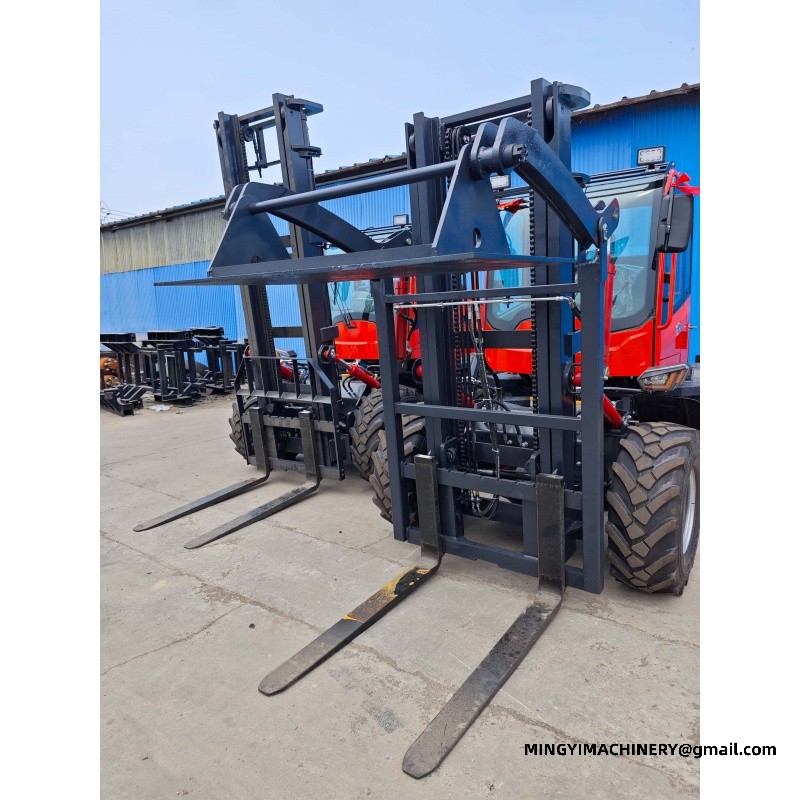
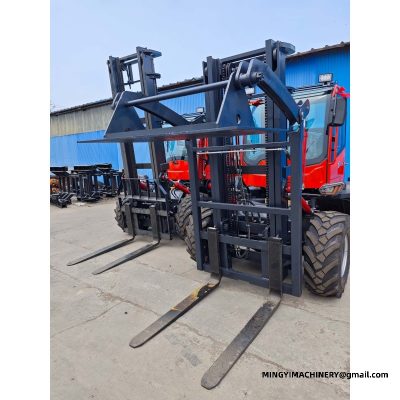
The models below are the four-wheel drive rough terrain forklifts in this range. Capacity, mast, axle and dimensional data are read together, because the load chart at the working height is what the job is actually limited by.
| Model | Wheelbase | Rated lift capacity | Engine | cab | Gradeability | Axle | Overall size | Lift height |
|---|---|---|---|---|---|---|---|---|
| 3.5 tfront articulated | 2060 mm | 3500 kg | 49036.8 kw | new electrophoretic deluxe round canopy | 45 deg | heavy cast steel wheel-side reduction axle | 3950 x 1850 x 2380 mm | Lift height 3-6 m |
| 4 tfront articulated | 2060 mm | 4000 kg | 410265 kw*1.36=88.4 hp | new electrophoretic deluxe round canopy | 45 deg | heavy cast steel wheel-side reduction axle | 4050 x 1950 x 2470 mm | Lift height 3-6 m |
| 3.5 trear articulated | 1875 mm | 3500 kg | 49036.8 kw | new electrophoretic deluxe round canopy | 45 deg | heavy cast steel wheel-side reduction axle | 3450 x 1850 x 2250 mm | Lift height 3-6 m |
| CPCD-35 short wheelbase | 1875 mm | 3500 kg | 49036.8 kw | new electrophoretic deluxe round canopy | 45 deg | heavy cast steel wheel-side reduction axle | 3730 x 1850 x 2380 mm | Lift height 3-6 m |
| CPCD-50 short wheelbase | 2160 mm | 5000 kg | 4102 turbo 78 kw*1.36=106.8 hp | new electrophoretic deluxe round canopy | 45 deg | heavy cast steel wheel-side reduction axle | 4450 x 2150 x 2600 mm | Lift height 3-6 m |
Options most often specified with the forklift
| Item | Note |
|---|---|
| Attachments | Side shift, fork positioner, drum clamp, bale clamp and load stabiliser are the attachments most often specified with this range. |
| Mast and fork options | Two-stage 3 m / 3.5 m / 4 m / 4.5 m masts and three-stage 4.5 m / 5 m / 6 m masts are matched to the load chart before the truck is built. |
| Tyre options | Chevron pattern, semi-solid and solid tyres are available; solid tyres suit scrap and foundry work, semi-solid suits mixed ground. |
Moving this class of machine between sites
Loading is where most damage happens. Ramps, angle of approach and the condition of the ground under them matter more than the machine when the unit in daily use is being loaded, and a careful driver is worth more than a fast one.
Commissioning a machine of this size on site
The first hour on site should be slow. Before the equipment on site is put to work the fluid levels are rechecked after transport, the fasteners are gone over and the machine is run light so that anything loosened in transit shows up early.
Fuel, oil and fluid quality for the machine itself
Fluid quality is a storage problem before it is a machine problem. Water and sediment in a drum will find the injection system of the model in question eventually, and a settling period is nothing compared with a pump.
Later additions and retrofits on the machine in that duty
Later changes are easier when they were anticipated. Asking for the extra hydraulic circuit or the heavier mounting plate on the unit on the job at build time adds little and leaves the option open.
Wear items and spares worth holding for a machine built for the work
Holding spares is about downtime rather than the shelf itself. The question for the equipment in service is not how large the part is but how long the machine sits while it is found, and a small shelf answers that better than a fast courier.
Hot, humid and dusty conditions around the forklift
Humidity attacks the parts that are not used. Storage in a damp climate means this class of machine needs the exposed metal protected and the machine run regularly, because standing still does more damage than working.
Every line above comes from the build sheet for the unit in daily use, and the final configuration is confirmed against the working conditions and the destination before production.
E-mail:sales@mingycn.com
LINE(ID):mingyicn
Related pages
rough terrain forklift · 4x4 rough terrain forklift · wheeled skid steer loader · 4x4 Rough Terrain Forklift