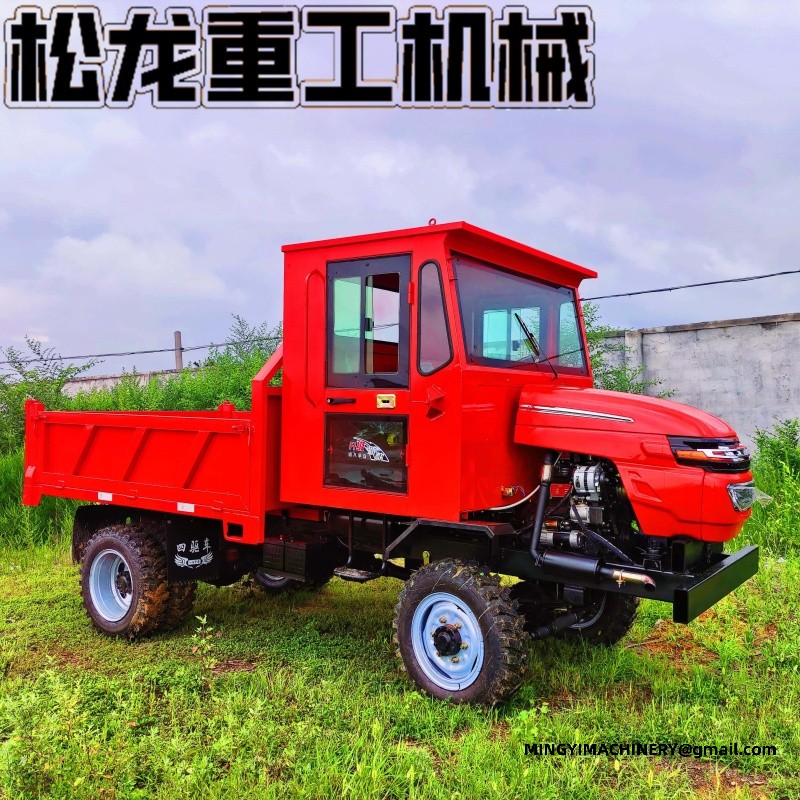
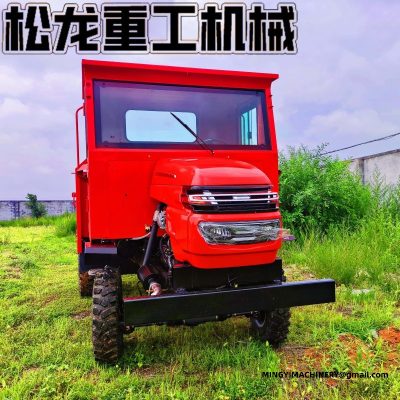
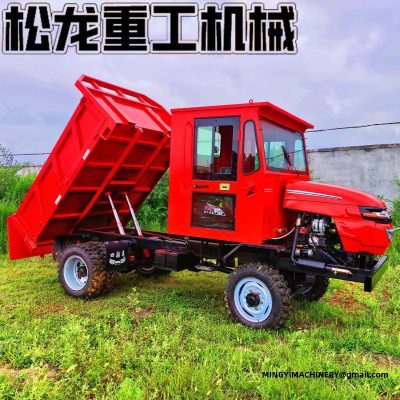
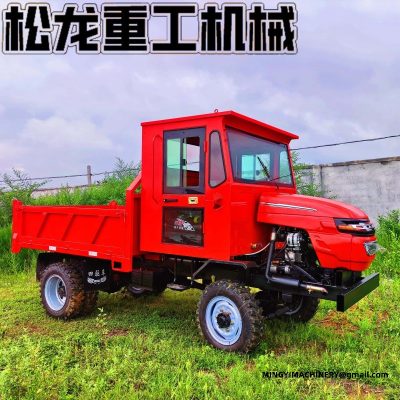
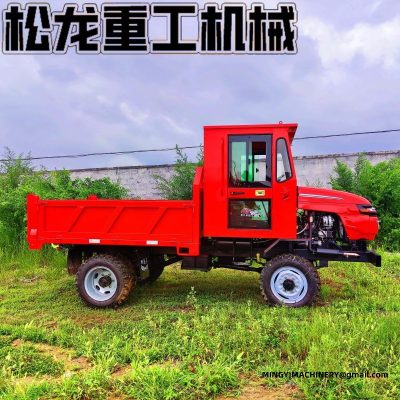
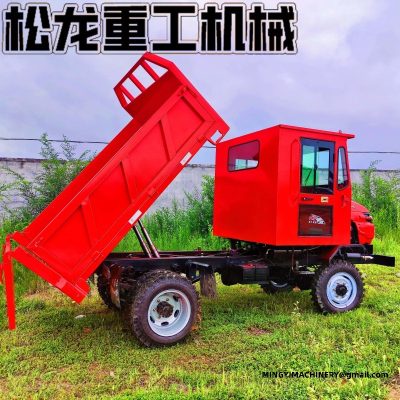
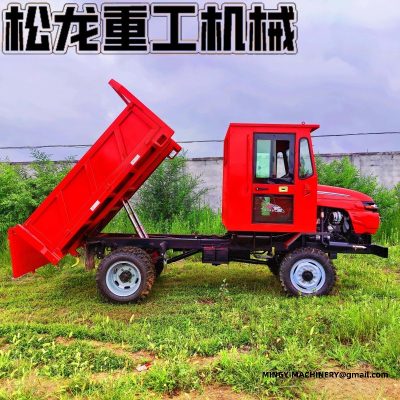
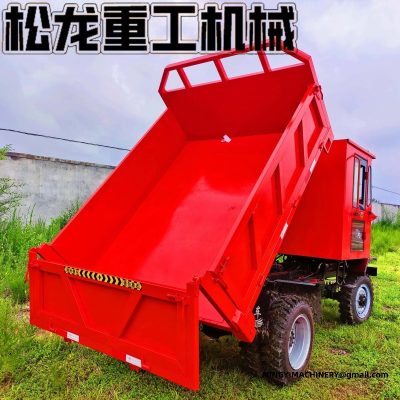
Two buyers can order the dumper for the same nominal job and receive different machines, because the ground and the access decide more than the workload does. The sections below explain which questions separate the two cases.
Crane and grab attachments on off road cargo vehicle with hydraulic tipping body
A crane or grab turns a haul vehicle into a loading machine. This class of machine fitted with a hydraulic crane loads itself, which removes a second machine from the job and is often the whole reason for specifying one. Stability governs what the crane can do. Outriggers, ground condition and load radius decide the safe figure on the unit in daily use, and those are checked before the lift rather than discovered during it. Adding a crane changes the vehicle specification. Hydraulic capacity, frame strength and braking all need to suit the attachment, and it is simpler to specify them at build than to add them later.
Soft ground, paddy fields and mud with off road cargo vehicle with hydraulic tipping body
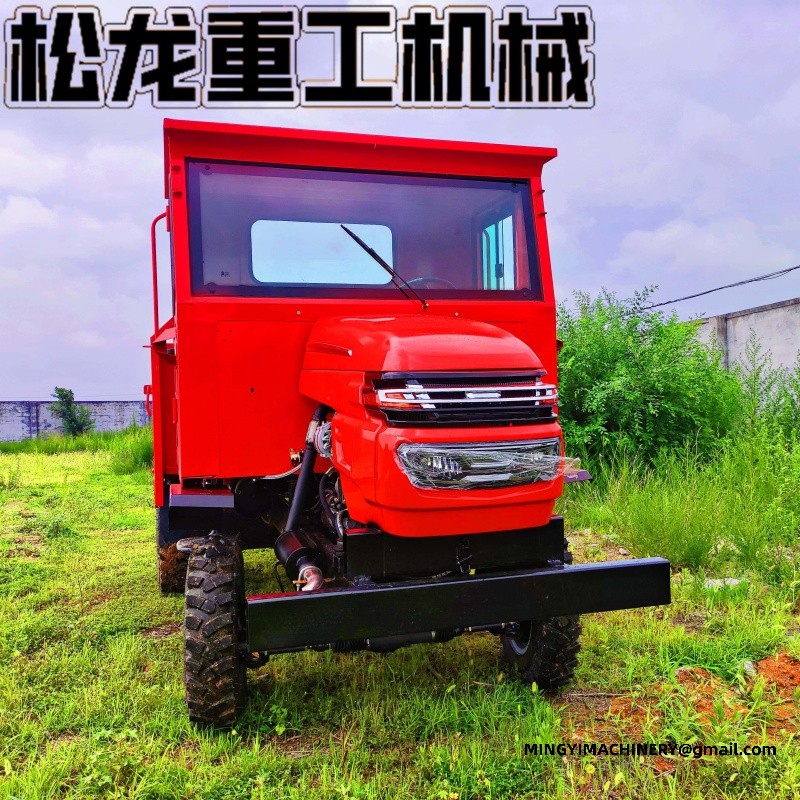
Soft ground punishes the wrong tyre. Mountain pattern tyres on a machine of this size clear mud that a road pattern would pack with, and the difference is measured in whether the machine finishes the day. Recovering a stuck vehicle takes longer than preventing it. Planning the route, avoiding the worst ground and knowing where the equipment on site will turn is what keeps a soft-ground job productive.
Export packing and shipping of off road cargo vehicle with hydraulic tipping body
Export orders add steps that domestic buyers never see. Packed dimensions, securing points, documentation and any dismantling required are all settled before the machine itself leaves the factory, and each one affects the freight booking. Container loading is a planning exercise. Confirming how the model in question is packed and how many units fit a container is what turns a per-unit freight estimate into a delivered figure the buyer can actually plan against.
Ordering, lead time and delivery of off road cargo vehicle with hydraulic tipping body
Delivery planning includes the receiving end. Knowing whether the machine in that duty will be craned, driven or forked off, and whether the site can accept it, is settled before dispatch rather than on the day.
Water tank and dust control bodies on off road cargo vehicle with hydraulic tipping body
A water tank turns the vehicle into a different machine. The unit on the job carrying water for dust control or irrigation is specified around tank size, baffles and the route, because a part-filled tank behaves very differently on a slope.
Wear items and life of off road cargo vehicle with hydraulic tipping body
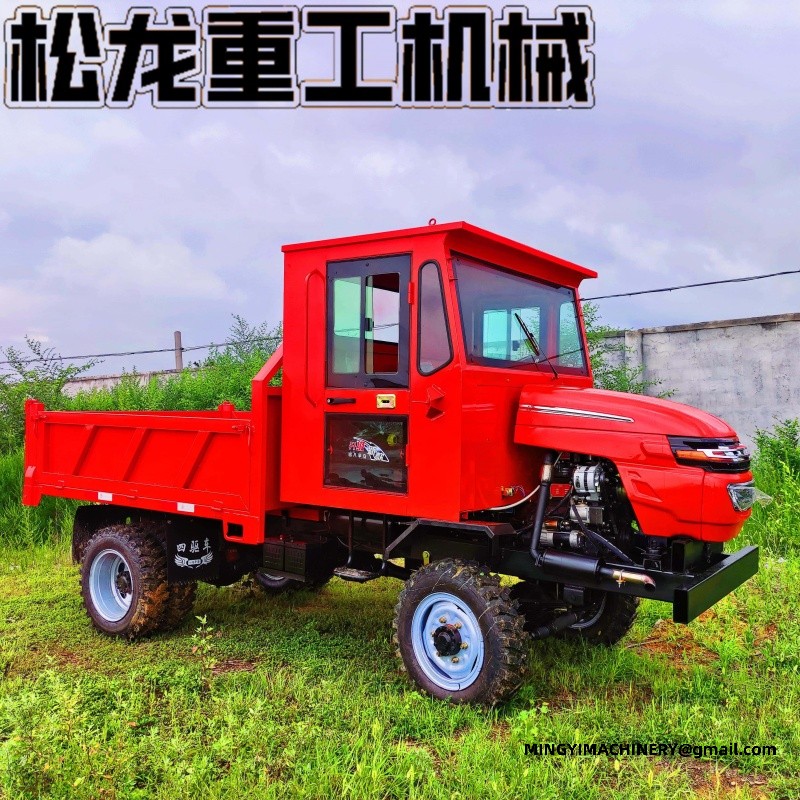
Certain parts are designed to be consumed. Knowing which items on a machine built for the work are wearing parts, and roughly how long they last in the duty the machine sees, turns replacement into a plan rather than a breakdown. Wear rate follows conditions far more than hours. The equipment in service working on abrasive ground or in mud will consume undercarriage or tyre life much faster than the same machine on clean ground. Replacing wear items early is usually simpler. Worn components on the dumper load the parts they run against, so a worn part left too long often becomes a major repair.
Working hours and duty cycle of off road cargo vehicle with hydraulic tipping body
Duty cycle is the honest measure of a machine. This class of machine working a few hours a week has different needs from one working two shifts, and the cooling, filtration and service intervals should follow the hours rather than the calendar. Seasonal work changes the maintenance calendar. Machines that work hard for two months and stand for ten need preparation before storage and a check before returning to work, and both are simpler than the repairs they prevent.
Tipping body and unloading on off road cargo vehicle with hydraulic tipping body
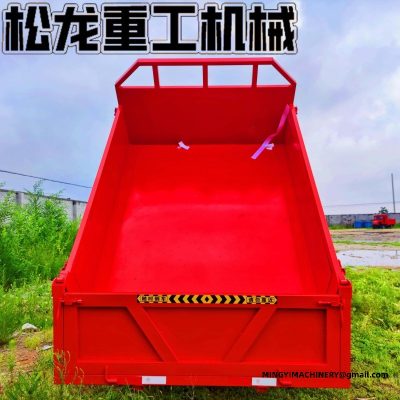
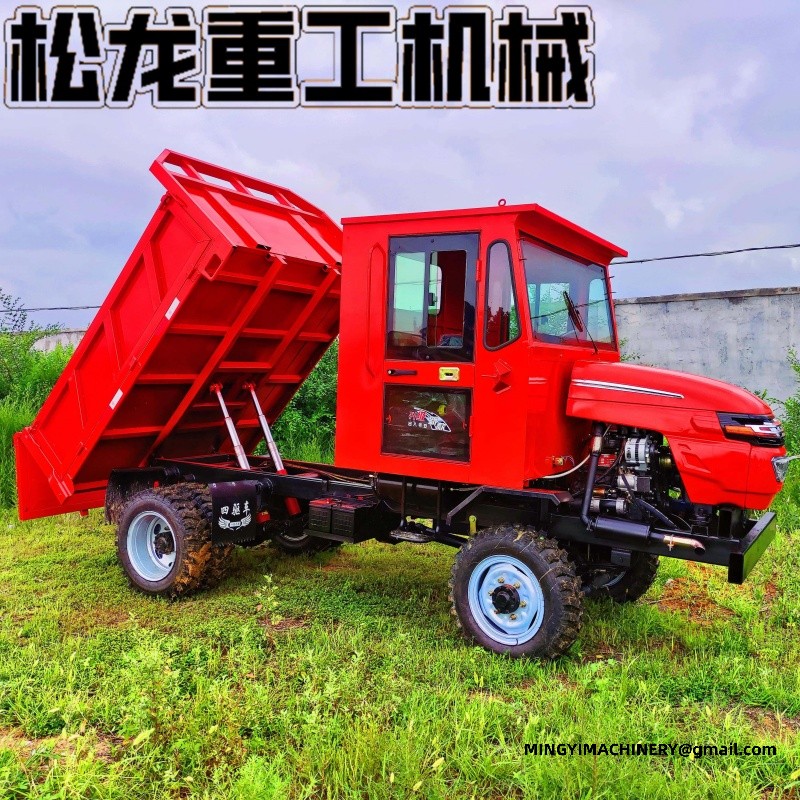
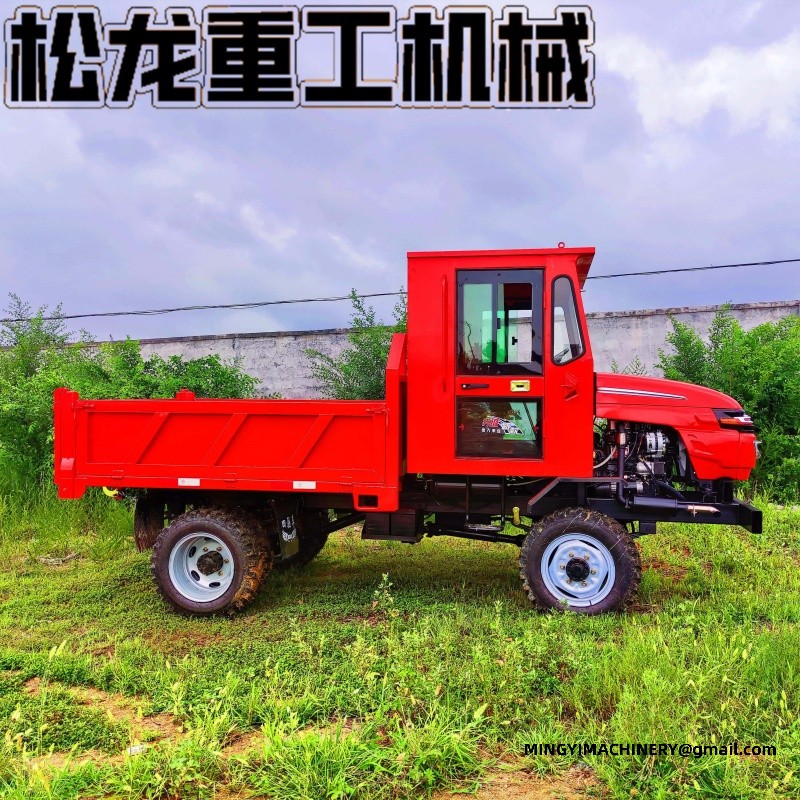
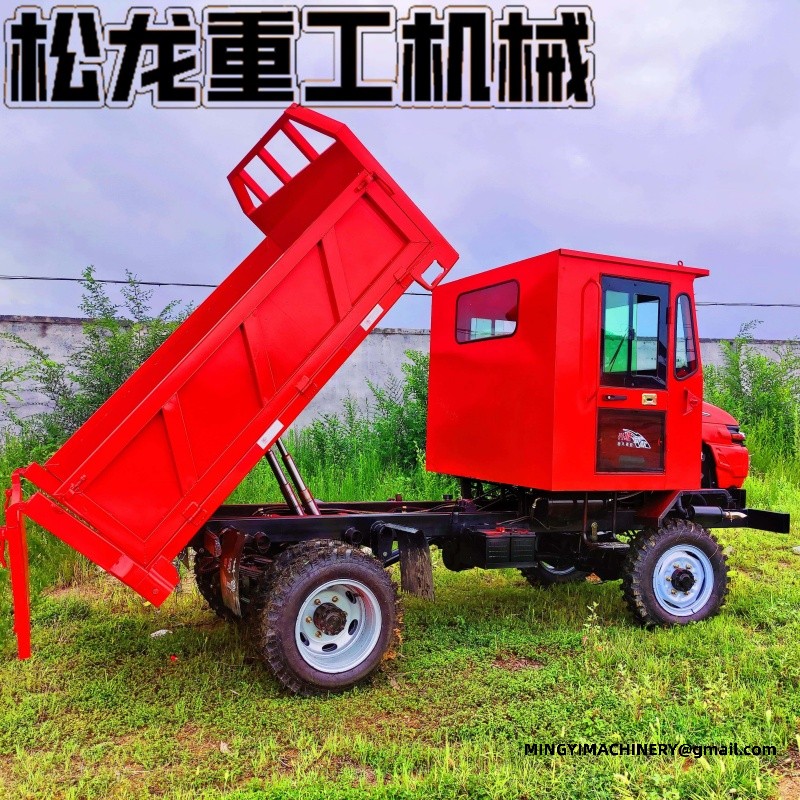
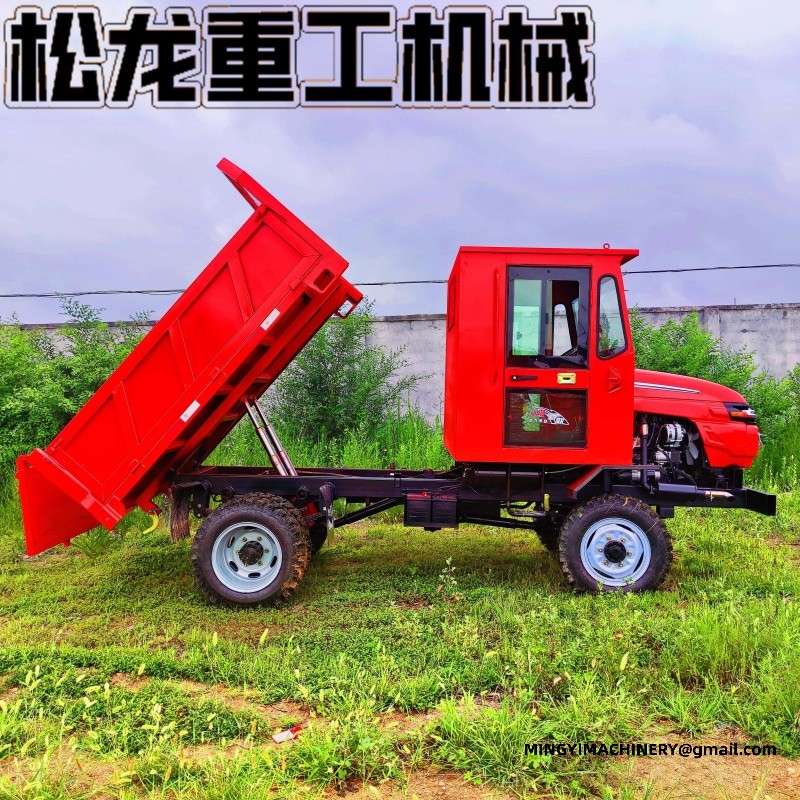
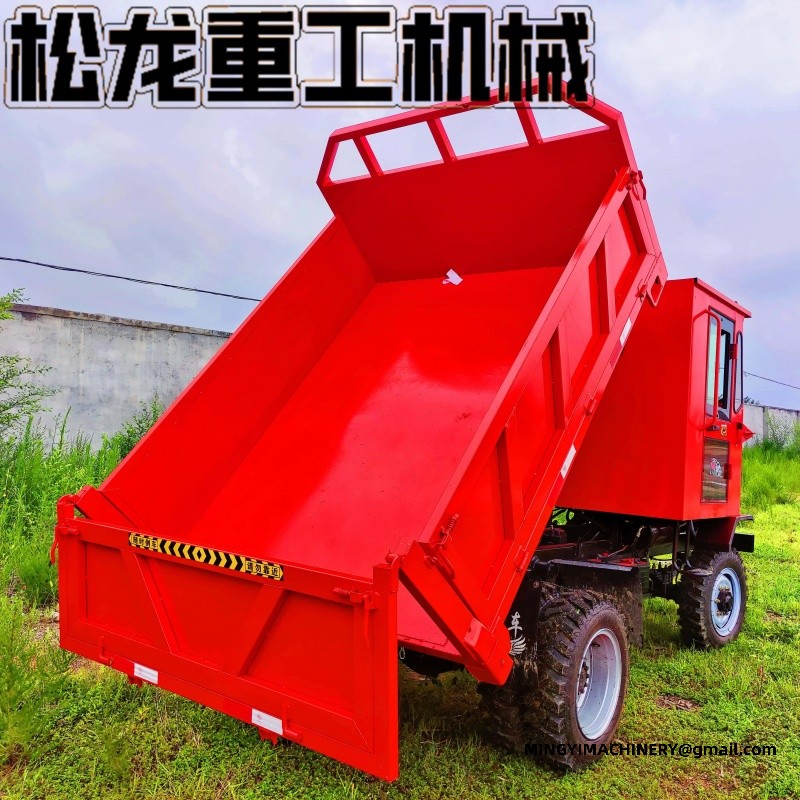
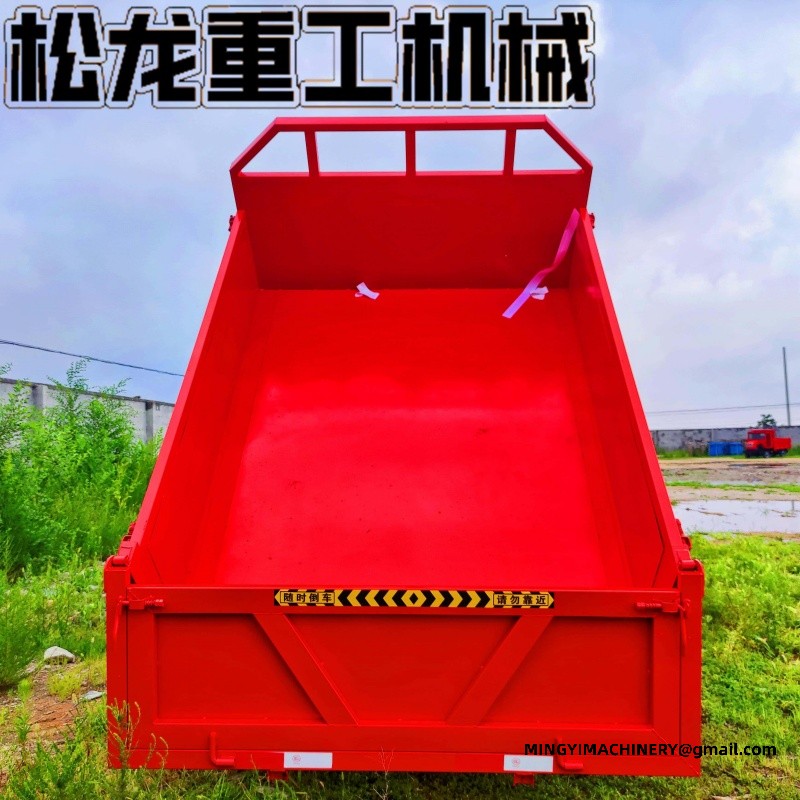
The tipping body is the part that does the work. The unit in daily use specified with twin hydraulic rams and a tailgate that opens under load unloads in one pass, which matters more on a short haul than top speed does.
Specifying a machine of this size against the job list
The specification should be written from the job backwards. Listing the loads, the ground and the hours first, then matching the machine itself to that list, avoids buying capacity the work never uses and avoids discovering a shortfall in the first week. A written duty list is the simplest part of the purchase. It takes an hour to note the material, the distance, the gradient and the hours per week, and it is what turns the equipment on site enquiry into a machine that fits.
Forestry and timber work with the model in question
Timber work changes what the vehicle carries. The machine in that duty fitted with a log grab loads and unloads without a second machine, which is usually the reason a forestry contractor specifies one over a conventional truck. Protection matters in timber work. Guarding, lighting and a cab that keeps branches out are the items that keep the unit on the job working through a season rather than being repaired through it.
Payload and how a machine built for the work is loaded
The honest payload figure comes from the duty. The equipment in service working a smooth haul road carries differently from one crossing ruts and gradients, and the conservative number is the one that keeps the machine working.
Load, ballast and stability on the dumper
Ballast and attachment weight change the machine. Adding a heavy tool to this class of machine moves the centre of gravity, and the counterweight or configuration should be matched to the tool rather than assumed.
Daily checks and maintenance on the unit in daily use
Most failures start as something small that a walk-around would have caught. Fluid levels, belt tension, tyre or track condition and any fresh leak are the items worth two minutes at the start of each shift on a machine of this size. A simple log helps. Recording hours, fuel and any adjustment made to the equipment on site gives the workshop a history, and that history is what turns an intermittent fault into a one-visit repair instead of three.
Attachments and working tools for the machine itself
The base machine is only as useful as the tool on the end of it. Matching the attachment to the task - rather than to what arrived with the machine - is what lets one the machine in that duty cover several jobs across a week. Most owners find that the second attachment changes how often the machine is used. The model in question that was bought for one task often becomes the general machine on site once a second tool is available.
Configuration data for the unit on the job
The configurations below are the build sheets most often matched to a machine built for the work. Engine, gearbox, axles, frame and body dimensions are confirmed together, because the body size and the axle rating have to suit the load before the engine rating matters.
| # | 13.Upgraded | 23.Upgraded | 4.Upgraded | 7.Upgraded |
|---|---|---|---|---|
| 1 | Two-cylinder diesel engine, 38 hp | Four-cylinder 4108 turbocharged diesel engine | Single-cylinder diesel engine, 25 hp | Single-cylinder diesel engine, 28 hp |
| 2 | Full-time gearbox with four-wheel drive | Model 140 part-time gearbox, selectable 2WD/4WD | Full-time gearbox with four-wheel drive | Full-time gearbox with four-wheel drive |
| 3 | High/low range with crawler gear | High/low range with crawler gear | High/low range with crawler gear | High/low range with crawler gear |
| 4 | Front axle clutch | Simple cab | Front axle clutch | Front axle clutch |
| 5 | Fully enclosed cab | Six 825R16 steel-belted radial tyres | Fully enclosed cab | Fully enclosed cab |
| 6 | Oil brakes | Reinforced ISUZU-pattern front axle | Oil brakes | Oil brakes |
| 7 | Four 700-16 mountain tyres | Reinforced 1080 rear axle | Four 700-16 mountain tyres | Four 700-16 mountain tyres |
| 8 | Front axle 212 | Air cut-off brakes | Front axle 212 | Front axle 212 |
| 9 | Rear axle 130 | Reinforced 80 x 180 mm square tube frame | Rear axle 130 | Rear axle 130 |
| 10 | Reinforced 60 x 140 mm square tube frame | Rear body 3.0 m long x 2.2 m wide x 0.45 m high | Reinforced 60 x 140 mm square tube frame | Reinforced 60 x 140 mm square tube frame |
| 11 | Rear body 2.2 m long x 1.5 m wide x 0.45 m high | Tailgate with self-dumping function | Rear body 2.2 m long x 1.5 m wide x 0.45 m high | Rear body 2.2 m long x 1.5 m wide x 0.45 m high |
| 12 | Tailgate with self-dumping function | Hydraulic power steering | Tailgate with self-dumping function | Tailgate with self-dumping function |
| 13 | Hydraulic power steering | Twin hydraulic rams | Hydraulic power steering | Hydraulic power steering |
| 14 | Twin hydraulic rams | Two-person comfort seat | Twin hydraulic rams | Twin hydraulic rams |
| 15 | Two-person comfort seat | Heavy-duty leaf springs | Two-person comfort seat | Two-person comfort seat |
| 16 | Twin-battery electric start | Twin-battery electric start | Twin-battery electric start | Twin-battery electric start |
| 17 | Round-nose bonnet | Square-nose bonnet | Square-nose bonnet | Square-nose bonnet |
Moving the equipment in service between sites
Loading is where most damage happens. Ramps, angle of approach and the condition of the ground under them matter more than the machine when the dumper is being loaded, and a careful driver is worth more than a fast one.
Documents that travel with this class of machine
Keeping the documents together is part of ownership. The manual, the service record and the build sheet for the unit in daily use belong in one folder, and the machine is easier to sell later when that folder is complete.
Cold weather and winter care for a machine of this size
Starting is only the first problem. Until the equipment on site reaches working temperature the hydraulic response is slower and the seals are stiffer, and warming the machine before asking for full output avoids unnecessary strain.
Planning the season around the machine itself
Downtime is simplest when it is planned. Booking the service for the model in question in the quiet part of the season takes nothing from the schedule, while the same work in the busy weeks gives up a day of output every time.
Pre-delivery inspection before the machine in that duty leaves the shop
The last hour before packing is the best time to find a fault. Running the unit on the job through its full working cycle, checking for leaks under load and confirming that the controls match the specification avoids a conversation across time zones later.
A second operator for a machine built for the work
Shared machines need shared habits. Two operators on the equipment in service should do the same daily checks in the same order, because the check that one person skips is the check that eventually matters.
Reading the early symptoms on the dumper
Operators notice things first because they hear the machine every day. Encouraging the person on this class of machine to report small changes, and acting on them, is the most effective maintenance programme there is.
Every line above is a build item rather than an optional extra, and the final sheet for the unit in daily use is confirmed against the destination, the ground and the load before production.
E-mail:sales@mingycn.com
LINE(ID):mingyicn
Nameplate, serial number and documents for off road cargo vehicle with hydraulic tipping body
Engine, pump and axle numbers are recorded separately, because a machine can carry a different build of each within one model year.
Import paperwork, the declaration of conformity and the operator manual are the three items most often asked for after delivery.
A record of modifications matters as well, since an added hydraulic circuit or a changed attachment mount changes what the manual describes.
Electrical system and battery care on off road cargo vehicle with hydraulic tipping body
Battery condition follows the charging system, so the belt, the connections and the electrolyte are checked together rather than separately.
Jump starting is a recovery rather than a repair, and the reason for the flat battery is worth finding the same day.
Additional wiring for work lamps, beacons or a radio should be fused and routed away from hot and moving parts.
Wear limits and replacement points on off road cargo vehicle with hydraulic tipping body
Uneven wear usually points at alignment, pressure or a driving habit rather than at the part itself.
Related pages
China off road dumper manufacturer for muddy and soft ground · custom 4WD transport vehicle with hydraulic tipping body · Construction Site Dumper: Ramps, Grades and Swinging Axles · Four Wheel Drive Transport Vehicle









