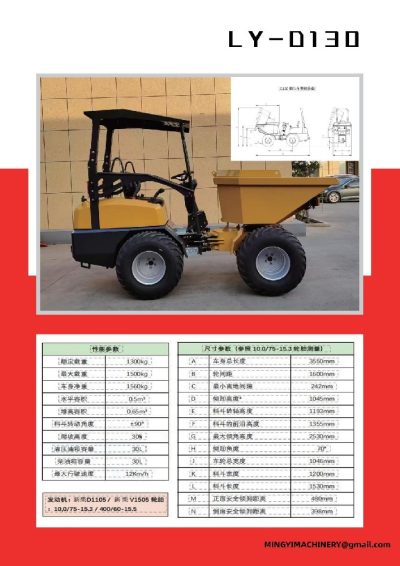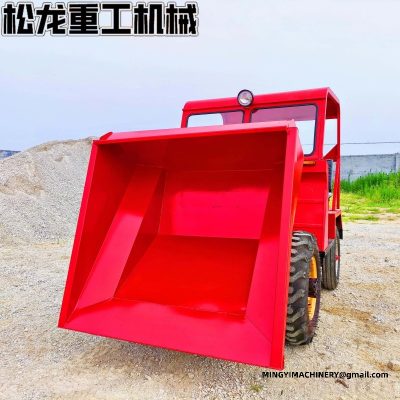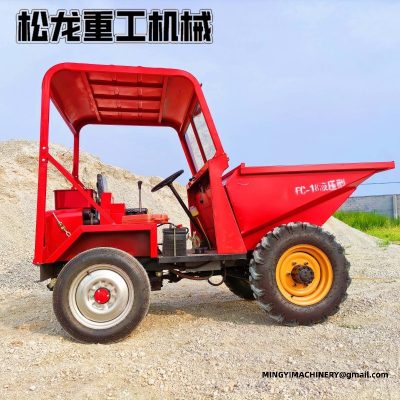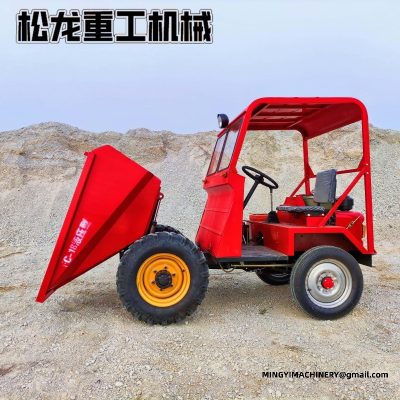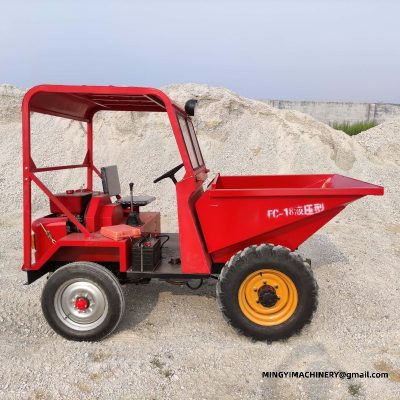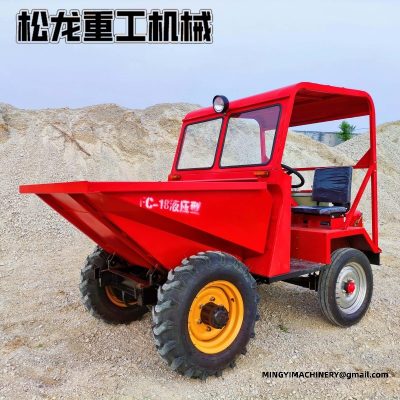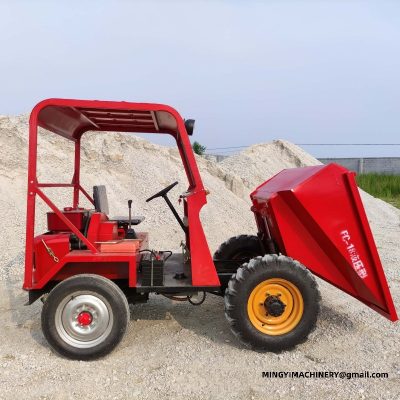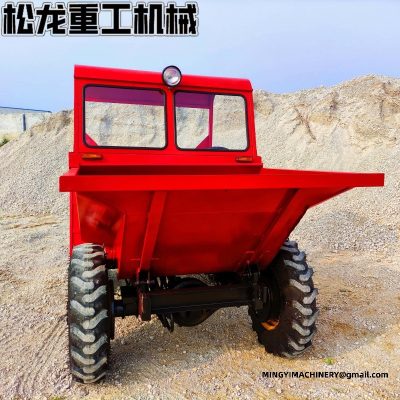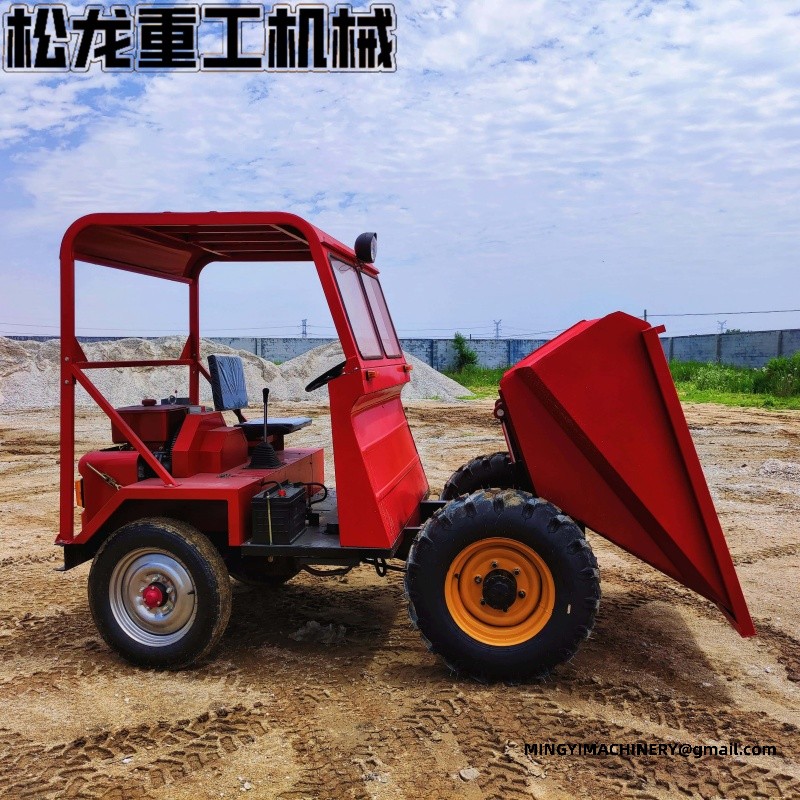
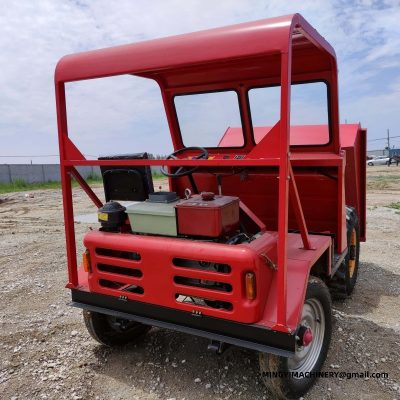
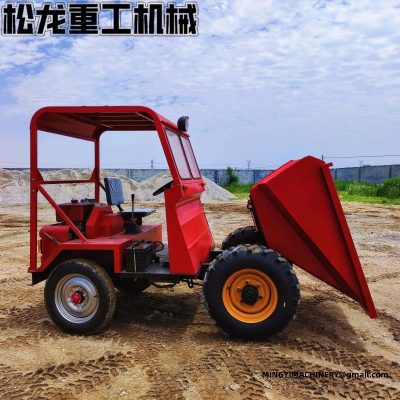
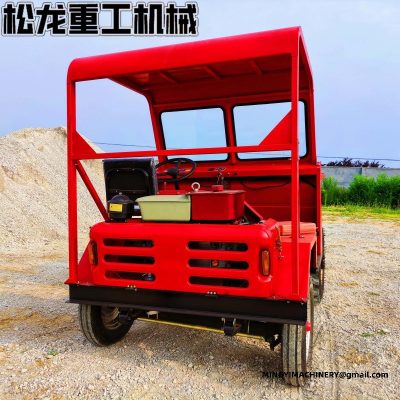
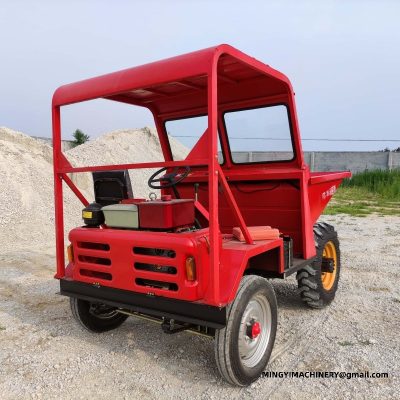
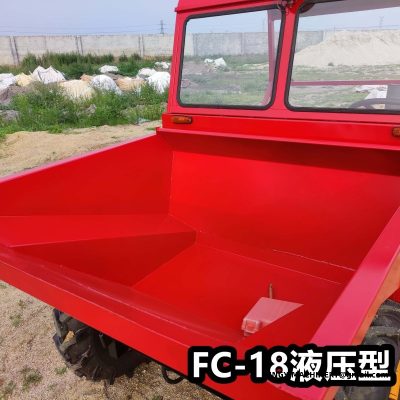
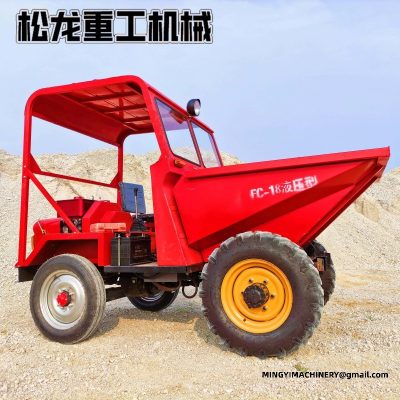
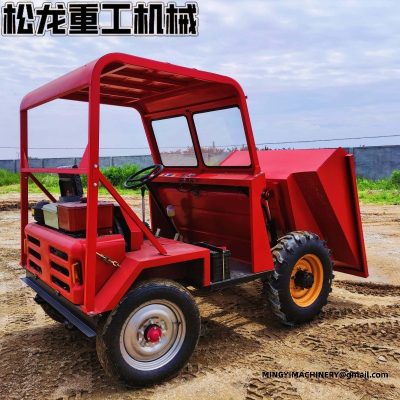
A front tipper is bought for the route, not for the specification sheet. The route decides everything: how wide the gateway is, how steep the ramp, how soft the worst stretch of ground. The FC10 publishes the figures that answer those questions — 2,700 x 1,600 x 2,000 overall, 4,500 mm turning radius, 21% gradeability, 200 mm clearance — and this page reads them in the order a construction site dumper buyer meets them on rural work.
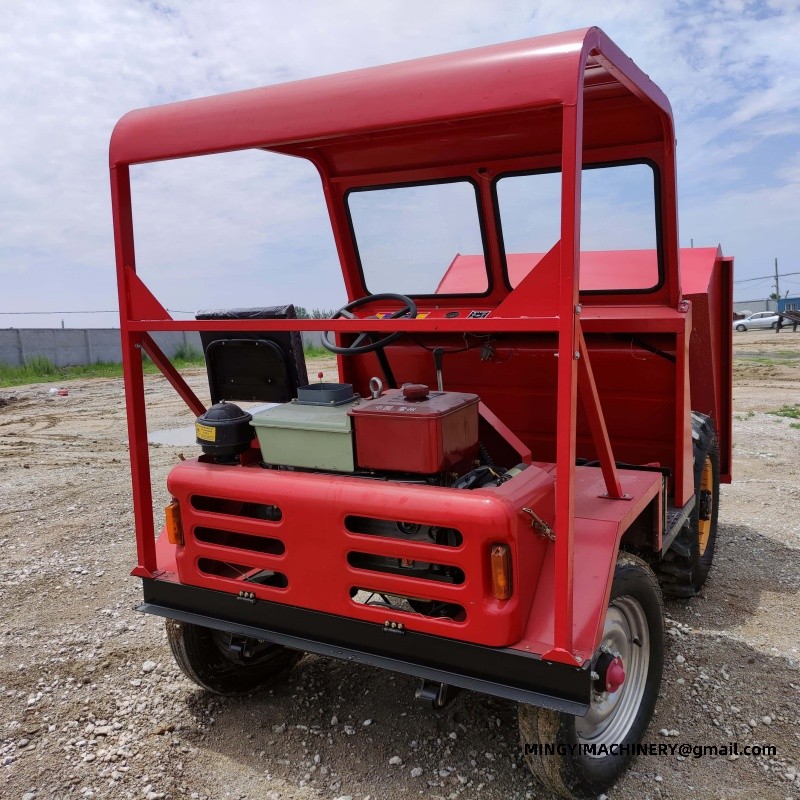
Specifying the FC10 is unusually straightforward because the table is complete: load 1,000 kg, box 0.5 m³, discharge 390 mm, turning radius 4,500 mm, clearance 200 mm, gradeability 21%, engine CG25M at 17.3 kW.
Check each against the site in the order they will constrain you: route width against 2,700 x 1,600 x 2,000 and 1,500 mm, the ramp against 21%, the worst ground against 200 mm, and the receiving point against 390 mm. A machine that passes all four on rural work is the machine for the job.
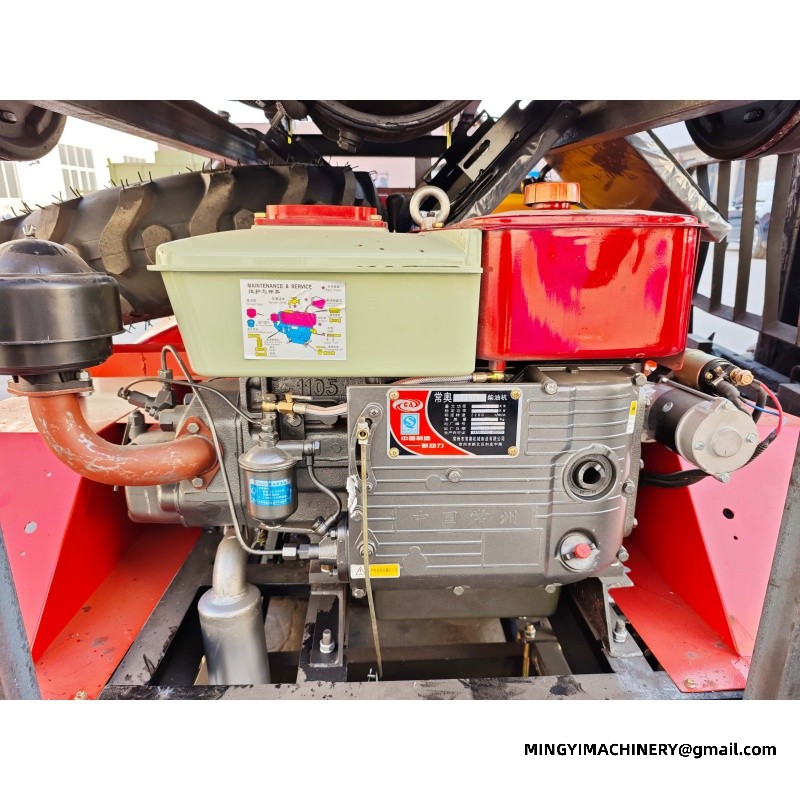
Maintenance on the FC10 is deliberately simple: rear-mounted CG25M diesel, mechanical driveline, hydraulic tipping circuit. on rural work carrying fertiliser from the store to the field headland, the machine works short cycles all day, and the daily checks — oil, coolant, tyre condition, grease points — take minutes rather than a workshop visit.
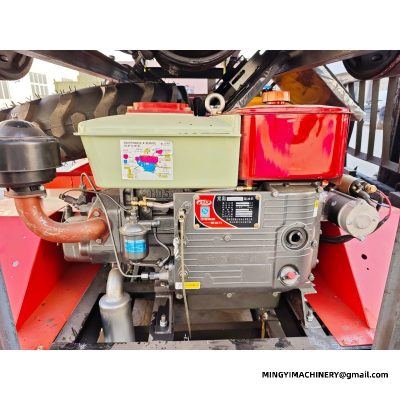
The layout helps: the engine sits at the rear away from the load, the tipping hydraulics are exposed, and the 1,230 mm wheelbase keeps everything within reach of the ground. Machines specified for sites are specified for field maintenance, and this one is no exception.
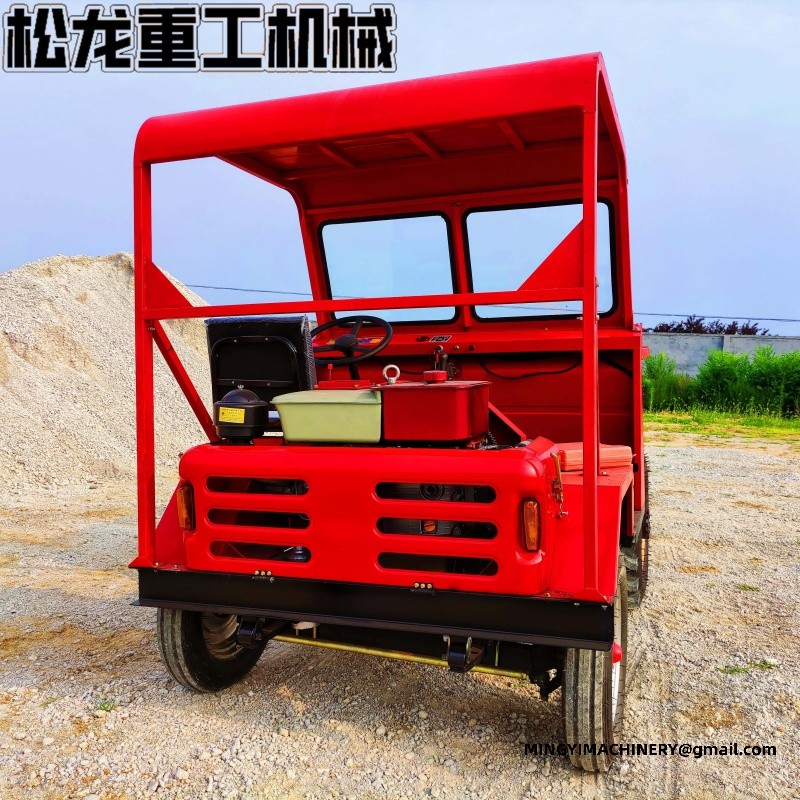
Steering at the rear takes a shift or two to get used to and then feels natural: the rear of the machine cuts inside the front's path, which is why the 4,500 mm turning radius is achievable on a 1,230 mm wheelbase. on rural work carrying fertiliser from the store to the field headland, that radius is usually the difference between working through a gateway and having to reverse every pass.
Because the front axle drives and the rear steers, the driven wheels stay on the load path while the steering wheels follow. On loose or soft ground on rural work carrying fertiliser from the store to the field headland that is the better arrangement: traction where the weight is, steering where the weight is not.
| Specification extract — FC10 front tipper (1,000 kg class) | |
|---|---|
| Rated load | 1,000 kg |
| Rated bucket capacity | 0.5 m³ |
| Discharge height | 390 mm |
| Maximum gradeability | 21% |
| Bucket width | 1,580 mm |
| Travel speed, 1st gear | 6.8 km/h |
| Travel speed, 2nd gear | 22 km/h |
| Travel speed, reverse | 7.5 km/h |
| Minimum turning radius | 4,500 mm |
| Overall dimensions (L x W x H) | 2,700 x 1,600 x 2,000 |
| Track | 1,500 mm |
| Wheelbase | 1,230 mm |
| Minimum ground clearance | 200 mm |
| Diesel engine model | CG25M |
| Rated engine power | 17.3 kW |
| Rated engine speed | 2,200 r/min |
| Starting method | 12 V DC electric motor |
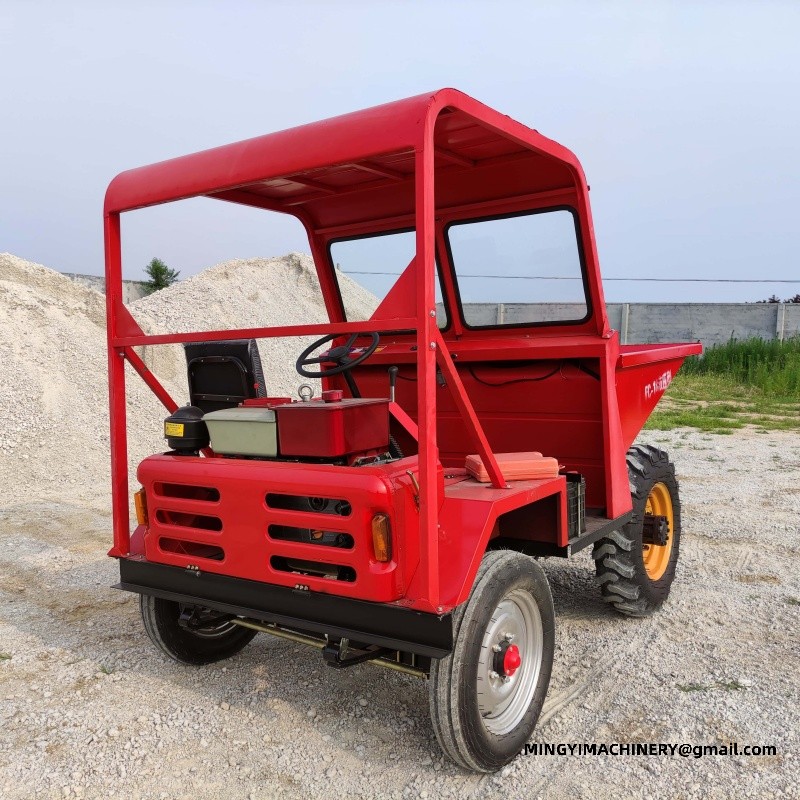
There is a size of job below which a large machine takes more than it earns. Access on rural work is usually the reason: a tipper at 2,700 x 1,600 x 2,000 with a 4,500 mm turning radius reaches the pour or the face that a bigger machine cannot approach.
The honest comparison is not tipper against tipper but tipper against wheelbarrow and shovel. At 1,000 kg per trip, one operator and one FC10 replace a small crew and remove the hardest part of the work. That is the job the machine was designed for.
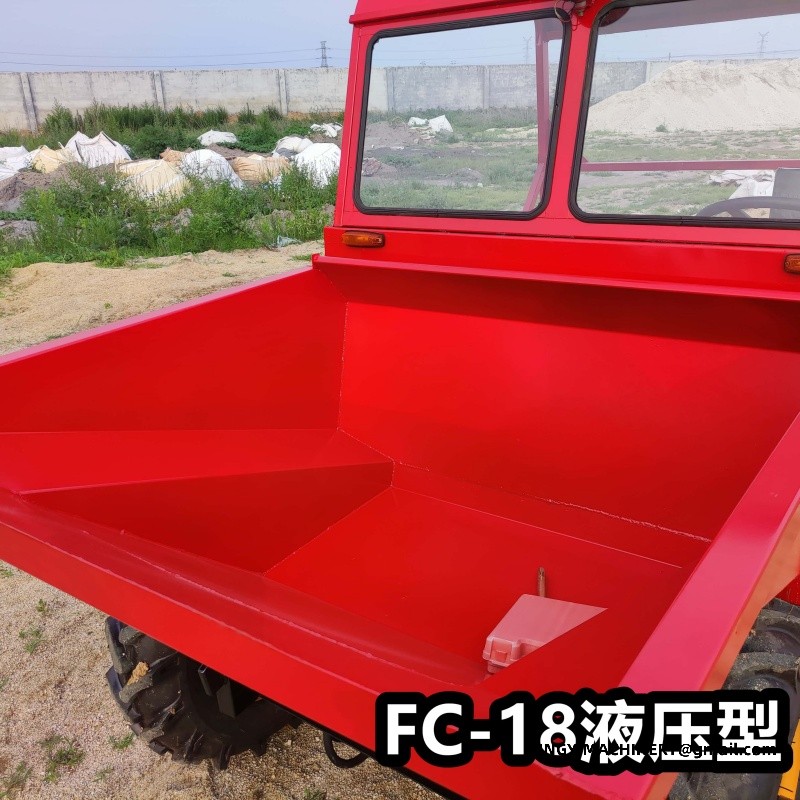
Starting on the FC10 is 12 V DC electric motor, which on a machine worked in short cycles is a genuine productivity figure. on rural work carrying fertiliser from the store to the field headland, the engine is stopped and started throughout the day, and a key start keeps that from being the slowest part of the job.
The CG25M diesel at 17.3 kW and 2,200 r/min is sized for the 1,000 kg duty cycle rather than for maximum output, and the rear mounting puts the everyday service points — oil, filters, battery — where they can be reached without climbing over the load.
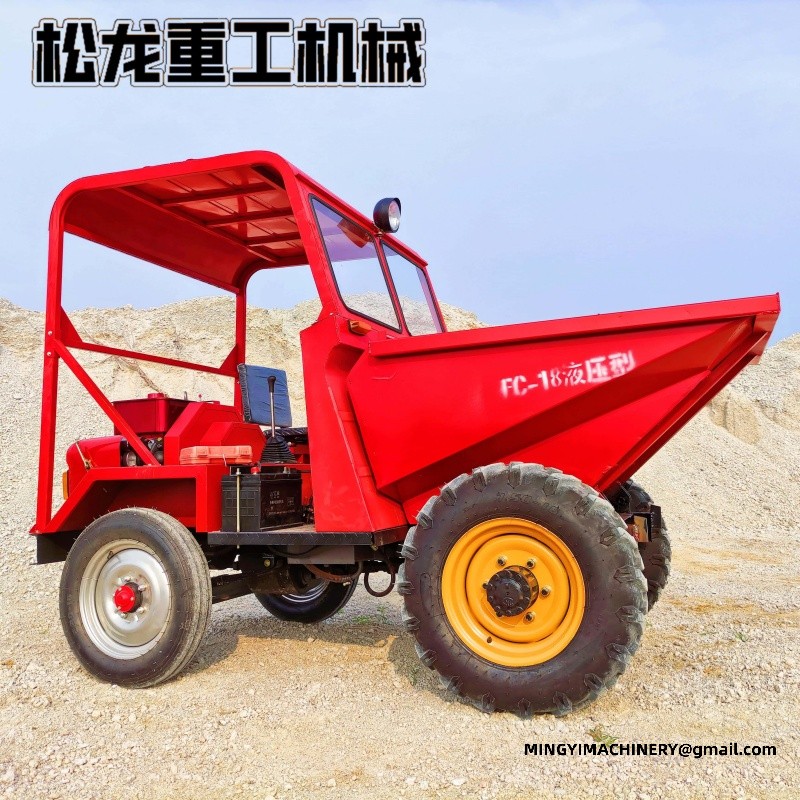
The box is 1,580 mm wide on a machine 2,700 x 1,600 x 2,000 overall, and that proportion is deliberate. A wide box loads from a heap without the operator having to square up precisely, which matters on rural work, where the loading point is a pile rather than a hopper.
Width also affects how the load sits. A 1,580 mm box spreading 1,000 kg across its floor keeps the centre of gravity low and central, which is what keeps the machine stable on the ground it is specified for. Narrow, tall boxes look efficient and handle badly when the load shifts — and loads of fertiliser do shift.
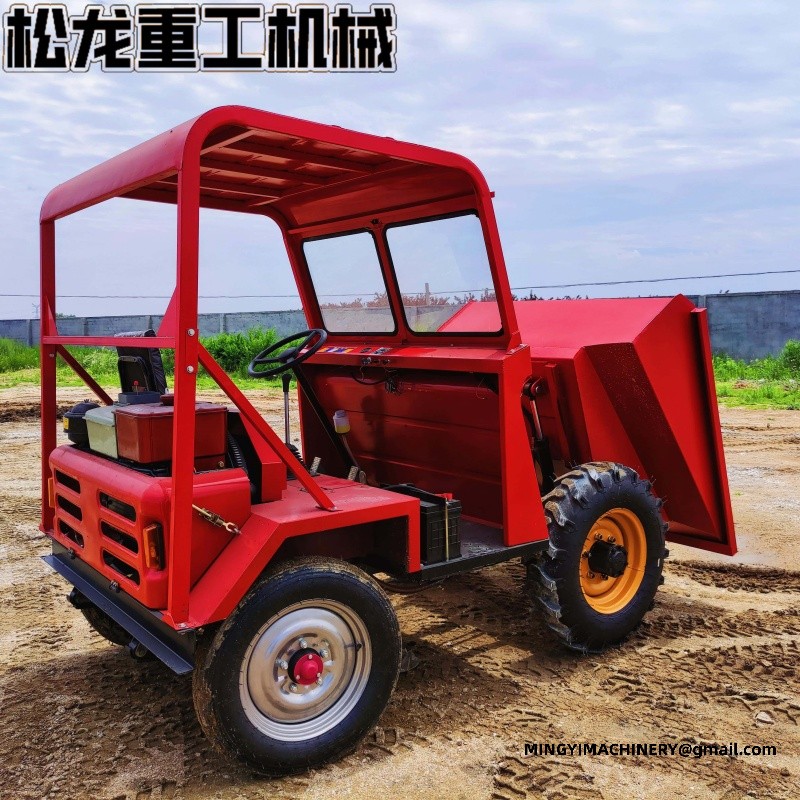
Wheelbarrows, tractor-and-trailer and full-size dump trucks all move material; the front tipper wins where the route is short, confined or rough. on rural work carrying fertiliser from the store to the field headland, the 2,700 x 1,600 x 2,000 machine with 4,500 mm of turning radius and 200 mm of clearance goes where the alternatives cannot, and tips forward without a ramp.
The 1,000 kg and 0.5 m³ figures are the honest middle of that argument: large enough that fertiliser moves in useful quantities, small enough that the machine fits the site. Machines that try to be both usually end up too big for the route and too small for the load.
Wet ground is where the published 200 mm of ground clearance starts to matter. Below that figure the machine is dragging its belly through the surface; above it, the tyres carry the load and the machine keeps moving. On a site that turns to mud, the clearance is what decides whether the shift continues.
The drive layout helps here too. With front-axle drive with rear-axle steering (two-wheel drive), the front axle pulls and the rear axle steers, and the 1,500 mm track keeps the load spread. What the machine will not do is float; a front tipper on soft ground is a machine that goes where a hard surface exists, or not at all.
The FC10 publishes three road speeds: 6.8 km/h in first, 22 km/h in second and 7.5 km/h in reverse. First gear is the working gear — full load, short cycle, on rural work carrying fertiliser from the store to the field headland. Second is for the empty return leg and for longer moves between working areas.
Reverse at 7.5 km/h is deliberately close to first gear, because on a site the reverse movement is part of the cycle rather than an exception. A machine that reverses slowly wastes more time than one that loads slowly, and the published gearing reflects how the machine is actually used on rural work carrying fertiliser from the store to the field headland.
A tractor and trailer carries far more per trip and needs far more room to turn. The FC10 carries 1,000 kg and turns in 4,500 mm, which is the trade in one sentence. On rural work, the shorter cycle usually wins on daily output even though the payload is smaller.
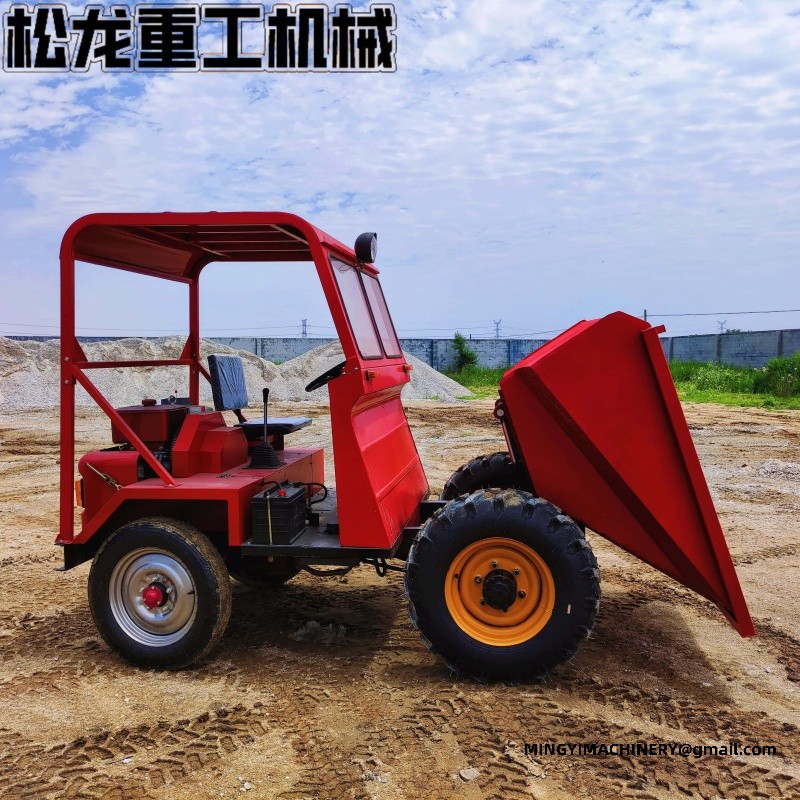
The second difference is the tipping method. A trailer tips to the rear and needs a clear run behind it; the FC10 tips forward at 390 mm over the front axle, which means it empties into a space ahead of the machine rather than requiring one behind it. In a corridor or against a wall, that is the entire argument.
The FC10 is the published reference in the range, and above it sit the FC15/FC18/FC20/FC25/FC30 — four-wheel-drive hydraulic tippers with electric start, lighting, signal lamps and an optional canopy. Those models are built for duties beyond what the 1,000 kg FC10 is specified for, on rural work.
What separates them from the FC10 is drive and equipment: four-wheel drive where the FC10 drives its front axle, and factory-fitted lighting and signals where the FC10 is a daylight site machine. The right choice is decided by the ground and the hours on rural work carrying fertiliser from the store to the field headland, not by the largest number in a model designation.
How is the box returned after tipping on a construction site dumper?
Under hydraulic power, with a dedicated return device. A controlled return protects the chassis from shock loading every cycle, which matters on a machine tipping hundreds of times a day on rural work.
What is the maximum gradeability of a construction site dumper?
21% with the machine working rather than coasting. Site ramps and loading inclines normally sit well inside that figure; where they do not, traction on the surface is usually the real limit rather than power.
Can a construction site dumper tip into a trench?
That is a normal duty. With 390 mm of discharge height and forward tipping, the machine empties into space ahead of itself, so a trench edge or a wall behind it does not obstruct the manoeuvre on rural work.
Does a construction site dumper need a ramp to discharge?
No. The box tips forward over the front axle and discharges at 390 mm, so the machine empties ahead of itself. That is the main reason a forward-tipping layout suits confined sites on rural work.
What figures should I check before buying a construction site dumper?
Route width against 2,700 x 1,600 x 2,000 and 1,500 mm, the ramp against 21%, the worst ground against 200 mm, and the receiving point against 390 mm. A machine that passes all four is the right machine.
How do I work out a construction site dumper cycle time?
Load time plus travel out at 6.8 km/h, tip, then travel back at 22 km/h, plus repositioning. Where total distance is short the loading and tipping dominate, and cycle-greared machines like this one lose nothing to larger alternatives.
What is the difference between the FC10 and the four-wheel-drive models?
Drive and equipment. The FC10 is a two-wheel-drive machine rated at 1,000 kg for firm ground; the FC15/FC18/FC20/FC25/FC30 models are four-wheel-drive hydraulic tippers with electric start, lighting, signal lamps and an optional canopy, for work where traction is the limit.
What maintenance does a construction site dumper need?
Daily: oil and coolant levels, tyre pressures and a walk-round. Then grease the tipping pivots and check the hydraulic hoses and cylinder, because the box cycles hundreds of times a day on rural work.
Read the table as a whole and the machine describes itself: 2,700 x 1,600 x 2,000 overall, 4,500 mm turning radius, 21% of gradeability, 1,000 kg of load. A construction site dumper specified in the middle of its range outlasts one specified at the edge.
Commissioning Construction Site Dumper: Ramps, Grades and Swinging Axles on site
Transport shakes things loose. A short check of Construction Site Dumper: Ramps, Grades and Swinging Axles after the crate is opened, covering the same points the pre-delivery inspection covered, is the most useful insurance available on delivery day.
Reading the early symptoms on Construction Site Dumper: Ramps, Grades and Swinging Axles
Temperature and pressure are the two things worth watching. A Construction Site Dumper: Ramps, Grades and Swinging Axles that runs hotter than it used to, or whose pressure has drifted, is reporting a problem that is still simple to fix.
Pre-delivery inspection before Construction Site Dumper: Ramps, Grades and Swinging Axles leaves the shop
The last hour before packing is the best time to find a fault. Running Construction Site Dumper: Ramps, Grades and Swinging Axles through its full working cycle, checking for leaks under load and confirming that the controls match the specification avoids a conversation across time zones later.
Planning the season around Construction Site Dumper: Ramps, Grades and Swinging Axles
The calendar decides more than the specification does. Planning when Construction Site Dumper: Ramps, Grades and Swinging Axles will be working, when it will be serviced and when it can be spared keeps the maintenance out of the weeks that matter.
Contact MINGYI Machinery for the current front tipper range, the four-wheel-drive models above the FC10, and a formal specification for your market. E-mail: sales@mingycn.com | LINE (ID): mingyicn
Small Dumper Machine: Engine, Starting and Daily Checks · Static Hydraulic Front Dump Truck: Site Transport Duties · 4x4 Water Tank Transport Truck for construction site haulage · Front Tipper Truck