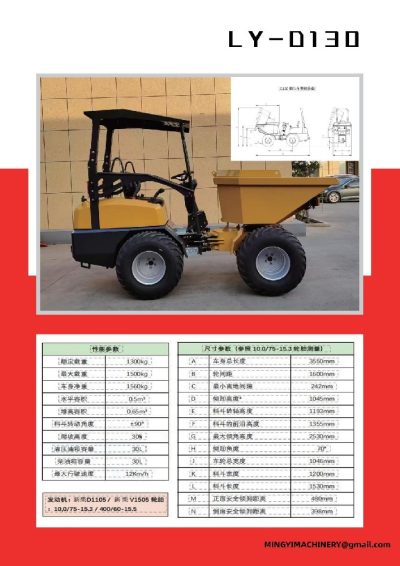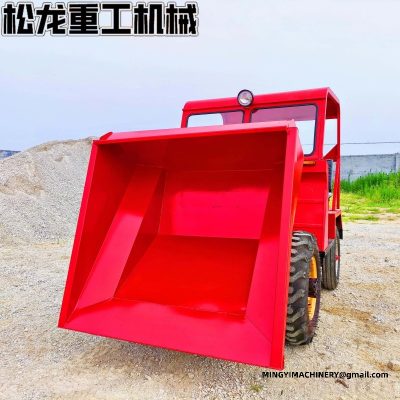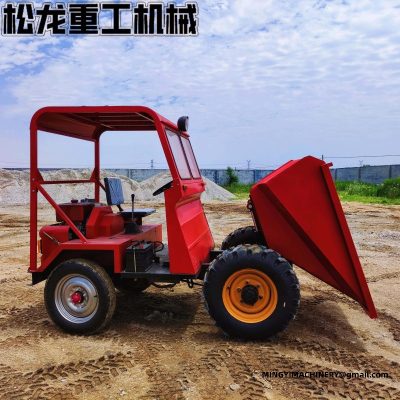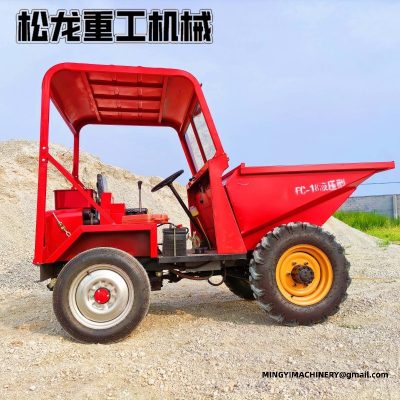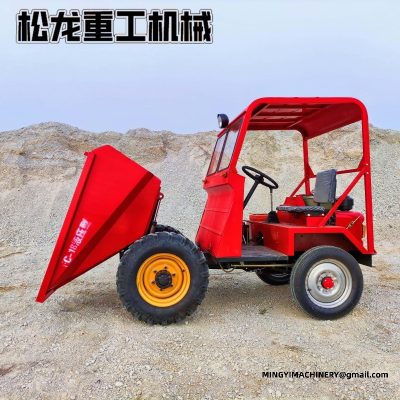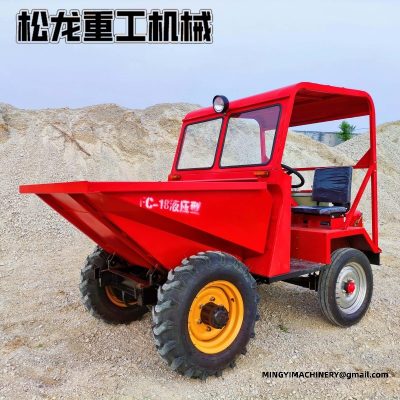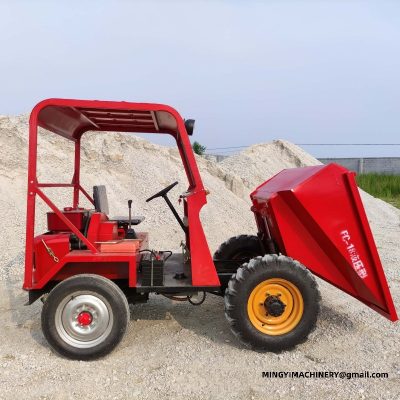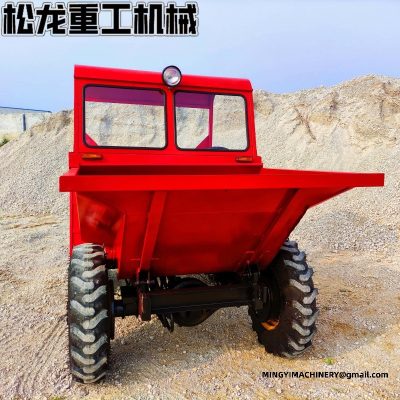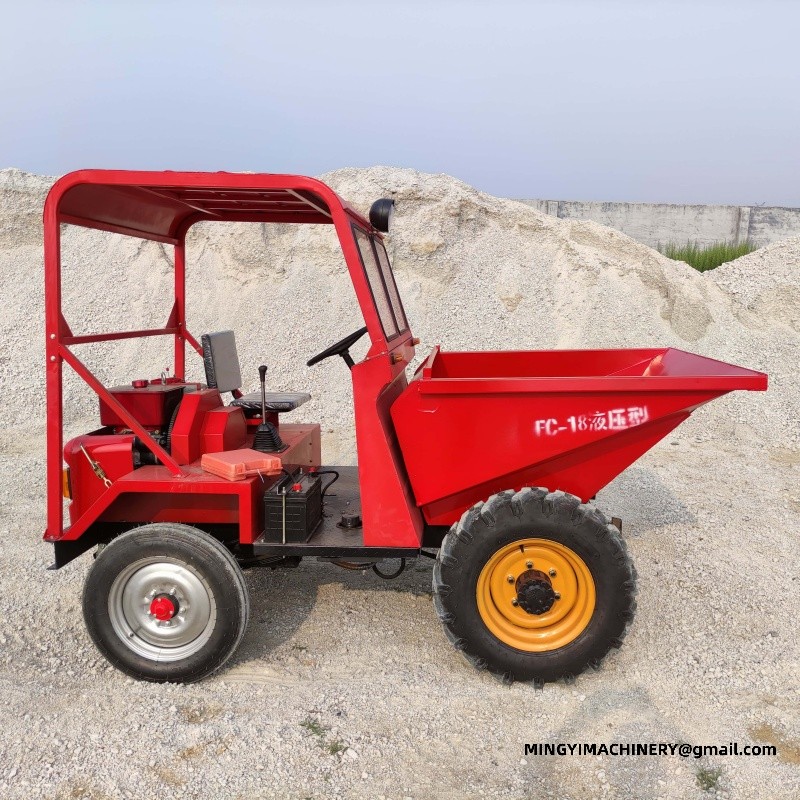
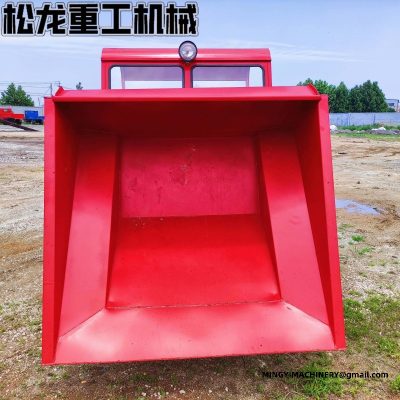
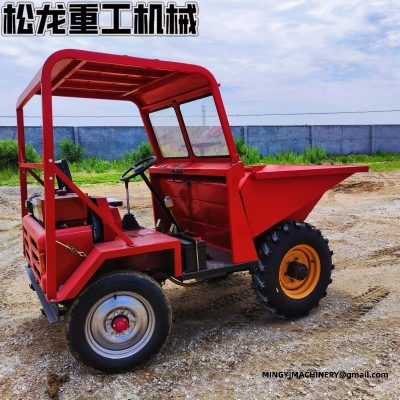
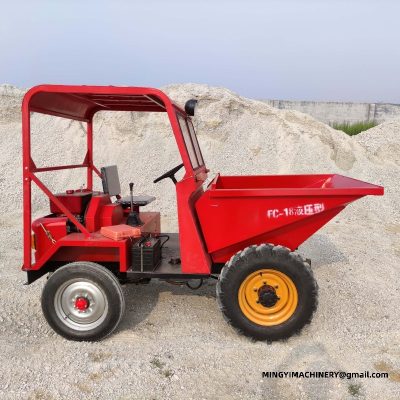
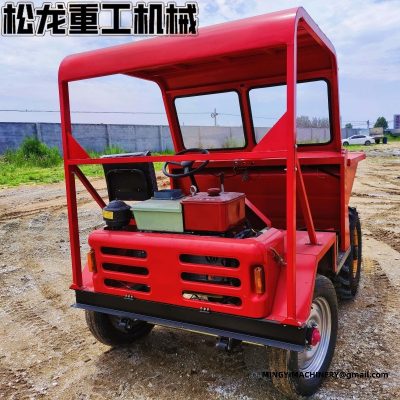
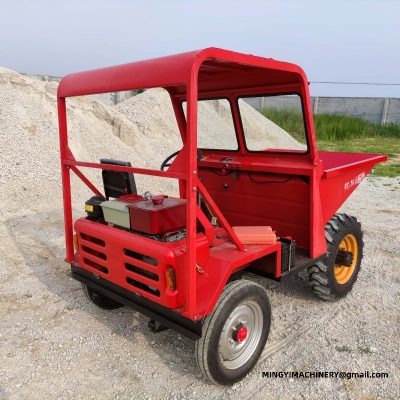
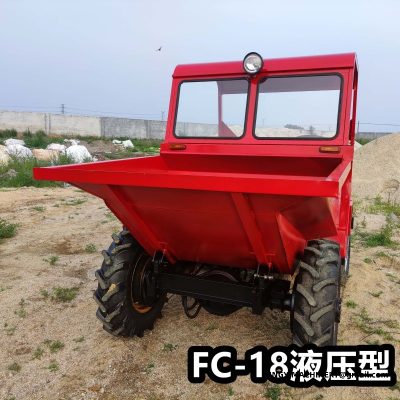
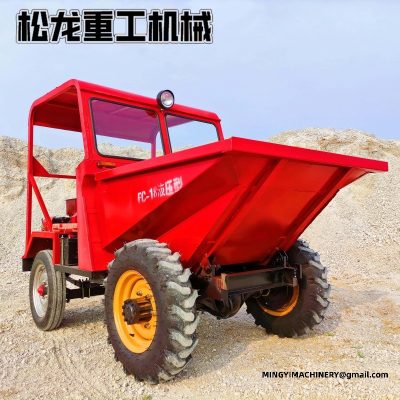
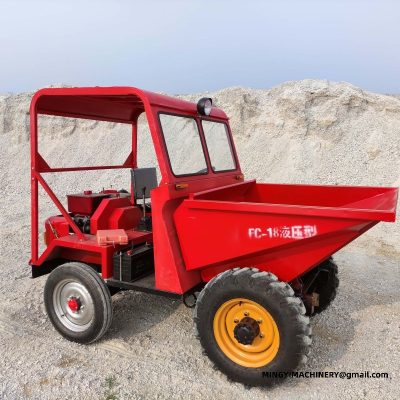
Buyers of a front tipping dumper factory china usually know their site better than any specification knows it. They know the gateway width, the state of the track and the size of the pile. What they need is the machine's own figures to set beside those: 2,700 x 1,600 x 2,000 overall, 1,500 mm of track, 4,500 mm turning radius, 200 mm of clearance, and 21% of gradeability for the ramp.
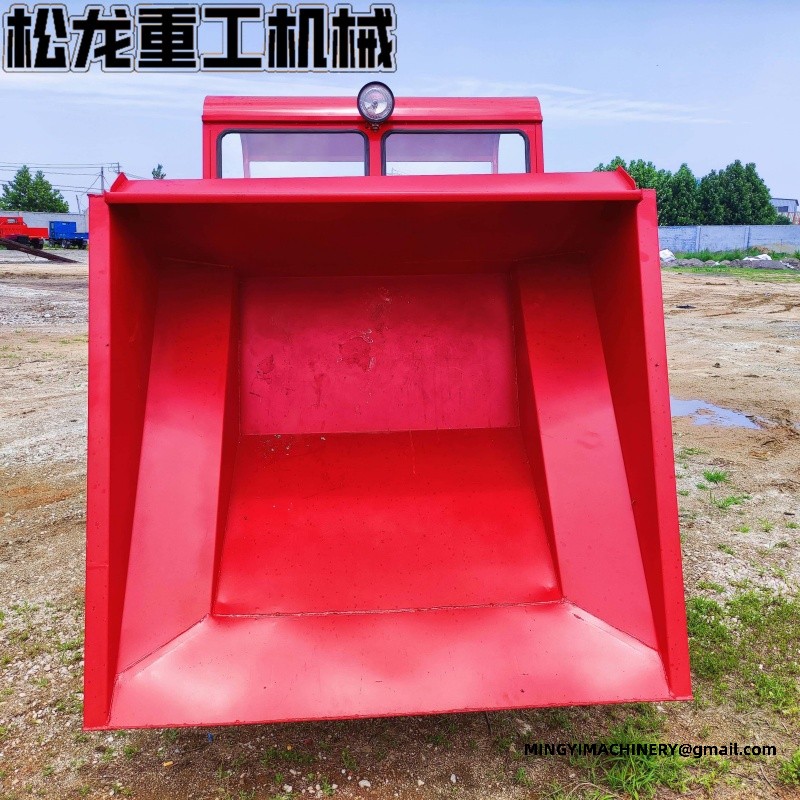
Maintenance on the FC10 is deliberately simple: rear-mounted CG25M diesel, mechanical driveline, hydraulic tipping circuit. on road building work carrying concrete from the batch point to the paver, the machine works short cycles all day, and the daily checks — oil, coolant, tyre condition, grease points — take minutes rather than a workshop visit.
The layout helps: the engine sits at the rear away from the load, the tipping hydraulics are exposed, and the 1,230 mm wheelbase keeps everything within reach of the ground. Machines specified for sites are specified for field maintenance, and this one is no exception.
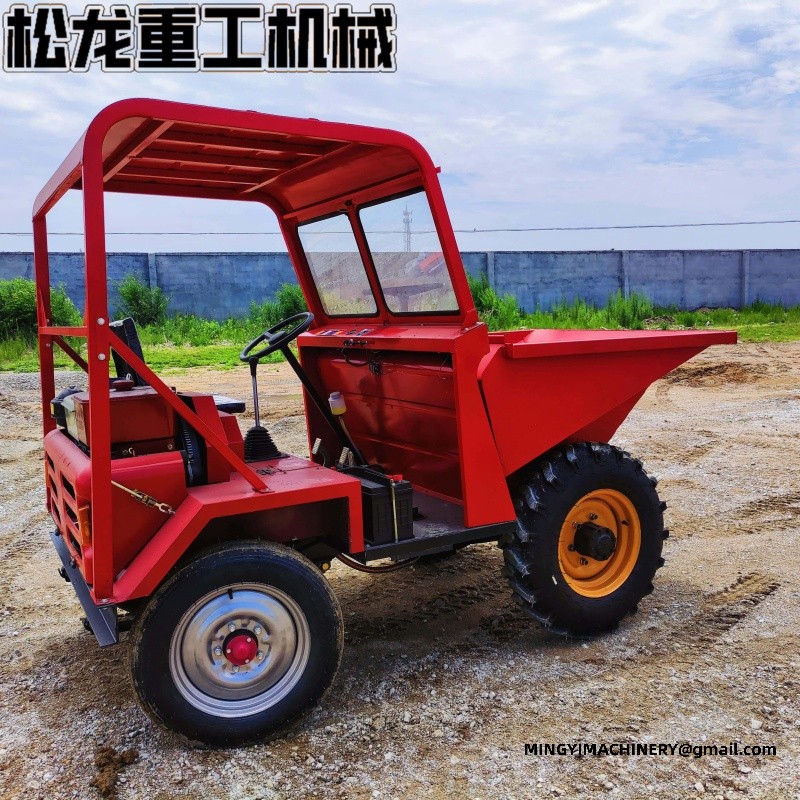
Keep the specification, the service record and the tyre details together with the machine. When the tipper is resold, or when a site asks for evidence of maintenance, that folder is the difference between a quick answer and a slow one.
It also pays on the maintenance side. A machine that has been worked on road building work for years accumulates a history, and knowing what has been replaced tells the next mechanic where to look. The FC10 is simple enough that this history is short, which is exactly the point of owning one.
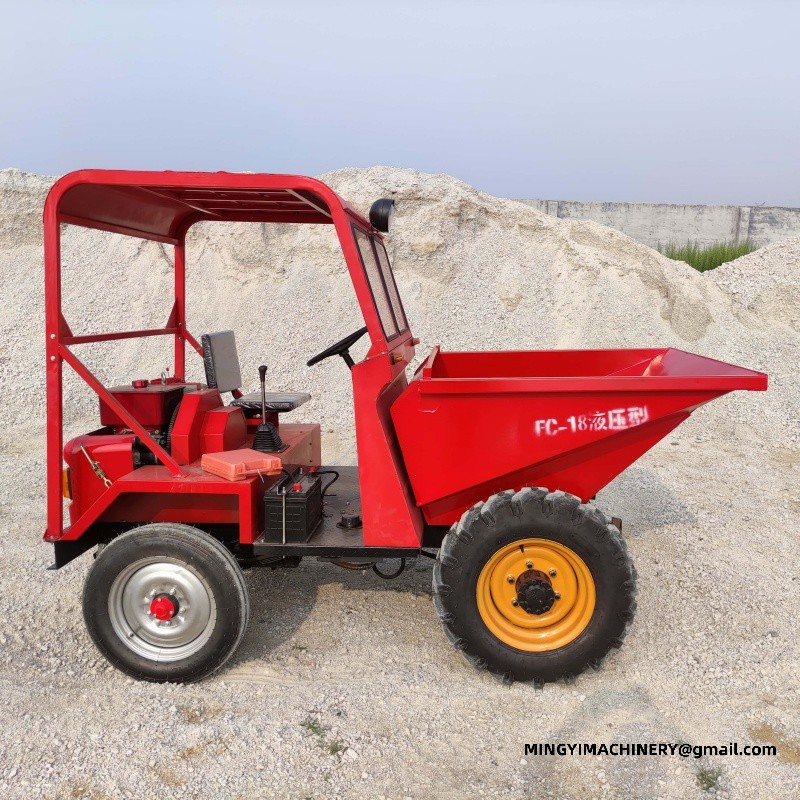
Rear-mounted diesel, front-axle drive, rear-axle steering: the FC10's layout is a set of connected decisions. The engine at the rear counterweights the box ahead of the front axle, so the machine carries 1,000 kg without needing a slab of ballast, and the 1,230 mm wheelbase keeps the whole thing 2,700 x 1,600 x 2,000 overall.
Road building work punishes a badly balanced machine on every ramp. With the weight spread between a driven front axle and a steering rear axle, the FC10 keeps traction while loaded and keeps steering while empty — the two conditions that catch out machines which put all their weight at one end.
| Sample build from the range — FC10 front tipper (1,000 kg class) | |
|---|---|
| Rated load | 1,000 kg |
| Rated bucket capacity | 0.5 m³ |
| Discharge height | 390 mm |
| Maximum gradeability | 21% |
| Bucket width | 1,580 mm |
| Travel speed, 1st gear | 6.8 km/h |
| Travel speed, 2nd gear | 22 km/h |
| Travel speed, reverse | 7.5 km/h |
| Minimum turning radius | 4,500 mm |
| Overall dimensions (L x W x H) | 2,700 x 1,600 x 2,000 |
| Track | 1,500 mm |
| Wheelbase | 1,230 mm |
| Minimum ground clearance | 200 mm |
| Diesel engine model | CG25M |
| Rated engine power | 17.3 kW |
| Rated engine speed | 2,200 r/min |
| Starting method | 12 V DC electric motor |
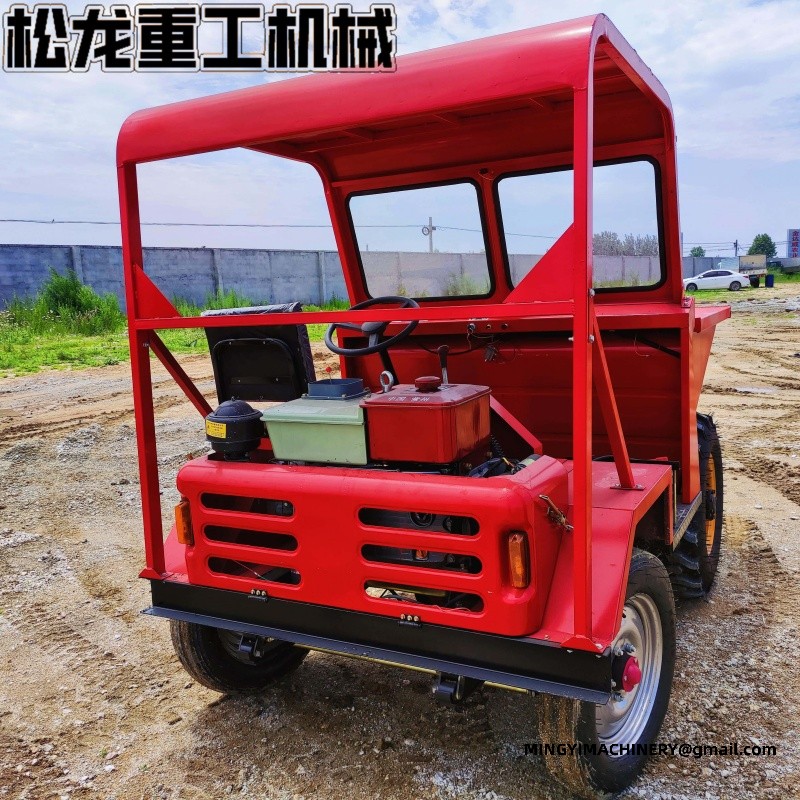
17.3 kW at 2,200 r/min is the honest way to specification a small diesel: power at rated speed, from the CG25M. What matters on road building work is whether the machine holds speed on a ramp with a full box, and that is a torque-and-gearing question the whole drivetrain answers together.
A 1,000 kg tipper does not need a large engine; it needs one sized so the hydraulics for tipping and the drive for hauling do not fight each other. The published pairing — CG25M, 17.3 kW, 21% — describes a machine matched for its duty rather than one specified for a brochure.
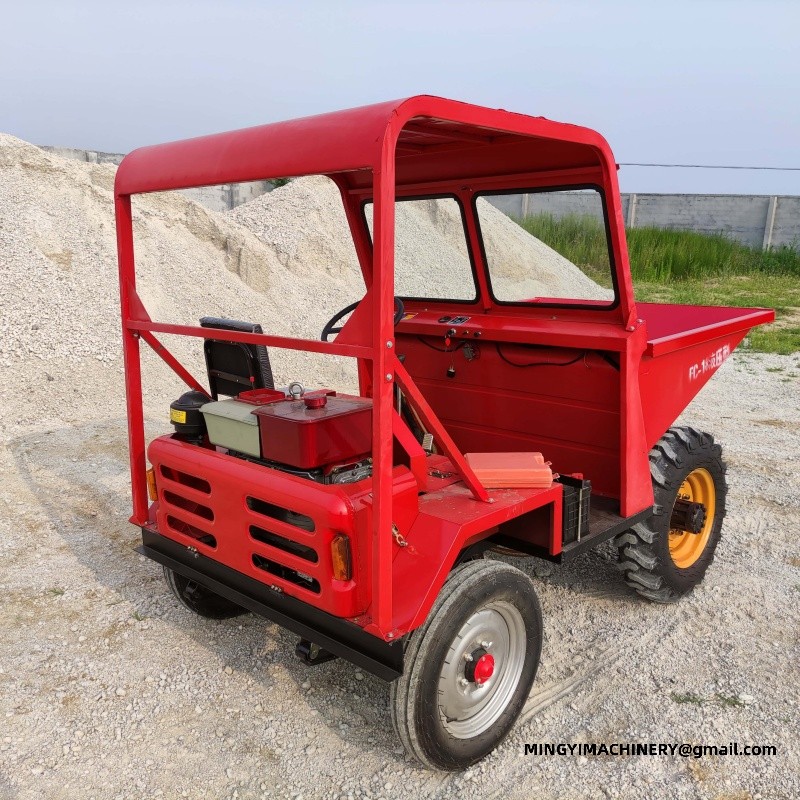
The right way to judge a tipper is effort per tonne moved. 1,000 kg per trip against a haul of a known length gives a fuel figure per tonne that a specification sheet cannot give you. Everything that reduces wasted trips improves that number.
Which is why the small things matter: keeping the route clear, loading the box properly the first time rather than nearly filling it twice, and not sending the machine out half-loaded. A tipper earning its keep is a tipper whose trips are all full trips.
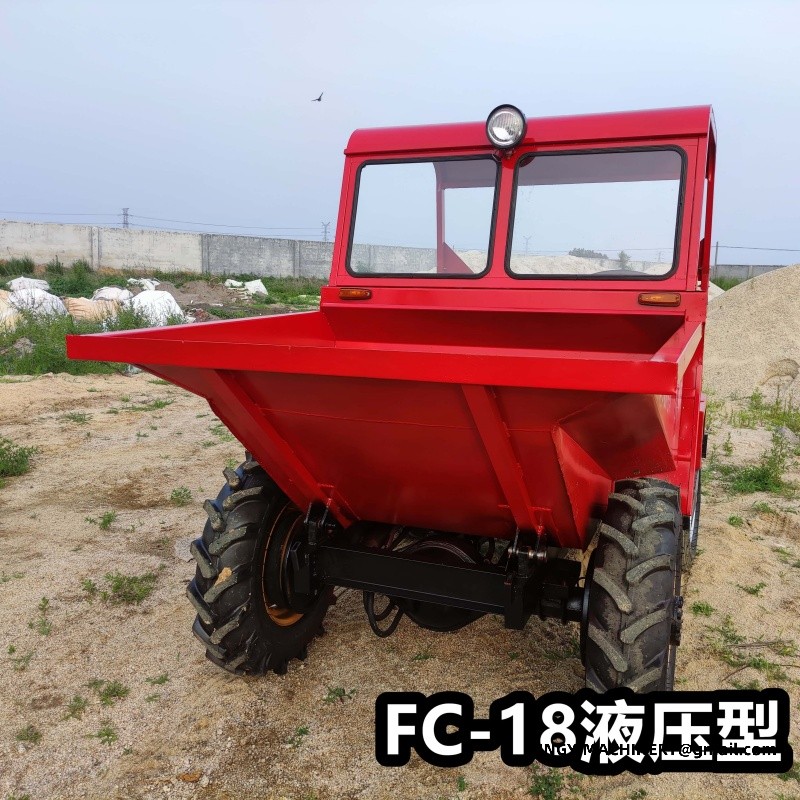
Every tipper has two limits and buyers usually specification one of them. The FC10 publishes both: 1,000 kg by weight and 0.5 m³ by volume. On road building work, the material decides which limit arrives first — dense loads reach the weight figure, light bulky loads reach the volume figure — and knowing which one you are working against tells you whether a bigger box or a stronger frame would actually help.
Road building work usually involves more than one material in a day, which is why a machine specified in the middle of its range lasts longer than one specified at the edge. The 0.5 m³ box with a 1,580 mm width loads from a heap without shovelling the edges, and the 1,000 kg rating leaves allowance for the loads that arrive wetter and heavier than planned.
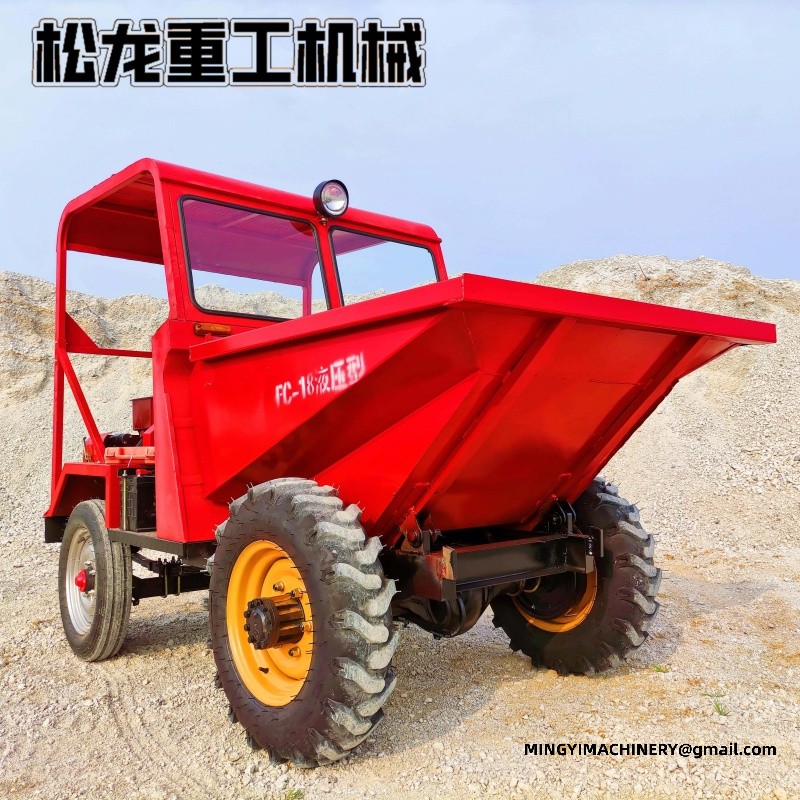
The working day on a small tipper is a long series of short cycles, and the routine that keeps it productive is unglamorous: walk-round at the start, oil and coolant level, tyre pressures, grease the tipping pivots, and watch the hydraulic hoses through the shift on road building work.
Starting is by 12 V DC electric motor, which supports the stop-start pattern of site work — the engine is off while the operator loads or waits, and restarted for each run. On a machine rated at 1,000 kg with a 17.3 kW engine, that cycling is normal duty rather than abuse.
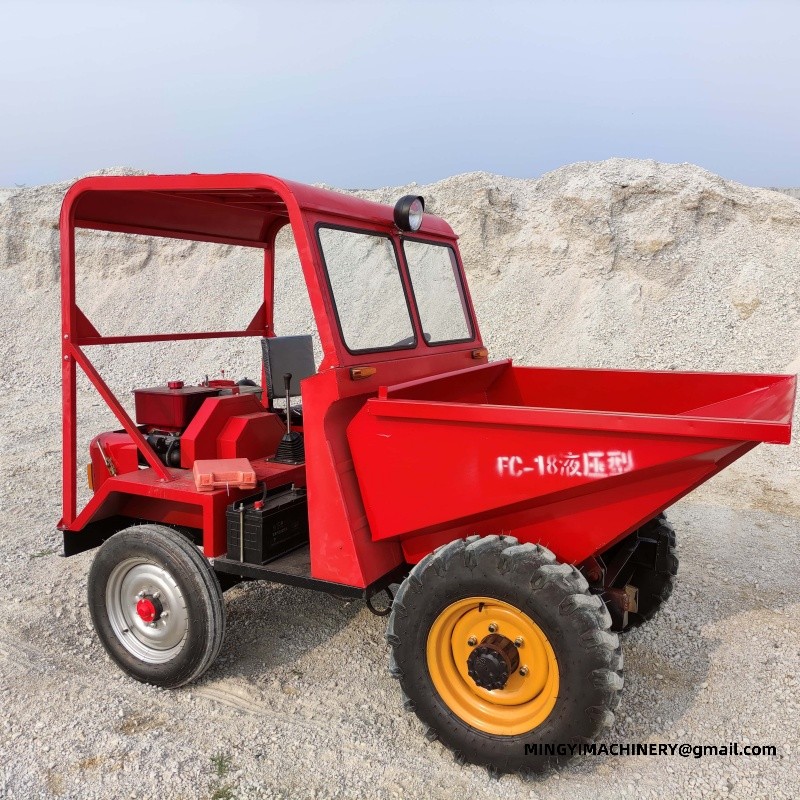
Top speed sells machines; cycle time pays for them. At 6.8 km/h loaded and 22 km/h empty, the FC10 is geared for the run between stockpile and discharge point on road building work carrying concrete from the batch point to the paver — short enough that acceleration and manoeuvring matter more than maximum speed.
That is also why reverse is geared at 7.5 km/h rather than as an afterthought. On a site where the machine works back and forth all day, the return leg is half the cycle, and gearing it properly is worth more than a higher number on the specification sheet.
The FC10 is offered with the equipment a site machine needs and no more; the FC15/FC18/FC20/FC25/FC30 models above it add four-wheel drive and, in the document's own words, electric starting, lighting, signal lamps and a canopy as optional equipment.
What the FC10 publishes as standard is what decides whether it can work at all on road building work: CG25M diesel with 12 V DC electric motor starting, hydraulic tipping with powered return, 390 mm of forward discharge, and a 1,000 kg rating. Everything beyond that is site preference.
The case for a small front tipper is made by the spaces it fits. At 2,700 x 1,600 x 2,000 overall with a 4,500 mm turning radius, the FC10 works through gateways, along trench lines and inside structures on road building work carrying concrete from the batch point to the paver — places where a larger dumper reverses fifty metres for every hundred it carries.
Narrow sites also punish machines that need to be squared up to load. Rear-axle steering and a short wheelbase let the operator correct position continuously rather than by shunting, and over a shift that is where most of the lost time usually goes. The published figures are small numbers that compound into the whole day's output.
The FC10 runs a 1,500 mm track on a 1,230 mm wheelbase, and those proportions decide how it behaves on the surfaces on road building work carrying concrete from the batch point to the paver. A wide track relative to the wheelbase resists tipping on side slopes; a short wheelbase keeps the machine manoeuvrable on a turning circle.
Ground clearance of 200 mm sets the limit at the bottom end. Below the axle line the machine is honest about what it can cross; above it, the swinging rear axle does the work. Where the route includes one bad stretch on road building work, those two features are what get the load through it.
What is the maximum gradeability of a front tipping dumper factory china?
21% with the machine working rather than coasting. Site ramps and loading inclines normally sit well inside that figure; where they do not, traction on the surface is usually the real limit rather than power.
How does a front tipping dumper factory china handle wet or soft ground?
Better than its size suggests. 1,000 kg spread over a 1,500 mm track with a swinging rear axle keeps the load per tyre modest and keeps contact on uneven surfaces — provided the ground stays within what a two-wheel-drive machine can cross on road building work.
Can a front tipping dumper factory china carry people as well as material?
It is specified as a material transport machine, rated at 1,000 kg of load in the box. The operator position described in the specification is for driving, and seats are described as a comfort feature rather than as passenger accommodation.
How do I choose between two- and four-wheel drive?
By the ground rather than the payload. Firm, even going and grades within 21% favour the simpler two-wheel-drive machine; soft, wet or broken ground needs four-wheel drive. Measure the worst stretch of the route on road building work, not the average.
What gradient can a front tipping dumper factory china climb?
Gradeability is 21%, measured with the machine working rather than coasting. Loading ramps and site inclines are usually well inside that figure; the constraint is more often traction than power.
Why does the box return hydraulically on a front tipping dumper factory china?
A powered return brings the box down under control rather than letting it fall, which protects the chassis from shock loading every cycle. Over hundreds of tips a day on road building work, that is the difference between a frame that stays tight and one that does not.
What turning radius does a front tipping dumper factory china need?
The FC10 turns in 4,500 mm on a 1,230 mm wheelbase, helped by rear-axle steering. Measure your tightest gateway or corridor against that figure on road building work.
What tyres does a front tipping dumper factory china run?
The machine carries 1,000 kg of load across a 1,500 mm track and a 1,230 mm wheelbase, which keeps the load per tyre modest. Correct pressures matter more than size on soft ground on road building work.
The FC10's specification is published in full, including the figures buyers usually have to ask for — 1,500 mm of track, 1,230 mm of wheelbase, 200 mm of clearance. Start from your route and the choice usually makes itself.
Packing, loading and shipment of Front Tipping Dumper Factory China: Two-Wheel or Four-Wheel
Container loading is a planning exercise. The overall dimensions and the operating weight of Front Tipping Dumper Factory China: Two-Wheel or Four-Wheel decide whether it ships whole, partly disassembled or with the attachment removed, and that decision is made before the booking.
Pre-delivery inspection before Front Tipping Dumper Factory China: Two-Wheel or Four-Wheel leaves the shop
What the customer sees on arrival is decided before departure. The walk-around given to Front Tipping Dumper Factory China: Two-Wheel or Four-Wheel covers the same points the operator will check on day one, so there are no surprises when the crate is opened at the destination.
Handover and getting familiar with Front Tipping Dumper Factory China: Two-Wheel or Four-Wheel
Familiarisation is not the same as reading the manual. Sitting on Front Tipping Dumper Factory China: Two-Wheel or Four-Wheel, working through the controls at low speed and learning where the machine balances takes an hour, and that hour is what keeps the first week uneventful.
Later additions and retrofits on Front Tipping Dumper Factory China: Two-Wheel or Four-Wheel
An added function should pay for itself quickly. Whether Front Tipping Dumper Factory China: Two-Wheel or Four-Wheel gains a different bucket, a hydraulic service or a protection package, the test is the number of days a year it is actually used.
Contact MINGYI Machinery for the current front tipper range, the four-wheel-drive models above the FC10, and a formal specification for your market. E-mail: sales@mingycn.com | LINE (ID): mingyicn
Site Dumper Manufacturer: Maintenance That Keeps It Working · Mini Dumper Supplier: What the FC10 Table Publishes · 4WD Site Dumper with hydraulic tipping body - site duty guide · Front Tipper Truck