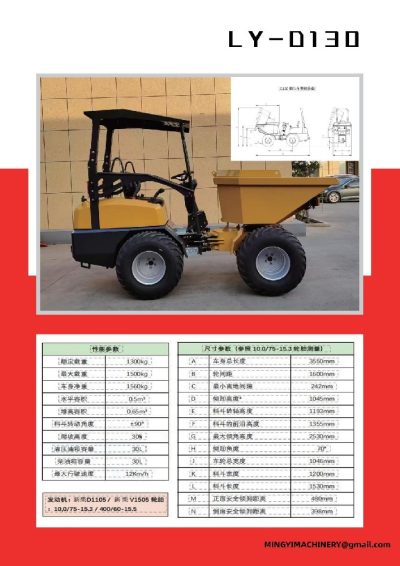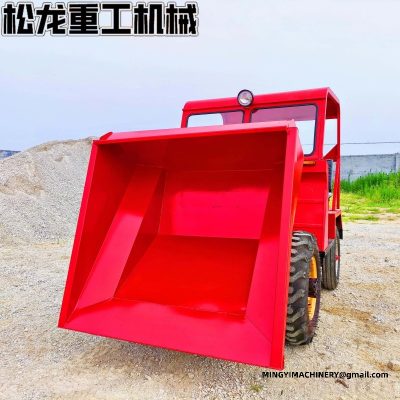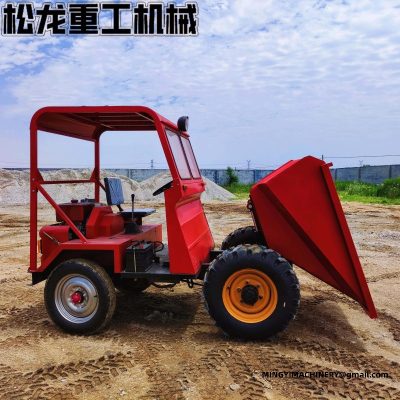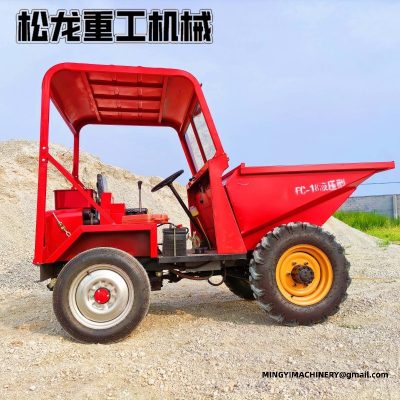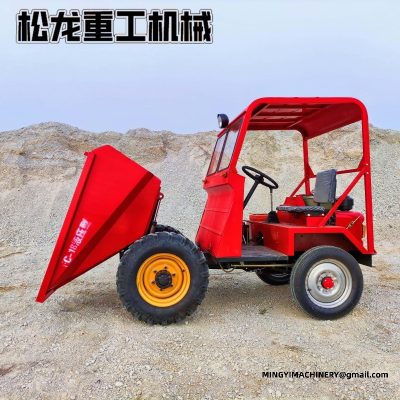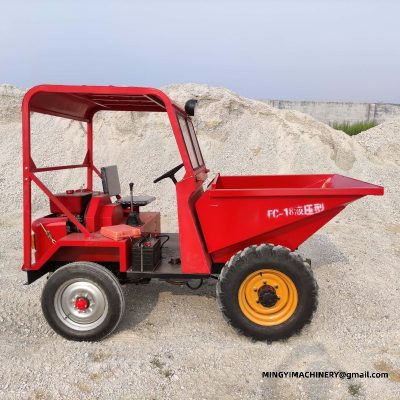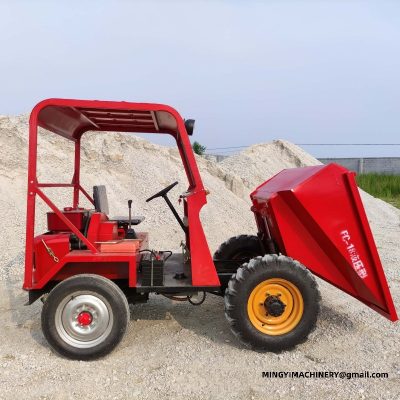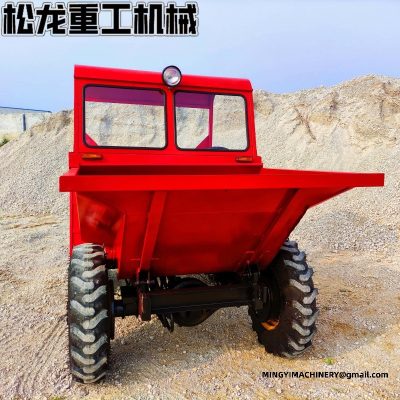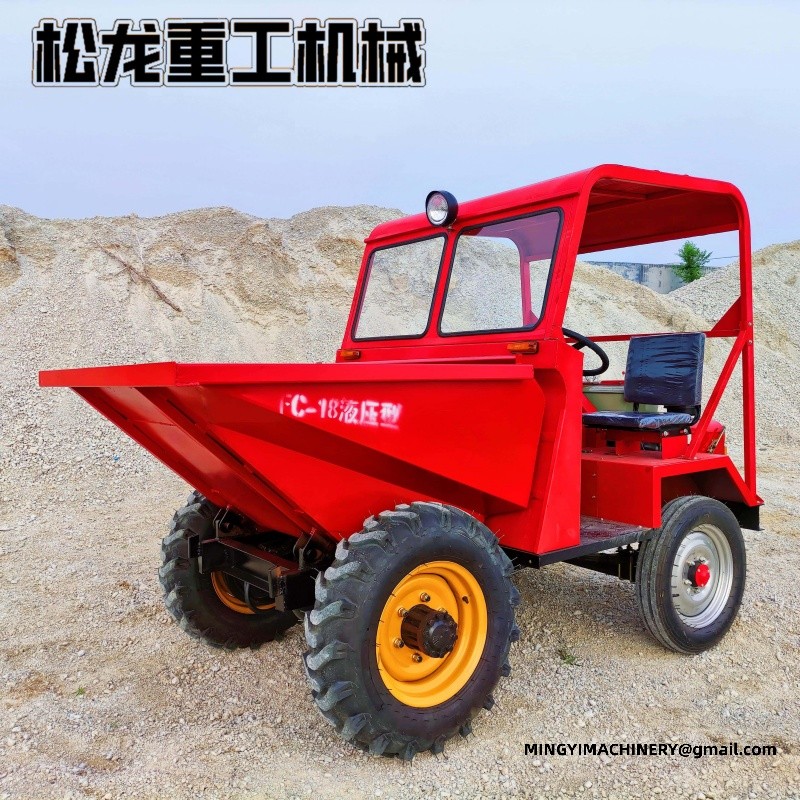
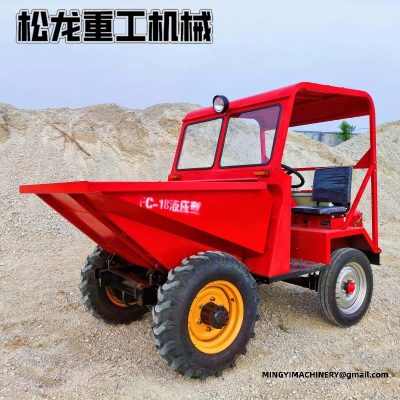
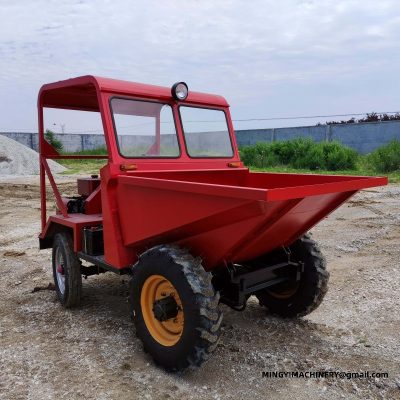
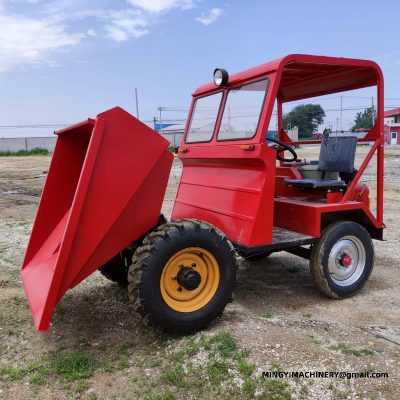
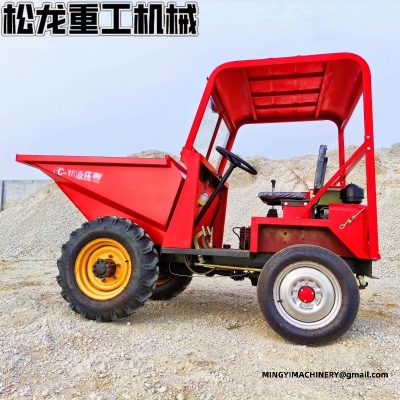
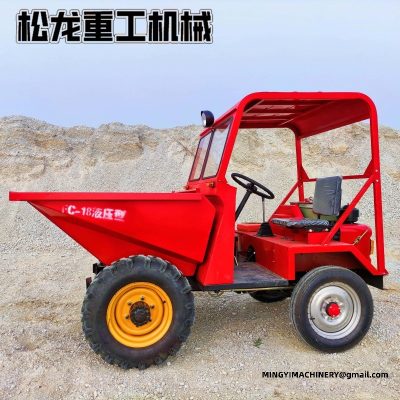
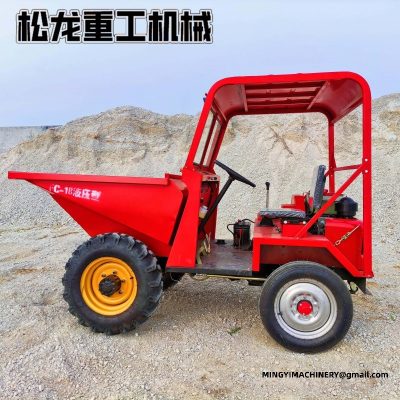
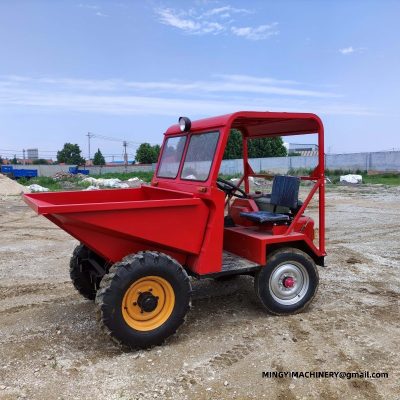
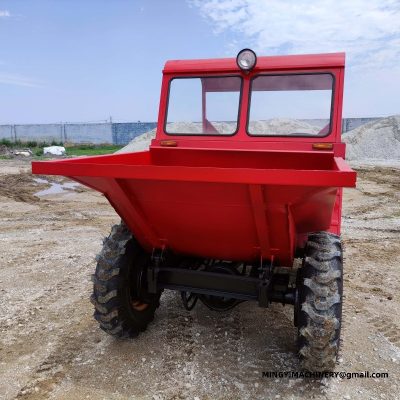
Site transport is a queue problem before it is a capacity problem. The machine that keeps a front tipping dumper manufacturer productive is the one that does not have to reverse out of every corner, and at 4,500 mm turning radius on a 1,230 mm wheelbase that is the design intent here. Load is 1,000 kg, box volume 0.5 m³, and discharge 390 mm over the front axle.
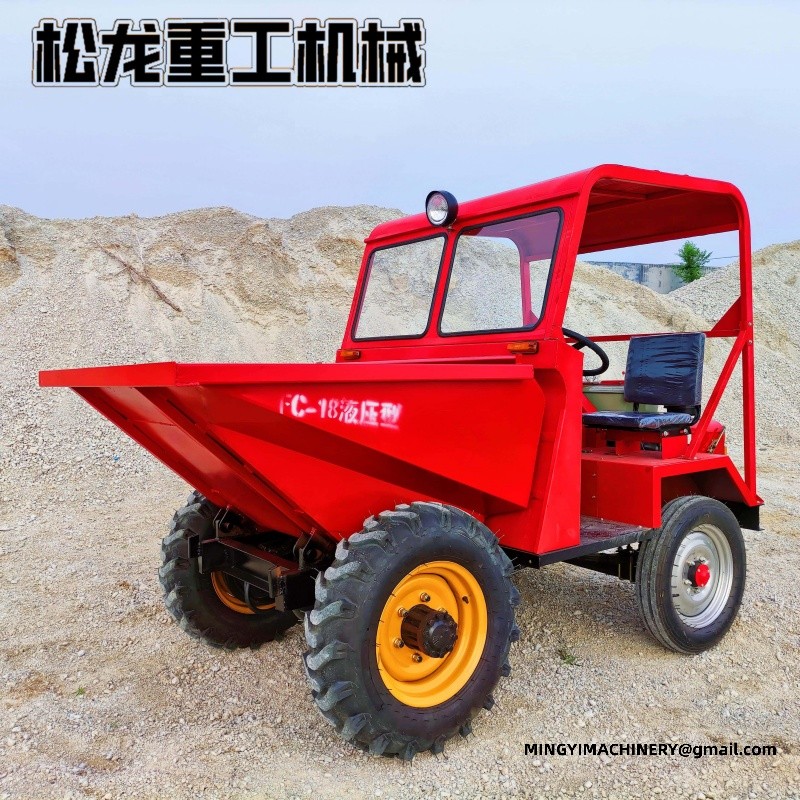
Starting on the FC10 is 12 V DC electric motor, which on a machine worked in short cycles is a genuine productivity figure. on road building work moving material between cuts and fills, the engine is stopped and started throughout the day, and a key start keeps that from being the slowest part of the job.
The CG25M diesel at 17.3 kW and 2,200 r/min is sized for the 1,000 kg duty cycle rather than for maximum output, and the rear mounting puts the everyday service points — oil, filters, battery — where they can be reached without climbing over the load.
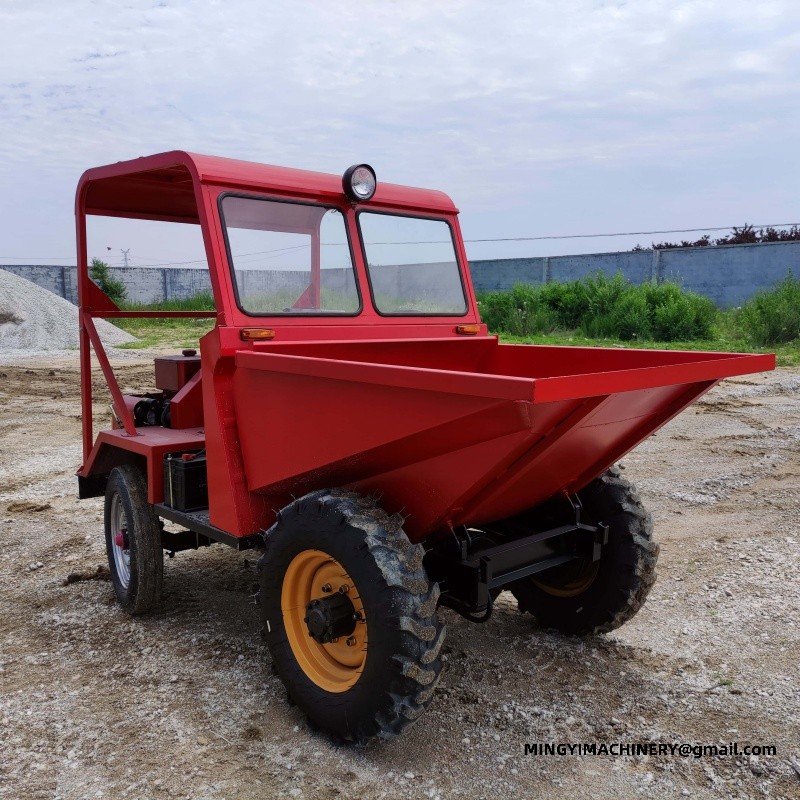
Keep the specification table with the machine. The four figures a second owner will ask for — 1,000 kg of load, 0.5 m³ of box, 390 mm of discharge height and 4,500 mm of turning radius — are all measurable on the machine itself, which makes a used FC10 easy to verify on road building work.
The engine figures are worth recording too: CG25M at 17.3 kW and 2,200 r/min, starting on 12 V DC electric motor. Between the two sets, an owner has everything needed to order parts, compare a replacement and answer an enquiry without going back to the manufacturer.
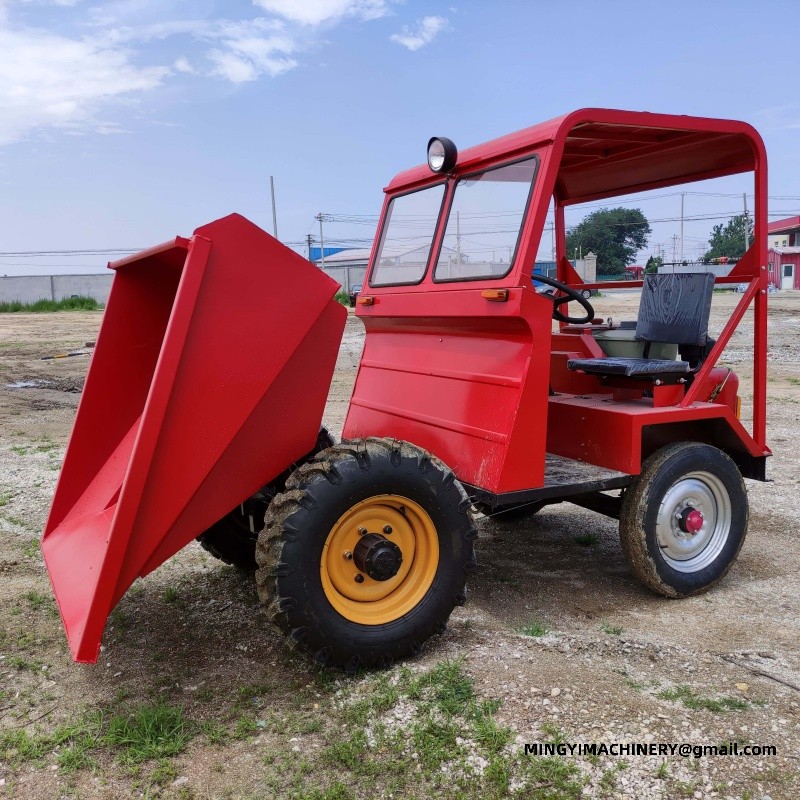
Ask for the specification sheet for the exact build you are buying, not for the model name. The FC10 figures published here describe the standard machine: 17.3 kW at 2,200 r/min, 0.5 m³ and 1,000 kg, with 12 V DC electric motor.
Ask also what is optional. On the wider FC15-FC30 four-wheel-drive machines the lighting, signal and cab options are listed explicitly; knowing which of them are fitted is the difference between a machine that suits your job and one that nearly does.
| Specification extract — FC10 front tipper (1,000 kg class) | |
|---|---|
| Rated load | 1,000 kg |
| Rated bucket capacity | 0.5 m³ |
| Discharge height | 390 mm |
| Maximum gradeability | 21% |
| Bucket width | 1,580 mm |
| Travel speed, 1st gear | 6.8 km/h |
| Travel speed, 2nd gear | 22 km/h |
| Travel speed, reverse | 7.5 km/h |
| Minimum turning radius | 4,500 mm |
| Overall dimensions (L x W x H) | 2,700 x 1,600 x 2,000 |
| Track | 1,500 mm |
| Wheelbase | 1,230 mm |
| Minimum ground clearance | 200 mm |
| Diesel engine model | CG25M |
| Rated engine power | 17.3 kW |
| Rated engine speed | 2,200 r/min |
| Starting method | 12 V DC electric motor |
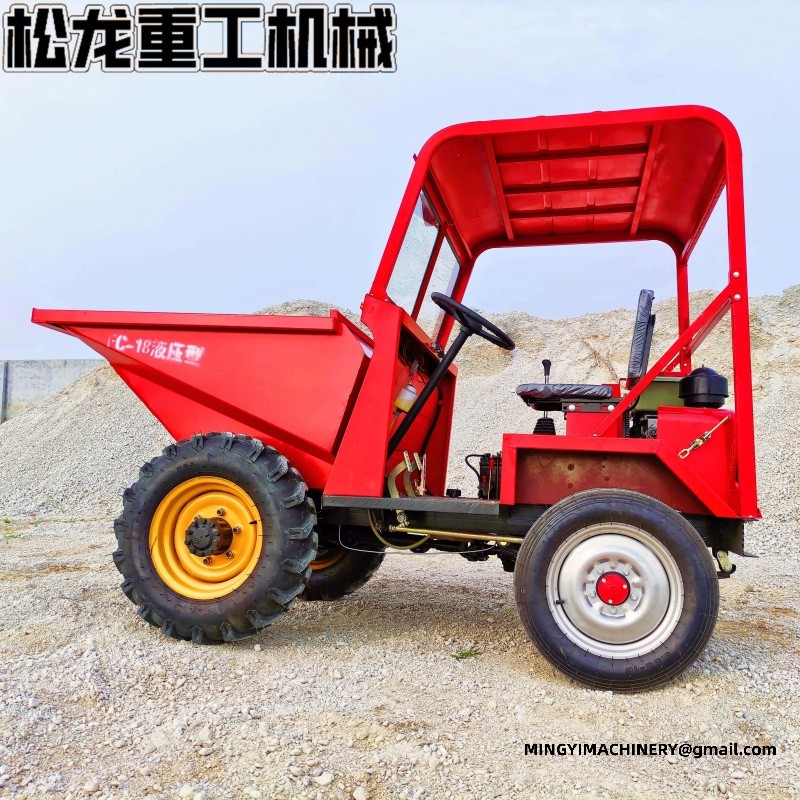
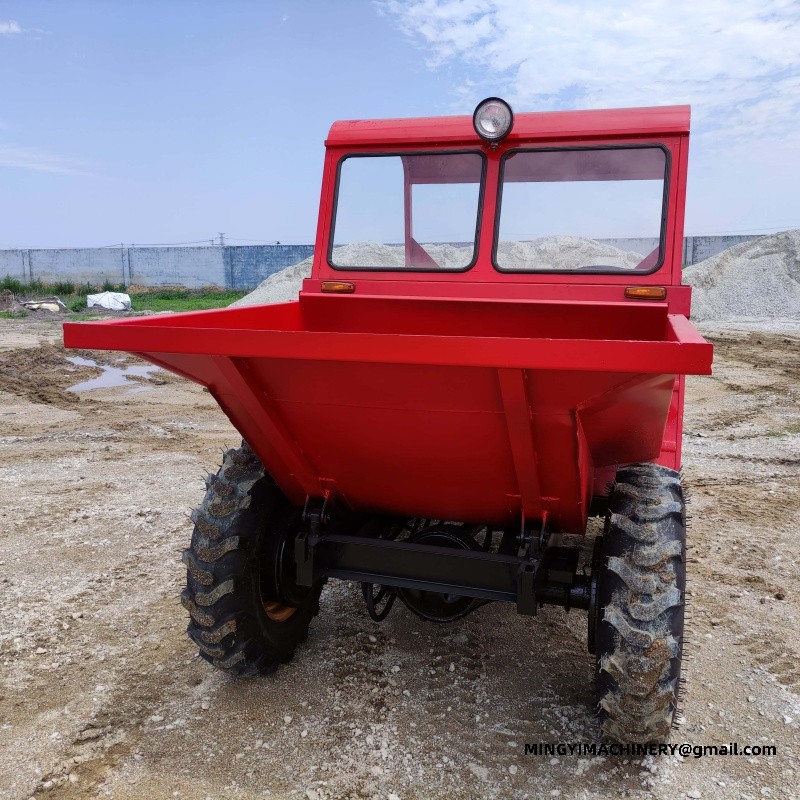
The FC10 drives through the front axle and steers through the rear, a front-axle drive with rear-axle steering (two-wheel drive). Rear steering is unusual on site machines and it is what makes the handling sharp: the front wheels keep driving while the rear pivots, so the machine turns into its own length on road building work moving material between cuts and fills.
The diesel sits at the rear, which balances the load in the front box and keeps the weight distribution sensible whether the box is full or empty. Combined with a 1,230 mm wheelbase and a 4,500 mm turning radius, the layout is what lets a 1,000 kg machine work where a larger one would spend its time manoeuvring.
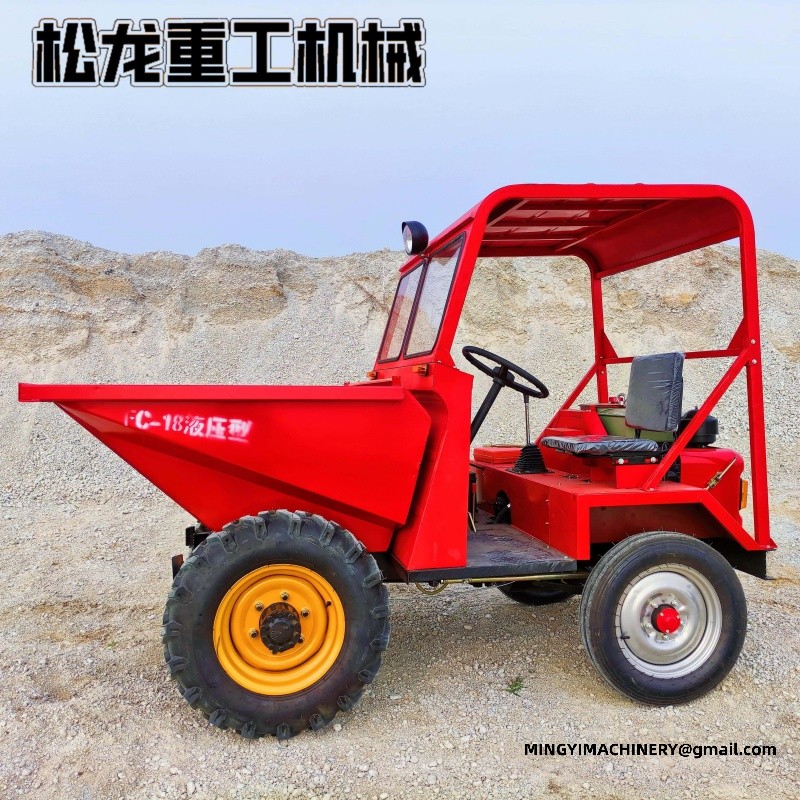
The FC10 is published at 1,000 kg rated load and 0.5 m³ rated bucket capacity, and those two figures are worth reading together rather than separately. Carrying earthwork, the box fills by volume long before the weight limit is reached, while denser material reaches the weight figure first, on road building work. Which of the two governs is decided by what you load, not by the machine.
For a site doing short runs on road building work, the practical question is how much arrives per hour, and that is load divided by cycle time. The 0.5 m³ box at 1,000 kg is sized so that neither figure is wasted: the machine is not carrying a half-empty box on light material, and it is not overloaded on dense material. That balance is what the two published numbers describe.
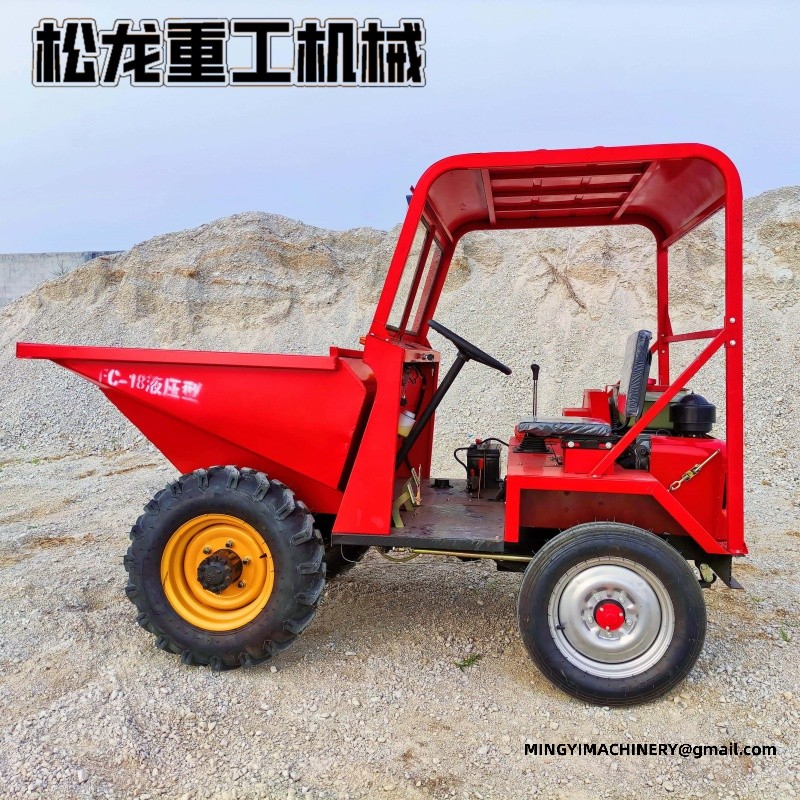
The safety case for a small front tipper is largely the safety case for not needing a larger machine. 2,700 x 1,600 x 2,000 overall and 4,500 mm of turning radius mean fewer blind reversing movements on road building work, and forward tipping at 390 mm means nobody has to stand behind a raised box.
Gradeability of 21% and clearance of 200 mm define the safe envelope. Worked inside those figures, on the firm ground the two-wheel-drive layout is specified for, the machine is predictable. The specification sheet is also, read properly, the operating manual.
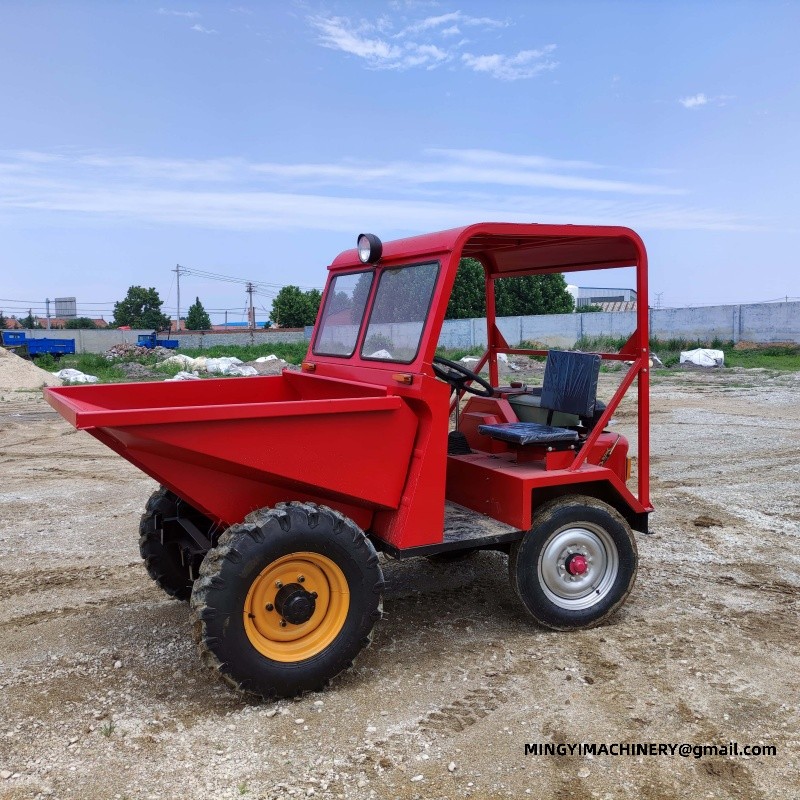
The FC10 is the published reference in the range, and above it sit the FC15/FC18/FC20/FC25/FC30 — four-wheel-drive hydraulic tippers with electric start, lighting, signal lamps and an optional canopy. Those models are built for duties beyond what the 1,000 kg FC10 is specified for, on road building work.
What separates them from the FC10 is drive and equipment: four-wheel drive where the FC10 drives its front axle, and factory-fitted lighting and signals where the FC10 is a daylight site machine. The right choice is decided by the ground and the hours on road building work moving material between cuts and fills, not by the largest number in a model designation.
Hot weather is easier on a mechanical diesel than cold, but hard on everything else. Dust on road building work works its way into the air filter, the radiator matrix and the hydraulic breather. On a machine rated to run at 2,200 r/min continuously, airflow is the whole of the cooling story.
The maintenance answer is unglamorous: clean the filter at the interval the site actually demands rather than the one in the book, and check the radiator fins with a torch. A front tipper that overheats is nearly always a front tipper with a blocked matrix, not a faulty thermostat.
22 km/h in second gear is a site speed, not a road speed, and the gearing makes that plain. on road building work moving material between cuts and fills, the distances are short, the ground is uneven and the machine is loaded for most of the cycle — conditions where 6.8 km/h in first does the work.
The value of the second gear is the empty leg and repositioning between working areas, and reverse at 7.5 km/h covers the corrections in between. Read as a set, the three published speeds describe a machine designed around a loading cycle rather than around a commute, which is what a front tipper is for.
2,700 x 1,600 x 2,000 is a set of compromises made in one direction. Height is kept down so the box can be loaded by hand when no machine is available, and length is kept short so the machine fits between structures and turns inside its own footprint. On road building work, both of those happen constantly.
The effort of a low build is ground clearance, which is published honestly at 200 mm. That is the trade: the FC10 goes under things and between things rather than over things. Buy it for the routes where that matters on road building work and it will earn its place; buy it for rocky ground and it will not.
A 17.3 kW mechanical diesel turning at 2,200 r/min uses fuel in proportion to the work it does, not to the hours it stands. The two habits that effort the most are idling and travelling loaded at a speed the haul does not need.
The published travel speeds are 6.8 km/h in first, 22 km/h in second and 7.5 km/h in reverse. On a short haul on road building work, first gear is often both faster overall and simpler, because it avoids the stop-start of working up and down the box.
What is the wheelbase of a front tipping dumper manufacturer and why does it matter?
1,230 mm, with a 4,500 mm turning radius. A short wheelbase plus rear-axle steering is what produces the tight radius, and that is what lets the machine work in confined areas on road building work.
How is the box returned after tipping on a front tipping dumper manufacturer?
Under hydraulic power, with a dedicated return device. A controlled return protects the chassis from shock loading every cycle, which matters on a machine tipping hundreds of times a day on road building work.
Does a front tipping dumper manufacturer need a licence or registration?
The published specification describes a site machine, geared at 22 km/h in second: it is built for working cycles on site rather than for road travel. Operate it as site plant rather than as a road vehicle.
How do I match a front tipping dumper manufacturer to a mixer or hopper?
By discharge height and cycle count. 390 mm of discharge height has to clear the receiving opening, and the 0.5 m³ box sets how many trips are needed. Check both before deciding on the build on road building work.
What does the operator need to know before using a front tipping dumper manufacturer?
The four working limits: 1,000 kg of load, 21% of gradeability, 200 mm of ground clearance and 390 mm of discharge height. Everything else about operating the machine follows from staying inside those.
How does a front tipping dumper manufacturer compare with a wheelbarrow?
1,000 kg per trip against a barrow load, through the same gaps and over the same boards. Nothing on the site has to be rebuilt to use it, which is why machines of this size get adopted quickly on road building work.
Is a front tipping dumper manufacturer stable on a slope?
Published gradeability is 21% and the track is 1,500 mm, which together set the sensible working envelope. Work up and down rather than across, and keep the load inside the rated 1,000 kg.
How is a front tipping dumper manufacturer started?
By 12 V DC electric motor, which suits the stop-start pattern of site work where the engine is shut down while the operator loads or waits. The CG25M diesel is sized for the 1,000 kg duty cycle.
Every figure on this page comes from the FC10 specification table — 1,000 kg of rated load, 390 mm of discharge height, 4,500 mm of turning radius. Nothing here is estimated, and the machine can be measured against all of it on delivery.
Handover and getting familiar with Front Tipping Dumper Manufacturer: Reading the Spec Table
Familiarisation is not the same as reading the manual. Sitting on Front Tipping Dumper Manufacturer: Reading the Spec Table, working through the controls at low speed and learning where the machine balances takes an hour, and that hour is what keeps the first week uneventful.
Packing, loading and shipment of Front Tipping Dumper Manufacturer: Reading the Spec Table
The paperwork matters as much as the packing. Serial numbers, dimensions and weights recorded for Front Tipping Dumper Manufacturer: Reading the Spec Table at loading are the same figures the destination needs, and a mismatch here loses more days than the voyage itself.
Commissioning Front Tipping Dumper Manufacturer: Reading the Spec Table on site
The first hour on site should be slow. Before Front Tipping Dumper Manufacturer: Reading the Spec Table is put to work the fluid levels are rechecked after transport, the fasteners are gone over and the machine is run light so that anything loosened in transit shows up early.
Keeping a service record for Front Tipping Dumper Manufacturer: Reading the Spec Table
The record should follow the machine, not the owner. When Front Tipping Dumper Manufacturer: Reading the Spec Table changes hands the service history travels with it, and a complete folder is often the difference between a quick sale and a long one.
Contact MINGYI Machinery for the current front tipper range, the four-wheel-drive models above the FC10, and a formal specification for your market. E-mail: sales@mingycn.com | LINE (ID): mingyicn
Front Tipping Dumper Factory China: Two-Wheel or Four-Wheel · Site Dumper Manufacturer: Maintenance That Keeps It Working · Articulated Dump Truck with hydraulic tipping body · Front Tipper Truck