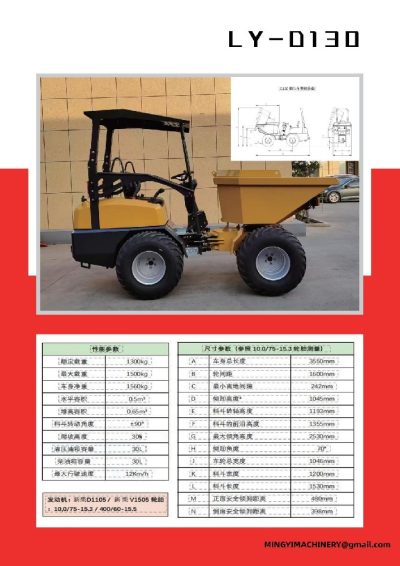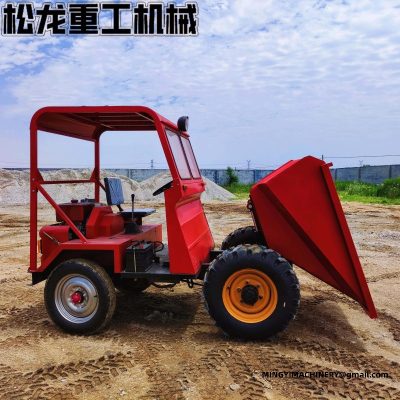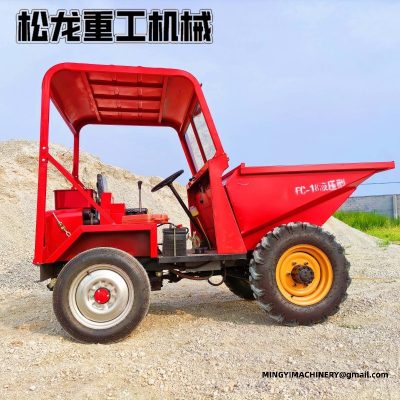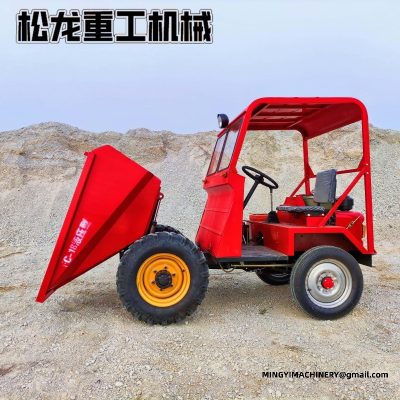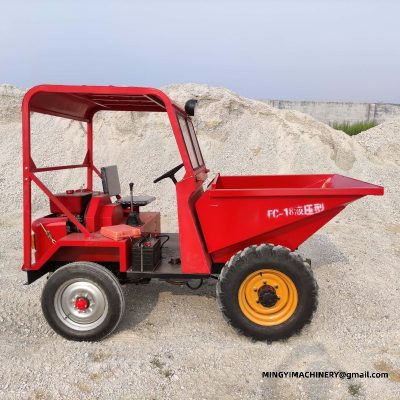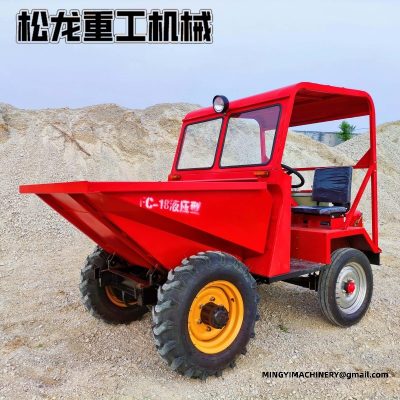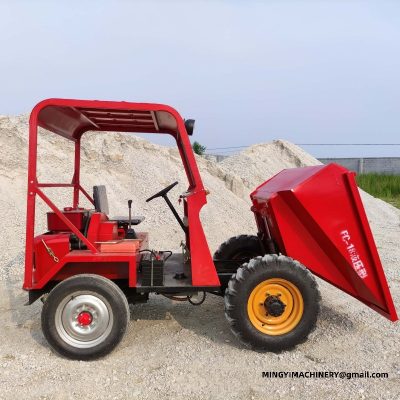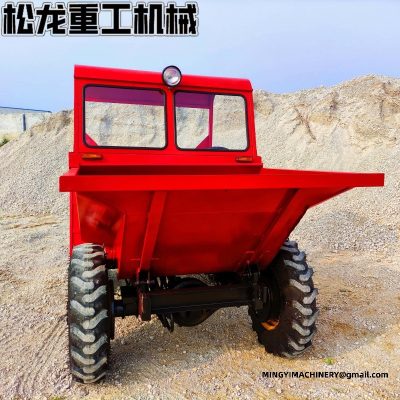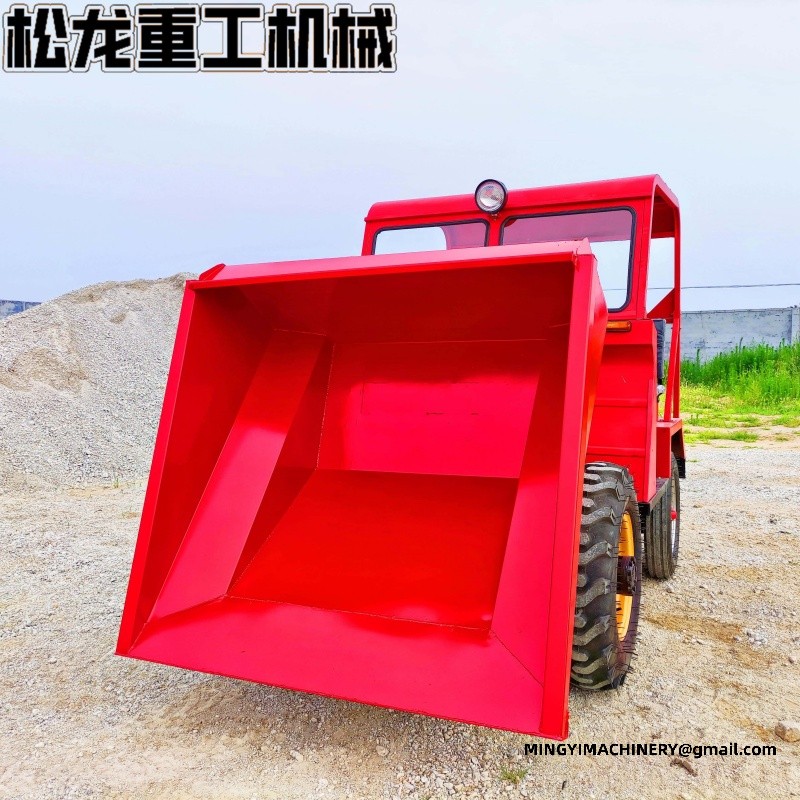
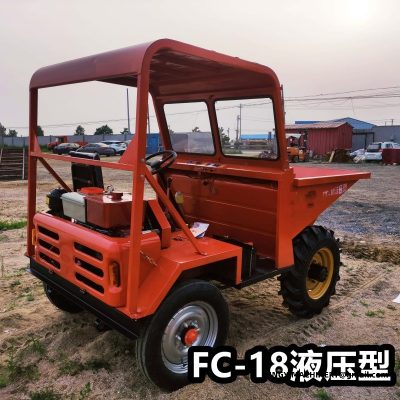
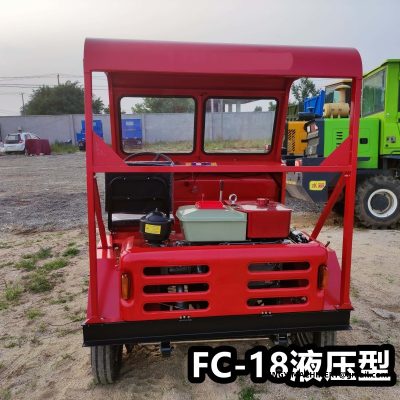
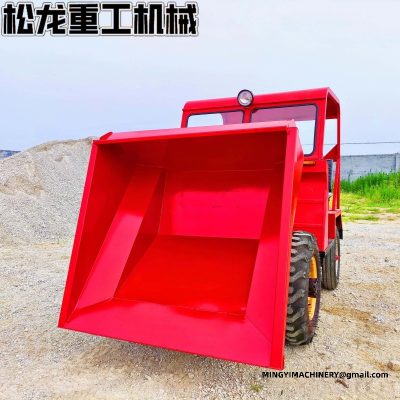
Most site plant is bought too big and then worked carefully. A small dumper machine does the opposite: it is sized so that it can be used hard in the places where it is needed. At 2,700 x 1,600 x 2,000 overall and 4,500 mm turning radius, the FC10 works through openings and along routes that larger machines avoid, on rural work moving loads between yard and field.
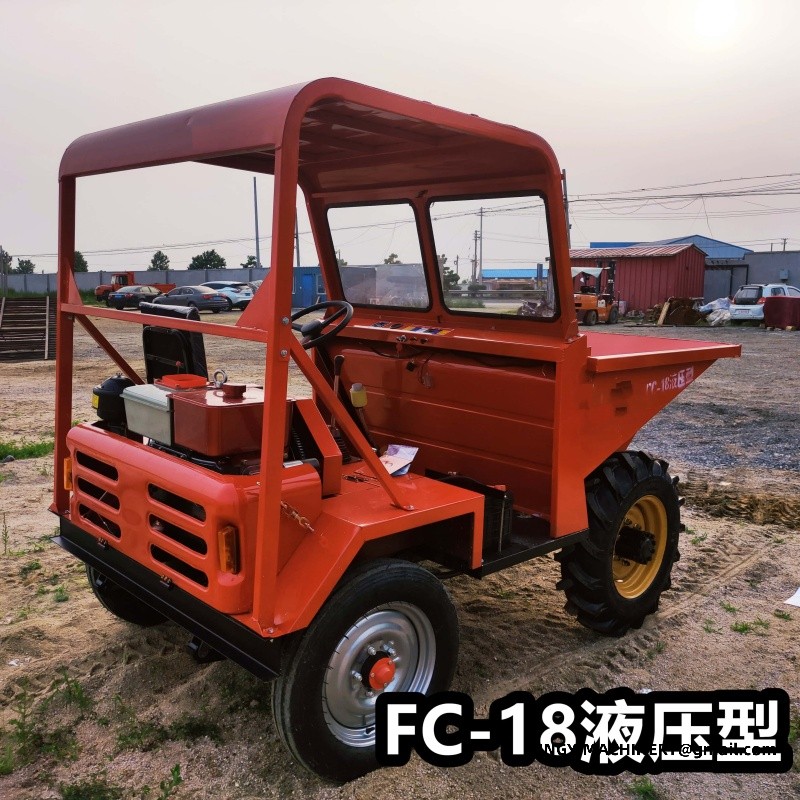
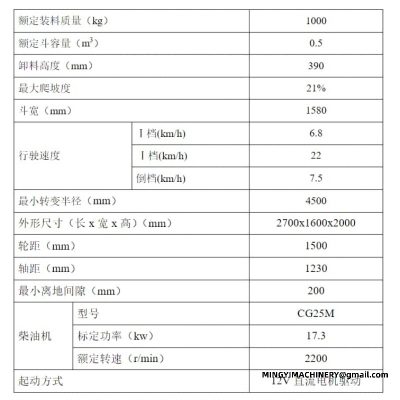
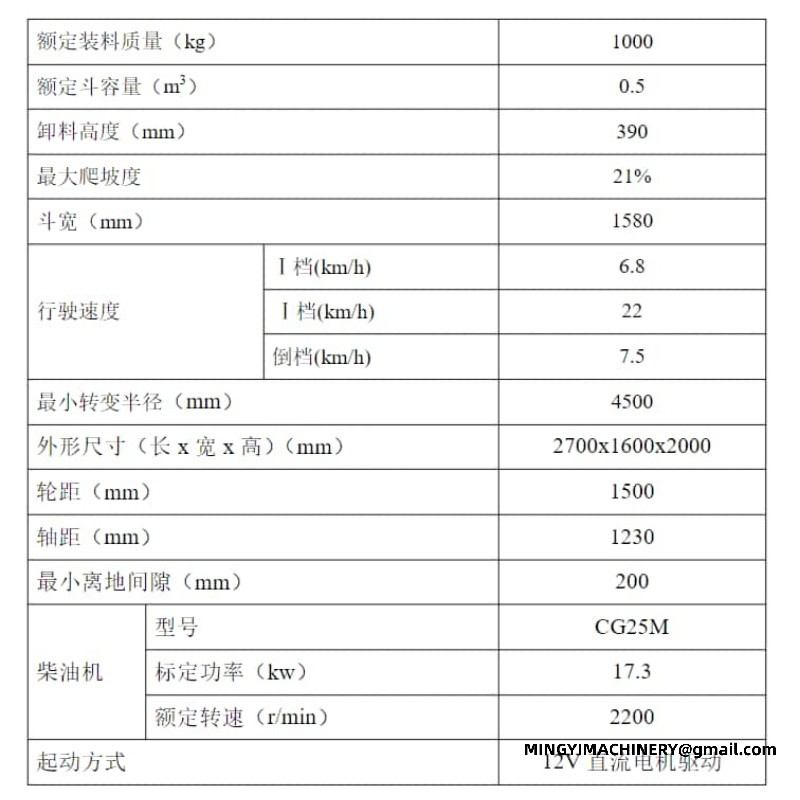
Keep the specification table with the machine. The four figures a second owner will ask for — 1,000 kg of load, 0.5 m³ of box, 390 mm of discharge height and 4,500 mm of turning radius — are all measurable on the machine itself, which makes a used FC10 easy to verify on rural work.
The engine figures are worth recording too: CG25M at 17.3 kW and 2,200 r/min, starting on 12 V DC electric motor. Between the two sets, an owner has everything needed to order parts, compare a replacement and answer an enquiry without going back to the manufacturer.
Keep the specification, the service record and the tyre details together with the machine. When the tipper is resold, or when a site asks for evidence of maintenance, that folder is the difference between a quick answer and a slow one.
It also pays on the maintenance side. A machine that has been worked on rural work for years accumulates a history, and knowing what has been replaced tells the next mechanic where to look. The FC10 is simple enough that this history is short, which is exactly the point of owning one.
Rear-mounted diesel, front-axle drive, rear-axle steering: the FC10's layout is a set of connected decisions. The engine at the rear counterweights the box ahead of the front axle, so the machine carries 1,000 kg without needing a slab of ballast, and the 1,230 mm wheelbase keeps the whole thing 2,700 x 1,600 x 2,000 overall.
Rural work work punishes a badly balanced machine on every ramp. With the weight spread between a driven front axle and a steering rear axle, the FC10 keeps traction while loaded and keeps steering while empty — the two conditions that catch out machines which put all their weight at one end.
| Sample build from the range — FC10 front tipper (1,000 kg class) | |
|---|---|
| Rated load | 1,000 kg |
| Rated bucket capacity | 0.5 m³ |
| Discharge height | 390 mm |
| Maximum gradeability | 21% |
| Bucket width | 1,580 mm |
| Travel speed, 1st gear | 6.8 km/h |
| Travel speed, 2nd gear | 22 km/h |
| Travel speed, reverse | 7.5 km/h |
| Minimum turning radius | 4,500 mm |
| Overall dimensions (L x W x H) | 2,700 x 1,600 x 2,000 |
| Track | 1,500 mm |
| Wheelbase | 1,230 mm |
| Minimum ground clearance | 200 mm |
| Diesel engine model | CG25M |
| Rated engine power | 17.3 kW |
| Rated engine speed | 2,200 r/min |
| Starting method | 12 V DC electric motor |
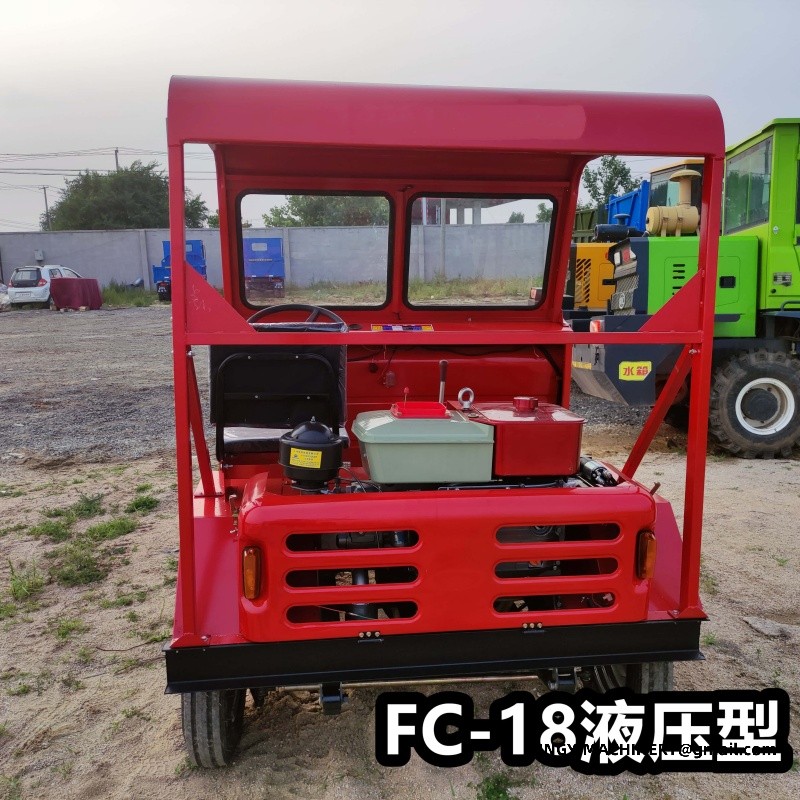
The FC10 runs a CG25M diesel rated at 17.3 kW at 2,200 r/min, and the matching is the point: a 1,000 kg machine with 21% gradeability needs torque in the working band rather than a big headline figure. on rural work moving loads between yard and field, that is load-lugging at low speed rather than sprinting.
Starting is by 12 V DC electric motor, which means the machine starts from the key rather than from a handle — worth more than it sounds on a site where the operator gets in and out twenty times a shift. The rear-mounted position keeps the engine away from the load and makes the routine checks straightforward.
The FC10 is the published reference in the range, and above it sit the FC15/FC18/FC20/FC25/FC30 — four-wheel-drive hydraulic tippers with electric start, lighting, signal lamps and an optional canopy. Those models are built for duties beyond what the 1,000 kg FC10 is specified for, on rural work.
What separates them from the FC10 is drive and equipment: four-wheel drive where the FC10 drives its front axle, and factory-fitted lighting and signals where the FC10 is a daylight site machine. The right choice is decided by the ground and the hours on rural work moving loads between yard and field, not by the largest number in a model designation.
A 1,580 mm box on a 2,700 x 1,600 x 2,000 machine can be loaded three ways: from a heap by hand, from a heap by machine, or from a hopper. On rural work, all three happen on the same site in the same week, and the box is proportioned to suit all of them.
0.5 m³ is small enough to fill by hand from a pile of mixed general loads and large enough that filling it mechanically is not wasted effort. That range is deliberate: the machine is bought by sites that cannot guarantee a loading method, so it works with whichever is available.
A front tipper is a short-distance machine, and the distances it suits are the ones on rural work moving loads between yard and field — tens and hundreds of metres, not kilometres. At 22 km/h empty and 6.8 km/h loaded, the economics work by cycle count, and the 1,000 kg load is sized so cycles stay frequent.
Rural work work is usually a chain of such distances: stockpile to mixer, excavation to spoil, store to working face. The FC10's value is that it completes each link without a reversing manoeuvre, at 4,500 mm turning radius, on ground that would stop a larger truck.
On a 2,700 x 1,600 x 2,000 machine the operator sits high relative to the load and close to the box, with the tipping area directly ahead. Front tipping means the discharge point is always in view, which is why a forward-tipping layout is preferred on rural work where the operator is working close to other people and plant.
The published comfort features are practical rather than decorative: a return device that brings the box down under control, and seating designed for a machine worked in short cycles. Comfort is a productivity figure on a tipper, because the operator is getting on and off it all day on rural work.
1,000 kg of mixed general loads sitting ahead of the front axle is what makes a front tipper work: the weight is on the driven wheels, so traction arrives when the load does. The rear-mounted CG25M balances it, which is why the machine does not need ballast.
The published 1,230 mm wheelbase keeps that weight transfer manageable on ramps of up to 21%. Put the same load on a machine with a longer wheelbase and the front axle carries it differently; put it on a shorter one and the machine pitches. The FC10's 1,230 mm and 1,500 mm are matched to the 1,000 kg it is rated for.
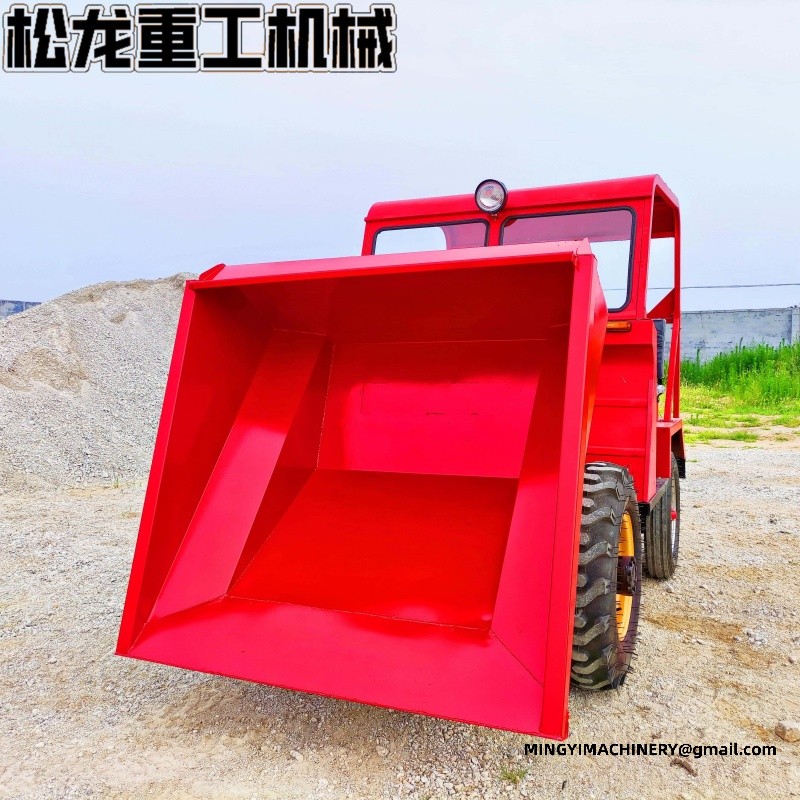
A tipper is a link in a chain, and the chain sets the pace. An excavator loading a 0.5 m³ box will fill it in a few passes; a machine that loads faster than the tipper can travel simply waits. Size the tipper against the haul distance, not against the loader.
On a site with a mixer, the tipper's job on rural work is to keep the batch point fed. At 1,000 kg a trip, that is a specific number of trips per hour, and the number either matches the pour rate or it does not. The published capacity is what makes the arithmetic honest.
A 4,500 mm turning radius on a 1,230 mm wheelbase is the figure that decides where the machine can work. Gateways, corridors between scaffolding and the working rooms inside a building are everyday obstacles on rural work, and a tight radius is what turns them from obstacles into routes.
Overall size is 2,700 x 1,600 x 2,000 — short, and narrow enough to pass where larger site plant cannot. Rear-axle steering makes the geometry work: the machine pivots inside its own footprint instead of swinging a long nose across the turn, which is what keeps a 1,000 kg tipper usable indoors and in confined yards.
How wide is the small dumper machine and will it pass through my gateway?
2,700 x 1,600 x 2,000 overall with a 1,500 mm track. Measure the narrowest fixed point on your route rather than the average, because one tight gateway decides whether the machine can be used at all on rural work.
What is the wheelbase of a small dumper machine and why does it matter?
1,230 mm, with a 4,500 mm turning radius. A short wheelbase plus rear-axle steering is what produces the tight radius, and that is what lets the machine work in confined areas on rural work.
How do I choose between two- and four-wheel drive?
By the ground rather than the payload. Firm, even going and grades within 21% favour the simpler two-wheel-drive machine; soft, wet or broken ground needs four-wheel drive. Measure the worst stretch of the route on rural work, not the average.
How does the small dumper machine drive and steer?
The FC10 drives through the front axle and steers at the rear — a front-axle drive with rear-axle steering (two-wheel drive). That puts the driven wheels under the load and keeps the steering wheels light, which is what makes the machine manoeuvrable on rural work.
How much can a small dumper machine carry?
The FC10 is published at 1,000 kg of rated load with a 0.5 m³ box, working on rural work. Which limit arrives first depends on the material: light bulky loads fill the box, dense loads reach the weight figure.
What is the rated load of a small dumper machine and what does it include?
1,000 kg rated load, with a 0.5 m³ box. The rating covers the material in the box and assumes the machine is working within its published limits on rural work.
How should a small dumper machine be stored between jobs?
Under cover where possible, box down, pivots greased and the hydraulic cylinder rod protected. The FC10 is 2,700 x 1,600 x 2,000 overall, so a standard site container or modest shed will take it, which is worth allowing for.
What tyres does a small dumper machine run?
The machine carries 1,000 kg of load across a 1,500 mm track and a 1,230 mm wheelbase, which keeps the load per tyre modest. Correct pressures matter more than size on soft ground on rural work.
A small dumper machine is a simple machine kept useful by honest figures. Rated load, box volume, discharge height, turning radius and clearance are the five rows worth checking against your site before anything else is discussed.
Storage and long idle periods for Small Dumper Machine: Engine, Starting and Daily Checks
The battery and the fuel are the first things to suffer in storage. Preparing Small Dumper Machine: Engine, Starting and Daily Checks properly at the start of the idle period avoids the flat battery and the contaminated tank that greet an unprepared machine.
Planning the season around Small Dumper Machine: Engine, Starting and Daily Checks
The calendar decides more than the specification does. Planning when Small Dumper Machine: Engine, Starting and Daily Checks will be working, when it will be serviced and when it can be spared keeps the maintenance out of the weeks that matter.
Reading the early symptoms on Small Dumper Machine: Engine, Starting and Daily Checks
Machines rarely fail without warning. A change in sound, a slower function or a new leak on Small Dumper Machine: Engine, Starting and Daily Checks is the machine saying something early, and listening then takes a fraction of the time that waiting does.
Commissioning Small Dumper Machine: Engine, Starting and Daily Checks on site
The machine should be introduced to the site as well as the operator. Walking the route Small Dumper Machine: Engine, Starting and Daily Checks will take, noting the soft spots and the turns, prevents the kind of first-day incident that has nothing to do with the machine.
Contact MINGYI Machinery for the current front tipper range, the four-wheel-drive models above the FC10, and a formal specification for your market. E-mail: sales@mingycn.com | LINE (ID): mingyicn
Static Hydraulic Front Dump Truck: Site Transport Duties · Front Tipping Dumper Manufacturer: The FC10 Build · 4x4 dumper for forestry and timber haulage · Front Tipper Truck