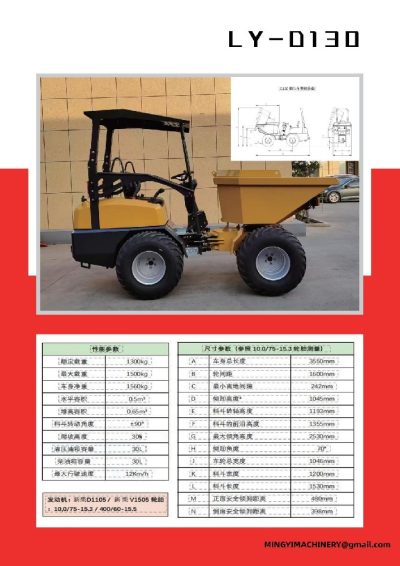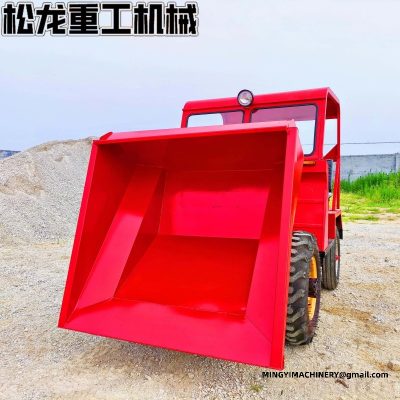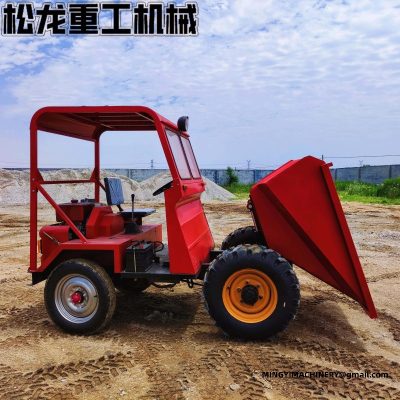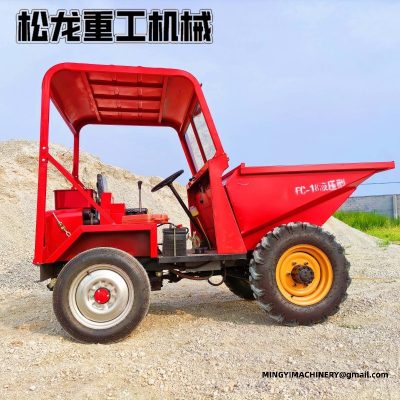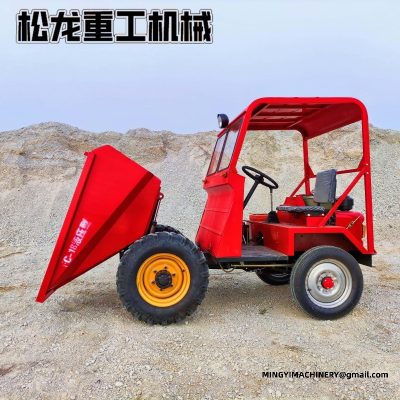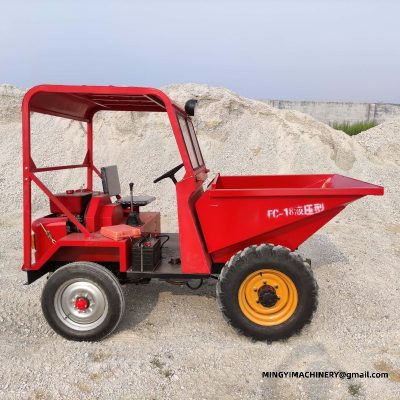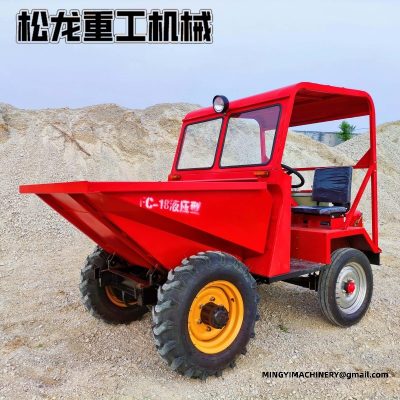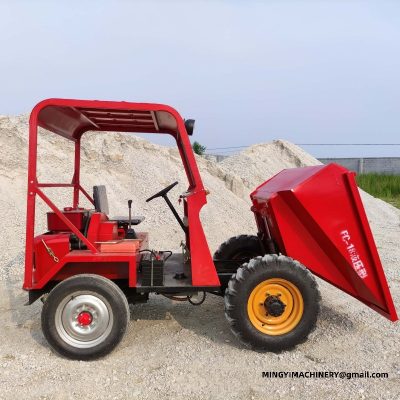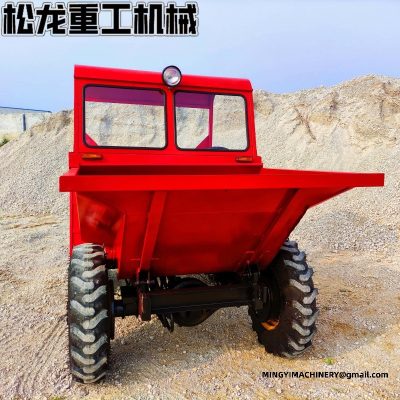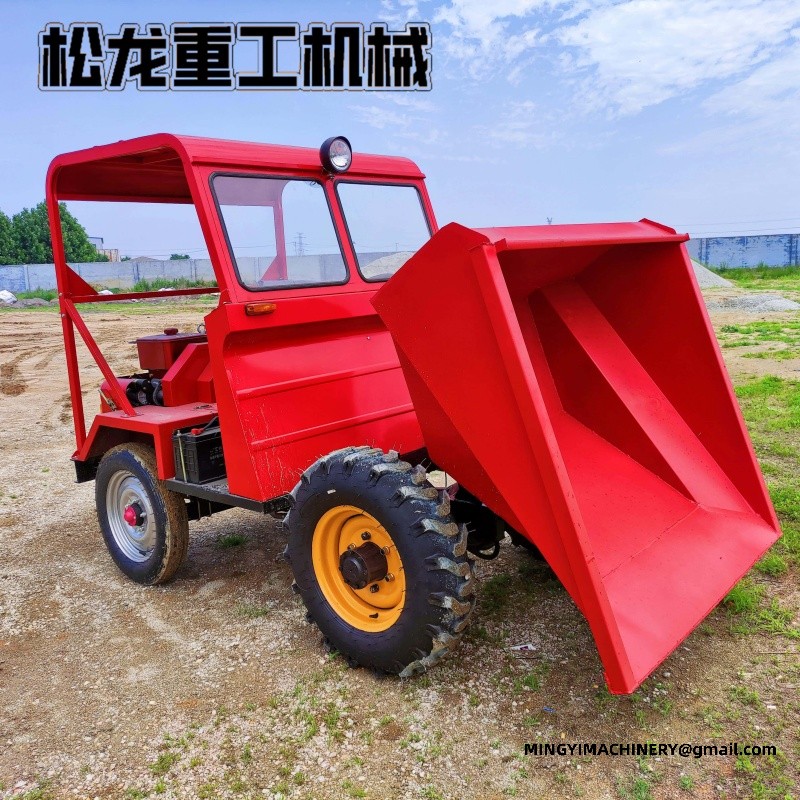
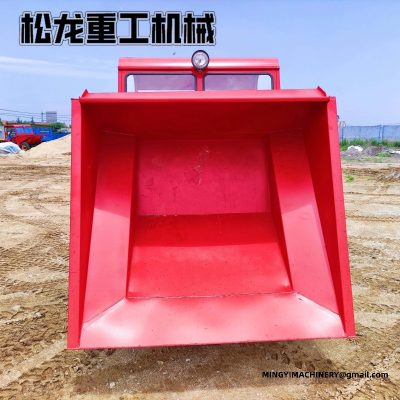
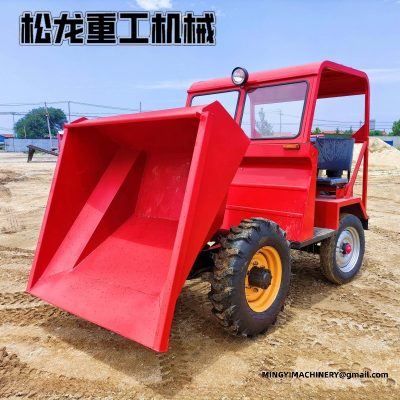
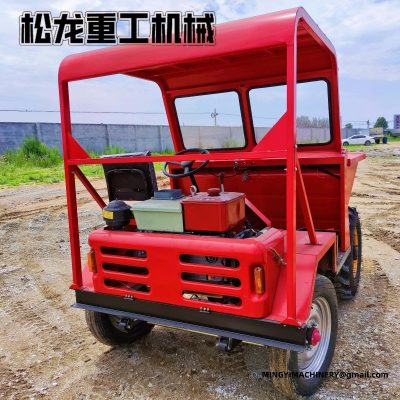
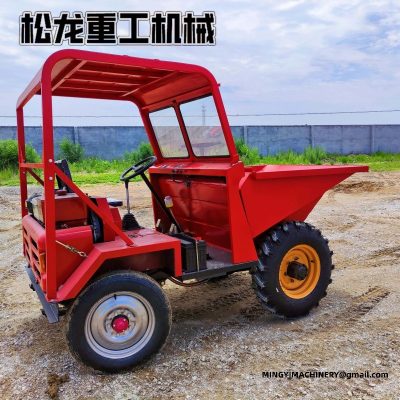
A front tipper is bought for the route, not for the specification sheet. The route decides everything: how wide the gateway is, how steep the ramp, how soft the worst stretch of ground. The FC10 publishes the figures that answer those questions — 2,700 x 1,600 x 2,000 overall, 4,500 mm turning radius, 21% gradeability, 200 mm clearance — and this page reads them in the order a front tipping dumper manufacturer buyer meets them on a building site.
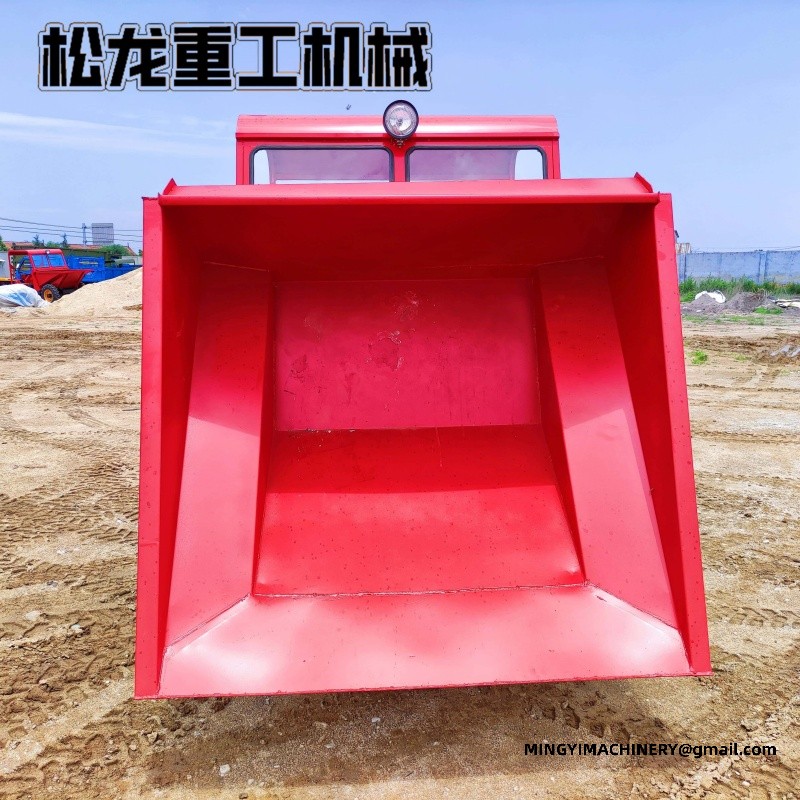
The FC10 is offered with the equipment a site machine needs and no more; the FC15/FC18/FC20/FC25/FC30 models above it add four-wheel drive and, in the document's own words, electric starting, lighting, signal lamps and a canopy as optional equipment.
What the FC10 publishes as standard is what decides whether it can work at all on a building site: CG25M diesel with 12 V DC electric motor starting, hydraulic tipping with powered return, 390 mm of forward discharge, and a 1,000 kg rating. Everything beyond that is site preference.
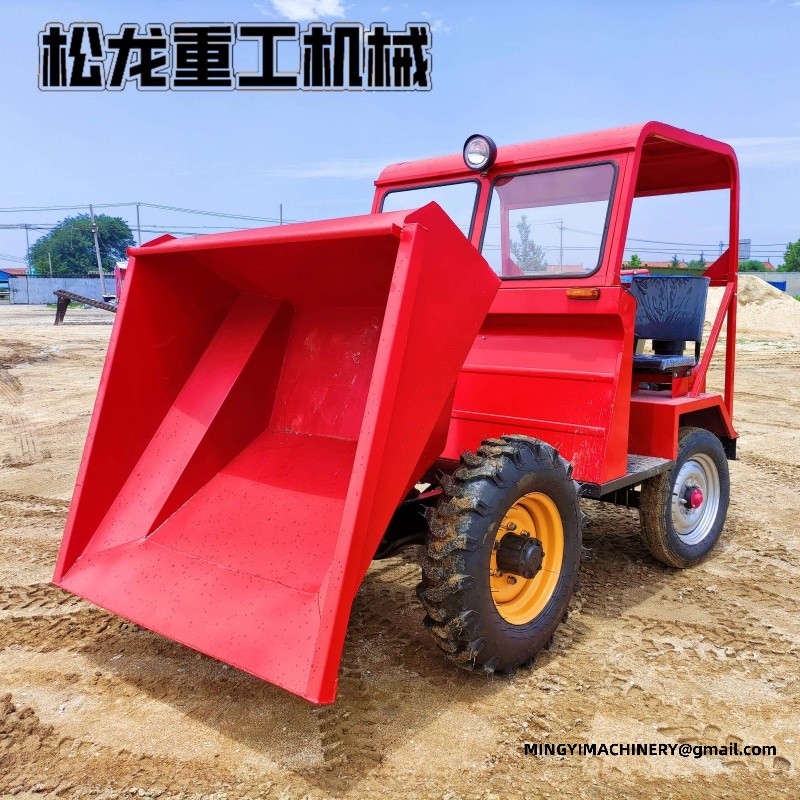
Maintenance on the FC10 is deliberately simple: rear-mounted CG25M diesel, mechanical driveline, hydraulic tipping circuit. on a building site moving concrete between the batch point and the pour, the machine works short cycles all day, and the daily checks — oil, coolant, tyre condition, grease points — take minutes rather than a workshop visit.
The layout helps: the engine sits at the rear away from the load, the tipping hydraulics are exposed, and the 1,230 mm wheelbase keeps everything within reach of the ground. Machines specified for sites are specified for field maintenance, and this one is no exception.
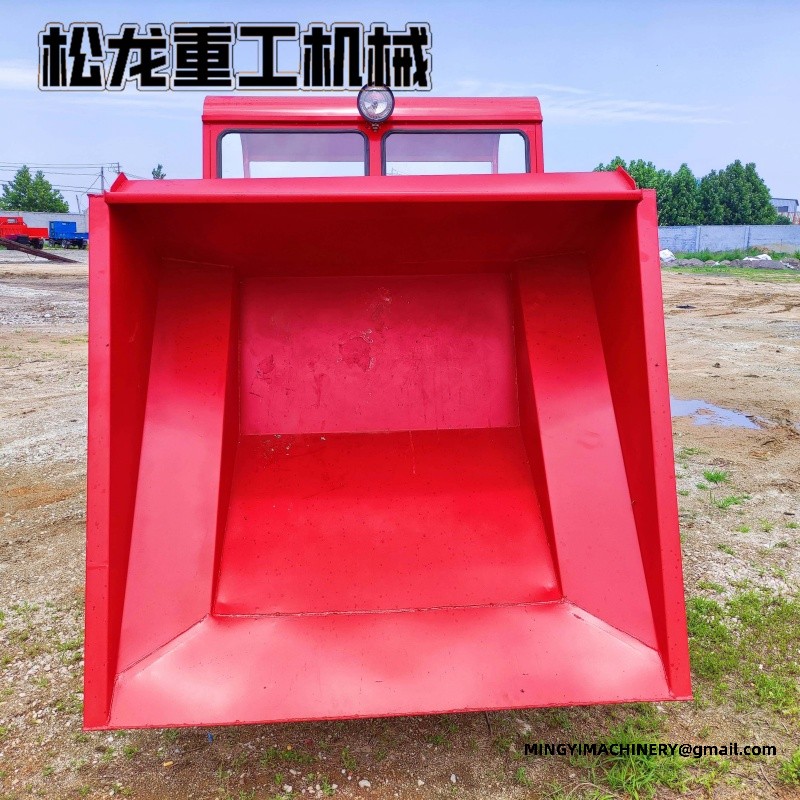
There is a size of job below which a large machine takes more than it earns. Access on a building site is usually the reason: a tipper at 2,700 x 1,600 x 2,000 with a 4,500 mm turning radius reaches the pour or the face that a bigger machine cannot approach.
The honest comparison is not tipper against tipper but tipper against wheelbarrow and shovel. At 1,000 kg per trip, one operator and one FC10 replace a small crew and remove the hardest part of the work. That is the job the machine was designed for.
| Reference specification — FC10 front tipper (1,000 kg class) | |
|---|---|
| Rated load | 1,000 kg |
| Rated bucket capacity | 0.5 m³ |
| Discharge height | 390 mm |
| Maximum gradeability | 21% |
| Bucket width | 1,580 mm |
| Travel speed, 1st gear | 6.8 km/h |
| Travel speed, 2nd gear | 22 km/h |
| Travel speed, reverse | 7.5 km/h |
| Minimum turning radius | 4,500 mm |
| Overall dimensions (L x W x H) | 2,700 x 1,600 x 2,000 |
| Track | 1,500 mm |
| Wheelbase | 1,230 mm |
| Minimum ground clearance | 200 mm |
| Diesel engine model | CG25M |
| Rated engine power | 17.3 kW |
| Rated engine speed | 2,200 r/min |
| Starting method | 12 V DC electric motor |
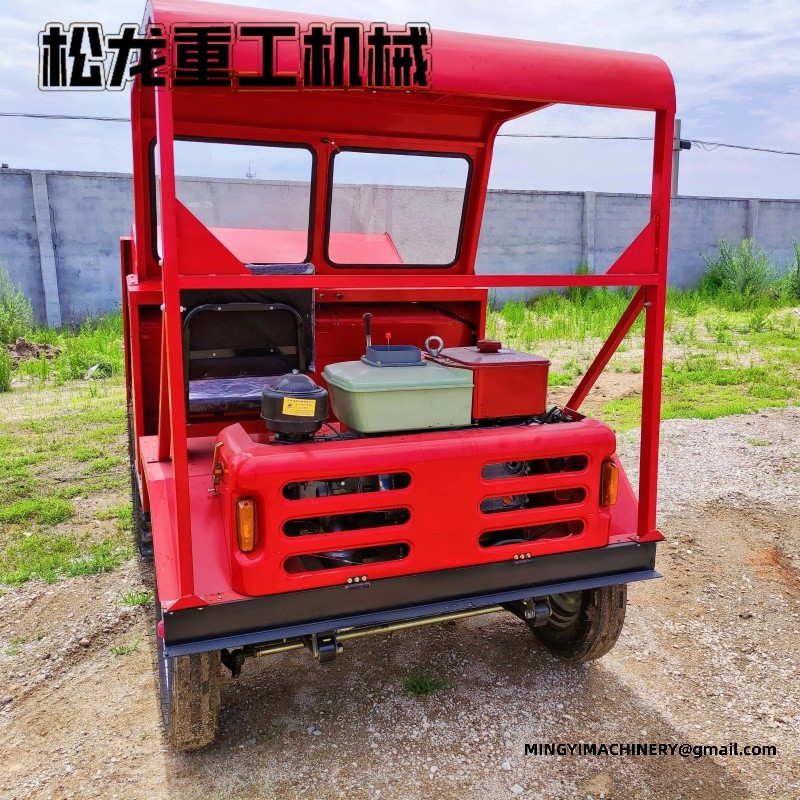
The FC10 runs a CG25M diesel rated at 17.3 kW at 2,200 r/min, and the matching is the point: a 1,000 kg machine with 21% gradeability needs torque in the working band rather than a big headline figure. on a building site moving concrete between the batch point and the pour, that is load-lugging at low speed rather than sprinting.
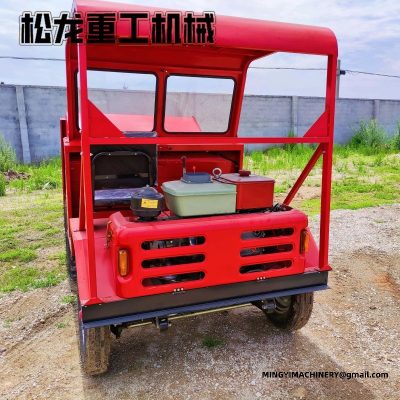
Starting is by 12 V DC electric motor, which means the machine starts from the key rather than from a handle — worth more than it sounds on a site where the operator gets in and out twenty times a shift. The rear-mounted position keeps the engine away from the load and makes the routine checks straightforward.
Cycle planning on a small tipper is short-haul planning. At 6.8 km/h loaded and 22 km/h empty, the FC10 is suited to runs measured in tens of metres — the distances that recur constantly on a building site.
The arithmetic is simple and worth doing: 1,000 kg per cycle at roughly 6.8 km/h out and 22 km/h back, plus load and tip time. Where the total distance is short, the loading and tipping dominate and a small machine loses nothing; where the run is long, cycle count falls and a different machine is needed.
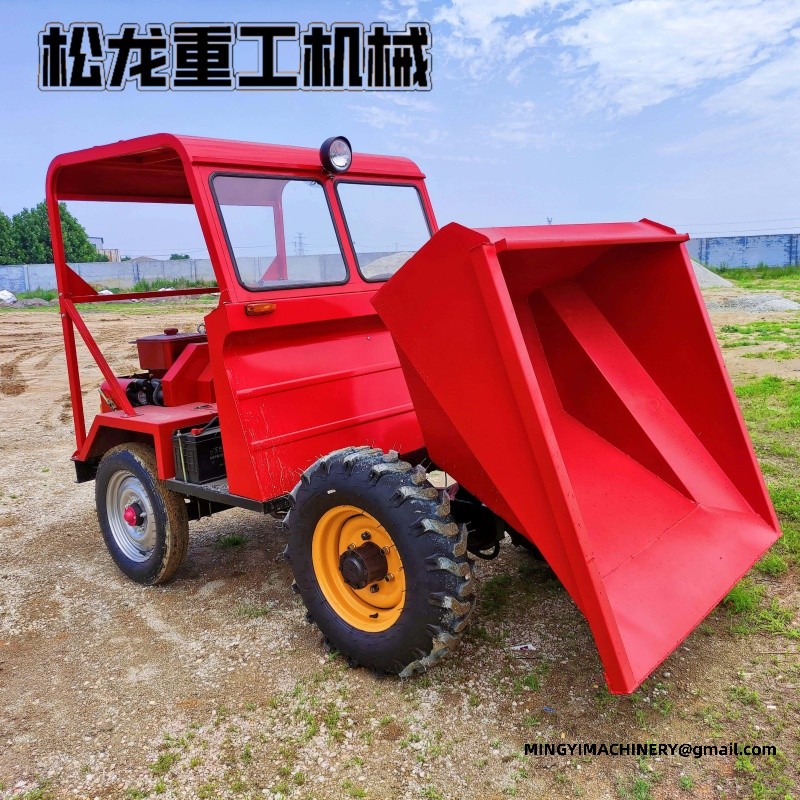
Everything about the FC10 is arranged so it cannot easily be tipped. The load goes in a 1,580 mm box over a 1,500 mm track. The machine tips forward, not sideways, so the tipping moment is taken along the length of the machine rather than across it.
21% is the published limit and it is a limit, not a target. A tipper loaded to 1,000 kg climbing a cross-slope is a different question from one climbing straight. Work straight up the grade and treat the number as a ceiling that tells you where the machine's allowance ends.
Hot weather is easier on a mechanical diesel than cold, but hard on everything else. Dust on a building site works its way into the air filter, the radiator matrix and the hydraulic breather. On a machine rated to run at 2,200 r/min continuously, airflow is the whole of the cooling story.
The maintenance answer is unglamorous: clean the filter at the interval the site actually demands rather than the one in the book, and check the radiator fins with a torch. A front tipper that overheats is nearly always a front tipper with a blocked matrix, not a faulty thermostat.
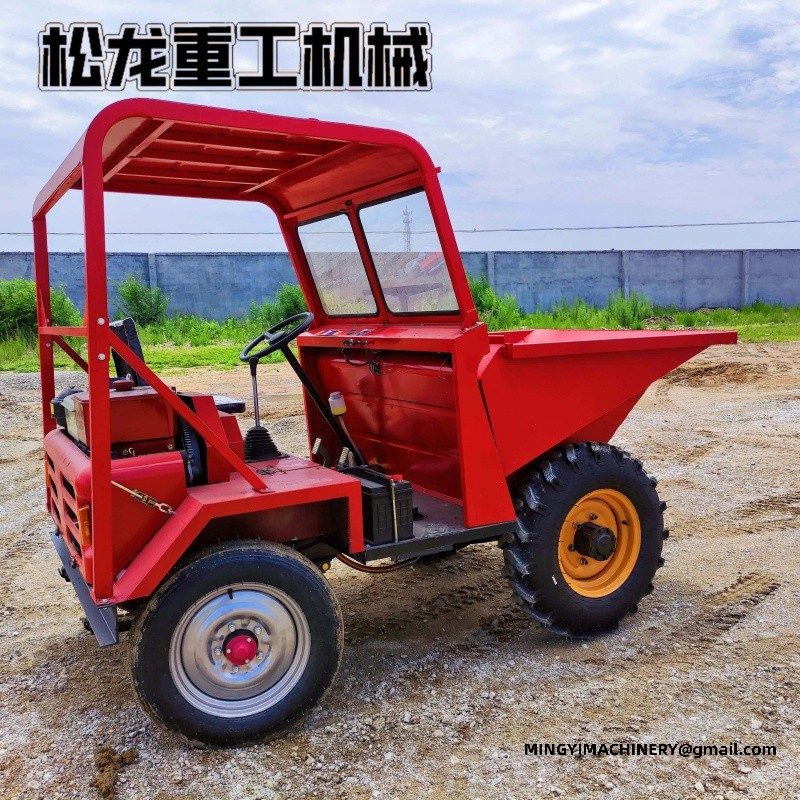
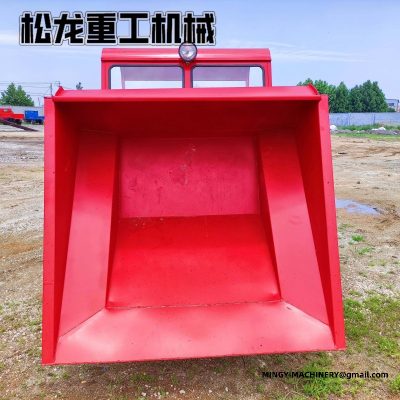
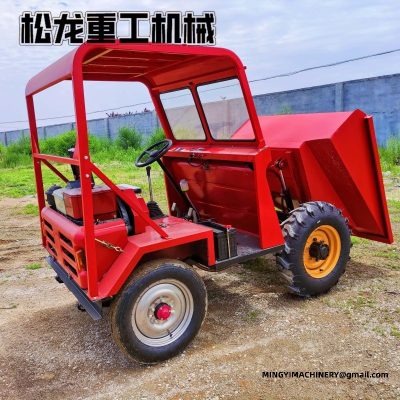
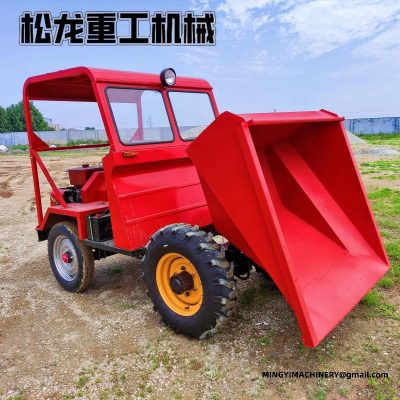
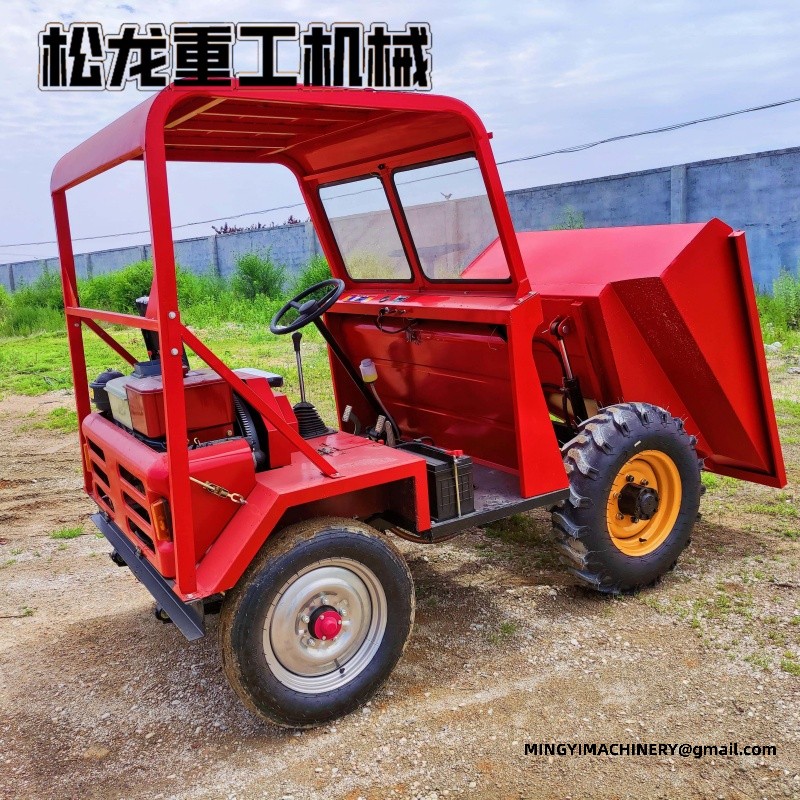
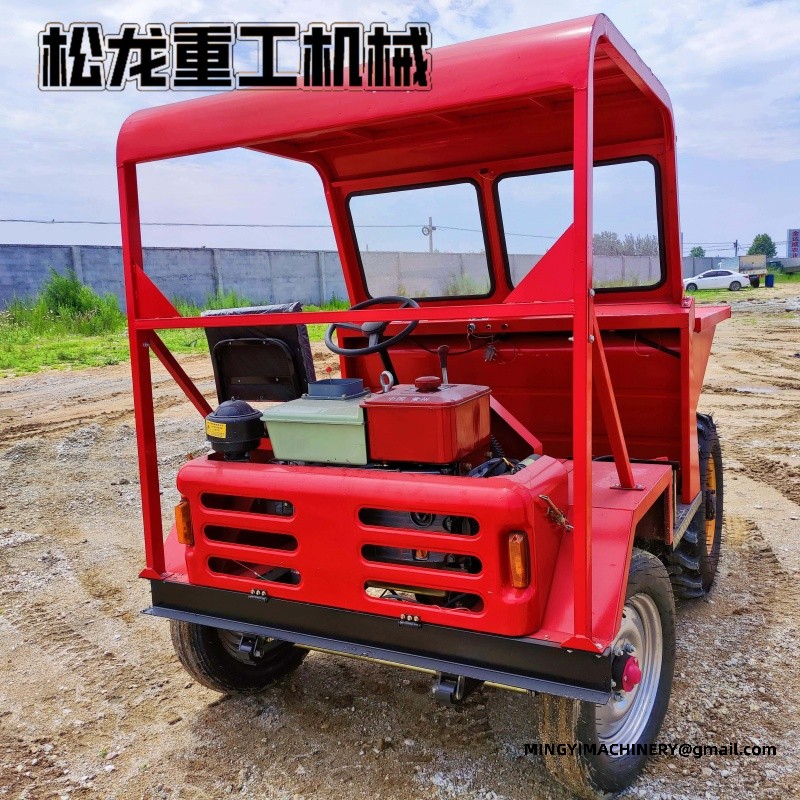
The FC10 is a chassis with a tipping box mounted on it, and the proportions are published: 2,700 x 1,600 x 2,000 overall, a 1,580 mm box and a 1,230 mm wheelbase. Short and low is deliberate. A tipper that is 2,700 x 1,600 x 2,000 can be loaded from the side by hand as well as from the front by machine, which is how a lot of concrete actually gets moved on a building site.
The frame carries 1,000 kg over a 1,500 mm track, so the load is spread widely relative to the machine's size. That is why the box can be tipped over the front axle without the machine feeling unsettled, and why the discharge height of 390 mm is measured close in rather than out on a long reach. Short tipping moments are what keep small tippers stable.
The FC10 has a short control set: a gear lever covering the published travel speeds, a steering wheel, a tipping control and a throttle. A new operator can be productive in an afternoon. The training that matters is not the controls but the judgement around them.
Two habits decide whether a new operator is safe. First, never travel or manoeuvre with the box raised. Second, treat 21% as the machine's limit rather than its capability. Everything else follows from those two, and everything else a tipper does on a building site is a variation on them.
A 4,500 mm turning radius on a 1,230 mm wheelbase is the figure that decides where the machine can work. Gateways, corridors between scaffolding and the working rooms inside a building are everyday obstacles on a building site, and a tight radius is what turns them from obstacles into routes.
Overall size is 2,700 x 1,600 x 2,000 — short, and narrow enough to pass where larger site plant cannot. Rear-axle steering makes the geometry work: the machine pivots inside its own footprint instead of swinging a long nose across the turn, which is what keeps a 1,000 kg tipper usable indoors and in confined yards.
1,000 kg plus the machine's own weight sits on four wheels spread across 1,500 mm of track and 1,230 mm of wheelbase. That is a modest load per tyre, which is why the FC10 keeps working on ground that would bog a heavier machine — an important property on a building site.
Pressure matters more than size on soft going. A machine running correct pressures spreads its 1,000 kg over the widest possible contact patch, and the swinging rear axle keeps that patch on the ground when the surface is uneven. Both are why a small tipper crosses ground that looks impassable.
How wide is the front tipping dumper manufacturer and will it pass through my gateway?
2,700 x 1,600 x 2,000 overall with a 1,500 mm track. Measure the narrowest fixed point on your route rather than the average, because one tight gateway decides whether the machine can be used at all on a building site.
Is the front tipping dumper manufacturer available with a canopy or cab?
The four-wheel-drive models in the range — FC15/FC18/FC20/FC25/FC30 — list a canopy as optional equipment, together with electric start, lighting and signal lamps. The FC10 itself is the simple, low machine described by its published table.
Does a front tipping dumper manufacturer need a licence or registration?
The published specification describes a site machine, geared at 22 km/h in second: it is built for working cycles on site rather than for road travel. Operate it as site plant rather than as a road vehicle.
How do I know a front tipping dumper manufacturer is the right size rather than too small?
Work out the daily tonnage and divide by 1,000 kg per trip. If the number of cycles is practical within the routes available, the machine is right. Where the runs are long rather than short, no machine of this class is the answer.
What figures should I check before buying a front tipping dumper manufacturer?
Route width against 2,700 x 1,600 x 2,000 and 1,500 mm, the ramp against 21%, the worst ground against 200 mm, and the receiving point against 390 mm. A machine that passes all four is the right machine.
How does a front tipping dumper manufacturer compare with a wheelbarrow?
1,000 kg per trip against a barrow load, through the same gaps and over the same boards. Nothing on the site has to be rebuilt to use it, which is why machines of this size get adopted quickly on a building site.
How high does a front tipping dumper manufacturer discharge?
Discharge height is 390 mm, measured at the box with it tipped forward over the front axle. Check it against the pile, trench or skip that receives the load on a building site.
How should a front tipping dumper manufacturer be stored between jobs?
Under cover where possible, box down, pivots greased and the hydraulic cylinder rod protected. The FC10 is 2,700 x 1,600 x 2,000 overall, so a standard site container or modest shed will take it, which is worth allowing for.
Every figure on this page comes from the FC10 specification table — 1,000 kg of rated load, 390 mm of discharge height, 4,500 mm of turning radius. Nothing here is estimated, and the machine can be measured against all of it on delivery.
Handover and getting familiar with Front Tipping Dumper Manufacturer: The FC10 Build
A good handover covers the awkward cases, not just the easy ones. Starting Front Tipping Dumper Manufacturer: The FC10 Build on a slope, turning in a confined space and recovering from soft ground are the situations an operator should meet first with someone beside them.
Later additions and retrofits on Front Tipping Dumper Manufacturer: The FC10 Build
An added function should pay for itself quickly. Whether Front Tipping Dumper Manufacturer: The FC10 Build gains a different bucket, a hydraulic service or a protection package, the test is the number of days a year it is actually used.
Wear items and spares worth holding for Front Tipping Dumper Manufacturer: The FC10 Build
A spares list should follow the duty cycle. A Front Tipping Dumper Manufacturer: The FC10 Build working every day in abrasive dust consumes filters and cutting edges far faster than the same machine used once a week, and the shelf should be stocked for the harder case.
Keeping a service record for Front Tipping Dumper Manufacturer: The FC10 Build
Patterns show up in the record before they show up in the machine. Rising oil consumption or a filter that keeps blocking on Front Tipping Dumper Manufacturer: The FC10 Build is obvious on paper long before it becomes a failure on site.
Contact MINGYI Machinery for the current front tipper range, the four-wheel-drive models above the FC10, and a formal specification for your market. E-mail: sales@mingycn.com | LINE (ID): mingyicn
Front Tipping Dumper Factory China: FC10 and the Range · Site Dumper Manufacturer: A 1,000 kg Machine for Tight Sites · 4x4 off road dumper Africa with hydraulic tipping body · Front Tipper Truck