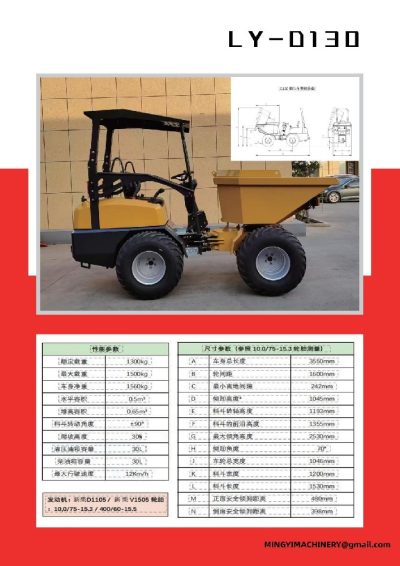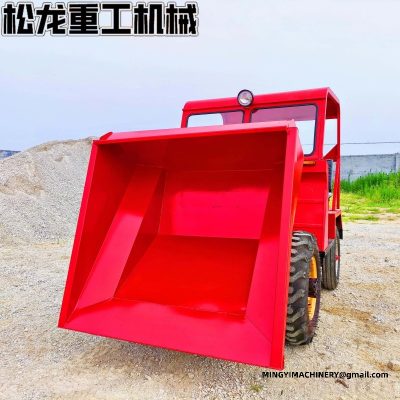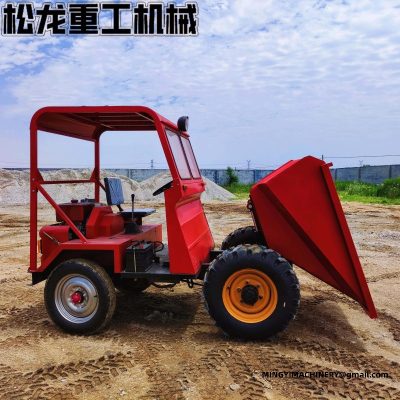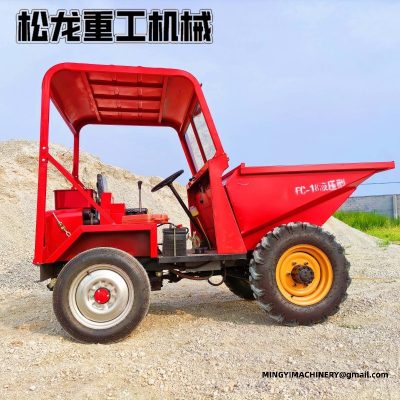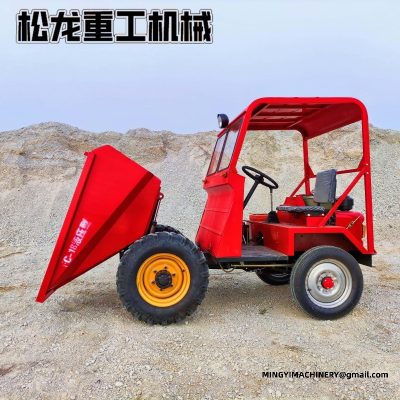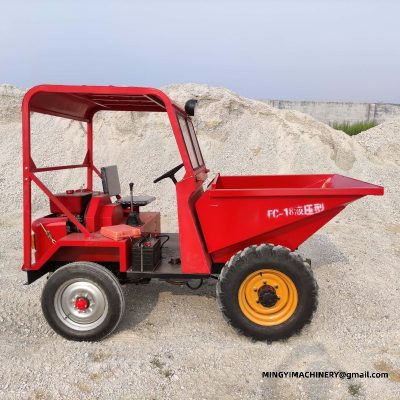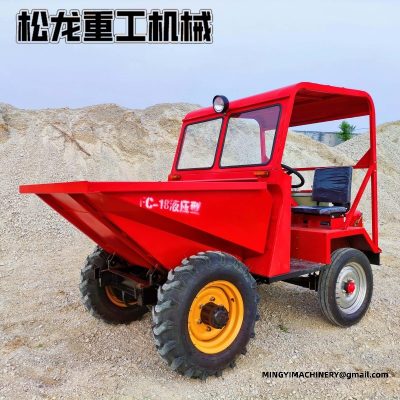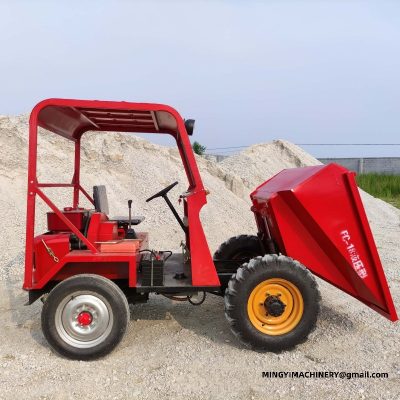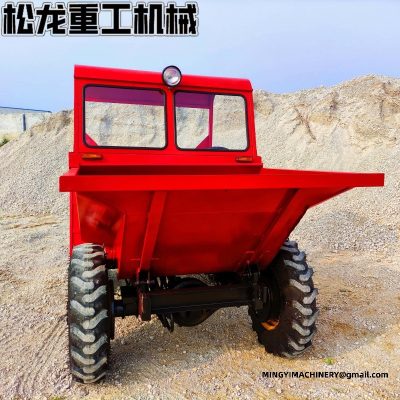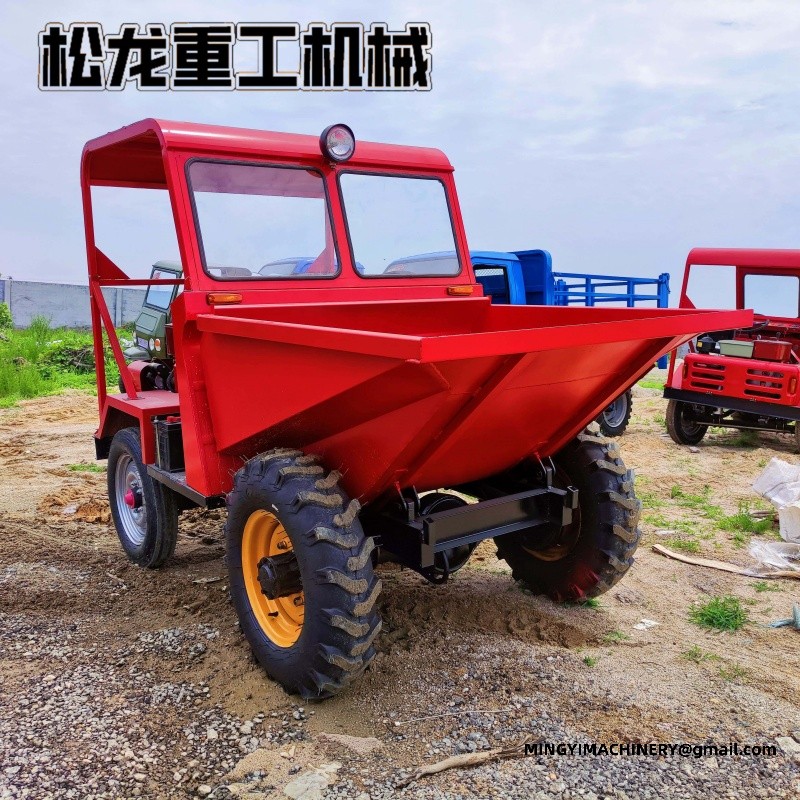
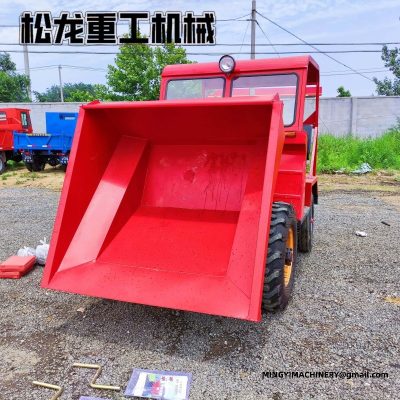
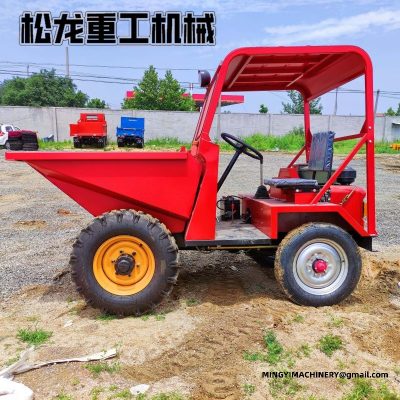
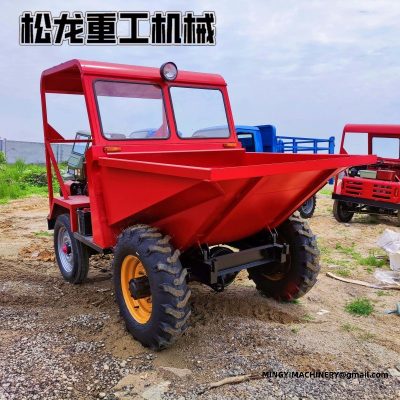
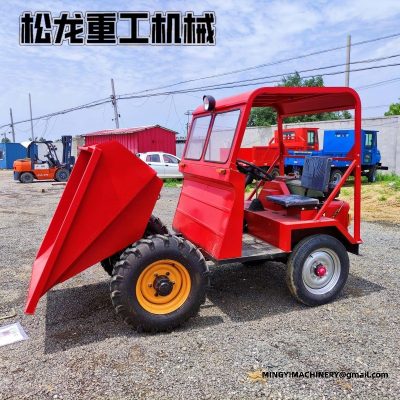
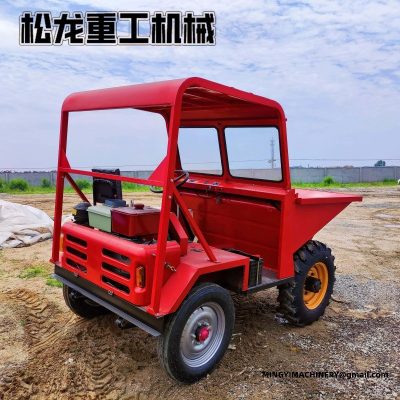
Two figures decide how much work a site dumper manufacturer does in a day: 1,000 kg of rated load and 0.5 m³ of bucket capacity. Everything else — 390 mm of discharge height, 200 mm of clearance, 21% of gradeability — decides whether that load can actually be moved on the ground on a water conservancy project. This page works through both groups.
A tractor and trailer carries far more per trip and needs far more room to turn. The FC10 carries 1,000 kg and turns in 4,500 mm, which is the trade in one sentence. On a water conservancy project, the shorter cycle usually wins on daily output even though the payload is smaller.
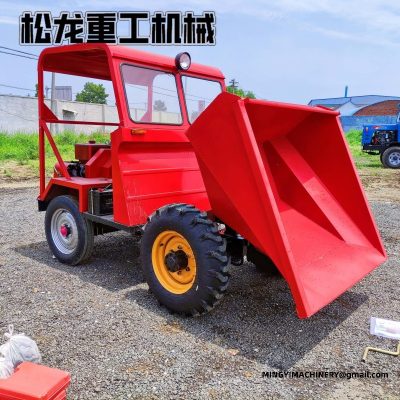
The second difference is the tipping method. A trailer tips to the rear and needs a clear run behind it; the FC10 tips forward at 390 mm over the front axle, which means it empties into a space ahead of the machine rather than requiring one behind it. In a corridor or against a wall, that is the entire argument.
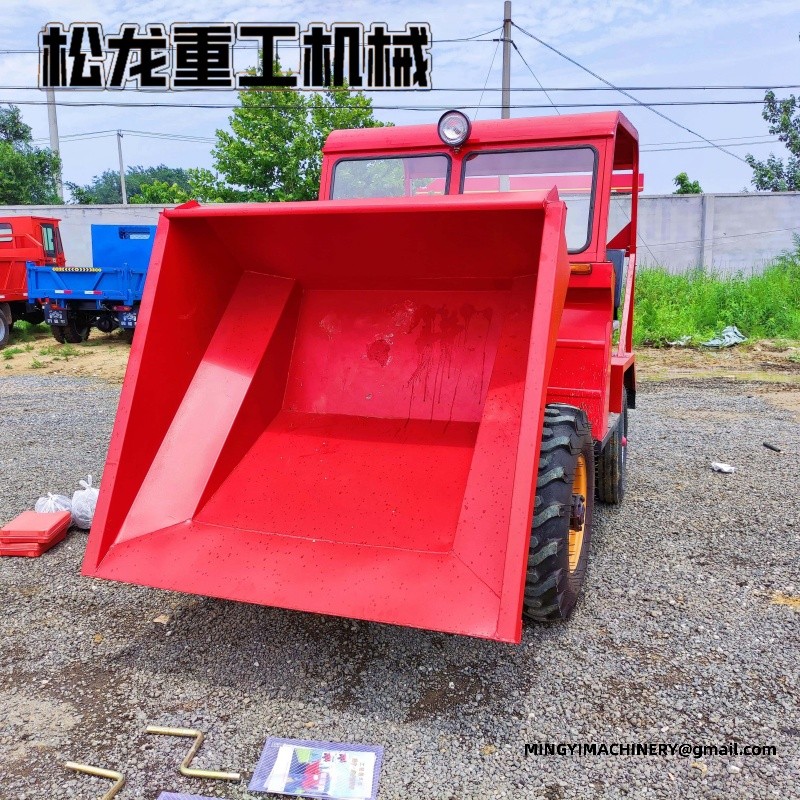
A box that carries excavated earth well is not automatically the right box for everything else. Material that flows freely dumps cleanly from a plain box; material that clings needs a shape that helps it leave. On the FC10 the box is 1,580 mm and the tipping action is a single ram, so what leaves the box leaves through gravity.
For the mixed work the machine is usually bought for on a water conservancy project, that suits. Choose the machine on the working it does most of the time and accept that one box cannot be ideal for all of it.
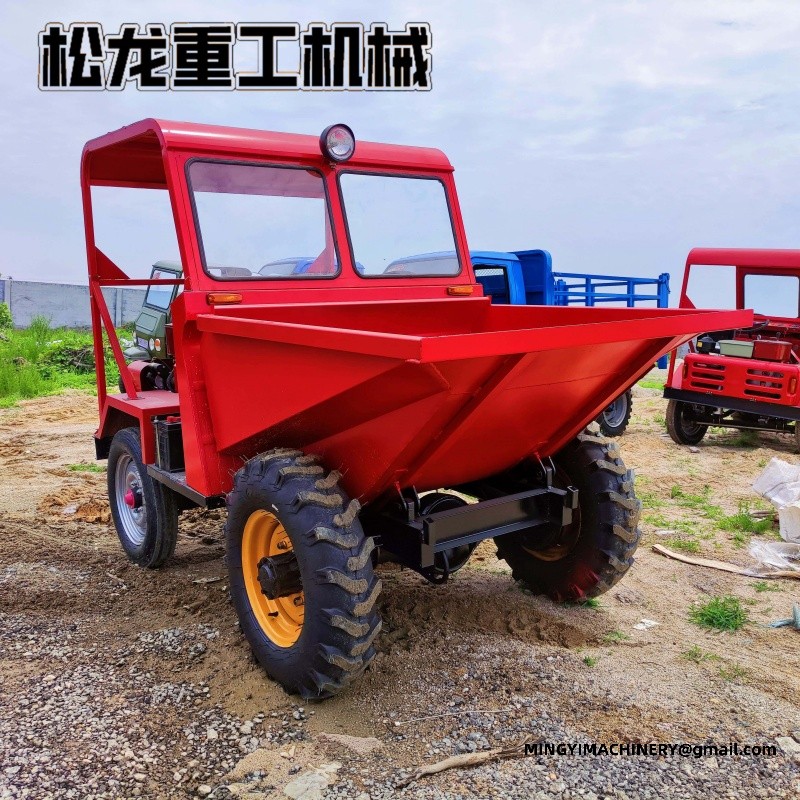
Keep the specification table with the machine. The four figures a second owner will ask for — 1,000 kg of load, 0.5 m³ of box, 390 mm of discharge height and 4,500 mm of turning radius — are all measurable on the machine itself, which makes a used FC10 easy to verify on a water conservancy project.
The engine figures are worth recording too: CG25M at 17.3 kW and 2,200 r/min, starting on 12 V DC electric motor. Between the two sets, an owner has everything needed to order parts, compare a replacement and answer an enquiry without going back to the manufacturer.
| Specification extract — FC10 front tipper (1,000 kg class) | |
|---|---|
| Rated load | 1,000 kg |
| Rated bucket capacity | 0.5 m³ |
| Discharge height | 390 mm |
| Maximum gradeability | 21% |
| Bucket width | 1,580 mm |
| Travel speed, 1st gear | 6.8 km/h |
| Travel speed, 2nd gear | 22 km/h |
| Travel speed, reverse | 7.5 km/h |
| Minimum turning radius | 4,500 mm |
| Overall dimensions (L x W x H) | 2,700 x 1,600 x 2,000 |
| Track | 1,500 mm |
| Wheelbase | 1,230 mm |
| Minimum ground clearance | 200 mm |
| Diesel engine model | CG25M |
| Rated engine power | 17.3 kW |
| Rated engine speed | 2,200 r/min |
| Starting method | 12 V DC electric motor |
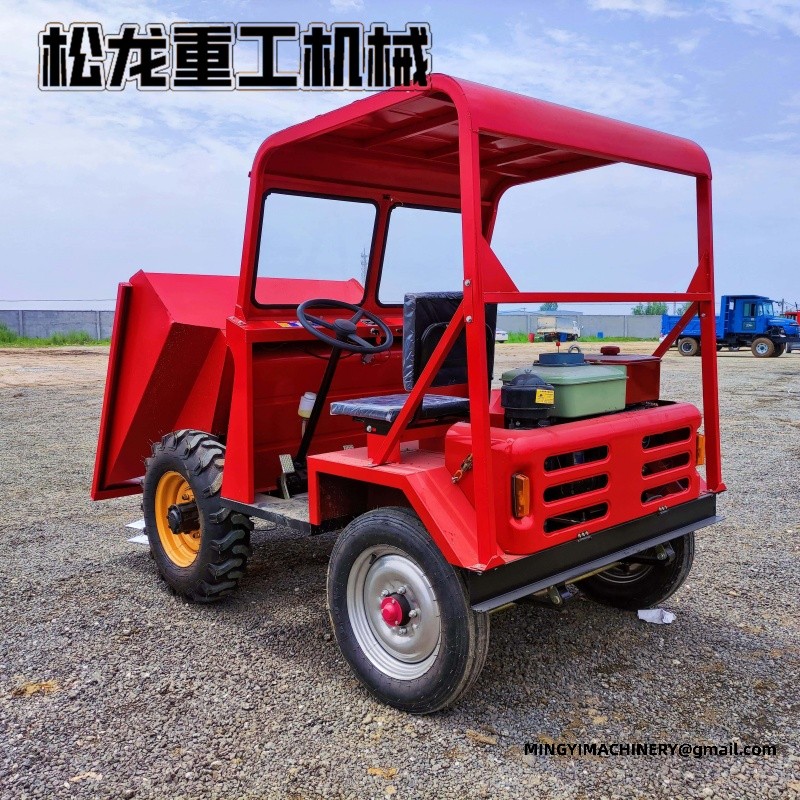
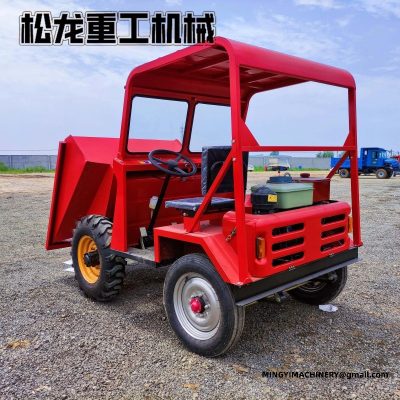
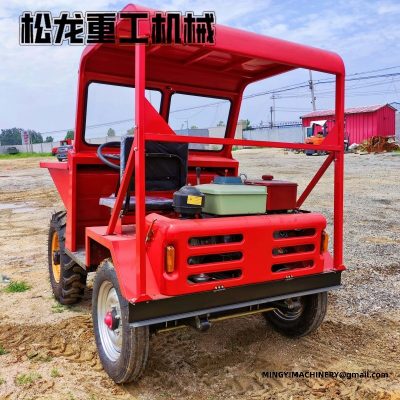
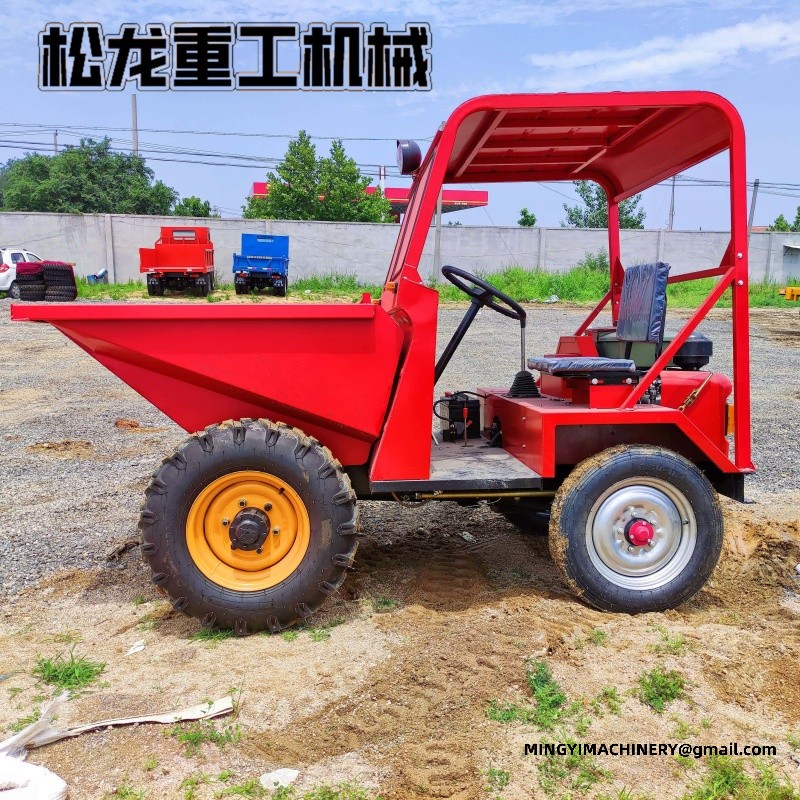
Steering at the rear takes a shift or two to get used to and then feels natural: the rear of the machine cuts inside the front's path, which is why the 4,500 mm turning radius is achievable on a 1,230 mm wheelbase. on a water conservancy project moving earth away from the working face, that radius is usually the difference between working through a gateway and having to reverse every pass.
Because the front axle drives and the rear steers, the driven wheels stay on the load path while the steering wheels follow. On loose or soft ground on a water conservancy project moving earth away from the working face that is the better arrangement: traction where the weight is, steering where the weight is not.
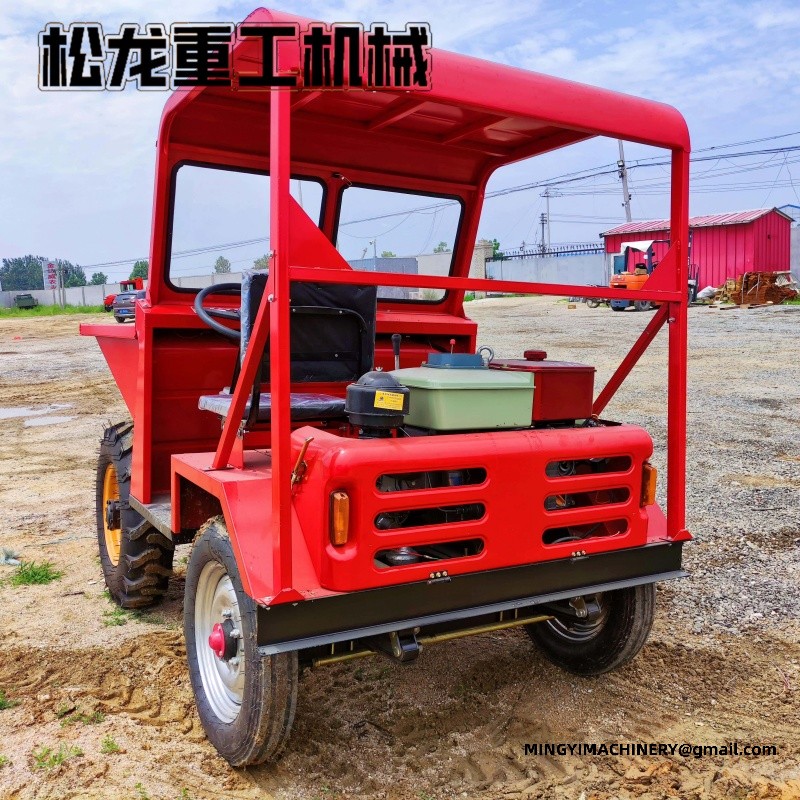
The box tips forward, over the front axle, and discharges at 390 mm. That layout means the machine approaches its discharge point nose-first, dumps, and drives away forwards — no reversing manoeuvre, no swing. On a water conservancy project, that is the difference between a cycle that flows and one that queues.
Return is hydraulic as well, with a dedicated return device on the FC10, so the box comes back down under control rather than by gravity alone. On a site where the discharge point is a heap of earthwork rather than a pit, a controlled return keeps the box from slamming and keeps the machine settled for the next load.
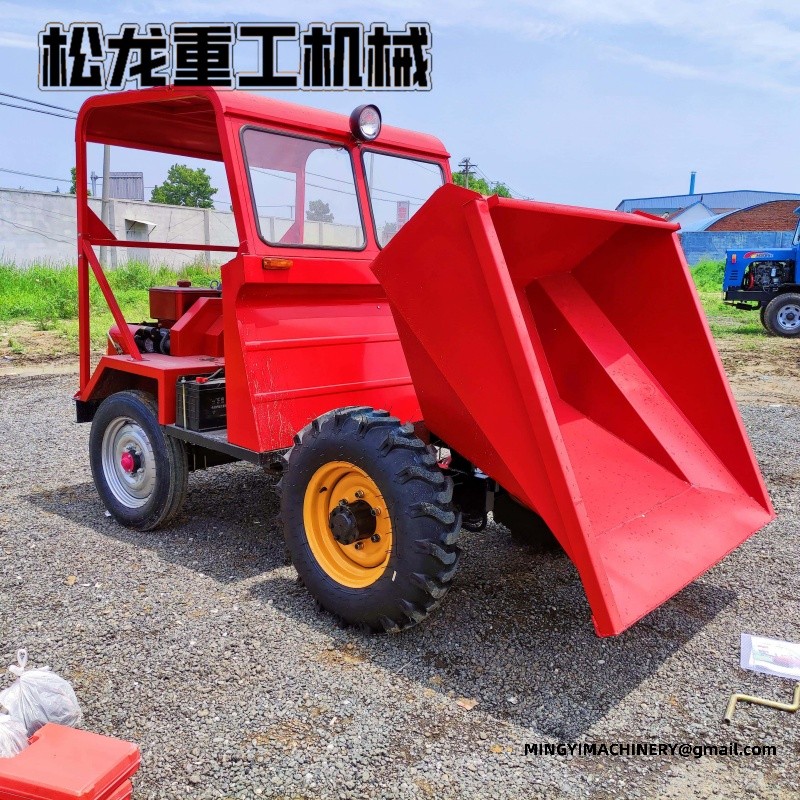
A 17.3 kW mechanical diesel turning at 2,200 r/min uses fuel in proportion to the work it does, not to the hours it stands. The two habits that effort the most are idling and travelling loaded at a speed the haul does not need.
The published travel speeds are 6.8 km/h in first, 22 km/h in second and 7.5 km/h in reverse. On a short haul on a water conservancy project, first gear is often both faster overall and simpler, because it avoids the stop-start of working up and down the box.
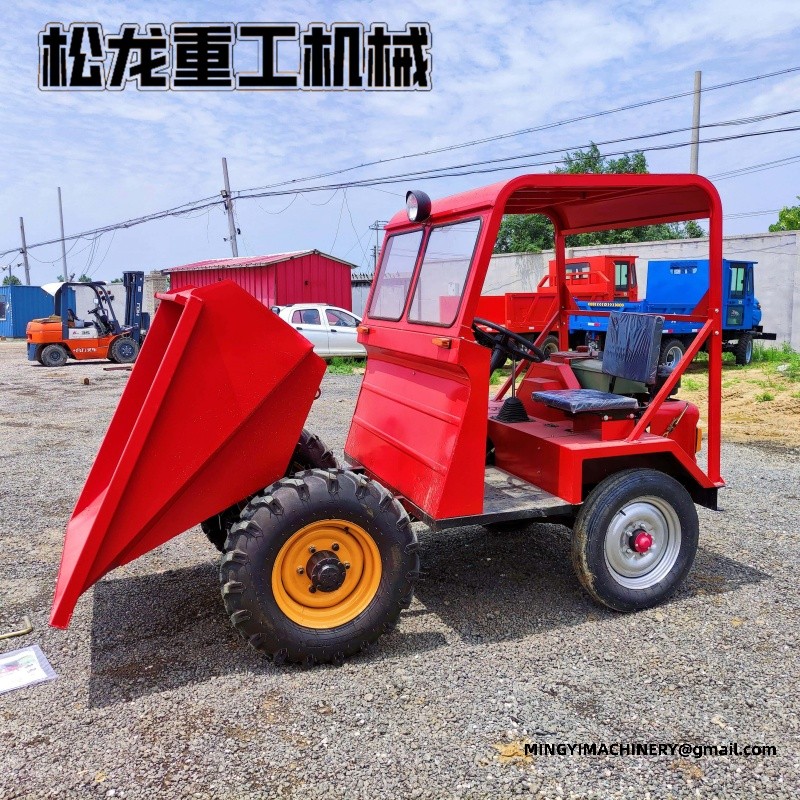
Starting on the FC10 is 12 V DC electric motor, which on a machine worked in short cycles is a genuine productivity figure. on a water conservancy project moving earth away from the working face, the engine is stopped and started throughout the day, and a key start keeps that from being the slowest part of the job.
The CG25M diesel at 17.3 kW and 2,200 r/min is sized for the 1,000 kg duty cycle rather than for maximum output, and the rear mounting puts the everyday service points — oil, filters, battery — where they can be reached without climbing over the load.
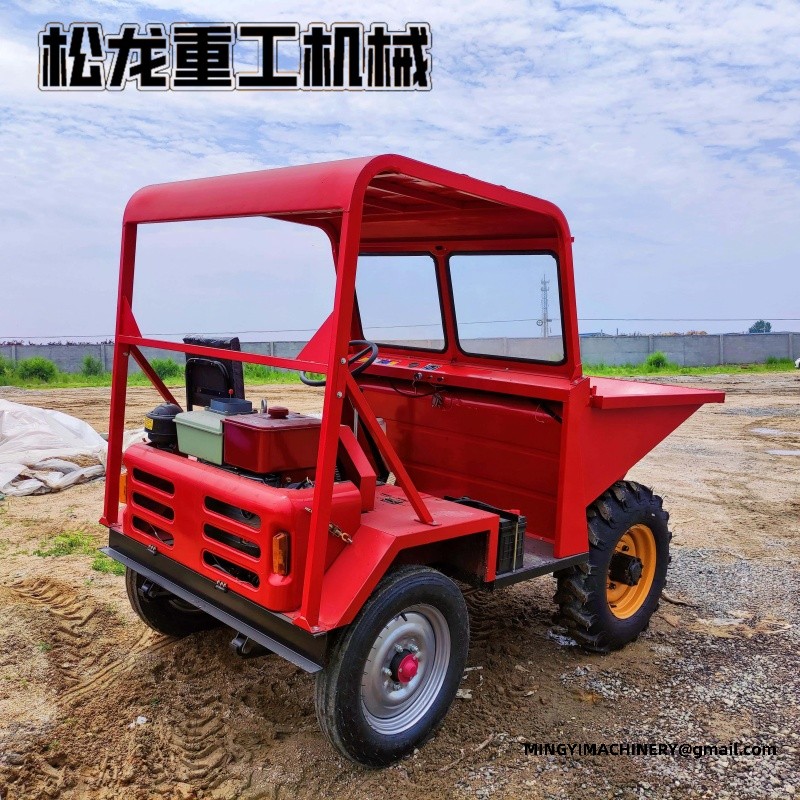
The FC10 is a front-axle drive with rear-axle steering (two-wheel drive) machine, and that is the correct specification for firm ground and short cycles on a water conservancy project. The FC15/FC18/FC20/FC25/FC30 models are four-wheel-drive hydraulic tippers for work where traction rather than payload is the limit.
The decision is ground-driven. Where the route is firm and the grades are within 21%, two-wheel drive keeps the machine simpler and its maintenance lighter. Where the ground is soft, wet or broken, four-wheel drive earns its complexity — and the family exists so that the choice can be made rather than compromised on.
Every tipper has two limits and buyers usually specification one of them. The FC10 publishes both: 1,000 kg by weight and 0.5 m³ by volume. On a water conservancy project, the material decides which limit arrives first — dense loads reach the weight figure, light bulky loads reach the volume figure — and knowing which one you are working against tells you whether a bigger box or a stronger frame would actually help.
Water conservancy project work usually involves more than one material in a day, which is why a machine specified in the middle of its range lasts longer than one specified at the edge. The 0.5 m³ box with a 1,580 mm width loads from a heap without shovelling the edges, and the 1,000 kg rating leaves allowance for the loads that arrive wetter and heavier than planned.
Cold changes two things on the FC10: the fluid in the hydraulic system thickens, and the battery has less to give. The engine itself is simple enough that starting on 12 V DC electric motor is not the hard part. Warm the machine by working it gently before loading to 1,000 kg, rather than by pulling straight out of a cold start into a graded climb.
Hydraulic response is the tell. A cold machine lifts the box slowly and the tipping action feels sluggish; a few minutes of circulation at light load brings it back. Operators who force a cold machine to 21% on the first trip of the morning are the ones who break things.
A tipper is a link in a chain, and the chain sets the pace. An excavator loading a 0.5 m³ box will fill it in a few passes; a machine that loads faster than the tipper can travel simply waits. Size the tipper against the haul distance, not against the loader.
On a site with a mixer, the tipper's job on a water conservancy project is to keep the batch point fed. At 1,000 kg a trip, that is a specific number of trips per hour, and the number either matches the pour rate or it does not. The published capacity is what makes the arithmetic honest.
What is the rated load of a site dumper manufacturer and what does it include?
1,000 kg rated load, with a 0.5 m³ box. The rating covers the material in the box and assumes the machine is working within its published limits on a water conservancy project.
What is the rear axle arrangement on a site dumper manufacturer?
The rear axle steers and swings, while the front axle drives — a front-axle drive with rear-axle steering (two-wheel drive). The swinging rear axle is what keeps all wheels in contact on uneven ground on a water conservancy project.
What is the engine power rating of a site dumper manufacturer?
17.3 kW at 2,200 r/min from the CG25M, mounted at the rear. The rating is matched to a 1,000 kg machine rather than chosen for a headline figure.
How does a site dumper manufacturer handle wet or soft ground?
Better than its size suggests. 1,000 kg spread over a 1,500 mm track with a swinging rear axle keeps the load per tyre modest and keeps contact on uneven surfaces — provided the ground stays within what a two-wheel-drive machine can cross on a water conservancy project.
How much can a site dumper manufacturer carry?
The FC10 is published at 1,000 kg of rated load with a 0.5 m³ box, working on a water conservancy project. Which limit arrives first depends on the material: light bulky loads fill the box, dense loads reach the weight figure.
How is a site dumper manufacturer loaded?
By hand from a heap, by machine from a heap, or from a hopper. The 0.5 m³ box on a 2,700 x 1,600 x 2,000 machine is proportioned for all three, which matters on sites that cannot guarantee one loading method on a water conservancy project.
Why does the box return hydraulically on a site dumper manufacturer?
A powered return brings the box down under control rather than letting it fall, which protects the chassis from shock loading every cycle. Over hundreds of tips a day on a water conservancy project, that is the difference between a frame that stays tight and one that does not.
What kind of route suits a site dumper manufacturer?
Short distances with tight corners, firm but uneven ground and no room to reverse: the conditions on a water conservancy project. Runs measured in tens of metres are where a machine of this size makes sense, and where 4,500 mm of turning radius pays for itself.
Those are the published figures for the FC10, and the same table is available for the four-wheel-drive models above it in the range. Send the narrowest passage, the steepest ramp and the worst ground on your site and the comparison can be made against real numbers.
Moving Site Dumper Manufacturer: A 1,000 kg Machine for Tight Sites between sites
Loading is where most damage happens. Ramps, angle of approach and the condition of the ground under them matter more than the machine when Site Dumper Manufacturer: A 1,000 kg Machine for Tight Sites is being loaded, and a careful driver is worth more than a fast one.
Reading the early symptoms on Site Dumper Manufacturer: A 1,000 kg Machine for Tight Sites
The symptom is usually not at the fault. A hydraulic function that has become sluggish on Site Dumper Manufacturer: A 1,000 kg Machine for Tight Sites may point to a filter, a relief setting or a pump, and starting with the simple checks avoids the wrong guess.
Pre-delivery inspection before Site Dumper Manufacturer: A 1,000 kg Machine for Tight Sites leaves the shop
The last hour before packing is the best time to find a fault. Running Site Dumper Manufacturer: A 1,000 kg Machine for Tight Sites through its full working cycle, checking for leaks under load and confirming that the controls match the specification avoids a conversation across time zones later.
Contact MINGYI Machinery for the current front tipper range, the four-wheel-drive models above the FC10, and a formal specification for your market. E-mail: sales@mingycn.com | LINE (ID): mingyicn
Mini Dumper Supplier: Load, Box and Route in Practice · Construction Site Dumper: Cycles, Ramps and Ground · 4WD construction dumper Europe with hydraulic tipping body · Front Tipper Truck