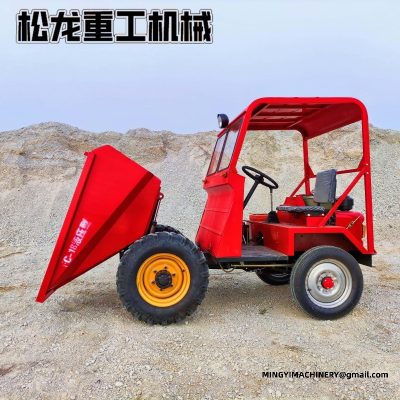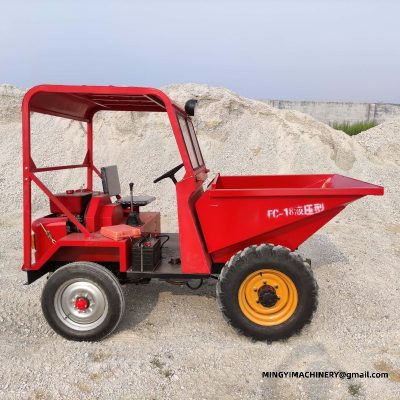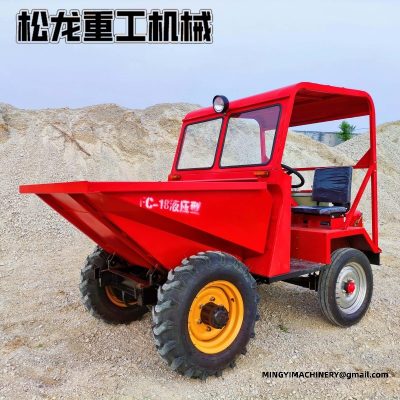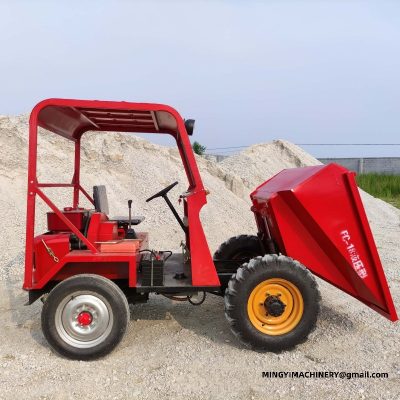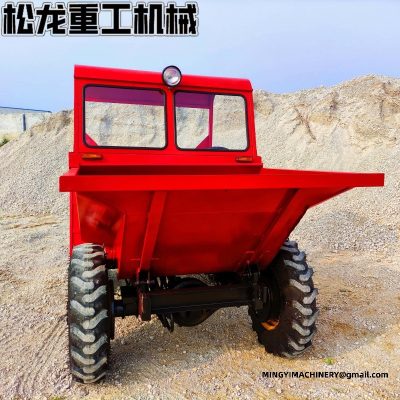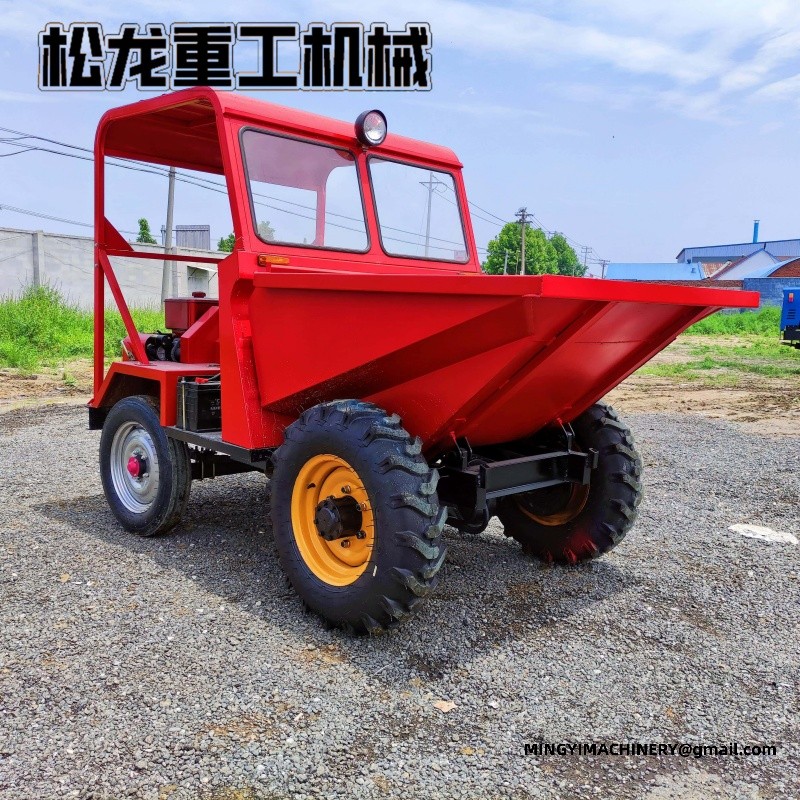
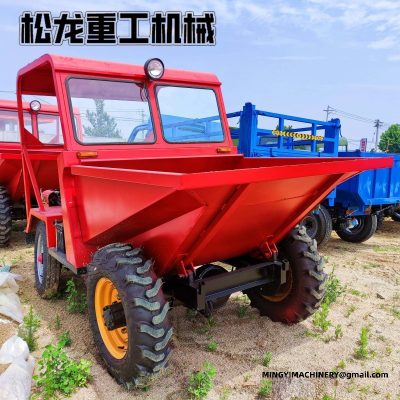
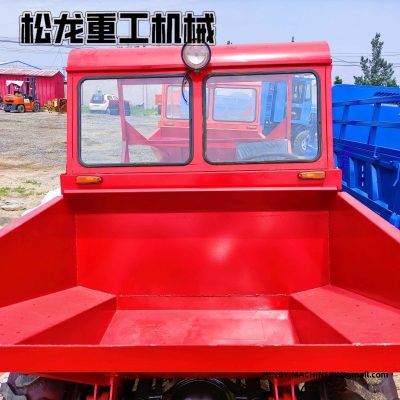
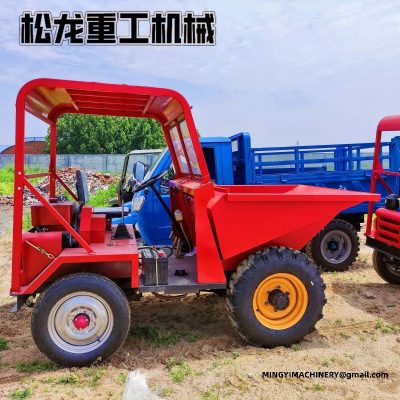
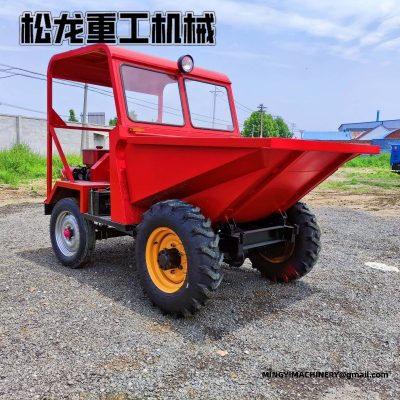
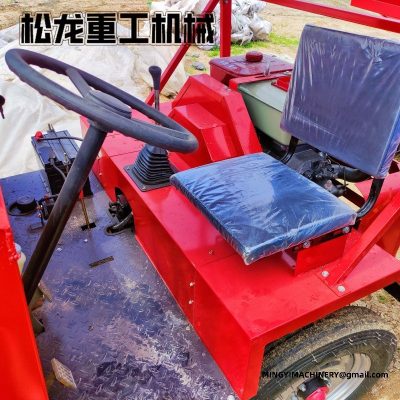
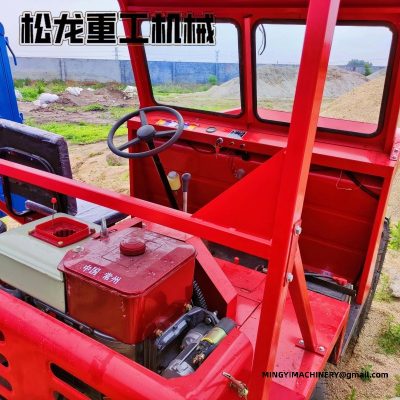
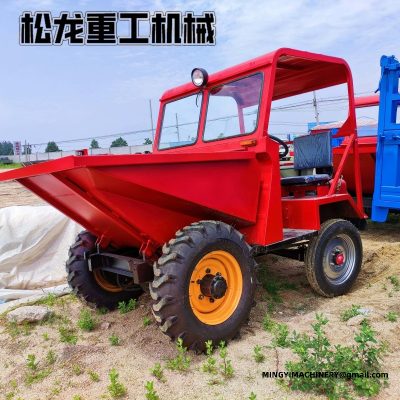
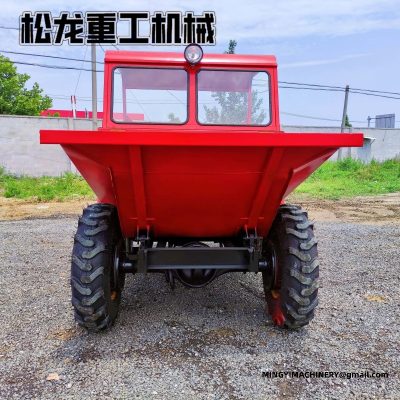
A mini dumper supplier earns its place by completing a cycle that other machines cannot. Load from a heap, drive a short distance, tip forward over the front axle, return the box hydraulically, drive away — no reversing manoeuvre, no ramp. The published figures that make that possible are 390 mm discharge height, 4,500 mm turning radius and 1,500 mm of track.
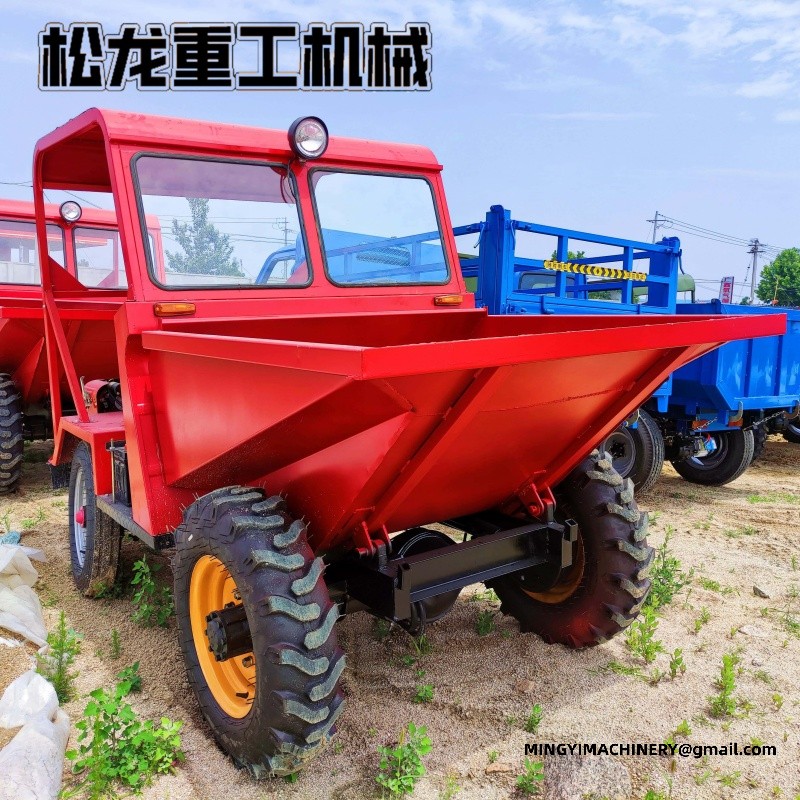
The FC10 drives its front axle and steers at the rear — a front-axle drive with rear-axle steering (two-wheel drive). That is right for firm ground and grades to 21%. The point at which it stops being right is when traction rather than payload becomes the limit on a water conservancy project.
Soft ground, persistent mud or a route across broken surfaces all shift the balance toward the four-wheel-drive FC15/FC18/FC20/FC25/FC30 models in the range, which are hydraulic tippers with electric start, lighting, signal lamps and an optional canopy. The decision is made by the site, not by the specification sheet — but it is only makeable if the two-wheel-drive baseline is known, which is why the FC10's figures are published in full.
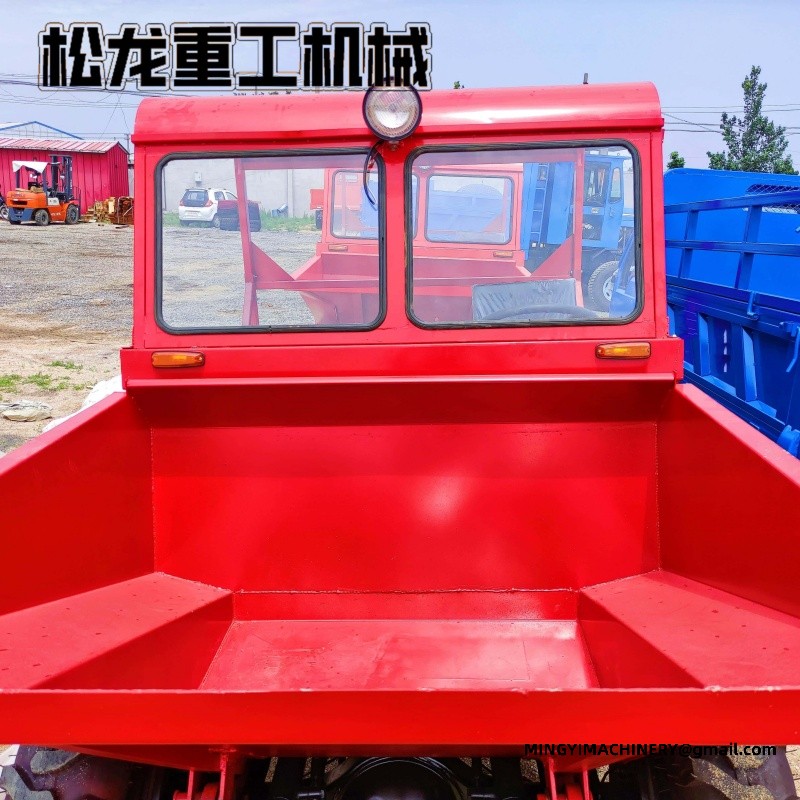
Welding extra structure onto a small tipper is a common mistake, because the failure it causes happens later and somewhere else. The chassis is sized for 1,000 kg over a 1,230 mm wheelbase. Something added to allow a heavier load redistributes stress into parts that were never asked to carry it.
If the job genuinely needs more than the machine gives, the answer is a larger machine from the same family rather than a modified small one. The published figures describe a 1,000 kg machine; they do not describe one that has been altered, and no warranty or safety judgement survives the alteration.
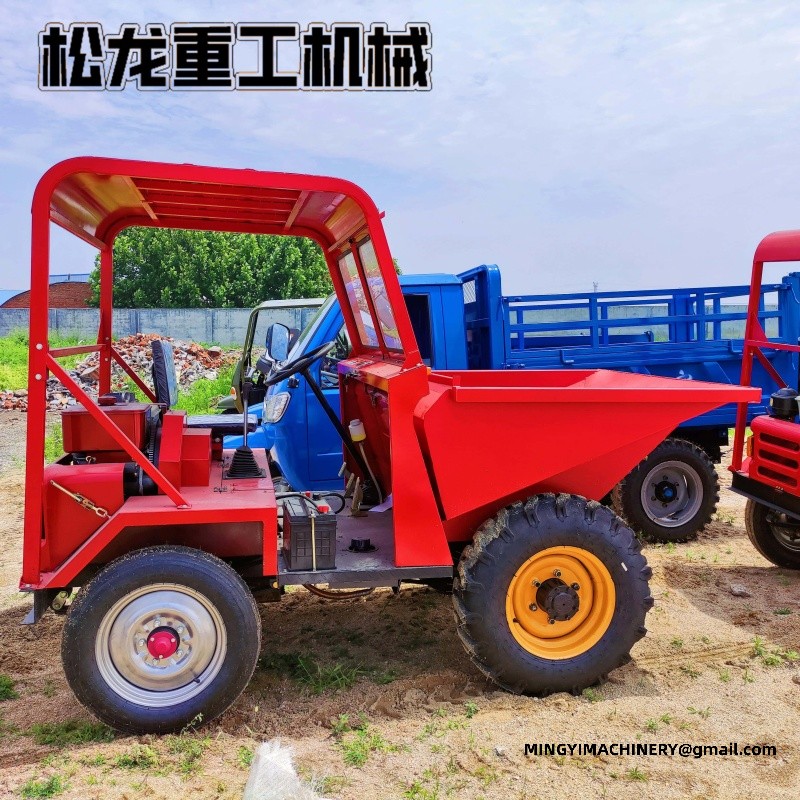
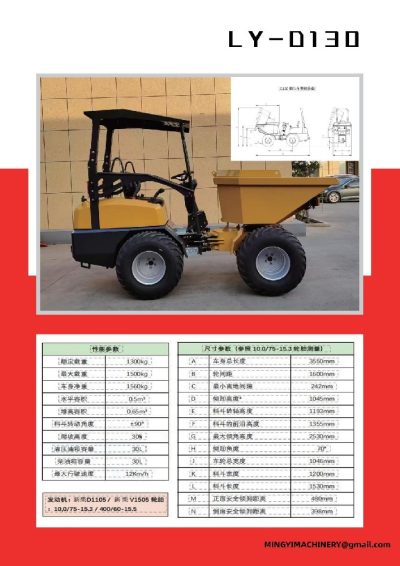
Specifying the FC10 is unusually straightforward because the table is complete: load 1,000 kg, box 0.5 m³, discharge 390 mm, turning radius 4,500 mm, clearance 200 mm, gradeability 21%, engine CG25M at 17.3 kW.
Check each against the site in the order they will constrain you: route width against 2,700 x 1,600 x 2,000 and 1,500 mm, the ramp against 21%, the worst ground against 200 mm, and the receiving point against 390 mm. A machine that passes all four on a water conservancy project is the machine for the job.
| Sample build from the range — FC10 front tipper (1,000 kg class) | |
|---|---|
| Rated load | 1,000 kg |
| Rated bucket capacity | 0.5 m³ |
| Discharge height | 390 mm |
| Maximum gradeability | 21% |
| Bucket width | 1,580 mm |
| Travel speed, 1st gear | 6.8 km/h |
| Travel speed, 2nd gear | 22 km/h |
| Travel speed, reverse | 7.5 km/h |
| Minimum turning radius | 4,500 mm |
| Overall dimensions (L x W x H) | 2,700 x 1,600 x 2,000 |
| Track | 1,500 mm |
| Wheelbase | 1,230 mm |
| Minimum ground clearance | 200 mm |
| Diesel engine model | CG25M |
| Rated engine power | 17.3 kW |
| Rated engine speed | 2,200 r/min |
| Starting method | 12 V DC electric motor |
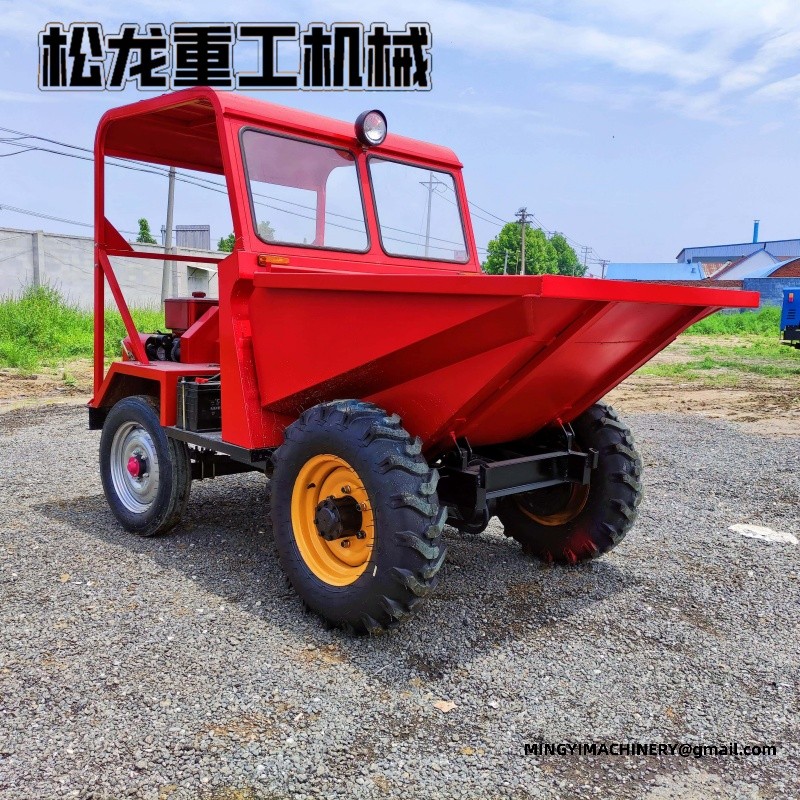
17.3 kW at 2,200 r/min is the honest way to specification a small diesel: power at rated speed, from the CG25M. What matters on a water conservancy project is whether the machine holds speed on a ramp with a full box, and that is a torque-and-gearing question the whole drivetrain answers together.
A 1,000 kg tipper does not need a large engine; it needs one sized so the hydraulics for tipping and the drive for hauling do not fight each other. The published pairing — CG25M, 17.3 kW, 21% — describes a machine matched for its duty rather than one specified for a brochure.
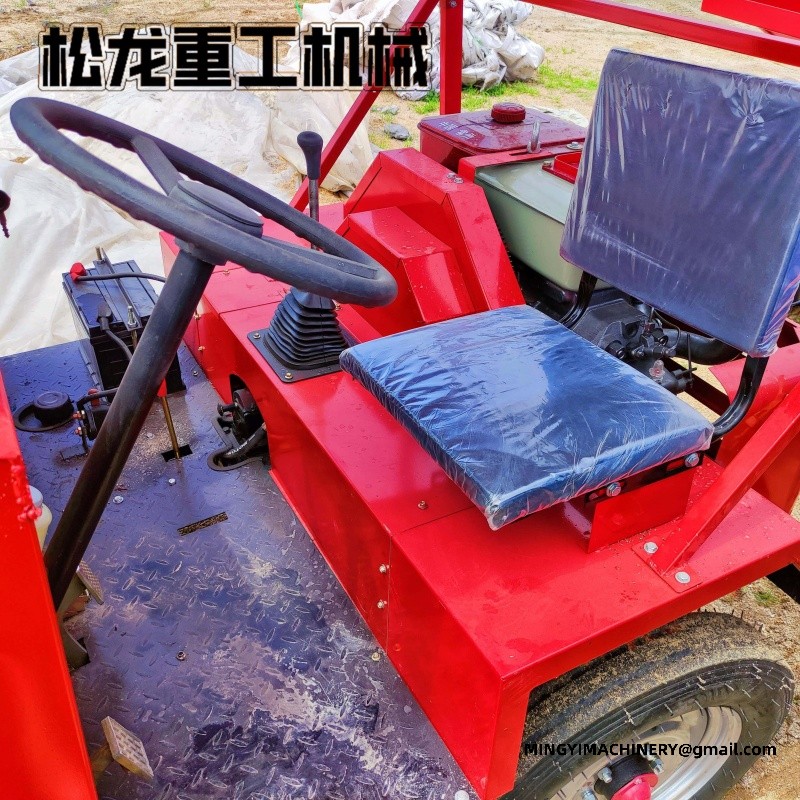
The FC10 is published at 1,000 kg rated load and 0.5 m³ rated bucket capacity, and those two figures are worth reading together rather than separately. Carrying sand and gravel, the box fills by volume long before the weight limit is reached, while denser material reaches the weight figure first, on a water conservancy project. Which of the two governs is decided by what you load, not by the machine.
For a site doing short runs on a water conservancy project, the practical question is how much arrives per hour, and that is load divided by cycle time. The 0.5 m³ box at 1,000 kg is sized so that neither figure is wasted: the machine is not carrying a half-empty box on light material, and it is not overloaded on dense material. That balance is what the two published numbers describe.
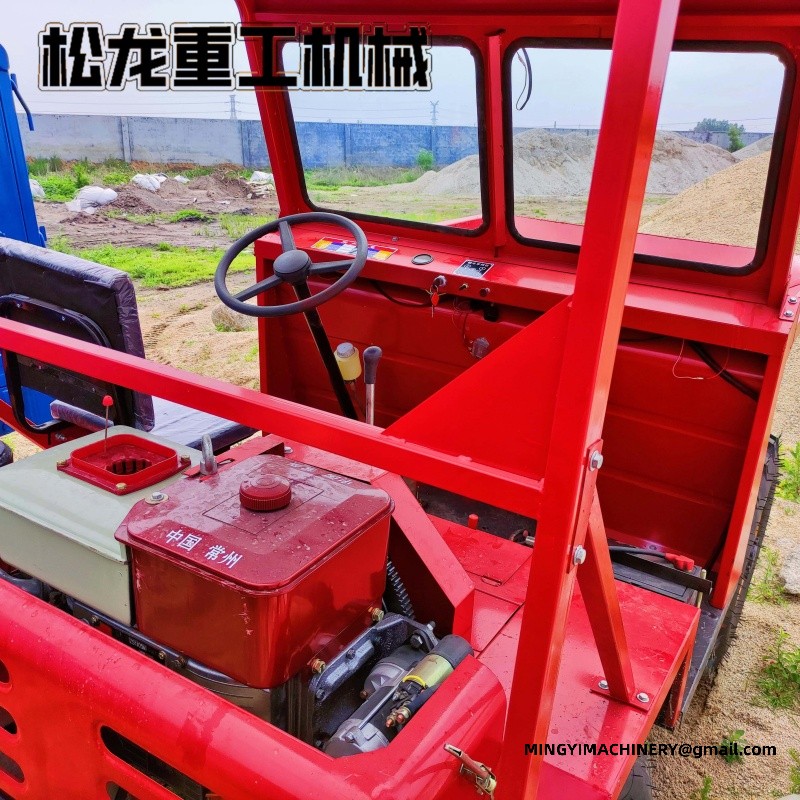
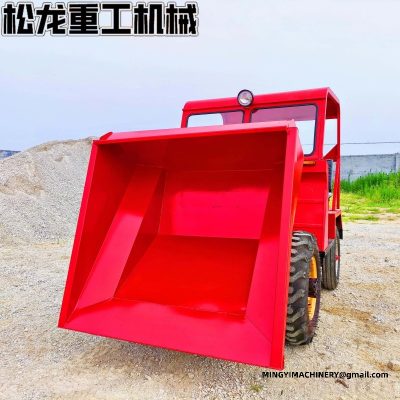
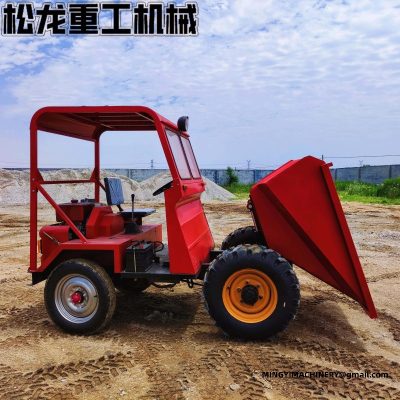
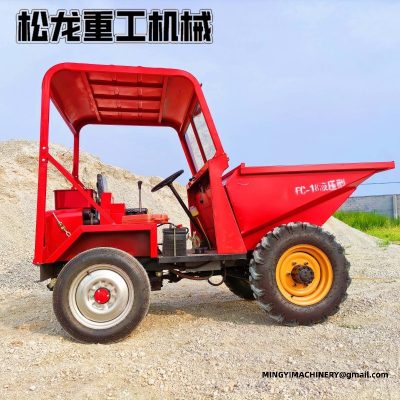
Wheelbarrows, tractor-and-trailer and full-size dump trucks all move material; the front tipper wins where the route is short, confined or rough. on a water conservancy project carrying material along the bund, the 2,700 x 1,600 x 2,000 machine with 4,500 mm of turning radius and 200 mm of clearance goes where the alternatives cannot, and tips forward without a ramp.
The 1,000 kg and 0.5 m³ figures are the honest middle of that argument: large enough that sand and gravel moves in useful quantities, small enough that the machine fits the site. Machines that try to be both usually end up too big for the route and too small for the load.
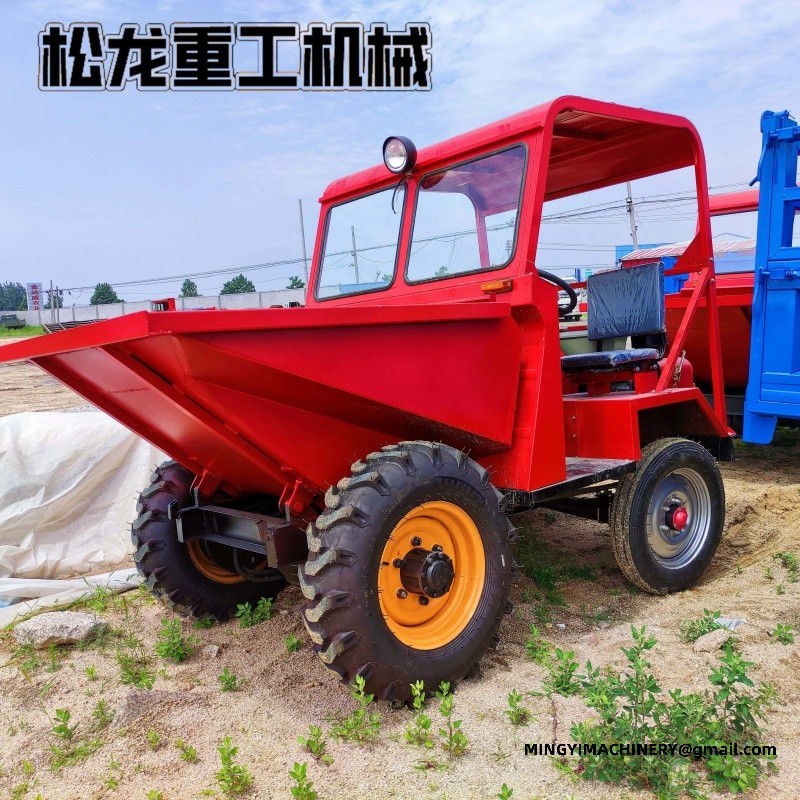
The working day on a small tipper is a long series of short cycles, and the routine that keeps it productive is unglamorous: walk-round at the start, oil and coolant level, tyre pressures, grease the tipping pivots, and watch the hydraulic hoses through the shift on a water conservancy project.
Starting is by 12 V DC electric motor, which supports the stop-start pattern of site work — the engine is off while the operator loads or waits, and restarted for each run. On a machine rated at 1,000 kg with a 17.3 kW engine, that cycling is normal duty rather than abuse.
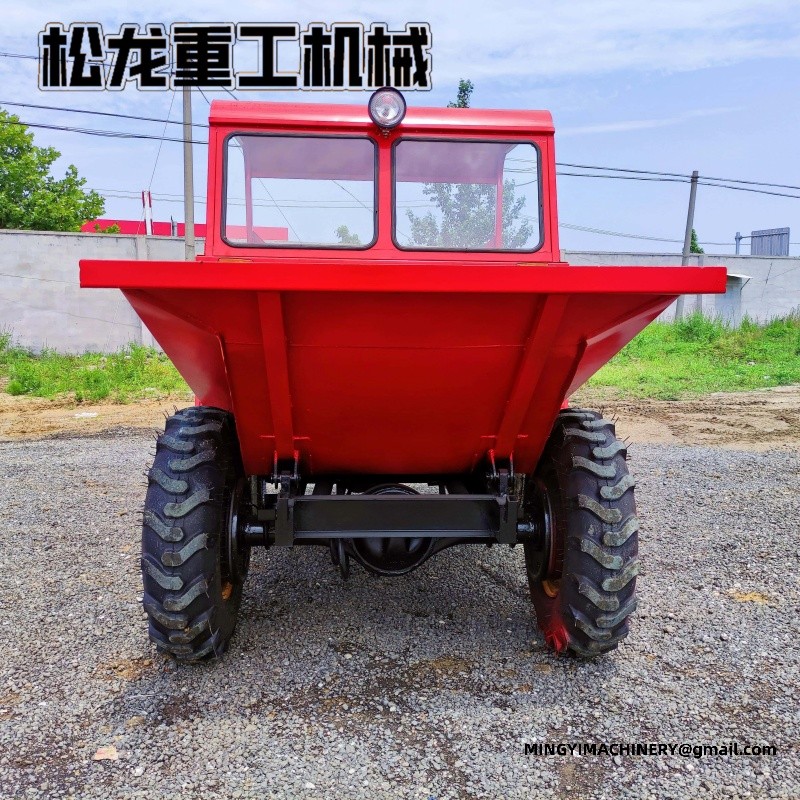
Wet ground is where the published 200 mm of ground clearance starts to matter. Below that figure the machine is dragging its belly through the surface; above it, the tyres carry the load and the machine keeps moving. On a site that turns to mud, the clearance is what decides whether the shift continues.
The drive layout helps here too. With front-axle drive with rear-axle steering (two-wheel drive), the front axle pulls and the rear axle steers, and the 1,500 mm track keeps the load spread. What the machine will not do is float; a front tipper on soft ground is a machine that goes where a hard surface exists, or not at all.
Top speed sells machines; cycle time pays for them. At 6.8 km/h loaded and 22 km/h empty, the FC10 is geared for the run between stockpile and discharge point on a water conservancy project carrying material along the bund — short enough that acceleration and manoeuvring matter more than maximum speed.
That is also why reverse is geared at 7.5 km/h rather than as an afterthought. On a site where the machine works back and forth all day, the return leg is half the cycle, and gearing it properly is worth more than a higher number on the specification sheet.
2,700 x 1,600 x 2,000 is a set of compromises made in one direction. Height is kept down so the box can be loaded by hand when no machine is available, and length is kept short so the machine fits between structures and turns inside its own footprint. On a water conservancy project, both of those happen constantly.
The effort of a low build is ground clearance, which is published honestly at 200 mm. That is the trade: the FC10 goes under things and between things rather than over things. Buy it for the routes where that matters on a water conservancy project and it will earn its place; buy it for rocky ground and it will not.
Watch someone experienced on a tipper and the differences are all economy and smoothness. They load the box in one pass rather than two, they take the flattest route rather than the shortest, and they set the machine up for the tip before the box goes up.
The mechanical habits are just as visible. They stop the machine before selecting a gear from the range that ends at 22 km/h. They do not ride the tipping control. They walk the route once on a water conservancy project before assuming it is passable at 2,700 x 1,600 x 2,000.
How is the box returned after tipping on a mini dumper supplier?
Under hydraulic power, with a dedicated return device. A controlled return protects the chassis from shock loading every cycle, which matters on a machine tipping hundreds of times a day on a water conservancy project.
Can a mini dumper supplier tip into a trench?
That is a normal duty. With 390 mm of discharge height and forward tipping, the machine empties into space ahead of itself, so a trench edge or a wall behind it does not obstruct the manoeuvre on a water conservancy project.
What spare parts are specific to a mini dumper supplier?
The tipping circuit and the box. The CG25M diesel, the driveline and the running gear are standard items, and the specification table carries the figures a parts enquiry needs: 1,000 kg, 17.3 kW and 0.5 m³.
How much does a mini dumper supplier weigh when loaded?
1,000 kg of load plus the machine itself, spread across a 1,500 mm track and a 1,230 mm wheelbase. The published load figure is the one to work from: the machine is balanced by the rear-mounted engine so that the rated load needs no ballast.
What engine does the mini dumper supplier use?
A CG25M diesel rated at 17.3 kW at 2,200 r/min, mounted at the rear to counterweight the load in the box ahead of the front axle. Starting is by 12 V DC electric motor.
Can a mini dumper supplier work in a narrow space?
That is what it is for. At 2,700 x 1,600 x 2,000 overall with a 4,500 mm turning radius, it passes through openings and turns inside its own footprint, and forward tipping means it empties ahead of itself rather than needing clear space behind.
What gradient can a mini dumper supplier climb?
Gradeability is 21%, measured with the machine working rather than coasting. Loading ramps and site inclines are usually well inside that figure; the constraint is more often traction than power.
What tyres does a mini dumper supplier run?
The machine carries 1,000 kg of load across a 1,500 mm track and a 1,230 mm wheelbase, which keeps the load per tyre modest. Correct pressures matter more than size on soft ground on a water conservancy project.
Where the route fits the FC10, the two-wheel-drive machine is the simpler and simpler answer; where the ground does not, the four-wheel-drive models in the family are the step up. Deciding which case applies is most of the purchase.
Storage and long idle periods for Mini Dumper Supplier: Load, Box and Route in Practice
Rubber, seals and hoses age whether the machine works or not. Keeping Mini Dumper Supplier: Load, Box and Route in Practice out of direct sun and off damp ground slows that, and running it briefly at intervals keeps everything moving.
Documents that travel with Mini Dumper Supplier: Load, Box and Route in Practice
Documentation should match the machine that was actually built. The sheet supplied with Mini Dumper Supplier: Load, Box and Route in Practice records the configuration as delivered, because the generic catalogue description is not what the customer needs when ordering a part.
Packing, loading and shipment of Mini Dumper Supplier: Load, Box and Route in Practice
Export packing is part of the machine, not an afterthought. Mini Dumper Supplier: Load, Box and Route in Practice is blocked and braced inside the container so that it arrives in the same condition it left, and the load plan is decided by the dimensions rather than by what fits loosely.
Hot, humid and dusty conditions around Mini Dumper Supplier: Load, Box and Route in Practice
Heat and dust shorten service intervals rather than machine life. In these conditions the filters on Mini Dumper Supplier: Load, Box and Route in Practice need attention more often, and the cooling surfaces need to be kept clear to hold the working temperature.
Contact MINGYI Machinery for the current front tipper range, the four-wheel-drive models above the FC10, and a formal specification for your market. E-mail: sales@mingycn.com | LINE (ID): mingyicn
Construction Site Dumper: Cycles, Ramps and Ground · Small Dumper Machine: Dimensions That Decide Where It Works · articulated dump truck supplier for export markets · Front Tipper Truck