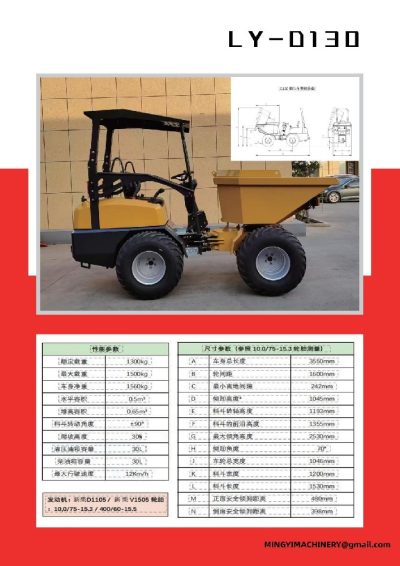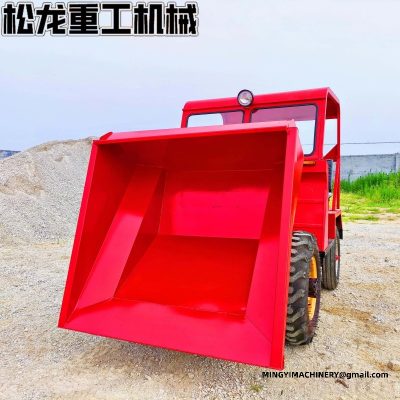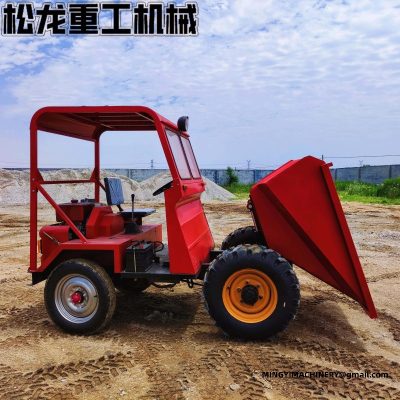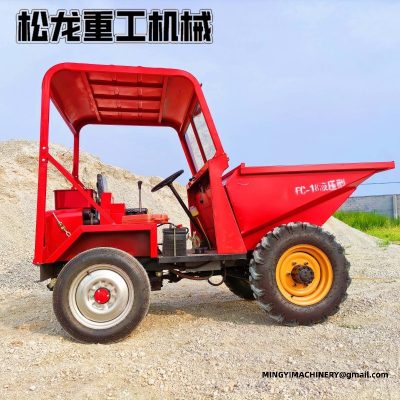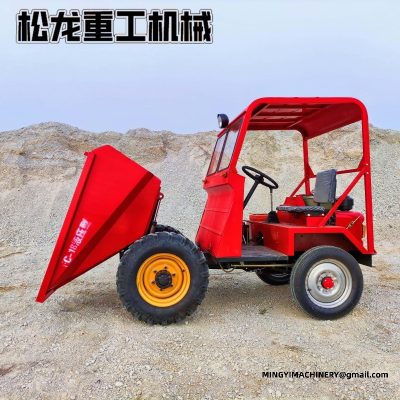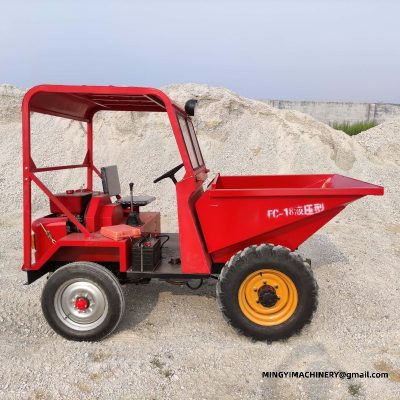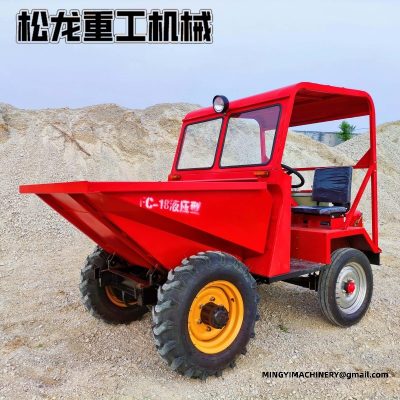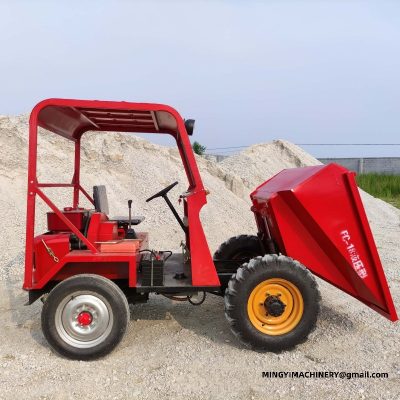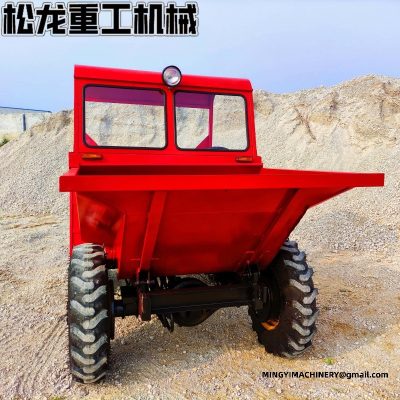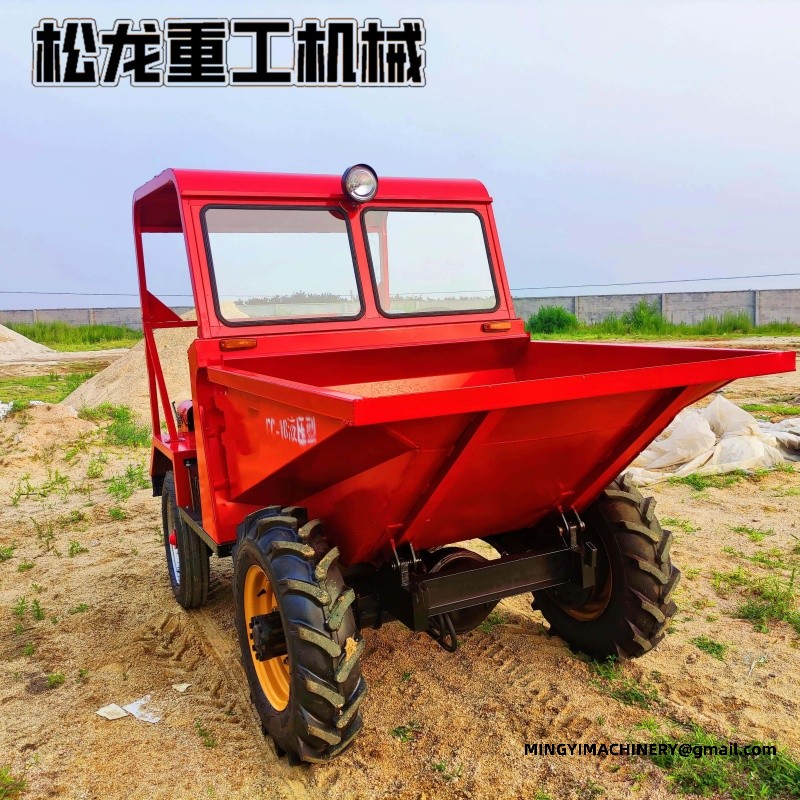
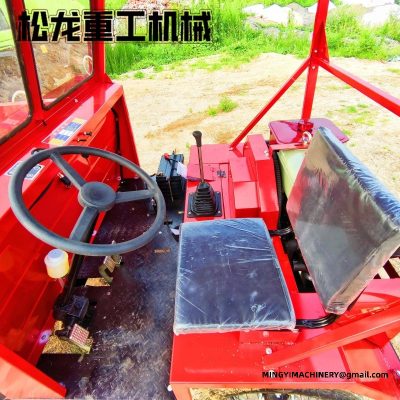
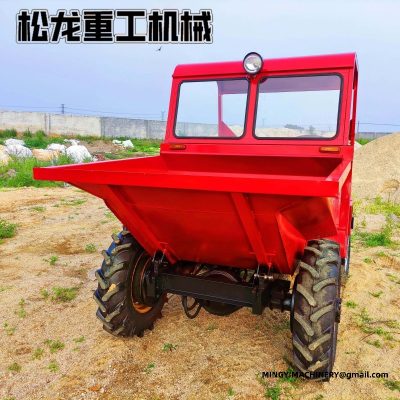
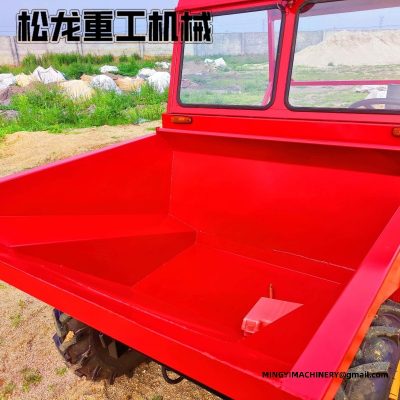
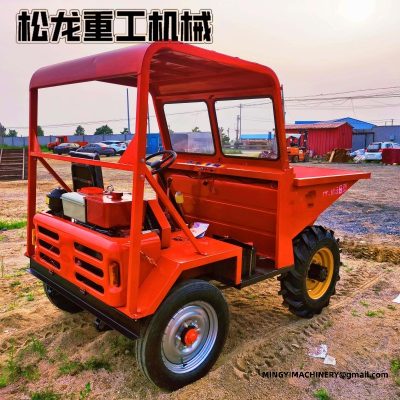
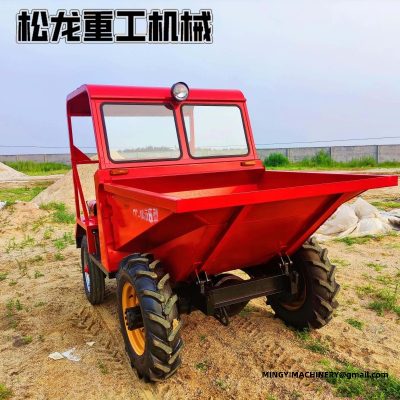
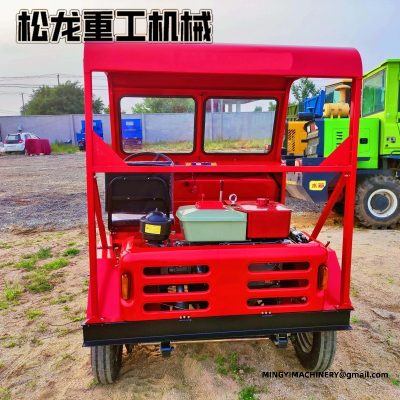
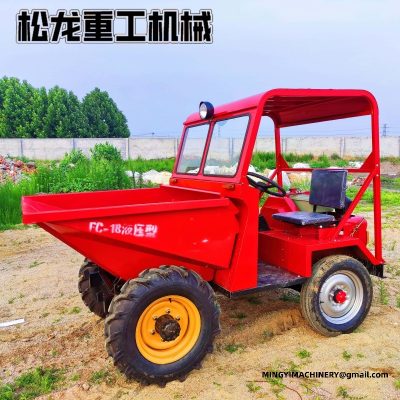
Site transport is a queue problem before it is a capacity problem. The machine that keeps a small dumper machine productive is the one that does not have to reverse out of every corner, and at 4,500 mm turning radius on a 1,230 mm wheelbase that is the design intent here. Load is 1,000 kg, box volume 0.5 m³, and discharge 390 mm over the front axle.
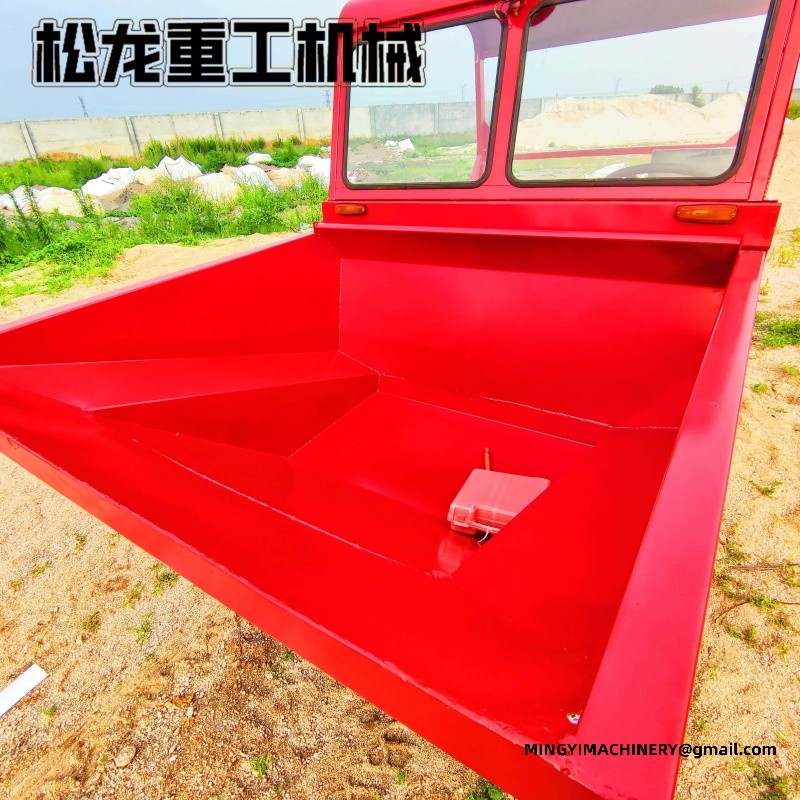
The comparison that matters most for a 1,000 kg machine is with the manual alternatives it replaces — because that is what many sites use until they buy one. 1,000 kg of concrete per trip against a barrow load is a change in the whole working day, not a marginal improvement.
What makes the change stick is that the machine needs no special route. At 2,700 x 1,600 x 2,000 it goes through the same gaps, over the same boards and up the same ramps on road building work that people were already using on foot. Nothing about the site has to be rebuilt to accommodate it.
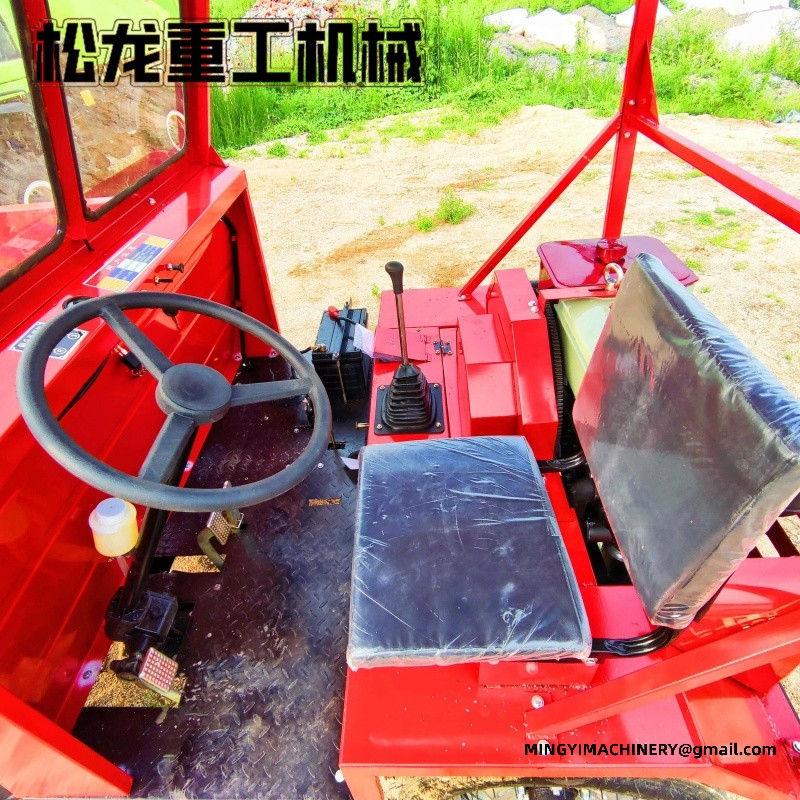
Three things wear: the tipping hydraulics, the pivot pins and the tyres. on road building work carrying concrete from the batch point to the paver, the box cycles continuously, so hose condition and pin greasing are the two checks that prevent almost every unplanned stop. The CG25M diesel itself is the durable part.
Tyres deserve more attention than they get: 1,000 kg over four wheels on ground with 200 mm of clearance to catch on, and the rear axle swinging under the load. A machine kept on its tyre pressures is a machine that steers predictably at 22 km/h on the empty leg.
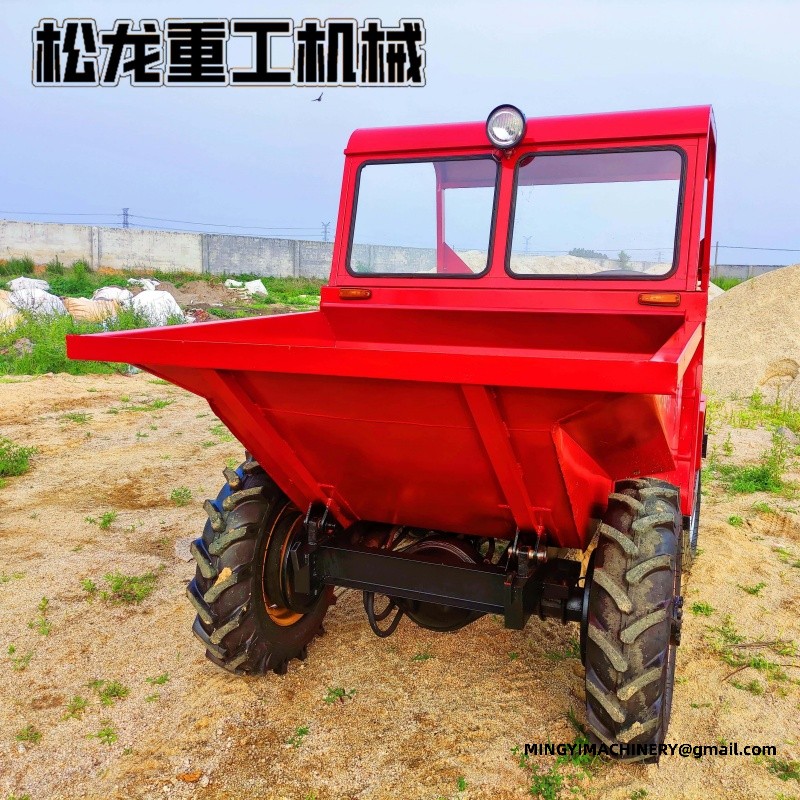
Keep the specification, the service record and the tyre details together with the machine. When the tipper is resold, or when a site asks for evidence of maintenance, that folder is the difference between a quick answer and a slow one.
It also pays on the maintenance side. A machine that has been worked on road building work for years accumulates a history, and knowing what has been replaced tells the next mechanic where to look. The FC10 is simple enough that this history is short, which is exactly the point of owning one.
| Published build data — FC10 front tipper (1,000 kg class) | |
|---|---|
| Rated load | 1,000 kg |
| Rated bucket capacity | 0.5 m³ |
| Discharge height | 390 mm |
| Maximum gradeability | 21% |
| Bucket width | 1,580 mm |
| Travel speed, 1st gear | 6.8 km/h |
| Travel speed, 2nd gear | 22 km/h |
| Travel speed, reverse | 7.5 km/h |
| Minimum turning radius | 4,500 mm |
| Overall dimensions (L x W x H) | 2,700 x 1,600 x 2,000 |
| Track | 1,500 mm |
| Wheelbase | 1,230 mm |
| Minimum ground clearance | 200 mm |
| Diesel engine model | CG25M |
| Rated engine power | 17.3 kW |
| Rated engine speed | 2,200 r/min |
| Starting method | 12 V DC electric motor |
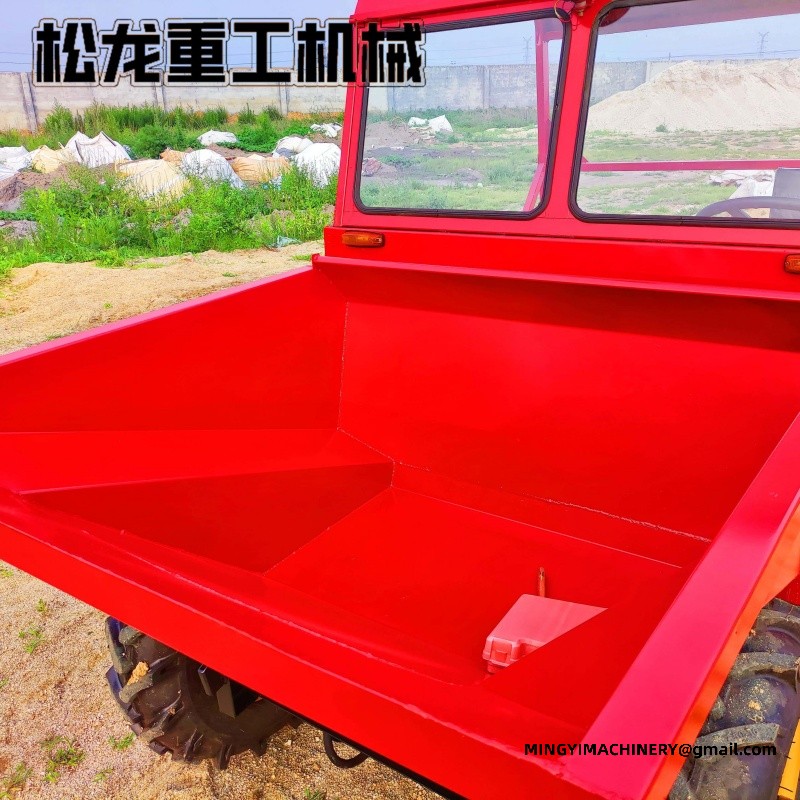
The right way to judge a tipper is effort per tonne moved. 1,000 kg per trip against a haul of a known length gives a fuel figure per tonne that a specification sheet cannot give you. Everything that reduces wasted trips improves that number.
Which is why the small things matter: keeping the route clear, loading the box properly the first time rather than nearly filling it twice, and not sending the machine out half-loaded. A tipper earning its keep is a tipper whose trips are all full trips.
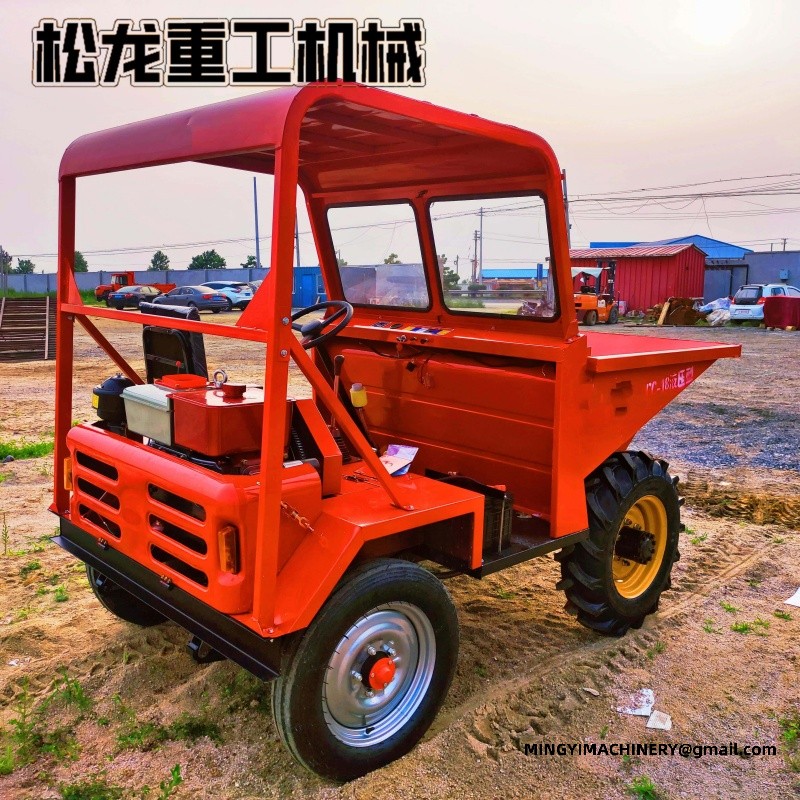
Two jobs only. Start the engine cold, and make the machine visible. A 17.3 kW diesel at 2,200 r/min is a low-compression-ratio case compared with modern high-speed engines, so cold cranking is easy and the starting load is light on the battery.
The second job matters more than buyers expect. A tipper working on road building work is often moving material across a shared route, and the machine has to be seen doing it. The optional lighting and signal package on the larger FC15-FC30 family is exactly that requirement answered on the wider four-wheel-drive machines.
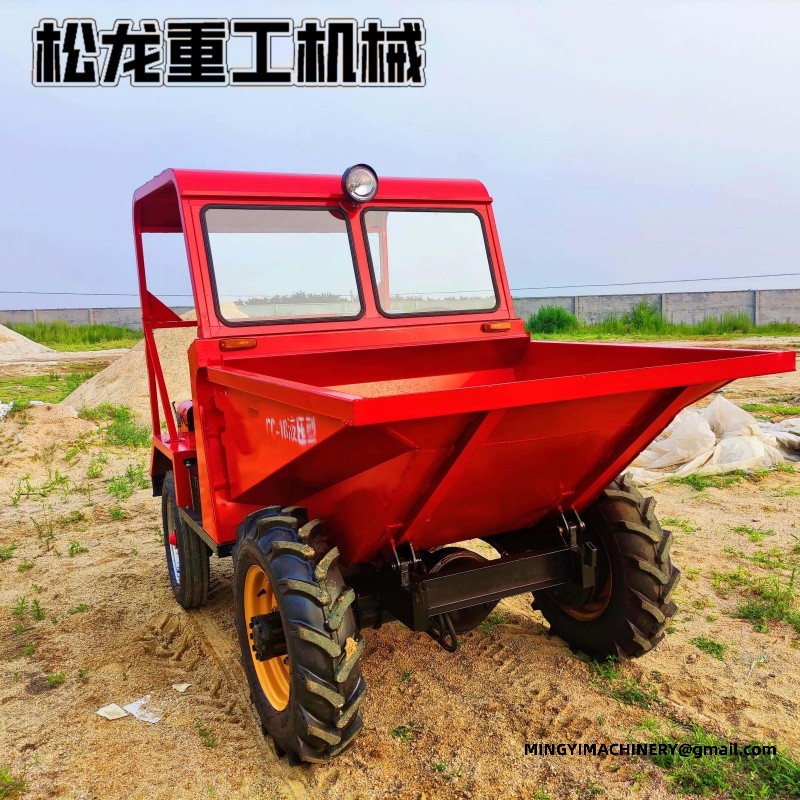
Choosing inside the range starts with the route rather than the model. Measure the narrowest passage, the steepest ramp and the worst ground on road building work carrying concrete from the batch point to the paver; compare them against the FC10's 2,700 x 1,600 x 2,000, 21% gradeability and 200 mm clearance. If all three fit, the 1,000 kg machine is the answer.
If the ground does not fit, the four-wheel-drive FC15/FC18/FC20/FC25/FC30 models are the step up — hydraulic tipping, electric start, lighting and signals, optional canopy. The FC10's published table exists so that the baseline is known before that comparison starts, which is exactly why full figures matter on the entry model.
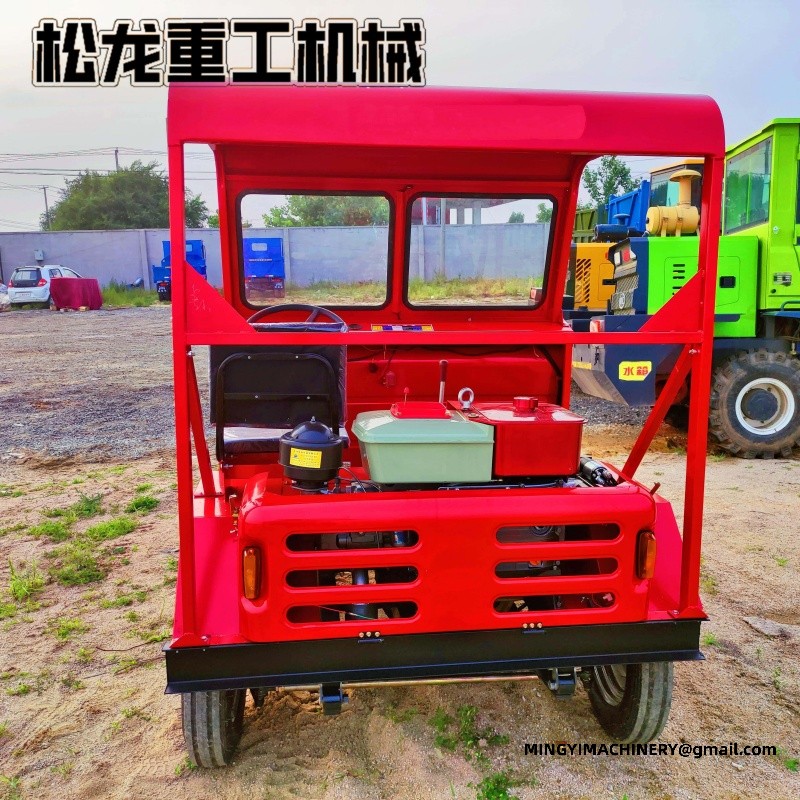
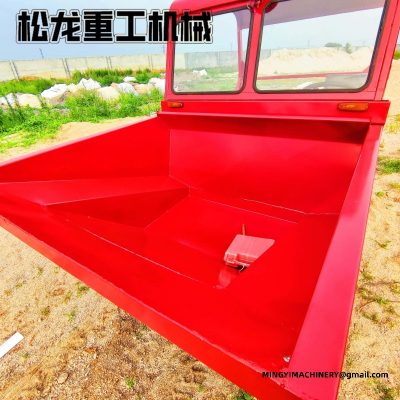
The box is 1,580 mm wide on a machine 2,700 x 1,600 x 2,000 overall, and that proportion is deliberate. A wide box loads from a heap without the operator having to square up precisely, which matters on road building work, where the loading point is a pile rather than a hopper.
Width also affects how the load sits. A 1,580 mm box spreading 1,000 kg across its floor keeps the centre of gravity low and central, which is what keeps the machine stable on the ground it is specified for. Narrow, tall boxes look efficient and handle badly when the load shifts — and loads of concrete do shift.
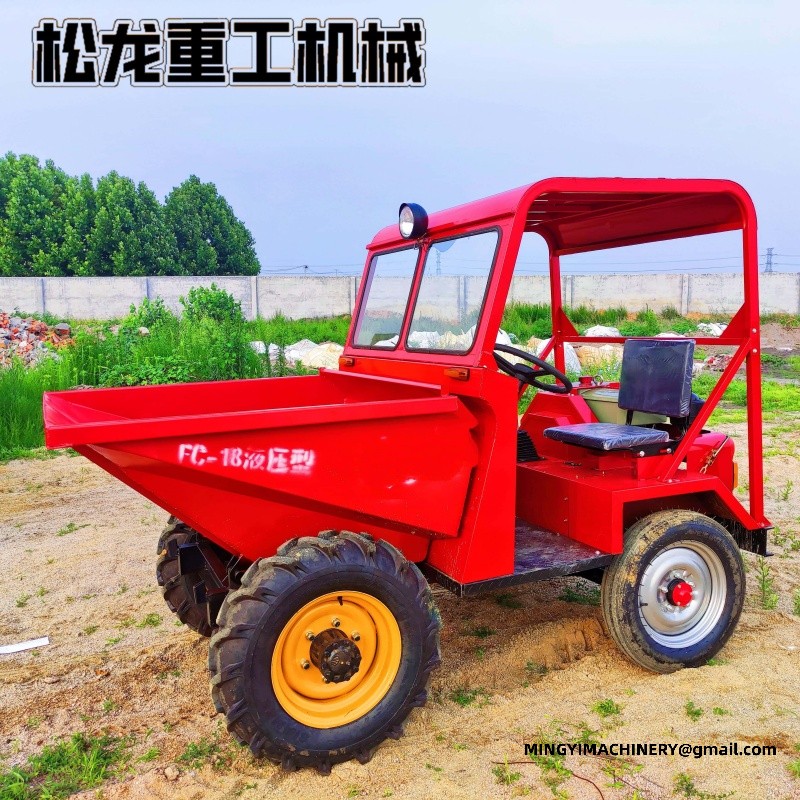
The safety case for a small front tipper is largely the safety case for not needing a larger machine. 2,700 x 1,600 x 2,000 overall and 4,500 mm of turning radius mean fewer blind reversing movements on road building work, and forward tipping at 390 mm means nobody has to stand behind a raised box.
Gradeability of 21% and clearance of 200 mm define the safe envelope. Worked inside those figures, on the firm ground the two-wheel-drive layout is specified for, the machine is predictable. The specification sheet is also, read properly, the operating manual.
1,000 kg of concrete sitting ahead of the front axle is what makes a front tipper work: the weight is on the driven wheels, so traction arrives when the load does. The rear-mounted CG25M balances it, which is why the machine does not need ballast.
The published 1,230 mm wheelbase keeps that weight transfer manageable on ramps of up to 21%. Put the same load on a machine with a longer wheelbase and the front axle carries it differently; put it on a shorter one and the machine pitches. The FC10's 1,230 mm and 1,500 mm are matched to the 1,000 kg it is rated for.
At 2,700 x 1,600 x 2,000 the FC10 is small enough to be moved without a low-loader, which is one of its less obvious advantages. A machine that can be carried on a standard trailer behind a light truck changes how a contractor deploys it between jobs.
The same dimensions, seen from the other side, decide whether it fits through the gateway on road building work. On road building work the first question is always access, and a machine that is 2,700 x 1,600 x 2,000 with a 4,500 mm turning radius answers it before any conversation about capacity begins.
Read the dimensions together and the design intent is clear: 2,700 x 1,600 x 2,000 overall, 1,230 mm wheelbase, 1,500 mm track, 4,500 mm turning radius. A short machine with a wide track and a tight radius — built for stability in the confined spaces on road building work carrying concrete from the batch point to the paver.
The 1,500 mm track is what keeps a narrow machine upright on side slopes and uneven going, and it is the figure most often overlooked when buyers compare overall widths. Two machines of the same length can behave very differently on a slope depending on how their 1,500 mm of track sits under the box.
What is the wheelbase of a small dumper machine and why does it matter?
1,230 mm, with a 4,500 mm turning radius. A short wheelbase plus rear-axle steering is what produces the tight radius, and that is what lets the machine work in confined areas on road building work.
What is the maximum gradeability of a small dumper machine?
21% with the machine working rather than coasting. Site ramps and loading inclines normally sit well inside that figure; where they do not, traction on the surface is usually the real limit rather than power.
What is the difference between the FC10 and a mini dumper?
Largely a naming convention. The FC10 is a 1,000 kg front-tipping machine with a 0.5 m³ box, described in the published table as suitable for short-distance movement of loose material; that is what the term mini dumper covers.
What is covered by the published specification of a small dumper machine?
Load, box volume, discharge height, bucket width, three travel speeds, turning radius, overall dimensions, track, wheelbase, ground clearance, engine model, power, rated speed and the starting method: 1,000 kg, CG25M and 4,500 mm among them.
What maintenance does a small dumper machine need?
Daily: oil and coolant levels, tyre pressures and a walk-round. Then grease the tipping pivots and check the hydraulic hoses and cylinder, because the box cycles hundreds of times a day on road building work.
What makes a used small dumper machine easy to sell?
A published specification that can be verified on the machine: 1,000 kg of load, 0.5 m³ of box, 390 mm of discharge height and 4,500 mm of turning radius. A buyer who can measure the claims will pay for the certainty.
What are the overall dimensions of a small dumper machine?
2,700 x 1,600 x 2,000 overall, with a 1,500 mm track and a 1,230 mm wheelbase. The size is what lets it work through openings and along routes that larger site plant cannot enter on road building work.
How does a small dumper machine discharge its load?
Forward, by gravity through hydraulic tipping, with the box returning under hydraulic power through a dedicated return device. The load leaves over the front axle at 390 mm, so no reversing manoeuvre or ramp is needed.
A small dumper machine is a simple machine kept useful by honest figures. Rated load, box volume, discharge height, turning radius and clearance are the five rows worth checking against your site before anything else is discussed.
Commissioning Small Dumper Machine: Dimensions That Decide Where It Works on site
Transport shakes things loose. A short check of Small Dumper Machine: Dimensions That Decide Where It Works after the crate is opened, covering the same points the pre-delivery inspection covered, is the most useful insurance available on delivery day.
Storage and long idle periods for Small Dumper Machine: Dimensions That Decide Where It Works
The battery and the fuel are the first things to suffer in storage. Preparing Small Dumper Machine: Dimensions That Decide Where It Works properly at the start of the idle period avoids the flat battery and the contaminated tank that greet an unprepared machine.
Keeping a service record for Small Dumper Machine: Dimensions That Decide Where It Works
Patterns show up in the record before they show up in the machine. Rising oil consumption or a filter that keeps blocking on Small Dumper Machine: Dimensions That Decide Where It Works is obvious on paper long before it becomes a failure on site.
A second operator for Small Dumper Machine: Dimensions That Decide Where It Works
Training is simpler than repair. An hour spent with a new operator on Small Dumper Machine: Dimensions That Decide Where It Works, covering the limits and the awkward cases, is the least lengthy hour in the whole ownership.
Moving Small Dumper Machine: Dimensions That Decide Where It Works between sites
Securing the load is not optional. Lashing Small Dumper Machine: Dimensions That Decide Where It Works at the points intended for it, checking the tension before the vehicle moves and rechecking after the first kilometres is standard practice rather than extra care.
Contact MINGYI Machinery for the current front tipper range, the four-wheel-drive models above the FC10, and a formal specification for your market. E-mail: sales@mingycn.com | LINE (ID): mingyicn
Front Tip Dumper: Forward Discharge and Hydraulic Return · Mini Site Dumper: Turning Radius and Ground Clearance · factory direct 4x4 off road dumper with hydraulic tipping body · Front Tipper Truck