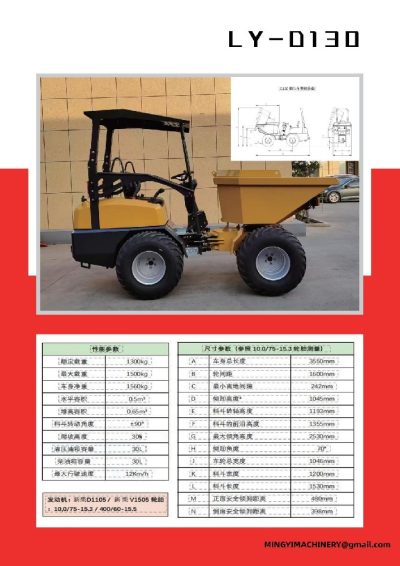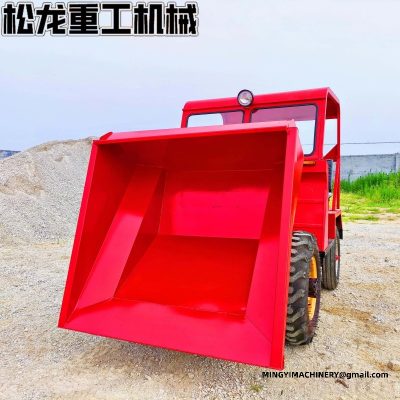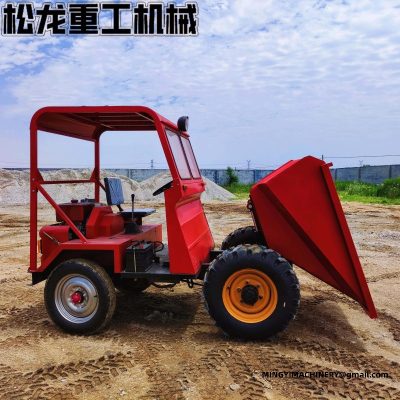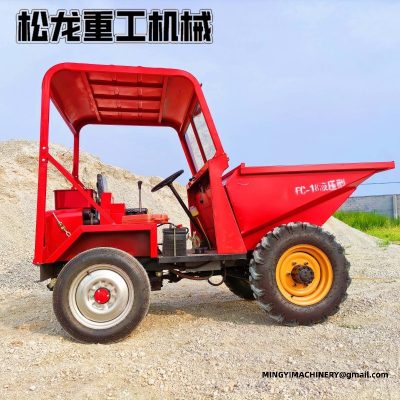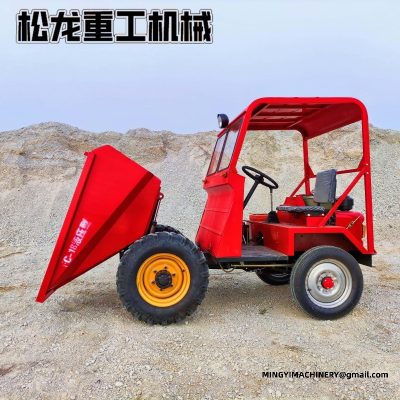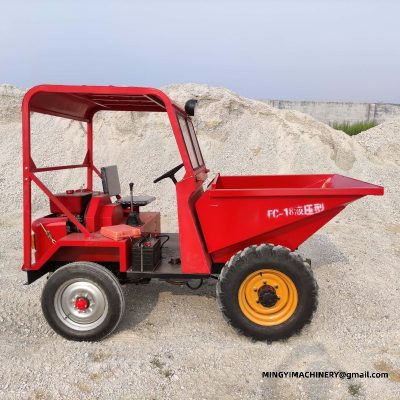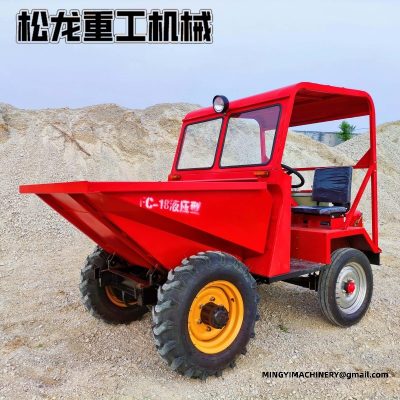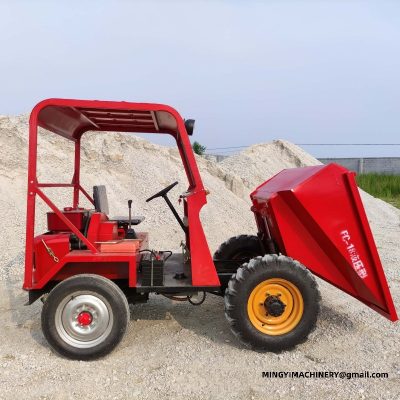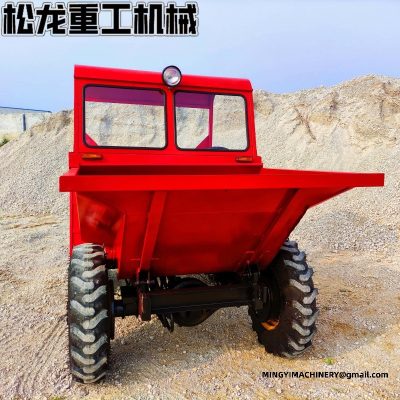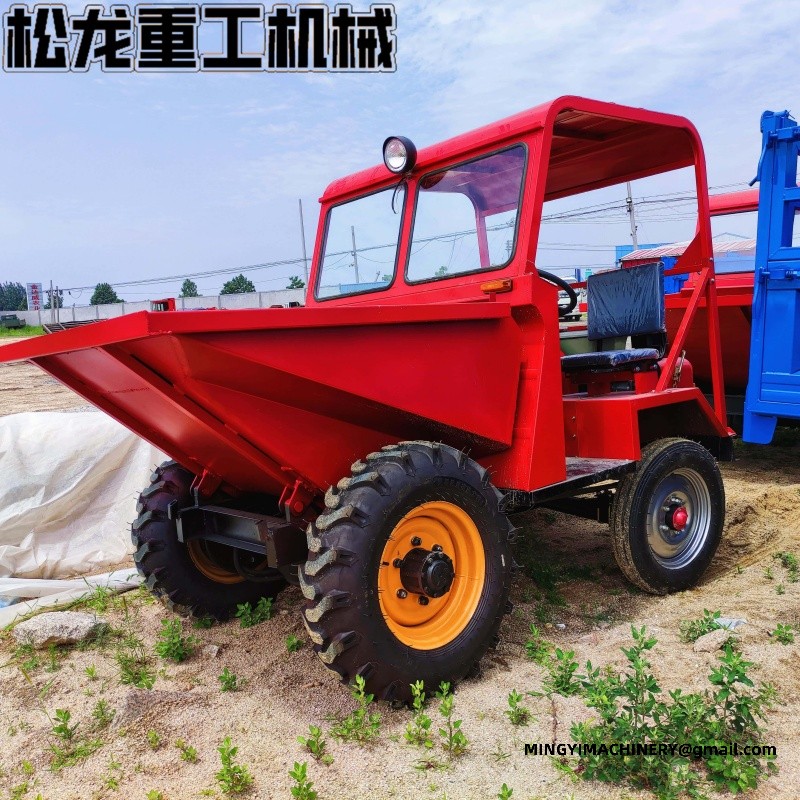
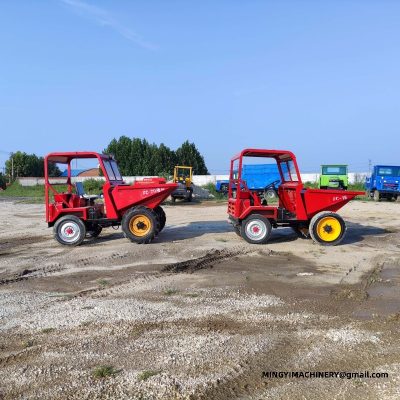
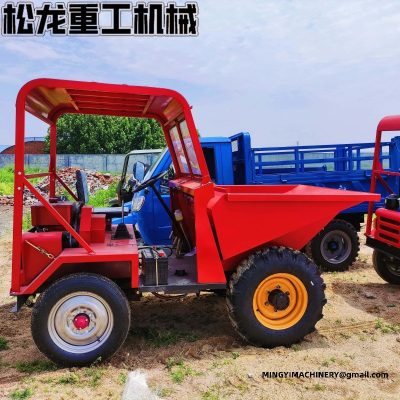
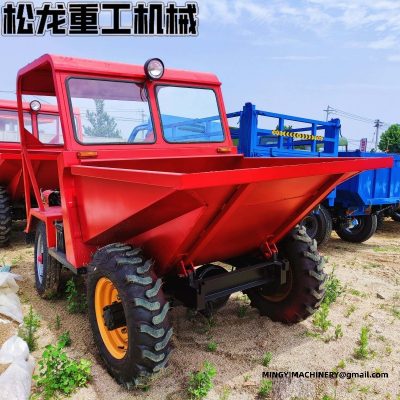
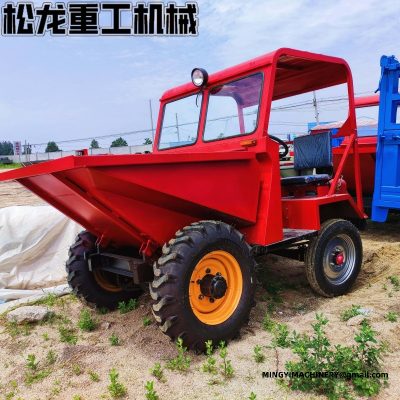
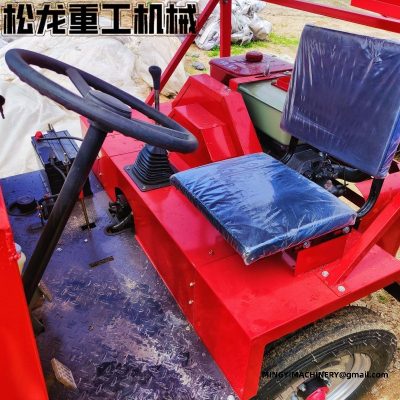
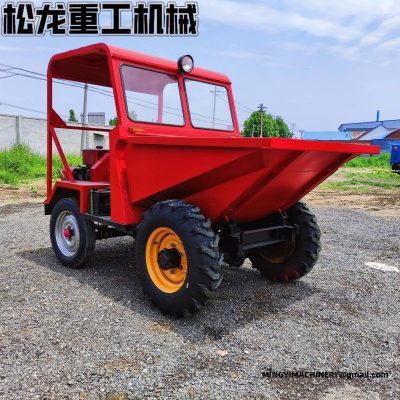
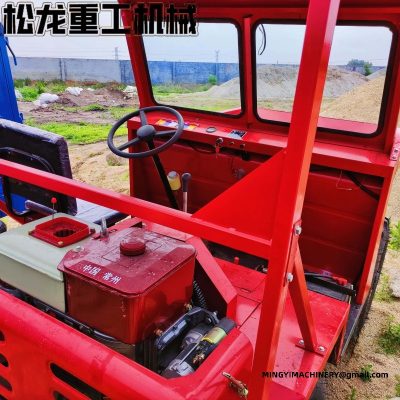
Buyers of a front tip dumper usually know their site better than any specification knows it. They know the gateway width, the state of the track and the size of the pile. What they need is the machine's own figures to set beside those: 2,700 x 1,600 x 2,000 overall, 1,500 mm of track, 4,500 mm turning radius, 200 mm of clearance, and 21% of gradeability for the ramp.
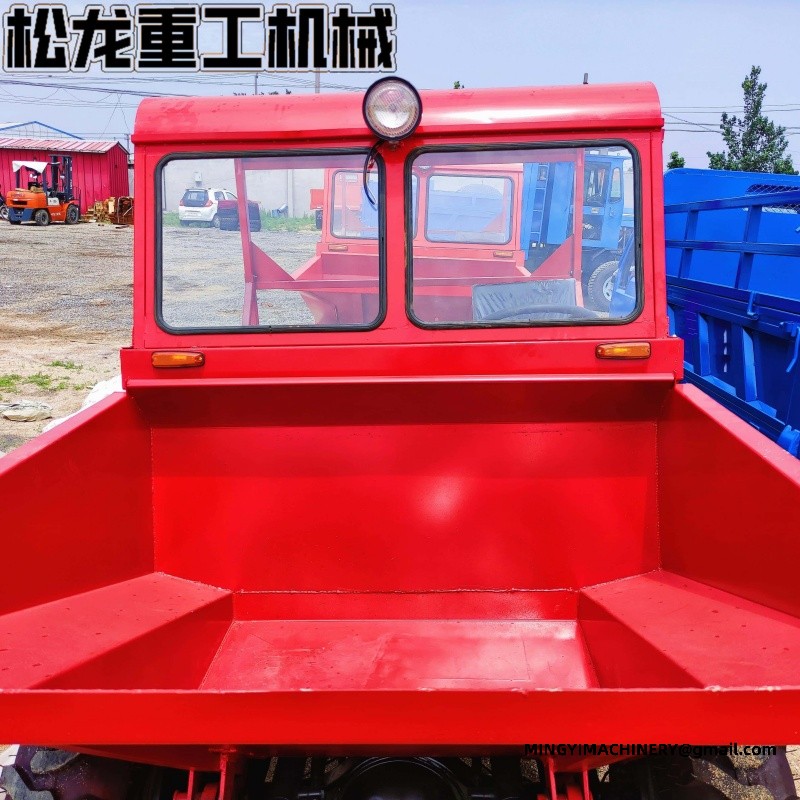
The FC10 drives its front axle and steers at the rear — a front-axle drive with rear-axle steering (two-wheel drive). That is right for firm ground and grades to 21%. The point at which it stops being right is when traction rather than payload becomes the limit in a factory yard.
Soft ground, persistent mud or a route across broken surfaces all shift the balance toward the four-wheel-drive FC15/FC18/FC20/FC25/FC30 models in the range, which are hydraulic tippers with electric start, lighting, signal lamps and an optional canopy. The decision is made by the site, not by the specification sheet — but it is only makeable if the two-wheel-drive baseline is known, which is why the FC10's figures are published in full.
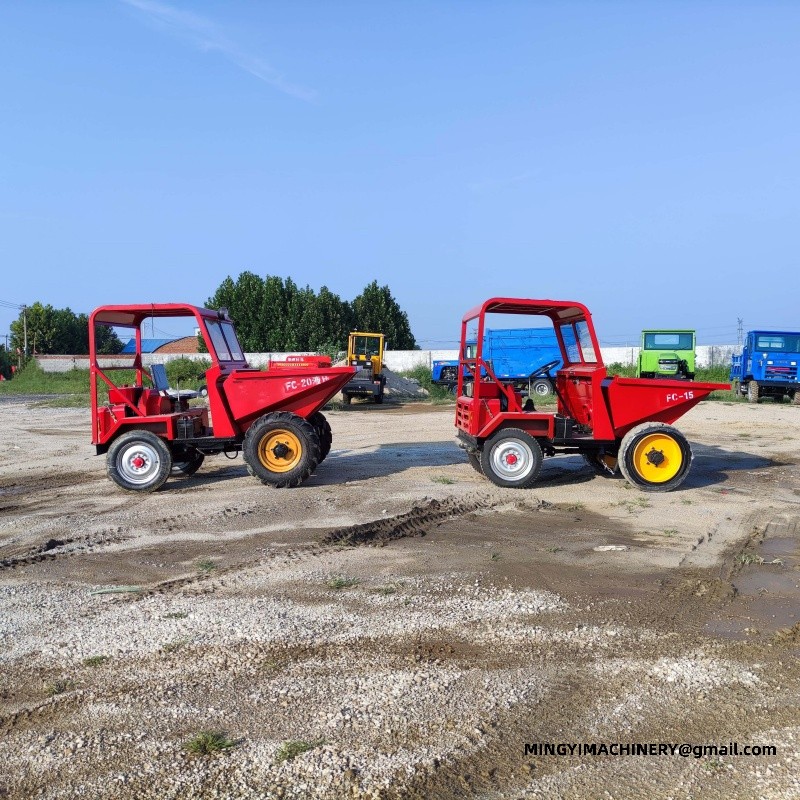
The FC10 is offered with the equipment a site machine needs and no more; the FC15/FC18/FC20/FC25/FC30 models above it add four-wheel drive and, in the document's own words, electric starting, lighting, signal lamps and a canopy as optional equipment.
What the FC10 publishes as standard is what decides whether it can work at all in a factory yard: CG25M diesel with 12 V DC electric motor starting, hydraulic tipping with powered return, 390 mm of forward discharge, and a 1,000 kg rating. Everything beyond that is site preference.
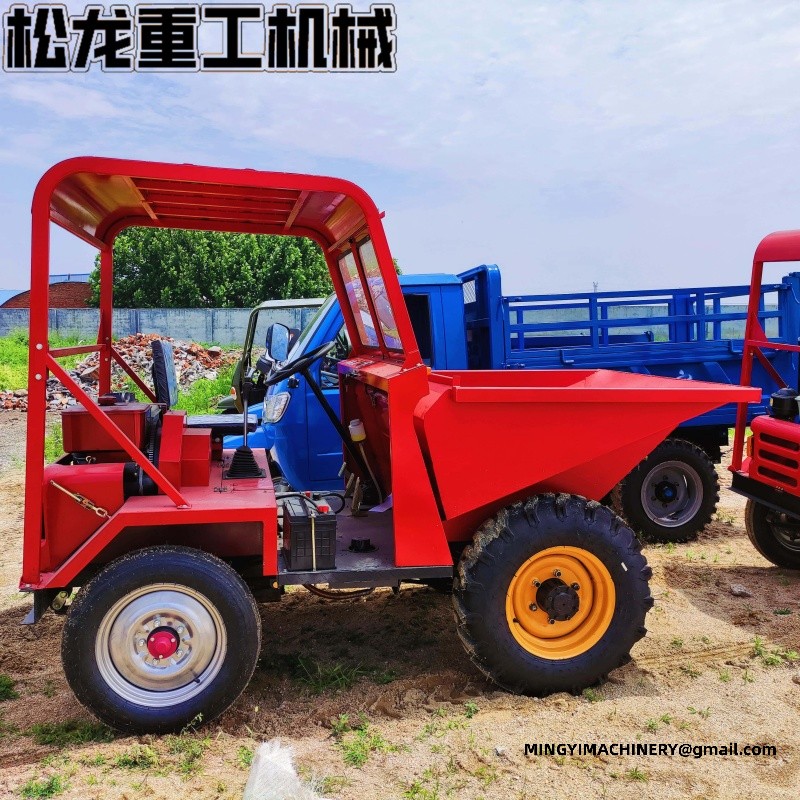
Three things wear: the tipping hydraulics, the pivot pins and the tyres. in a factory yard moving coal from the delivery point to the boiler house, the box cycles continuously, so hose condition and pin greasing are the two checks that prevent almost every unplanned stop. The CG25M diesel itself is the durable part.
Tyres deserve more attention than they get: 1,000 kg over four wheels on ground with 200 mm of clearance to catch on, and the rear axle swinging under the load. A machine kept on its tyre pressures is a machine that steers predictably at 22 km/h on the empty leg.
| Specification extract — FC10 front tipper (1,000 kg class) | |
|---|---|
| Rated load | 1,000 kg |
| Rated bucket capacity | 0.5 m³ |
| Discharge height | 390 mm |
| Maximum gradeability | 21% |
| Bucket width | 1,580 mm |
| Travel speed, 1st gear | 6.8 km/h |
| Travel speed, 2nd gear | 22 km/h |
| Travel speed, reverse | 7.5 km/h |
| Minimum turning radius | 4,500 mm |
| Overall dimensions (L x W x H) | 2,700 x 1,600 x 2,000 |
| Track | 1,500 mm |
| Wheelbase | 1,230 mm |
| Minimum ground clearance | 200 mm |
| Diesel engine model | CG25M |
| Rated engine power | 17.3 kW |
| Rated engine speed | 2,200 r/min |
| Starting method | 12 V DC electric motor |
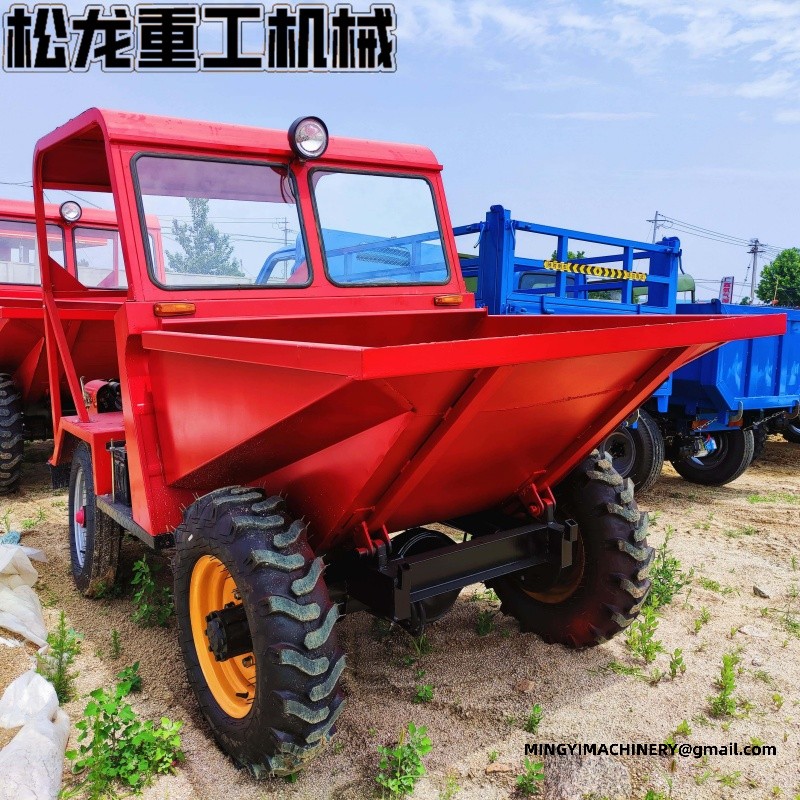
Ask for the specification sheet for the exact build you are buying, not for the model name. The FC10 figures published here describe the standard machine: 17.3 kW at 2,200 r/min, 0.5 m³ and 1,000 kg, with 12 V DC electric motor.
Ask also what is optional. On the wider FC15-FC30 four-wheel-drive machines the lighting, signal and cab options are listed explicitly; knowing which of them are fitted is the difference between a machine that suits your job and one that nearly does.
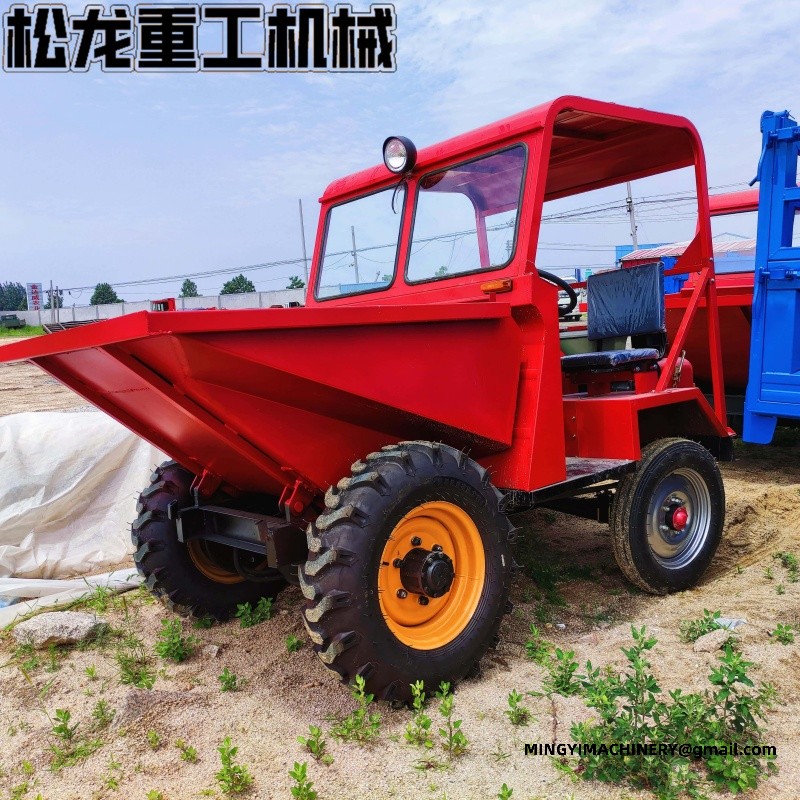
Steering at the rear takes a shift or two to get used to and then feels natural: the rear of the machine cuts inside the front's path, which is why the 4,500 mm turning radius is achievable on a 1,230 mm wheelbase. in a factory yard moving coal from the delivery point to the boiler house, that radius is usually the difference between working through a gateway and having to reverse every pass.
Because the front axle drives and the rear steers, the driven wheels stay on the load path while the steering wheels follow. On loose or soft ground in a factory yard moving coal from the delivery point to the boiler house that is the better arrangement: traction where the weight is, steering where the weight is not.
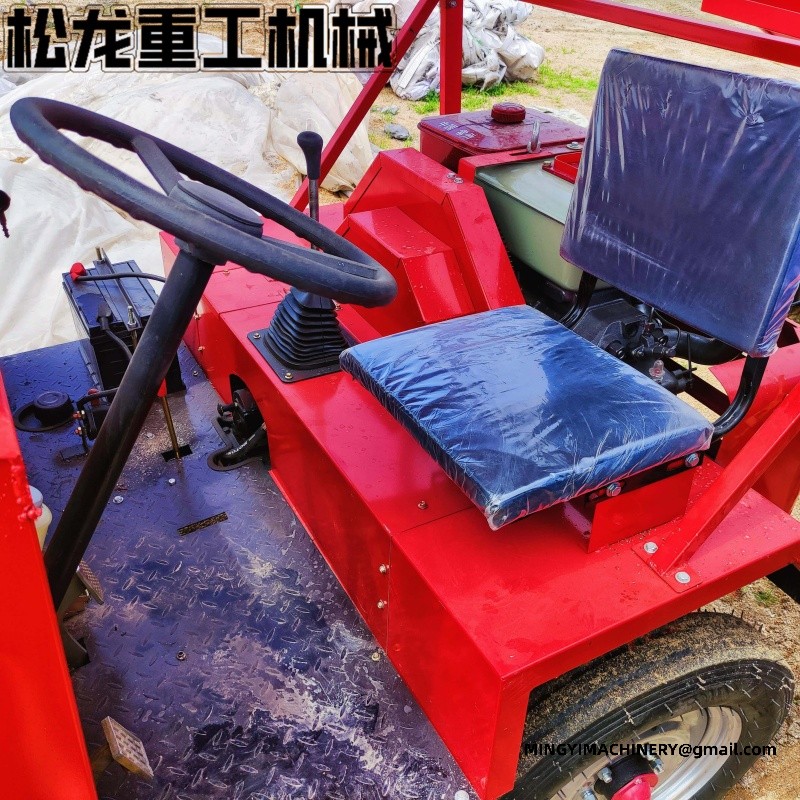
Starting on the FC10 is 12 V DC electric motor, which on a machine worked in short cycles is a genuine productivity figure. in a factory yard moving coal from the delivery point to the boiler house, the engine is stopped and started throughout the day, and a key start keeps that from being the slowest part of the job.
The CG25M diesel at 17.3 kW and 2,200 r/min is sized for the 1,000 kg duty cycle rather than for maximum output, and the rear mounting puts the everyday service points — oil, filters, battery — where they can be reached without climbing over the load.
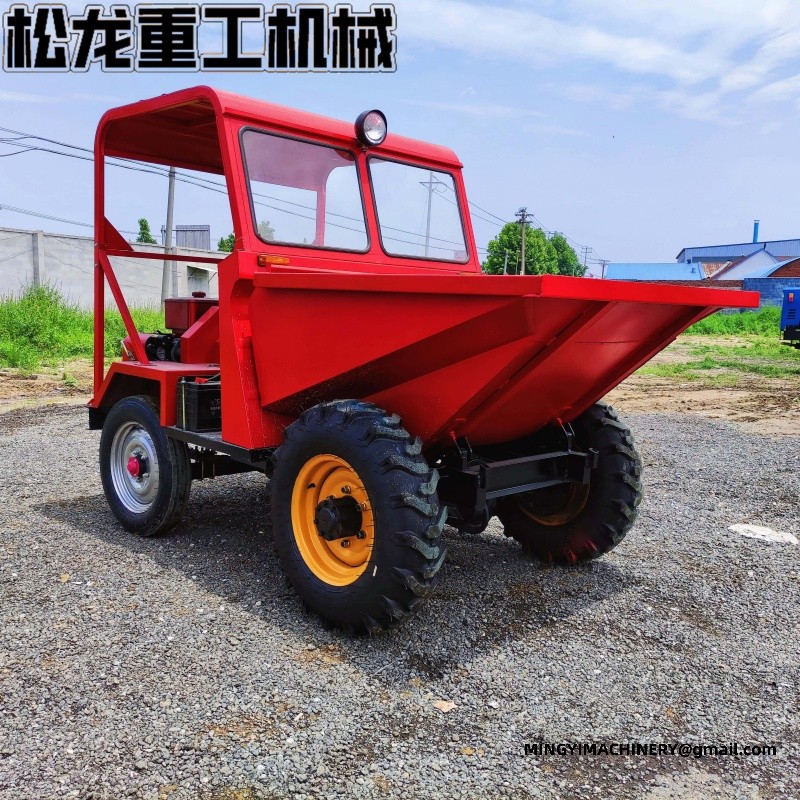
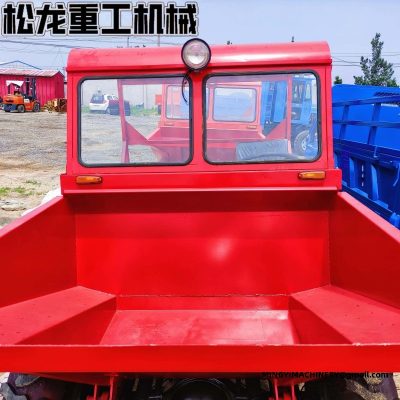
The box is 1,580 mm wide on a machine 2,700 x 1,600 x 2,000 overall, and that proportion is deliberate. A wide box loads from a heap without the operator having to square up precisely, which matters in a factory yard, where the loading point is a pile rather than a hopper.
Width also affects how the load sits. A 1,580 mm box spreading 1,000 kg across its floor keeps the centre of gravity low and central, which is what keeps the machine stable on the ground it is specified for. Narrow, tall boxes look efficient and handle badly when the load shifts — and loads of coal do shift.
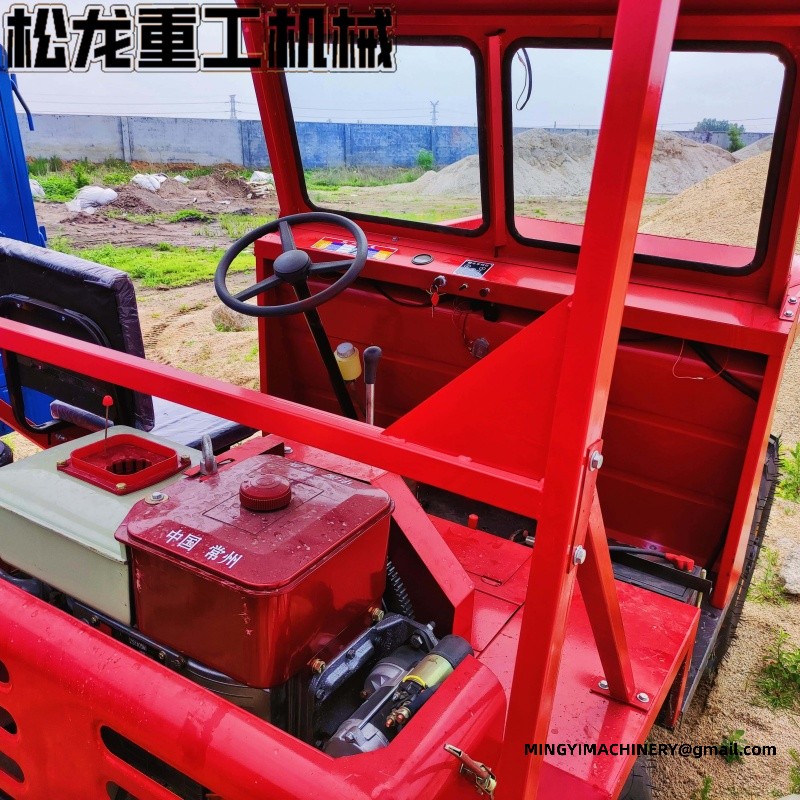
A tipper is at its least stable with the box up, and the FC10 tips forward, so the raised box hangs over the front axle rather than behind the machine. Emptying ahead of the machine, from a discharge height of 390 mm, keeps the raised load inside the footprint of the machine's own length.
The practical rules follow from that: tip on level ground, never travel with the box raised, and keep people out of the discharge zone ahead of the machine. None of this is specific to the FC10; it is simply what a forward-tipping machine asks of its operator.
2,700 x 1,600 x 2,000 is a set of compromises made in one direction. Height is kept down so the box can be loaded by hand when no machine is available, and length is kept short so the machine fits between structures and turns inside its own footprint. In a factory yard, both of those happen constantly.
The effort of a low build is ground clearance, which is published honestly at 200 mm. That is the trade: the FC10 goes under things and between things rather than over things. Buy it for the routes where that matters in a factory yard and it will earn its place; buy it for rocky ground and it will not.
A tipper is a link in a chain, and the chain sets the pace. An excavator loading a 0.5 m³ box will fill it in a few passes; a machine that loads faster than the tipper can travel simply waits. Size the tipper against the haul distance, not against the loader.
On a site with a mixer, the tipper's job in a factory yard is to keep the batch point fed. At 1,000 kg a trip, that is a specific number of trips per hour, and the number either matches the pour rate or it does not. The published capacity is what makes the arithmetic honest.
1,000 kg plus the machine's own weight sits on four wheels spread across 1,500 mm of track and 1,230 mm of wheelbase. That is a modest load per tyre, which is why the FC10 keeps working on ground that would bog a heavier machine — an important property in a factory yard.
Pressure matters more than size on soft going. A machine running correct pressures spreads its 1,000 kg over the widest possible contact patch, and the swinging rear axle keeps that patch on the ground when the surface is uneven. Both are why a small tipper crosses ground that looks impassable.
How is the box returned after tipping on a front tip dumper?
Under hydraulic power, with a dedicated return device. A controlled return protects the chassis from shock loading every cycle, which matters on a machine tipping hundreds of times a day in a factory yard.
What speed can a front tip dumper reverse at?
7.5 km/h, closely matched to first gear at 6.8 km/h. On a site the reverse movement is part of the working cycle rather than the exception, so gearing it properly matters more than top speed.
What is covered by the published specification of a front tip dumper?
Load, box volume, discharge height, bucket width, three travel speeds, turning radius, overall dimensions, track, wheelbase, ground clearance, engine model, power, rated speed and the starting method: 1,000 kg, CG25M and 4,500 mm among them.
What is the working envelope of a front tip dumper?
Grades to 21%, ground clearance of 200 mm, a turning radius of 4,500 mm and overall dimensions of 2,700 x 1,600 x 2,000. Inside that envelope the machine is predictable on the firm ground its two-wheel-drive layout is specified for in a factory yard.
What does the operator need to know before using a front tip dumper?
The four working limits: 1,000 kg of load, 21% of gradeability, 200 mm of ground clearance and 390 mm of discharge height. Everything else about operating the machine follows from staying inside those.
How do I choose between two- and four-wheel drive?
By the ground rather than the payload. Firm, even going and grades within 21% favour the simpler two-wheel-drive machine; soft, wet or broken ground needs four-wheel drive. Measure the worst stretch of the route in a factory yard, not the average.
Why does the box return hydraulically on a front tip dumper?
A powered return brings the box down under control rather than letting it fall, which protects the chassis from shock loading every cycle. Over hundreds of tips a day in a factory yard, that is the difference between a frame that stays tight and one that does not.
How does a front tip dumper discharge its load?
Forward, by gravity through hydraulic tipping, with the box returning under hydraulic power through a dedicated return device. The load leaves over the front axle at 390 mm, so no reversing manoeuvre or ramp is needed.
Full specifications for the FC10 and for the four-wheel-drive models above it are available on request, along with the optional equipment list: electric start, lighting, signal lamps and canopy.
Reading the early symptoms on Front Tip Dumper: Forward Discharge and Hydraulic Return
Operators notice things first because they hear the machine every day. Encouraging the person on Front Tip Dumper: Forward Discharge and Hydraulic Return to report small changes, and acting on them, is the most effective maintenance programme there is.
Wear items and spares worth holding for Front Tip Dumper: Forward Discharge and Hydraulic Return
A spares list should follow the duty cycle. A Front Tip Dumper: Forward Discharge and Hydraulic Return working every day in abrasive dust consumes filters and cutting edges far faster than the same machine used once a week, and the shelf should be stocked for the harder case.
Commissioning Front Tip Dumper: Forward Discharge and Hydraulic Return on site
The first hour on site should be slow. Before Front Tip Dumper: Forward Discharge and Hydraulic Return is put to work the fluid levels are rechecked after transport, the fasteners are gone over and the machine is run light so that anything loosened in transit shows up early.
Packing, loading and shipment of Front Tip Dumper: Forward Discharge and Hydraulic Return
Export packing is part of the machine, not an afterthought. Front Tip Dumper: Forward Discharge and Hydraulic Return is blocked and braced inside the container so that it arrives in the same condition it left, and the load plan is decided by the dimensions rather than by what fits loosely.
Contact MINGYI Machinery for the current front tipper range, the four-wheel-drive models above the FC10, and a formal specification for your market. E-mail: sales@mingycn.com | LINE (ID): mingyicn
Mini Site Dumper: Turning Radius and Ground Clearance · Front Tipping Dumper for Construction: Site Cycles · 4x4 off road dumper working on site with hydraulic tipping body · Front Tipper Truck