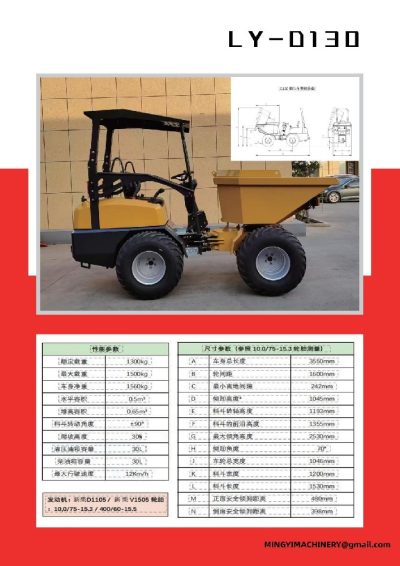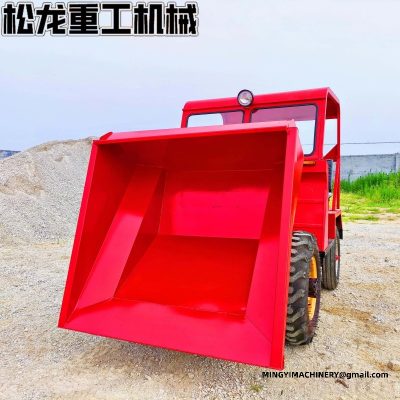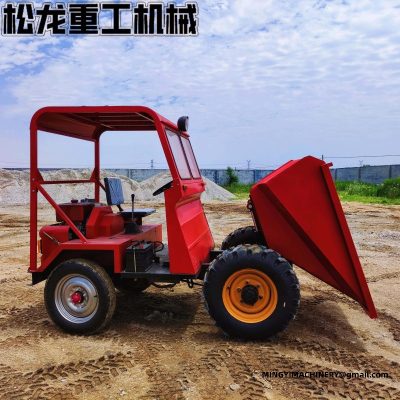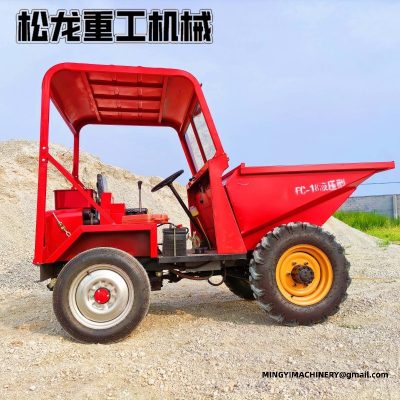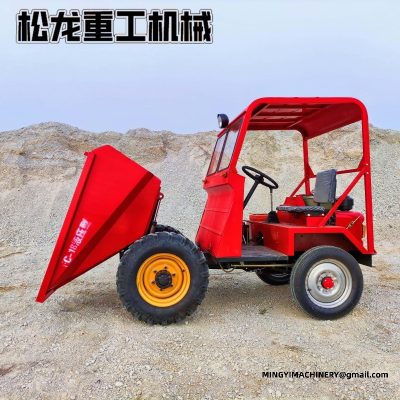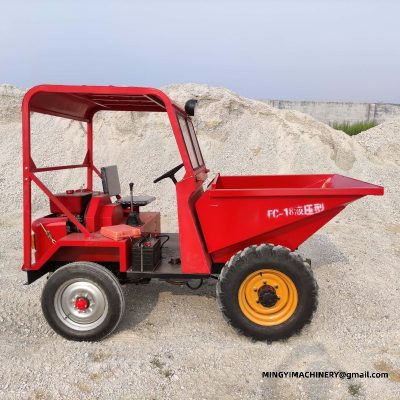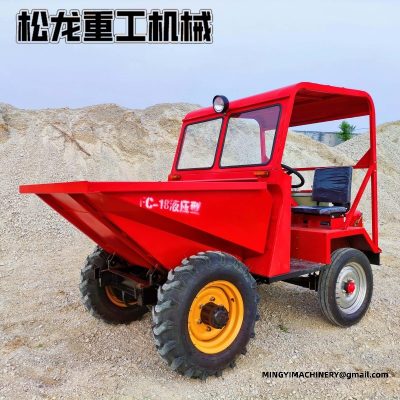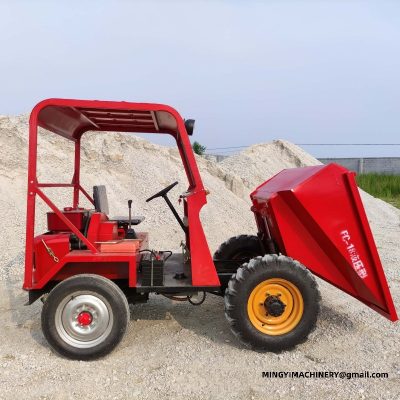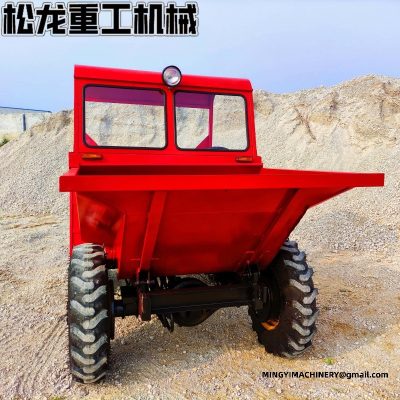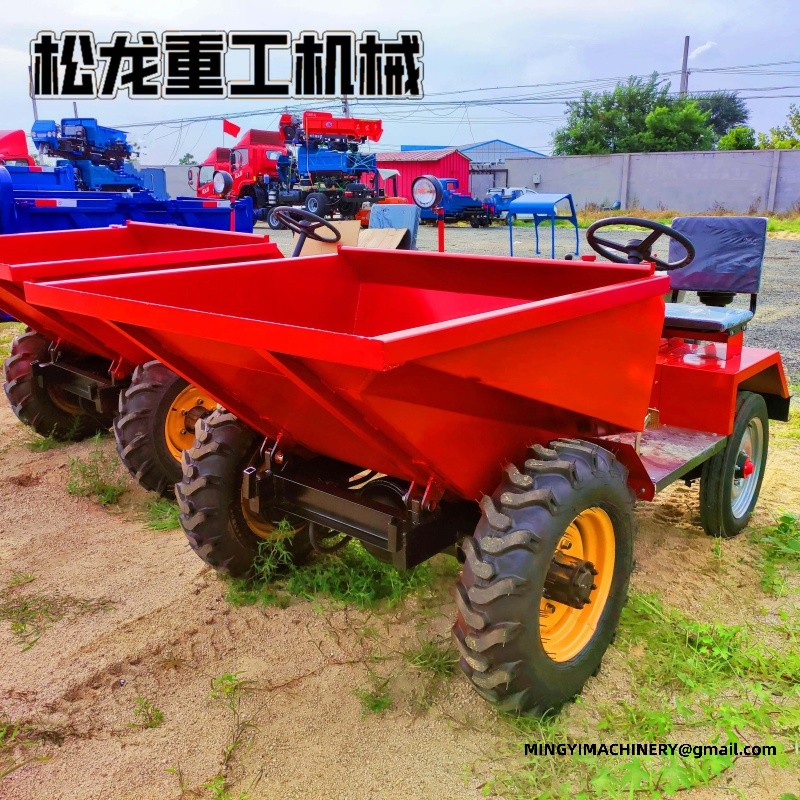
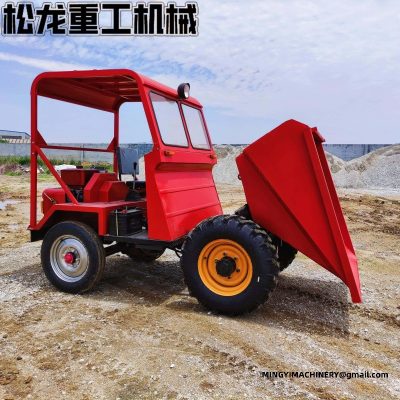
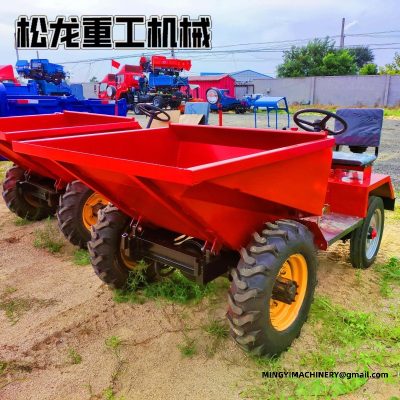
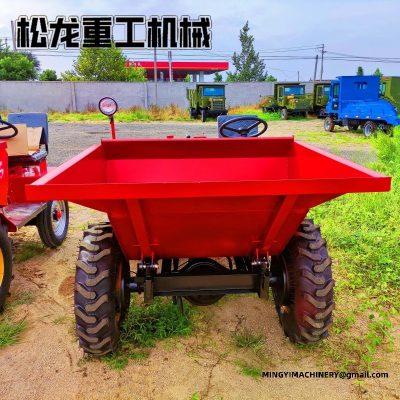
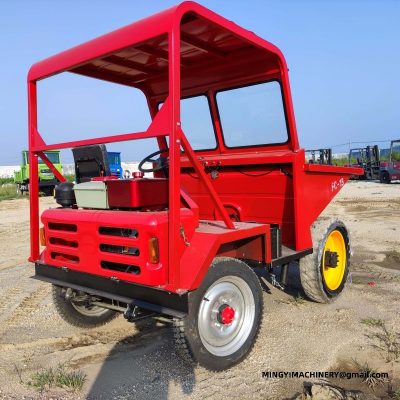
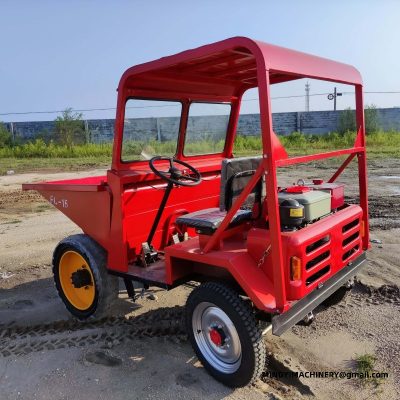
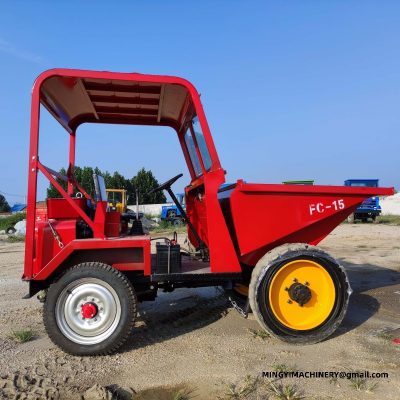
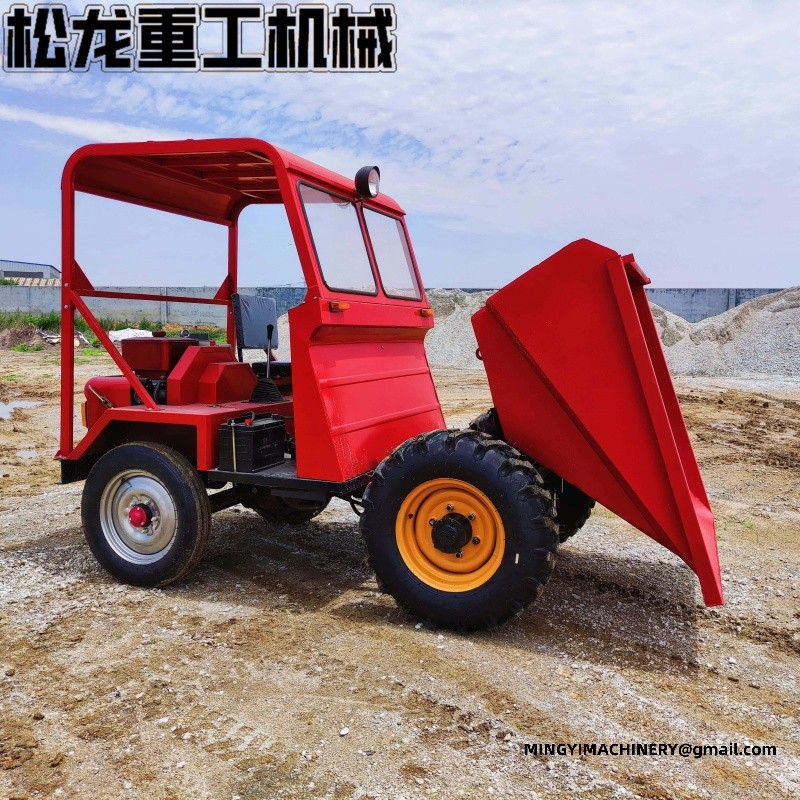
There are two kinds of small site transport: the kind that carries a lot slowly and the kind that carries less quickly. The FC10 is built for the second. Rated at 1,000 kg with 0.5 m³ in the box, geared at 6.8 km/h loaded and 22 km/h empty, it is specified to complete many short cycles in a factory yard rather than a few long runs.
The comparison that matters most for a 1,000 kg machine is with the manual alternatives it replaces — because that is what many sites use until they buy one. 1,000 kg of ore per trip against a barrow load is a change in the whole working day, not a marginal improvement.
What makes the change stick is that the machine needs no special route. At 2,700 x 1,600 x 2,000 it goes through the same gaps, over the same boards and up the same ramps in a factory yard that people were already using on foot. Nothing about the site has to be rebuilt to accommodate it.
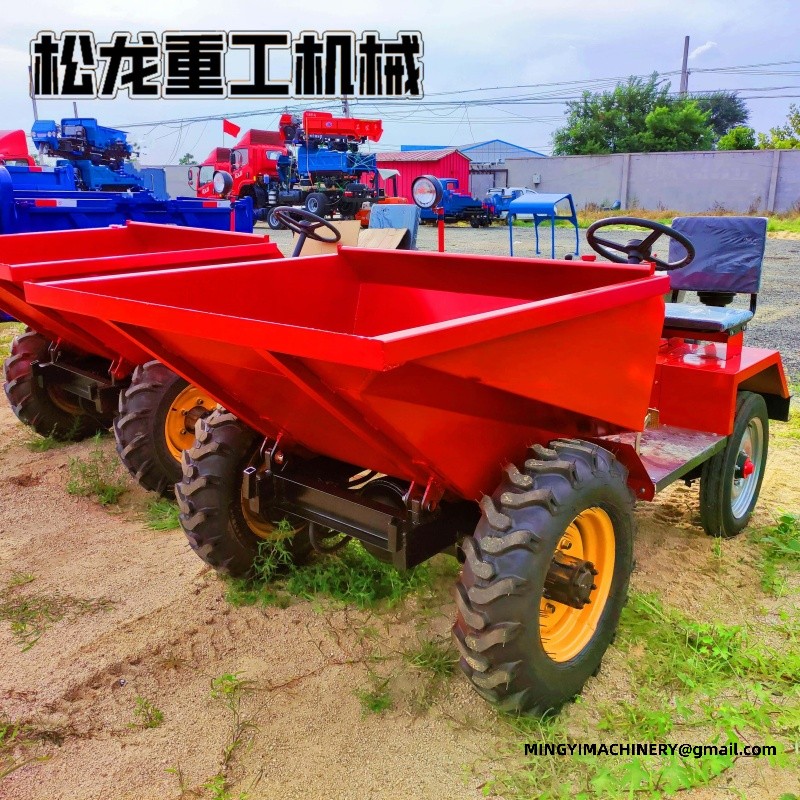
A box that carries ore and heavy aggregate well is not automatically the right box for everything else. Material that flows freely dumps cleanly from a plain box; material that clings needs a shape that helps it leave. On the FC10 the box is 1,580 mm and the tipping action is a single ram, so what leaves the box leaves through gravity.
For the mixed work the machine is usually bought for in a factory yard, that suits. Choose the machine on the working it does most of the time and accept that one box cannot be ideal for all of it.
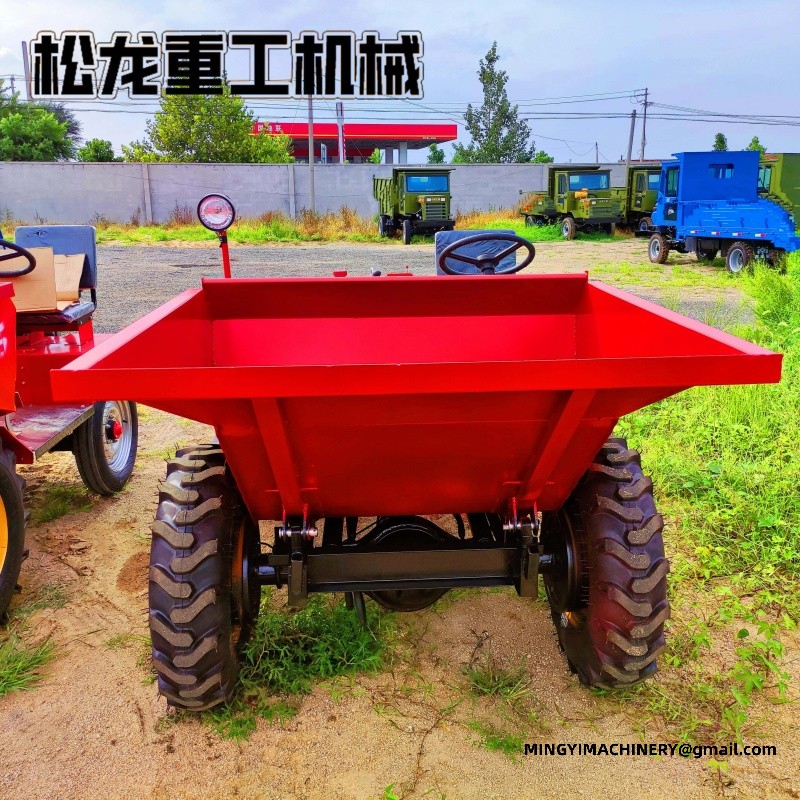
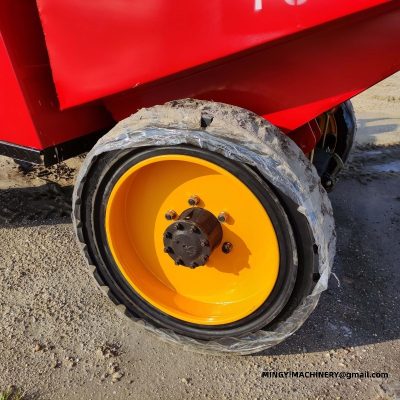
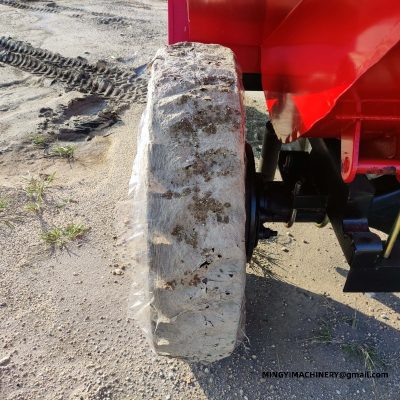
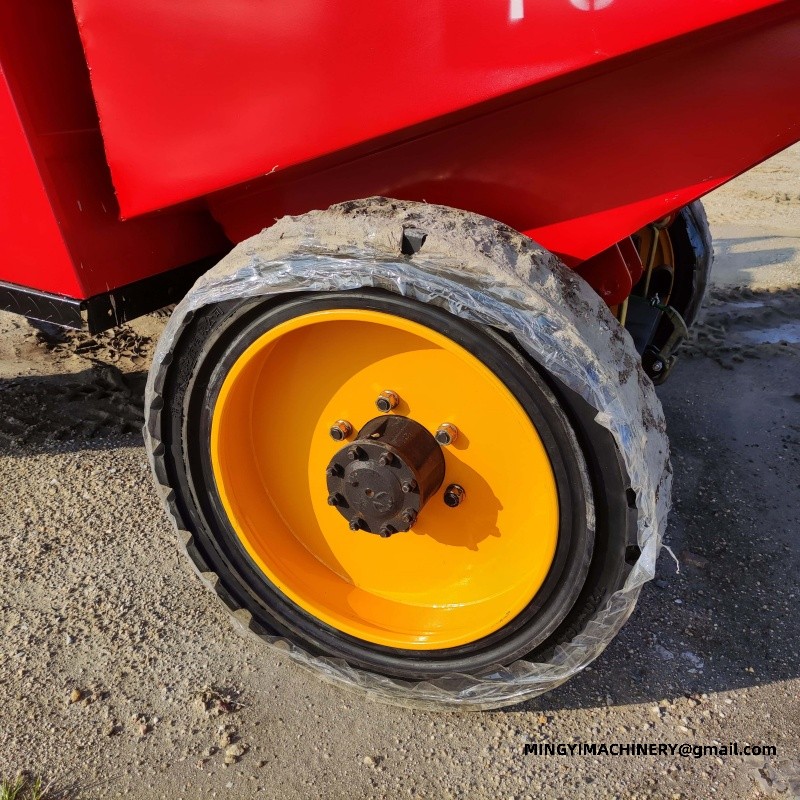
A front tipper lives on its hydraulics and its pivots, and both are checked in a walk-round. in a factory yard shifting material between bays, the box tips and returns hundreds of times a day, so the pins, hoses and cylinders deserve a glance each shift — as do the tyres, which take the weight of 1,000 kg over 1,500 mm of track.
The CG25M diesel needs oil and filter attention on the hours, and the battery behind the 12 V DC electric motor needs keeping charged on machines that stop and start frequently. None of that is specialised work, which is the point of a machine specified for sites rather than for workshops.
| Sample build from the range — FC10 front tipper (1,000 kg class) | |
|---|---|
| Rated load | 1,000 kg |
| Rated bucket capacity | 0.5 m³ |
| Discharge height | 390 mm |
| Maximum gradeability | 21% |
| Bucket width | 1,580 mm |
| Travel speed, 1st gear | 6.8 km/h |
| Travel speed, 2nd gear | 22 km/h |
| Travel speed, reverse | 7.5 km/h |
| Minimum turning radius | 4,500 mm |
| Overall dimensions (L x W x H) | 2,700 x 1,600 x 2,000 |
| Track | 1,500 mm |
| Wheelbase | 1,230 mm |
| Minimum ground clearance | 200 mm |
| Diesel engine model | CG25M |
| Rated engine power | 17.3 kW |
| Rated engine speed | 2,200 r/min |
| Starting method | 12 V DC electric motor |
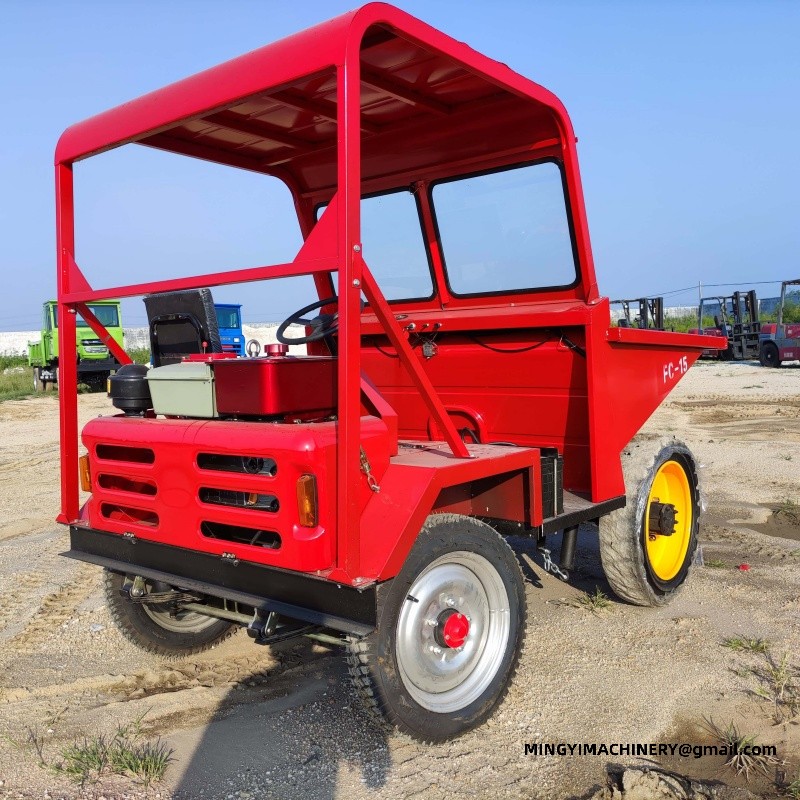
Rear-mounted diesel, front-axle drive, rear-axle steering: the FC10's layout is a set of connected decisions. The engine at the rear counterweights the box ahead of the front axle, so the machine carries 1,000 kg without needing a slab of ballast, and the 1,230 mm wheelbase keeps the whole thing 2,700 x 1,600 x 2,000 overall.
Factory yard work punishes a badly balanced machine on every ramp. With the weight spread between a driven front axle and a steering rear axle, the FC10 keeps traction while loaded and keeps steering while empty — the two conditions that catch out machines which put all their weight at one end.
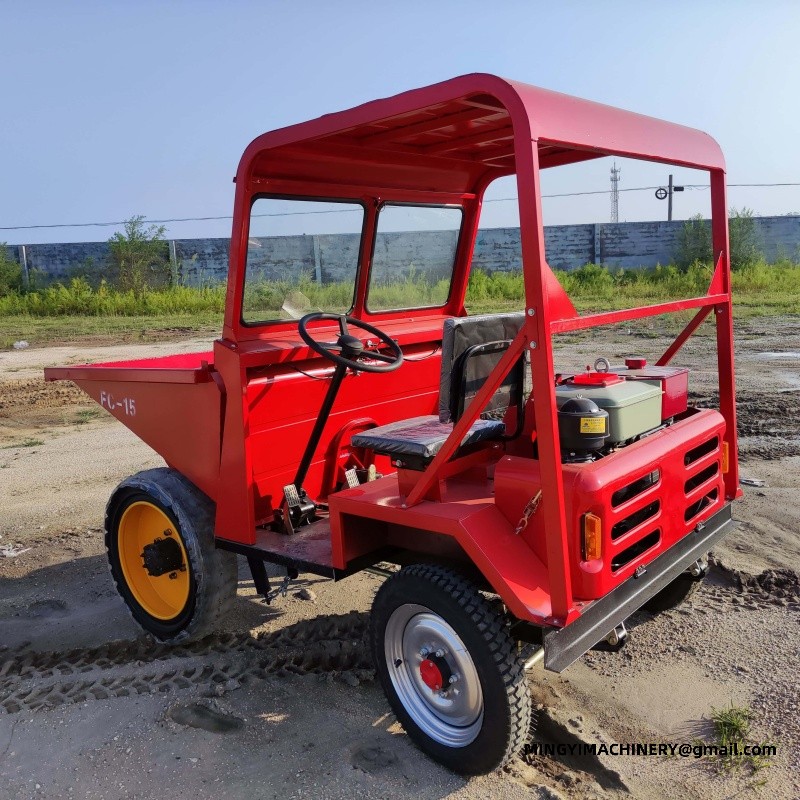
Every tipper has two limits and buyers usually specification one of them. The FC10 publishes both: 1,000 kg by weight and 0.5 m³ by volume. In a factory yard, the material decides which limit arrives first — dense loads reach the weight figure, light bulky loads reach the volume figure — and knowing which one you are working against tells you whether a bigger box or a stronger frame would actually help.
Factory yard work usually involves more than one material in a day, which is why a machine specified in the middle of its range lasts longer than one specified at the edge. The 0.5 m³ box with a 1,580 mm width loads from a heap without shovelling the edges, and the 1,000 kg rating leaves allowance for the loads that arrive wetter and heavier than planned.
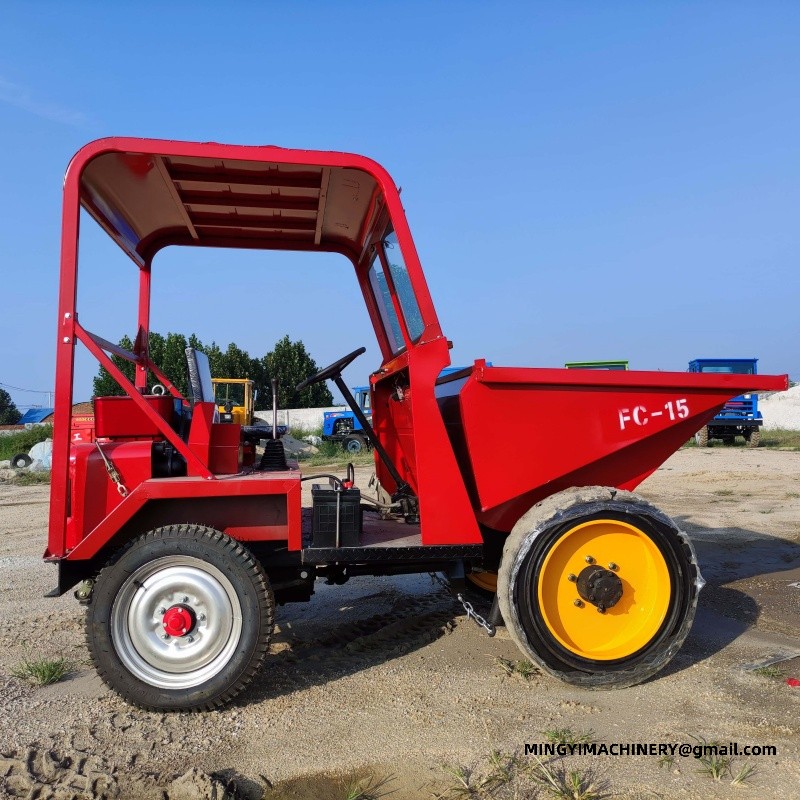
A front tipper is a short-distance machine, and the distances it suits are the ones in a factory yard shifting material between bays — tens and hundreds of metres, not kilometres. At 22 km/h empty and 6.8 km/h loaded, the economics work by cycle count, and the 1,000 kg load is sized so cycles stay frequent.
Factory yard work is usually a chain of such distances: stockpile to mixer, excavation to spoil, store to working face. The FC10's value is that it completes each link without a reversing manoeuvre, at 4,500 mm turning radius, on ground that would stop a larger truck.
On a 2,700 x 1,600 x 2,000 machine the operator sits high relative to the load and close to the box, with the tipping area directly ahead. Front tipping means the discharge point is always in view, which is why a forward-tipping layout is preferred in a factory yard where the operator is working close to other people and plant.
The published comfort features are practical rather than decorative: a return device that brings the box down under control, and seating designed for a machine worked in short cycles. Comfort is a productivity figure on a tipper, because the operator is getting on and off it all day in a factory yard.
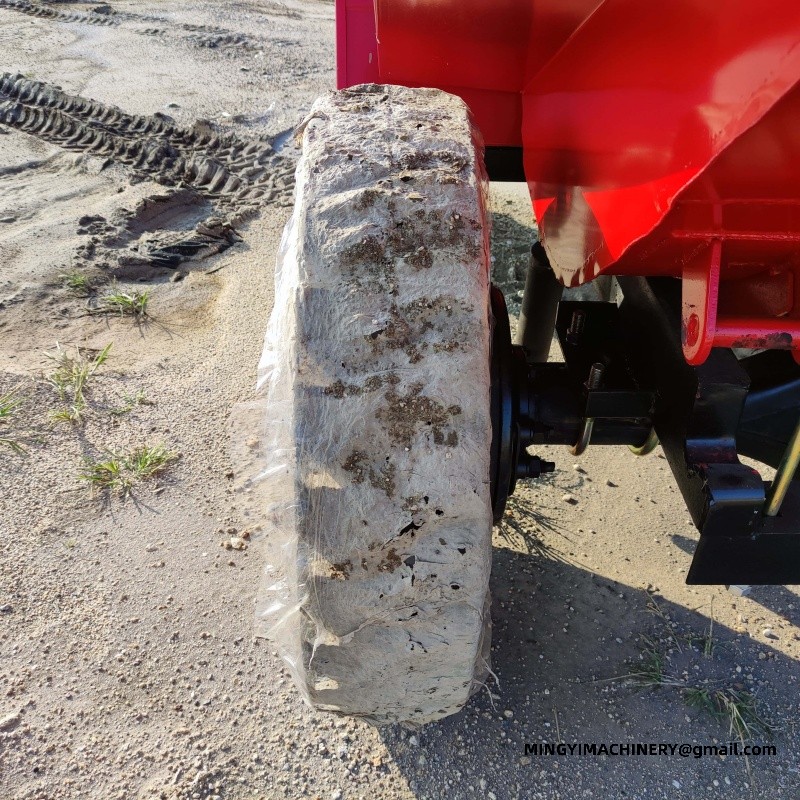
Wet ground is where the published 200 mm of ground clearance starts to matter. Below that figure the machine is dragging its belly through the surface; above it, the tyres carry the load and the machine keeps moving. On a site that turns to mud, the clearance is what decides whether the shift continues.
The drive layout helps here too. With front-axle drive with rear-axle steering (two-wheel drive), the front axle pulls and the rear axle steers, and the 1,500 mm track keeps the load spread. What the machine will not do is float; a front tipper on soft ground is a machine that goes where a hard surface exists, or not at all.
22 km/h in second gear is a site speed, not a road speed, and the gearing makes that plain. in a factory yard shifting material between bays, the distances are short, the ground is uneven and the machine is loaded for most of the cycle — conditions where 6.8 km/h in first does the work.
The value of the second gear is the empty leg and repositioning between working areas, and reverse at 7.5 km/h covers the corrections in between. Read as a set, the three published speeds describe a machine designed around a loading cycle rather than around a commute, which is what a front tipper is for.
The FC10 is a chassis with a tipping box mounted on it, and the proportions are published: 2,700 x 1,600 x 2,000 overall, a 1,580 mm box and a 1,230 mm wheelbase. Short and low is deliberate. A tipper that is 2,700 x 1,600 x 2,000 can be loaded from the side by hand as well as from the front by machine, which is how a lot of ore actually gets moved in a factory yard.
The frame carries 1,000 kg over a 1,500 mm track, so the load is spread widely relative to the machine's size. That is why the box can be tipped over the front axle without the machine feeling unsettled, and why the discharge height of 390 mm is measured close in rather than out on a long reach. Short tipping moments are what keep small tippers stable.
A tipper that changes hands every shift needs a check that takes less than five minutes. Tyres, fluids, the tipping linkage, the lights and the brake. On the FC10 the tipping linkage is the part to watch, because it is the part doing the heavy work.
Record the checks rather than trusting memory. A tipper with several operators and no written handover is a tipper whose faults are always discovered by the next person, usually at the start of a shift when the machine is needed most.
What is the wheelbase of a mini site dumper and why does it matter?
1,230 mm, with a 4,500 mm turning radius. A short wheelbase plus rear-axle steering is what produces the tight radius, and that is what lets the machine work in confined areas in a factory yard.
Does a mini site dumper need a ramp to discharge?
No. The box tips forward over the front axle and discharges at 390 mm, so the machine empties ahead of itself. That is the main reason a forward-tipping layout suits confined sites in a factory yard.
What spare parts are specific to a mini site dumper?
The tipping circuit and the box. The CG25M diesel, the driveline and the running gear are standard items, and the specification table carries the figures a parts enquiry needs: 1,000 kg, 17.3 kW and 0.5 m³.
What tyre pressures suit a mini site dumper?
Correct pressures for the load: 1,000 kg across a 1,500 mm track and 1,230 mm wheelbase. On soft ground, correct pressures are what keep the contact patch wide and the machine moving, which is why the figure is worth checking weekly.
How do I match a mini site dumper to a mixer or hopper?
By discharge height and cycle count. 390 mm of discharge height has to clear the receiving opening, and the 0.5 m³ box sets how many trips are needed. Check both before deciding on the build in a factory yard.
What maintenance does a mini site dumper need?
Daily: oil and coolant levels, tyre pressures and a walk-round. Then grease the tipping pivots and check the hydraulic hoses and cylinder, because the box cycles hundreds of times a day in a factory yard.
Is a mini site dumper stable on a slope?
Published gradeability is 21% and the track is 1,500 mm, which together set the sensible working envelope. Work up and down rather than across, and keep the load inside the rated 1,000 kg.
How do I check a mini site dumper on delivery?
Measure the box at 1,580 mm wide, the discharge height at 390 mm, the track at 1,500 mm and the turning radius at 4,500 mm. All four are published, all four are measurable, and all four settle any later question about what was ordered.
Every figure on this page comes from the FC10 specification table — 1,000 kg of rated load, 390 mm of discharge height, 4,500 mm of turning radius. Nothing here is estimated, and the machine can be measured against all of it on delivery.
Handover and getting familiar with Mini Site Dumper: Turning Radius and Ground Clearance
Familiarisation is not the same as reading the manual. Sitting on Mini Site Dumper: Turning Radius and Ground Clearance, working through the controls at low speed and learning where the machine balances takes an hour, and that hour is what keeps the first week uneventful.
Later additions and retrofits on Mini Site Dumper: Turning Radius and Ground Clearance
Retrofitting is limited by the base machine. Before anything is added to Mini Site Dumper: Turning Radius and Ground Clearance the hydraulic flow, the mounting interface and the stability allowance have to be checked, because those limits are what decide what is sensible.
Pre-delivery inspection before Mini Site Dumper: Turning Radius and Ground Clearance leaves the shop
What the customer sees on arrival is decided before departure. The walk-around given to Mini Site Dumper: Turning Radius and Ground Clearance covers the same points the operator will check on day one, so there are no surprises when the crate is opened at the destination.
Contact MINGYI Machinery for the current front tipper range, the four-wheel-drive models above the FC10, and a formal specification for your market. E-mail: sales@mingycn.com | LINE (ID): mingyicn
Front Tipping Dumper for Construction: Site Cycles · Site Dumper for Narrow Spaces: Working in Confined Areas · 4WD site dumper climbing slope with hydraulic tipping body · Front Tipper Truck