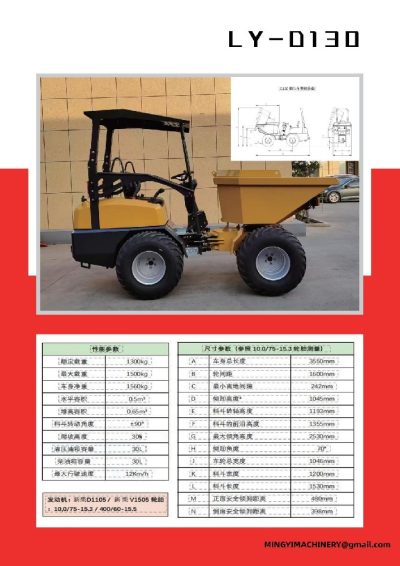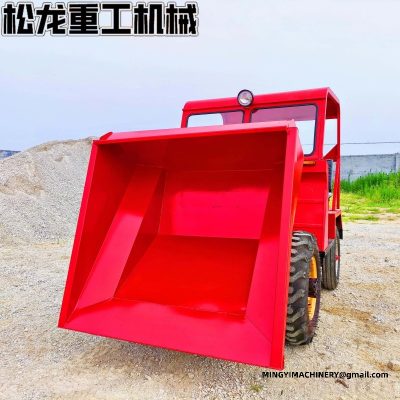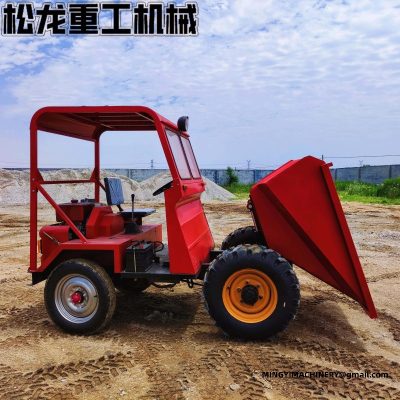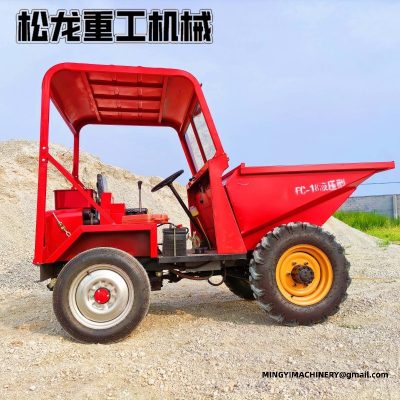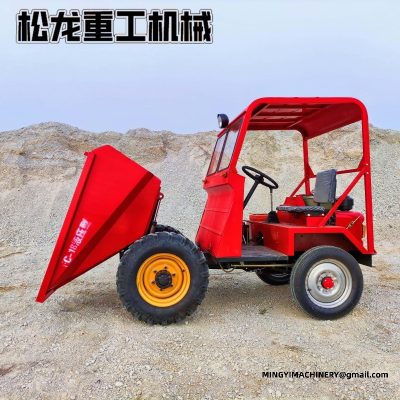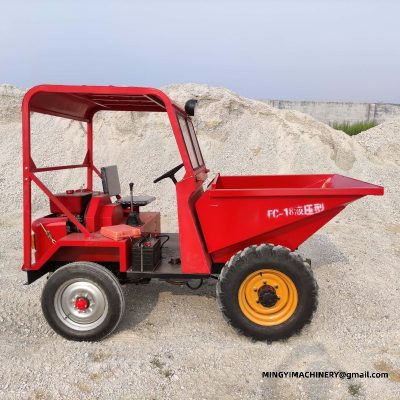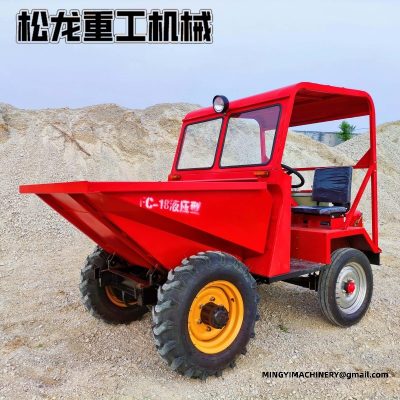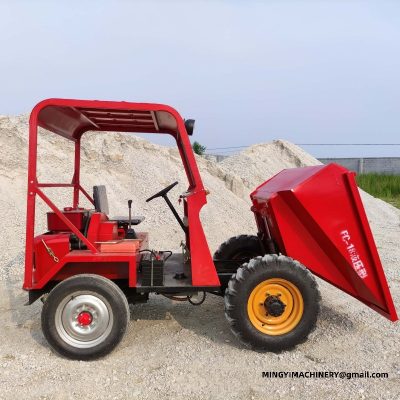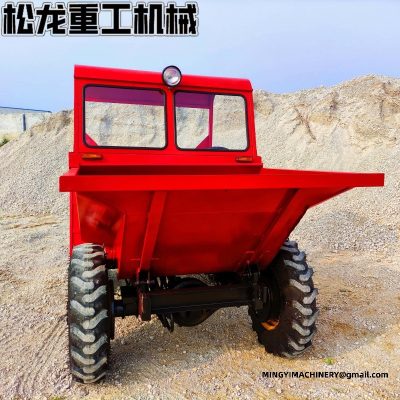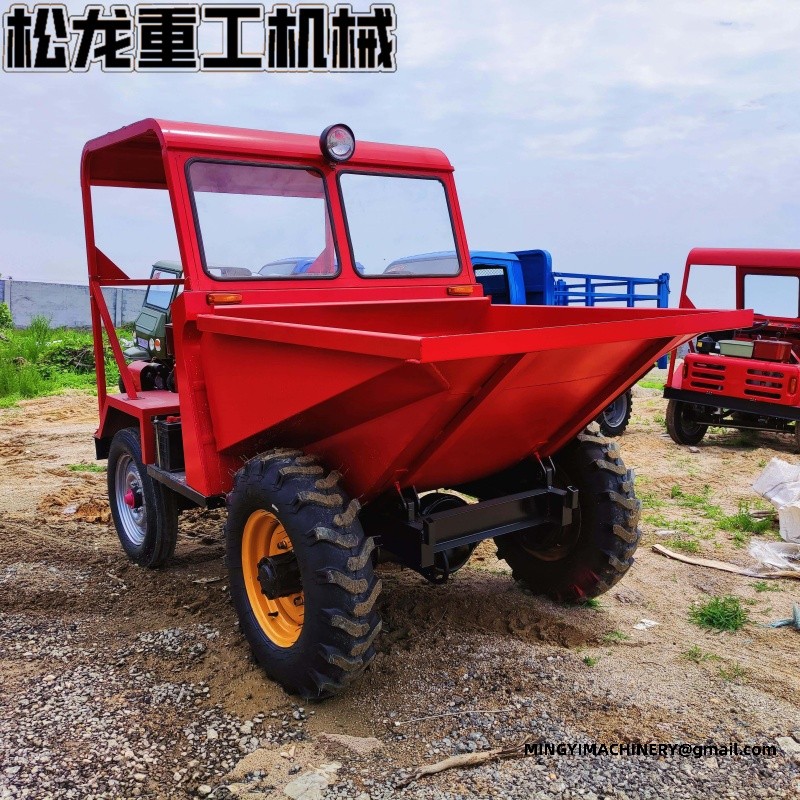
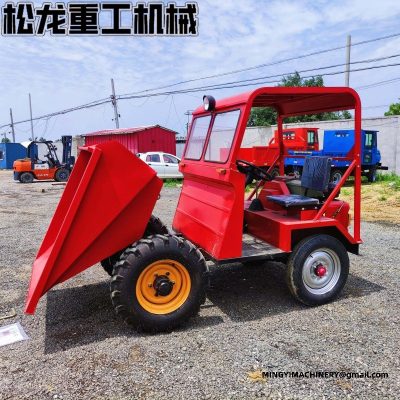
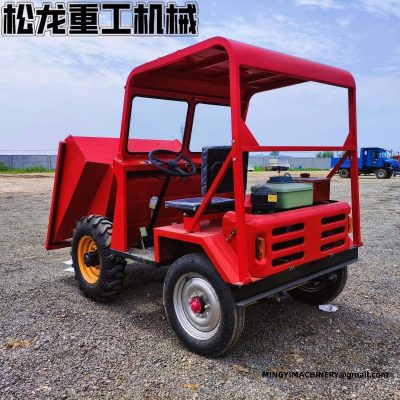
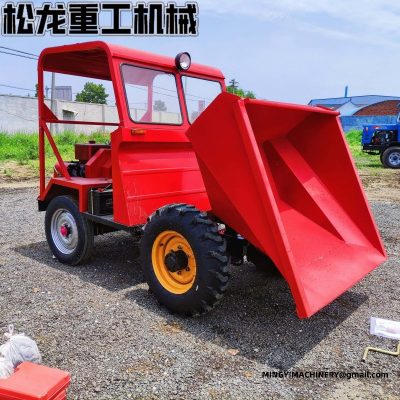
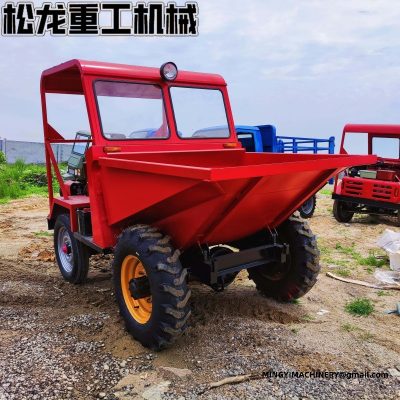
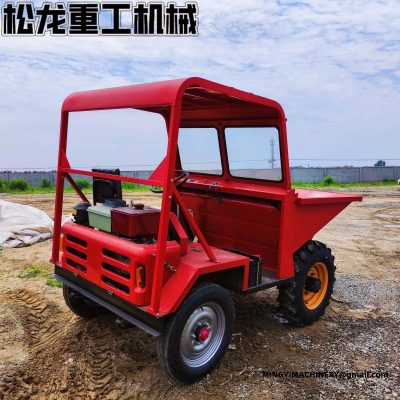
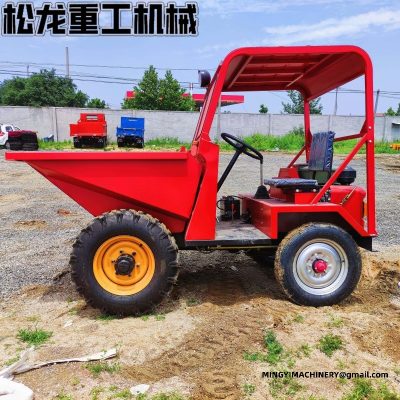
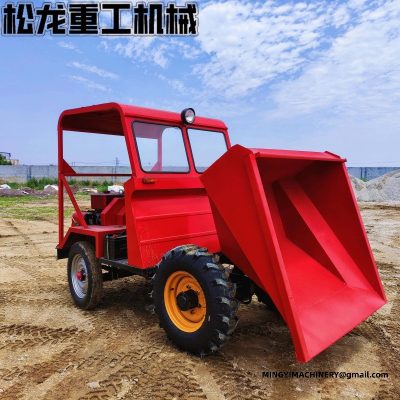
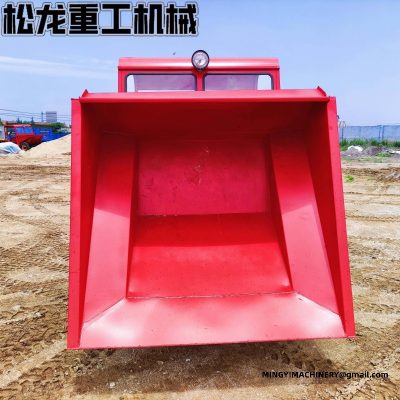
A front tipper is bought for the route, not for the specification sheet. The route decides everything: how wide the gateway is, how steep the ramp, how soft the worst stretch of ground. The FC10 publishes the figures that answer those questions — 2,700 x 1,600 x 2,000 overall, 4,500 mm turning radius, 21% gradeability, 200 mm clearance — and this page reads them in the order a site dumper for narrow spaces buyer meets them on rural work.
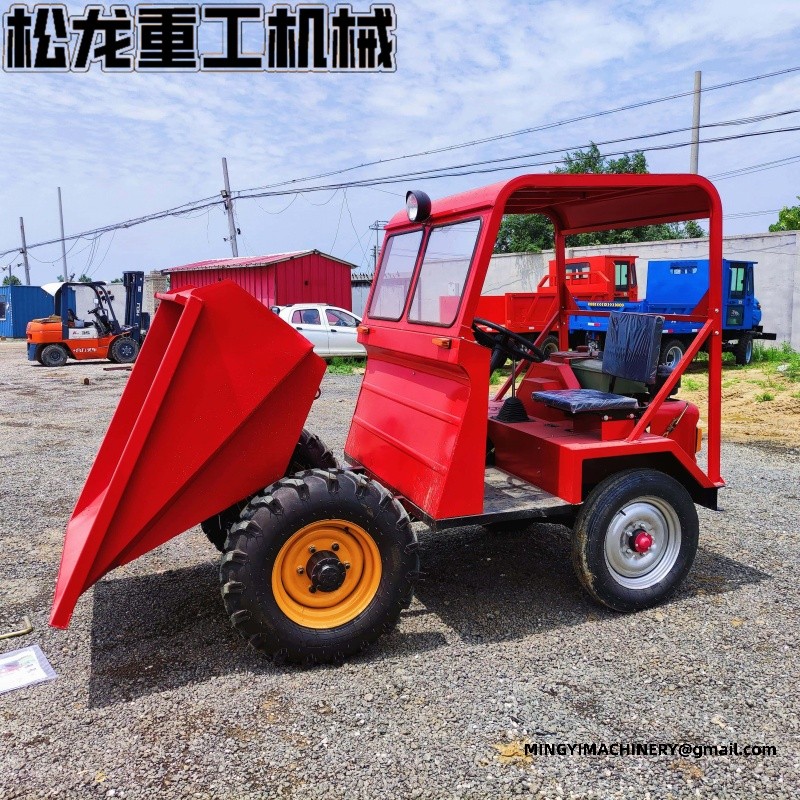
The comparison that matters most for a 1,000 kg machine is with the manual alternatives it replaces — because that is what many sites use until they buy one. 1,000 kg of mixed general loads per trip against a barrow load is a change in the whole working day, not a marginal improvement.
What makes the change stick is that the machine needs no special route. At 2,700 x 1,600 x 2,000 it goes through the same gaps, over the same boards and up the same ramps on rural work that people were already using on foot. Nothing about the site has to be rebuilt to accommodate it.
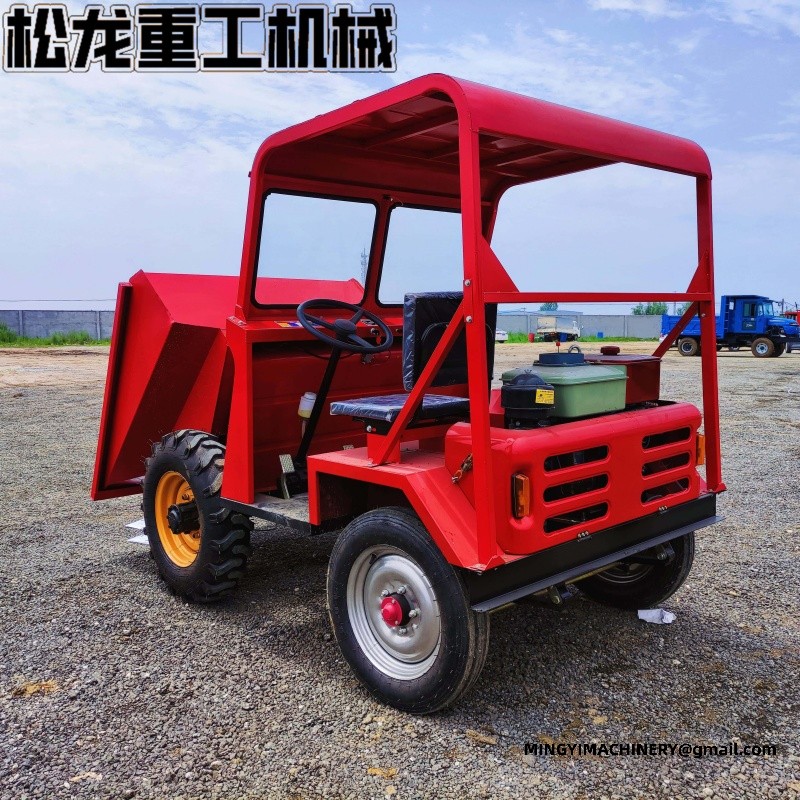
Keep the specification table with the machine. The four figures a second owner will ask for — 1,000 kg of load, 0.5 m³ of box, 390 mm of discharge height and 4,500 mm of turning radius — are all measurable on the machine itself, which makes a used FC10 easy to verify on rural work.
The engine figures are worth recording too: CG25M at 17.3 kW and 2,200 r/min, starting on 12 V DC electric motor. Between the two sets, an owner has everything needed to order parts, compare a replacement and answer an enquiry without going back to the manufacturer.
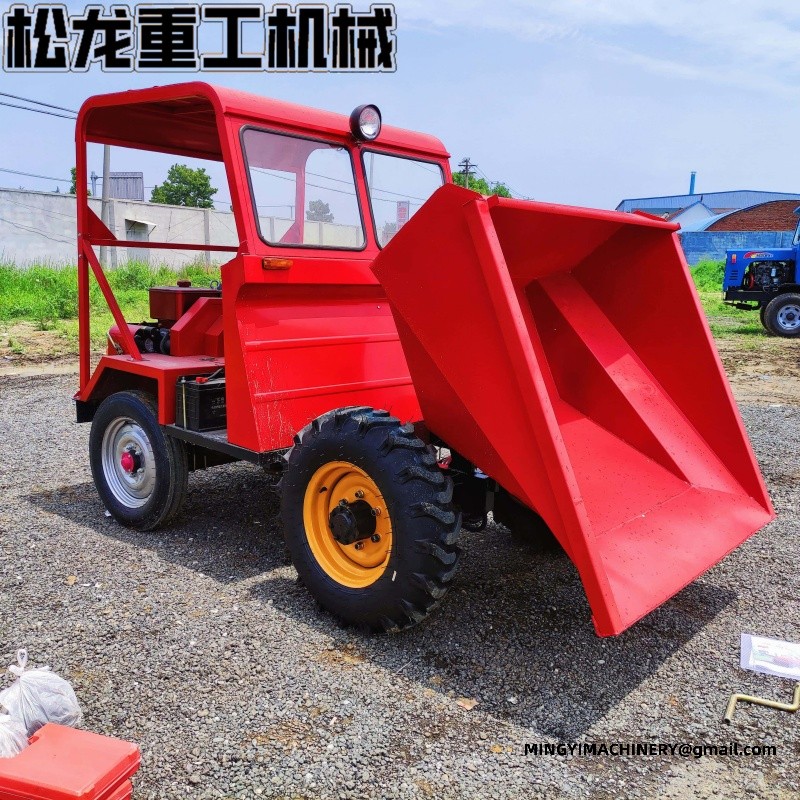
Maintenance on the FC10 is deliberately simple: rear-mounted CG25M diesel, mechanical driveline, hydraulic tipping circuit. on rural work moving loads between yard and field, the machine works short cycles all day, and the daily checks — oil, coolant, tyre condition, grease points — take minutes rather than a workshop visit.
The layout helps: the engine sits at the rear away from the load, the tipping hydraulics are exposed, and the 1,230 mm wheelbase keeps everything within reach of the ground. Machines specified for sites are specified for field maintenance, and this one is no exception.
| Published build data — FC10 front tipper (1,000 kg class) | |
|---|---|
| Rated load | 1,000 kg |
| Rated bucket capacity | 0.5 m³ |
| Discharge height | 390 mm |
| Maximum gradeability | 21% |
| Bucket width | 1,580 mm |
| Travel speed, 1st gear | 6.8 km/h |
| Travel speed, 2nd gear | 22 km/h |
| Travel speed, reverse | 7.5 km/h |
| Minimum turning radius | 4,500 mm |
| Overall dimensions (L x W x H) | 2,700 x 1,600 x 2,000 |
| Track | 1,500 mm |
| Wheelbase | 1,230 mm |
| Minimum ground clearance | 200 mm |
| Diesel engine model | CG25M |
| Rated engine power | 17.3 kW |
| Rated engine speed | 2,200 r/min |
| Starting method | 12 V DC electric motor |
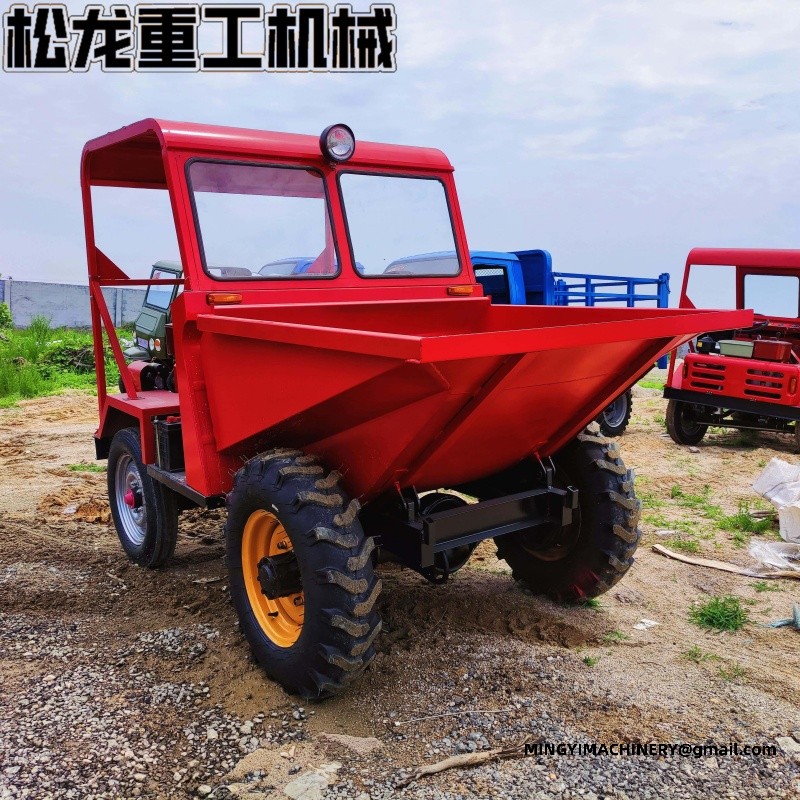
The right way to judge a tipper is effort per tonne moved. 1,000 kg per trip against a haul of a known length gives a fuel figure per tonne that a specification sheet cannot give you. Everything that reduces wasted trips improves that number.
Which is why the small things matter: keeping the route clear, loading the box properly the first time rather than nearly filling it twice, and not sending the machine out half-loaded. A tipper earning its keep is a tipper whose trips are all full trips.
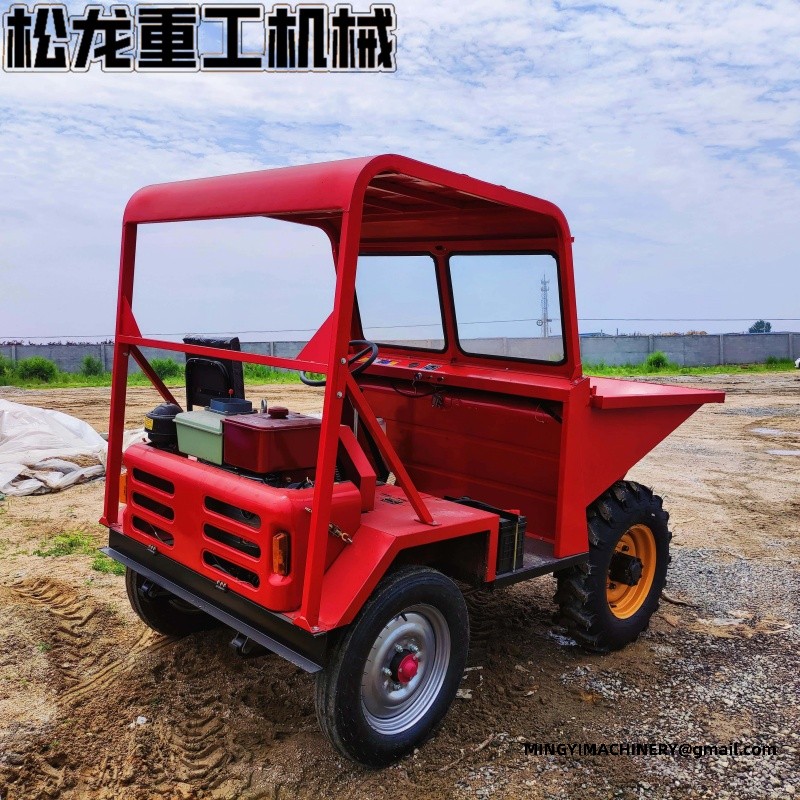
The FC10 runs a CG25M diesel rated at 17.3 kW at 2,200 r/min, and the matching is the point: a 1,000 kg machine with 21% gradeability needs torque in the working band rather than a big headline figure. on rural work moving loads between yard and field, that is load-lugging at low speed rather than sprinting.
Starting is by 12 V DC electric motor, which means the machine starts from the key rather than from a handle — worth more than it sounds on a site where the operator gets in and out twenty times a shift. The rear-mounted position keeps the engine away from the load and makes the routine checks straightforward.
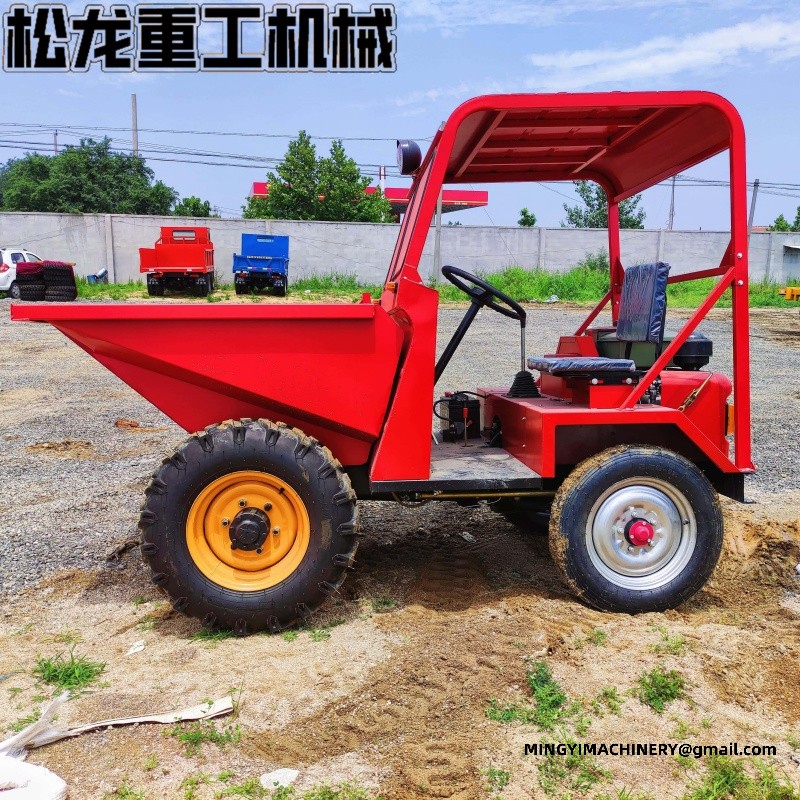
The FC10 is a front-axle drive with rear-axle steering (two-wheel drive) machine, and that is the correct specification for firm ground and short cycles on rural work. The FC15/FC18/FC20/FC25/FC30 models are four-wheel-drive hydraulic tippers for work where traction rather than payload is the limit.
The decision is ground-driven. Where the route is firm and the grades are within 21%, two-wheel drive keeps the machine simpler and its maintenance lighter. Where the ground is soft, wet or broken, four-wheel drive earns its complexity — and the family exists so that the choice can be made rather than compromised on.
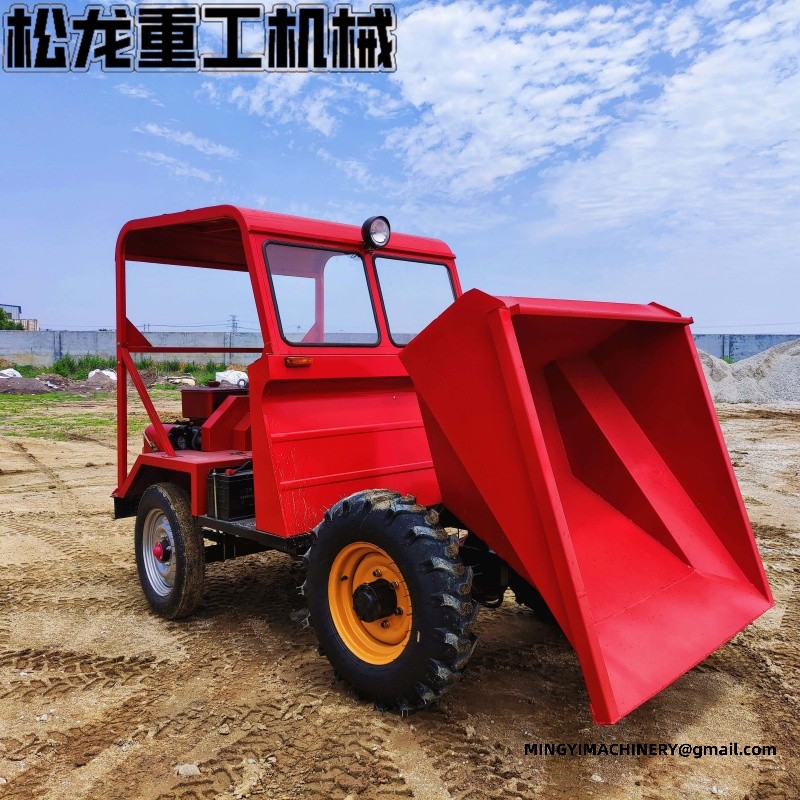
Ask for the specification sheet for the exact build you are buying, not for the model name. The FC10 figures published here describe the standard machine: 17.3 kW at 2,200 r/min, 0.5 m³ and 1,000 kg, with 12 V DC electric motor.
Ask also what is optional. On the wider FC15-FC30 four-wheel-drive machines the lighting, signal and cab options are listed explicitly; knowing which of them are fitted is the difference between a machine that suits your job and one that nearly does.
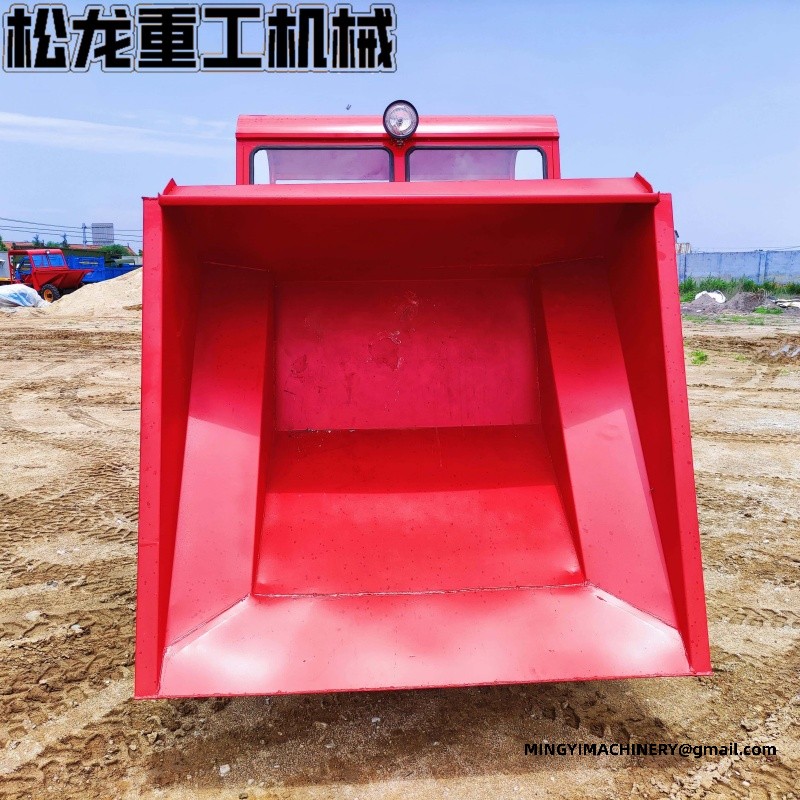
The published application list covers concrete, sand and gravel, earthwork, coal, ore and fertiliser — short-distance movement of loose material, on rural work moving loads between yard and field. What those have in common is that they load by shovel or grab, discharge by tipping and do not need a sealed body.
The 0.5 m³ box with a 1,580 mm width suits all of them for different reasons: width for loading from a heap, volume for light material, the 1,000 kg rating for the dense ones. A machine that publishes its limits honestly can be matched to the material rather than hoped into it.
The working day on a small tipper is a long series of short cycles, and the routine that keeps it productive is unglamorous: walk-round at the start, oil and coolant level, tyre pressures, grease the tipping pivots, and watch the hydraulic hoses through the shift on rural work.
Starting is by 12 V DC electric motor, which supports the stop-start pattern of site work — the engine is off while the operator loads or waits, and restarted for each run. On a machine rated at 1,000 kg with a 17.3 kW engine, that cycling is normal duty rather than abuse.
The FC10 reverses at 7.5 km/h, which is slow enough that a banksman walking beside it can keep up. That is deliberate on a machine used on rural work, where the route behind is often occupied by people who cannot hear it coming over the general noise.
Ask any site that runs small tippers and the same three controls come back: a speed limit for reversing, a rule that the person on the ground has the right of way, and nobody standing inside the turning circle. At 4,500 mm, the FC10 turns inside a space narrower than most expectations, which reduces but does not remove the need for those rules.
Watch someone experienced on a tipper and the differences are all economy and smoothness. They load the box in one pass rather than two, they take the flattest route rather than the shortest, and they set the machine up for the tip before the box goes up.
The mechanical habits are just as visible. They stop the machine before selecting a gear from the range that ends at 22 km/h. They do not ride the tipping control. They walk the route once on rural work before assuming it is passable at 2,700 x 1,600 x 2,000.
What is the maximum gradeability of a site dumper for narrow spaces?
21% with the machine working rather than coasting. Site ramps and loading inclines normally sit well inside that figure; where they do not, traction on the surface is usually the real limit rather than power.
How is a site dumper for narrow spaces loaded from a stockpile?
From the front, from the side by hand, or from a hopper. A 1,580 mm box on a 2,700 x 1,600 x 2,000 machine is wide enough to load from a heap without precise positioning, which saves time on every cycle on rural work.
What is the fuel and starting arrangement on a site dumper for narrow spaces?
A CG25M diesel started by 12 V DC electric motor. Rear-mounted, which keeps the service points clear of the load and supports the stop-start pattern of site work where the engine is shut down between runs.
How much does load distribution matter on a site dumper for narrow spaces?
Considerably. 1,000 kg of load sits ahead of the front axle, which is why the driven wheels are at the front and the engine is at the rear to counterweight it. The 1,230 mm wheelbase keeps that arrangement manageable on ramps.
Does a site dumper for narrow spaces need a licence or registration?
The published specification describes a site machine, geared at 22 km/h in second: it is built for working cycles on site rather than for road travel. Operate it as site plant rather than as a road vehicle.
How does a site dumper for narrow spaces compare with a wheelbarrow?
1,000 kg per trip against a barrow load, through the same gaps and over the same boards. Nothing on the site has to be rebuilt to use it, which is why machines of this size get adopted quickly on rural work.
How does the site dumper for narrow spaces drive and steer?
The FC10 drives through the front axle and steers at the rear — a front-axle drive with rear-axle steering (two-wheel drive). That puts the driven wheels under the load and keeps the steering wheels light, which is what makes the machine manoeuvrable on rural work.
What kind of route suits a site dumper for narrow spaces?
Short distances with tight corners, firm but uneven ground and no room to reverse: the conditions on rural work. Runs measured in tens of metres are where a machine of this size makes sense, and where 4,500 mm of turning radius pays for itself.
Those are the published figures for the FC10, and the same table is available for the four-wheel-drive models above it in the range. Send the narrowest passage, the steepest ramp and the worst ground on your site and the comparison can be made against real numbers.
Keeping a service record for Site Dumper for Narrow Spaces: Working in Confined Areas
The record should follow the machine, not the owner. When Site Dumper for Narrow Spaces: Working in Confined Areas changes hands the service history travels with it, and a complete folder is often the difference between a quick sale and a long one.
Cold weather and winter care for Site Dumper for Narrow Spaces: Working in Confined Areas
Cold exposes weak batteries, thick oil and water in the fuel. Preparing Site Dumper for Narrow Spaces: Working in Confined Areas for winter means the right grade of oil, a battery in good condition and fuel that will not wax in the tank overnight.
Documents that travel with Site Dumper for Narrow Spaces: Working in Confined Areas
Documentation should match the machine that was actually built. The sheet supplied with Site Dumper for Narrow Spaces: Working in Confined Areas records the configuration as delivered, because the generic catalogue description is not what the customer needs when ordering a part.
Fuel, oil and fluid quality for Site Dumper for Narrow Spaces: Working in Confined Areas
Fluid quality is a storage problem before it is a machine problem. Water and sediment in a drum will find the injection system of Site Dumper for Narrow Spaces: Working in Confined Areas eventually, and a settling period is nothing compared with a pump.
Contact MINGYI Machinery for the current front tipper range, the four-wheel-drive models above the FC10, and a formal specification for your market. E-mail: sales@mingycn.com | LINE (ID): mingyicn
Mini Dumper for Material Transport: Load and Route · OEM Front Tipping Dumper Manufacturer: Build Records · construction dumper hydraulic tipping with hydraulic tipping body · Front Tipper Truck