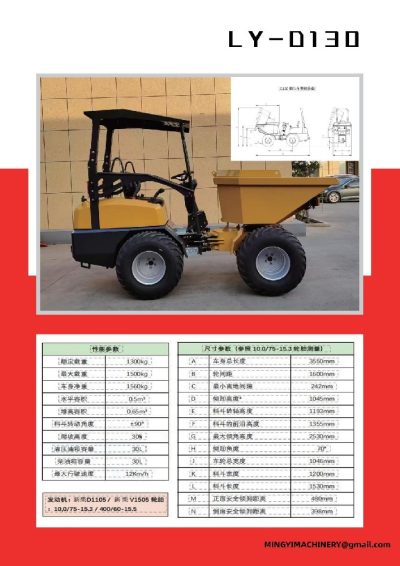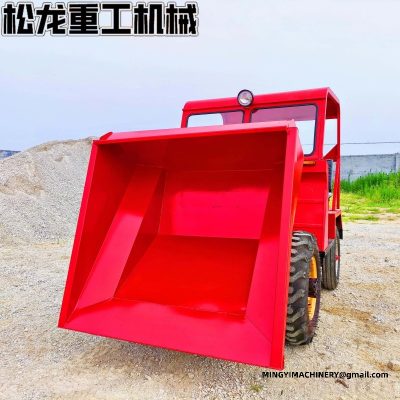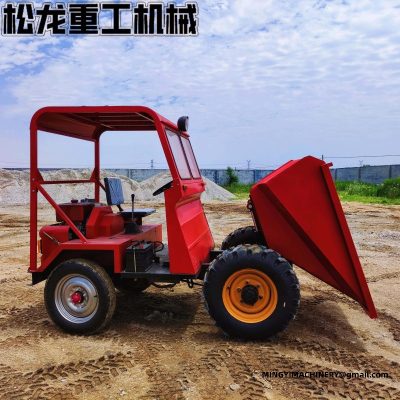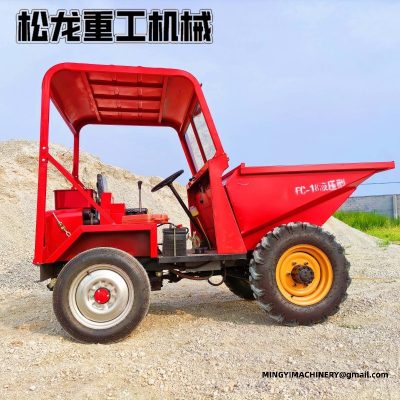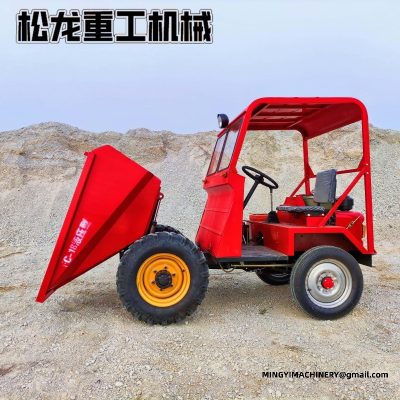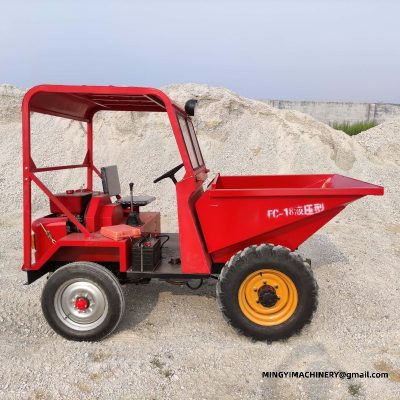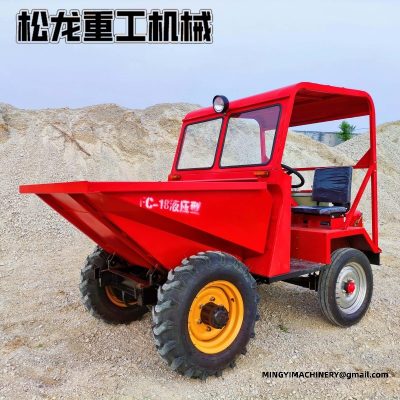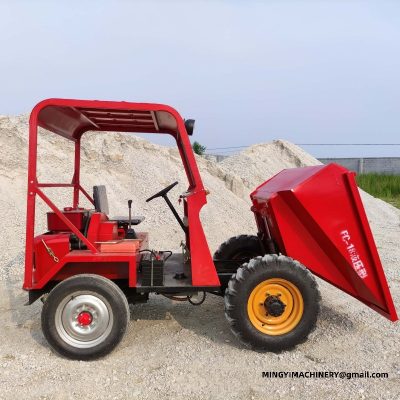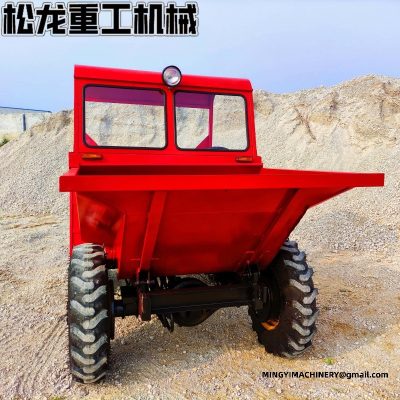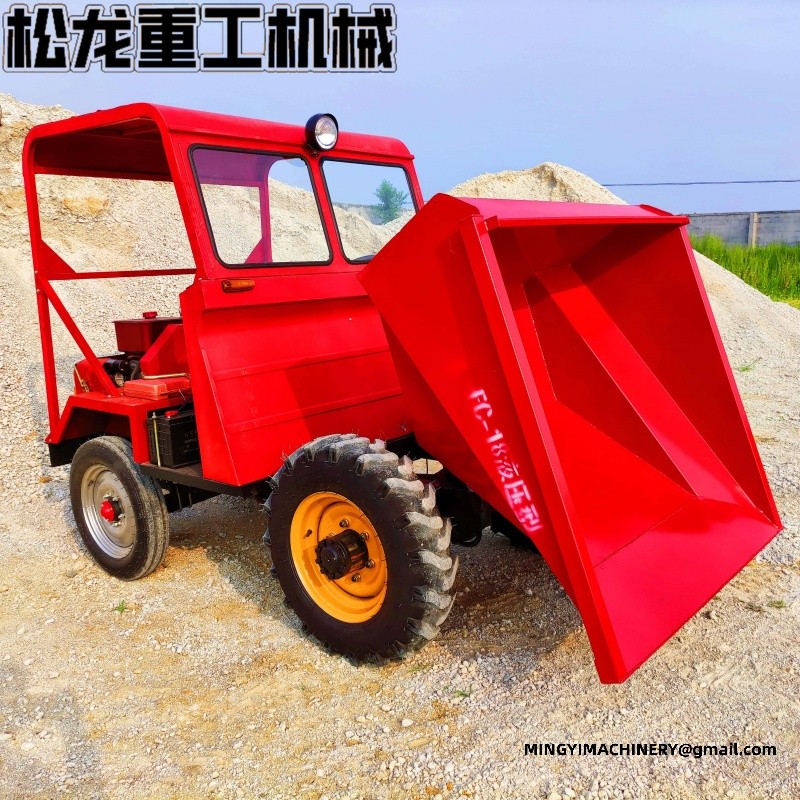
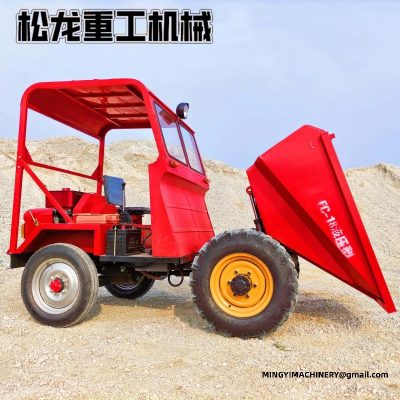
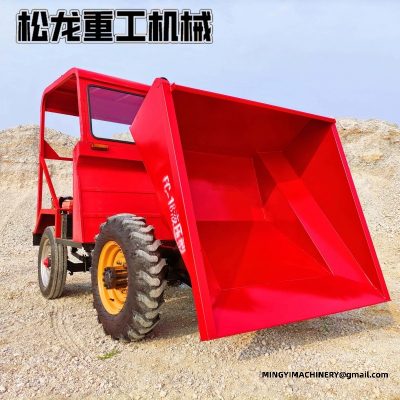
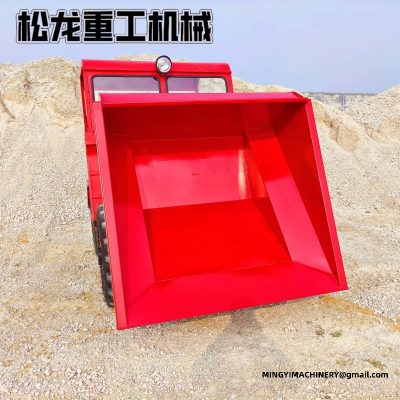
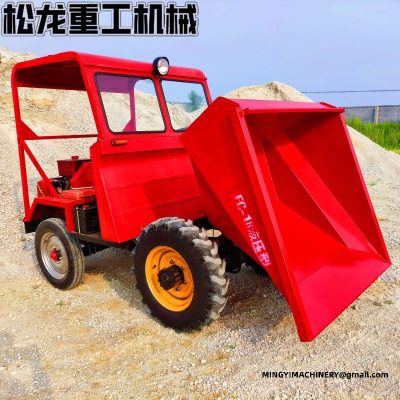
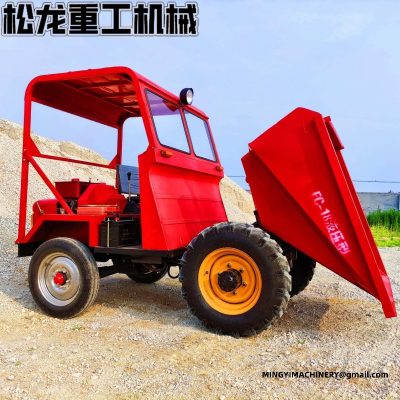
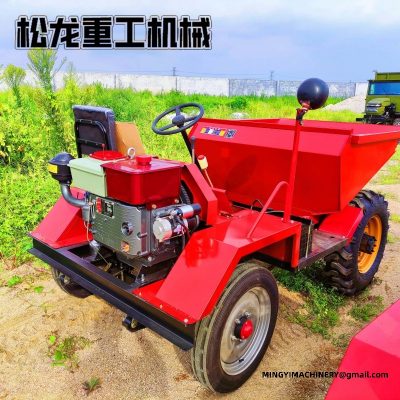
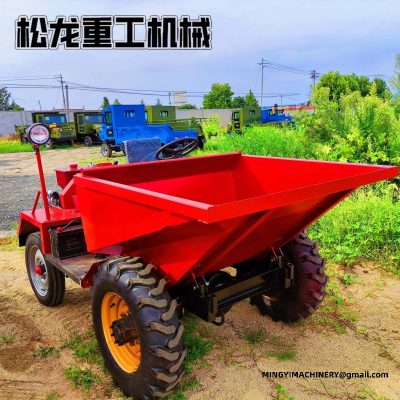
Two figures decide how much work a OEM front tipping dumper manufacturer does in a day: 1,000 kg of rated load and 0.5 m³ of bucket capacity. Everything else — 390 mm of discharge height, 200 mm of clearance, 21% of gradeability — decides whether that load can actually be moved on the ground on a building site. This page works through both groups.
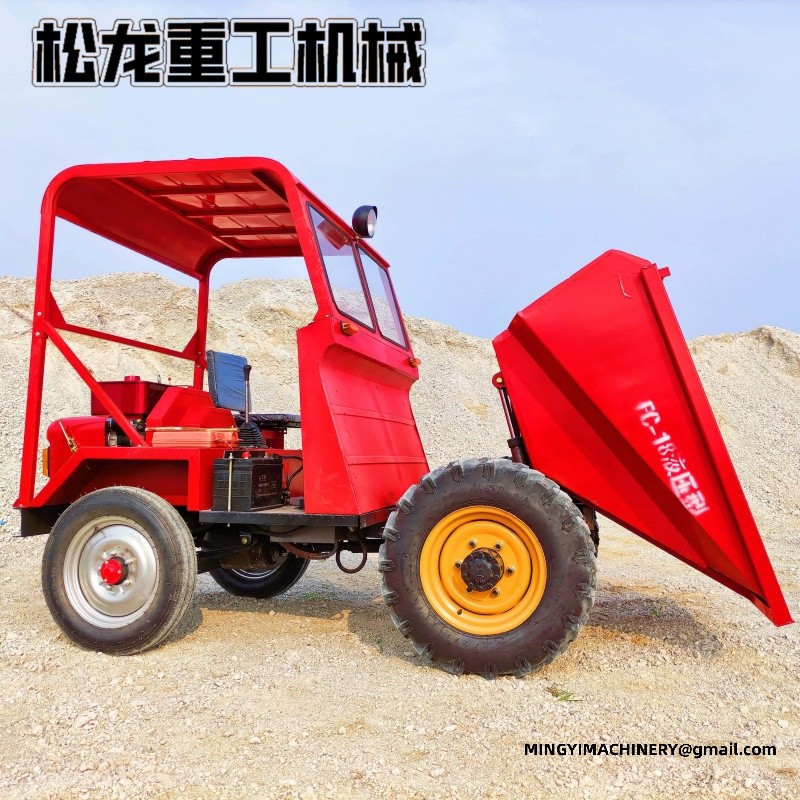
A tractor and trailer carries far more per trip and needs far more room to turn. The FC10 carries 1,000 kg and turns in 4,500 mm, which is the trade in one sentence. On a building site, the shorter cycle usually wins on daily output even though the payload is smaller.
The second difference is the tipping method. A trailer tips to the rear and needs a clear run behind it; the FC10 tips forward at 390 mm over the front axle, which means it empties into a space ahead of the machine rather than requiring one behind it. In a corridor or against a wall, that is the entire argument.
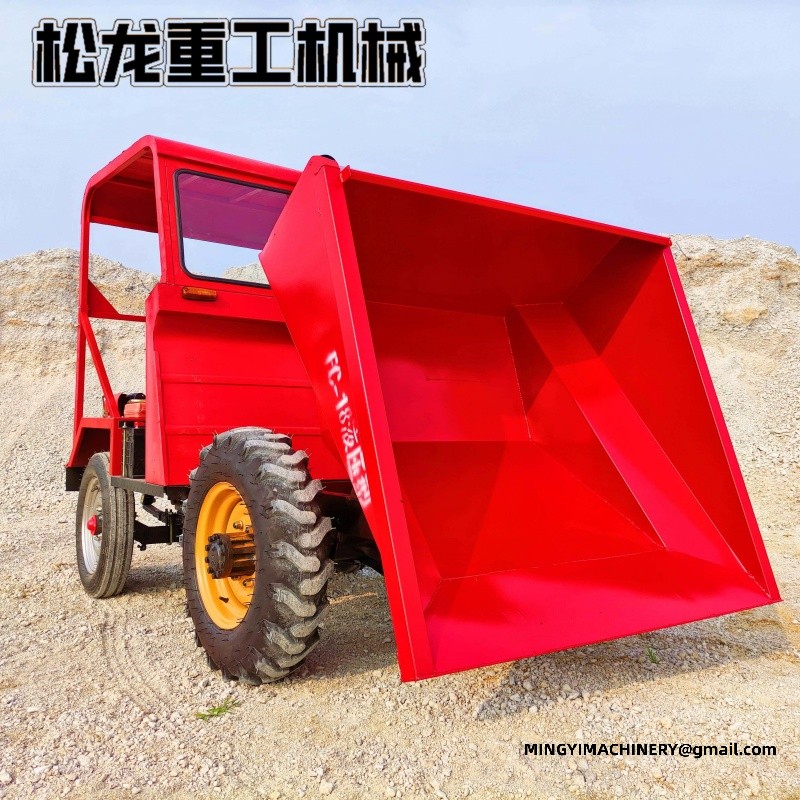
The published 2,700 x 1,600 x 2,000 is what an operator needs for a permit or an access survey. It is also what a transport company needs to specification. Having the figure to hand shortens a surprising number of conversations, from a site induction to a plant-hire agreement.
The same applies to the machine's working envelope. A 4,500 mm turning radius and a 1,000 kg payload are the two figures that most often decide whether a machine may work a particular part of a site.
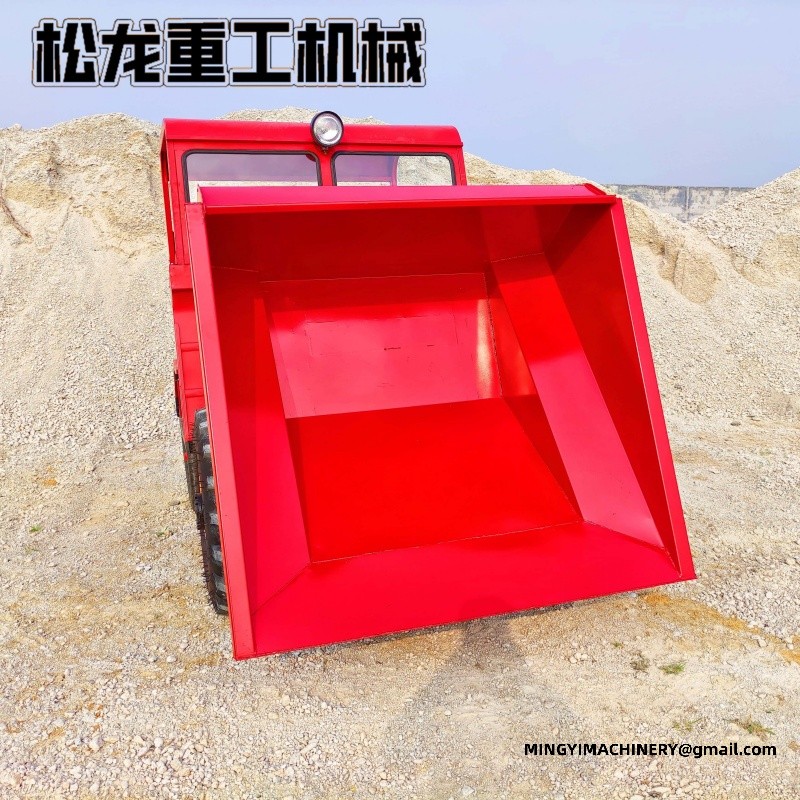
Discharge is by gravity through hydraulic tipping, and the box returns under hydraulic power as well; the FC10 also carries a dedicated bucket return device. Discharge height is published at 390 mm, which is the figure to check against whatever receives the load on a building site.
Building site work rarely offers a purpose-built ramp, so the 390 mm discharge height has to clear a heap, a trench edge or a skip. Because the box tips forward over the front axle, the load leaves cleanly at low height and the machine does not need to reverse up a ramp to empty — which is most of the reason the cycle works in tight spaces.
| Sample build from the range — FC10 front tipper (1,000 kg class) | |
|---|---|
| Rated load | 1,000 kg |
| Rated bucket capacity | 0.5 m³ |
| Discharge height | 390 mm |
| Maximum gradeability | 21% |
| Bucket width | 1,580 mm |
| Travel speed, 1st gear | 6.8 km/h |
| Travel speed, 2nd gear | 22 km/h |
| Travel speed, reverse | 7.5 km/h |
| Minimum turning radius | 4,500 mm |
| Overall dimensions (L x W x H) | 2,700 x 1,600 x 2,000 |
| Track | 1,500 mm |
| Wheelbase | 1,230 mm |
| Minimum ground clearance | 200 mm |
| Diesel engine model | CG25M |
| Rated engine power | 17.3 kW |
| Rated engine speed | 2,200 r/min |
| Starting method | 12 V DC electric motor |
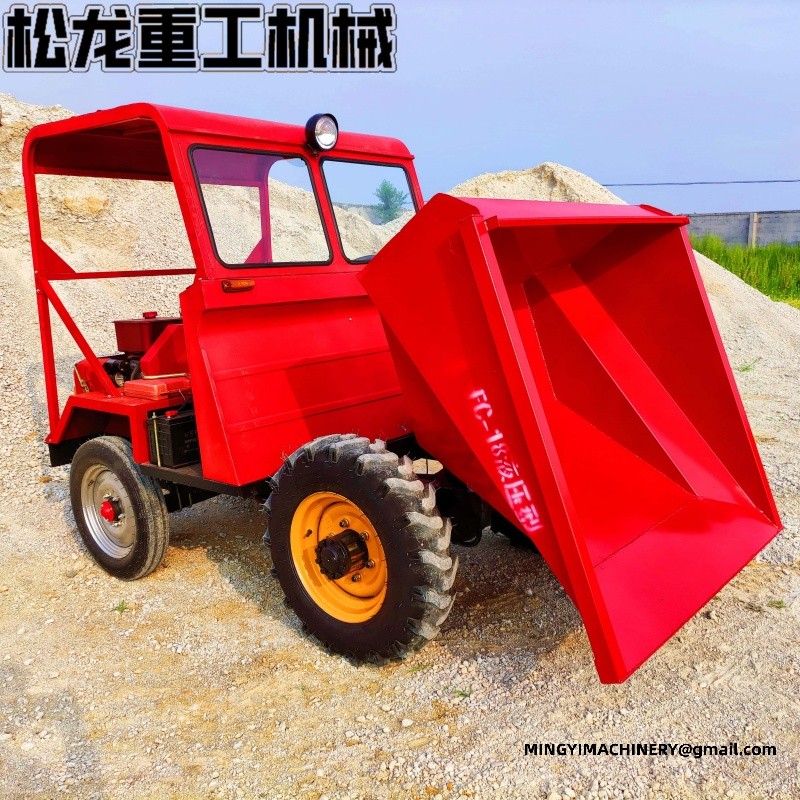
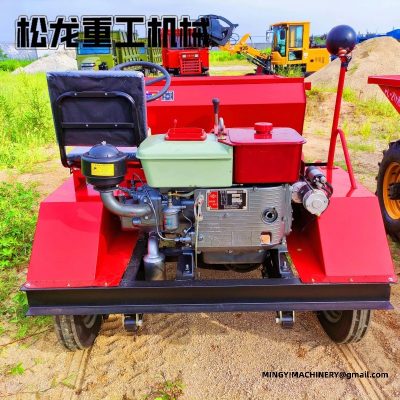
The FC10 starts on 12 V DC electric motor, and the rest of the electrical side is kept deliberately plain. There is no ECU, no sensor network and no immobiliser to strand the machine on a building site. What there is: a starter, a charging circuit and the lighting needed to work and to travel legally between sites.
That simplicity is why a tipper of this class can be kept running for years on a site with no specialist support. The diesel at 17.3 kW is a mechanical unit turning at 2,200 r/min, which means a competent mechanic with hand tools can diagnose it. When it does need attention, the fault is usually found by ear before any meter is produced.
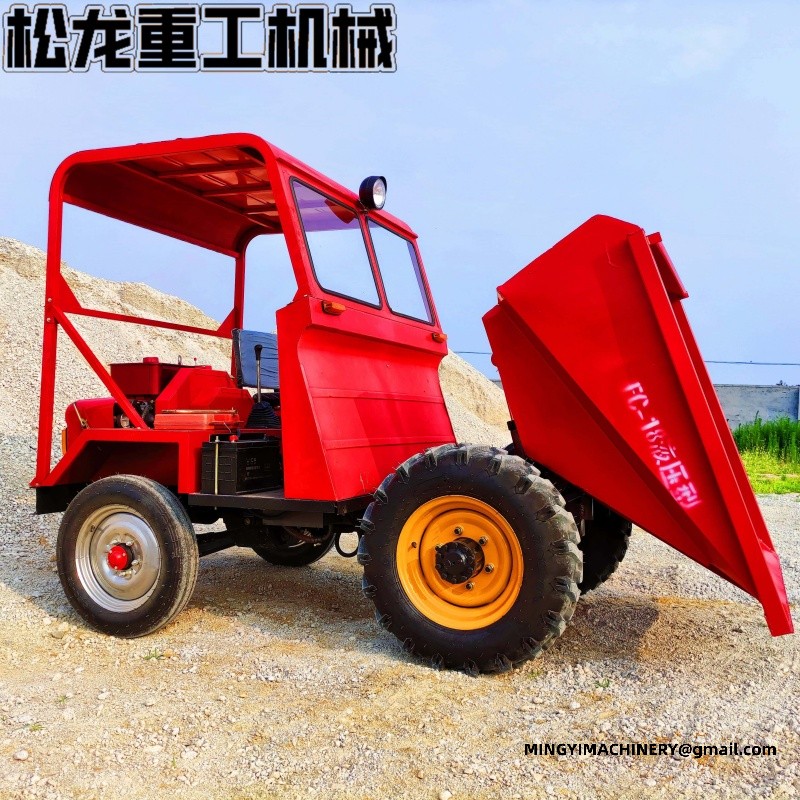
17.3 kW at 2,200 r/min is the honest way to specification a small diesel: power at rated speed, from the CG25M. What matters on a building site is whether the machine holds speed on a ramp with a full box, and that is a torque-and-gearing question the whole drivetrain answers together.
A 1,000 kg tipper does not need a large engine; it needs one sized so the hydraulics for tipping and the drive for hauling do not fight each other. The published pairing — CG25M, 17.3 kW, 21% — describes a machine matched for its duty rather than one specified for a brochure.
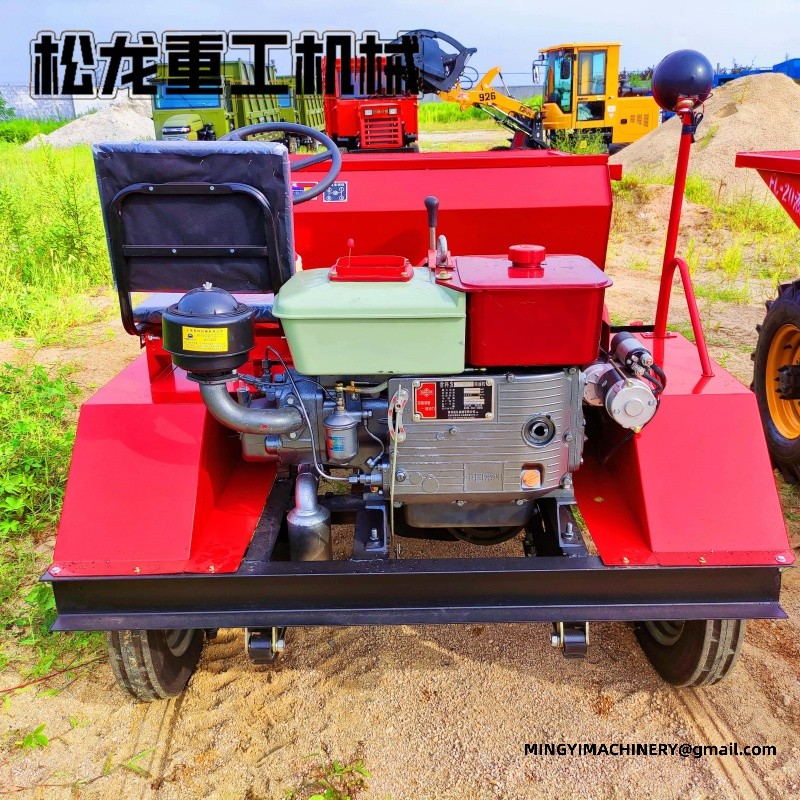
Choosing inside the range starts with the route rather than the model. Measure the narrowest passage, the steepest ramp and the worst ground on a building site ferrying sand and gravel from the stockpile to the mixer; compare them against the FC10's 2,700 x 1,600 x 2,000, 21% gradeability and 200 mm clearance. If all three fit, the 1,000 kg machine is the answer.
If the ground does not fit, the four-wheel-drive FC15/FC18/FC20/FC25/FC30 models are the step up — hydraulic tipping, electric start, lighting and signals, optional canopy. The FC10's published table exists so that the baseline is known before that comparison starts, which is exactly why full figures matter on the entry model.
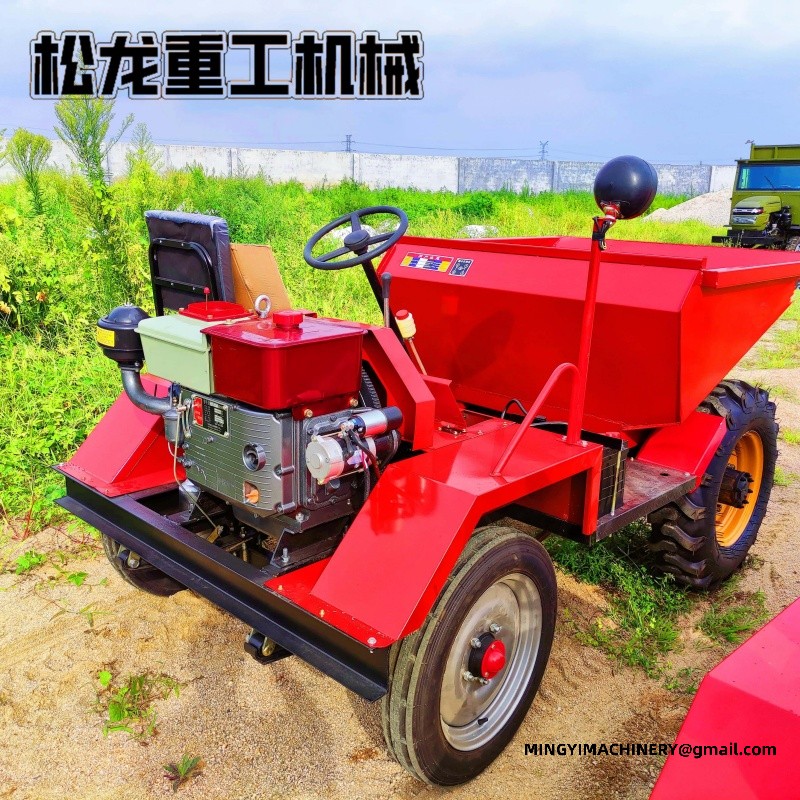
Three figures describe where the FC10 can work: 21% maximum gradeability, 200 mm of ground clearance, and a rear axle that swings. on a building site ferrying sand and gravel from the stockpile to the mixer, ramps and broken ground are normal, and the swinging rear axle is what keeps all wheels on the ground when one of them drops into a rut.
Ground clearance of 200 mm is modest by design — the machine is 2,700 x 1,600 x 2,000 overall and low build keeps the centre of gravity down. What it means in practice is that the FC10 handles rough going rather than rock: expect it on a building site ferrying sand and gravel from the stockpile to the mixer on rutted tracks and across sites, not on quarried rock faces.
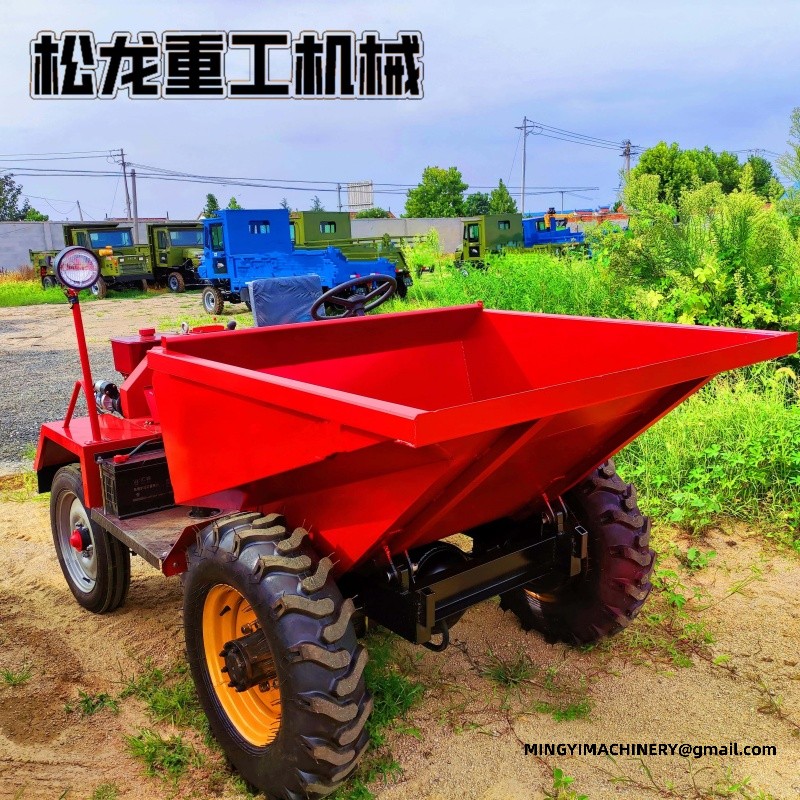
Tipping and return on the FC10 are both hydraulic, with a dedicated bucket return device. That matters more than it sounds: a box that returns under power comes down controlled rather than falling, which protects the frame and keeps the machine settled for the next load on a building site.
A gravity-return box is simpler and behaves worse. Over a shift of several hundred cycles carrying sand and gravel, the difference shows up as shock loading through the chassis every time the box drops. The FC10's powered return is the kind of specification detail that only becomes visible in year three.
Specifying the FC10 is unusually straightforward because the table is complete: load 1,000 kg, box 0.5 m³, discharge 390 mm, turning radius 4,500 mm, clearance 200 mm, gradeability 21%, engine CG25M at 17.3 kW.
Check each against the site in the order they will constrain you: route width against 2,700 x 1,600 x 2,000 and 1,500 mm, the ramp against 21%, the worst ground against 200 mm, and the receiving point against 390 mm. A machine that passes all four on a building site is the machine for the job.
The FC10 has a short control set: a gear lever covering the published travel speeds, a steering wheel, a tipping control and a throttle. A new operator can be productive in an afternoon. The training that matters is not the controls but the judgement around them.
Two habits decide whether a new operator is safe. First, never travel or manoeuvre with the box raised. Second, treat 21% as the machine's limit rather than its capability. Everything else follows from those two, and everything else a tipper does on a building site is a variation on them.
The case for a small front tipper is made by the spaces it fits. At 2,700 x 1,600 x 2,000 overall with a 4,500 mm turning radius, the FC10 works through gateways, along trench lines and inside structures on a building site ferrying sand and gravel from the stockpile to the mixer — places where a larger dumper reverses fifty metres for every hundred it carries.
Narrow sites also punish machines that need to be squared up to load. Rear-axle steering and a short wheelbase let the operator correct position continuously rather than by shunting, and over a shift that is where most of the lost time usually goes. The published figures are small numbers that compound into the whole day's output.
What is the rated load of a OEM front tipping dumper manufacturer and what does it include?
1,000 kg rated load, with a 0.5 m³ box. The rating covers the material in the box and assumes the machine is working within its published limits on a building site.
How does a OEM front tipping dumper manufacturer handle wet or soft ground?
Better than its size suggests. 1,000 kg spread over a 1,500 mm track with a swinging rear axle keeps the load per tyre modest and keeps contact on uneven surfaces — provided the ground stays within what a two-wheel-drive machine can cross on a building site.
What makes the OEM front tipping dumper manufacturer suitable for construction work?
The combination of 1,000 kg of load, 390 mm of discharge height, 4,500 mm of turning radius and 21% of gradeability, on a machine 2,700 x 1,600 x 2,000 overall. Those figures describe a vehicle that fits real construction routes on a building site.
What is the difference between the FC10 and the four-wheel-drive models?
Drive and equipment. The FC10 is a two-wheel-drive machine rated at 1,000 kg for firm ground; the FC15/FC18/FC20/FC25/FC30 models are four-wheel-drive hydraulic tippers with electric start, lighting, signal lamps and an optional canopy, for work where traction is the limit.
What makes a used OEM front tipping dumper manufacturer easy to sell?
A published specification that can be verified on the machine: 1,000 kg of load, 0.5 m³ of box, 390 mm of discharge height and 4,500 mm of turning radius. A buyer who can measure the claims will pay for the certainty.
Is a OEM front tipping dumper manufacturer safe on a confined site?
The layout helps: 4,500 mm of turning radius means fewer blind reversing movements, and forward tipping at 390 mm means nobody has to stand behind a raised box. Keep inside the published 21% gradeability and 200 mm clearance limits.
How fast does a OEM front tipping dumper manufacturer travel?
Three published speeds: 6.8 km/h in first, 22 km/h in second and 7.5 km/h in reverse. First is the working gear, second is for the empty return and repositioning, and reverse is geared close to first because it is part of the cycle.
How should a OEM front tipping dumper manufacturer be stored between jobs?
Under cover where possible, box down, pivots greased and the hydraulic cylinder rod protected. The FC10 is 2,700 x 1,600 x 2,000 overall, so a standard site container or modest shed will take it, which is worth allowing for.
Read the table as a whole and the machine describes itself: 2,700 x 1,600 x 2,000 overall, 4,500 mm turning radius, 21% of gradeability, 1,000 kg of load. A OEM front tipping dumper manufacturer specified in the middle of its range outlasts one specified at the edge.
Moving OEM Front Tipping Dumper Manufacturer: Build Records between sites
A machine that works on one site still has to reach the next. The overall dimensions and the operating weight of OEM Front Tipping Dumper Manufacturer: Build Records decide what trailer or truck is needed, and that decision belongs before the job is booked.
Pre-delivery inspection before OEM Front Tipping Dumper Manufacturer: Build Records leaves the shop
The last hour before packing is the best time to find a fault. Running OEM Front Tipping Dumper Manufacturer: Build Records through its full working cycle, checking for leaks under load and confirming that the controls match the specification avoids a conversation across time zones later.
Commissioning OEM Front Tipping Dumper Manufacturer: Build Records on site
Transport shakes things loose. A short check of OEM Front Tipping Dumper Manufacturer: Build Records after the crate is opened, covering the same points the pre-delivery inspection covered, is the most useful insurance available on delivery day.
Contact MINGYI Machinery for the current front tipper range, the four-wheel-drive models above the FC10, and a formal specification for your market. E-mail: sales@mingycn.com | LINE (ID): mingyicn
China Front Tipping Dumper Factory Supplier: Range · Front Tipping Dumper Manufacturer | China Factory: FC10 Spec · all terrain transporter for steep gradient sites · Front Tipper Truck