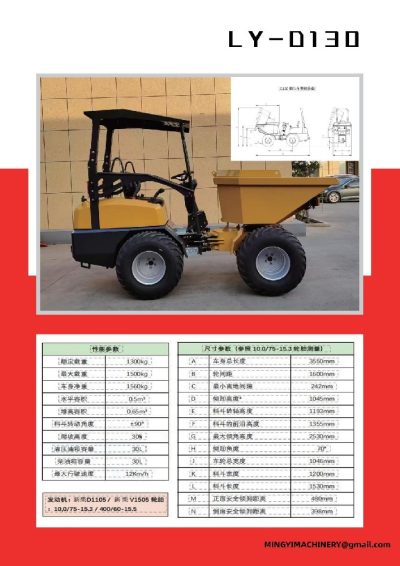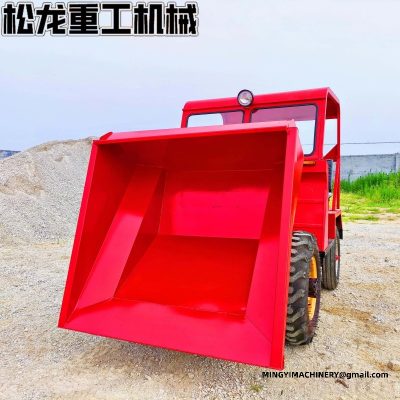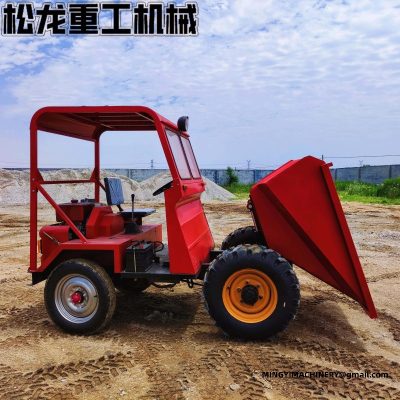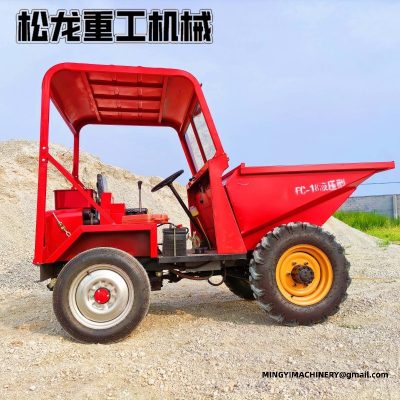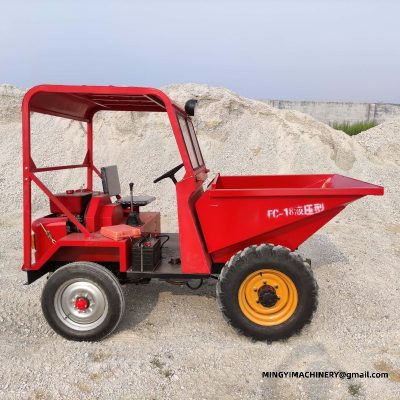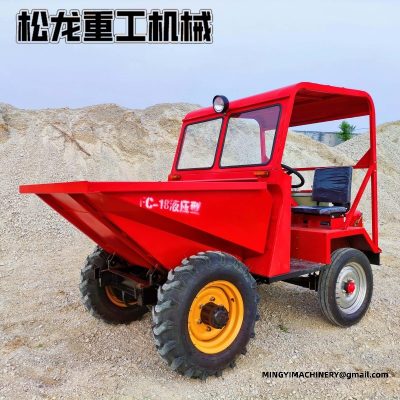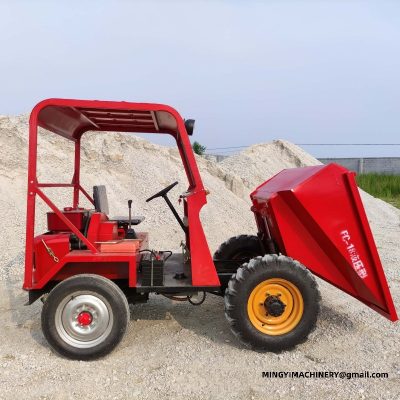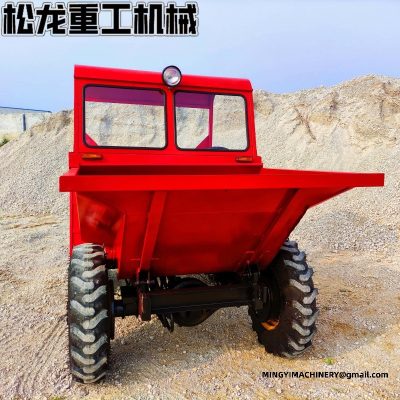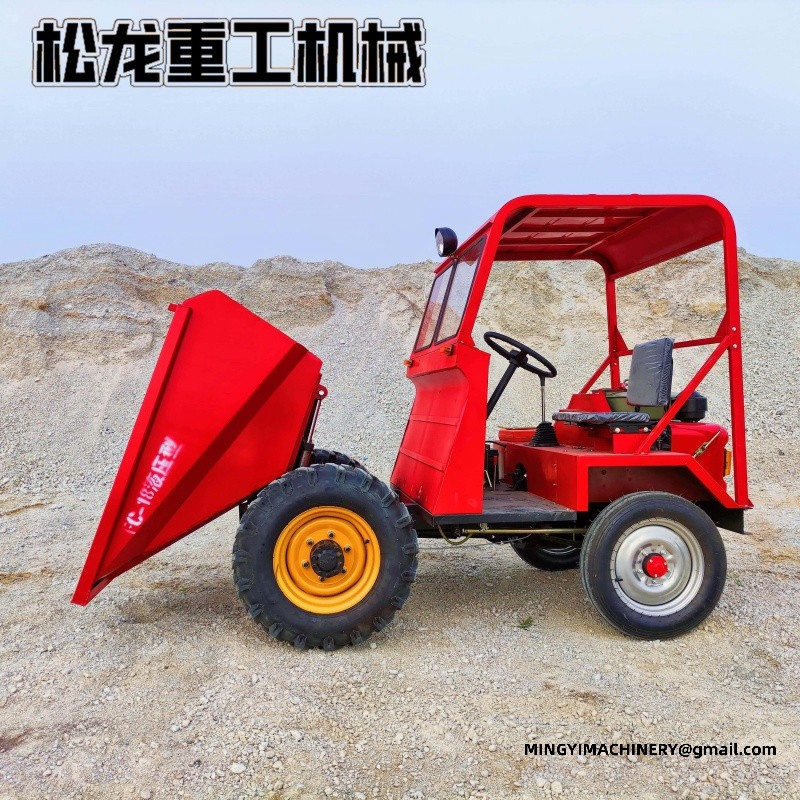
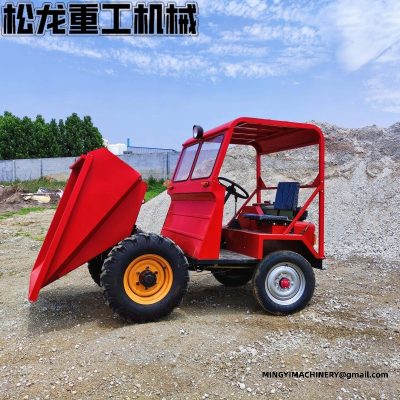
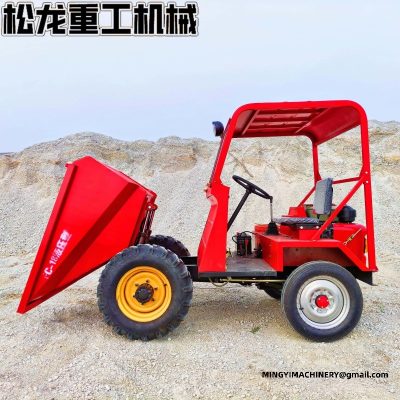
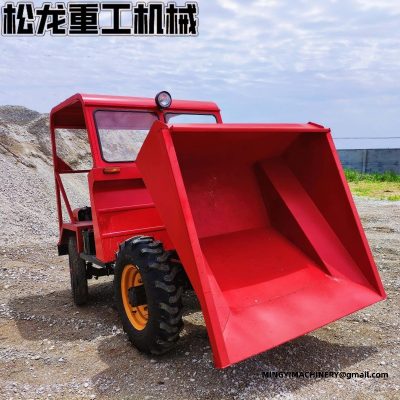
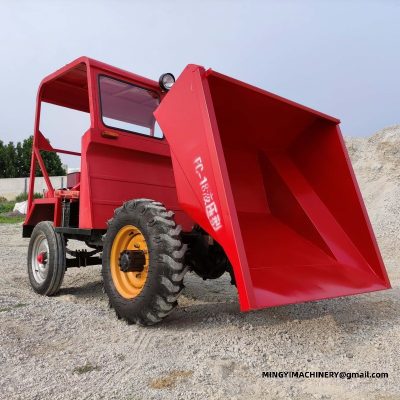
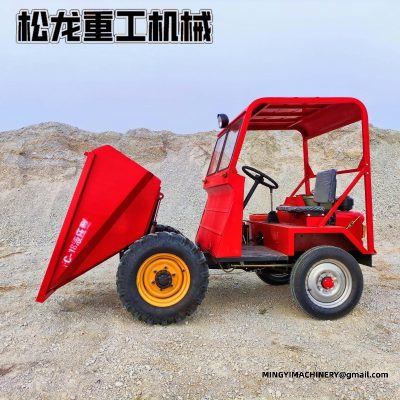
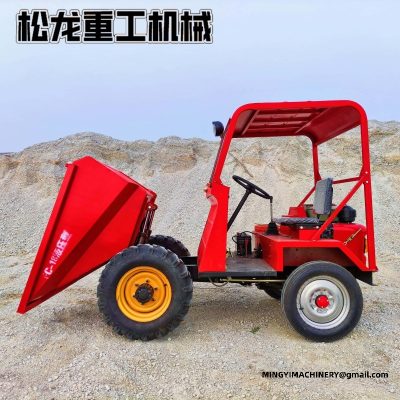
There are two kinds of small site transport: the kind that carries a lot slowly and the kind that carries less quickly. The FC10 is built for the second. Rated at 1,000 kg with 0.5 m³ in the box, geared at 6.8 km/h loaded and 22 km/h empty, it is specified to complete many short cycles in a factory yard rather than a few long runs.
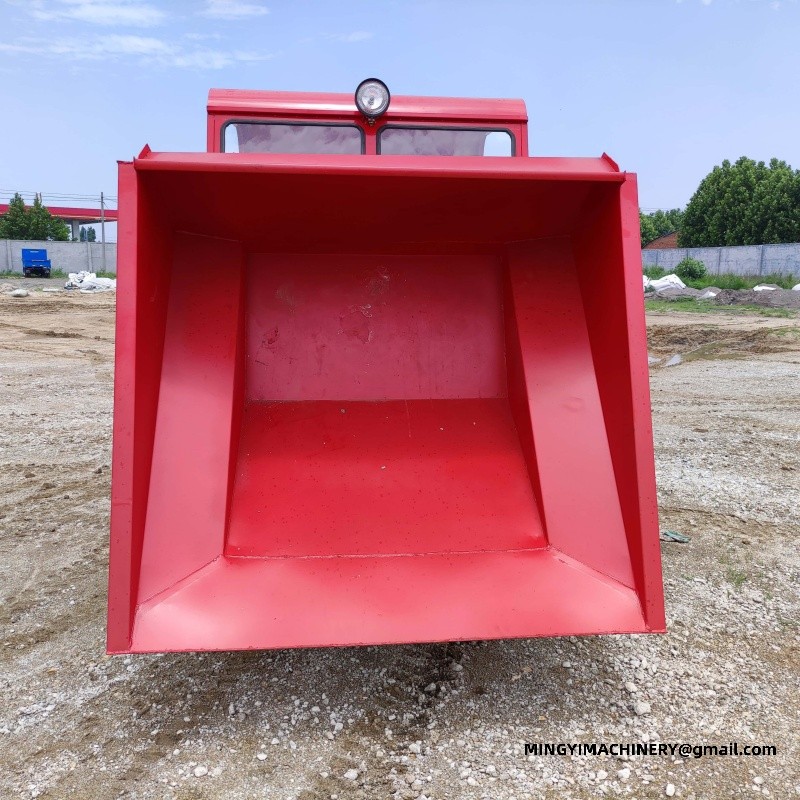
The FC10 drives its front axle and steers at the rear — a front-axle drive with rear-axle steering (two-wheel drive). That is right for firm ground and grades to 21%. The point at which it stops being right is when traction rather than payload becomes the limit in a factory yard.
Soft ground, persistent mud or a route across broken surfaces all shift the balance toward the four-wheel-drive FC15/FC18/FC20/FC25/FC30 models in the range, which are hydraulic tippers with electric start, lighting, signal lamps and an optional canopy. The decision is made by the site, not by the specification sheet — but it is only makeable if the two-wheel-drive baseline is known, which is why the FC10's figures are published in full.
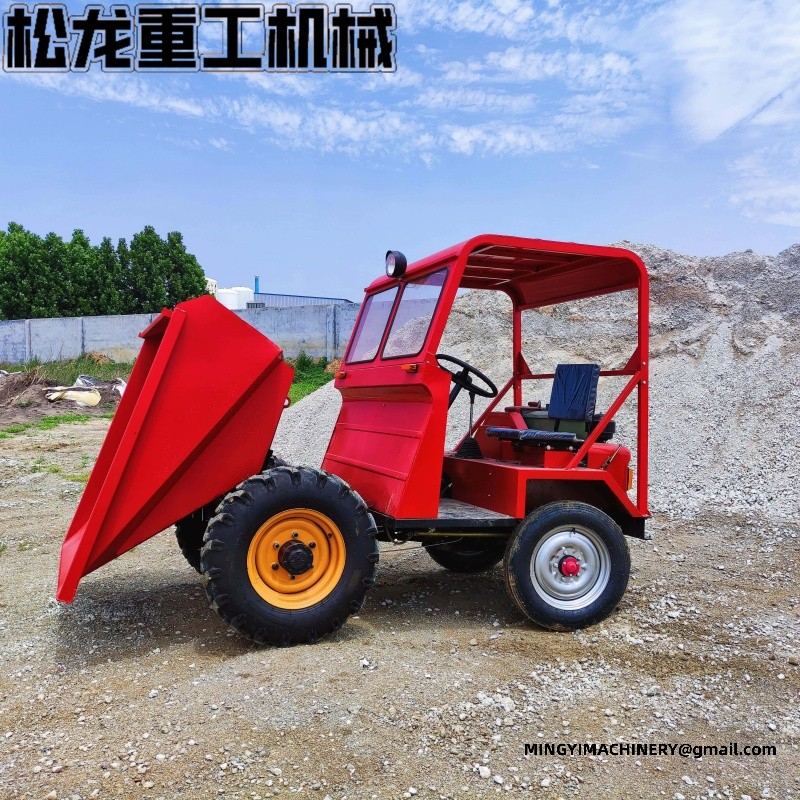
Three things wear: the tipping hydraulics, the pivot pins and the tyres. in a factory yard moving coal from the delivery point to the boiler house, the box cycles continuously, so hose condition and pin greasing are the two checks that prevent almost every unplanned stop. The CG25M diesel itself is the durable part.
Tyres deserve more attention than they get: 1,000 kg over four wheels on ground with 200 mm of clearance to catch on, and the rear axle swinging under the load. A machine kept on its tyre pressures is a machine that steers predictably at 22 km/h on the empty leg.
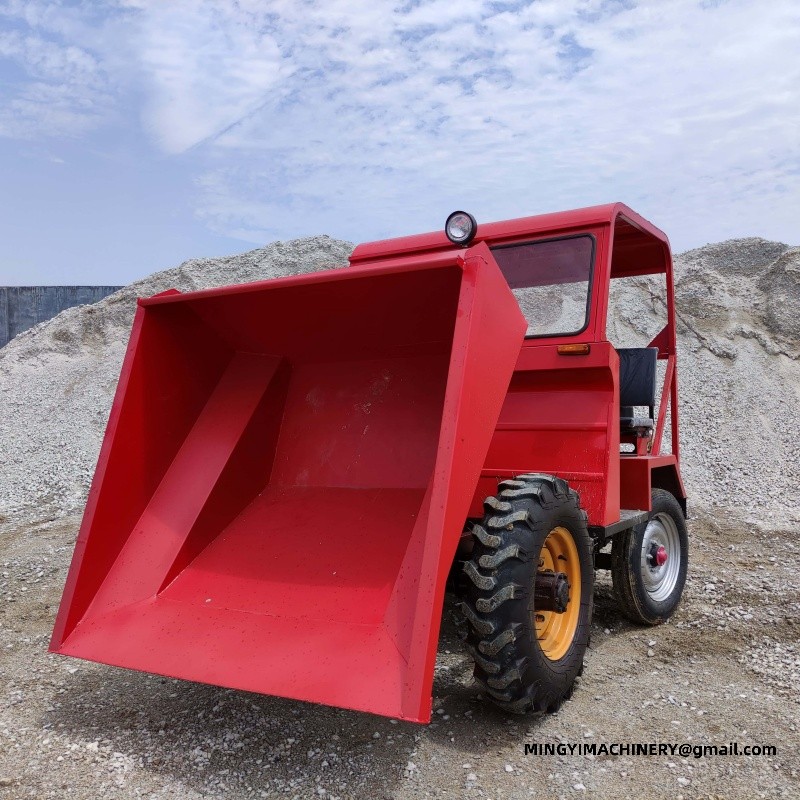
The FC10 drives through the front axle and steers through the rear, a front-axle drive with rear-axle steering (two-wheel drive). Rear steering is unusual on site machines and it is what makes the handling sharp: the front wheels keep driving while the rear pivots, so the machine turns into its own length in a factory yard moving coal from the delivery point to the boiler house.
The diesel sits at the rear, which balances the load in the front box and keeps the weight distribution sensible whether the box is full or empty. Combined with a 1,230 mm wheelbase and a 4,500 mm turning radius, the layout is what lets a 1,000 kg machine work where a larger one would spend its time manoeuvring.
| Reference specification — FC10 front tipper (1,000 kg class) | |
|---|---|
| Rated load | 1,000 kg |
| Rated bucket capacity | 0.5 m³ |
| Discharge height | 390 mm |
| Maximum gradeability | 21% |
| Bucket width | 1,580 mm |
| Travel speed, 1st gear | 6.8 km/h |
| Travel speed, 2nd gear | 22 km/h |
| Travel speed, reverse | 7.5 km/h |
| Minimum turning radius | 4,500 mm |
| Overall dimensions (L x W x H) | 2,700 x 1,600 x 2,000 |
| Track | 1,500 mm |
| Wheelbase | 1,230 mm |
| Minimum ground clearance | 200 mm |
| Diesel engine model | CG25M |
| Rated engine power | 17.3 kW |
| Rated engine speed | 2,200 r/min |
| Starting method | 12 V DC electric motor |
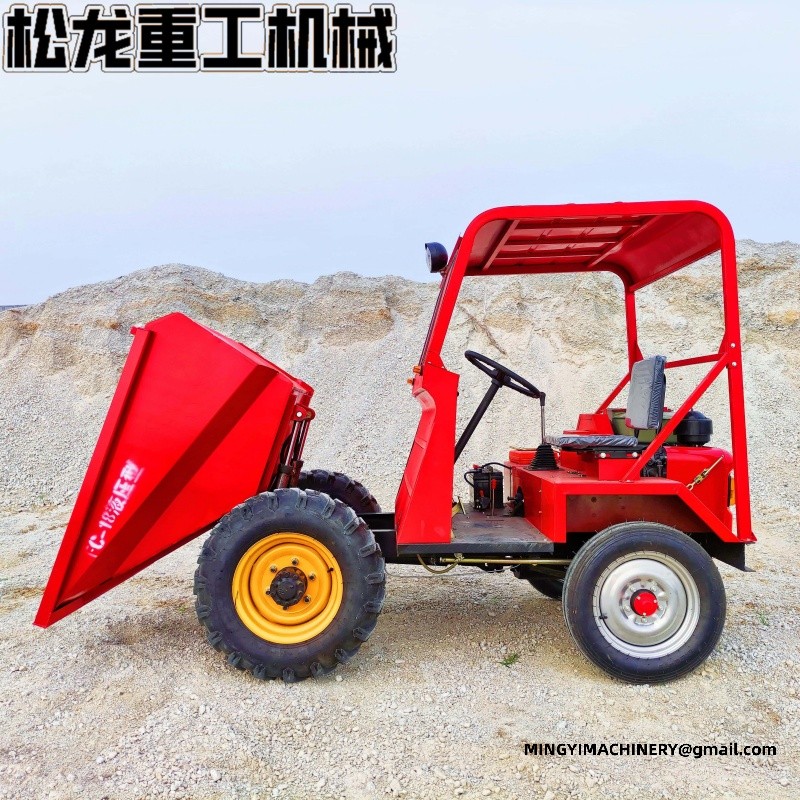
A 17.3 kW mechanical diesel turning at 2,200 r/min uses fuel in proportion to the work it does, not to the hours it stands. The two habits that effort the most are idling and travelling loaded at a speed the haul does not need.
The published travel speeds are 6.8 km/h in first, 22 km/h in second and 7.5 km/h in reverse. On a short haul in a factory yard, first gear is often both faster overall and simpler, because it avoids the stop-start of working up and down the box.
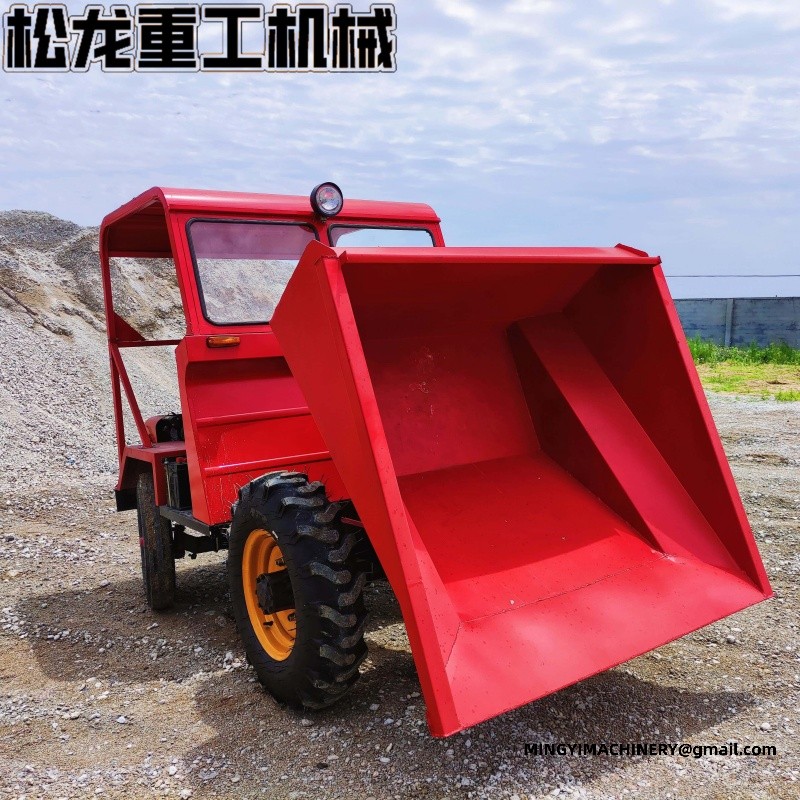
The FC10 starts on 12 V DC electric motor, and the rest of the electrical side is kept deliberately plain. There is no ECU, no sensor network and no immobiliser to strand the machine in a factory yard. What there is: a starter, a charging circuit and the lighting needed to work and to travel legally between sites.
That simplicity is why a tipper of this class can be kept running for years on a site with no specialist support. The diesel at 17.3 kW is a mechanical unit turning at 2,200 r/min, which means a competent mechanic with hand tools can diagnose it. When it does need attention, the fault is usually found by ear before any meter is produced.
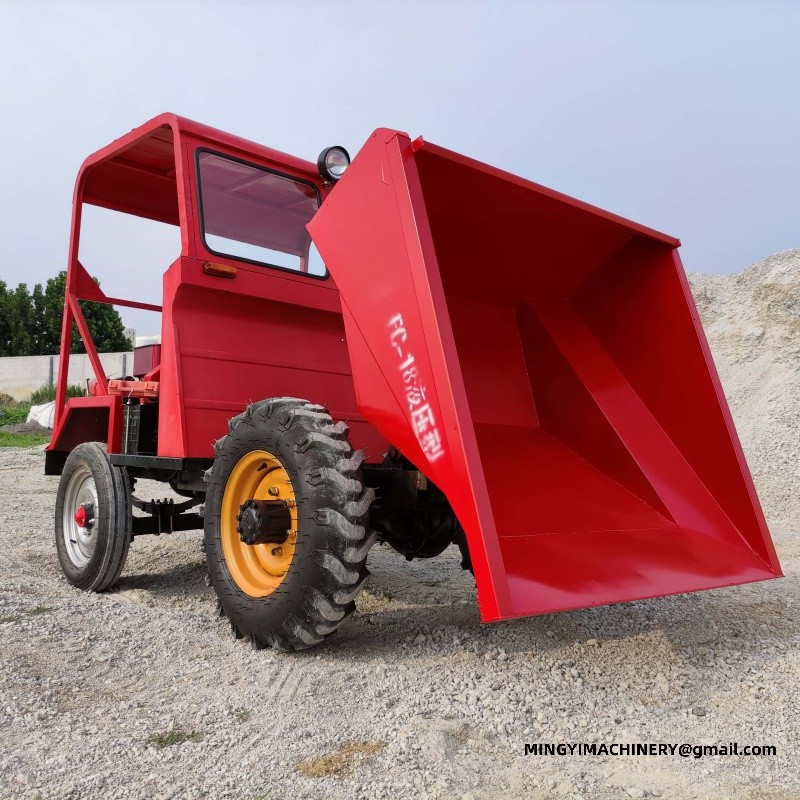
The FC10 runs a CG25M diesel rated at 17.3 kW at 2,200 r/min, and the matching is the point: a 1,000 kg machine with 21% gradeability needs torque in the working band rather than a big headline figure. in a factory yard moving coal from the delivery point to the boiler house, that is load-lugging at low speed rather than sprinting.
Starting is by 12 V DC electric motor, which means the machine starts from the key rather than from a handle — worth more than it sounds on a site where the operator gets in and out twenty times a shift. The rear-mounted position keeps the engine away from the load and makes the routine checks straightforward.
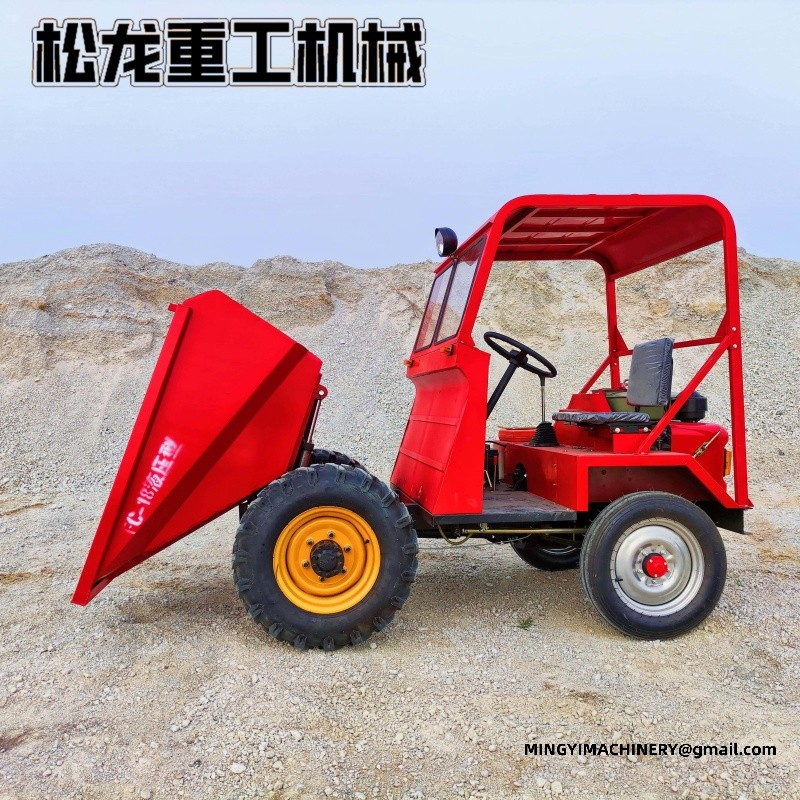
Cycle planning on a small tipper is short-haul planning. At 6.8 km/h loaded and 22 km/h empty, the FC10 is suited to runs measured in tens of metres — the distances that recur constantly in a factory yard.
The arithmetic is simple and worth doing: 1,000 kg per cycle at roughly 6.8 km/h out and 22 km/h back, plus load and tip time. Where the total distance is short, the loading and tipping dominate and a small machine loses nothing; where the run is long, cycle count falls and a different machine is needed.
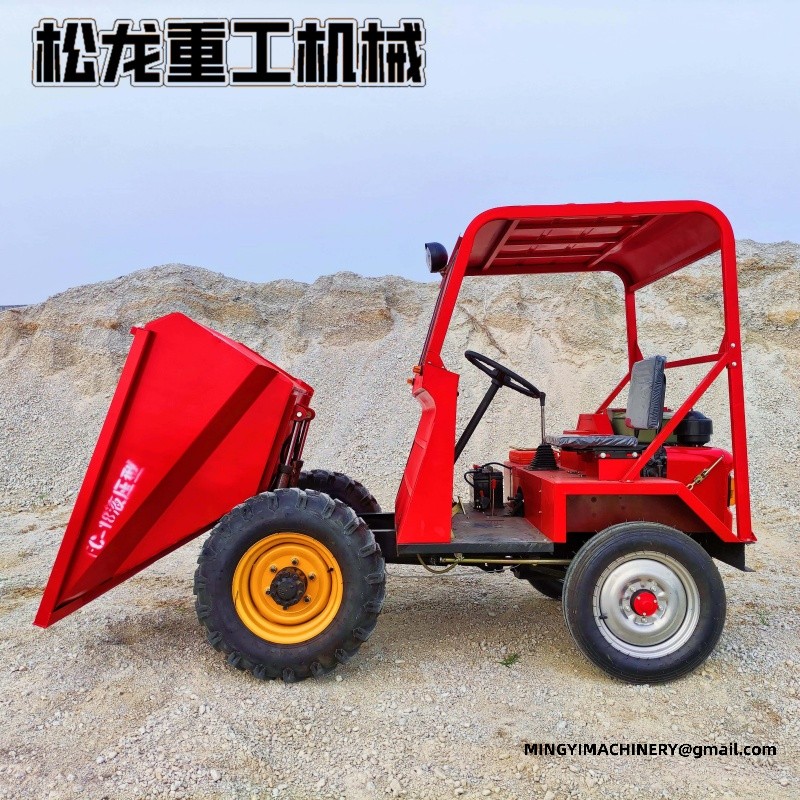
The published application list covers concrete, sand and gravel, earthwork, coal, ore and fertiliser — short-distance movement of loose material, in a factory yard moving coal from the delivery point to the boiler house. What those have in common is that they load by shovel or grab, discharge by tipping and do not need a sealed body.
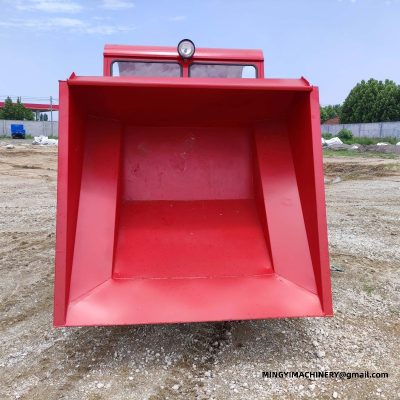
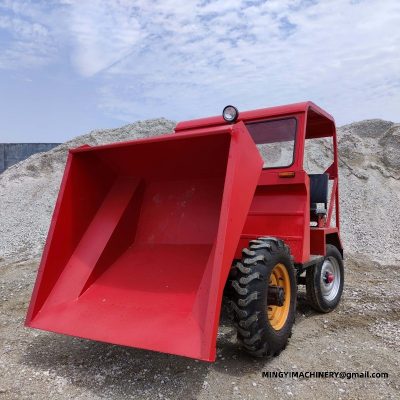
The 0.5 m³ box with a 1,580 mm width suits all of them for different reasons: width for loading from a heap, volume for light material, the 1,000 kg rating for the dense ones. A machine that publishes its limits honestly can be matched to the material rather than hoped into it.
Wet ground is where the published 200 mm of ground clearance starts to matter. Below that figure the machine is dragging its belly through the surface; above it, the tyres carry the load and the machine keeps moving. On a site that turns to mud, the clearance is what decides whether the shift continues.
The drive layout helps here too. With front-axle drive with rear-axle steering (two-wheel drive), the front axle pulls and the rear axle steers, and the 1,500 mm track keeps the load spread. What the machine will not do is float; a front tipper on soft ground is a machine that goes where a hard surface exists, or not at all.
Load it on a ramp steeper than the machine's 21% and you have created a problem the machine cannot solve. Ramps for small tippers are usually the flattest part of a transport arrangement, and they should be. Lash down at the chassis, not at the box, and chock the wheels on the trailer.
The machine weighs what it weighs; the published figures describe the working machine, not a stripped one. Check the trailer plated weight against the machine plus any attachments before the first trip, because an overloaded trailer in a factory yard is a problem that arrives at a weighbridge rather than at the site gate.
Read the dimensions together and the design intent is clear: 2,700 x 1,600 x 2,000 overall, 1,230 mm wheelbase, 1,500 mm track, 4,500 mm turning radius. A short machine with a wide track and a tight radius — built for stability in the confined spaces in a factory yard moving coal from the delivery point to the boiler house.
The 1,500 mm track is what keeps a narrow machine upright on side slopes and uneven going, and it is the figure most often overlooked when buyers compare overall widths. Two machines of the same length can behave very differently on a slope depending on how their 1,500 mm of track sits under the box.
Does a site dumper manufacturer need a ramp to discharge?
No. The box tips forward over the front axle and discharges at 390 mm, so the machine empties ahead of itself. That is the main reason a forward-tipping layout suits confined sites in a factory yard.
How often should hydraulic hoses be replaced on a site dumper manufacturer?
On condition rather than on a calendar. The box cycles continuously in a factory yard, so inspect for cracking, rubbing and weeping at the crimps, and replace before a failure stops the machine.
What is the ideal site layout for a site dumper manufacturer?
Short, direct routes with the loading point and the discharge point close together: the pattern the machine is specified for. Where the total run is short, loading and tipping dominate the cycle and a small tipper loses nothing in a factory yard.
How does the site dumper manufacturer drive and steer?
The FC10 drives through the front axle and steers at the rear — a front-axle drive with rear-axle steering (two-wheel drive). That puts the driven wheels under the load and keeps the steering wheels light, which is what makes the machine manoeuvrable in a factory yard.
How much can a site dumper manufacturer carry?
The FC10 is published at 1,000 kg of rated load with a 0.5 m³ box, working in a factory yard. Which limit arrives first depends on the material: light bulky loads fill the box, dense loads reach the weight figure.
How is a site dumper manufacturer loaded?
By hand from a heap, by machine from a heap, or from a hopper. The 0.5 m³ box on a 2,700 x 1,600 x 2,000 machine is proportioned for all three, which matters on sites that cannot guarantee one loading method in a factory yard.
What makes a used site dumper manufacturer easy to sell?
A published specification that can be verified on the machine: 1,000 kg of load, 0.5 m³ of box, 390 mm of discharge height and 4,500 mm of turning radius. A buyer who can measure the claims will pay for the certainty.
How should a site dumper manufacturer be stored between jobs?
Under cover where possible, box down, pivots greased and the hydraulic cylinder rod protected. The FC10 is 2,700 x 1,600 x 2,000 overall, so a standard site container or modest shed will take it, which is worth allowing for.
Those are the published figures for the FC10, and the same table is available for the four-wheel-drive models above it in the range. Send the narrowest passage, the steepest ramp and the worst ground on your site and the comparison can be made against real numbers.
Moving Site Dumper Manufacturer: Maintenance That Keeps It Working between sites
Securing the load is not optional. Lashing Site Dumper Manufacturer: Maintenance That Keeps It Working at the points intended for it, checking the tension before the vehicle moves and rechecking after the first kilometres is standard practice rather than extra care.
Commissioning Site Dumper Manufacturer: Maintenance That Keeps It Working on site
The first hour on site should be slow. Before Site Dumper Manufacturer: Maintenance That Keeps It Working is put to work the fluid levels are rechecked after transport, the fasteners are gone over and the machine is run light so that anything loosened in transit shows up early.
Packing, loading and shipment of Site Dumper Manufacturer: Maintenance That Keeps It Working
How a machine travels decides how it starts on arrival. Securing Site Dumper Manufacturer: Maintenance That Keeps It Working against movement, protecting the exposed cylinders and keeping the battery and fluids in the right state for the voyage all belong to the packing list.
Contact MINGYI Machinery for the current front tipper range, the four-wheel-drive models above the FC10, and a formal specification for your market. E-mail: sales@mingycn.com | LINE (ID): mingyicn
Mini Dumper Supplier: What the FC10 Table Publishes · Construction Site Dumper: Ramps, Grades and Swinging Axles · All Terrain Transport Vehicle with hydraulic tipping body - export packing and shipping · Front Tipper Truck