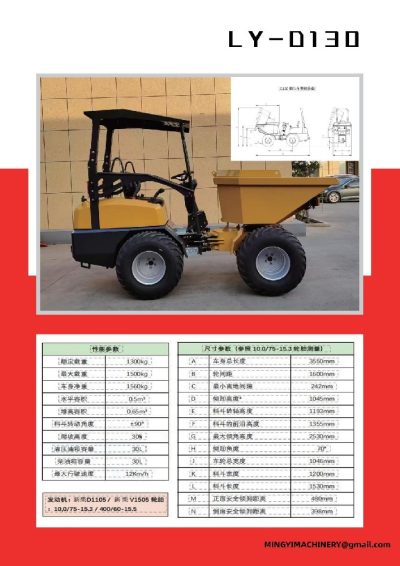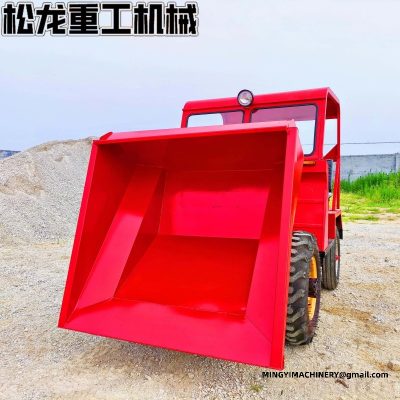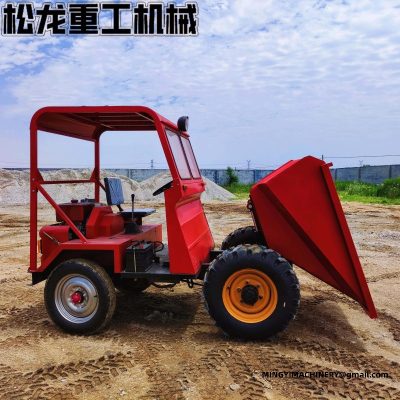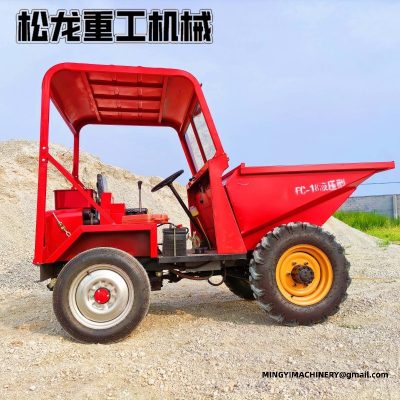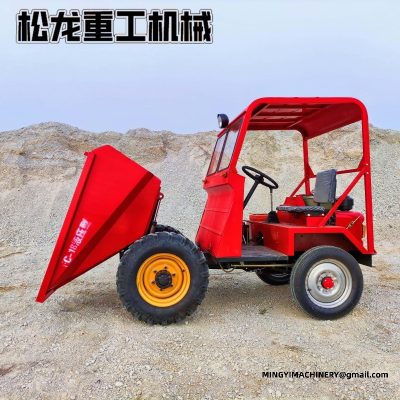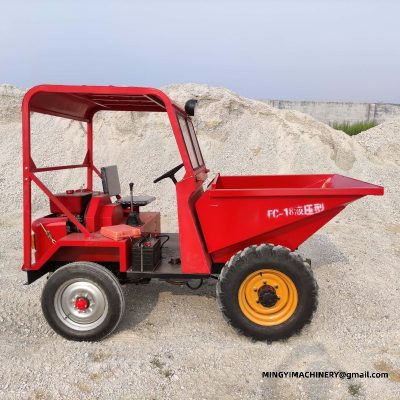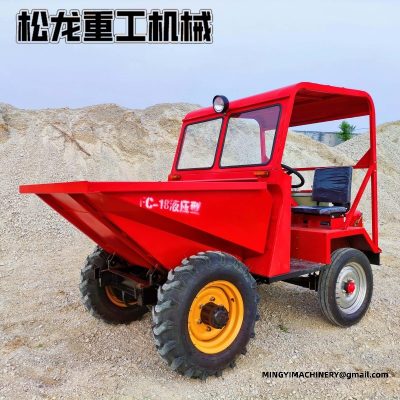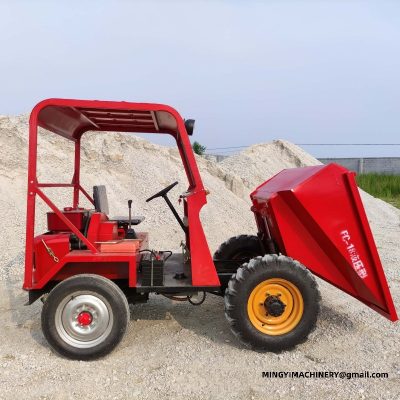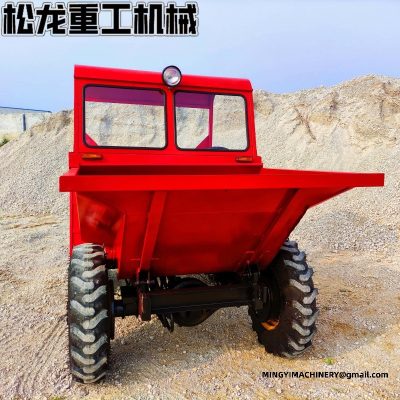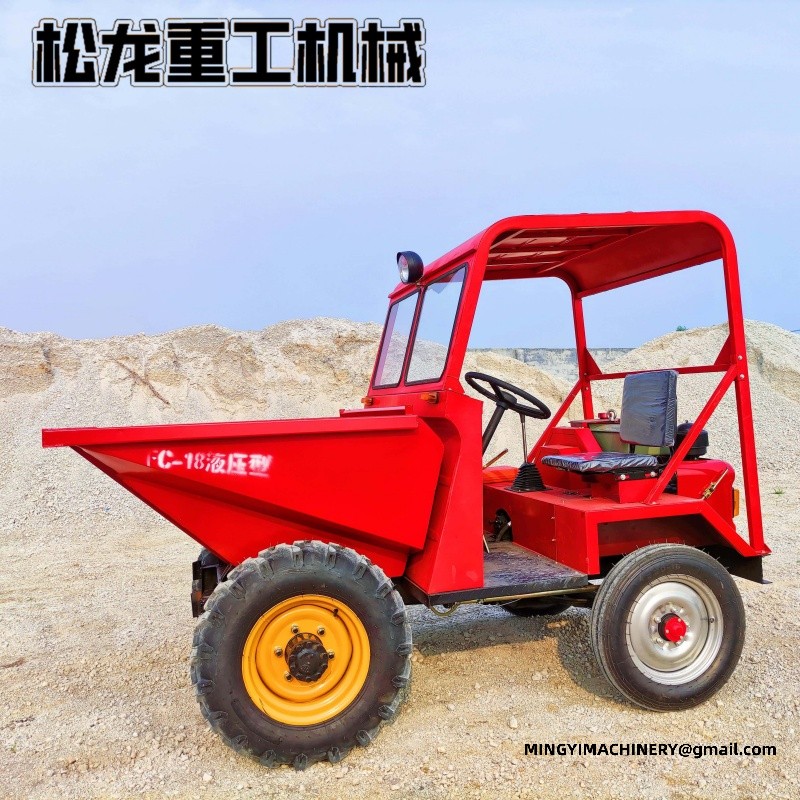
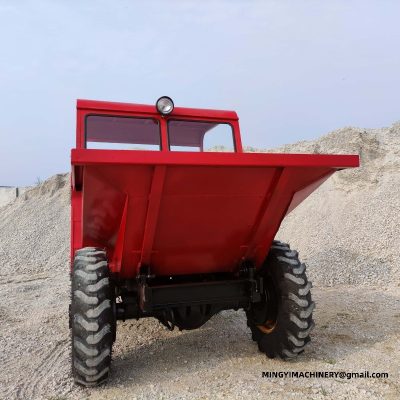
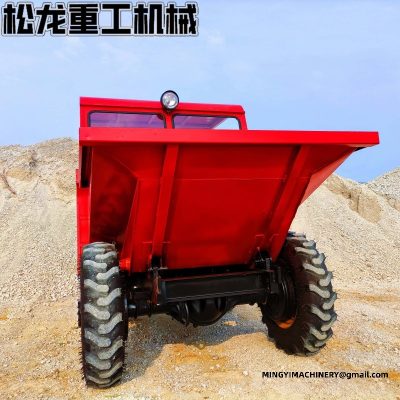
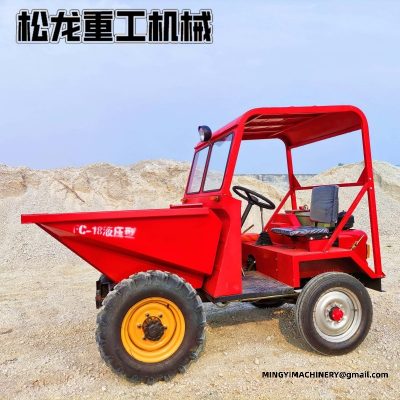
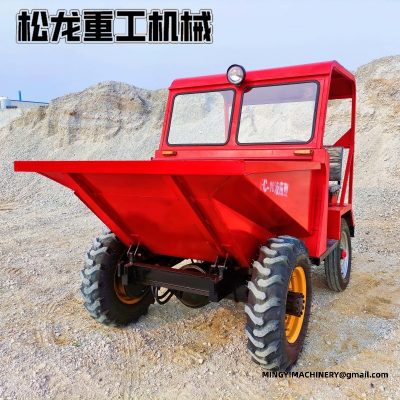
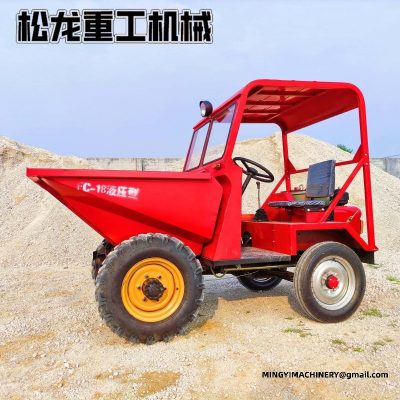
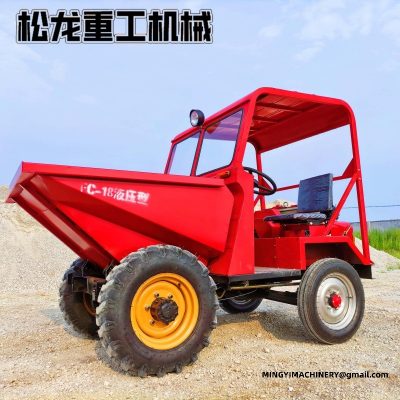
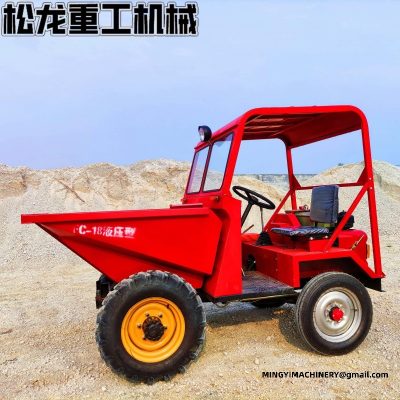
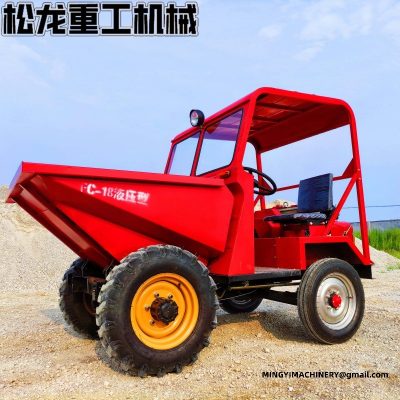
Most site plant is bought too big and then worked carefully. A mini dumper for material transport does the opposite: it is sized so that it can be used hard in the places where it is needed. At 2,700 x 1,600 x 2,000 overall and 4,500 mm turning radius, the FC10 works through openings and along routes that larger machines avoid, on a building site moving concrete between the batch point and the pour.
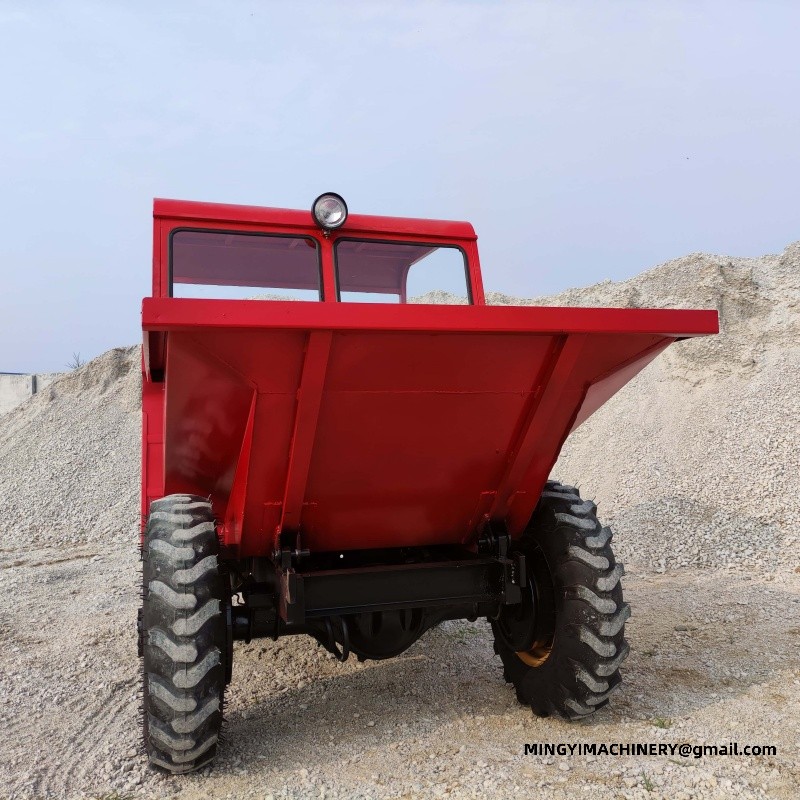
The published 2,700 x 1,600 x 2,000 is what an operator needs for a permit or an access survey. It is also what a transport company needs to specification. Having the figure to hand shortens a surprising number of conversations, from a site induction to a plant-hire agreement.
The same applies to the machine's working envelope. A 4,500 mm turning radius and a 1,000 kg payload are the two figures that most often decide whether a machine may work a particular part of a site.
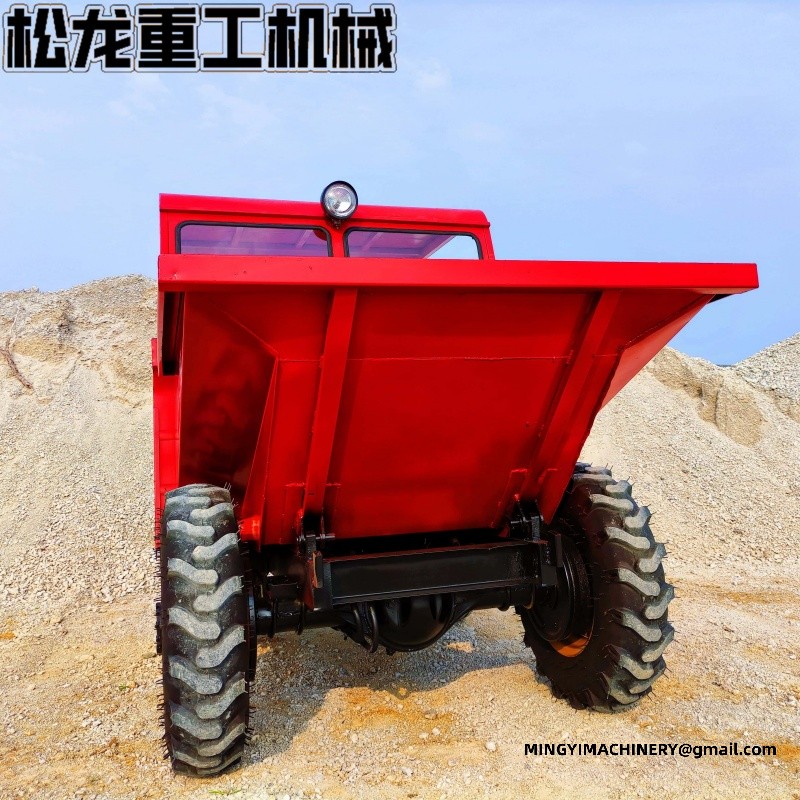
Specifying the FC10 is unusually straightforward because the table is complete: load 1,000 kg, box 0.5 m³, discharge 390 mm, turning radius 4,500 mm, clearance 200 mm, gradeability 21%, engine CG25M at 17.3 kW.
Check each against the site in the order they will constrain you: route width against 2,700 x 1,600 x 2,000 and 1,500 mm, the ramp against 21%, the worst ground against 200 mm, and the receiving point against 390 mm. A machine that passes all four on a building site is the machine for the job.
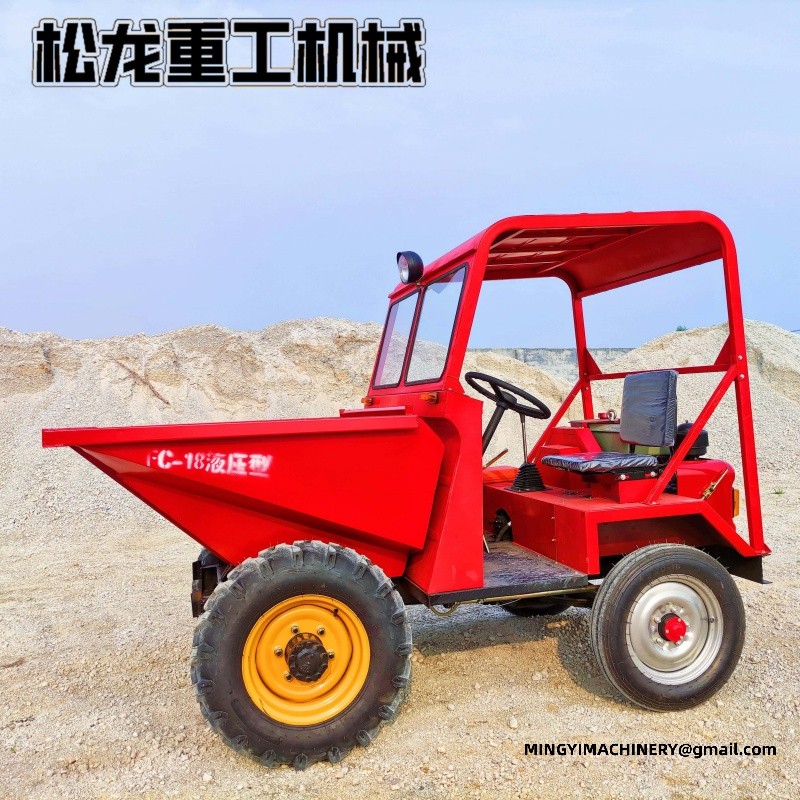
There is a size of job below which a large machine takes more than it earns. Access on a building site is usually the reason: a tipper at 2,700 x 1,600 x 2,000 with a 4,500 mm turning radius reaches the pour or the face that a bigger machine cannot approach.
The honest comparison is not tipper against tipper but tipper against wheelbarrow and shovel. At 1,000 kg per trip, one operator and one FC10 replace a small crew and remove the hardest part of the work. That is the job the machine was designed for.
| Specification extract — FC10 front tipper (1,000 kg class) | |
|---|---|
| Rated load | 1,000 kg |
| Rated bucket capacity | 0.5 m³ |
| Discharge height | 390 mm |
| Maximum gradeability | 21% |
| Bucket width | 1,580 mm |
| Travel speed, 1st gear | 6.8 km/h |
| Travel speed, 2nd gear | 22 km/h |
| Travel speed, reverse | 7.5 km/h |
| Minimum turning radius | 4,500 mm |
| Overall dimensions (L x W x H) | 2,700 x 1,600 x 2,000 |
| Track | 1,500 mm |
| Wheelbase | 1,230 mm |
| Minimum ground clearance | 200 mm |
| Diesel engine model | CG25M |
| Rated engine power | 17.3 kW |
| Rated engine speed | 2,200 r/min |
| Starting method | 12 V DC electric motor |
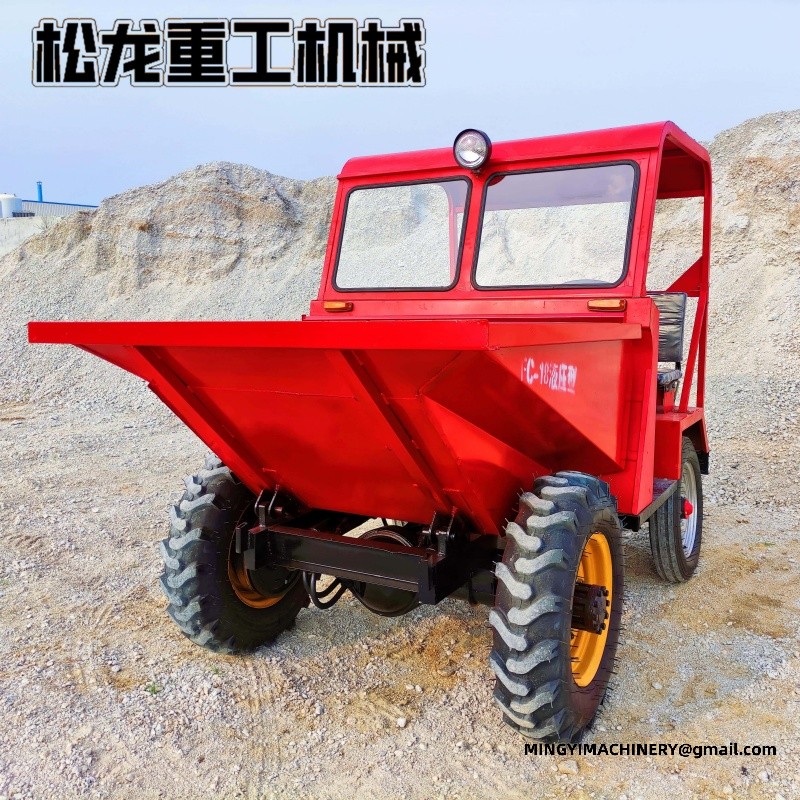
The FC10 is the published reference in the range, and above it sit the FC15/FC18/FC20/FC25/FC30 — four-wheel-drive hydraulic tippers with electric start, lighting, signal lamps and an optional canopy. Those models are built for duties beyond what the 1,000 kg FC10 is specified for, on a building site.
What separates them from the FC10 is drive and equipment: four-wheel drive where the FC10 drives its front axle, and factory-fitted lighting and signals where the FC10 is a daylight site machine. The right choice is decided by the ground and the hours on a building site moving concrete between the batch point and the pour, not by the largest number in a model designation.
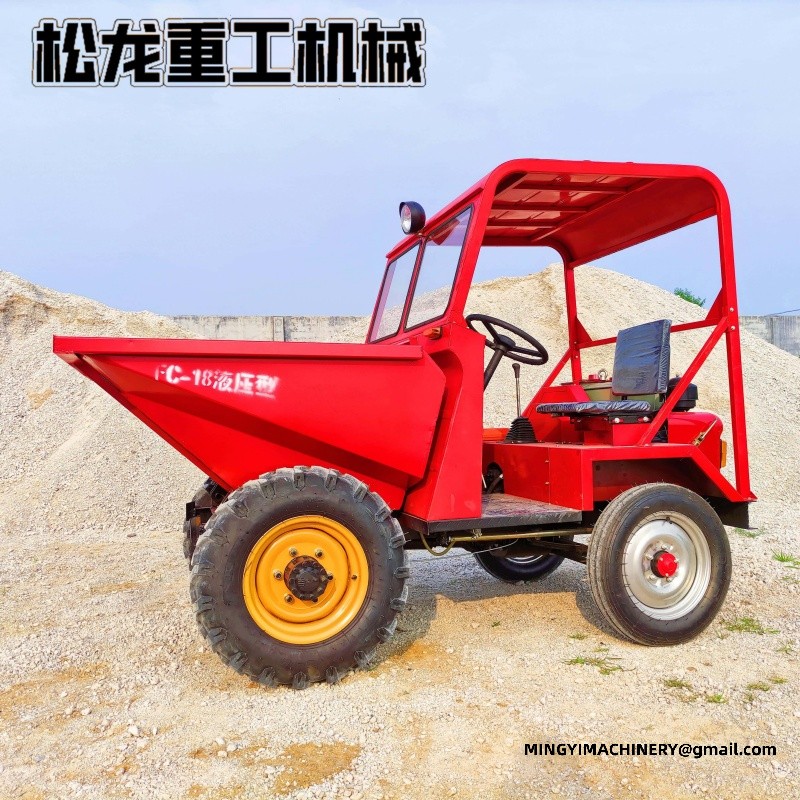
A 1,580 mm box on a 2,700 x 1,600 x 2,000 machine can be loaded three ways: from a heap by hand, from a heap by machine, or from a hopper. On a building site, all three happen on the same site in the same week, and the box is proportioned to suit all of them.
0.5 m³ is small enough to fill by hand from a pile of concrete and large enough that filling it mechanically is not wasted effort. That range is deliberate: the machine is bought by sites that cannot guarantee a loading method, so it works with whichever is available.
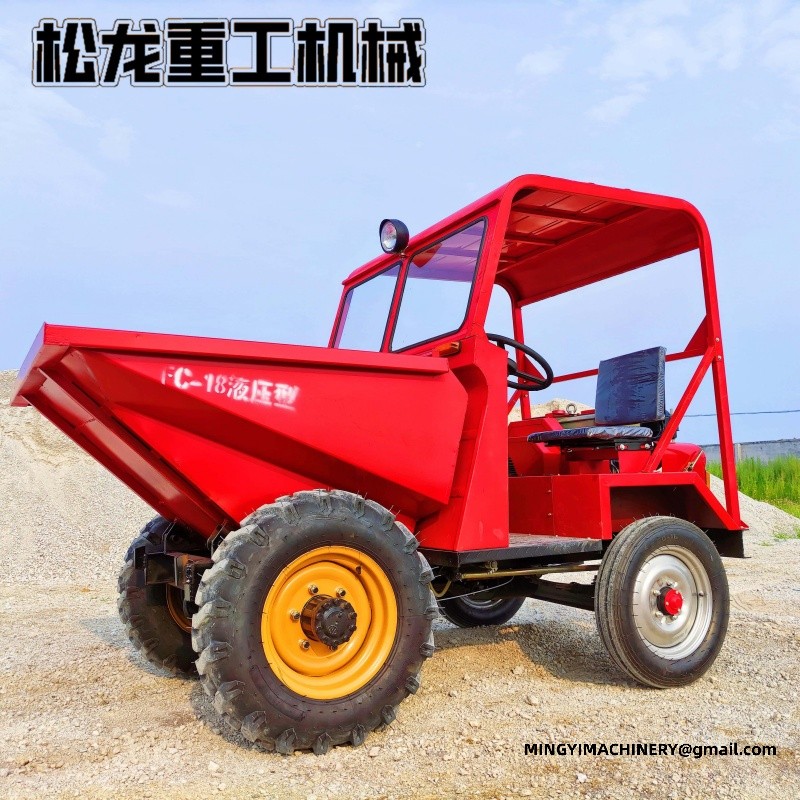
Hot weather is easier on a mechanical diesel than cold, but hard on everything else. Dust on a building site works its way into the air filter, the radiator matrix and the hydraulic breather. On a machine rated to run at 2,200 r/min continuously, airflow is the whole of the cooling story.
The maintenance answer is unglamorous: clean the filter at the interval the site actually demands rather than the one in the book, and check the radiator fins with a torch. A front tipper that overheats is nearly always a front tipper with a blocked matrix, not a faulty thermostat.
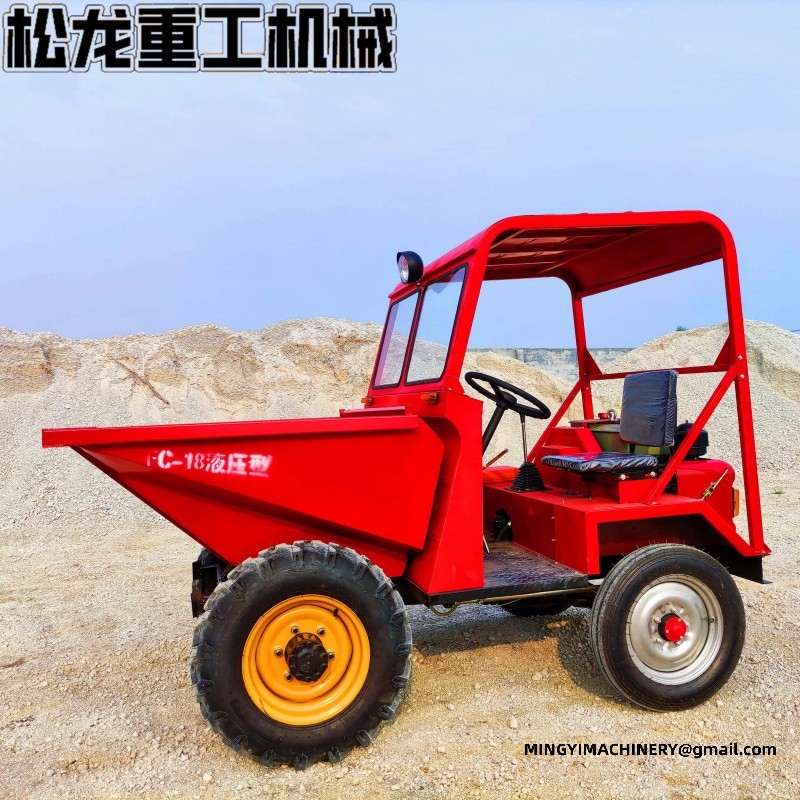
Top speed sells machines; cycle time pays for them. At 6.8 km/h loaded and 22 km/h empty, the FC10 is geared for the run between stockpile and discharge point on a building site moving concrete between the batch point and the pour — short enough that acceleration and manoeuvring matter more than maximum speed.
That is also why reverse is geared at 7.5 km/h rather than as an afterthought. On a site where the machine works back and forth all day, the return leg is half the cycle, and gearing it properly is worth more than a higher number on the specification sheet.
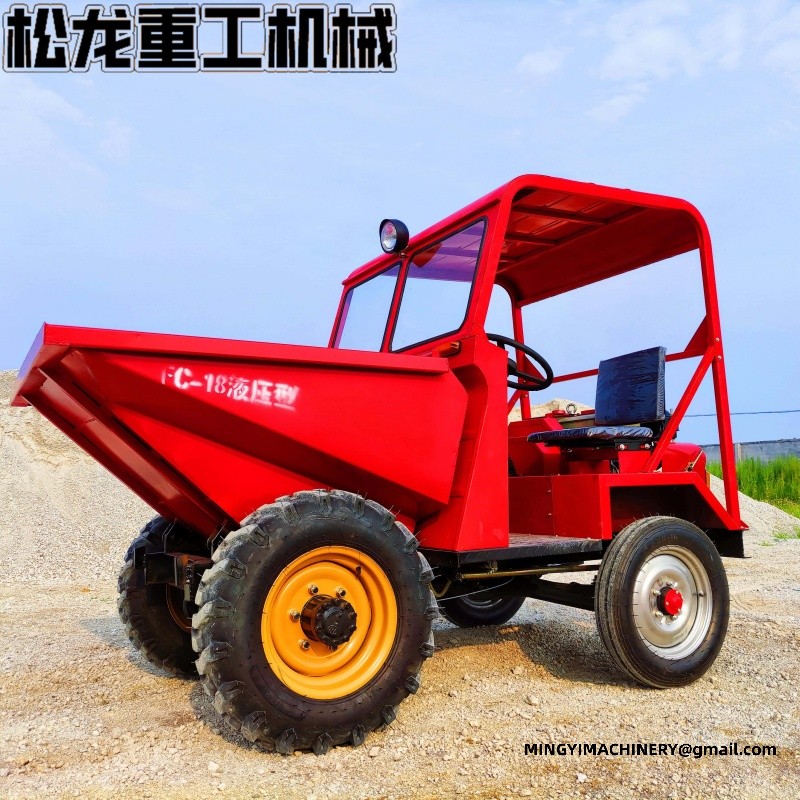
1,000 kg of concrete sitting ahead of the front axle is what makes a front tipper work: the weight is on the driven wheels, so traction arrives when the load does. The rear-mounted CG25M balances it, which is why the machine does not need ballast.
The published 1,230 mm wheelbase keeps that weight transfer manageable on ramps of up to 21%. Put the same load on a machine with a longer wheelbase and the front axle carries it differently; put it on a shorter one and the machine pitches. The FC10's 1,230 mm and 1,500 mm are matched to the 1,000 kg it is rated for.
A front tipper lives on its hydraulics and its pivots, and both are checked in a walk-round. on a building site moving concrete between the batch point and the pour, the box tips and returns hundreds of times a day, so the pins, hoses and cylinders deserve a glance each shift — as do the tyres, which take the weight of 1,000 kg over 1,500 mm of track.
The CG25M diesel needs oil and filter attention on the hours, and the battery behind the 12 V DC electric motor needs keeping charged on machines that stop and start frequently. None of that is specialised work, which is the point of a machine specified for sites rather than for workshops.
Read the dimensions together and the design intent is clear: 2,700 x 1,600 x 2,000 overall, 1,230 mm wheelbase, 1,500 mm track, 4,500 mm turning radius. A short machine with a wide track and a tight radius — built for stability in the confined spaces on a building site moving concrete between the batch point and the pour.
The 1,500 mm track is what keeps a narrow machine upright on side slopes and uneven going, and it is the figure most often overlooked when buyers compare overall widths. Two machines of the same length can behave very differently on a slope depending on how their 1,500 mm of track sits under the box.
The FC10 runs a 1,500 mm track on a 1,230 mm wheelbase, and those proportions decide how it behaves on the surfaces on a building site moving concrete between the batch point and the pour. A wide track relative to the wheelbase resists tipping on side slopes; a short wheelbase keeps the machine manoeuvrable on a turning circle.
Ground clearance of 200 mm sets the limit at the bottom end. Below the axle line the machine is honest about what it can cross; above it, the swinging rear axle does the work. Where the route includes one bad stretch on a building site, those two features are what get the load through it.
What is the rear axle arrangement on a mini dumper for material transport?
The rear axle steers and swings, while the front axle drives — a front-axle drive with rear-axle steering (two-wheel drive). The swinging rear axle is what keeps all wheels in contact on uneven ground on a building site.
What is the engine power rating of a mini dumper for material transport?
17.3 kW at 2,200 r/min from the CG25M, mounted at the rear. The rating is matched to a 1,000 kg machine rather than chosen for a headline figure.
What is the difference between the FC10 and a mini dumper?
Largely a naming convention. The FC10 is a 1,000 kg front-tipping machine with a 0.5 m³ box, described in the published table as suitable for short-distance movement of loose material; that is what the term mini dumper covers.
How often should hydraulic hoses be replaced on a mini dumper for material transport?
On condition rather than on a calendar. The box cycles continuously on a building site, so inspect for cracking, rubbing and weeping at the crimps, and replace before a failure stops the machine.
How much can a mini dumper for material transport carry?
The FC10 is published at 1,000 kg of rated load with a 0.5 m³ box, working on a building site. Which limit arrives first depends on the material: light bulky loads fill the box, dense loads reach the weight figure.
What materials can a mini dumper for material transport move?
The published application list covers concrete, sand and gravel, earthwork, coal, ore and fertiliser — short-distance movement of loose material. The 0.5 m³ box handles all of them, with the load limit deciding which one governs.
What gradient can a mini dumper for material transport climb?
Gradeability is 21%, measured with the machine working rather than coasting. Loading ramps and site inclines are usually well inside that figure; the constraint is more often traction than power.
What tyres does a mini dumper for material transport run?
The machine carries 1,000 kg of load across a 1,500 mm track and a 1,230 mm wheelbase, which keeps the load per tyre modest. Correct pressures matter more than size on soft ground on a building site.
Where the route fits the FC10, the two-wheel-drive machine is the simpler and simpler answer; where the ground does not, the four-wheel-drive models in the family are the step up. Deciding which case applies is most of the purchase.
Handover and getting familiar with Mini Dumper for Material Transport: Load and Route
Familiarisation is not the same as reading the manual. Sitting on Mini Dumper for Material Transport: Load and Route, working through the controls at low speed and learning where the machine balances takes an hour, and that hour is what keeps the first week uneventful.
Wear items and spares worth holding for Mini Dumper for Material Transport: Load and Route
A spares list should follow the duty cycle. A Mini Dumper for Material Transport: Load and Route working every day in abrasive dust consumes filters and cutting edges far faster than the same machine used once a week, and the shelf should be stocked for the harder case.
Storage and long idle periods for Mini Dumper for Material Transport: Load and Route
The battery and the fuel are the first things to suffer in storage. Preparing Mini Dumper for Material Transport: Load and Route properly at the start of the idle period avoids the flat battery and the contaminated tank that greet an unprepared machine.
A second operator for Mini Dumper for Material Transport: Load and Route
Different operators suit different work. The person who is quickest with Mini Dumper for Material Transport: Load and Route on open ground is not always the one who is safest in a confined space, and having both available is a genuine advantage.
Documents that travel with Mini Dumper for Material Transport: Load and Route
The machine is only half of what arrives. The parts book, the service schedule and the declarations that come with Mini Dumper for Material Transport: Load and Route are what let the owner register, insure and maintain it without a second round of emails.
Contact MINGYI Machinery for the current front tipper range, the four-wheel-drive models above the FC10, and a formal specification for your market. E-mail: sales@mingycn.com | LINE (ID): mingyicn
OEM Front Tipping Dumper Manufacturer: Build Records · China Front Tipping Dumper Factory Supplier: Range · articulated dumper for forestry and timber haulage · Front Tipper Truck