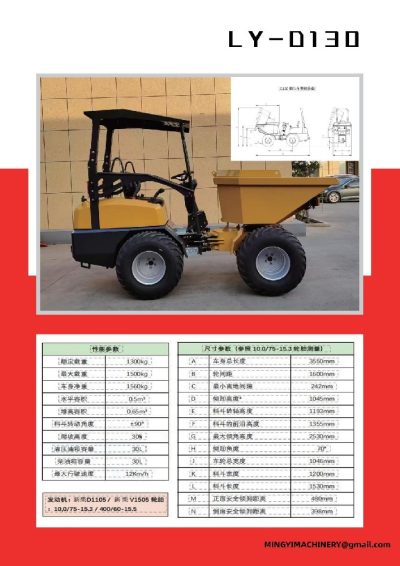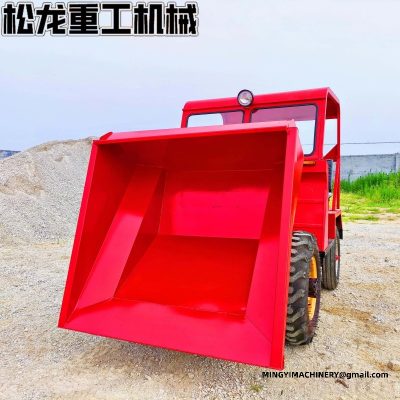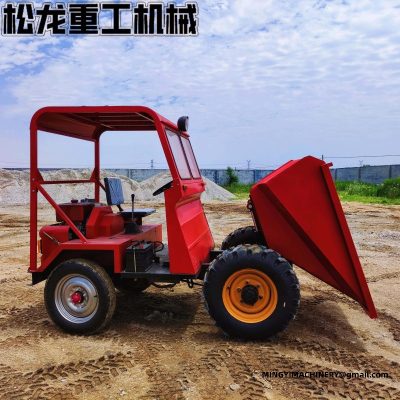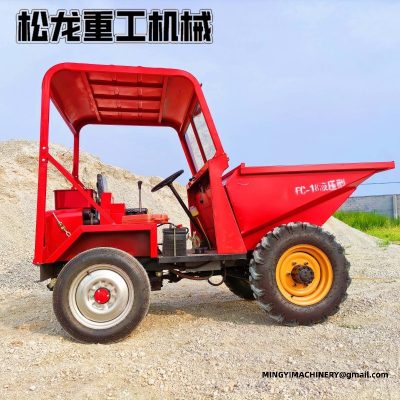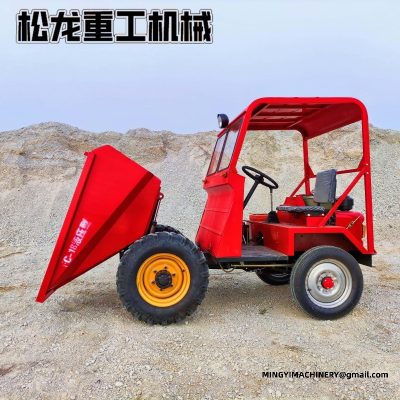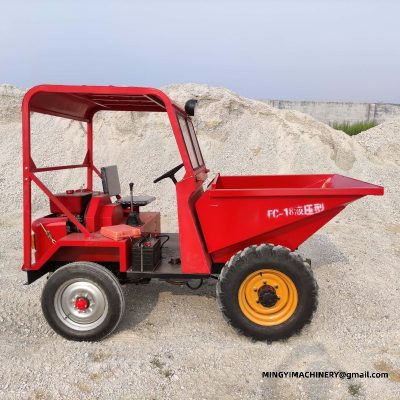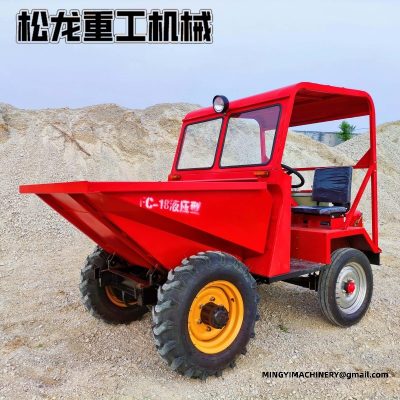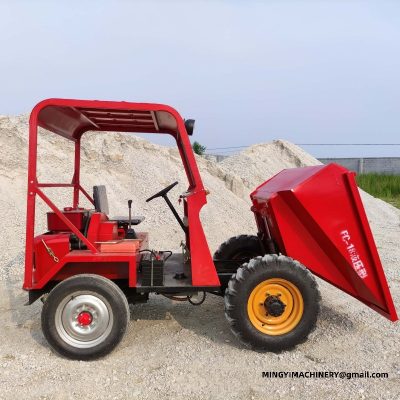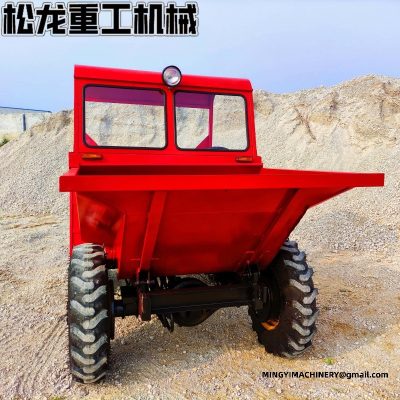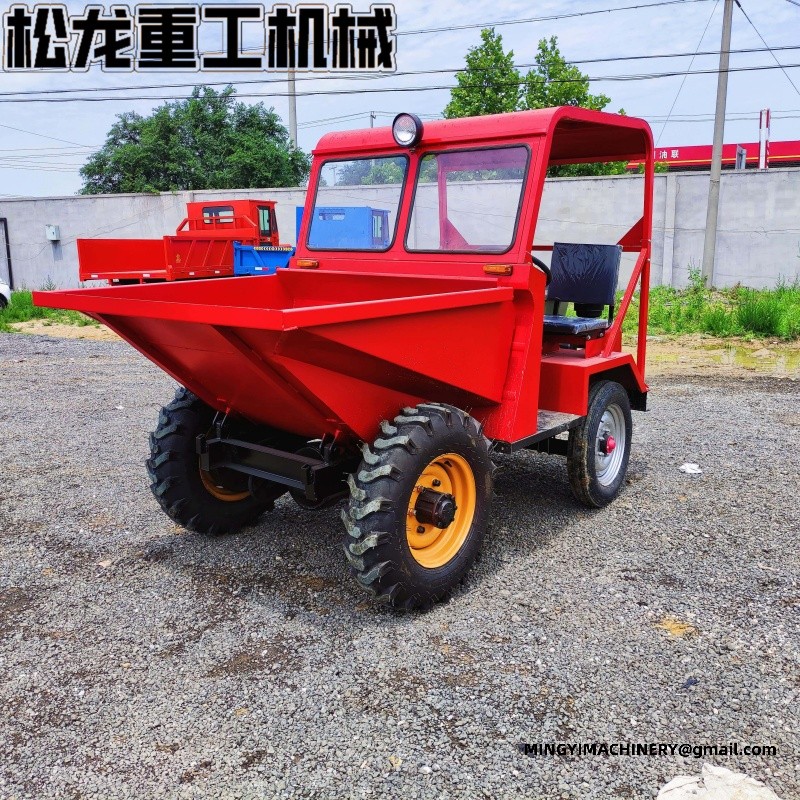
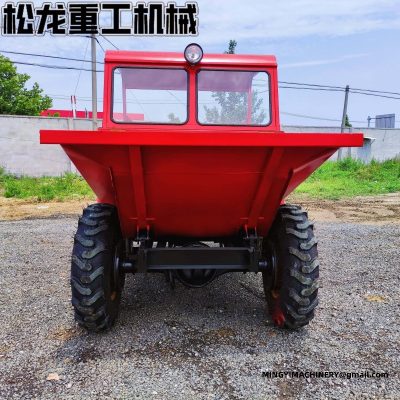
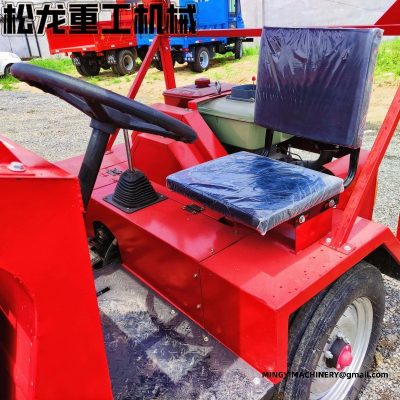
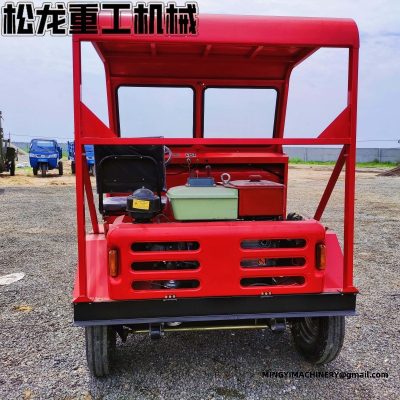
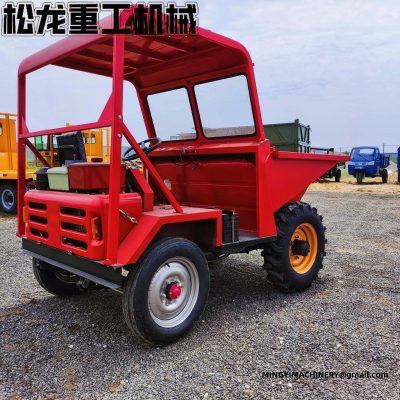
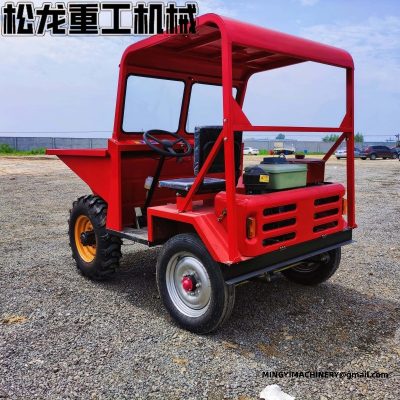
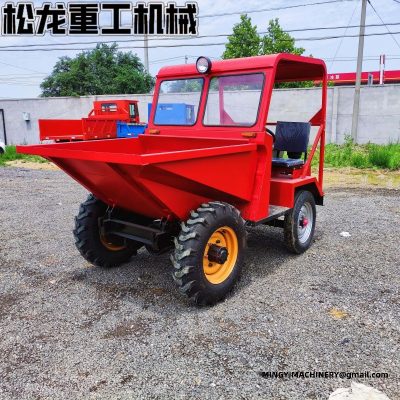
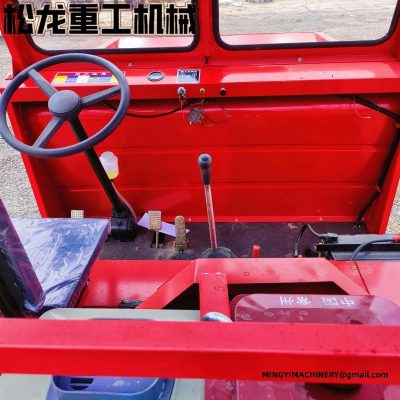
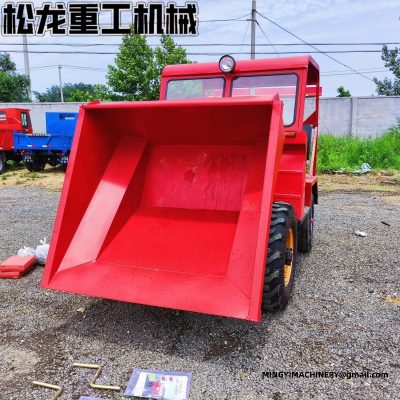
The case for a front tipping dumper for construction rests on three numbers that are usually left off a brochure: turning radius, ground clearance and gradeability. Together they describe where the machine can go rather than what it can carry, and where a front tipping dumper for construction works, that is what gets decided first. Here they are 4,500 mm, 200 mm and 21% respectively.
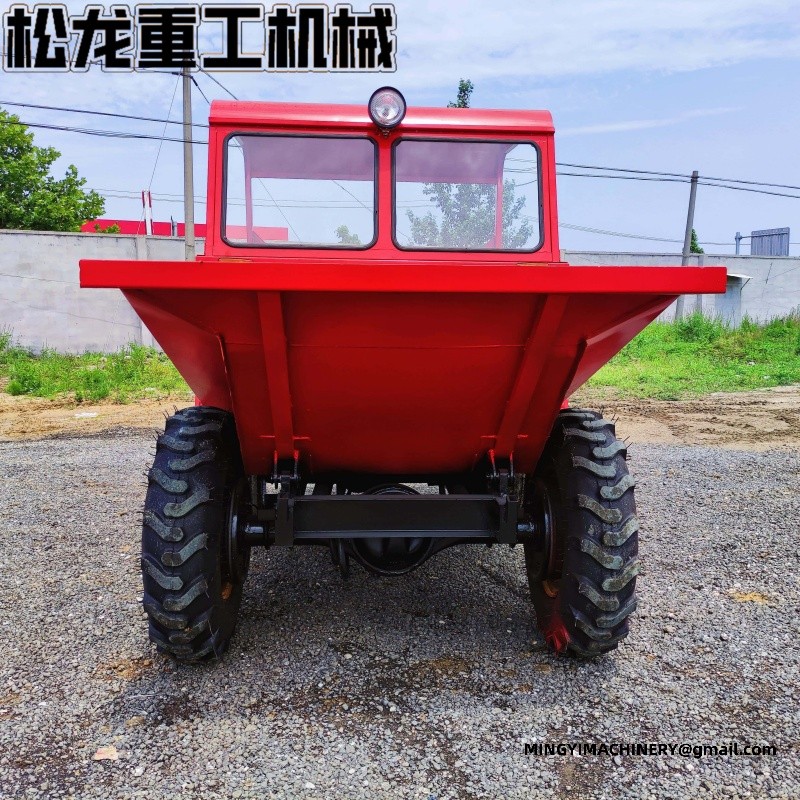
Keep the specification, the service record and the tyre details together with the machine. When the tipper is resold, or when a site asks for evidence of maintenance, that folder is the difference between a quick answer and a slow one.
It also pays on the maintenance side. A machine that has been worked on rural work for years accumulates a history, and knowing what has been replaced tells the next mechanic where to look. The FC10 is simple enough that this history is short, which is exactly the point of owning one.
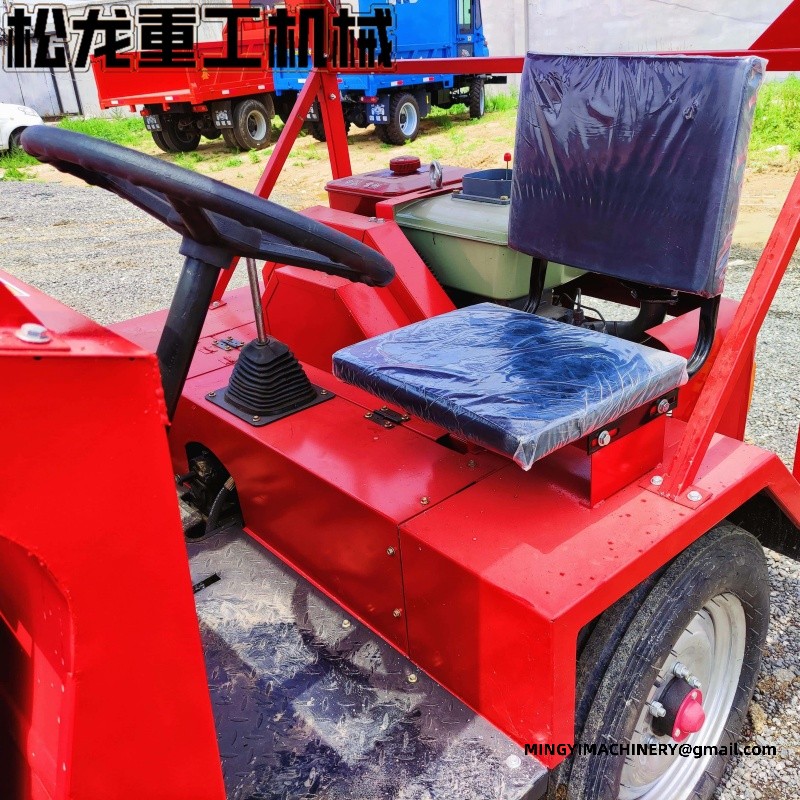
The FC10 drives through the front axle and steers through the rear, a front-axle drive with rear-axle steering (two-wheel drive). Rear steering is unusual on site machines and it is what makes the handling sharp: the front wheels keep driving while the rear pivots, so the machine turns into its own length on rural work carrying fertiliser from the store to the field headland.
The diesel sits at the rear, which balances the load in the front box and keeps the weight distribution sensible whether the box is full or empty. Combined with a 1,230 mm wheelbase and a 4,500 mm turning radius, the layout is what lets a 1,000 kg machine work where a larger one would spend its time manoeuvring.
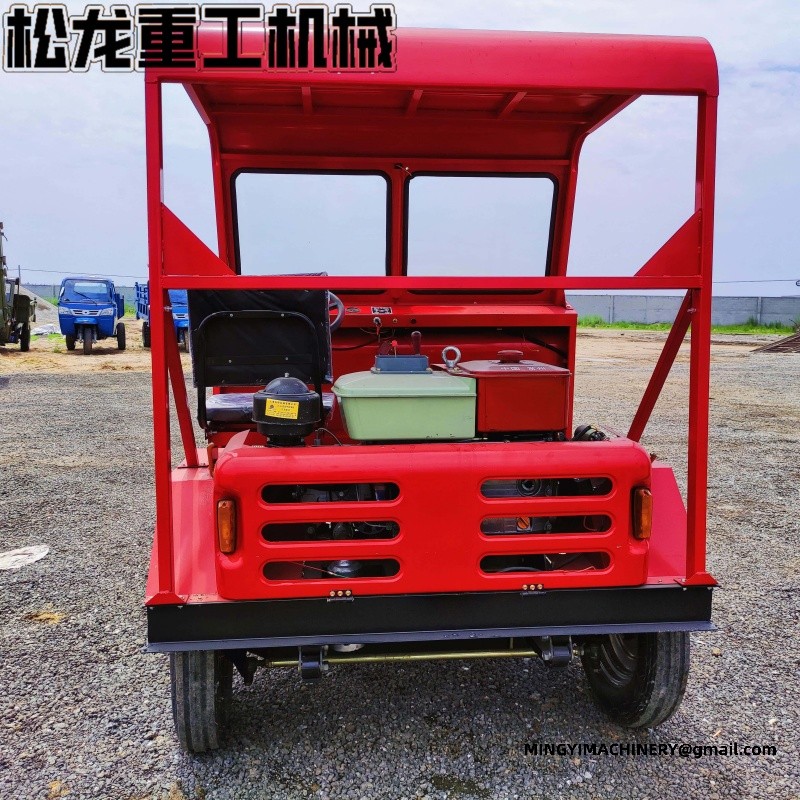
A 17.3 kW mechanical diesel turning at 2,200 r/min uses fuel in proportion to the work it does, not to the hours it stands. The two habits that effort the most are idling and travelling loaded at a speed the haul does not need.
The published travel speeds are 6.8 km/h in first, 22 km/h in second and 7.5 km/h in reverse. On a short haul on rural work, first gear is often both faster overall and simpler, because it avoids the stop-start of working up and down the box.
| Reference specification — FC10 front tipper (1,000 kg class) | |
|---|---|
| Rated load | 1,000 kg |
| Rated bucket capacity | 0.5 m³ |
| Discharge height | 390 mm |
| Maximum gradeability | 21% |
| Bucket width | 1,580 mm |
| Travel speed, 1st gear | 6.8 km/h |
| Travel speed, 2nd gear | 22 km/h |
| Travel speed, reverse | 7.5 km/h |
| Minimum turning radius | 4,500 mm |
| Overall dimensions (L x W x H) | 2,700 x 1,600 x 2,000 |
| Track | 1,500 mm |
| Wheelbase | 1,230 mm |
| Minimum ground clearance | 200 mm |
| Diesel engine model | CG25M |
| Rated engine power | 17.3 kW |
| Rated engine speed | 2,200 r/min |
| Starting method | 12 V DC electric motor |
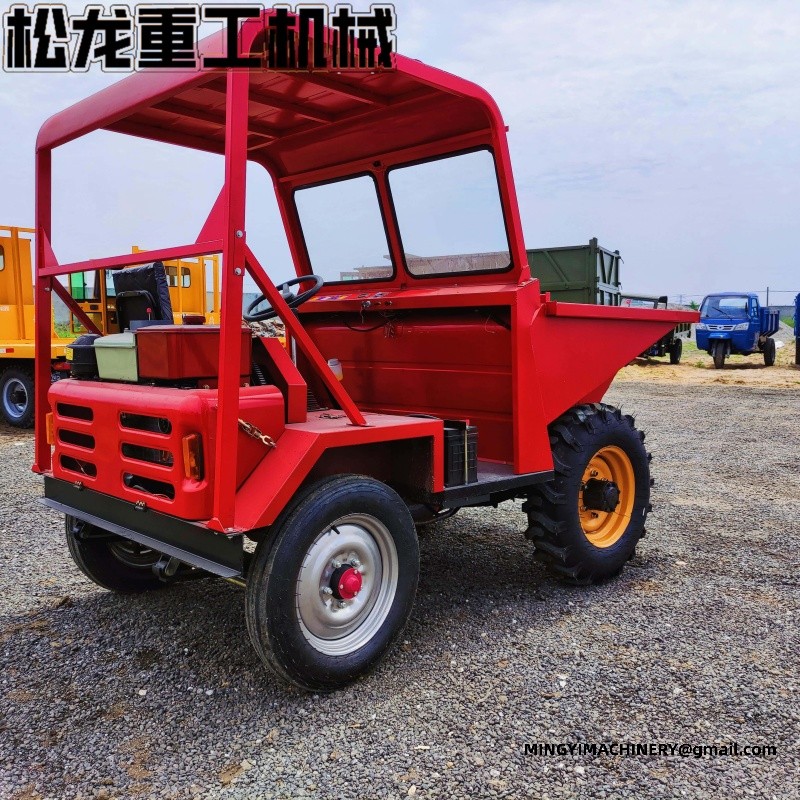
On most sites the front tipper is the link between a stockpile and a process: heap to mixer, excavation to spoil, store to working face. Its job is to keep that link short and continuous on rural work, which is why turning radius and tipping layout matter more than top speed.
Read the FC10's figures with that role in mind. 4,500 mm lets it work both ends of the link in confined space; 390 mm of forward discharge lets it empty without a ramp; 1,000 kg keeps each journey useful. The specification describes a link in a chain rather than a standalone machine.
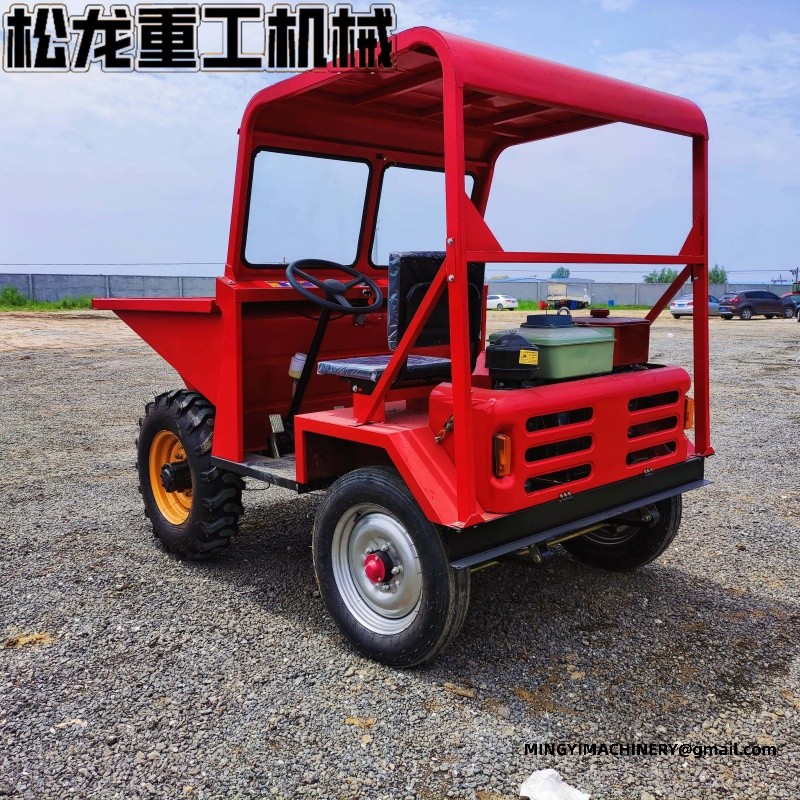
Wheelbarrows, tractor-and-trailer and full-size dump trucks all move material; the front tipper wins where the route is short, confined or rough. on rural work carrying fertiliser from the store to the field headland, the 2,700 x 1,600 x 2,000 machine with 4,500 mm of turning radius and 200 mm of clearance goes where the alternatives cannot, and tips forward without a ramp.
The 1,000 kg and 0.5 m³ figures are the honest middle of that argument: large enough that fertiliser moves in useful quantities, small enough that the machine fits the site. Machines that try to be both usually end up too big for the route and too small for the load.
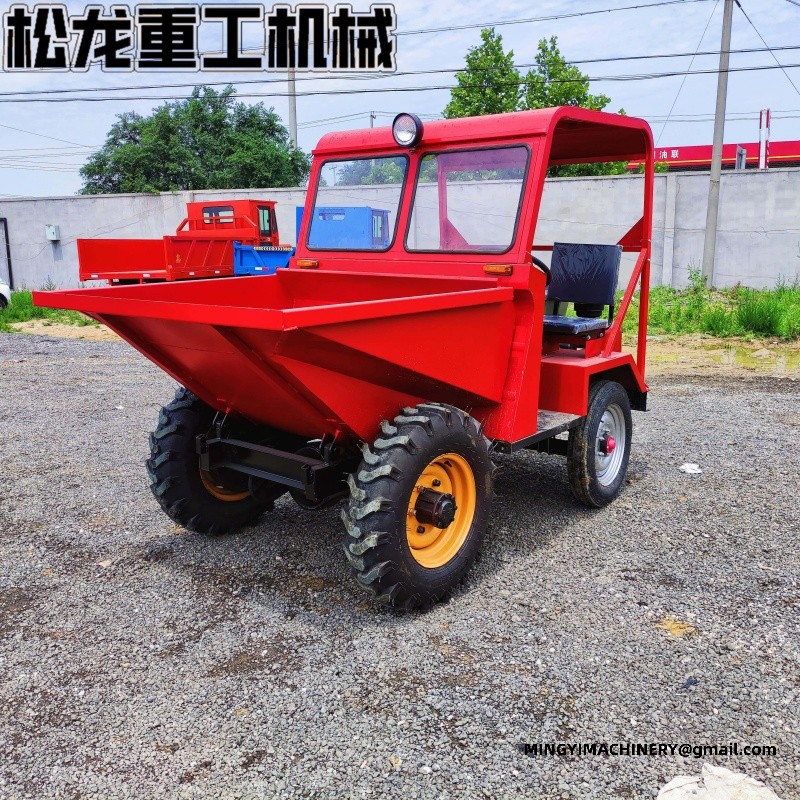
The safety case for a small front tipper is largely the safety case for not needing a larger machine. 2,700 x 1,600 x 2,000 overall and 4,500 mm of turning radius mean fewer blind reversing movements on rural work, and forward tipping at 390 mm means nobody has to stand behind a raised box.
Gradeability of 21% and clearance of 200 mm define the safe envelope. Worked inside those figures, on the firm ground the two-wheel-drive layout is specified for, the machine is predictable. The specification sheet is also, read properly, the operating manual.
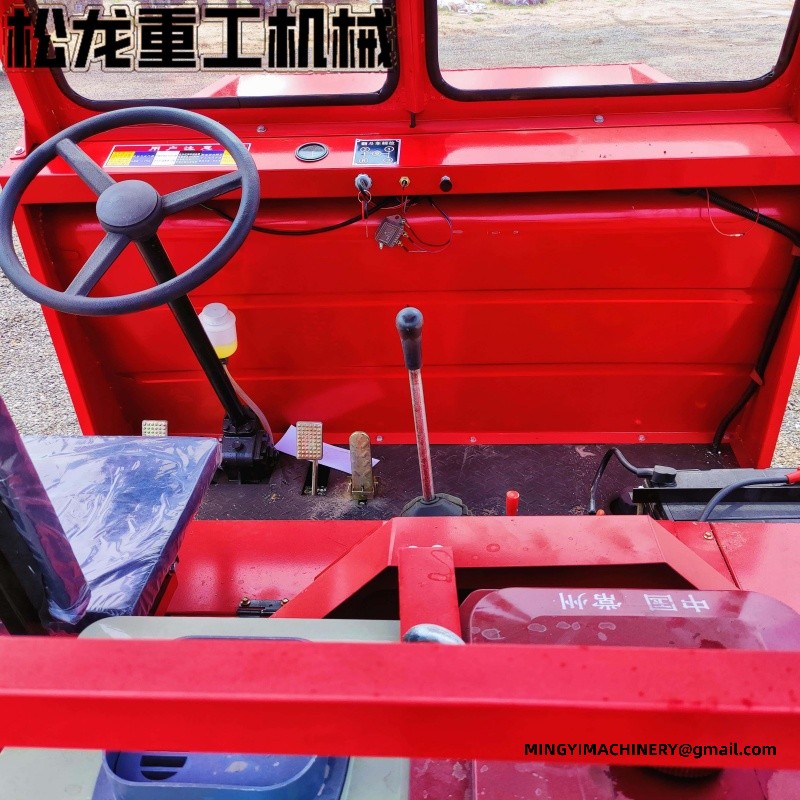
Everything about the FC10 is arranged so it cannot easily be tipped. The load goes in a 1,580 mm box over a 1,500 mm track. The machine tips forward, not sideways, so the tipping moment is taken along the length of the machine rather than across it.
21% is the published limit and it is a limit, not a target. A tipper loaded to 1,000 kg climbing a cross-slope is a different question from one climbing straight. Work straight up the grade and treat the number as a ceiling that tells you where the machine's allowance ends.
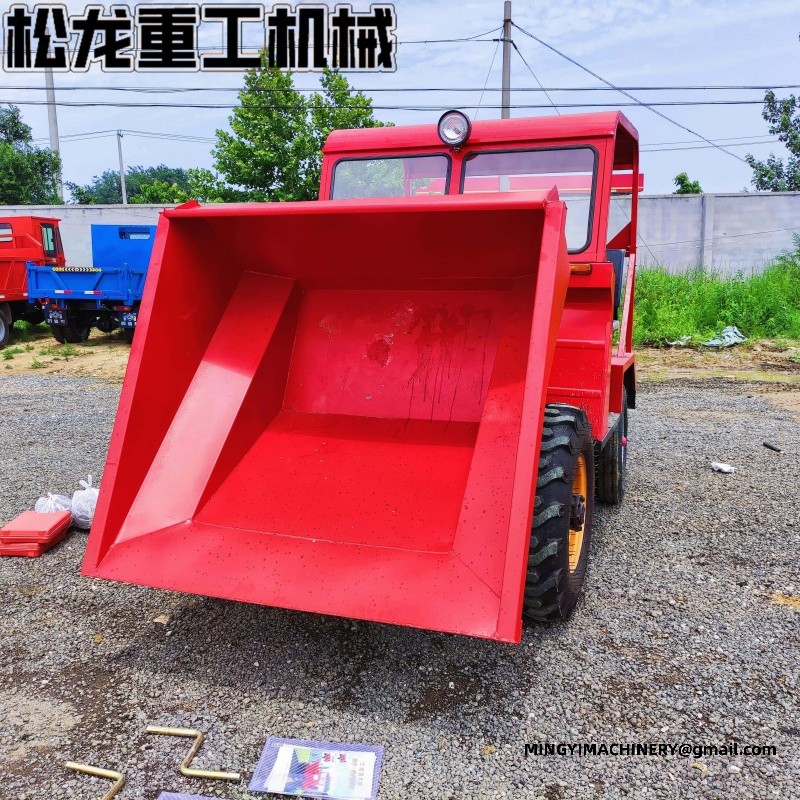
Cold changes two things on the FC10: the fluid in the hydraulic system thickens, and the battery has less to give. The engine itself is simple enough that starting on 12 V DC electric motor is not the hard part. Warm the machine by working it gently before loading to 1,000 kg, rather than by pulling straight out of a cold start into a graded climb.
Hydraulic response is the tell. A cold machine lifts the box slowly and the tipping action feels sluggish; a few minutes of circulation at light load brings it back. Operators who force a cold machine to 21% on the first trip of the morning are the ones who break things.
The FC10 publishes three road speeds: 6.8 km/h in first, 22 km/h in second and 7.5 km/h in reverse. First gear is the working gear — full load, short cycle, on rural work carrying fertiliser from the store to the field headland. Second is for the empty return leg and for longer moves between working areas.
Reverse at 7.5 km/h is deliberately close to first gear, because on a site the reverse movement is part of the cycle rather than an exception. A machine that reverses slowly wastes more time than one that loads slowly, and the published gearing reflects how the machine is actually used on rural work carrying fertiliser from the store to the field headland.
At 2,700 x 1,600 x 2,000 the FC10 is small enough to be moved without a low-loader, which is one of its less obvious advantages. A machine that can be carried on a standard trailer behind a light truck changes how a contractor deploys it between jobs.
The same dimensions, seen from the other side, decide whether it fits through the gateway on rural work. On rural work the first question is always access, and a machine that is 2,700 x 1,600 x 2,000 with a 4,500 mm turning radius answers it before any conversation about capacity begins.
A 4,500 mm turning radius on a 1,230 mm wheelbase is the figure that decides where the machine can work. Gateways, corridors between scaffolding and the working rooms inside a building are everyday obstacles on rural work, and a tight radius is what turns them from obstacles into routes.
Overall size is 2,700 x 1,600 x 2,000 — short, and narrow enough to pass where larger site plant cannot. Rear-axle steering makes the geometry work: the machine pivots inside its own footprint instead of swinging a long nose across the turn, which is what keeps a 1,000 kg tipper usable indoors and in confined yards.
Can a front tipping dumper for construction carry people as well as material?
It is specified as a material transport machine, rated at 1,000 kg of load in the box. The operator position described in the specification is for driving, and seats are described as a comfort feature rather than as passenger accommodation.
How much does a front tipping dumper for construction weigh when loaded?
1,000 kg of load plus the machine itself, spread across a 1,500 mm track and a 1,230 mm wheelbase. The published load figure is the one to work from: the machine is balanced by the rear-mounted engine so that the rated load needs no ballast.
How does the front tipping dumper for construction compare with a full-size dump truck?
A dump truck carries far more and needs far more room. The FC10 carries 1,000 kg and turns in 4,500 mm, tipping forward at 390 mm without needing a clear run behind it — the argument in one sentence on rural work.
What figures should I check before buying a front tipping dumper for construction?
Route width against 2,700 x 1,600 x 2,000 and 1,500 mm, the ramp against 21%, the worst ground against 200 mm, and the receiving point against 390 mm. A machine that passes all four is the right machine.
How much ground clearance does a front tipping dumper for construction have?
200 mm, which is deliberately modest because the machine is kept low. The FC10 is built for sites, yards and tracks on rural work rather than for rock. The swinging rear axle keeps the wheels down on uneven going.
What engine does the front tipping dumper for construction use?
A CG25M diesel rated at 17.3 kW at 2,200 r/min, mounted at the rear to counterweight the load in the box ahead of the front axle. Starting is by 12 V DC electric motor.
What should I keep in stock for a front tipping dumper for construction?
Hydraulic hoses and seals for the tipping circuit, filters, a spare wheel or tyre set, and grease. The specification table with 1,000 kg, CG25M and 0.5 m³ covers everything a parts enquiry needs.
What turning radius does a front tipping dumper for construction need?
The FC10 turns in 4,500 mm on a 1,230 mm wheelbase, helped by rear-axle steering. Measure your tightest gateway or corridor against that figure on rural work.
The FC10's specification is published in full, including the figures buyers usually have to ask for — 1,500 mm of track, 1,230 mm of wheelbase, 200 mm of clearance. Start from your route and the choice usually makes itself.
Keeping a service record for Front Tipping Dumper for Construction: Site Cycles
Patterns show up in the record before they show up in the machine. Rising oil consumption or a filter that keeps blocking on Front Tipping Dumper for Construction: Site Cycles is obvious on paper long before it becomes a failure on site.
Packing, loading and shipment of Front Tipping Dumper for Construction: Site Cycles
How a machine travels decides how it starts on arrival. Securing Front Tipping Dumper for Construction: Site Cycles against movement, protecting the exposed cylinders and keeping the battery and fluids in the right state for the voyage all belong to the packing list.
Reading the early symptoms on Front Tipping Dumper for Construction: Site Cycles
The symptom is usually not at the fault. A hydraulic function that has become sluggish on Front Tipping Dumper for Construction: Site Cycles may point to a filter, a relief setting or a pump, and starting with the simple checks avoids the wrong guess.
Planning the season around Front Tipping Dumper for Construction: Site Cycles
Downtime is simplest when it is planned. Booking the service for Front Tipping Dumper for Construction: Site Cycles in the quiet part of the season takes nothing from the schedule, while the same work in the busy weeks gives up a day of output every time.
Contact MINGYI Machinery for the current front tipper range, the four-wheel-drive models above the FC10, and a formal specification for your market. E-mail: sales@mingycn.com | LINE (ID): mingyicn
Site Dumper for Narrow Spaces: Working in Confined Areas · Mini Dumper for Material Transport: Load and Route · off road cargo transporter muddy road with hydraulic tipping body · Front Tipper Truck