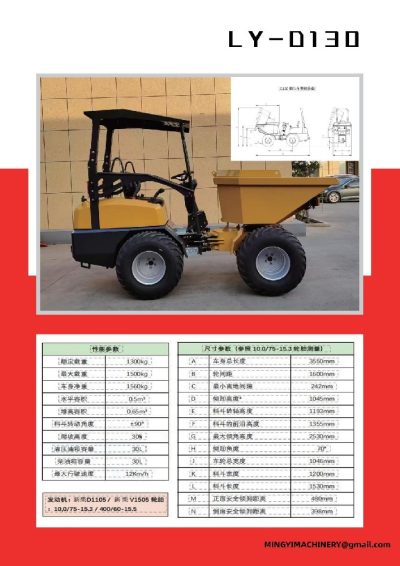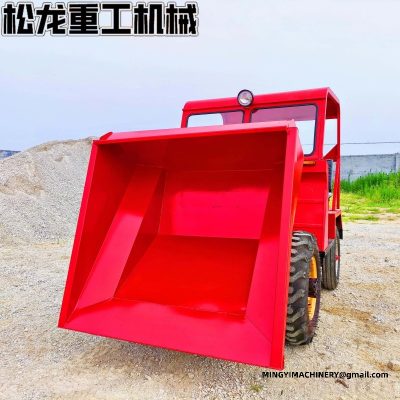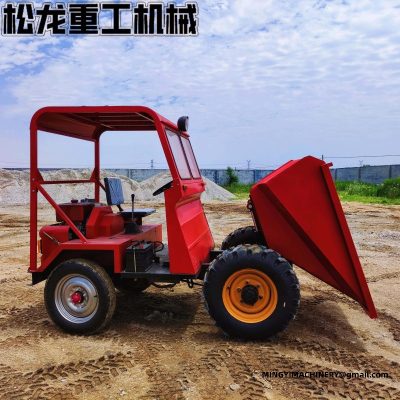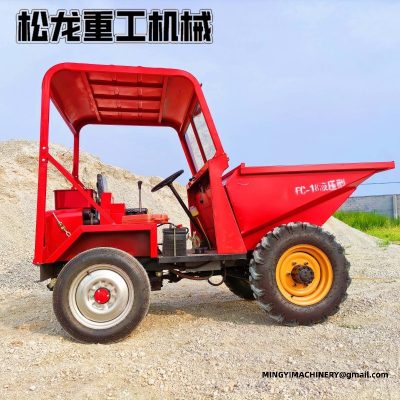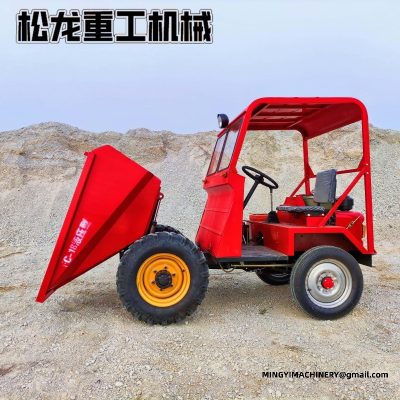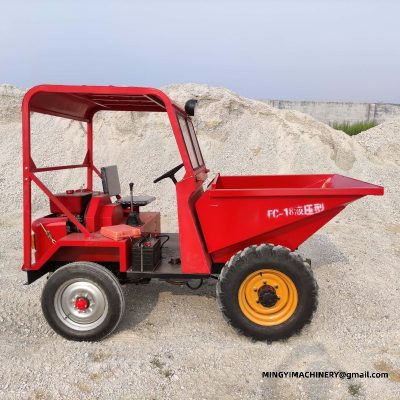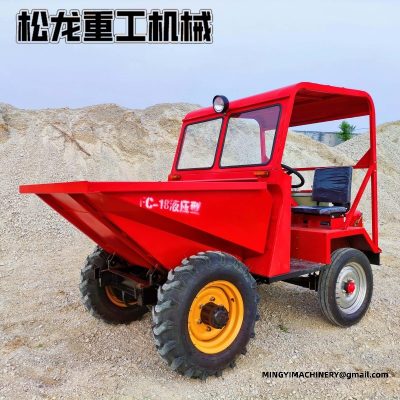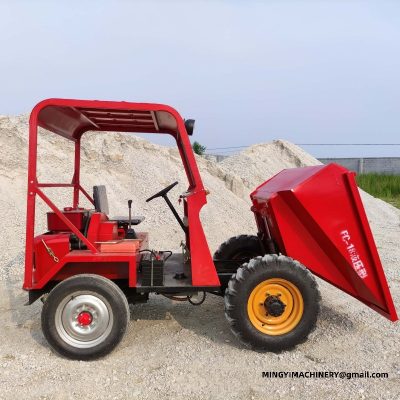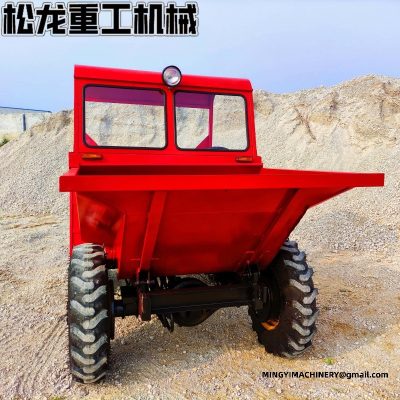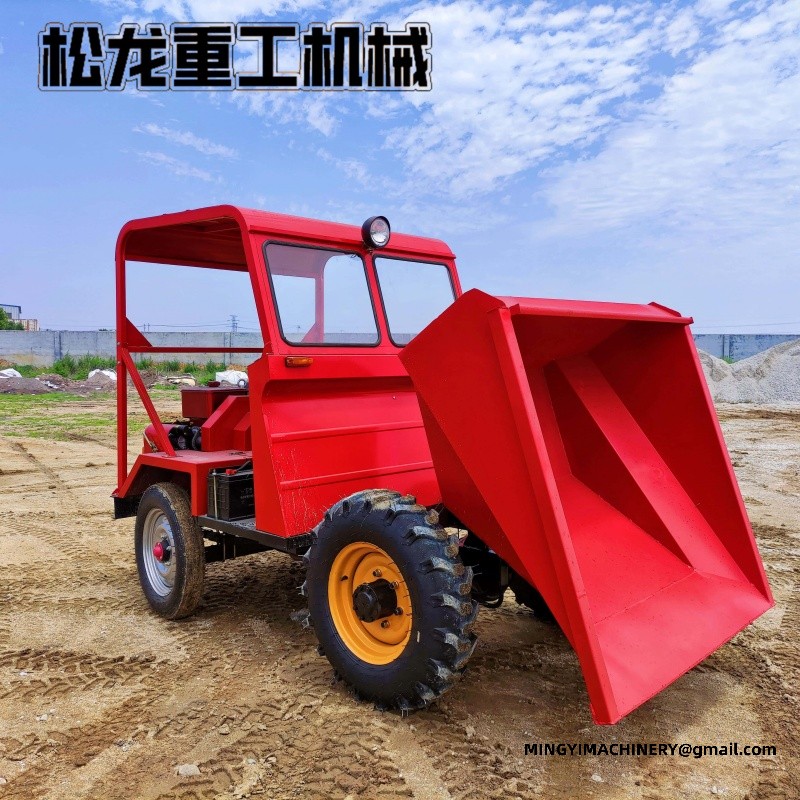
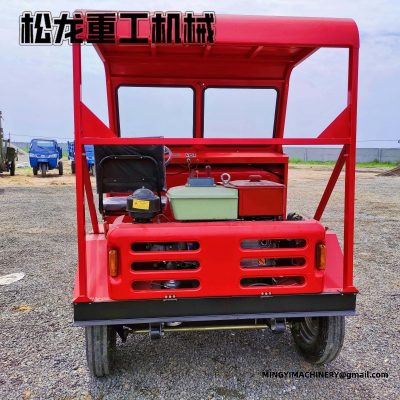
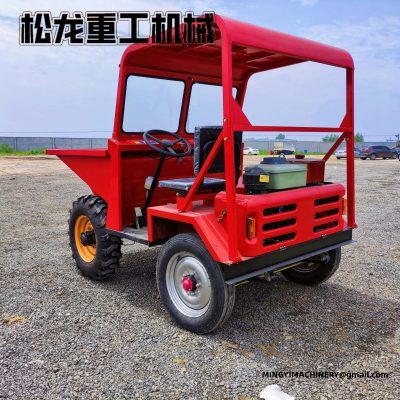
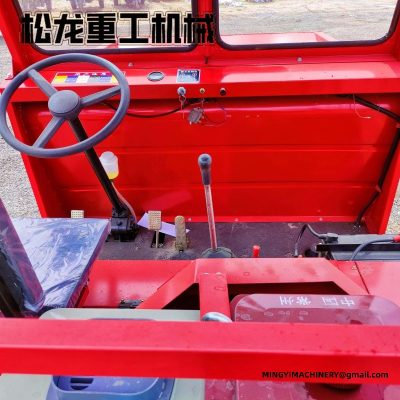
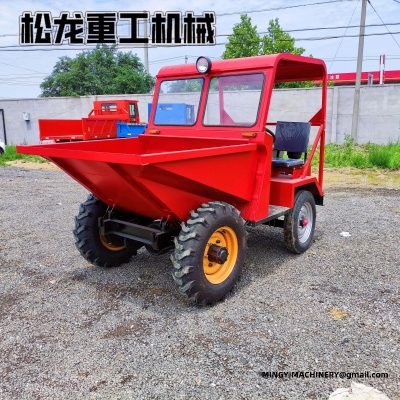
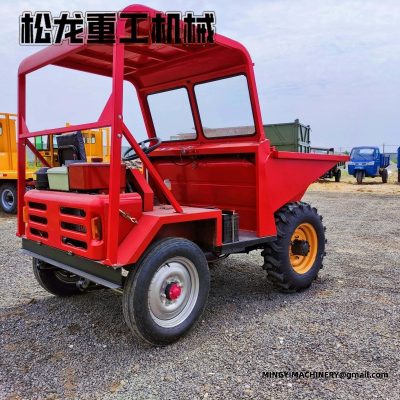
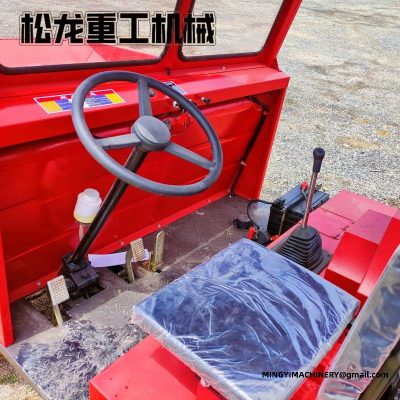
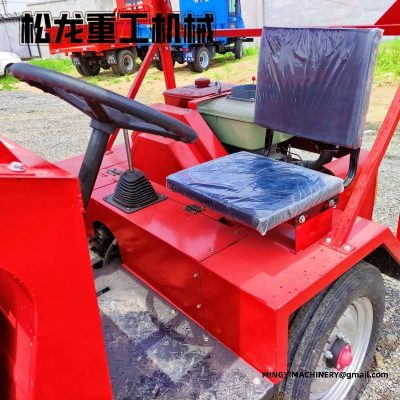
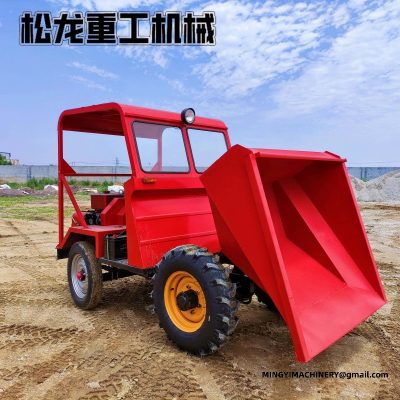
The FC10 is the entry machine in a range that runs up to the construction site dumper models, so it is worth being precise about what the entry machine is. It is a two-wheel-drive front tipper rated at 1,000 kg with a 0.5 m³ box, a CG25M diesel, 21% gradeability and 200 mm of clearance — specified for firm ground and short cycles on road building work.
The published 2,700 x 1,600 x 2,000 is what an operator needs for a permit or an access survey. It is also what a transport company needs to specification. Having the figure to hand shortens a surprising number of conversations, from a site induction to a plant-hire agreement.
The same applies to the machine's working envelope. A 4,500 mm turning radius and a 1,000 kg payload are the two figures that most often decide whether a machine may work a particular part of a site.
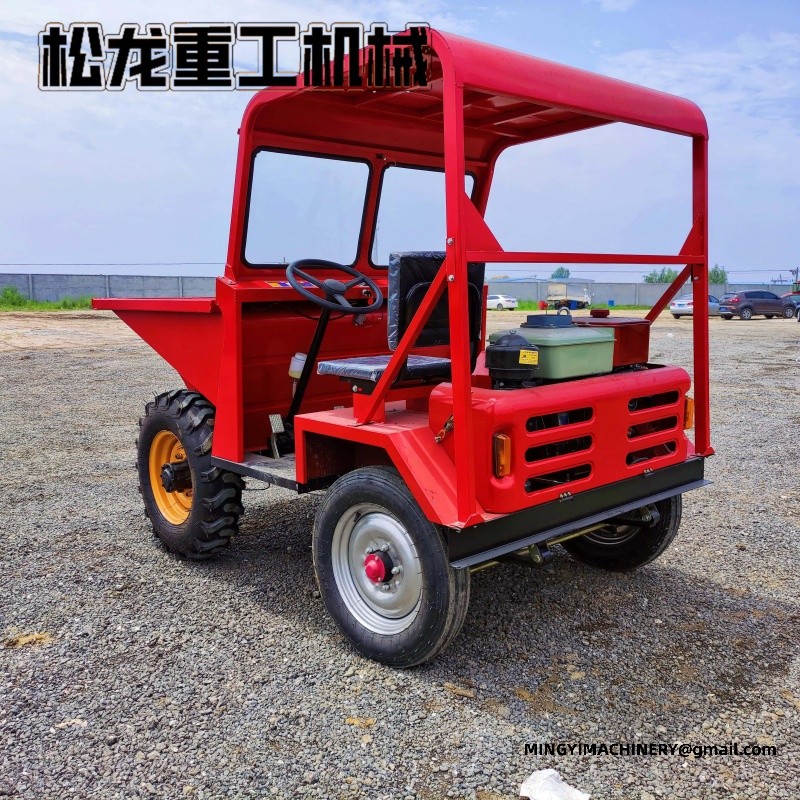
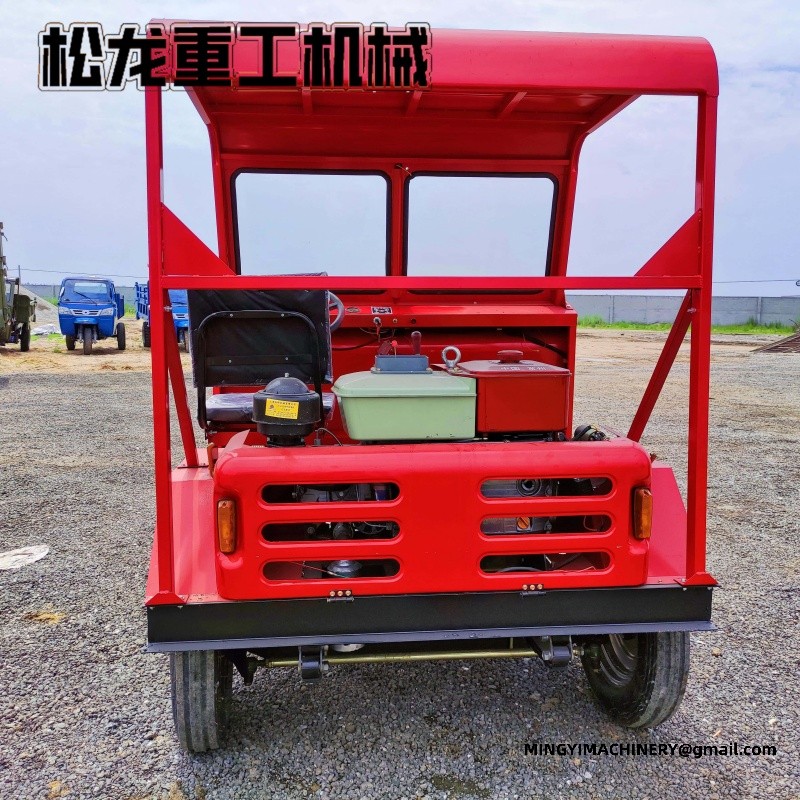
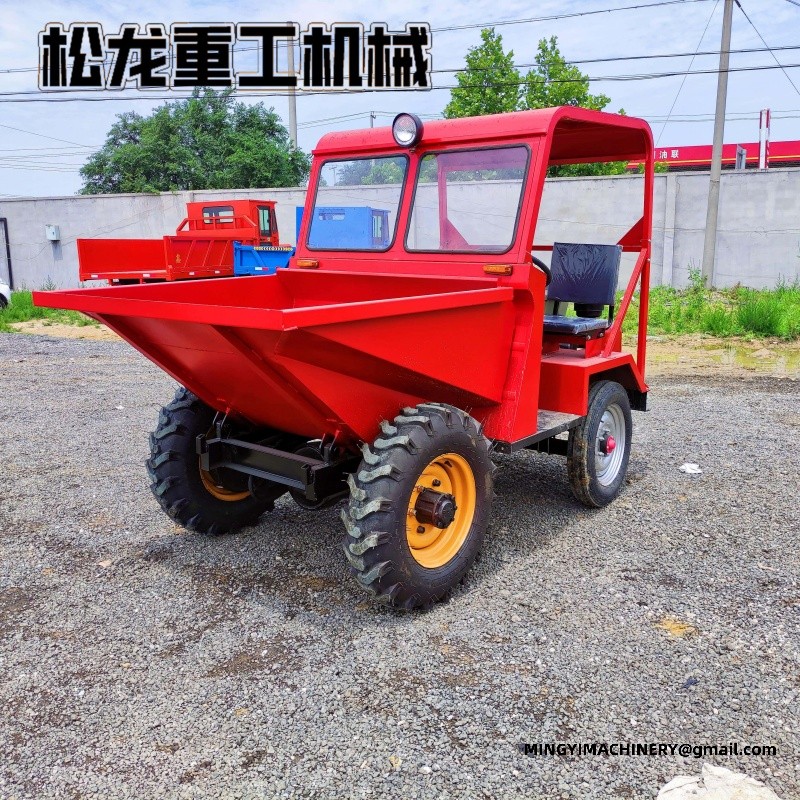
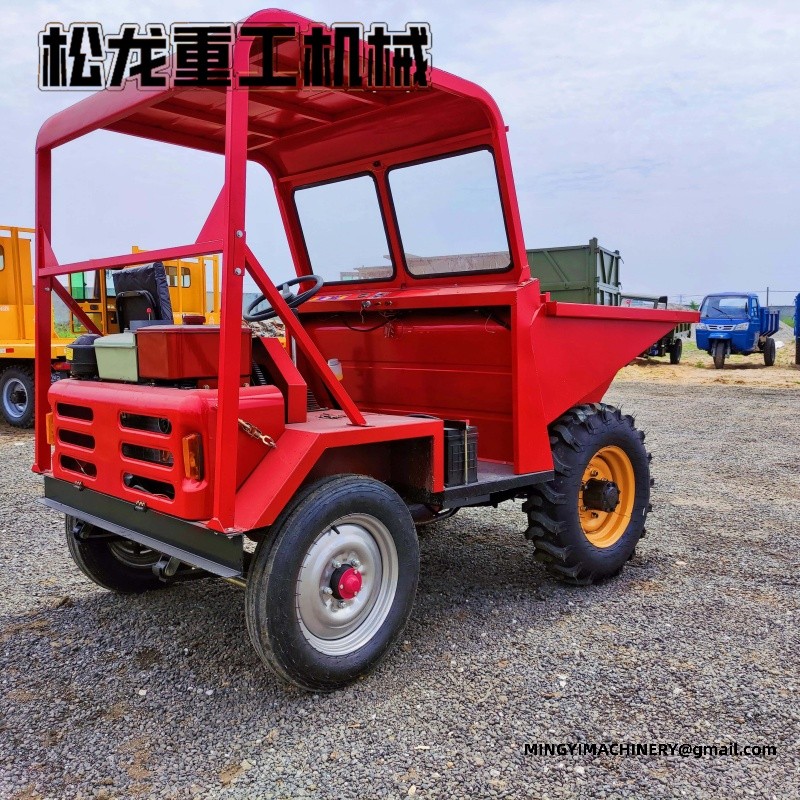
Rear-mounted diesel, front-axle drive, rear-axle steering: the FC10's layout is a set of connected decisions. The engine at the rear counterweights the box ahead of the front axle, so the machine carries 1,000 kg without needing a slab of ballast, and the 1,230 mm wheelbase keeps the whole thing 2,700 x 1,600 x 2,000 overall.
Road building work punishes a badly balanced machine on every ramp. With the weight spread between a driven front axle and a steering rear axle, the FC10 keeps traction while loaded and keeps steering while empty — the two conditions that catch out machines which put all their weight at one end.
390 mm of discharge height is the number to hold against the site. on road building work moving material between cuts and fills, the receiving point is whatever the job provides: a trench, a skip, a heap. Measure the tallest of them with the load in it, not empty, and compare — because a machine that cannot clear the pile cannot be worked around.
The forward-tipping layout helps here too. Because the load leaves over the front axle rather than to the rear, the discharge height is measured close to the machine, which keeps the tipping moment short and the machine stable while the box is up. On soft or uneven ground that difference is easy to feel.
| Reference specification — FC10 front tipper (1,000 kg class) | |
|---|---|
| Rated load | 1,000 kg |
| Rated bucket capacity | 0.5 m³ |
| Discharge height | 390 mm |
| Maximum gradeability | 21% |
| Bucket width | 1,580 mm |
| Travel speed, 1st gear | 6.8 km/h |
| Travel speed, 2nd gear | 22 km/h |
| Travel speed, reverse | 7.5 km/h |
| Minimum turning radius | 4,500 mm |
| Overall dimensions (L x W x H) | 2,700 x 1,600 x 2,000 |
| Track | 1,500 mm |
| Wheelbase | 1,230 mm |
| Minimum ground clearance | 200 mm |
| Diesel engine model | CG25M |
| Rated engine power | 17.3 kW |
| Rated engine speed | 2,200 r/min |
| Starting method | 12 V DC electric motor |
The FC10 starts on 12 V DC electric motor, and the rest of the electrical side is kept deliberately plain. There is no ECU, no sensor network and no immobiliser to strand the machine on road building work. What there is: a starter, a charging circuit and the lighting needed to work and to travel legally between sites.
That simplicity is why a tipper of this class can be kept running for years on a site with no specialist support. The diesel at 17.3 kW is a mechanical unit turning at 2,200 r/min, which means a competent mechanic with hand tools can diagnose it. When it does need attention, the fault is usually found by ear before any meter is produced.
The FC10 is the published reference in the range, and above it sit the FC15/FC18/FC20/FC25/FC30 — four-wheel-drive hydraulic tippers with electric start, lighting, signal lamps and an optional canopy. Those models are built for duties beyond what the 1,000 kg FC10 is specified for, on road building work.
What separates them from the FC10 is drive and equipment: four-wheel drive where the FC10 drives its front axle, and factory-fitted lighting and signals where the FC10 is a daylight site machine. The right choice is decided by the ground and the hours on road building work moving material between cuts and fills, not by the largest number in a model designation.
On most sites the front tipper is the link between a stockpile and a process: heap to mixer, excavation to spoil, store to working face. Its job is to keep that link short and continuous on road building work, which is why turning radius and tipping layout matter more than top speed.
Read the FC10's figures with that role in mind. 4,500 mm lets it work both ends of the link in confined space; 390 mm of forward discharge lets it empty without a ramp; 1,000 kg keeps each journey useful. The specification describes a link in a chain rather than a standalone machine.
The published application list covers concrete, sand and gravel, earthwork, coal, ore and fertiliser — short-distance movement of loose material, on road building work moving material between cuts and fills. What those have in common is that they load by shovel or grab, discharge by tipping and do not need a sealed body.
The 0.5 m³ box with a 1,580 mm width suits all of them for different reasons: width for loading from a heap, volume for light material, the 1,000 kg rating for the dense ones. A machine that publishes its limits honestly can be matched to the material rather than hoped into it.
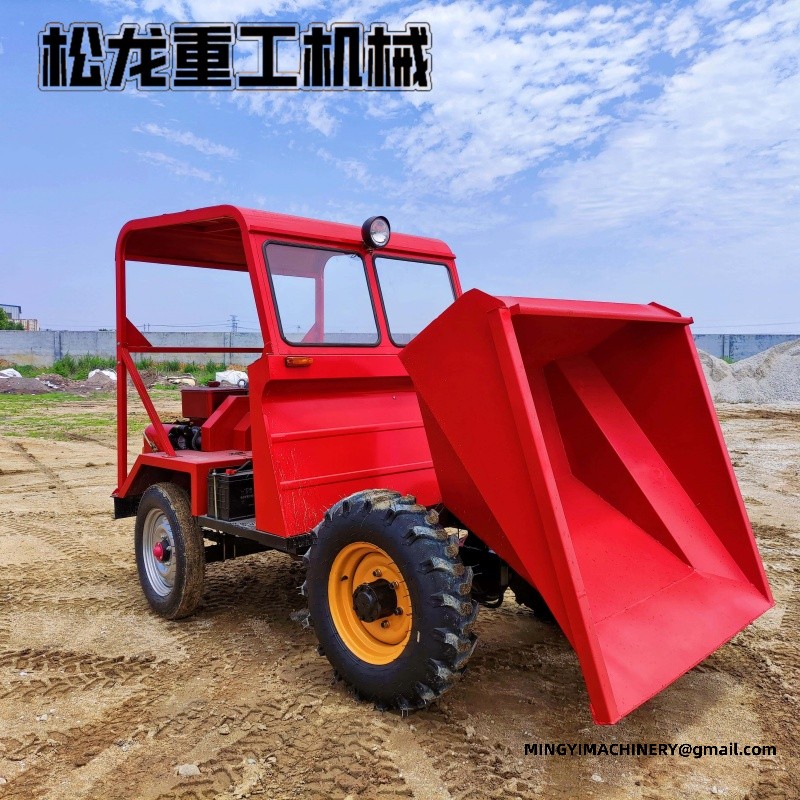
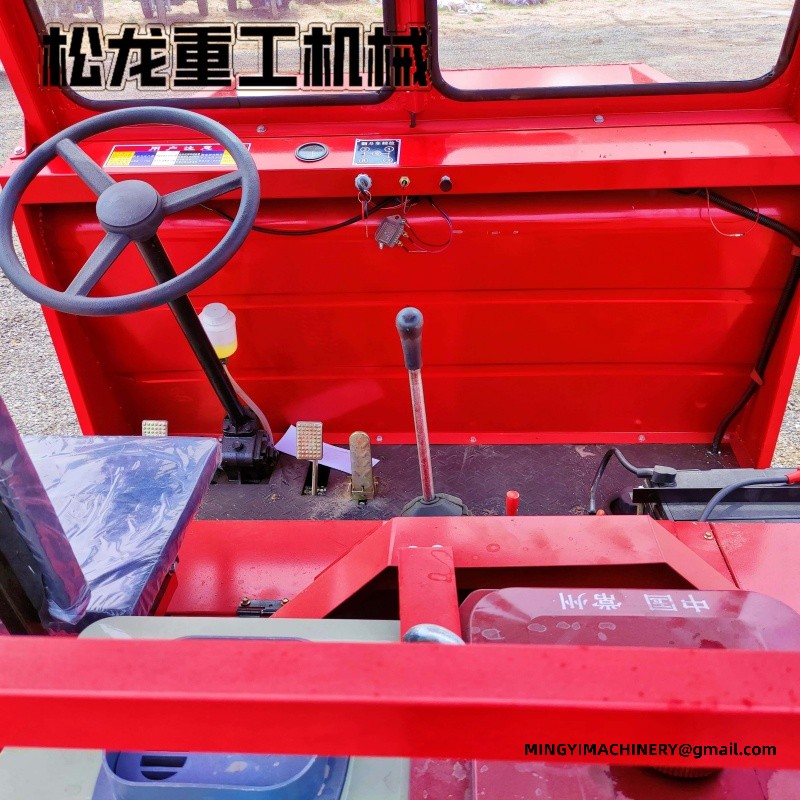
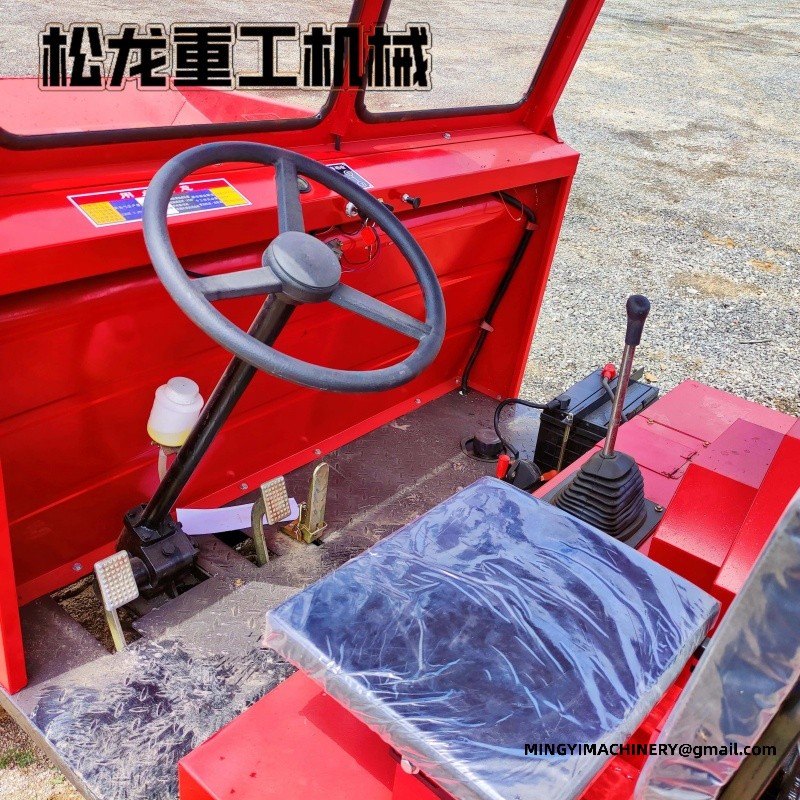
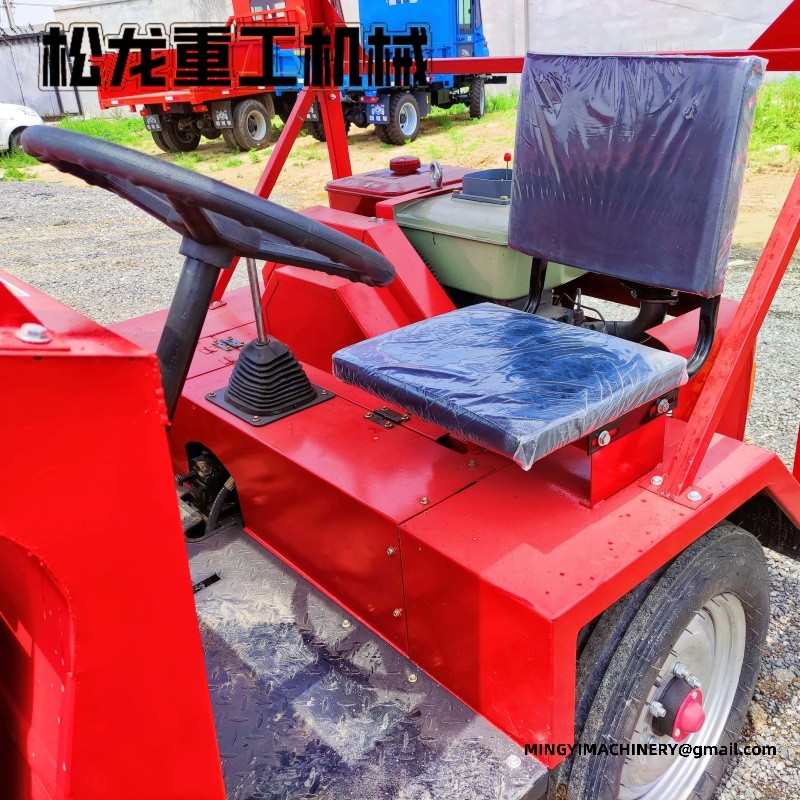
On a 2,700 x 1,600 x 2,000 machine the operator sits high relative to the load and close to the box, with the tipping area directly ahead. Front tipping means the discharge point is always in view, which is why a forward-tipping layout is preferred on road building work where the operator is working close to other people and plant.
The published comfort features are practical rather than decorative: a return device that brings the box down under control, and seating designed for a machine worked in short cycles. Comfort is a productivity figure on a tipper, because the operator is getting on and off it all day on road building work.
The FC10 reverses at 7.5 km/h, which is slow enough that a banksman walking beside it can keep up. That is deliberate on a machine used on road building work, where the route behind is often occupied by people who cannot hear it coming over the general noise.
Ask any site that runs small tippers and the same three controls come back: a speed limit for reversing, a rule that the person on the ground has the right of way, and nobody standing inside the turning circle. At 4,500 mm, the FC10 turns inside a space narrower than most expectations, which reduces but does not remove the need for those rules.
The FC10 publishes three road speeds: 6.8 km/h in first, 22 km/h in second and 7.5 km/h in reverse. First gear is the working gear — full load, short cycle, on road building work moving material between cuts and fills. Second is for the empty return leg and for longer moves between working areas.
Reverse at 7.5 km/h is deliberately close to first gear, because on a site the reverse movement is part of the cycle rather than an exception. A machine that reverses slowly wastes more time than one that loads slowly, and the published gearing reflects how the machine is actually used on road building work moving material between cuts and fills.
A tipper that changes hands every shift needs a check that takes less than five minutes. Tyres, fluids, the tipping linkage, the lights and the brake. On the FC10 the tipping linkage is the part to watch, because it is the part doing the heavy work.
Record the checks rather than trusting memory. A tipper with several operators and no written handover is a tipper whose faults are always discovered by the next person, usually at the start of a shift when the machine is needed most.
What is the fuel and starting arrangement on a construction site dumper?
A CG25M diesel started by 12 V DC electric motor. Rear-mounted, which keeps the service points clear of the load and supports the stop-start pattern of site work where the engine is shut down between runs.
How much does load distribution matter on a construction site dumper?
Considerably. 1,000 kg of load sits ahead of the front axle, which is why the driven wheels are at the front and the engine is at the rear to counterweight it. The 1,230 mm wheelbase keeps that arrangement manageable on ramps.
What tyre pressures suit a construction site dumper?
Correct pressures for the load: 1,000 kg across a 1,500 mm track and 1,230 mm wheelbase. On soft ground, correct pressures are what keep the contact patch wide and the machine moving, which is why the figure is worth checking weekly.
What is the ideal site layout for a construction site dumper?
Short, direct routes with the loading point and the discharge point close together: the pattern the machine is specified for. Where the total run is short, loading and tipping dominate the cycle and a small tipper loses nothing on road building work.
Can a construction site dumper carry people as well as material?
It is specified as a material transport machine, rated at 1,000 kg of load in the box. The operator position described in the specification is for driving, and seats are described as a comfort feature rather than as passenger accommodation.
How do I choose between two- and four-wheel drive?
By the ground rather than the payload. Firm, even going and grades within 21% favour the simpler two-wheel-drive machine; soft, wet or broken ground needs four-wheel drive. Measure the worst stretch of the route on road building work, not the average.
How does the construction site dumper drive and steer?
The FC10 drives through the front axle and steers at the rear — a front-axle drive with rear-axle steering (two-wheel drive). That puts the driven wheels under the load and keeps the steering wheels light, which is what makes the machine manoeuvrable on road building work.
What wears out on a construction site dumper?
Three things: the tipping hydraulics, the pivot pins and the tyres. The CG25M diesel is the durable part. Hose condition and pin greasing are the two checks that prevent most unplanned stops.
Read the table as a whole and the machine describes itself: 2,700 x 1,600 x 2,000 overall, 4,500 mm turning radius, 21% of gradeability, 1,000 kg of load. A construction site dumper specified in the middle of its range outlasts one specified at the edge.
Keeping a service record for Construction Site Dumper: Cycles, Ramps and Ground
The record should follow the machine, not the owner. When Construction Site Dumper: Cycles, Ramps and Ground changes hands the service history travels with it, and a complete folder is often the difference between a quick sale and a long one.
Hot, humid and dusty conditions around Construction Site Dumper: Cycles, Ramps and Ground
Tropical operation is a specification question as much as a maintenance one. The cooling capacity, the sealing and the corrosion protection fitted to Construction Site Dumper: Cycles, Ramps and Ground are what make the difference once the ambient temperature rises.
Pre-delivery inspection before Construction Site Dumper: Cycles, Ramps and Ground leaves the shop
A machine should be inspected while it is still on our floor rather than after it lands. For Construction Site Dumper: Cycles, Ramps and Ground that means the engine is run to temperature, the hydraulics are cycled through full travel, and every function is checked against the build sheet before the crate is closed.
Wear items and spares worth holding for Construction Site Dumper: Cycles, Ramps and Ground
Holding spares is about downtime rather than the shelf itself. The question for Construction Site Dumper: Cycles, Ramps and Ground is not how large the part is but how long the machine sits while it is found, and a small shelf answers that better than a fast courier.
Contact MINGYI Machinery for the current front tipper range, the four-wheel-drive models above the FC10, and a formal specification for your market. E-mail: sales@mingycn.com | LINE (ID): mingyicn
Small Dumper Machine: Dimensions That Decide Where It Works · Front Tip Dumper: Forward Discharge and Hydraulic Return · heavy duty 4WD site dumper for construction for farm and estate work · Front Tipper Truck