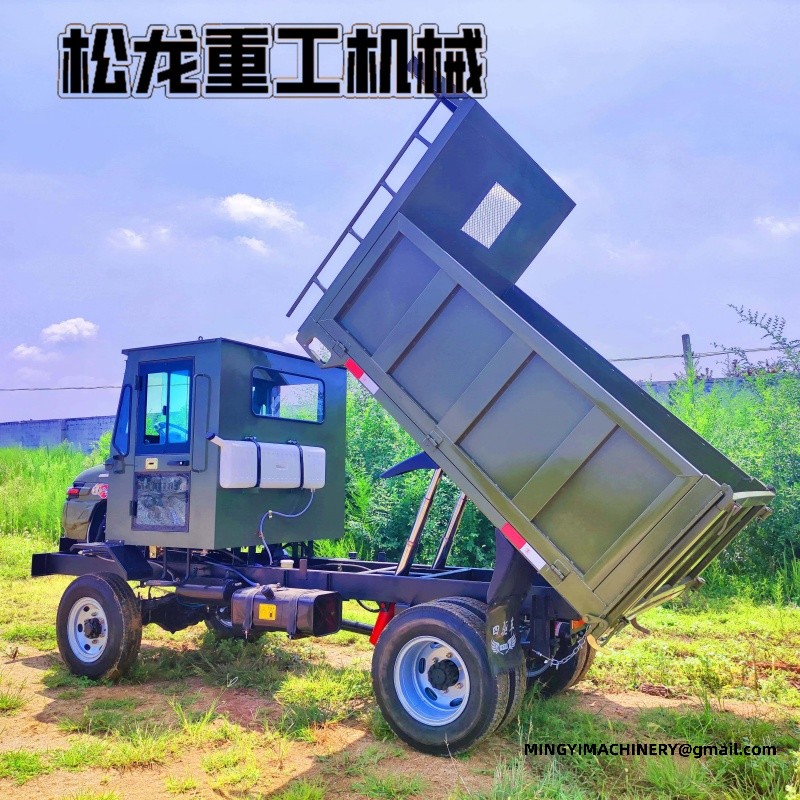
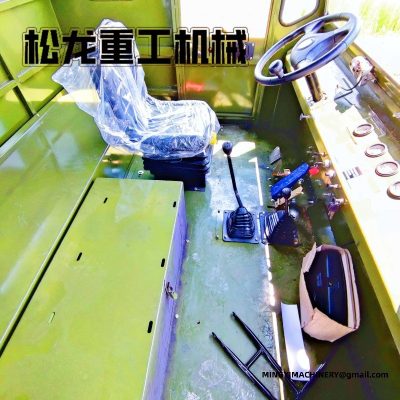
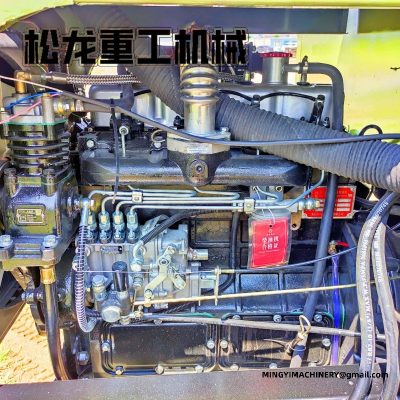
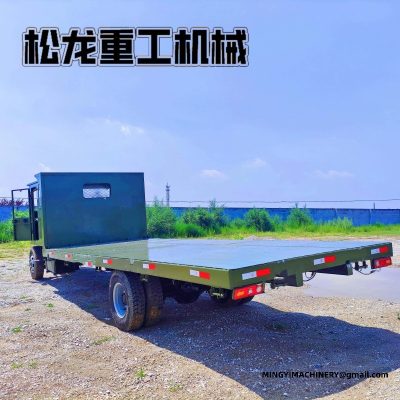
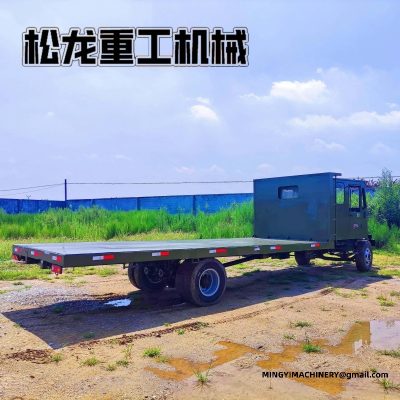
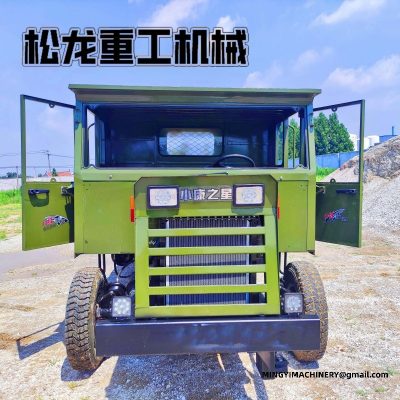
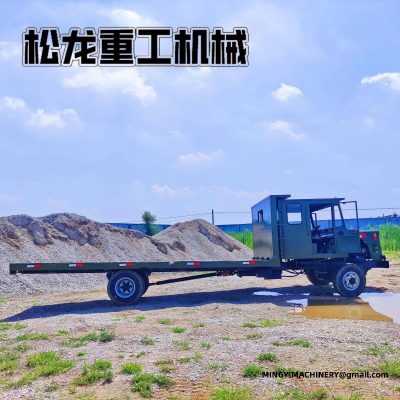
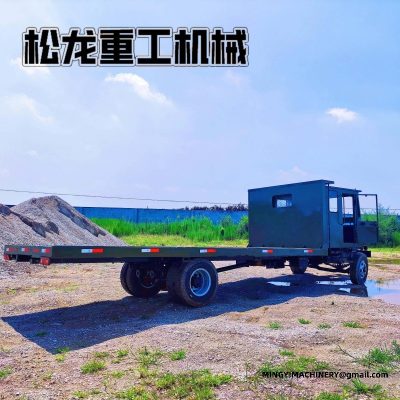
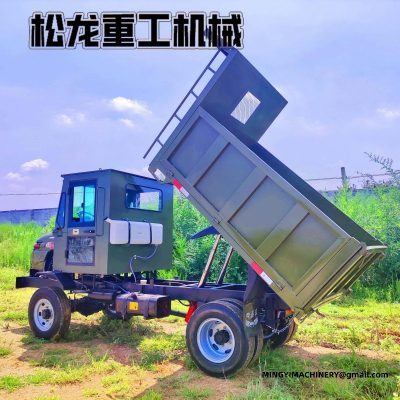
Several forms of the dumper appear in this range, and the right one depends on the ground more than on the brochure. Below, the practical differences are set out alongside the figures so the two can be read together.
Dust, mud and abrasive conditions around 4x4 articulated dumper
Abrasive conditions shorten service intervals. Air filters, seals and any exposed sliding surface on this class of machine need attention more often in dusty or muddy work, and the extra checks prevent far more wear than the time they take. Sealed points and guarded areas deserve a look in these conditions. The unit in daily use working in abrasive dust benefits from checked boots, intact guards and clean breathers, all of which are quick to verify.
Farm and estate use of 4x4 articulated dumper
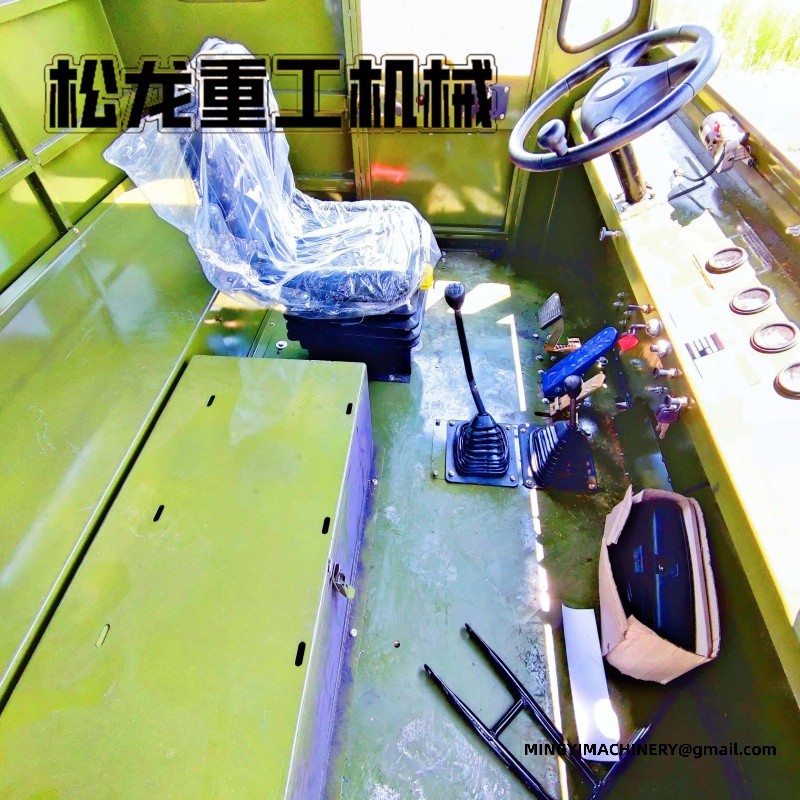
Ground on farms is often soft and often shared with livestock. A machine of this size working there needs to cross pasture without rutting it badly, and tyre and weight choices follow from that. Farm users also value simplicity. The equipment on site that can be serviced in the yard with common tools and common parts suits a farm better than one that needs a dealer visit for routine work.
Crane and grab attachments on 4x4 articulated dumper
A crane or grab turns a haul vehicle into a loading machine. The machine itself fitted with a hydraulic crane loads itself, which removes a second machine from the job and is often the whole reason for specifying one. Stability governs what the crane can do. Outriggers, ground condition and load radius decide the safe figure on the model in question, and those are checked before the lift rather than discovered during it. Adding a crane changes the vehicle specification. Hydraulic capacity, frame strength and braking all need to suit the attachment, and it is simpler to specify them at build than to add them later.
Parts, service and support for 4x4 articulated dumper
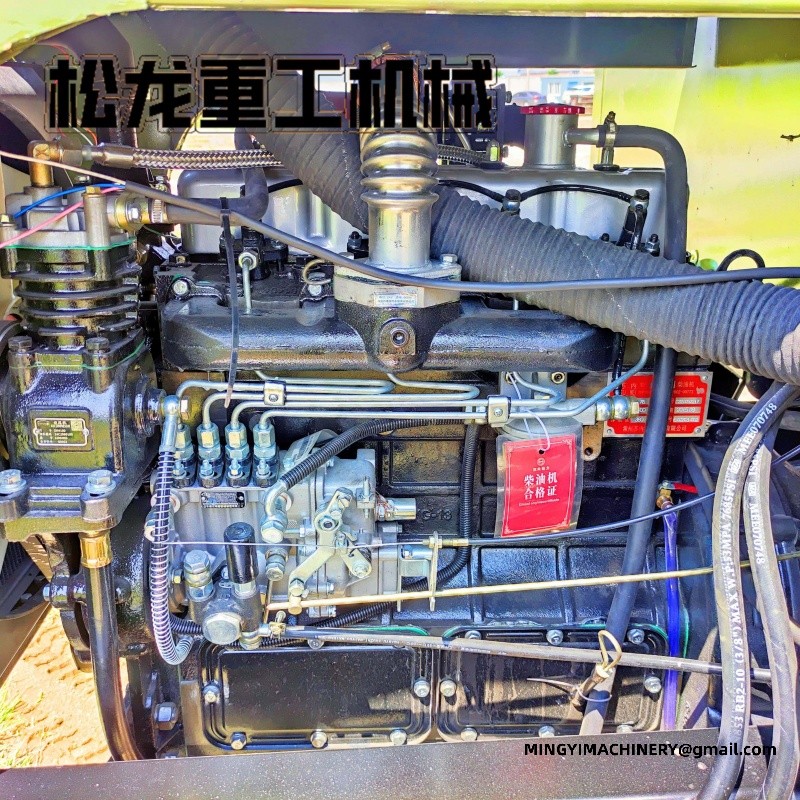
Support after delivery is a parts question. Filters, belts, hoses and the wearing items specific to the machine in that duty are what a buyer should plan to hold before the first service interval rather than order after a failure. Parts availability usually decides the engine and the brand. A machine built around components the local network already carries is serviced from stock, which is the difference between a day lost and a week lost.
Storage and downtime care for 4x4 articulated dumper
Before-storage preparation prevents most return-to-work faults. Draining or treating fuel, protecting exposed rods and relieving pressure where the maker specifies it are the items worth an hour when the unit on the job is parked.
Working hours and duty cycle of 4x4 articulated dumper
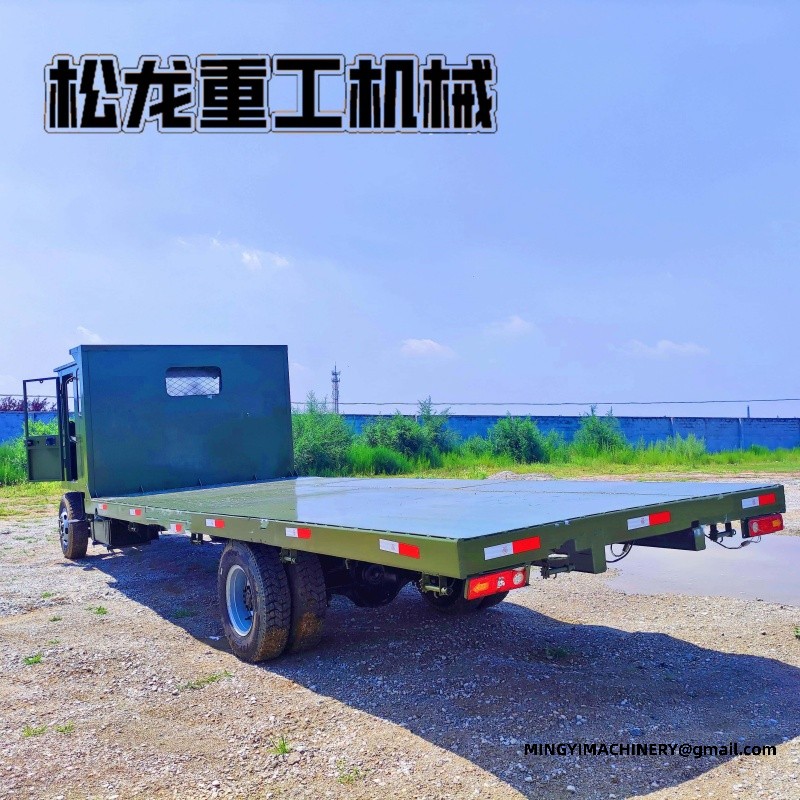
Duty cycle is the honest measure of a machine. A machine built for the work working a few hours a week has different needs from one working two shifts, and the cooling, filtration and service intervals should follow the hours rather than the calendar. Seasonal work changes the maintenance calendar. Machines that work hard for two months and stand for ten need preparation before storage and a check before returning to work, and both are simpler than the repairs they prevent.
Handover and documentation for 4x4 articulated dumper
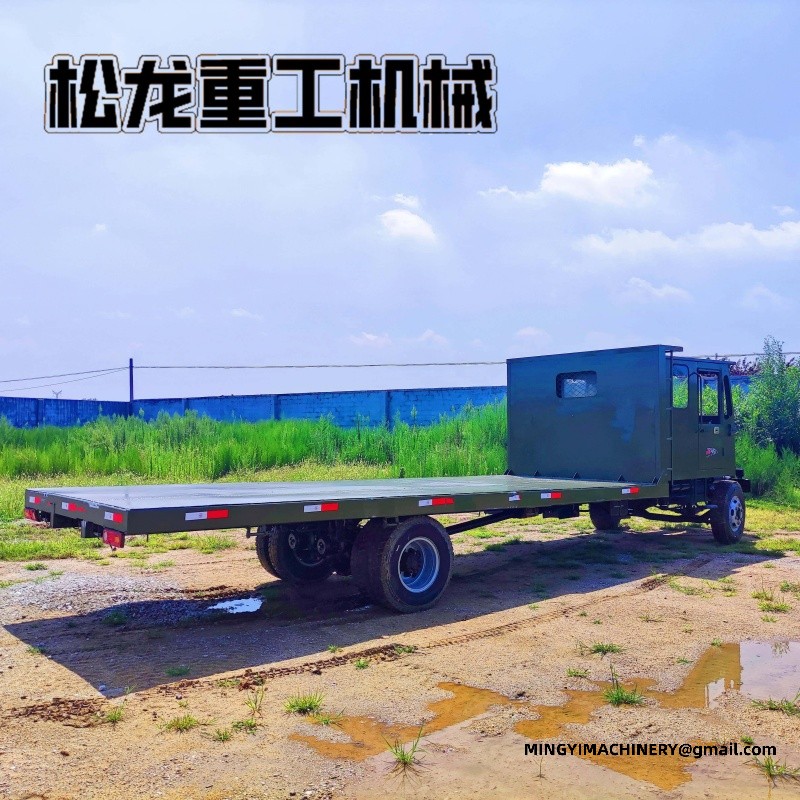
Handover should include the documents as well as the keys. Parts list, service schedule and the operator notes for the equipment in service are what the workshop needs in month six, and they are much harder to obtain later.
Fitting 4x4 articulated dumper into the wider site plan
Access and storage are worth settling early. Where the dumper will be parked, refuelled and serviced on site affects the working day more than most specification details, and it takes nothing to plan.
Running this class of machine in a mixed fleet
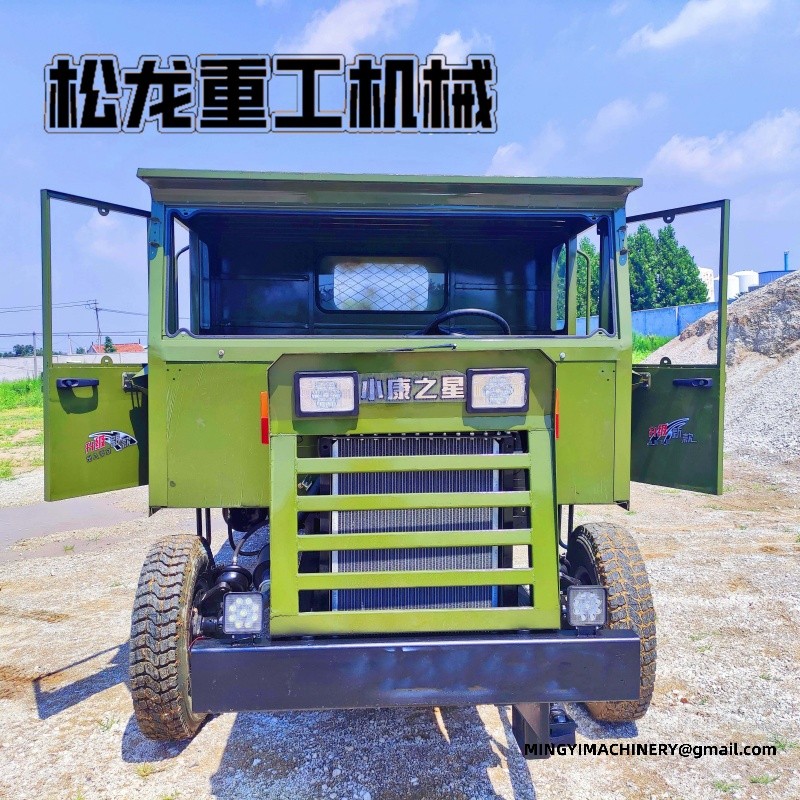
Fleet value comes from interchangeability. Operators who can step between machines without retraining, and a workshop that stocks one set of filters, keep utilisation higher than a fleet of individually optimised units. Utilisation matters more than the purchase decision over a few years. The unit in daily use that sits idle ties up the same yard space standing still as one that earns, so the buying decision should follow the hours the machine will realistically work.
Specifying a machine of this size against the job list
The specification should be written from the job backwards. Listing the loads, the ground and the hours first, then matching the machine itself to that list, avoids buying capacity the work never uses and avoids discovering a shortfall in the first week. A written duty list is the simplest part of the purchase. It takes an hour to note the material, the distance, the gradient and the hours per week, and it is what turns the equipment on site enquiry into a machine that fits.
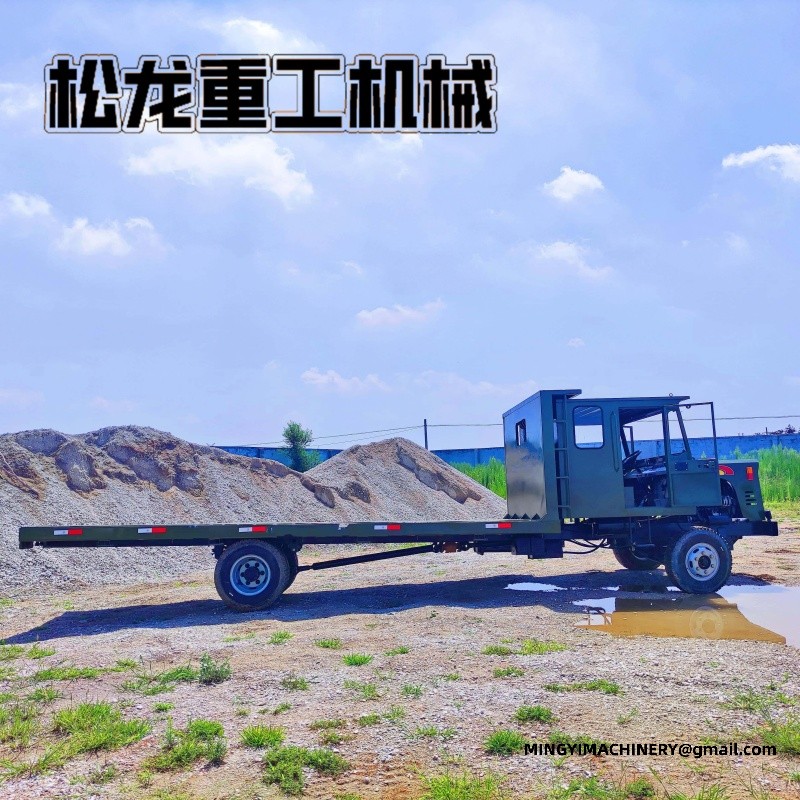
Soft ground, paddy fields and mud with the model in question
Four-wheel drive is only part of soft ground capability. Tyre choice, ground clearance and weight distribution decide whether the machine in that duty keeps moving in a paddy field or a marsh, and all three are specified rather than assumed. Recovering a stuck vehicle takes longer than preventing it. Planning the route, avoiding the worst ground and knowing where the unit on the job will turn is what keeps a soft-ground job productive.
Matching a machine built for the work to ground conditions
Ground decides more of the outcome than power does. Soft, wet or loose surfaces call for a wider footprint and lower ground pressure, while hard standing allows a narrower machine that turns in less space and travels faster between tasks. Traction and flotation are two separate questions. The equipment in service may have the power for a slope and still not have the grip, so the surface, not the engine rating, is usually what limits the working day.
Engine and power options behind the dumper
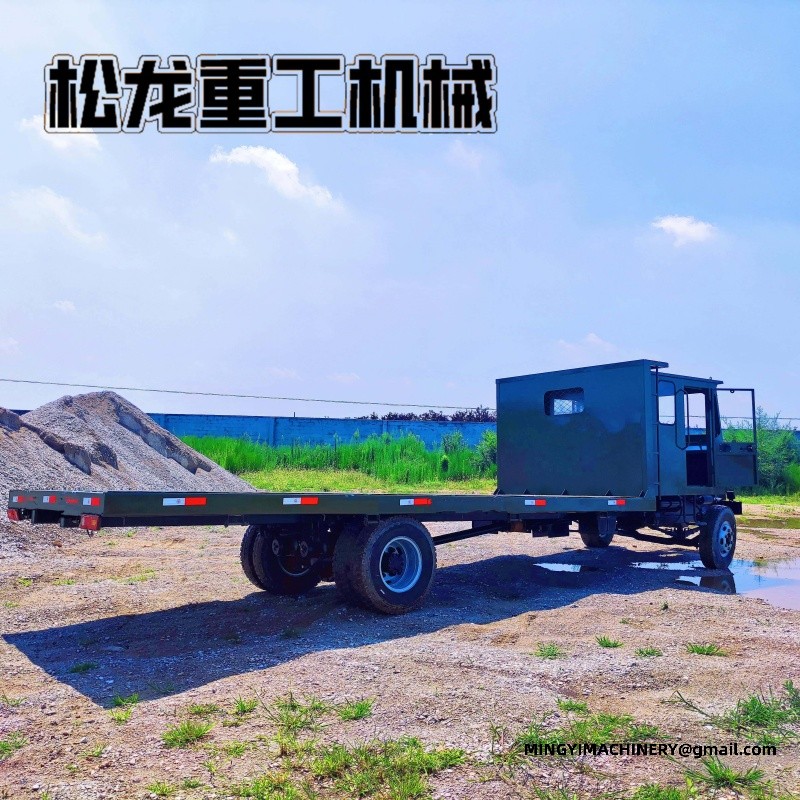
Emissions documentation is part of engine selection for some destinations. Confirming which units can be supplied and documented for the destination country is worth doing at enquiry stage rather than after the build sheet is signed.
Attachments and working tools for this class of machine
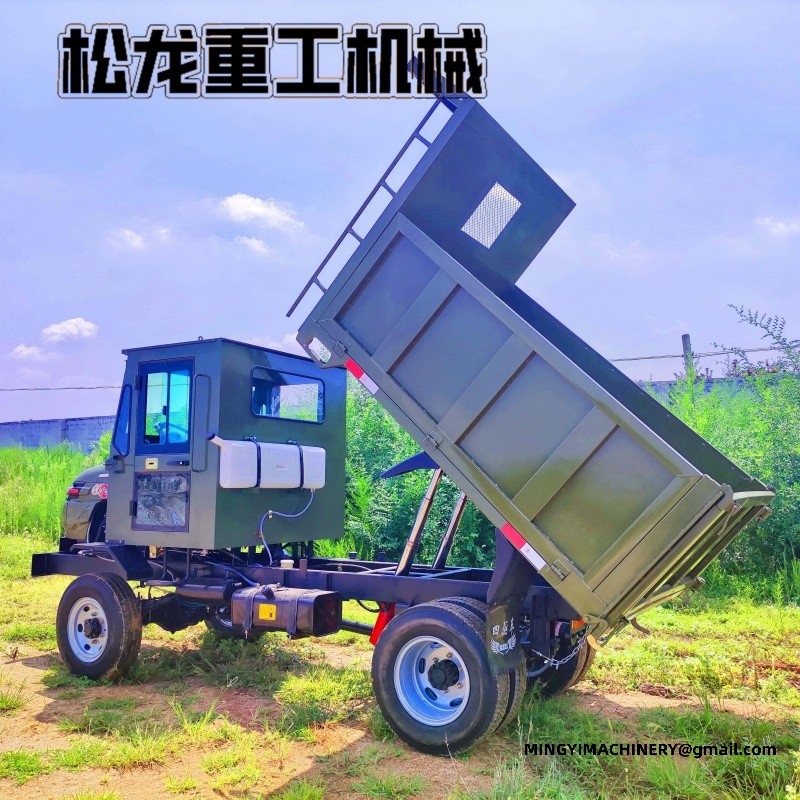
The base machine is only as useful as the tool on the end of it. Matching the attachment to the task - rather than to what arrived with the machine - is what lets one a machine of this size cover several jobs across a week. Most owners find that the second attachment changes how often the machine is used. The unit in daily use that was bought for one task often becomes the general machine on site once a second tool is available.
Load, ballast and stability on the equipment on site
Stability follows the load and its position. Knowing the rated capacity of the machine itself at the working radius, rather than at its best case, is what keeps handling predictable and the machine upright. Ballast and attachment weight change the machine. Adding a heavy tool to the model in question moves the centre of gravity, and the counterweight or configuration should be matched to the tool rather than assumed. Carrying and travelling with a load needs its own plan. Speed, gradient and surface all matter more once the machine in that duty is loaded, and the safe combination is the conservative one.
Configuration data for the unit on the job
The configurations below are the build sheets most often matched to a machine built for the work. Engine, gearbox, axles, frame and body dimensions are confirmed together, because the body size and the axle rating have to suit the load before the engine rating matters.
| # | 11.Luxury | 19.Upgraded | 20.Luxury | 21.Upgraded |
|---|---|---|---|---|
| 1 | Single-cylinder diesel engine, 32 hp | Four-cylinder 4102 turbocharged diesel engine | Four-cylinder 4102 turbocharged diesel engine | Four-cylinder 4105 turbocharged diesel engine |
| 2 | Part-time gearbox, selectable 2WD/4WD | Model 140 part-time gearbox with four-wheel drive | Model 140 part-time gearbox with four-wheel drive | Model 140 part-time gearbox with four-wheel drive |
| 3 | High/low range with crawler gear | High/low range with crawler gear | High/low range with crawler gear | High/low range with crawler gear |
| 4 | Enclosed cab | Fully enclosed cab | Fully enclosed cab | Simple cab |
| 5 | Six 700-16 mountain tyres | Six 750R16 steel-belted radial tyres | Six 825R16 steel-belted radial tyres | Six 825R16 steel-belted radial tyres |
| 6 | Model 212 front axle | Reinforced ISUZU-pattern front axle | Reinforced ISUZU-pattern front axle | Reinforced ISUZU-pattern front axle |
| 7 | Model 130 rear axle | Reinforced 1061 rear axle | Reinforced 1080 rear axle | Reinforced 1080 rear axle with air cut-off brake |
| 8 | Air cut-off brakes | Air cut-off brakes | Air cut-off brakes | Air cut-off brakes |
| 9 | Reinforced 60 x 140 mm square tube frame | Reinforced 80 x 180 mm square tube frame | Reinforced 80 x 180 mm square tube frame | Reinforced 80 x 180 mm square tube frame |
| 10 | Rear body 2.2 m long x 1.5 m wide x 0.45 m high | Rear body 3.0 m long x 2.1 m wide x 0.45 m high | Rear body 3.0 m long x 2.2 m wide x 0.45 m high | Rear body 3.0 m long x 2.2 m wide x 0.45 m high |
| 11 | Tailgate with self-dumping function | Tailgate with self-dumping function | Tailgate with self-dumping function | Tailgate with self-dumping function |
| 12 | Side-opening rear body tailgate | Side-opening rear body tailgate with cab ladder | Side-opening rear body tailgate with cab ladder | Hydraulic power steering |
| 13 | Hydraulic power steering | Hydraulic power steering | Hydraulic power steering | Twin hydraulic rams |
| 14 | Twin hydraulic rams | Twin hydraulic rams | Twin hydraulic rams | Two-person comfort seat |
| 15 | Two-person comfort seat | Two-person comfort seat | Two-person comfort seat | Heavy-duty leaf springs |
| 16 | Heavy-duty leaf springs | Thickened heavy-duty leaf springs | Heavy-duty thickened leaf springs | Twin-battery electric start |
| 17 | Twin-battery electric start | Twin-battery electric start | Twin-battery electric start | Square-nose bonnet |
| 18 | Square-nose bonnet | Square-nose bonnet | Square-nose bonnet | — |
| 19 | — | — | Four-cylinder 4105 turbocharged | — |
| 20 | — | — | Four-cylinder 4108 turbocharged | — |
| 21 | — | — | Single-cylinder engine, 25 hp | — |
| 22 | — | — | Single-cylinder engine, 28 hp | — |
| 23 | — | — | Single-cylinder engine, 32 hp | — |
| 24 | — | — | Two-cylinder engine, 38 hp | — |
| 25 | — | — | Four-cylinder 490 engine | — |
| 26 | — | — | Four-cylinder 4102 turbocharged engine | — |
Storage and long idle periods for the equipment in service
A stored machine should be brought back carefully. Before the dumper returns to work the fluids, the brakes and the controls are checked, because months of standing change more than a weekend does.
Wear items and spares worth holding for this class of machine
A spares list should follow the duty cycle. The unit in daily use working every day in abrasive dust consumes filters and cutting edges far faster than the same machine used once a week, and the shelf should be stocked for the harder case.
Moving a machine of this size between sites
Loading is where most damage happens. Ramps, angle of approach and the condition of the ground under them matter more than the machine when the equipment on site is being loaded, and a careful driver is worth more than a fast one.
Later additions and retrofits on the machine itself
Most additions are easier to plan than to add. Hydraulic services, mounting brackets and electrical capacity on the model in question are build items, and deciding them at the specification stage is far easier than doing it later.
Reading the early symptoms on the machine in that duty
Operators notice things first because they hear the machine every day. Encouraging the person on the unit on the job to report small changes, and acting on them, is the most effective maintenance programme there is.
A second operator for a machine built for the work
A machine that only one person can use is a single point of failure. Training a second operator on the equipment in service takes a day and removes the dependency that otherwise governs holidays, illness and busy weeks.
Fuel, oil and fluid quality for the dumper
The specification for oil is written for a reason. Using the grade and the change interval set for this class of machine keeps the engine and the hydraulic system inside the range they were designed for.
Commissioning the unit in daily use on site
Commissioning is where the specification meets the ground. The settings chosen for a machine of this size are confirmed against the actual site, and the working pattern is adjusted before the machine is asked for a full day.
Keeping a service record for the equipment on site
A written record is worth more than a good memory. Dates, hours and the parts fitted on the machine itself turn a guess about the next service into a fact, and they are the first thing a buyer asks to see.
Every line above is a build item rather than an optional extra, and the final sheet for the model in question is confirmed against the destination, the ground and the load before production.
E-mail:sales@mingycn.com
LINE(ID):mingyicn
Related pages
hydraulic tipper 4x4 · 4WD dump truck small size · Construction Site Dumper: Ramps, Grades and Swinging Axles · Four Wheel Drive Transport Vehicle









