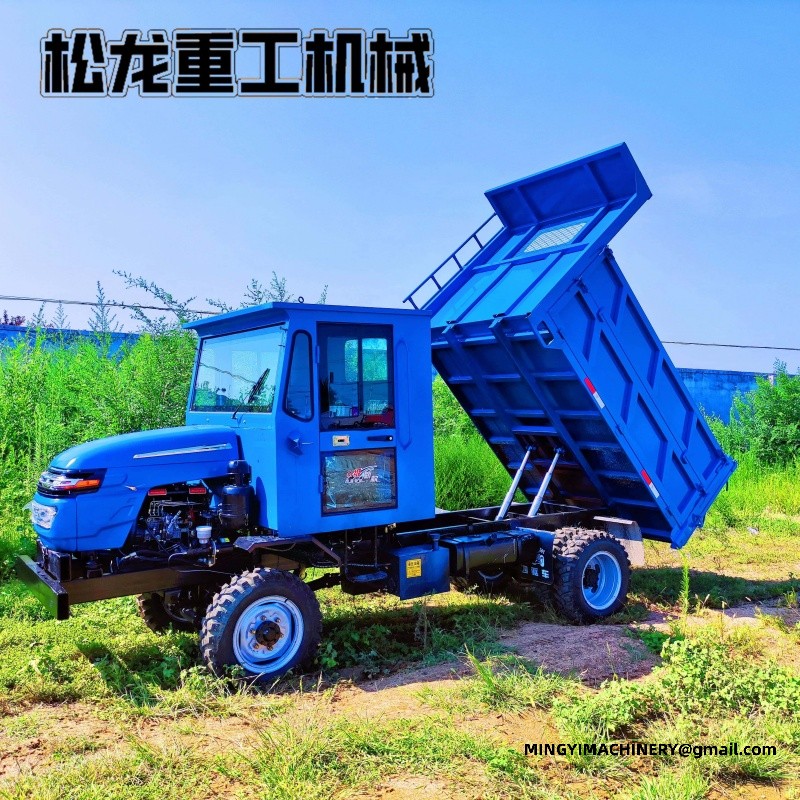
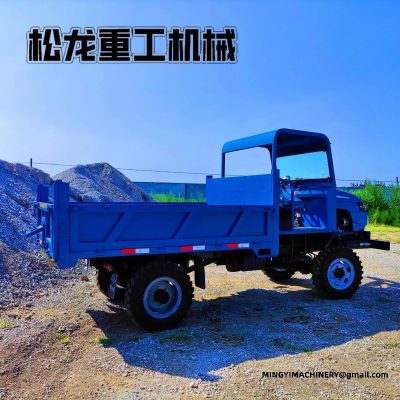
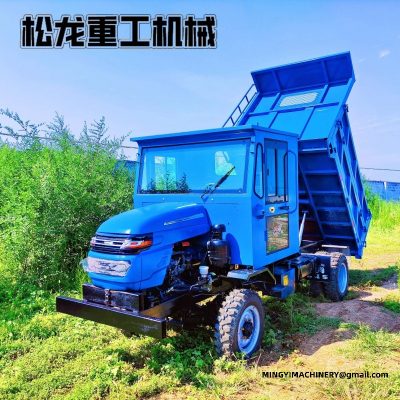
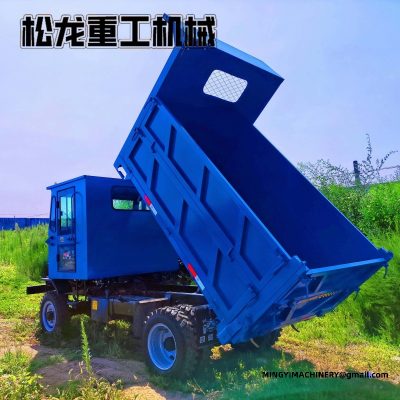
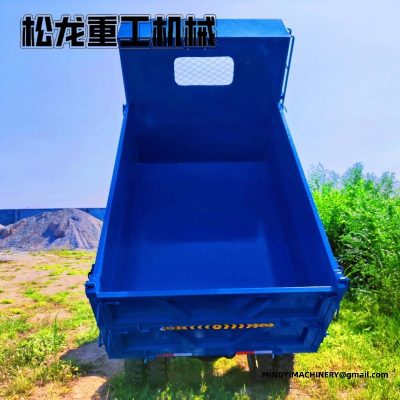
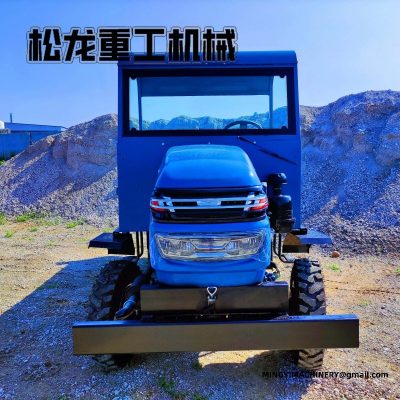
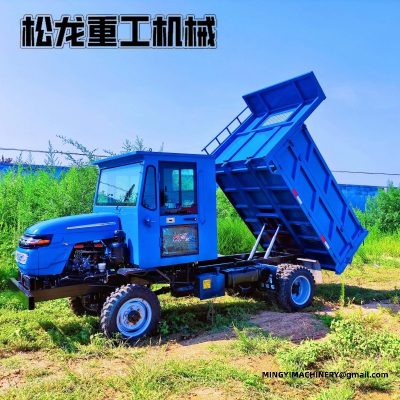
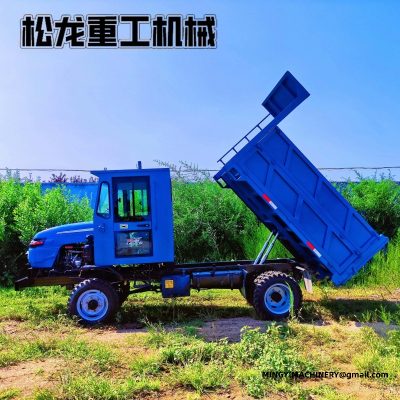
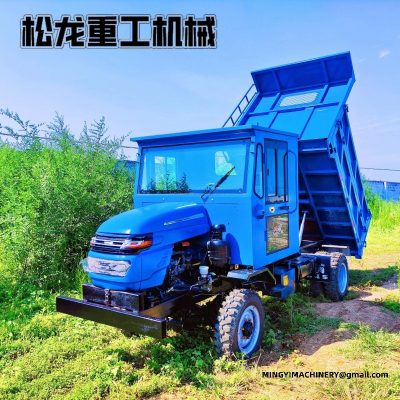
This page covers the dumper for buyers who already know the job and now need the machine. It sets out what the build includes, what can be changed, what the operator should expect in the first weeks and what the service schedule looks like.
Forestry and timber work with off road waste carrier
Access tracks in forestry are narrow, soft and often steep. This class of machine chosen for that work is chosen for the track, and the body, cab and tyre specification follow from the route rather than from the load alone.
Daily checks and maintenance on off road waste carrier
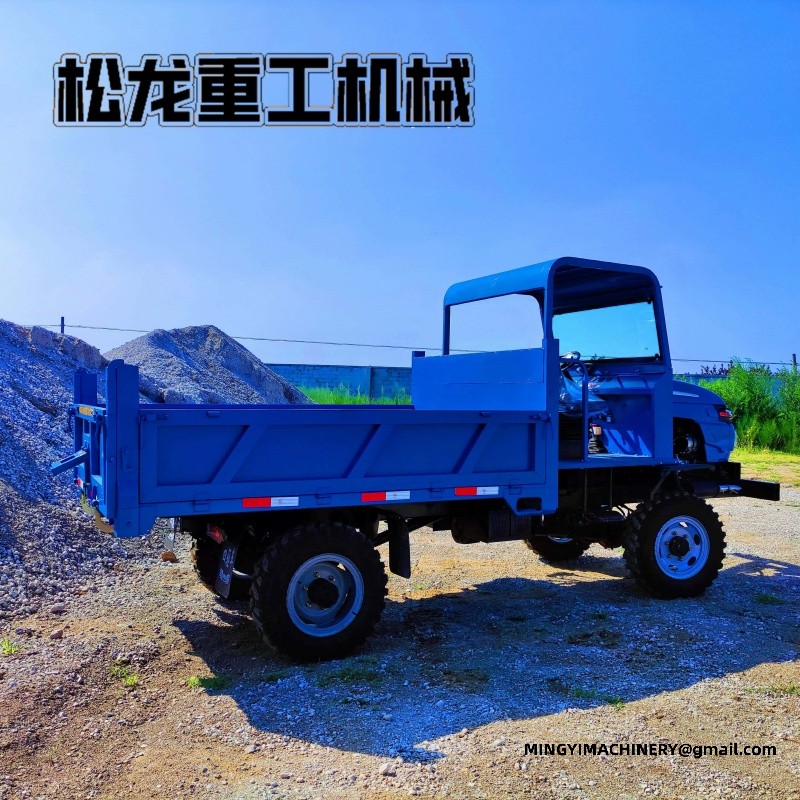
Most failures start as something small that a walk-around would have caught. Fluid levels, belt tension, tyre or track condition and any fresh leak are the items worth two minutes at the start of each shift on the unit in daily use. Service intervals exist because wear is predictable. Following the maker schedule on a machine of this size takes far less time than repairing the damage that follows a missed oil change or a filter left in place past its life. A simple log helps. Recording hours, fuel and any adjustment made to the equipment on site gives the workshop a history, and that history is what turns an intermittent fault into a one-visit repair instead of three.
Matching off road waste carrier to ground conditions
Ground decides more of the outcome than power does. Soft, wet or loose surfaces call for a wider footprint and lower ground pressure, while hard standing allows a narrower machine that turns in less space and travels faster between tasks. The working surface should be surveyed before the machine itself is specified. A machine that is stable on compacted gravel can be unusable on the same site after rain, and the difference shows up as lost days rather than as a fault.
Specifying off road waste carrier against the job list
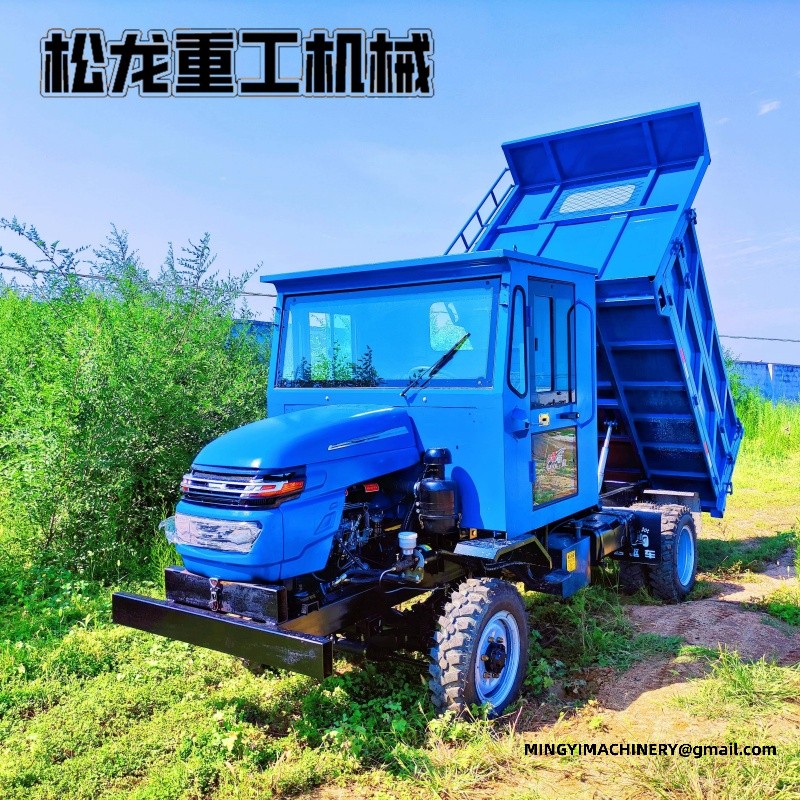
The specification should be written from the job backwards. Listing the loads, the ground and the hours first, then matching the machine in that duty to that list, avoids buying capacity the work never uses and avoids discovering a shortfall in the first week. Buyers who specify the unit on the job on paper before enquiring get specifications that can be compared. Without that list, two suppliers will propose two different machines and the simpler one is usually the smaller one, not the better value. A written duty list is the simplest part of the purchase. It takes an hour to note the material, the distance, the gradient and the hours per week, and it is what turns the model in question enquiry into a machine that fits.
Tipping body and unloading on off road waste carrier
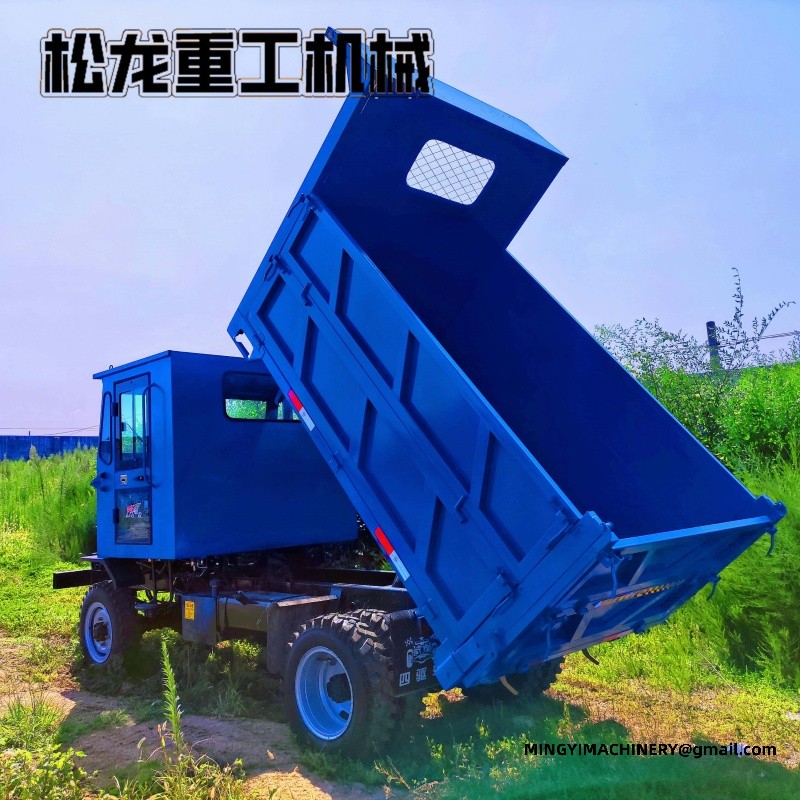
Body size is a compromise with access. A larger body on a machine built for the work carries more per trip but needs more room to turn and tip, so the useful question is how many trips the route allows rather than how much it holds.
Farm and estate use of off road waste carrier
Farm work is seasonal and varied. The equipment in service that hauls feed in one month and muck or aggregate in the next earns its place by being usable across the year rather than by being optimised for one task. Farm users also value simplicity. The dumper that can be serviced in the yard with common tools and common parts suits a farm better than one that needs a dealer visit for routine work.
Working hours and duty cycle of off road waste carrier
Hour planning helps at resale as well. This class of machine with a recorded service history and a sensible hour count is easier to sell than one with the same hours and no records, whatever its condition.
Running off road waste carrier in a mixed fleet
Utilisation matters more than the purchase decision over a few years. The unit in daily use that sits idle ties up the same yard space standing still as one that earns, so the buying decision should follow the hours the machine will realistically work.
Ordering, lead time and delivery of a machine of this size
Lead time is part of the specification. Confirming build time, shipping method and what is included before ordering the equipment on site prevents the common gap between when the machine is needed and when it can arrive. The order should state the configuration in writing. Engine, attachments, colour, documents and any market requirement are clearer on the build sheet for the machine itself than in a conversation after delivery. Delivery planning includes the receiving end. Knowing whether the model in question will be craned, driven or forked off, and whether the site can accept it, is settled before dispatch rather than on the day.
Resale value and replacement planning
Resale starts at purchase. Specification choices, service records and the condition of wearing parts are what a buyer looks at, and the machine in that duty that has been maintained on schedule is worth more than one that merely looks clean.
Handover and documentation for the unit on the job
A short familiarisation session prevents the early faults. Most first-month problems on a machine built for the work come from unfamiliarity with controls, limits or checks rather than from the machine itself.
Water tank and dust control bodies on the equipment in service
A water tank turns the vehicle into a different machine. The dumper carrying water for dust control or irrigation is specified around tank size, baffles and the route, because a part-filled tank behaves very differently on a slope. Water is heavy and it moves. Baffles and sensible speeds matter on this class of machine with a tank body, and the specification should reflect the ground the vehicle will cross rather than only the volume needed. Dust control work is repetitive and time-critical. The unit in daily use with the right tank and spray arrangement covers more ground per shift, which is usually the point of the exercise.
Fitting a machine of this size into the wider site plan
Machine productivity depends on what happens around it. Deliveries, other trades and the sequence of work decide how much of the shift the equipment on site spends actually working rather than waiting. Access and storage are worth settling early. Where the machine itself will be parked, refuelled and serviced on site affects the working day more than most specification details, and it takes nothing to plan.
Customisation and build options for the model in question
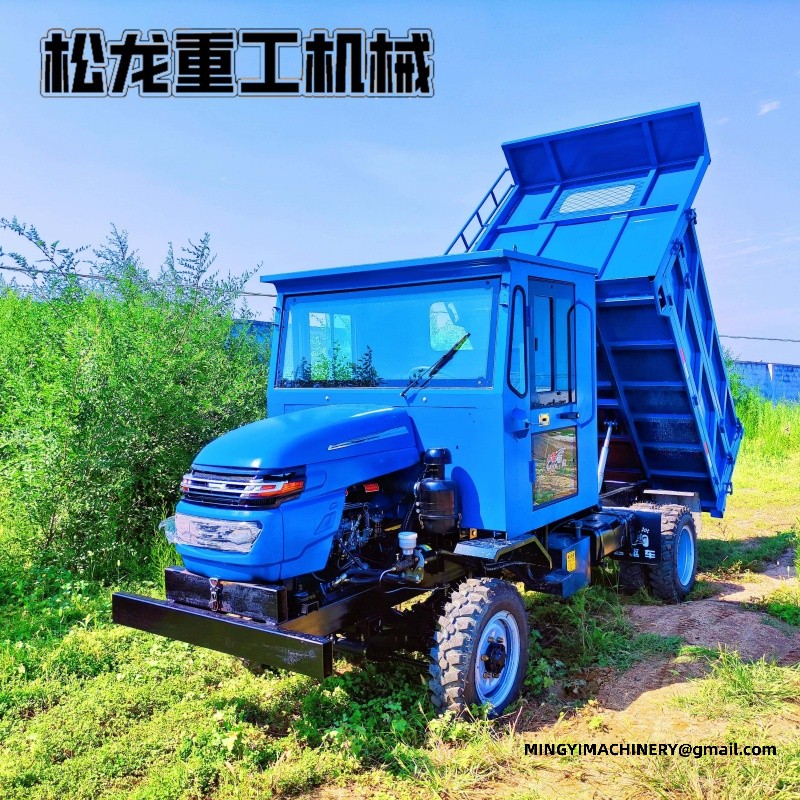
Customisation should still be limited to what the work needs. Each addition to the machine in that duty is another item to maintain, so the useful question is not what can be added but what the job list actually requires.
Wear items and life of the unit on the job
Certain parts are designed to be consumed. Knowing which items on a machine built for the work are wearing parts, and roughly how long they last in the duty the machine sees, turns replacement into a plan rather than a breakdown.
Upgrading and reconfiguring the equipment in service
Reconfiguration can extend the useful life of a machine. The dumper that no longer suits the current work may suit it again with a different attachment, guarding or control arrangement. Upgrades should be checked against the base machine. Hydraulic capacity, mounting interface and stability all limit what can reasonably be added to this class of machine, and confirming those limits avoids an unsatisfactory result.
Configuration data for the unit in daily use
The configurations below are the build sheets most often matched to a machine of this size. Engine, gearbox, axles, frame and body dimensions are confirmed together, because the body size and the axle rating have to suit the load before the engine rating matters.
| # | 11.Luxury | 21.Upgraded | 22.Luxury | 7.Upgraded |
|---|---|---|---|---|
| 1 | Single-cylinder diesel engine, 32 hp | Four-cylinder 4105 turbocharged diesel engine | Four-cylinder 4105 turbocharged diesel engine | Single-cylinder diesel engine, 28 hp |
| 2 | Part-time gearbox, selectable 2WD/4WD | Model 140 part-time gearbox with four-wheel drive | Model 145 part-time gearbox with four-wheel drive | Full-time gearbox with four-wheel drive |
| 3 | High/low range with crawler gear | High/low range with crawler gear | High/low range with crawler gear | High/low range with crawler gear |
| 4 | Enclosed cab | Simple cab | Fully enclosed cab | Front axle clutch |
| 5 | Six 700-16 mountain tyres | Six 825R16 steel-belted radial tyres | Six 825R16 steel-belted radial tyres | Fully enclosed cab |
| 6 | Model 212 front axle | Reinforced ISUZU-pattern front axle | Reinforced ISUZU-pattern front axle | Oil brakes |
| 7 | Model 130 rear axle | Reinforced 1080 rear axle with air cut-off brake | Reinforced 1080 rear axle | Four 700-16 mountain tyres |
| 8 | Air cut-off brakes | Air cut-off brakes | Air cut-off brakes | Front axle 212 |
| 9 | Reinforced 60 x 140 mm square tube frame | Reinforced 80 x 180 mm square tube frame | Reinforced 80 x 180 mm square tube frame | Rear axle 130 |
| 10 | Rear body 2.2 m long x 1.5 m wide x 0.45 m high | Rear body 3.0 m long x 2.2 m wide x 0.45 m high | Rear body 3.0 m long x 2.2 m wide x 0.45 m high | Reinforced 60 x 140 mm square tube frame |
| 11 | Tailgate with self-dumping function | Tailgate with self-dumping function | Tailgate with self-dumping function | Rear body 2.2 m long x 1.5 m wide x 0.45 m high |
| 12 | Side-opening rear body tailgate | Hydraulic power steering | Side-opening rear body tailgate with cab ladder | Tailgate with self-dumping function |
| 13 | Hydraulic power steering | Twin hydraulic rams | Hydraulic power steering | Hydraulic power steering |
| 14 | Twin hydraulic rams | Two-person comfort seat | Twin hydraulic rams | Twin hydraulic rams |
| 15 | Two-person comfort seat | Heavy-duty leaf springs | Two-person comfort seat | Two-person comfort seat |
| 16 | Heavy-duty leaf springs | Twin-battery electric start | Heavy-duty leaf springs | Twin-battery electric start |
| 17 | Twin-battery electric start | Square-nose bonnet | Twin-battery electric start | Square-nose bonnet |
| 18 | Square-nose bonnet | — | Square-nose bonnet | — |
Planning the season around the equipment on site
Workload is rarely even across the year, and the machine should be specified for the busy weeks. The machine itself sized only for the average month will be the limiting factor exactly when the work is worth the most.
Reading the early symptoms on the model in question
Temperature and pressure are the two things worth watching. The machine in that duty that runs hotter than it used to, or whose pressure has drifted, is reporting a problem that is still simple to fix.
Hot, humid and dusty conditions around the unit on the job
Humidity attacks the parts that are not used. Storage in a damp climate means a machine built for the work needs the exposed metal protected and the machine run regularly, because standing still does more damage than working.
Handover and getting familiar with the equipment in service
Operators who come from a different machine need a short conversion. The controls on the dumper follow the usual pattern, but the response, the sightlines and the stopping distance are learned by doing rather than by reading.
Commissioning this class of machine on site
Transport shakes things loose. A short check of the unit in daily use after the crate is opened, covering the same points the pre-delivery inspection covered, is the most useful insurance available on delivery day.
Fuel, oil and fluid quality for a machine of this size
Most engine trouble starts with what went into the tank. Clean fuel, stored properly and filtered before it reaches the equipment on site, prevents more downtime than any other single habit an owner can adopt.
Storage and long idle periods for the machine itself
Rubber, seals and hoses age whether the machine works or not. Keeping the model in question out of direct sun and off damp ground slows that, and running it briefly at intervals keeps everything moving.
Pre-delivery inspection before the machine in that duty leaves the shop
A machine should be inspected while it is still on our floor rather than after it lands. For the unit on the job that means the engine is run to temperature, the hydraulics are cycled through full travel, and every function is checked against the build sheet before the crate is closed.
Packing, loading and shipment of a machine built for the work
The paperwork matters as much as the packing. Serial numbers, dimensions and weights recorded for the equipment in service at loading are the same figures the destination needs, and a mismatch here loses more days than the voyage itself.
Every line above is a build item rather than an optional extra, and the final sheet for the dumper is confirmed against the destination, the ground and the load before production.
E-mail:sales@mingycn.com
LINE(ID):mingyicn
Related pages
off road waste carrier for mining and quarry work · 4WD trash transport vehicle · OEM Front Tipping Dumper Manufacturer: Build Records · Four Wheel Drive Transport Vehicle









