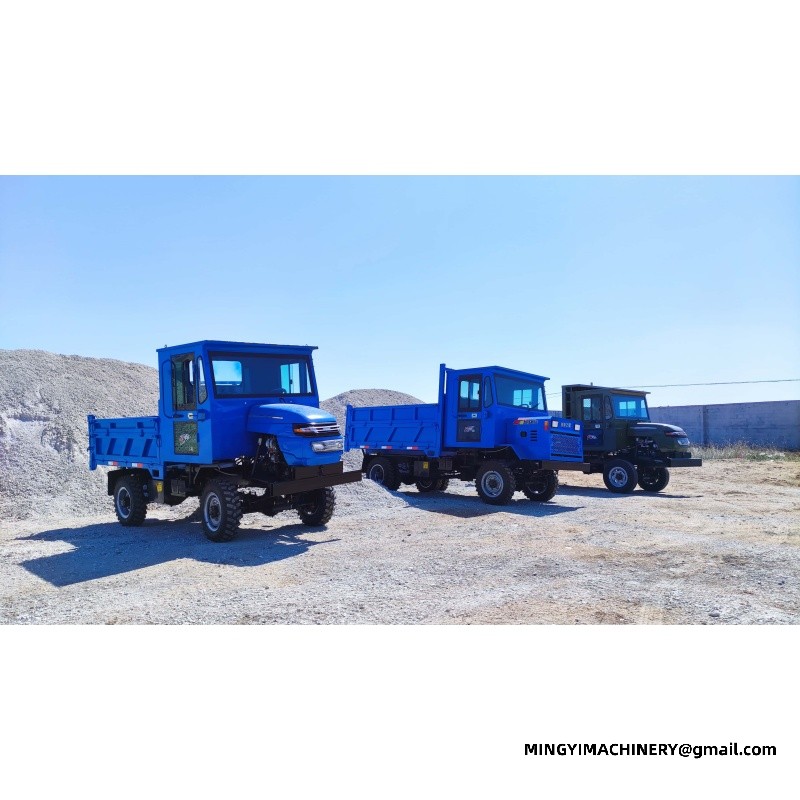
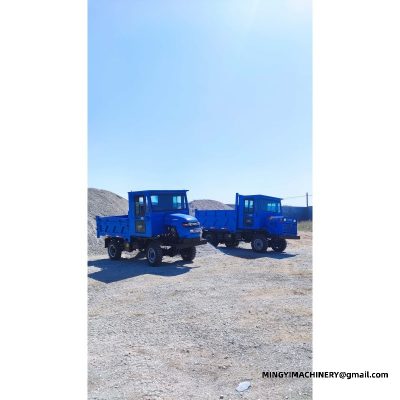
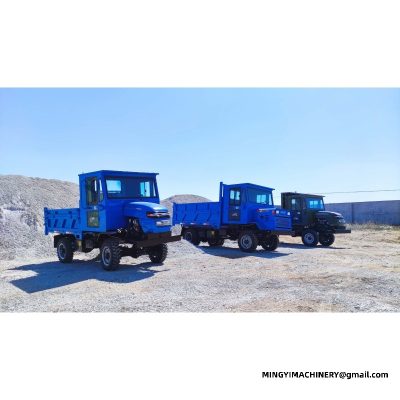
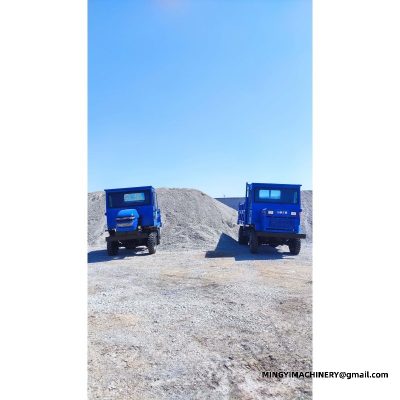
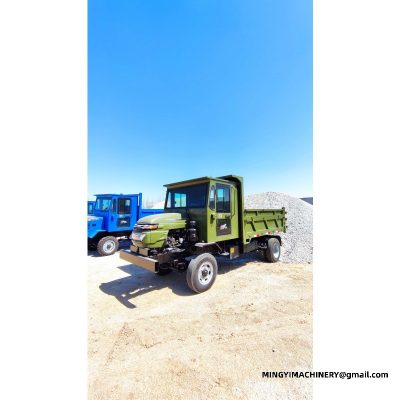
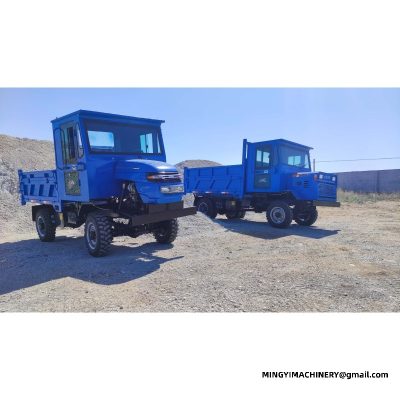
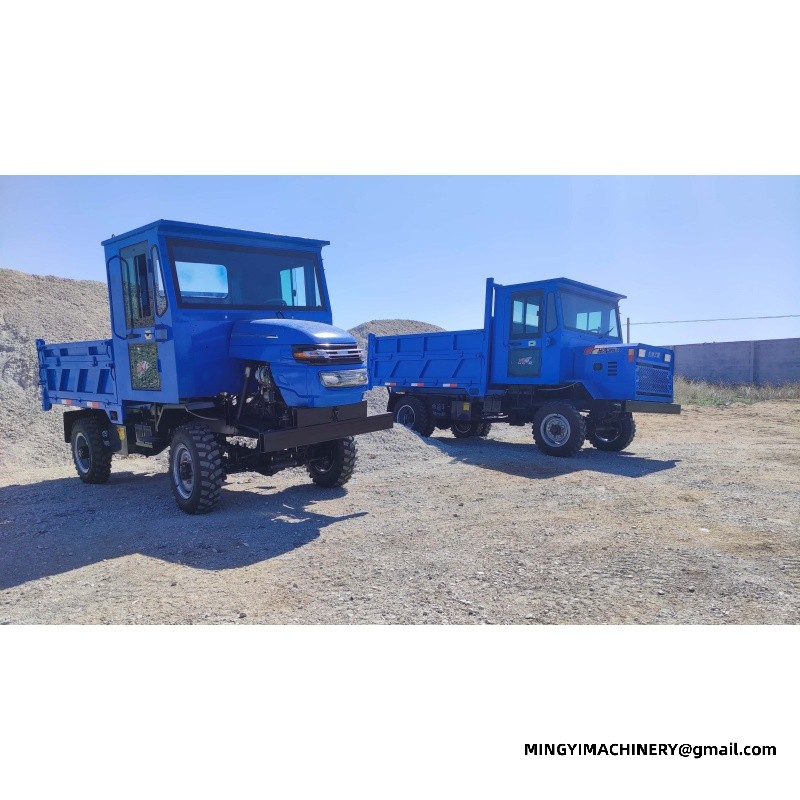
Model MY-4x4-4T
Reading about the dumper is easier when the page follows the life of the machine. What follows moves from selection through delivery, first weeks of work, routine care and the point at which the unit is replaced or sold on.
Ordering, lead time and delivery of 4WD Concrete Mixer Transporter
Lead time is part of the specification. Confirming build time, shipping method and what is included before ordering this class of machine prevents the common gap between when the machine is needed and when it can arrive. Delivery planning includes the receiving end. Knowing whether the unit in daily use will be craned, driven or forked off, and whether the site can accept it, is settled before dispatch rather than on the day.
Soft ground, paddy fields and mud with 4WD Concrete Mixer Transporter
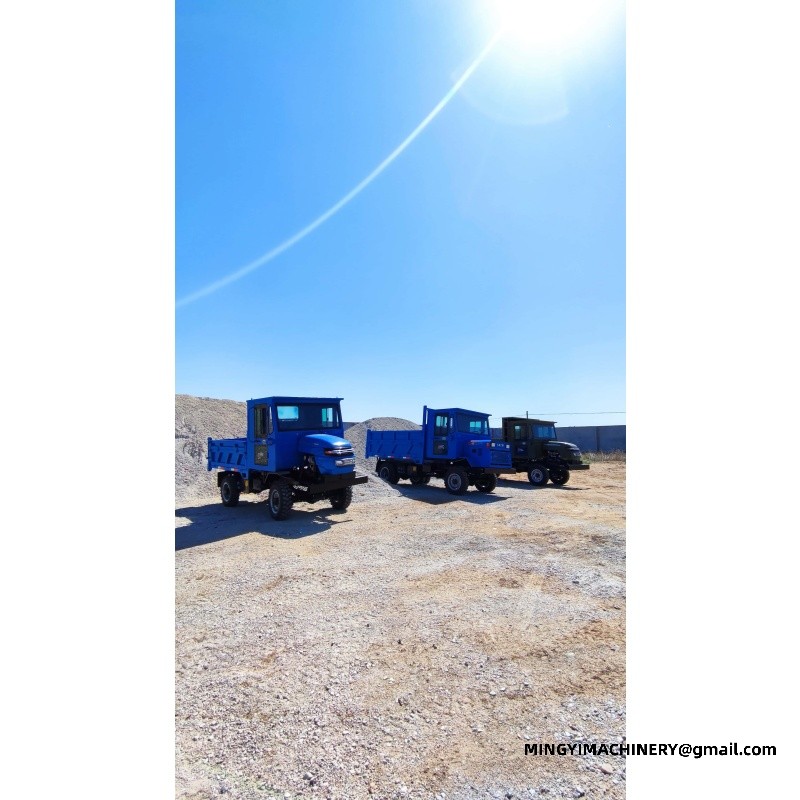
Four-wheel drive is only part of soft ground capability. Tyre choice, ground clearance and weight distribution decide whether a machine of this size keeps moving in a paddy field or a marsh, and all three are specified rather than assumed.
Daily checks and maintenance on 4WD Concrete Mixer Transporter
Most failures start as something small that a walk-around would have caught. Fluid levels, belt tension, tyre or track condition and any fresh leak are the items worth two minutes at the start of each shift on the equipment on site. Service intervals exist because wear is predictable. Following the maker schedule on the machine itself takes far less time than repairing the damage that follows a missed oil change or a filter left in place past its life.
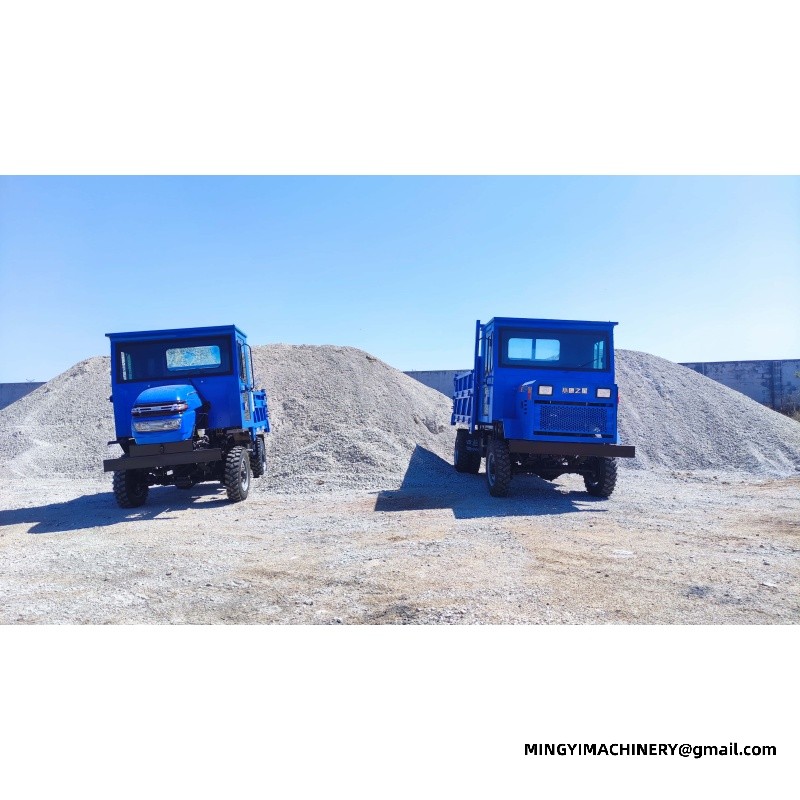
Warranty, commissioning and early checks
Warranty terms are clearer when they are read before purchase. Knowing what is covered, what counts as a wearing item and what documentation is required makes a claim on the model in question straightforward rather than contested.
Fuel use and running demands of 4WD Concrete Mixer Transporter
Fuel is usually the largest controllable running demand. Operating style, correct tyre or track condition and a clean air supply all move consumption on the machine in that duty by more than most buyers expect.
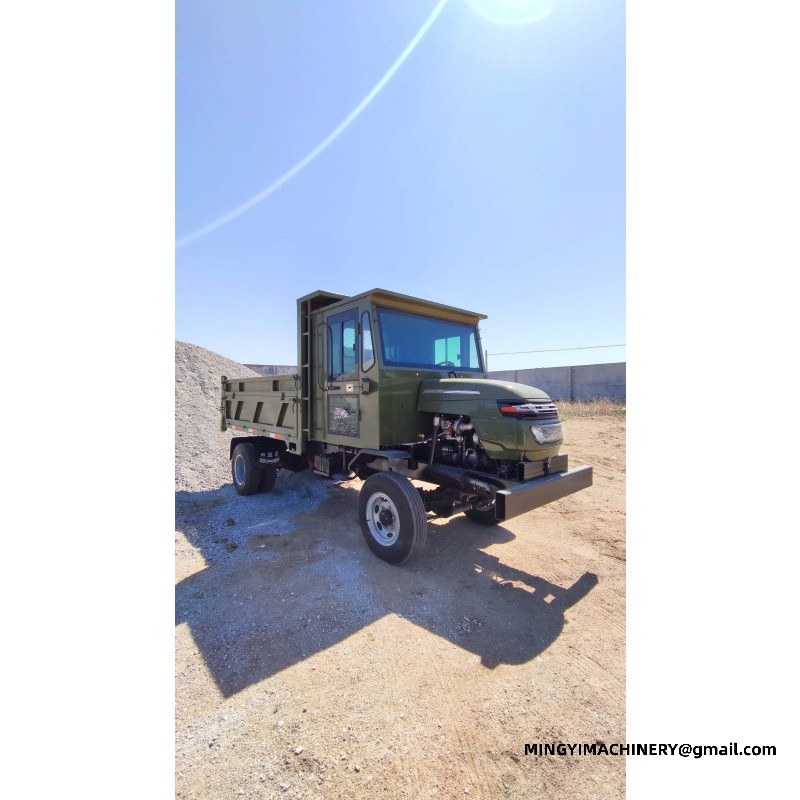
Tipping body and unloading on 4WD Concrete Mixer Transporter
Unloading method should follow the material. Wet spoil, aggregate and green timber behave differently in the body, and matching the body and tailgate arrangement to the load is what keeps the unit on the job cycling rather than being hand-cleared. Body size is a compromise with access. A larger body on a machine built for the work carries more per trip but needs more room to turn and tip, so the useful question is how many trips the route allows rather than how much it holds.
Resale value and replacement planning
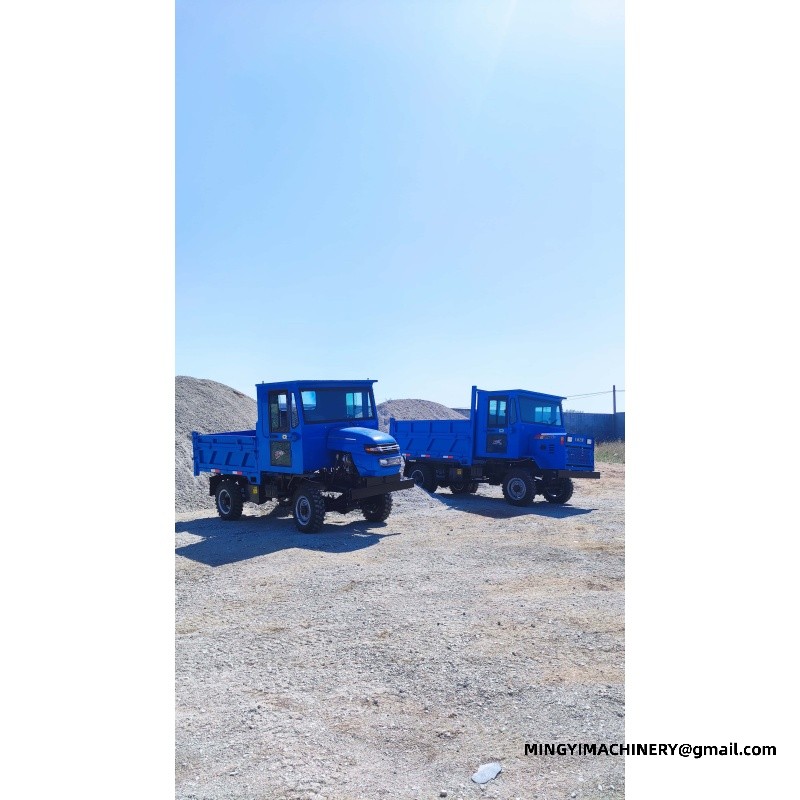
Resale starts at purchase. Specification choices, service records and the condition of wearing parts are what a buyer looks at, and the equipment in service that has been maintained on schedule is worth more than one that merely looks clean. Replacement timing is a planning decision. Knowing the intended working life of the dumper lets an owner sell while the machine still has value rather than after a major repair becomes due. Records are part of the asset. Keeping the service history and the hour records with this class of machine makes it easier to sell, easier to insure and easier to justify the replacement machine internally.
Parts, service and support for 4WD Concrete Mixer Transporter
Parts availability usually decides the engine and the brand. A machine built around components the local network already carries is serviced from stock, which is the difference between a day lost and a week lost.
Specifying the unit in daily use against the job list
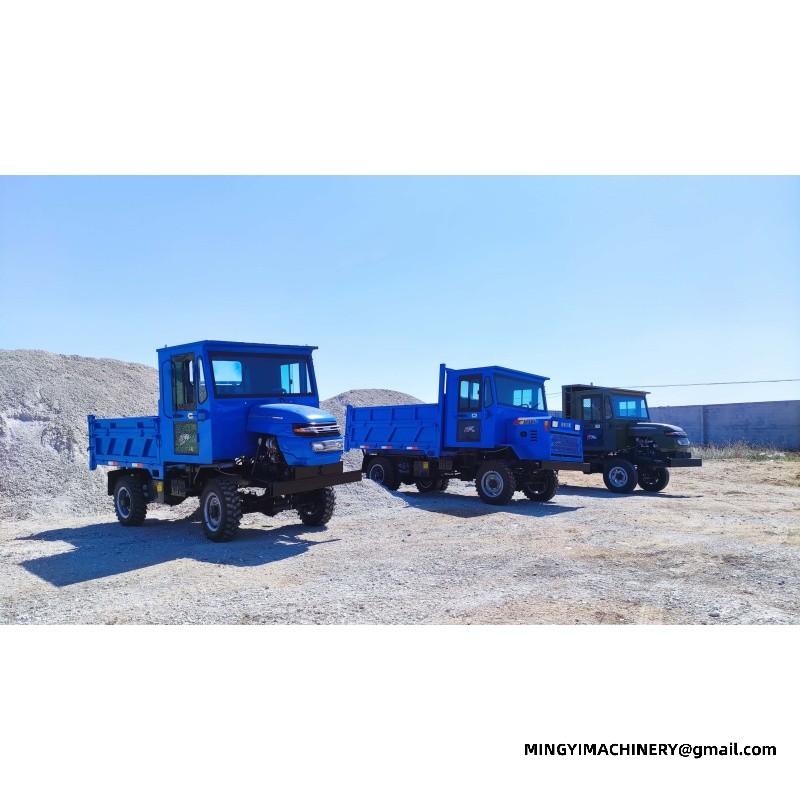
Buyers who specify a machine of this size on paper before enquiring get specifications that can be compared. Without that list, two suppliers will propose two different machines and the simpler one is usually the smaller one, not the better value.
Forestry and timber work with the equipment on site
Timber work changes what the vehicle carries. The machine itself fitted with a log grab loads and unloads without a second machine, which is usually the reason a forestry contractor specifies one over a conventional truck.
Farm and estate use of the model in question
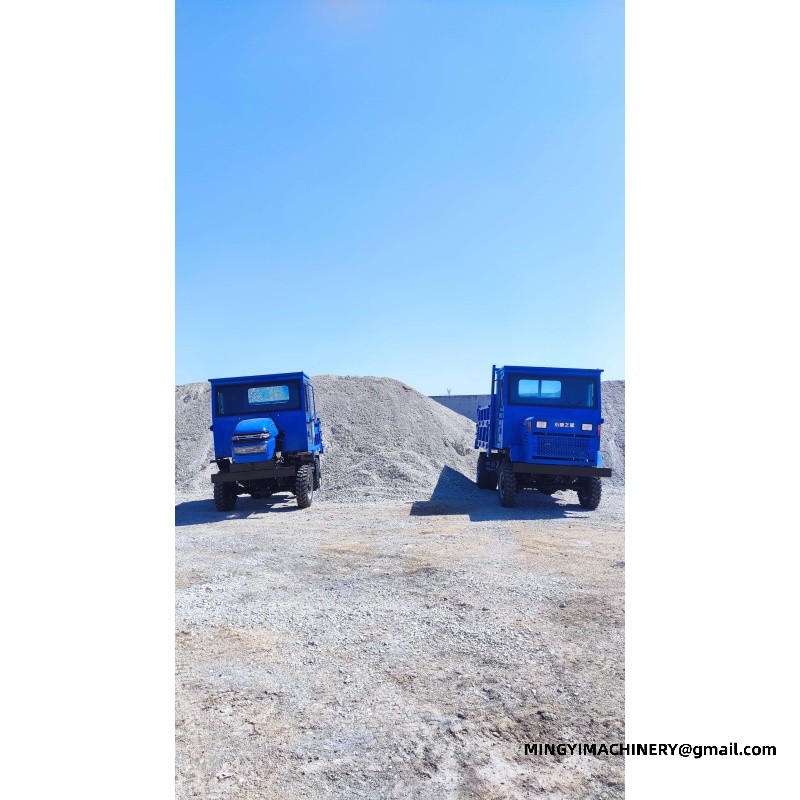
Farm work is seasonal and varied. The machine in that duty that hauls feed in one month and muck or aggregate in the next earns its place by being usable across the year rather than by being optimised for one task. Ground on farms is often soft and often shared with livestock. The unit on the job working there needs to cross pasture without rutting it badly, and tyre and weight choices follow from that. Farm users also value simplicity. A machine built for the work that can be serviced in the yard with common tools and common parts suits a farm better than one that needs a dealer visit for routine work.
Quarry, tunnel and mining duty for the equipment in service
Size matters underground. Overall height and width decide whether the dumper can work in a tunnel at all, and those dimensions are the first thing to confirm rather than the last.
Upgrading and reconfiguring this class of machine
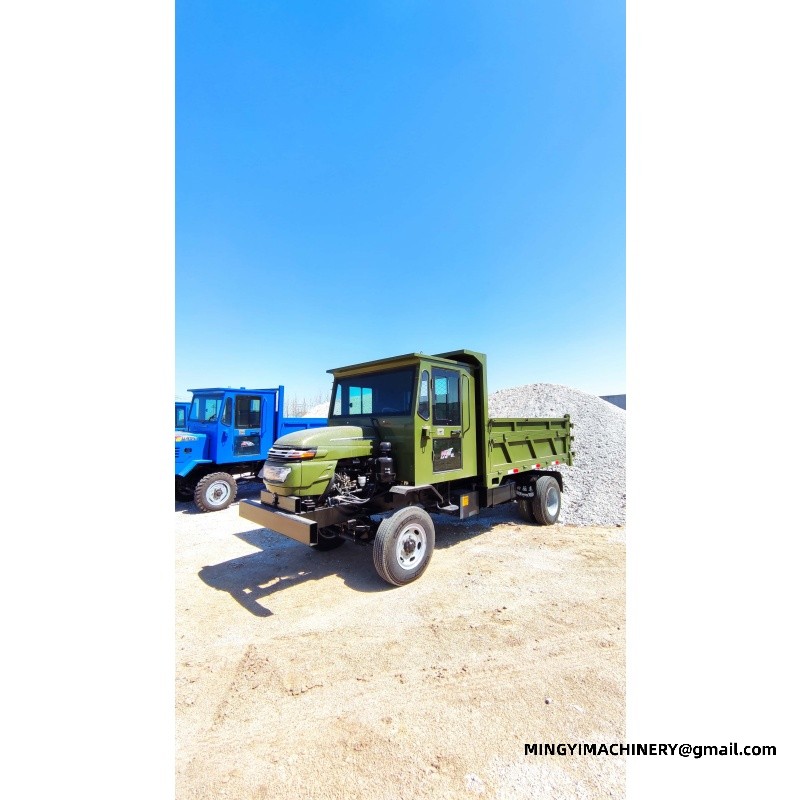
Reconfiguration can extend the useful life of a machine. The unit in daily use that no longer suits the current work may suit it again with a different attachment, guarding or control arrangement.
Attachments and working tools for a machine of this size
Attachment decisions are best made before delivery. Specifying hydraulics and couplers at build time is simpler than adding them later, and it avoids the downtime of a workshop visit in the first month. Most owners find that the second attachment changes how often the machine is used. The equipment on site that was bought for one task often becomes the general machine on site once a second tool is available.
Operator technique and familiarisation
Machine output varies more between operators than between brands. Smooth, planned movements put less load on the structure and use less fuel, and that difference is visible on the hour meter and in the service bills for the machine itself. A short handover pays for itself. Operators who understand why the model in question is set up the way it is will report a change in behaviour early, which is usually the point where a repair is simplest.
Crane and grab attachments on the machine in that duty
A crane or grab turns a haul vehicle into a loading machine. The unit on the job fitted with a hydraulic crane loads itself, which removes a second machine from the job and is often the whole reason for specifying one. Adding a crane changes the vehicle specification. Hydraulic capacity, frame strength and braking all need to suit the attachment, and it is simpler to specify them at build than to add them later.
Handover and documentation for a machine built for the work
Keeping the manuals where they can be reached matters. The equipment in service whose documents stay with the machine gets serviced on schedule; one whose paperwork was filed elsewhere tends to run on memory instead.
Customisation and build options for the dumper
Build options are where a standard machine becomes the right machine. Colour, guarding, lighting, seating and hydraulic provisions can usually be set at build time on this class of machine, and are far simpler then than as a retrofit. Fleet buyers often want consistency rather than variety. Specifying the unit in daily use so that several units share controls, filters and service points reduces training time and keeps the parts shelf small. Customisation should still be limited to what the work needs. Each addition to a machine of this size is another item to maintain, so the useful question is not what can be added but what the job list actually requires.
Configuration data for the equipment on site
The configurations below are the build sheets most often matched to the machine itself. Engine, gearbox, axles, frame and body dimensions are confirmed together, because the body size and the axle rating have to suit the load before the engine rating matters.
| # | 12.Standard | 13.Upgraded | 7.Upgraded | 8.Luxury |
|---|---|---|---|---|
| 1 | Two-cylinder diesel engine, 38 hp | Two-cylinder diesel engine, 38 hp | Single-cylinder diesel engine, 28 hp | Single-cylinder diesel engine, 28 hp |
| 2 | Full-time gearbox with four-wheel drive | Full-time gearbox with four-wheel drive | Full-time gearbox with four-wheel drive | Part-time gearbox, selectable 2WD/4WD |
| 3 | High/low range with crawler gear | High/low range with crawler gear | High/low range with crawler gear | High/low range with crawler gear |
| 4 | Simple cab | Front axle clutch | Front axle clutch | Enclosed cab |
| 5 | Oil brakes | Fully enclosed cab | Fully enclosed cab | Six 700-16 mountain tyres |
| 6 | Four 700-16 mountain tyres | Oil brakes | Oil brakes | Model 212 front axle |
| 7 | Front axle 212 | Four 700-16 mountain tyres | Four 700-16 mountain tyres | Model 130 rear axle |
| 8 | Rear axle 130 | Front axle 212 | Front axle 212 | Air cut-off brakes |
| 9 | Reinforced 60 x 140 mm square tube frame | Rear axle 130 | Rear axle 130 | Reinforced 60 x 140 mm square tube frame |
| 10 | Rear body 2.2 m long x 1.5 m wide x 0.45 m high | Reinforced 60 x 140 mm square tube frame | Reinforced 60 x 140 mm square tube frame | Rear body 2.2 m long x 1.5 m wide x 0.45 m high |
| 11 | Tailgate with self-dumping function | Rear body 2.2 m long x 1.5 m wide x 0.45 m high | Rear body 2.2 m long x 1.5 m wide x 0.45 m high | Tailgate with self-dumping function |
| 12 | Hydraulic power steering | Tailgate with self-dumping function | Tailgate with self-dumping function | Side-opening rear body tailgate |
| 13 | Twin hydraulic rams | Hydraulic power steering | Hydraulic power steering | Hydraulic power steering |
| 14 | Two-person comfort seat | Twin hydraulic rams | Twin hydraulic rams | Twin hydraulic rams |
| 15 | Twin-battery electric start | Two-person comfort seat | Two-person comfort seat | Two-person comfort seat |
| 16 | Round-nose bonnet | Twin-battery electric start | Twin-battery electric start | Heavy-duty leaf springs |
| 17 | — | Round-nose bonnet | Square-nose bonnet | Twin-battery electric start |
| 18 | — | — | — | Square-nose bonnet |
Later additions and retrofits on the model in question
Retrofitting is limited by the base machine. Before anything is added to the machine in that duty the hydraulic flow, the mounting interface and the stability allowance have to be checked, because those limits are what decide what is sensible.
A second operator for the unit on the job
Different operators suit different work. The person who is quickest with a machine built for the work on open ground is not always the one who is safest in a confined space, and having both available is a genuine advantage.
Fuel, oil and fluid quality for the equipment in service
Most engine trouble starts with what went into the tank. Clean fuel, stored properly and filtered before it reaches the dumper, prevents more downtime than any other single habit an owner can adopt.
Pre-delivery inspection before this class of machine leaves the shop
The last hour before packing is the best time to find a fault. Running the unit in daily use through its full working cycle, checking for leaks under load and confirming that the controls match the specification avoids a conversation across time zones later.
Keeping a service record for a machine of this size
The record should follow the machine, not the owner. When the equipment on site changes hands the service history travels with it, and a complete folder is often the difference between a quick sale and a long one.
Documents that travel with the machine itself
The machine is only half of what arrives. The parts book, the service schedule and the declarations that come with the model in question are what let the owner register, insure and maintain it without a second round of emails.
Cold weather and winter care for the machine in that duty
Starting is only the first problem. Until the unit on the job reaches working temperature the hydraulic response is slower and the seals are stiffer, and warming the machine before asking for full output avoids unnecessary strain.
Every line above is a build item rather than an optional extra, and the final sheet for a machine built for the work is confirmed against the destination, the ground and the load before production.
E-mail:sales@mingycn.com
LINE(ID):mingyicn
Related pages
4WD site dumper for mining and quarry work · all terrain dump truck for mining and quarry work · Mini Dumper Supplier: Load, Box and Route in Practice · Four Wheel Drive Transport Vehicle









