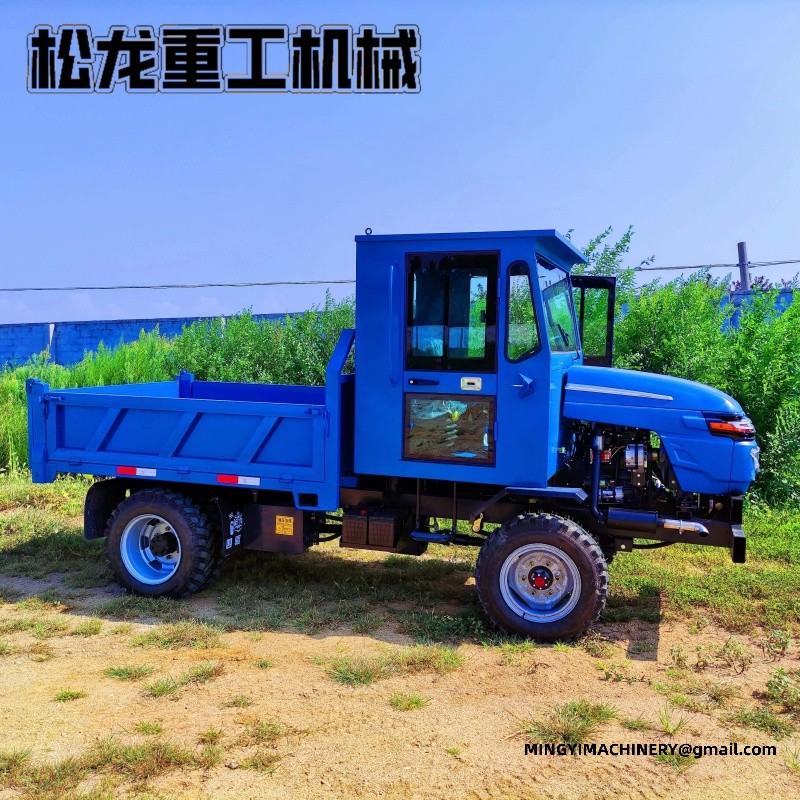
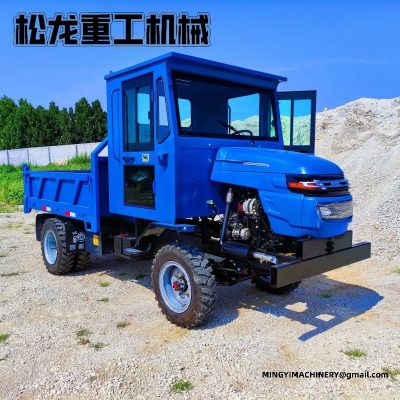
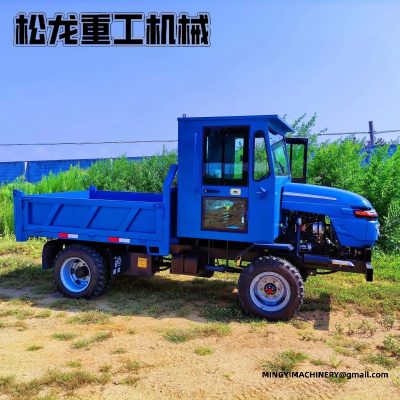
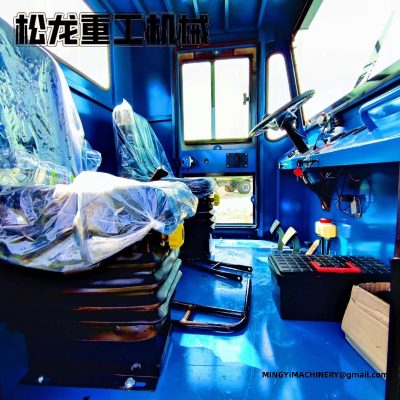
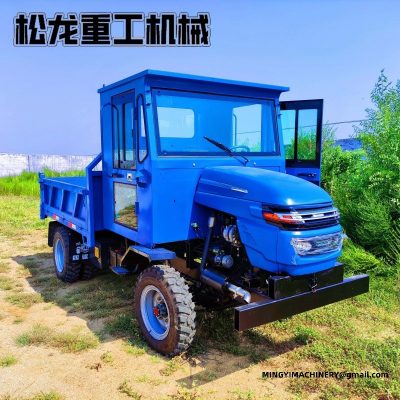
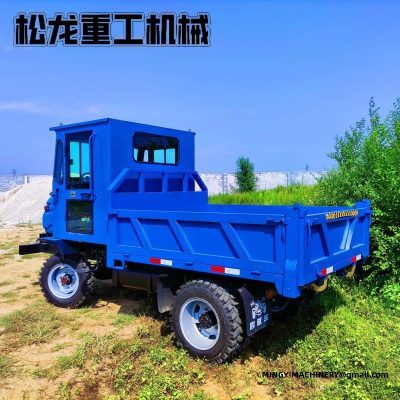
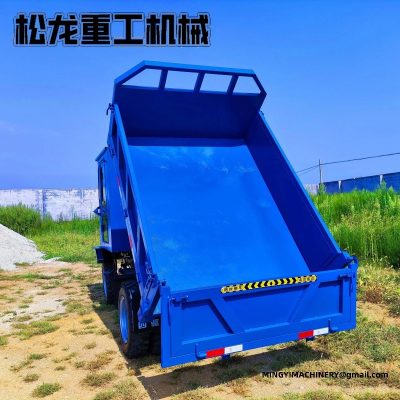
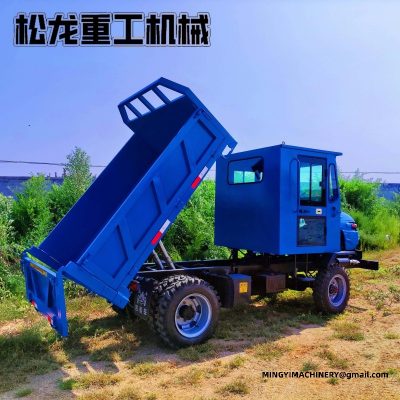
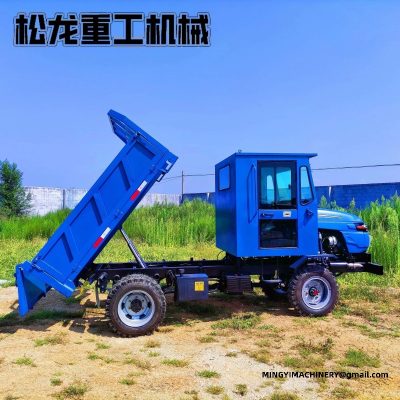
Model MY-4x4-5T · 5 t payload · 58 hp engine
Nothing about the dumper is complicated, but the details are easy to overlook. This page gathers them in one place, from the build and the daily checks through to transport, documents and the support that comes after delivery.
Parts, service and support for heavy load off road transporter
Parts availability usually decides the engine and the brand. A machine built around components the local network already carries is serviced from stock, which is the difference between a day lost and a week lost. Remote diagnosis shortens most faults. A walk-around on video with the panels open often identifies the cause on this class of machine without waiting for a visit, and avoids shipping a part that turns out not to be needed.
Handover and documentation for heavy load off road transporter
A short familiarisation session prevents the early faults. Most first-month problems on the unit in daily use come from unfamiliarity with controls, limits or checks rather than from the machine itself.
Fitting heavy load off road transporter into the wider site plan
Machine productivity depends on what happens around it. Deliveries, other trades and the sequence of work decide how much of the shift a machine of this size spends actually working rather than waiting. Access and storage are worth settling early. Where the equipment on site will be parked, refuelled and serviced on site affects the working day more than most specification details, and it takes nothing to plan.
Farm and estate use of heavy load off road transporter
Farm work is seasonal and varied. The machine itself that hauls feed in one month and muck or aggregate in the next earns its place by being usable across the year rather than by being optimised for one task. Farm users also value simplicity. The model in question that can be serviced in the yard with common tools and common parts suits a farm better than one that needs a dealer visit for routine work.
Soft ground, paddy fields and mud with heavy load off road transporter
Recovering a stuck vehicle takes longer than preventing it. Planning the route, avoiding the worst ground and knowing where the machine in that duty will turn is what keeps a soft-ground job productive.
Engine and power options behind heavy load off road transporter
Power unit choice is usually a parts question, not a performance one. Two buyers can order the same the unit on the job and sensibly choose different engines, because the right answer depends on which brand the local workshop already supports. Emissions documentation is part of engine selection for some destinations. Confirming which units can be supplied and documented for the destination country is worth doing at enquiry stage rather than after the build sheet is signed.
Resale value and replacement planning
Resale starts at purchase. Specification choices, service records and the condition of wearing parts are what a buyer looks at, and a machine built for the work that has been maintained on schedule is worth more than one that merely looks clean.
Fuel use and running demands of heavy load off road transporter
Fuel is usually the largest controllable running demand. Operating style, correct tyre or track condition and a clean air supply all move consumption on the equipment in service by more than most buyers expect. Consumption is best measured over a full week rather than judged per hour. Idle time, repositioning and waiting for other trades are often the largest share of the fuel the dumper burns on a site.
Forestry and timber work with this class of machine
Access tracks in forestry are narrow, soft and often steep. The unit in daily use chosen for that work is chosen for the track, and the body, cab and tyre specification follow from the route rather than from the load alone. Protection matters in timber work. Guarding, lighting and a cab that keeps branches out are the items that keep a machine of this size working through a season rather than being repaired through it.
Gradient and climbing ability of the equipment on site
Gradient is where a haul vehicle earns its keep. The machine itself with a crawler gear and a low range climbs loaded where a road vehicle would need a second attempt, and that difference decides whether a track is usable at all.
Export packing and shipping of the model in question
Export orders add steps that domestic buyers never see. Packed dimensions, securing points, documentation and any dismantling required are all settled before the machine in that duty leaves the factory, and each one affects the freight booking. Documentation should be agreed at order stage. The commercial invoice, packing list and any certificate required at destination are part of shipping the unit on the job, and missing papers delay clearance longer than the voyage takes.
Operator technique and familiarisation
Familiarisation should cover the limits as well as the controls. Knowing where a machine built for the work loses stability, how it behaves at full reach, and what the warning lights mean prevents the incidents that are put down to bad luck.
Quarry, tunnel and mining duty for the equipment in service
Quarry and tunnel work is hard on vehicles. Abrasive dust, sharp material and continuous loading mean the dumper in this duty needs attention to filtration, body wear and brake condition far more often. Size matters underground. Overall height and width decide whether this class of machine can work in a tunnel at all, and those dimensions are the first thing to confirm rather than the last. Haul cycles in a quarry are short and repetitive. The unit in daily use specified for that pattern benefits from a body that dumps cleanly and quickly, because the time saved per cycle is the whole allowance.
Running a machine of this size in a mixed fleet
Fleet value comes from interchangeability. Operators who can step between machines without retraining, and a workshop that stocks one set of filters, keep utilisation higher than a fleet of individually optimised units. Utilisation matters more than the purchase decision over a few years. The equipment on site that sits idle ties up the same yard space standing still as one that earns, so the buying decision should follow the hours the machine will realistically work. Standardising where possible simplifies everything downstream. When several units of the machine itself share a service schedule and a parts list, the fleet becomes easier to plan and easier to sell on at replacement time.
Attachments and working tools for the model in question
The base machine is only as useful as the tool on the end of it. Matching the attachment to the task - rather than to what arrived with the machine - is what lets one the machine in that duty cover several jobs across a week. Attachment decisions are best made before delivery. Specifying hydraulics and couplers at build time is simpler than adding them later, and it avoids the downtime of a workshop visit in the first month.
Daily checks and maintenance on the unit on the job
Most failures start as something small that a walk-around would have caught. Fluid levels, belt tension, tyre or track condition and any fresh leak are the items worth two minutes at the start of each shift on a machine built for the work. Service intervals exist because wear is predictable. Following the maker schedule on the equipment in service takes far less time than repairing the damage that follows a missed oil change or a filter left in place past its life. A simple log helps. Recording hours, fuel and any adjustment made to the dumper gives the workshop a history, and that history is what turns an intermittent fault into a one-visit repair instead of three.
Configuration data for this class of machine
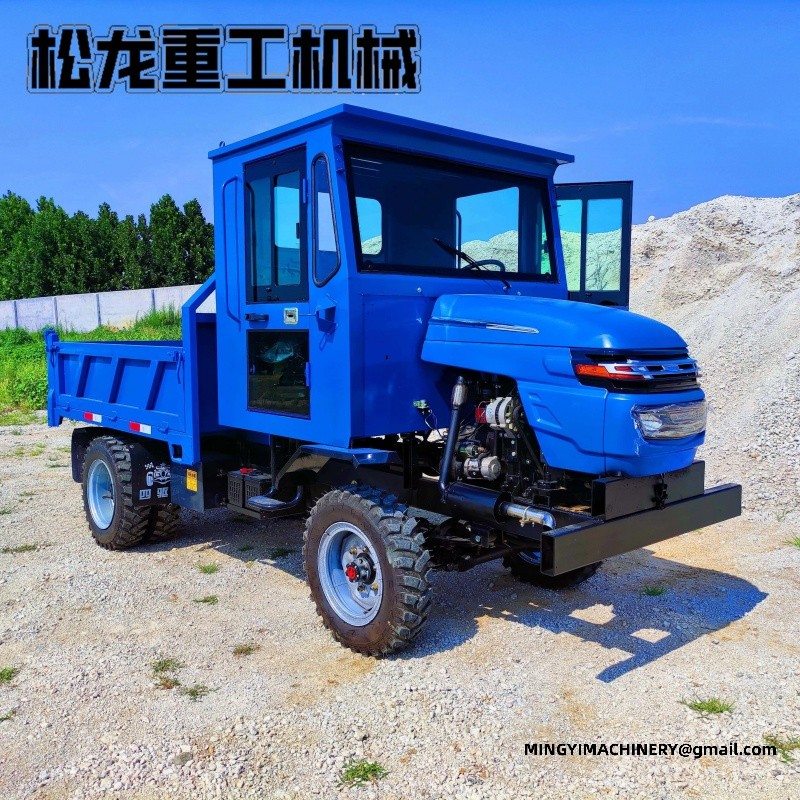
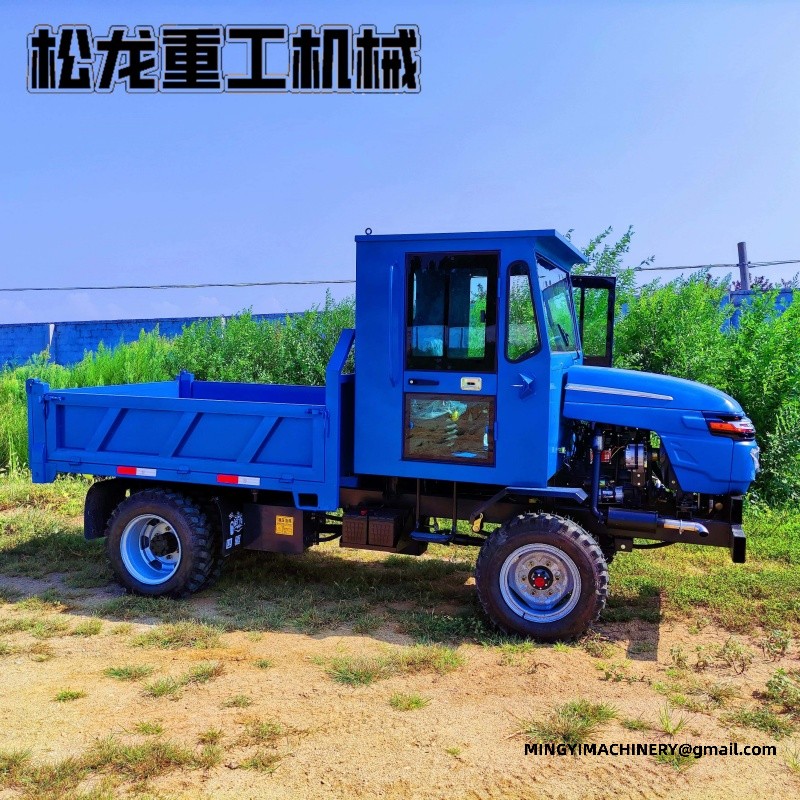
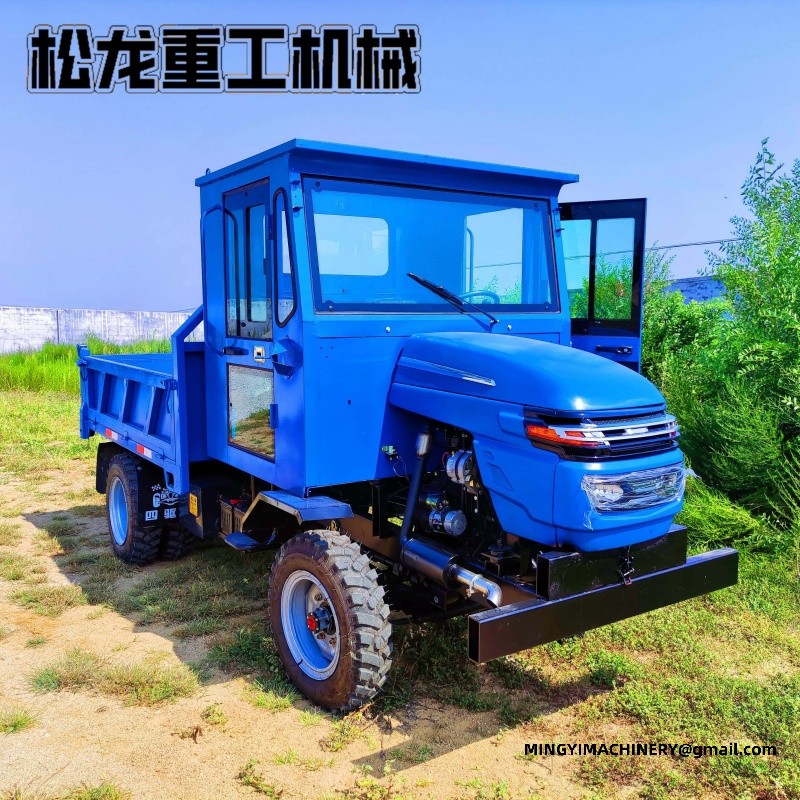
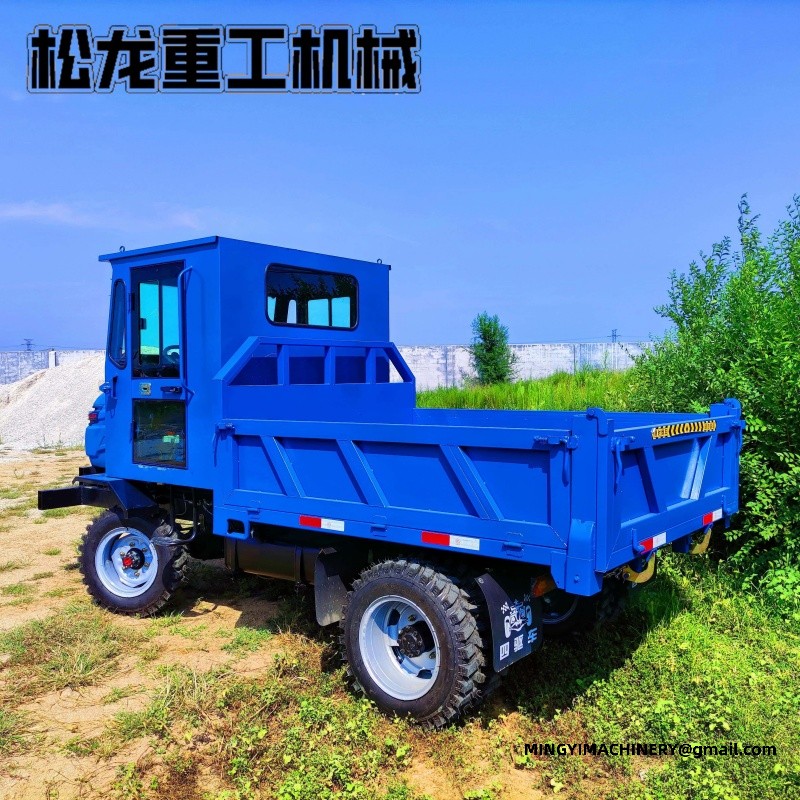
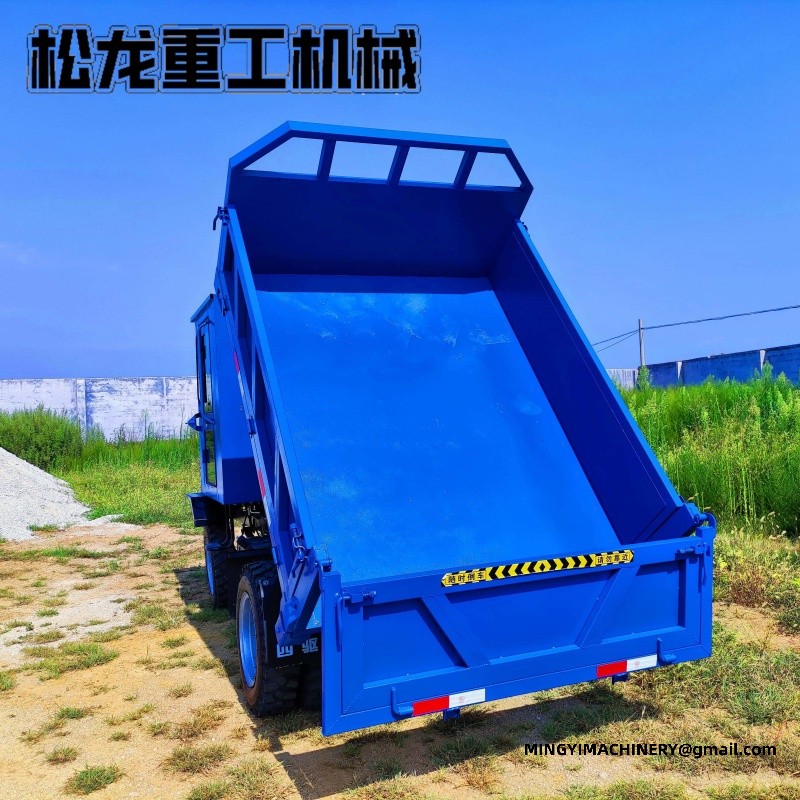
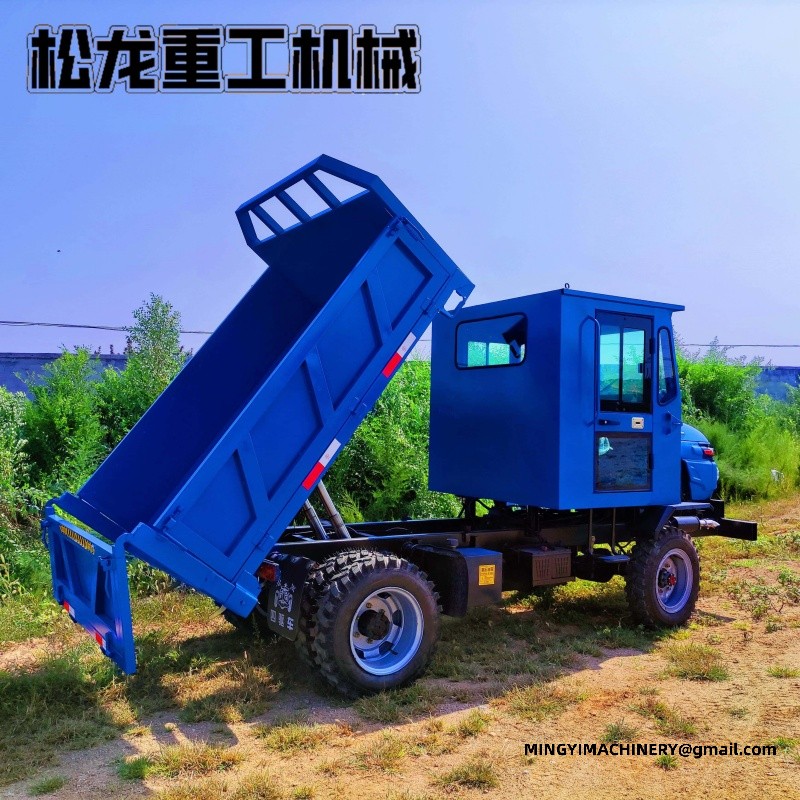
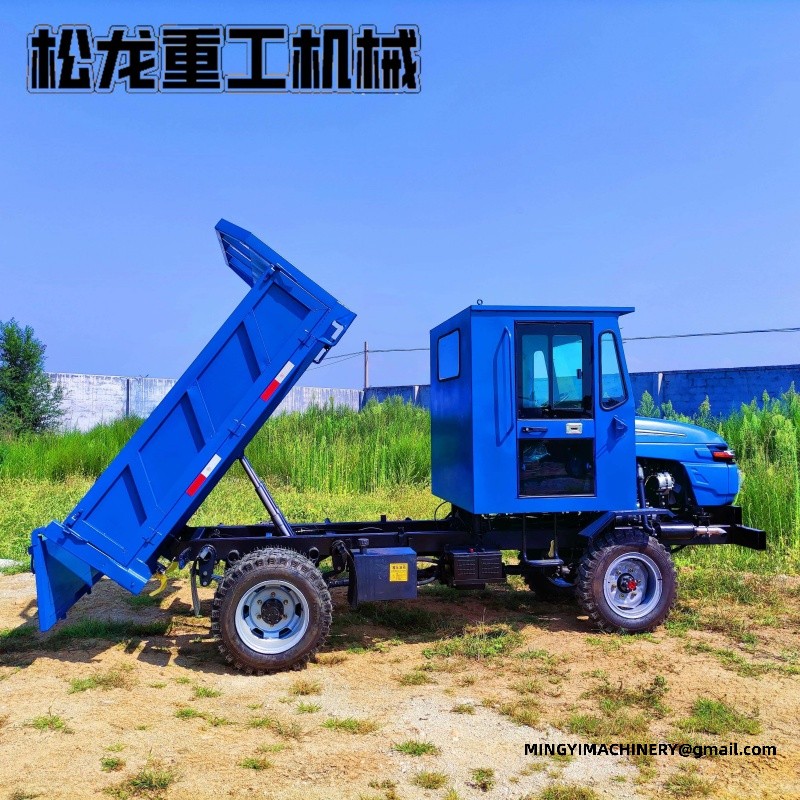
The configurations below are the build sheets most often matched to the unit in daily use. Engine, gearbox, axles, frame and body dimensions are confirmed together, because the body size and the axle rating have to suit the load before the engine rating matters.
| # | 12.Standard | 18.Standard | 21.Upgraded | 8.Luxury |
|---|---|---|---|---|
| 1 | Two-cylinder diesel engine, 38 hp | Four-cylinder 4102 turbocharged diesel engine | Four-cylinder 4105 turbocharged diesel engine | Single-cylinder diesel engine, 28 hp |
| 2 | Full-time gearbox with four-wheel drive | Model 140 part-time gearbox with four-wheel drive | Model 140 part-time gearbox with four-wheel drive | Part-time gearbox, selectable 2WD/4WD |
| 3 | High/low range with crawler gear | High/low range with crawler gear | High/low range with crawler gear | High/low range with crawler gear |
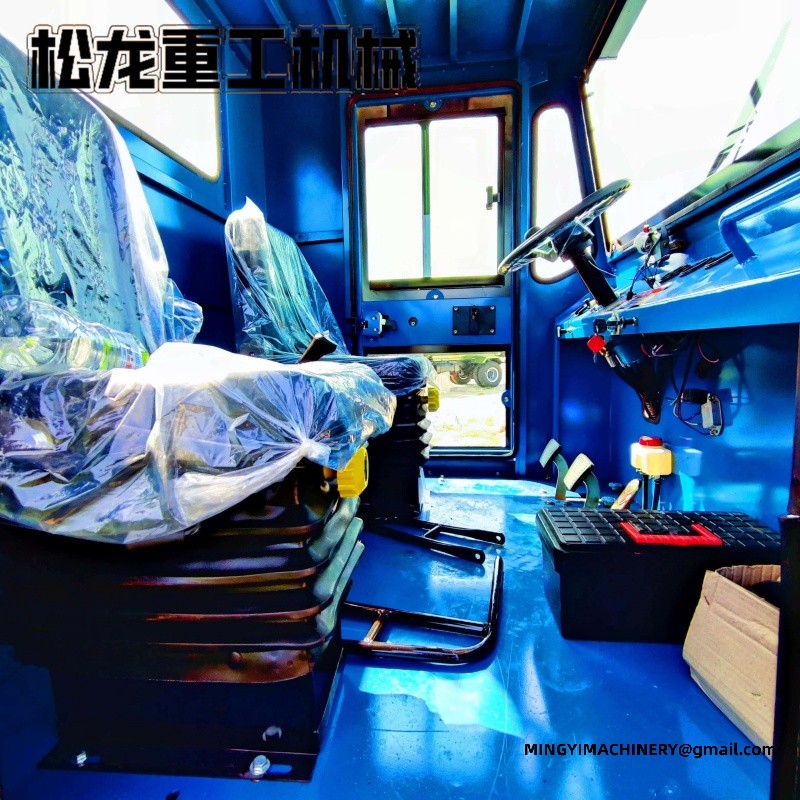
| 4 | Simple cab | Simple cab | Simple cab | Enclosed cab |
| 5 | Oil brakes | Oil brakes | Six 825R16 steel-belted radial tyres | Six 700-16 mountain tyres |
| 6 | Four 700-16 mountain tyres | Six 700-16 mountain tyres | Reinforced ISUZU-pattern front axle | Model 212 front axle |
| 7 | Front axle 212 | Reinforced ISUZU-pattern front axle | Reinforced 1080 rear axle with air cut-off brake | Model 130 rear axle |
| 8 | Rear axle 130 | Reinforced 1061 rear axle | Air cut-off brakes | Air cut-off brakes |
| 9 | Reinforced 60 x 140 mm square tube frame | Reinforced 80 x 180 mm square tube frame | Reinforced 80 x 180 mm square tube frame | Reinforced 60 x 140 mm square tube frame |
| 10 | Rear body 2.2 m long x 1.5 m wide x 0.45 m high | Rear body 2.2 m long x 2.1 m wide x 0.45 m high | Rear body 3.0 m long x 2.2 m wide x 0.45 m high | Rear body 2.2 m long x 1.5 m wide x 0.45 m high |
| 11 | Tailgate with self-dumping function | Tailgate with self-dumping function | Tailgate with self-dumping function | Tailgate with self-dumping function |
| 12 | Hydraulic power steering | Hydraulic power steering | Hydraulic power steering | Side-opening rear body tailgate |
| 13 | Twin hydraulic rams | Twin hydraulic rams | Twin hydraulic rams | Hydraulic power steering |
| 14 | Two-person comfort seat | Two-person comfort seat | Two-person comfort seat | Twin hydraulic rams |
| 15 | Twin-battery electric start | Twin-battery electric start | Heavy-duty leaf springs | Two-person comfort seat |
| 16 | Round-nose bonnet | Square-nose bonnet | Twin-battery electric start | Heavy-duty leaf springs |
| 17 | — | — | Square-nose bonnet | Twin-battery electric start |
| 18 | — | — | — | Square-nose bonnet |
Pre-delivery inspection before a machine of this size leaves the shop
The last hour before packing is the best time to find a fault. Running the equipment on site through its full working cycle, checking for leaks under load and confirming that the controls match the specification avoids a conversation across time zones later.
Reading the early symptoms on the machine itself
Machines rarely fail without warning. A change in sound, a slower function or a new leak on the model in question is the machine saying something early, and listening then takes a fraction of the time that waiting does.
Commissioning the machine in that duty on site
Commissioning is where the specification meets the ground. The settings chosen for the unit on the job are confirmed against the actual site, and the working pattern is adjusted before the machine is asked for a full day.
Moving a machine built for the work between sites
Loading is where most damage happens. Ramps, angle of approach and the condition of the ground under them matter more than the machine when the equipment in service is being loaded, and a careful driver is worth more than a fast one.
Wear items and spares worth holding for the dumper
Wear items are predictable once the machine has settled in. After the first service interval the pattern on this class of machine is visible, and the parts that were replaced become the parts that are kept.
Packing, loading and shipment of the unit in daily use
The paperwork matters as much as the packing. Serial numbers, dimensions and weights recorded for a machine of this size at loading are the same figures the destination needs, and a mismatch here loses more days than the voyage itself.
Every line above is a build item rather than an optional extra, and the final sheet for the equipment on site is confirmed against the destination, the ground and the load before production.
E-mail:sales@mingycn.com
LINE(ID):mingyicn
Working alongside other plant with heavy load off road transporter
Exclusion zones drawn on the ground work better than zones described in a meeting, and they are re-drawn when the job phase changes.
Matching the cycle counts matters too, because a fast loader feeding a slow haulage route simply builds a queue, and the queue is where the risk sits.
Related pages
4x4 off road dumper Africa · site dumper Middle East · Mini Dumper Supplier: Load, Box and Route in Practice · Four Wheel Drive Transport Vehicle









