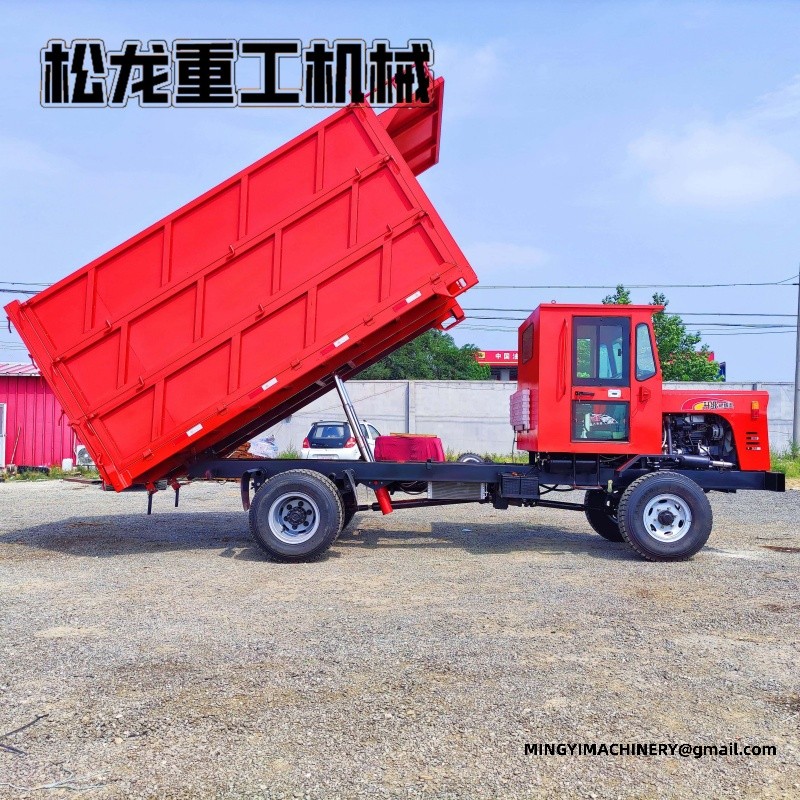
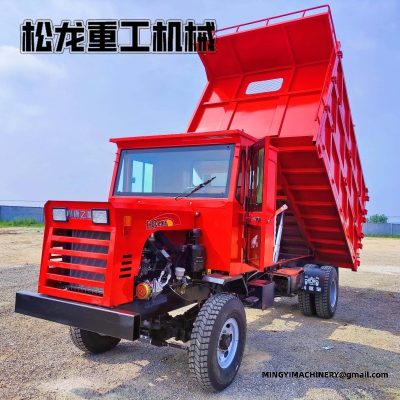
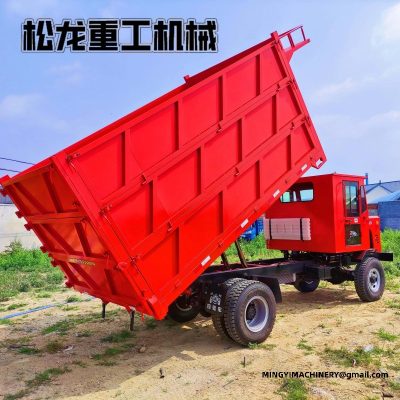
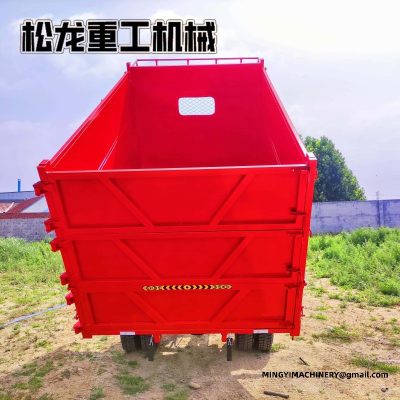
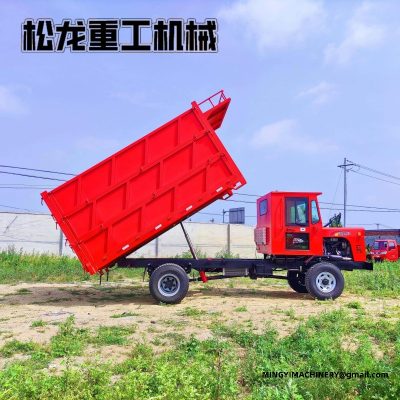
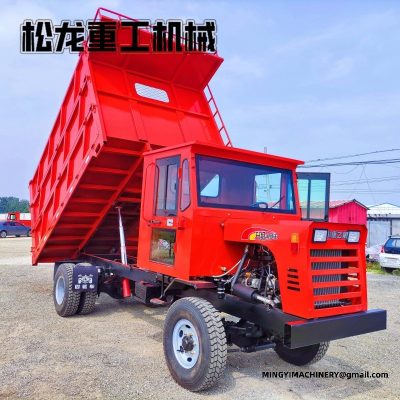
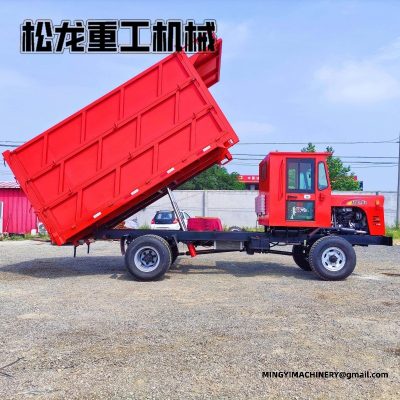
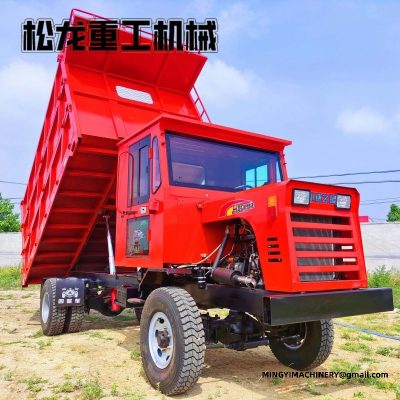
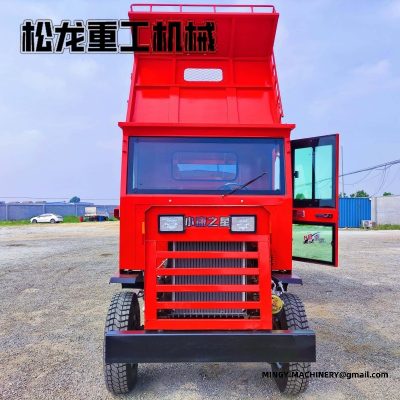
Model MY-4x4-8T · 8 t payload · 110 hp engine
The dumper earns its place by doing one job repeatedly and without fuss. The sections below are written from that angle: what the machine is asked to do each day, what wears, what an operator needs to know and what to confirm before dispatch.
Safe working practice around 4x4 off road dumper with hydraulic tipping body
Most incidents around machinery come from the space rather than the machine. Exclusion zones, a clear signal person and a check on what is behind the unit in daily use before it moves cover the large majority of the risk on a working site. Personal protective equipment and a stop rule are simple controls. Agreeing before work starts that anyone can stop the job is the single measure that most often prevents a serious incident near this class of machine.
Payload and how a 4x4 off road dumper with hydraulic tipping body is loaded
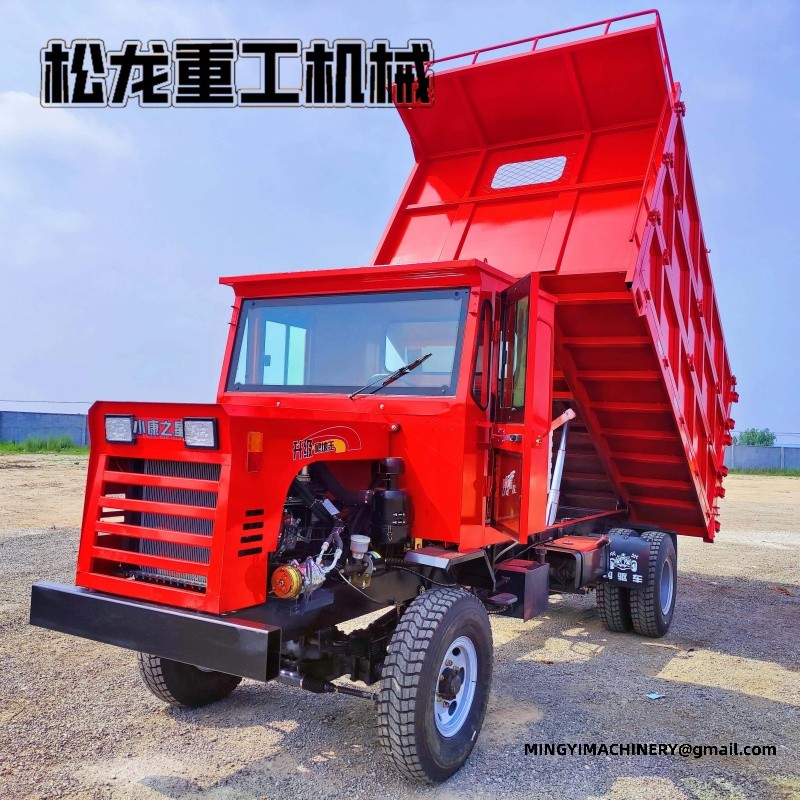
Loading method affects the machine as much as the load does. Material dropped from height into a machine of this size shocks the frame and the body floor, while material placed evenly spreads the load and extends body life.
Daily checks and maintenance on 4x4 off road dumper with hydraulic tipping body
Most failures start as something small that a walk-around would have caught. Fluid levels, belt tension, tyre or track condition and any fresh leak are the items worth two minutes at the start of each shift on the equipment on site.
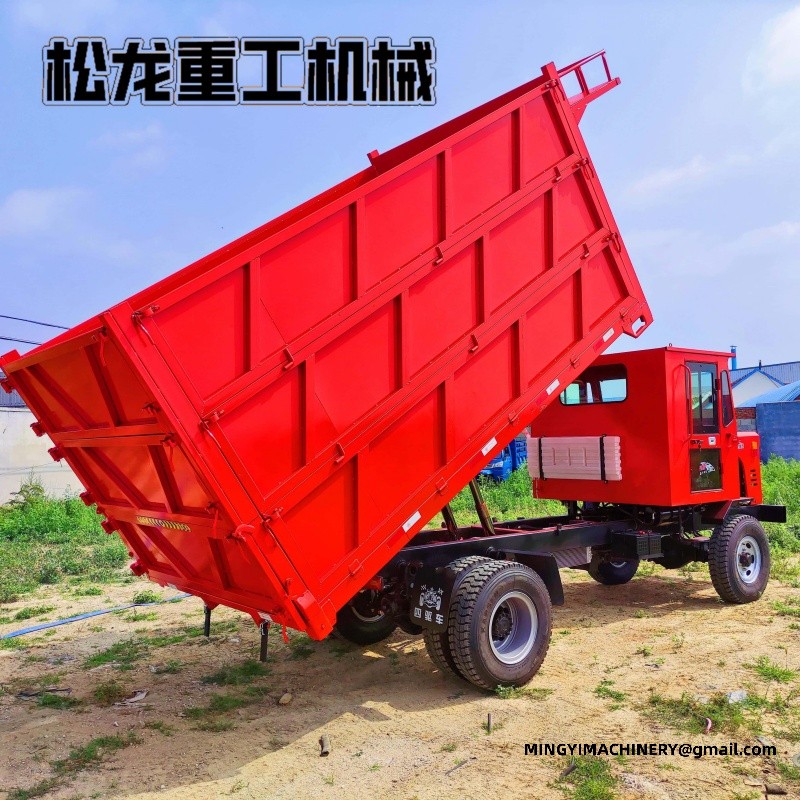
Crane and grab attachments on 4x4 off road dumper with hydraulic tipping body
Adding a crane changes the vehicle specification. Hydraulic capacity, frame strength and braking all need to suit the attachment, and it is simpler to specify them at build than to add them later.
Lighting and low light operation of 4x4 off road dumper with hydraulic tipping body
Planning helps more than extra lamps. Positioning the machine itself so that the work is lit from the machine side, and keeping the route clear, does more for safety than adding light to a badly planned task.
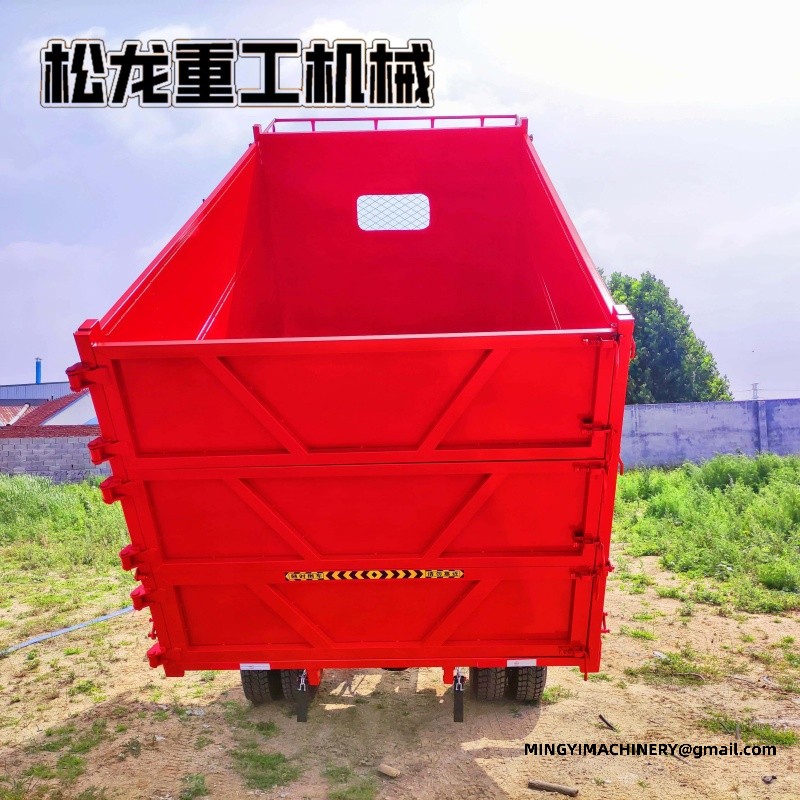
Attachments and working tools for 4x4 off road dumper with hydraulic tipping body
The base machine is only as useful as the tool on the end of it. Matching the attachment to the task - rather than to what arrived with the machine - is what lets one the model in question cover several jobs across a week.
Engine and power options behind 4x4 off road dumper with hydraulic tipping body
Emissions documentation is part of engine selection for some destinations. Confirming which units can be supplied and documented for the destination country is worth doing at enquiry stage rather than after the build sheet is signed. Matching the engine to the duty matters more than the peak rating. The machine in that duty that spends its day at part load benefits from a different setup than one that works at full output, and the difference shows in fuel use over a season.
Matching 4x4 off road dumper with hydraulic tipping body to ground conditions
Ground decides more of the outcome than power does. Soft, wet or loose surfaces call for a wider footprint and lower ground pressure, while hard standing allows a narrower machine that turns in less space and travels faster between tasks.
Mixer drum bodies and concrete haulage the unit on the job
Drum bodies need power and stability. A machine built for the work set up for concrete has to carry the drum, the load and the water, and the frame and brakes should be specified for that combined weight.
Ordering, lead time and delivery of the equipment in service
Lead time is part of the specification. Confirming build time, shipping method and what is included before ordering the dumper prevents the common gap between when the machine is needed and when it can arrive. Delivery planning includes the receiving end. Knowing whether this class of machine will be craned, driven or forked off, and whether the site can accept it, is settled before dispatch rather than on the day.
Quarry, tunnel and mining duty for the unit in daily use
Quarry and tunnel work is hard on vehicles. Abrasive dust, sharp material and continuous loading mean a machine of this size in this duty needs attention to filtration, body wear and brake condition far more often. Size matters underground. Overall height and width decide whether the equipment on site can work in a tunnel at all, and those dimensions are the first thing to confirm rather than the last.
Gradient and climbing ability of the machine itself
Descending matters as much as climbing. A loaded the machine in that duty on a steep gradient needs engine braking and brakes in good order, and the safe practice is to plan the descent before the load rather than during it. Ground and gradient together set the limit. Loose surface on a slope reduces what the model in question can pull regardless of engine power, so the surface survey belongs before the specification.
Upgrading and reconfiguring the unit on the job
Reconfiguration can extend the useful life of a machine. A machine built for the work that no longer suits the current work may suit it again with a different attachment, guarding or control arrangement. Upgrades should be checked against the base machine. Hydraulic capacity, mounting interface and stability all limit what can reasonably be added to the equipment in service, and confirming those limits avoids an unsatisfactory result. The decision is economic as well as technical. Comparing the work of reconfiguring the dumper against a different machine is a short calculation that usually gives a clear answer.
Resale value and replacement planning
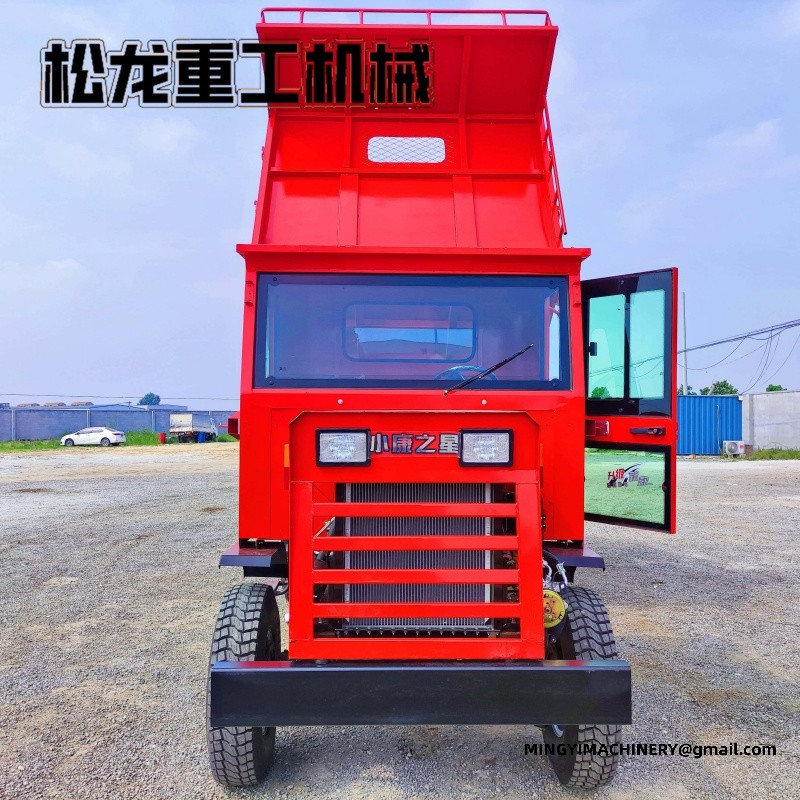
Resale starts at purchase. Specification choices, service records and the condition of wearing parts are what a buyer looks at, and this class of machine that has been maintained on schedule is worth more than one that merely looks clean. Replacement timing is a planning decision. Knowing the intended working life of the unit in daily use lets an owner sell while the machine still has value rather than after a major repair becomes due. Records are part of the asset. Keeping the service history and the hour records with a machine of this size makes it easier to sell, easier to insure and easier to justify the replacement machine internally.
Customisation and build options for the equipment on site
Build options are where a standard machine becomes the right machine. Colour, guarding, lighting, seating and hydraulic provisions can usually be set at build time on the machine itself, and are far simpler then than as a retrofit. Fleet buyers often want consistency rather than variety. Specifying the model in question so that several units share controls, filters and service points reduces training time and keeps the parts shelf small. Customisation should still be limited to what the work needs. Each addition to the machine in that duty is another item to maintain, so the useful question is not what can be added but what the job list actually requires.
Configuration data for the unit on the job
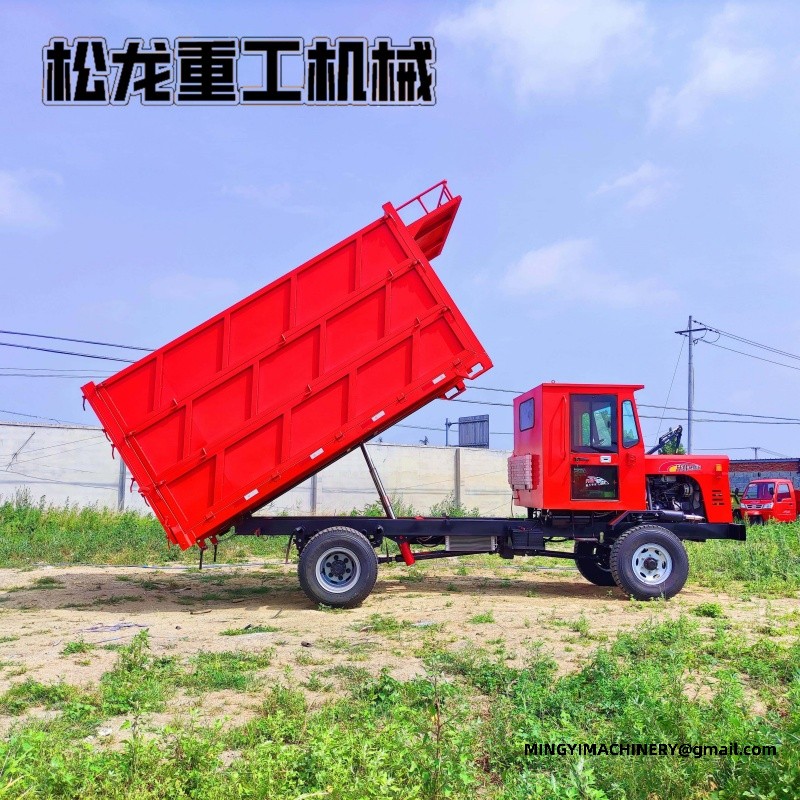
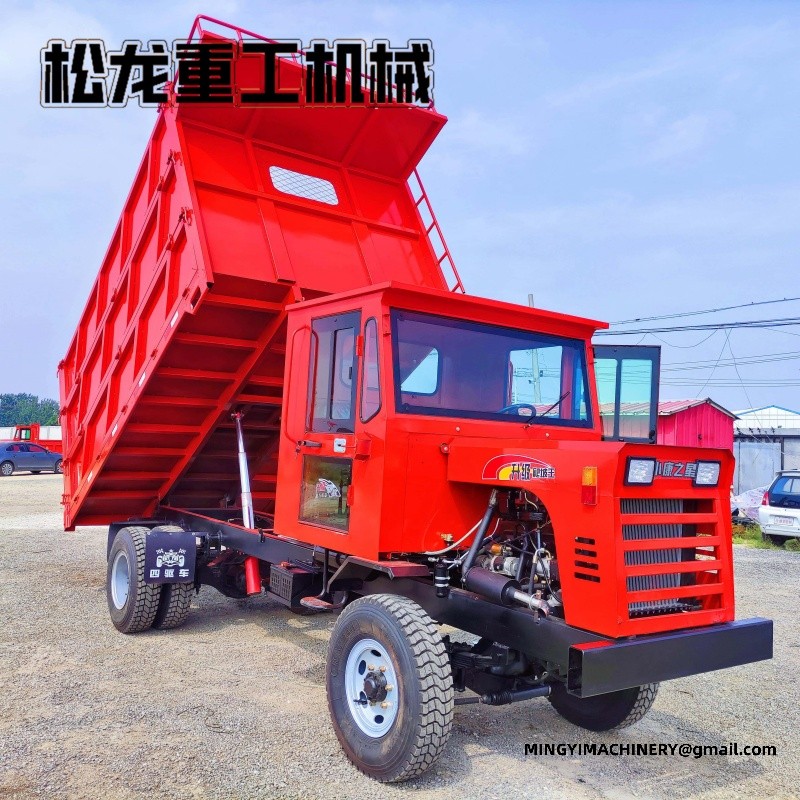
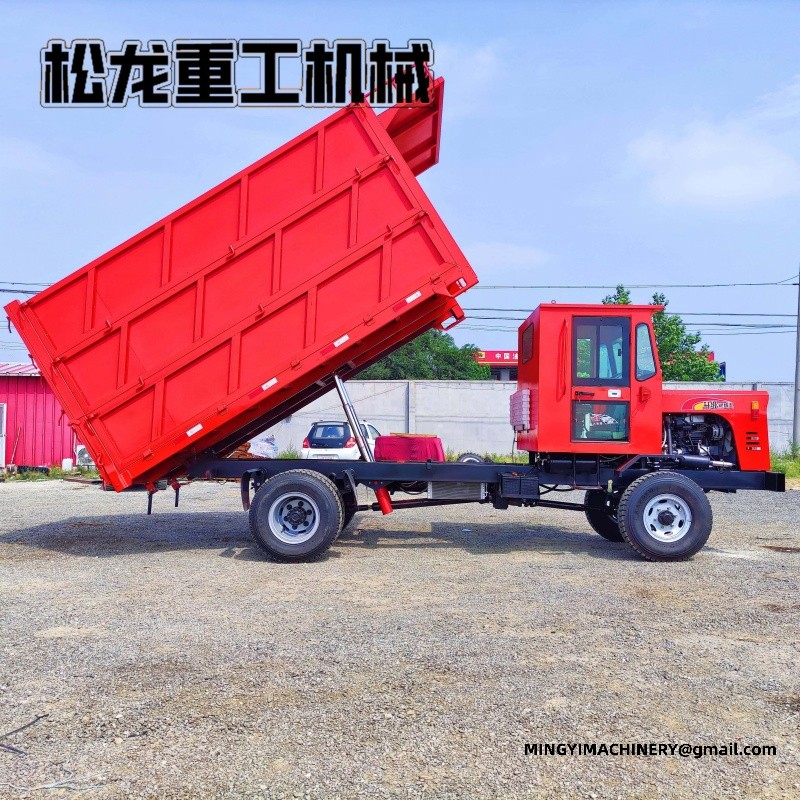
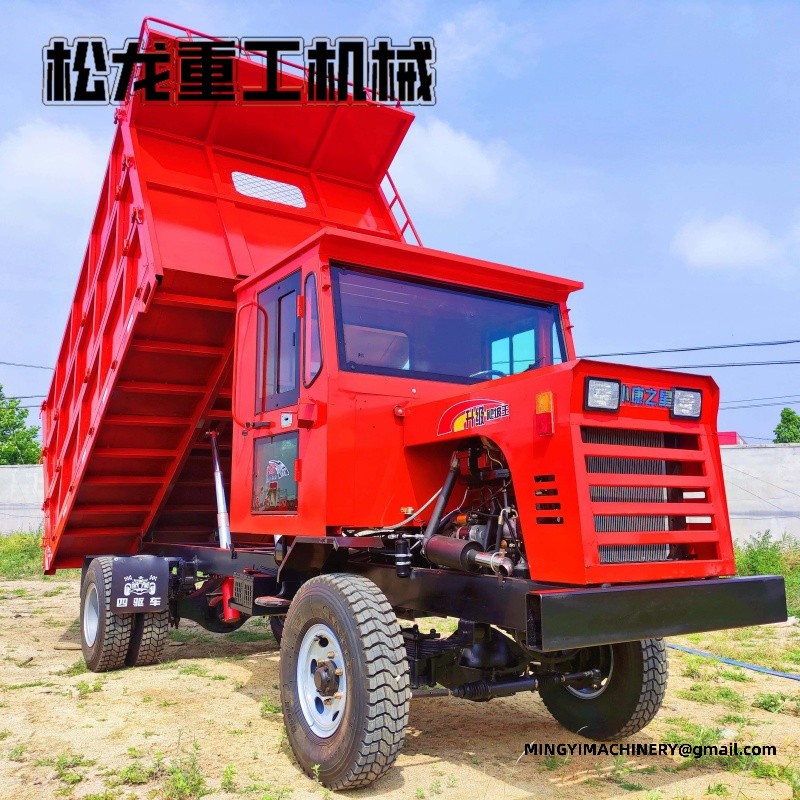
The configurations below are the build sheets most often matched to a machine built for the work. Engine, gearbox, axles, frame and body dimensions are confirmed together, because the body size and the axle rating have to suit the load before the engine rating matters.
| # | 11.Luxury | 14.Luxury | 4.Upgraded | 8.Luxury |
|---|---|---|---|---|
| 1 | Single-cylinder diesel engine, 32 hp | Two-cylinder diesel engine, 38 hp | Single-cylinder diesel engine, 25 hp | Single-cylinder diesel engine, 28 hp |
| 2 | Part-time gearbox, selectable 2WD/4WD | Part-time gearbox, selectable 2WD/4WD | Full-time gearbox with four-wheel drive | Part-time gearbox, selectable 2WD/4WD |
| 3 | High/low range with crawler gear | High/low range with crawler gear | High/low range with crawler gear | High/low range with crawler gear |
| 4 | Enclosed cab | Enclosed cab | Front axle clutch | Enclosed cab |
| 5 | Six 700-16 mountain tyres | Six 700-16 mountain tyres | Fully enclosed cab | Six 700-16 mountain tyres |
| 6 | Model 212 front axle | Model 212 front axle | Oil brakes | Model 212 front axle |
| 7 | Model 130 rear axle | Reinforced 130 rear axle | Four 700-16 mountain tyres | Model 130 rear axle |
| 8 | Air cut-off brakes | Air cut-off brakes | Front axle 212 | Air cut-off brakes |
| 9 | Reinforced 60 x 140 mm square tube frame | Reinforced 60 x 140 mm square tube frame | Rear axle 130 | Reinforced 60 x 140 mm square tube frame |
| 10 | Rear body 2.2 m long x 1.5 m wide x 0.45 m high | Rear body 2.2 m long x 1.5 m wide x 0.45 m high | Reinforced 60 x 140 mm square tube frame | Rear body 2.2 m long x 1.5 m wide x 0.45 m high |
| 11 | Tailgate with self-dumping function | Tailgate with self-dumping function | Rear body 2.2 m long x 1.5 m wide x 0.45 m high | Tailgate with self-dumping function |
| 12 | Side-opening rear body tailgate | Side-opening rear body tailgate | Tailgate with self-dumping function | Side-opening rear body tailgate |
| 13 | Hydraulic power steering | Hydraulic power steering | Hydraulic power steering | Hydraulic power steering |
| 14 | Twin hydraulic rams | Twin hydraulic rams | Twin hydraulic rams | Twin hydraulic rams |
| 15 | Two-person comfort seat | Heavy-duty leaf springs | Two-person comfort seat | Two-person comfort seat |
| 16 | Heavy-duty leaf springs | Two-person comfort seat | Twin-battery electric start | Heavy-duty leaf springs |
| 17 | Twin-battery electric start | Twin-battery electric start | Square-nose bonnet | Twin-battery electric start |
| 18 | Square-nose bonnet | Round-nose bonnet | — | Square-nose bonnet |
Pre-delivery inspection before the equipment in service leaves the shop
The last hour before packing is the best time to find a fault. Running the dumper through its full working cycle, checking for leaks under load and confirming that the controls match the specification avoids a conversation across time zones later.
Planning the season around this class of machine
Workload is rarely even across the year, and the machine should be specified for the busy weeks. The unit in daily use sized only for the average month will be the limiting factor exactly when the work is worth the most.
Keeping a service record for a machine of this size
A written record is worth more than a good memory. Dates, hours and the parts fitted on the equipment on site turn a guess about the next service into a fact, and they are the first thing a buyer asks to see.
A second operator for the machine itself
A machine that only one person can use is a single point of failure. Training a second operator on the model in question takes a day and removes the dependency that otherwise governs holidays, illness and busy weeks.
Wear items and spares worth holding for the machine in that duty
A spares list should follow the duty cycle. The unit on the job working every day in abrasive dust consumes filters and cutting edges far faster than the same machine used once a week, and the shelf should be stocked for the harder case.
Handover and getting familiar with a machine built for the work
Familiarisation is not the same as reading the manual. Sitting on the equipment in service, working through the controls at low speed and learning where the machine balances takes an hour, and that hour is what keeps the first week uneventful.
Moving the dumper between sites
Travel time is not working time, and it should be planned as its own item. The hours spent moving this class of machine between jobs are hours not worked, and a trailer that matches the machine reduces them every single trip.
Every line above is a build item rather than an optional extra, and the final sheet for the unit in daily use is confirmed against the destination, the ground and the load before production.
E-mail:sales@mingycn.com
LINE(ID):mingyicn
Night work and lighting on 4x4 off road dumper with hydraulic tipping body
Work lamps should cover the working area and the travel path separately, since a beam set for loading usually leaves the route dark.
Reflective markings on the machine help everyone else on site, and they are simple to add and easy to replace.
A lighting check belongs at the start of every night shift, together with a look at the warning beacon and the brake lights.
Heat and hydraulic temperature in 4x4 off road dumper with hydraulic tipping body
Oil that runs hotter than the design range loses its film strength, and the first symptom is usually slower, softer movement rather than a leak.
Related pages
4WD dump truck for forestry and timber haulage · articulated dump truck small with hydraulic tipping body · Static Hydraulic Front Dump Truck: Site Transport Duties · Four Wheel Drive Transport Vehicle









