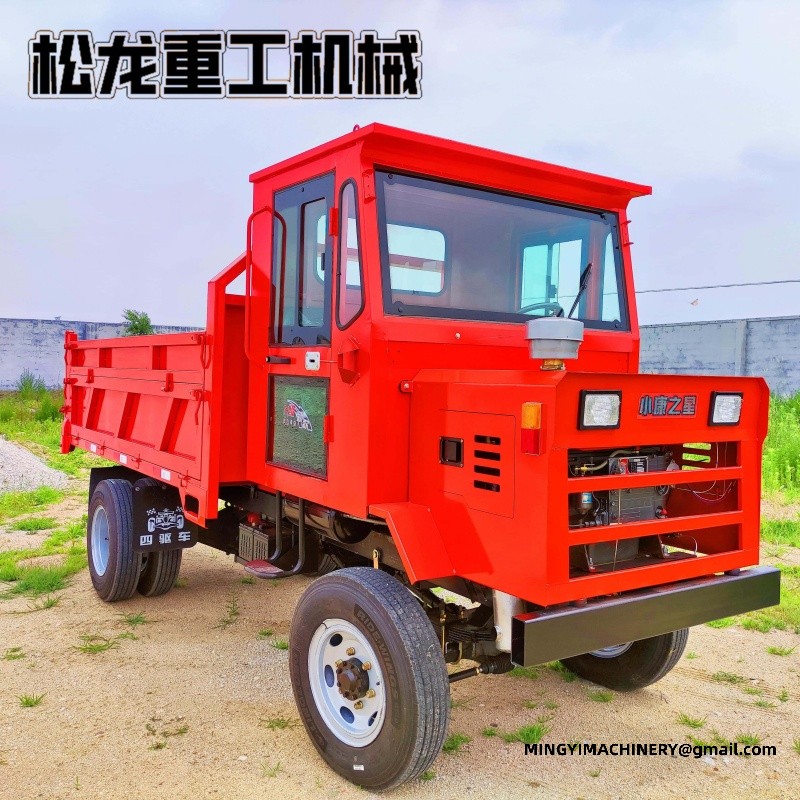
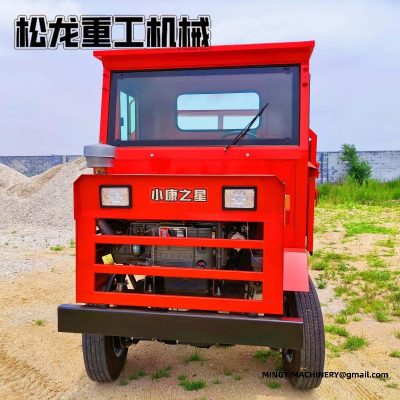
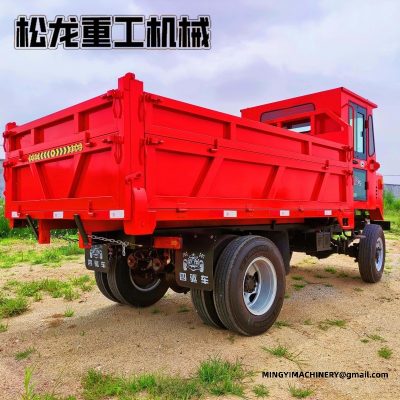
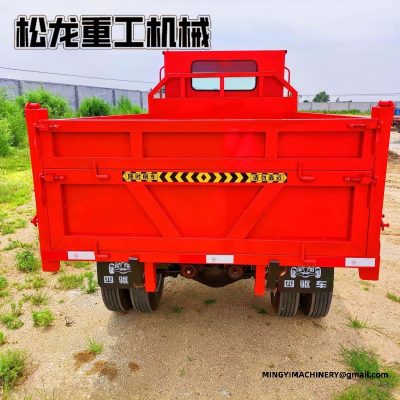
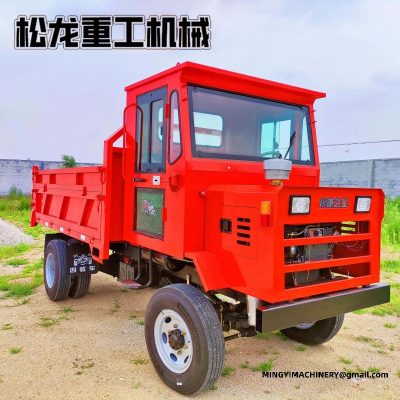
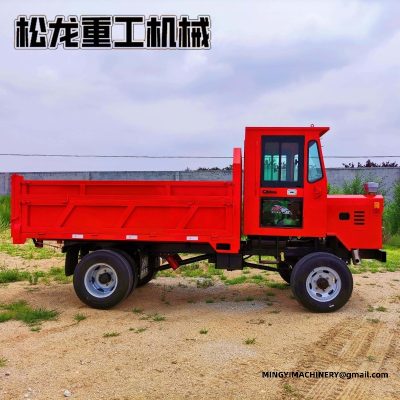
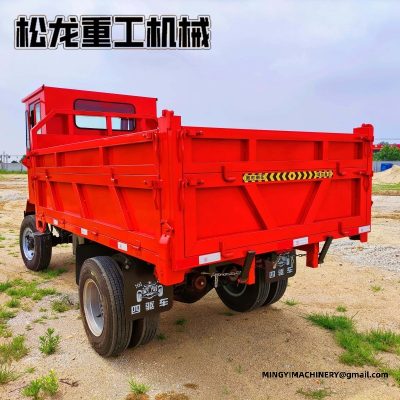
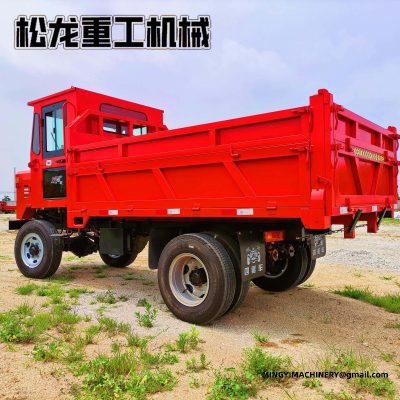
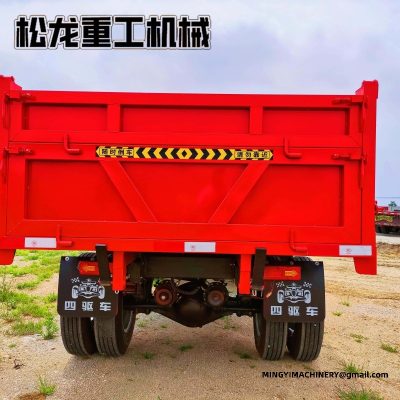
Model MY-4x4-4T · 4 t payload · 28 hp engine
This page covers the dumper for buyers who already know the job and now need the machine. It sets out what the build includes, what can be changed, what the operator should expect in the first weeks and what the service schedule looks like.
Gradient and climbing ability of 4WD Forestry Transport Vehicle for mining and quarry work
Gradient is where a haul vehicle earns its keep. This class of machine with a crawler gear and a low range climbs loaded where a road vehicle would need a second attempt, and that difference decides whether a track is usable at all. Descending matters as much as climbing. A loaded a machine of this size on a steep gradient needs engine braking and brakes in good order, and the safe practice is to plan the descent before the load rather than during it. Ground and gradient together set the limit. Loose surface on a slope reduces what the unit in daily use can pull regardless of engine power, so the surface survey belongs before the specification.
Wear items and life of 4WD Forestry Transport Vehicle for mining and quarry work
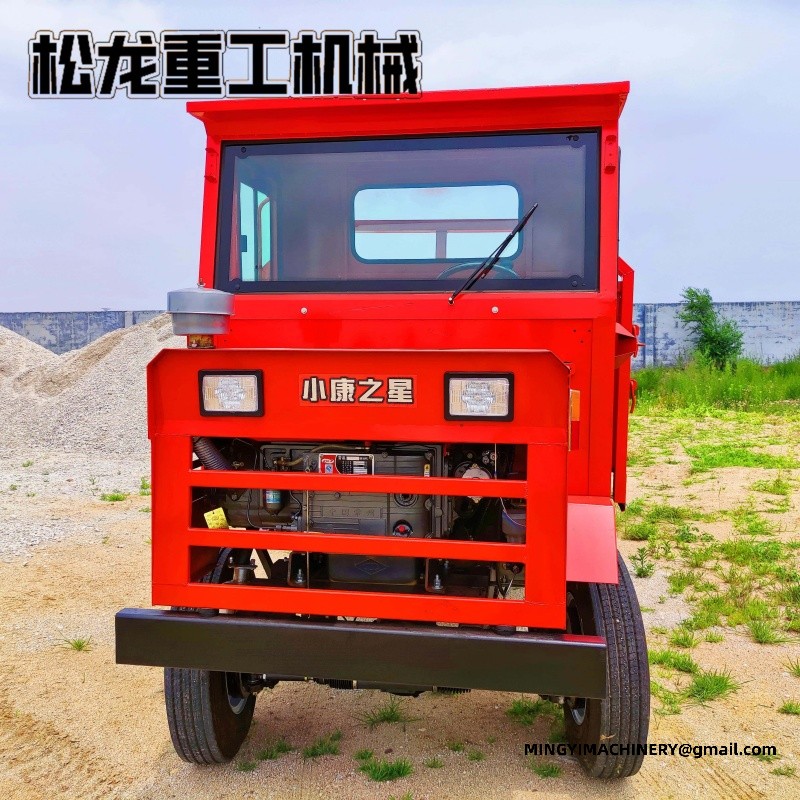
Certain parts are designed to be consumed. Knowing which items on the equipment on site are wearing parts, and roughly how long they last in the duty the machine sees, turns replacement into a plan rather than a breakdown. Replacing wear items early is usually simpler. Worn components on the machine itself load the parts they run against, so a worn part left too long often becomes a major repair.
Crane and grab attachments on 4WD Forestry Transport Vehicle for mining and quarry work
Adding a crane changes the vehicle specification. Hydraulic capacity, frame strength and braking all need to suit the attachment, and it is simpler to specify them at build than to add them later.
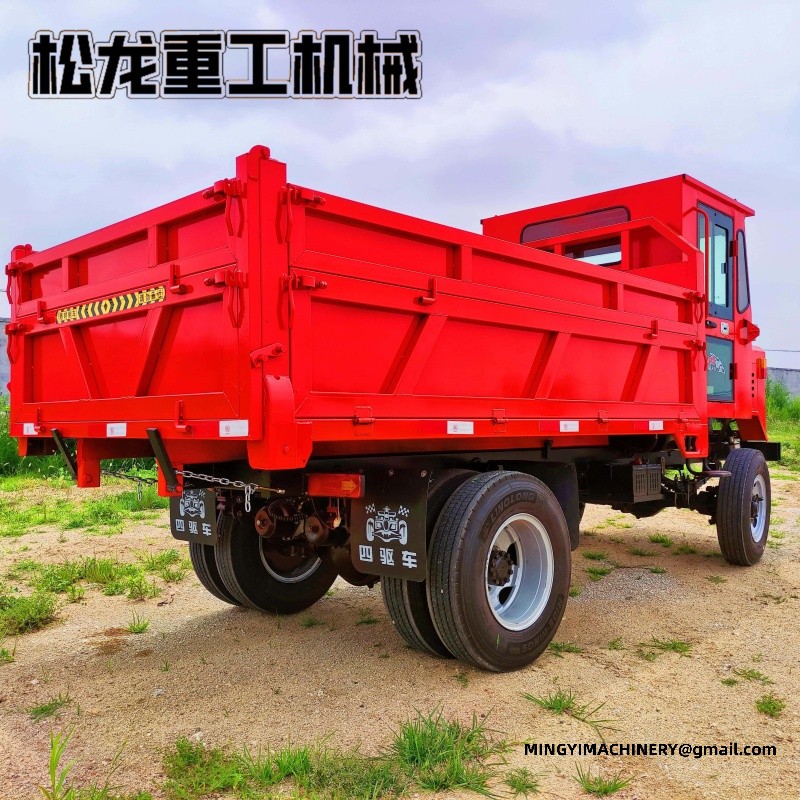
Storage and downtime care for 4WD Forestry Transport Vehicle for mining and quarry work
Standing still is hard on machinery. The model in question left for weeks benefits from a clean, dry, covered space, a charged battery and a fuel system prepared for the layoff, and all three effort very little.
Quarry, tunnel and mining duty for 4WD Forestry Transport Vehicle for mining and quarry work
Size matters underground. Overall height and width decide whether the machine in that duty can work in a tunnel at all, and those dimensions are the first thing to confirm rather than the last.
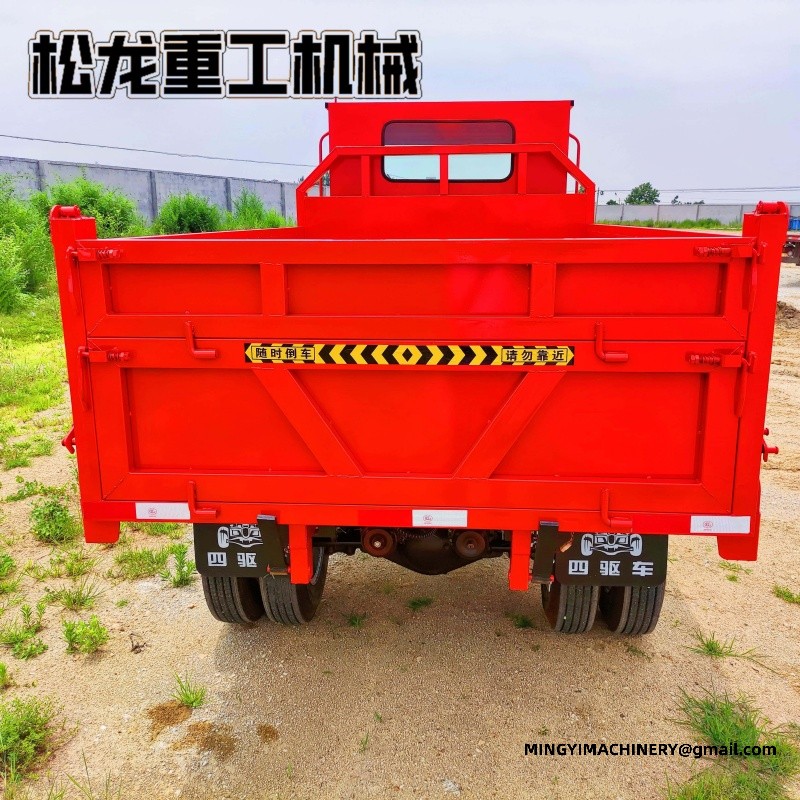
Export packing and shipping of 4WD Forestry Transport Vehicle for mining and quarry work
Export orders add steps that domestic buyers never see. Packed dimensions, securing points, documentation and any dismantling required are all settled before the unit on the job leaves the factory, and each one affects the freight booking.
Resale value and replacement planning
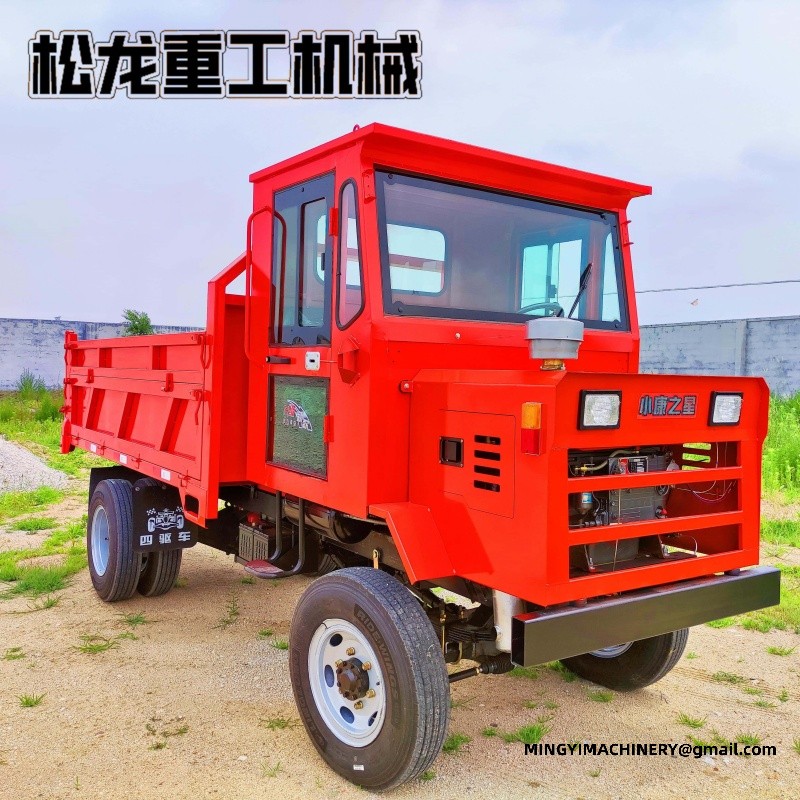
Resale starts at purchase. Specification choices, service records and the condition of wearing parts are what a buyer looks at, and a machine built for the work that has been maintained on schedule is worth more than one that merely looks clean. Replacement timing is a planning decision. Knowing the intended working life of the equipment in service lets an owner sell while the machine still has value rather than after a major repair becomes due. Records are part of the asset. Keeping the service history and the hour records with the dumper makes it easier to sell, easier to insure and easier to justify the replacement machine internally.
Ordering, lead time and delivery of 4WD Forestry Transport Vehicle for mining and quarry work
Lead time is part of the specification. Confirming build time, shipping method and what is included before ordering this class of machine prevents the common gap between when the machine is needed and when it can arrive. The order should state the configuration in writing. Engine, attachments, colour, documents and any market requirement are clearer on the build sheet for the unit in daily use than in a conversation after delivery.
Matching a machine of this size to ground conditions
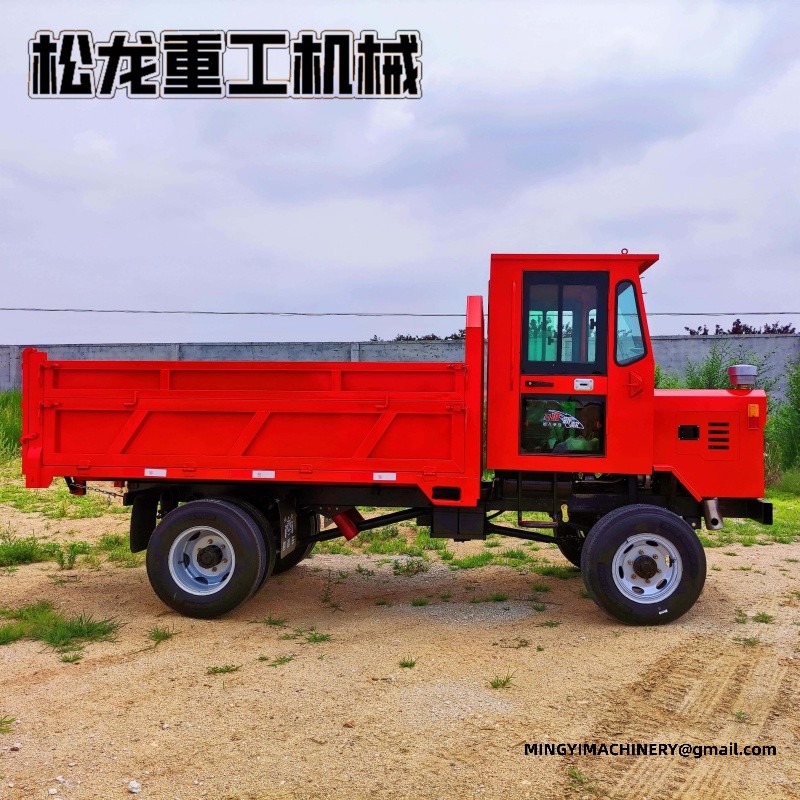
Ground decides more of the outcome than power does. Soft, wet or loose surfaces call for a wider footprint and lower ground pressure, while hard standing allows a narrower machine that turns in less space and travels faster between tasks.
Running the equipment on site in a mixed fleet
Utilisation matters more than the purchase decision over a few years. The machine itself that sits idle ties up the same yard space standing still as one that earns, so the buying decision should follow the hours the machine will realistically work. Standardising where possible simplifies everything downstream. When several units of the model in question share a service schedule and a parts list, the fleet becomes easier to plan and easier to sell on at replacement time.
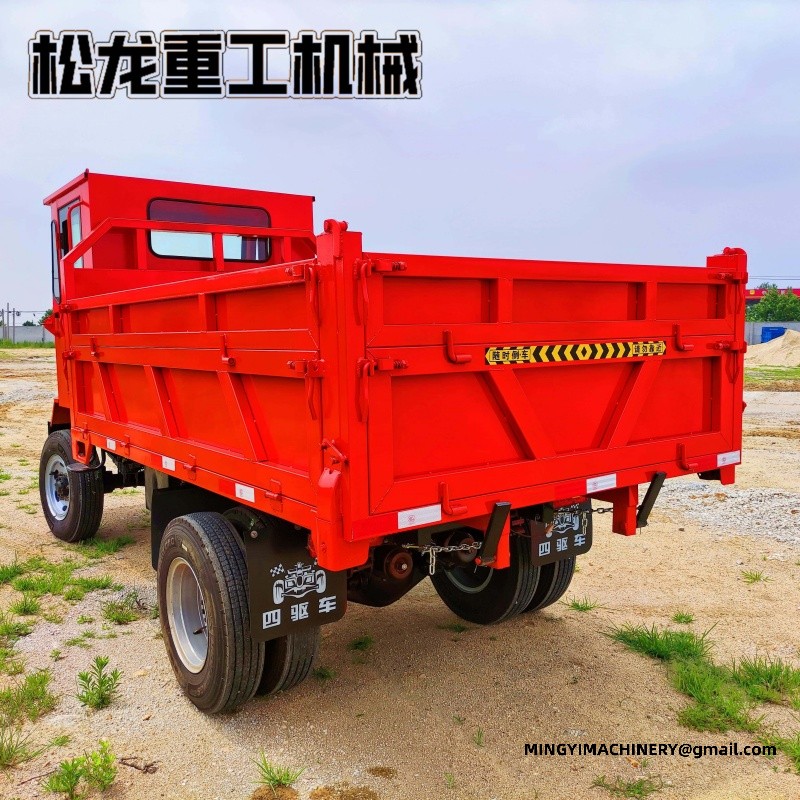
Payload and how the machine in that duty is loaded
Loading method affects the machine as much as the load does. Material dropped from height into the unit on the job shocks the frame and the body floor, while material placed evenly spreads the load and extends body life. The honest payload figure comes from the duty. A machine built for the work working a smooth haul road carries differently from one crossing ruts and gradients, and the conservative number is the one that keeps the machine working.
Water tank and dust control bodies on the equipment in service
A water tank turns the vehicle into a different machine. The dumper carrying water for dust control or irrigation is specified around tank size, baffles and the route, because a part-filled tank behaves very differently on a slope. Dust control work is repetitive and time-critical. This class of machine with the right tank and spray arrangement covers more ground per shift, which is usually the point of the exercise.
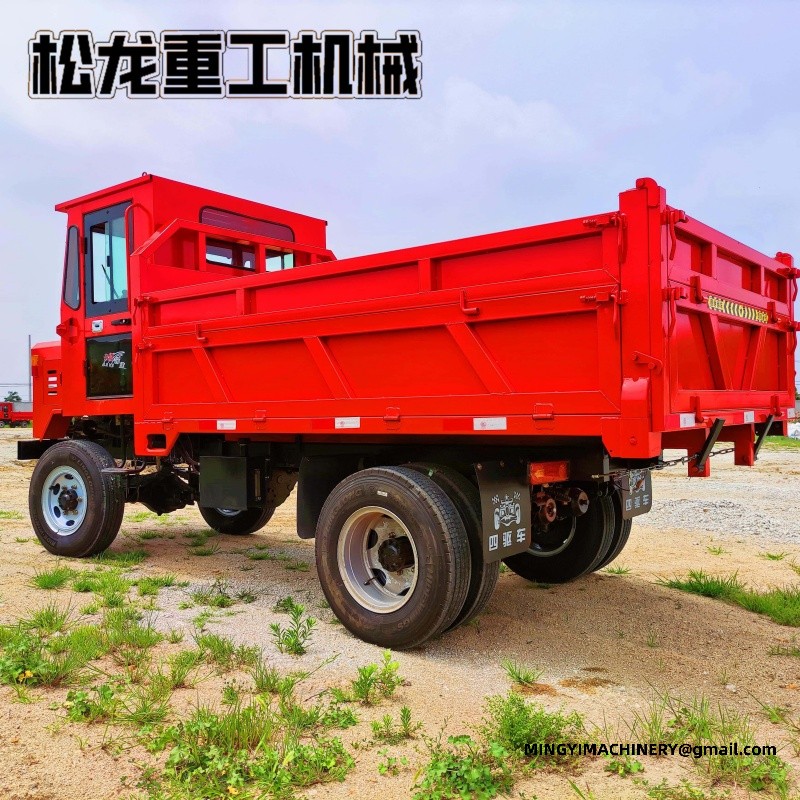
Daily checks and maintenance on the unit in daily use
Most failures start as something small that a walk-around would have caught. Fluid levels, belt tension, tyre or track condition and any fresh leak are the items worth two minutes at the start of each shift on a machine of this size.
Configuration data for the equipment on site
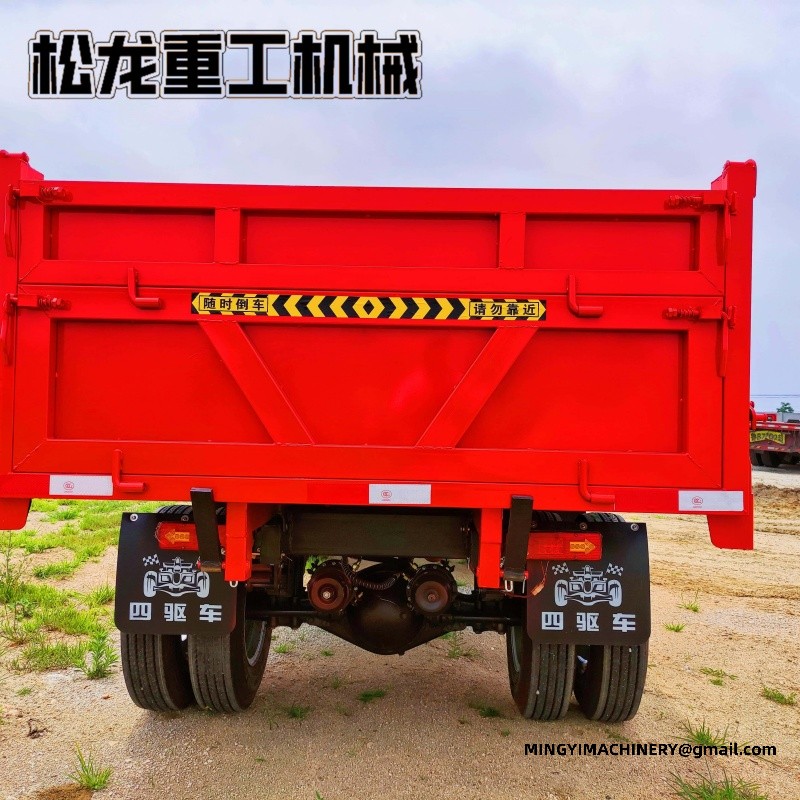
The configurations below are the build sheets most often matched to the machine itself. Engine, gearbox, axles, frame and body dimensions are confirmed together, because the body size and the axle rating have to suit the load before the engine rating matters.
| # | 11.Luxury | 20.Luxury | 24.Luxury | 7.Upgraded |
|---|---|---|---|---|
| 1 | Single-cylinder diesel engine, 32 hp | Four-cylinder 4102 turbocharged diesel engine | Four-cylinder 4108 turbocharged diesel engine | Single-cylinder diesel engine, 28 hp |
| 2 | Part-time gearbox, selectable 2WD/4WD | Model 140 part-time gearbox with four-wheel drive | Model 145 part-time gearbox, selectable 2WD/4WD | Full-time gearbox with four-wheel drive |
| 3 | High/low range with crawler gear | High/low range with crawler gear | High/low range with crawler gear | High/low range with crawler gear |
| 4 | Enclosed cab | Fully enclosed cab | Fully enclosed cab | Front axle clutch |
| 5 | Six 700-16 mountain tyres | Six 825R16 steel-belted radial tyres | Six 825R16 steel-belted radial tyres | Fully enclosed cab |
| 6 | Model 212 front axle | Reinforced ISUZU-pattern front axle | Reinforced ISUZU-pattern front axle | Oil brakes |
| 7 | Model 130 rear axle | Reinforced 1080 rear axle | Reinforced 1080 rear axle | Four 700-16 mountain tyres |
| 8 | Air cut-off brakes | Air cut-off brakes | Air cut-off brakes | Front axle 212 |
| 9 | Reinforced 60 x 140 mm square tube frame | Reinforced 80 x 180 mm square tube frame | Reinforced 80 x 180 mm square tube frame | Rear axle 130 |
| 10 | Rear body 2.2 m long x 1.5 m wide x 0.45 m high | Rear body 3.0 m long x 2.2 m wide x 0.45 m high | Rear body 3.0 m long x 2.2 m wide x 0.45 m high | Reinforced 60 x 140 mm square tube frame |
| 11 | Tailgate with self-dumping function | Tailgate with self-dumping function | Tailgate with self-dumping function | Rear body 2.2 m long x 1.5 m wide x 0.45 m high |
| 12 | Side-opening rear body tailgate | Side-opening rear body tailgate with cab ladder | Side-opening rear body tailgate with cab ladder | Tailgate with self-dumping function |
| 13 | Hydraulic power steering | Hydraulic power steering | Hydraulic power steering | Hydraulic power steering |
| 14 | Twin hydraulic rams | Twin hydraulic rams | Twin hydraulic rams | Twin hydraulic rams |
| 15 | Two-person comfort seat | Two-person comfort seat | Two-person comfort seat | Two-person comfort seat |
| 16 | Heavy-duty leaf springs | Heavy-duty thickened leaf springs | Heavy-duty leaf springs | Twin-battery electric start |
| 17 | Twin-battery electric start | Twin-battery electric start | Twin-battery electric start | Square-nose bonnet |
| 18 | Square-nose bonnet | Square-nose bonnet | Square-nose bonnet | — |
| 19 | — | Four-cylinder 4105 turbocharged | — | — |
| 20 | — | Four-cylinder 4108 turbocharged | — | — |
| 21 | — | Single-cylinder engine, 25 hp | — | — |
| 22 | — | Single-cylinder engine, 28 hp | — | — |
| 23 | — | Single-cylinder engine, 32 hp | — | — |
| 24 | — | Two-cylinder engine, 38 hp | — | — |
| 25 | — | Four-cylinder 490 engine | — | — |
| 26 | — | Four-cylinder 4102 turbocharged engine | — | — |
Documents that travel with the model in question
A clear parts book saves more time than any other document. When the machine in that duty needs a replacement, the illustration and the part number are what turn a phone call into a shipment instead of a description.
Handover and getting familiar with the unit on the job
A good handover covers the awkward cases, not just the easy ones. Starting a machine built for the work on a slope, turning in a confined space and recovering from soft ground are the situations an operator should meet first with someone beside them.
Commissioning the equipment in service on site
Transport shakes things loose. A short check of the dumper after the crate is opened, covering the same points the pre-delivery inspection covered, is the most useful insurance available on delivery day.
Hot, humid and dusty conditions around this class of machine
Dust is the enemy of every rotating joint. Keeping the radiator and the air intake of the unit in daily use clean, and cleaning them before they are blocked rather than after, is what separates a machine that lasts from one that overheats.
Reading the early symptoms on a machine of this size
Operators notice things first because they hear the machine every day. Encouraging the person on the equipment on site to report small changes, and acting on them, is the most effective maintenance programme there is.
Later additions and retrofits on the machine itself
Later changes are easier when they were anticipated. Asking for the extra hydraulic circuit or the heavier mounting plate on the model in question at build time adds little and leaves the option open.
Storage and long idle periods for the machine in that duty
The battery and the fuel are the first things to suffer in storage. Preparing the unit on the job properly at the start of the idle period avoids the flat battery and the contaminated tank that greet an unprepared machine.
Packing, loading and shipment of a machine built for the work
Export packing is part of the machine, not an afterthought. The equipment in service is blocked and braced inside the container so that it arrives in the same condition it left, and the load plan is decided by the dimensions rather than by what fits loosely.
Every line above is a build item rather than an optional extra, and the final sheet for the dumper is confirmed against the destination, the ground and the load before production.
E-mail:sales@mingycn.com
LINE(ID):mingyicn
Visibility and blind spots around 4WD Forestry Transport Vehicle for mining and quarry work
Glass, wipers and mirrors are safety items rather than comfort items, and they belong on the daily walk-around with the lights and the horn.
Dust, low sun and rain all shorten sight lines, and the sensible response is to slow the cycle rather than to work on memory.
The seat position, the mirror setting and the camera angle are worth recording once the operator is settled, so a change of driver does not undo them.
Emission and regional requirements for 4WD Forestry Transport Vehicle for mining and quarry work
Emission rules are set by the market the machine is delivered into, and they are confirmed before the build rather than after it.
Customs documentation often asks for the engine family and the emission declaration, both of which come from the engine plate.
Where a machine moves between regions during its life, the original certificate is worth keeping with the manual.
Related pages
4x4 Water Tank Transport Truck with hydraulic tipping body · 4WD Concrete Mixer Transporter for mining and quarry work · Site Dumper Manufacturer: Maintenance That Keeps It Working · Four Wheel Drive Transport Vehicle









