LW1000 Rubber Track Skid Steer Loader, 25HP Kubota Diesel, 300kg Rated Capacity
This page documents the LW1000 compact track loader as specified for rubber-track operation, with the Kubota D1105 engine, a 300 kg rated operating capacity and a high-output auxiliary hydraulic system. It sets out the figures from the factory sheet and explains what each one means on a working site.
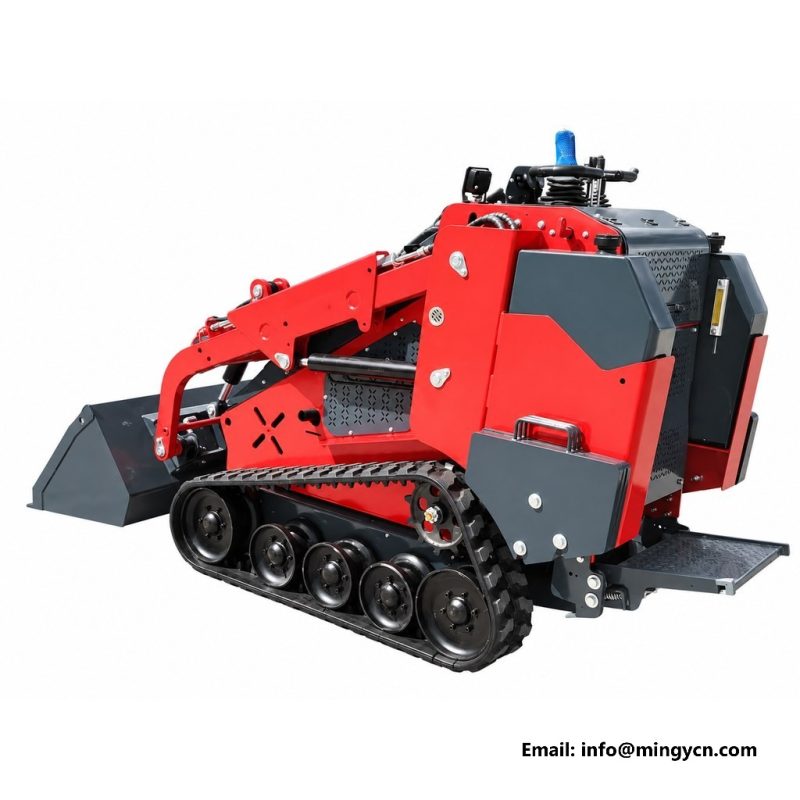
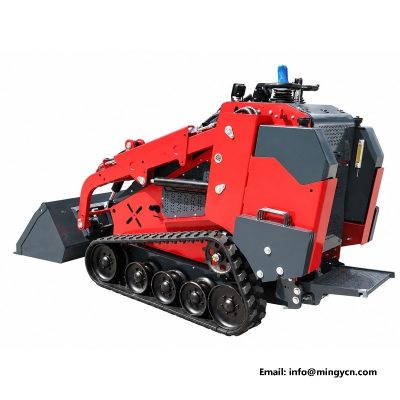
The LW1000 is listed for use with rubber tracks, and the photographs show the tracked undercarriage rather than wheels. With an operating weight of 1520 kg and a ground pressure of 2800 kg per square metre, the track spreads the machine over a larger contact area than a tyre of the same class. That is the reason the machine is chosen for soft, wet or freshly graded ground, where a wheeled carrier would cut in and lose traction. The trade-off is travel speed: 5.8 km/h forward and 3.9 km/h in reverse.
The works sheet lists engine as kubota d1105 for this particular implement. Inspectors compare the shipped unit with the rated power figure of 18.4 kw (25 hp).
The D1105 is a three-cylinder, liquid-cooled diesel of 1.131 litres producing 18.4 kW, or 25 HP, at 3600 rpm. Three cylinders give smoother running than a single-cylinder unit of similar output, which matters when the machine spends the day feeding a hydraulic attachment at constant speed. The sheet records EU 97/68/EC Stage V and EPA Tier 4 Final compliance, with a noise level of 95 dB or lower. Fuel capacity is 30 litres.
engine is specified as kubota d1105 on the unit photographed here. The recorded value of rated power is 18.4 kw (25 hp), taken from the assembled tool.
Rated operating capacity is 300 kg and tipping load is 1315 kg. The gap between those numbers is not a contradiction: tipping load is the point at which the machine begins to lift at the rear under a static test, while rated operating capacity is the working figure with a stability margin applied. Industry practice commonly sets the working load at about half of tipping load for a wheeled machine and lower still for some configurations, so the 300 kg figure is the one used for planning.
For engine cooling the data sheet states liquid; the same entry is read again at handover. fuel: diesel. That line travels with the inspection record.
Auxiliary flow is listed at 56.8 litres per minute at 19.3 MPa, with a pump capacity of 45 litres per minute and system relief at the quick coupler of 200 bar. Those figures place the machine in the high-output class, where a snow blower, a stump grinder or a chipper can be driven at its designed speed rather than merely turned. Published industry guidance puts standard auxiliary circuits near 17 to 24 gpm and high-flow circuits near 30 to 42 gpm at roughly 3000 to 3500 psi; this machine's auxiliary output sits above the standard bracket.
The recorded value of configuration is rubber track compact loader, taken from the assembled tool. Before dispatch, the engine entry is confirmed as kubota d1105.
The sheet specifies a C II universal industrial attachment interface, which is the mechanical half of compatibility; the hydraulic half is the coupler type and whether the tool needs a case-drain line. Travel motors are listed as Danfoss units and the hydraulic supply pump as an Italian pump set, with a 30 litre hydraulic oil tank. Flat-face couplers, correct hose diameter and a free case drain are all confirmed before a powered tool is connected.
engine: kubota d1105. That line travels with the inspection record. Inspectors compare the shipped unit with the rated power figure of 18.4 kw (25 hp).
Tracked carriers reward smooth input. The machine is turned gently, the load is kept low and close to the plate, and sudden counter-rotation of the tracks is avoided because it both scuffs the surface and loads the undercarriage. Track tension is checked with the machine on level ground, and material packed between the rollers and the track is cleared at the end of a shift in clay or snow.
cylinders is specified as 3 on the unit photographed here. travel speed, forward appears in the build record as 5.8 km/h, which a buyer can verify on arrival.
Engine oil, coolant and the hydraulic oil level are checked with the machine level and the arms down; reading the hydraulic level with the arms raised draws oil from the tank and gives a false low reading. Industry guidance for auxiliary circuits places hydraulic oil changes around 1000 hours, with the exact interval taken from the operator manual for the fitted engine. Hoses at the coupler and at the track motor are inspected for abrasion weekly.
Before dispatch, the engine speed entry is confirmed as 3600 rpm. Anyone reading the identification plate will find operating weight given as 1520 kg.
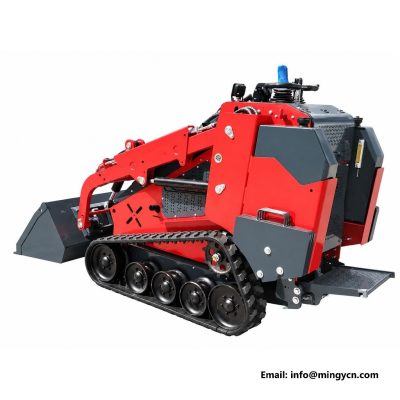
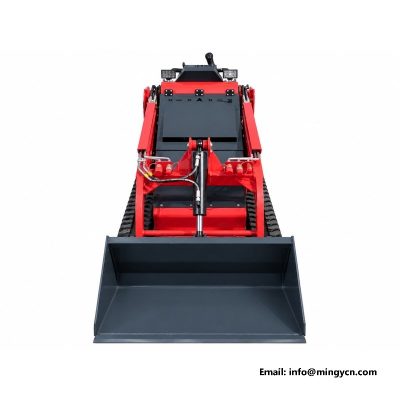
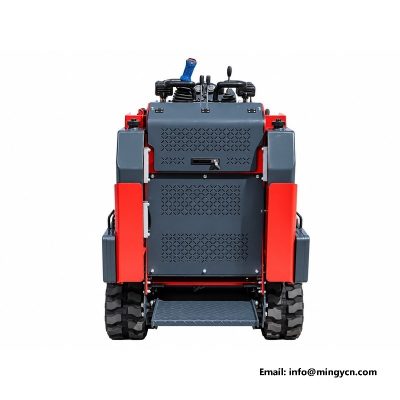
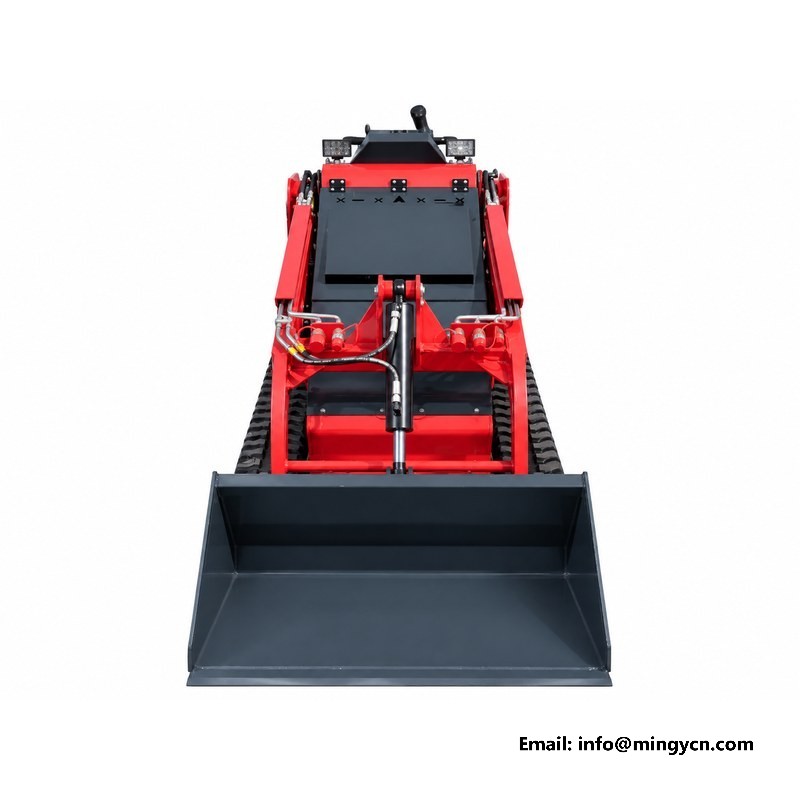
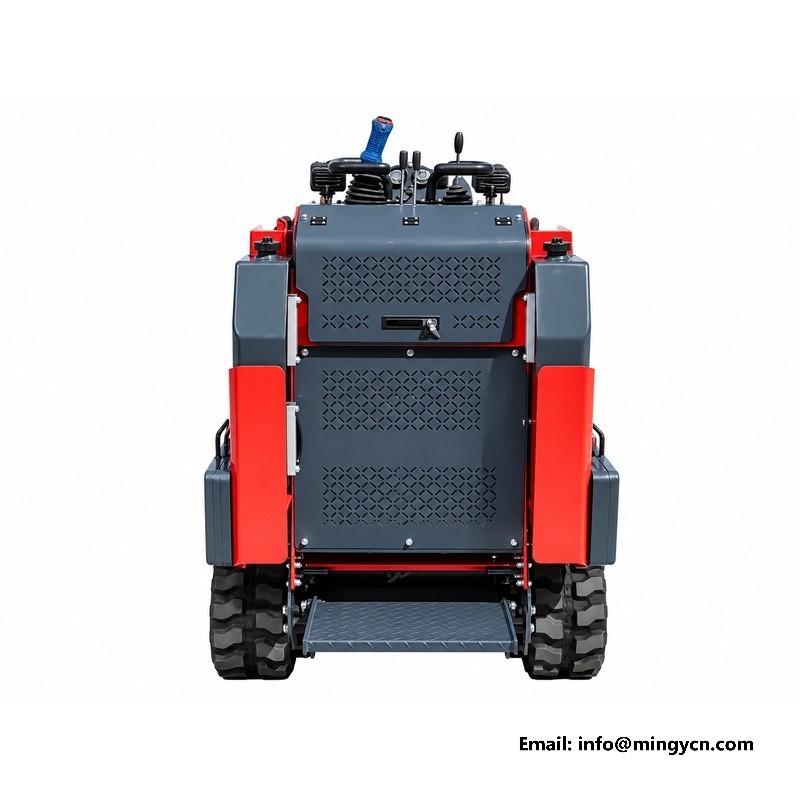
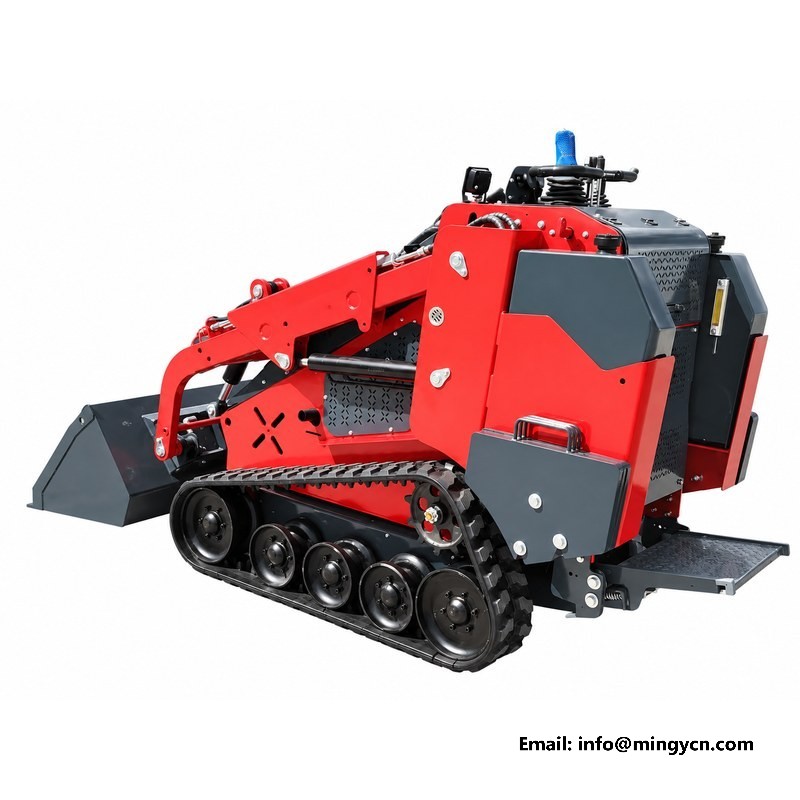
The images show a front three-quarter view, a square front view with the bucket low, a rear view of the engine cover and track frame, and a rear three-quarter view. Together they show the bucket width relative to the tracks, the position of the operator platform, the rear service access and the hose routing at the lift arms.
noise level appears in the build record as 95 db or lower, which a buyer can verify on arrival. The recorded value of emission standard is eu 97/68/ec stage v and epa tier 4 final, taken from the assembled tool.
With 56.8 L/min available, the machine can be specified with hydraulic tools that a standard-flow carrier would stall. Selection still follows the same order: confirm the tool's required flow and maximum pressure, confirm whether a case drain is needed, check the mounting plate, then compare the combined mass with the 300 kg rated operating capacity.
The factory gives noise level as 95 db or lower and repeats the figure on the delivery note. The works sheet lists emission standard as eu 97/68/ec stage v and epa tier 4 final for this particular implement.
Flow sets the speed of a rotating tool, pressure sets the force available when that tool meets resistance, and the two cross at the point where the operation actually happens. Matching a tool to a base unit begins with the data mount, not with a photograph. A typical secondary supply is commonly rated around 17 to 24 gpm, a high-flow supply around 30 to 42 gpm, and relief settings near 3000 to 3500 psi are typical across the industry.
A mounting mount that looks interchangeable still has to be measured. Wedge engagement, mount flatness and the condition of the lower lip decide whether the tool stays attached under a shock load. Weight is the other half of the calculation: the further the mass sits ahead of the arms, the smaller the sound load, which is why industry practice keeps the combined tool and load near half of the piece of equipment's rated tipping value.
Service schedules follow the abrasion profile. Pins and bushes are greased on an each day cycle in dusty conditions, cutting edges are reversed before the parent interface is exposed, and flexible lines are examined where they flex across a pivot. These are short checks, but they decide the operating life of the tool.
No adjustment, clearing or greasing is attempted with the system pressurised, and hoses are relieved before a coupler is disconnected. Safe in-service routines are mostly about position. Loads stay low during travel, the assembly is kept close to the loader, and turns are made gently on slopes.
| Parameter | Value |
|---|---|
| Model | LW1000 / V1000 |
| Configuration | Rubber track compact loader |
| Engine | Kubota D1105 |
| Rated power | 18.4 kW (25 HP) |
| Engine speed | 3600 rpm |
| Operating weight | 1520 kg |
| Rated operating capacity | 300 kg |
| Ground pressure with rubber track | 2800 kg/m2 |
| Tipping load | 1315 kg |
| Auxiliary hydraulic flow | 56.8 L/min |
| Auxiliary hydraulic pressure | 19.3 MPa |
| Noise level | 95 dB or lower |
| Emission standard | EU 97/68/EC Stage V and EPA Tier 4 Final |
| Engine cooling | Liquid |
| Fuel | Diesel |
| Displacement | 1.131 L |
| Cylinders | 3 |
| Travel speed, forward | 5.8 km/h |
| Travel speed, reverse | 3.9 km/h |
| Attachment interface | C II universal industrial interface |
| Drive motor | Danfoss |
| Fuel tank | 30 L |
| Hydraulic supply pump | Italian pump unit |
| Hydraulic oil tank | 30 L |
| Pump capacity | 45 L/min |
| System relief at quick coupler | 200 bar |
The specification is written for rubber-track operation and the photographs show the tracked undercarriage.
A Kubota D1105 three-cylinder liquid-cooled diesel rated at 18.4 kW (25 HP) at 3600 rpm.
Auxiliary flow of 56.8 L/min at 19.3 MPa supports powered attachments; the individual tool requirement is still checked before connection.
EU 97/68/EC Stage V and EPA Tier 4 Final, with a noise level of 95 dB or lower.
The figures above are taken from the factory specification sheet. Build photographs, the engine identification and the pre-dispatch inspection record are supplied with each machine so that the delivered unit can be checked against the table item by item.
E-mail: sales@mingycn.com | LINE: mingyicn
Send the carrier model, auxiliary flow and the material you work with. The factory will confirm the mounting interface, circuit requirement and the build photographs for the exact tool, and will answer technical questions directly.