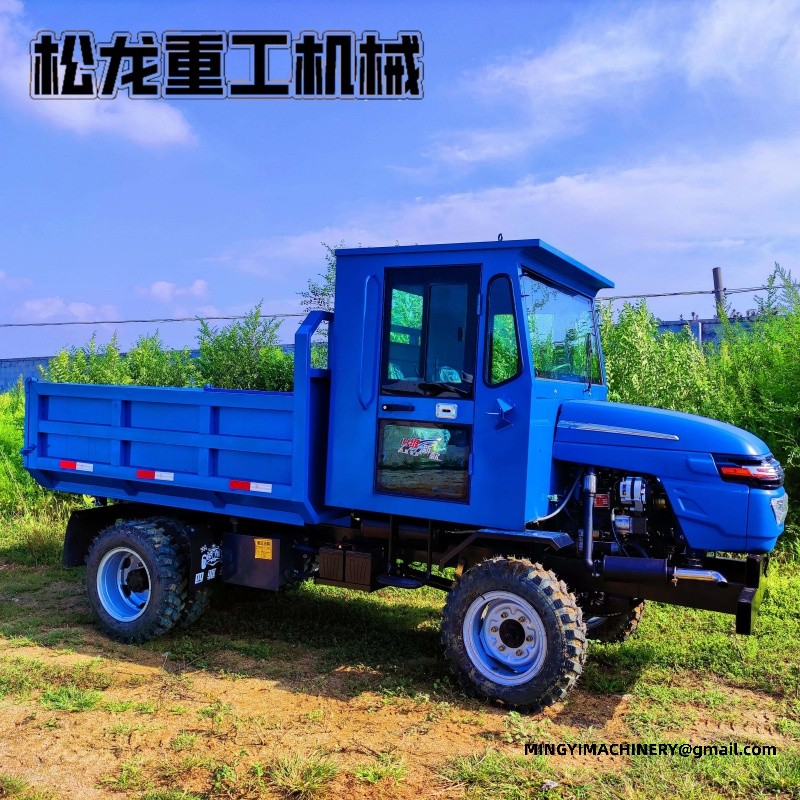
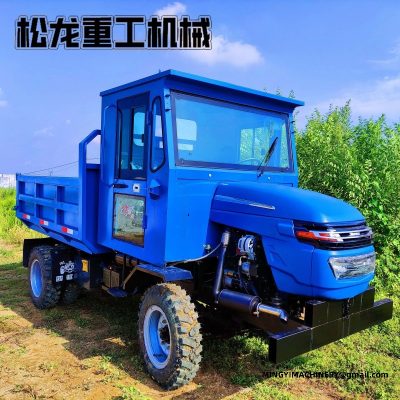
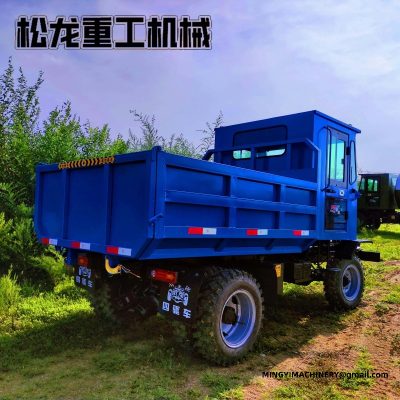
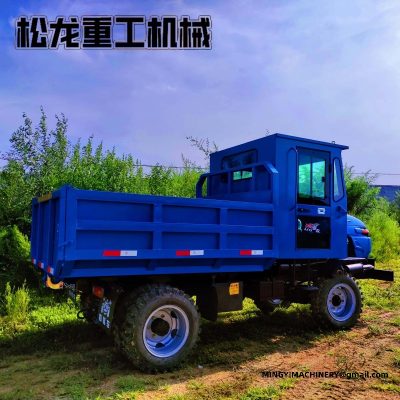
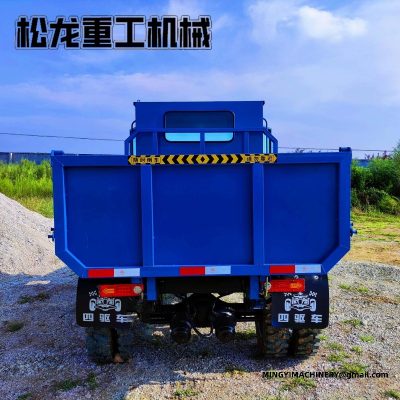
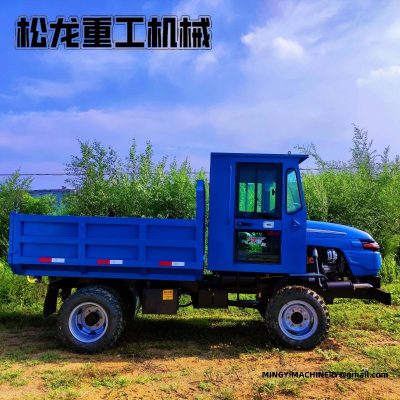
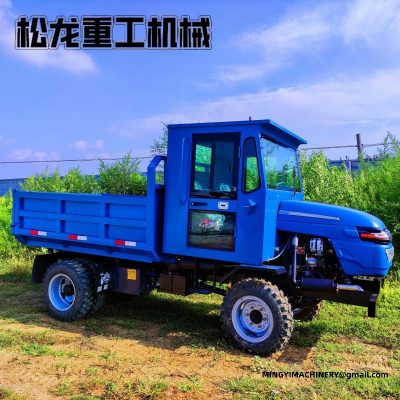
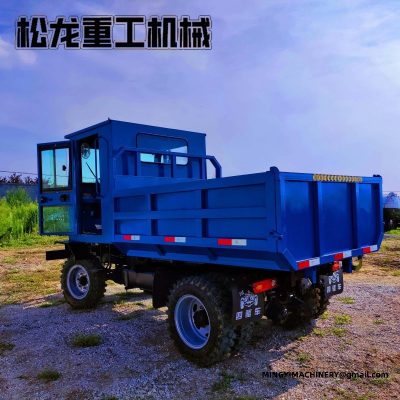
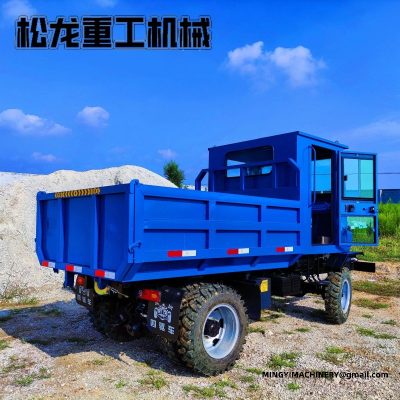
Most enquiries about the dumper start with a job rather than a machine. Someone has a site, a material and a deadline, and the specification follows from those three. This page works back from the job to the build sheet.
Matching 4x4 utility transport vehicle for construction site haulage to ground conditions
Ground decides more of the outcome than power does. Soft, wet or loose surfaces call for a wider footprint and lower ground pressure, while hard standing allows a narrower machine that turns in less space and travels faster between tasks. The working surface should be surveyed before the unit in daily use is specified. A machine that is stable on compacted gravel can be unusable on the same site after rain, and the difference shows up as lost days rather than as a fault. Traction and flotation are two separate questions. This class of machine may have the power for a slope and still not have the grip, so the surface, not the engine rating, is usually what limits the working day.
Wear items and life of 4x4 utility transport vehicle for construction site haulage
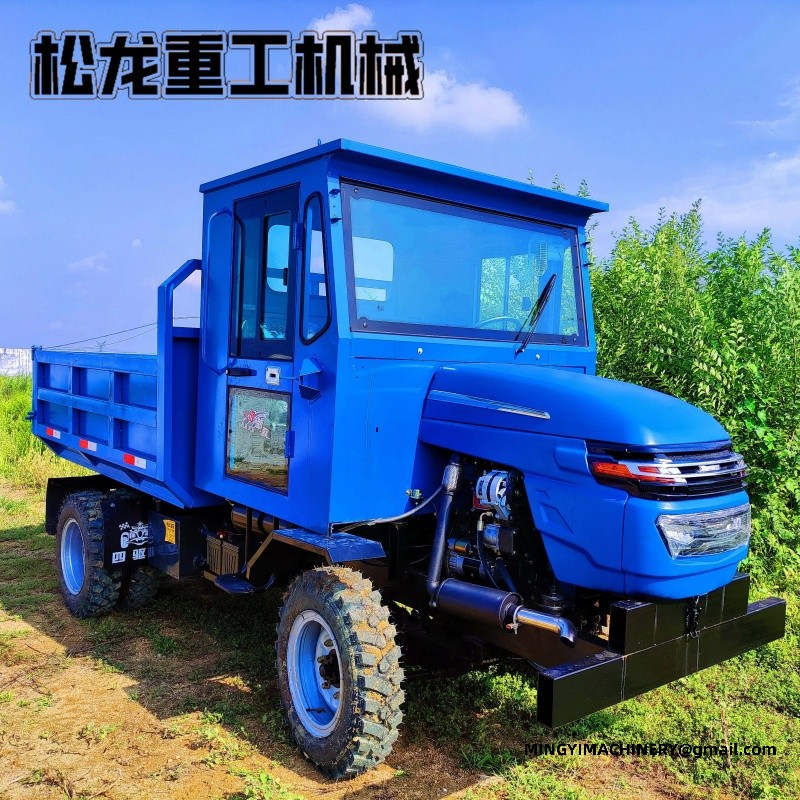
Certain parts are designed to be consumed. Knowing which items on a machine of this size are wearing parts, and roughly how long they last in the duty the machine sees, turns replacement into a plan rather than a breakdown. Wear rate follows conditions far more than hours. The equipment on site working on abrasive ground or in mud will consume undercarriage or tyre life much faster than the same machine on clean ground. Replacing wear items early is usually simpler. Worn components on the machine itself load the parts they run against, so a worn part left too long often becomes a major repair.
Soft ground, paddy fields and mud with 4x4 utility transport vehicle for construction site haulage
Soft ground punishes the wrong tyre. Mountain pattern tyres on the model in question clear mud that a road pattern would pack with, and the difference is measured in whether the machine finishes the day. Recovering a stuck vehicle takes longer than preventing it. Planning the route, avoiding the worst ground and knowing where the machine in that duty will turn is what keeps a soft-ground job productive.
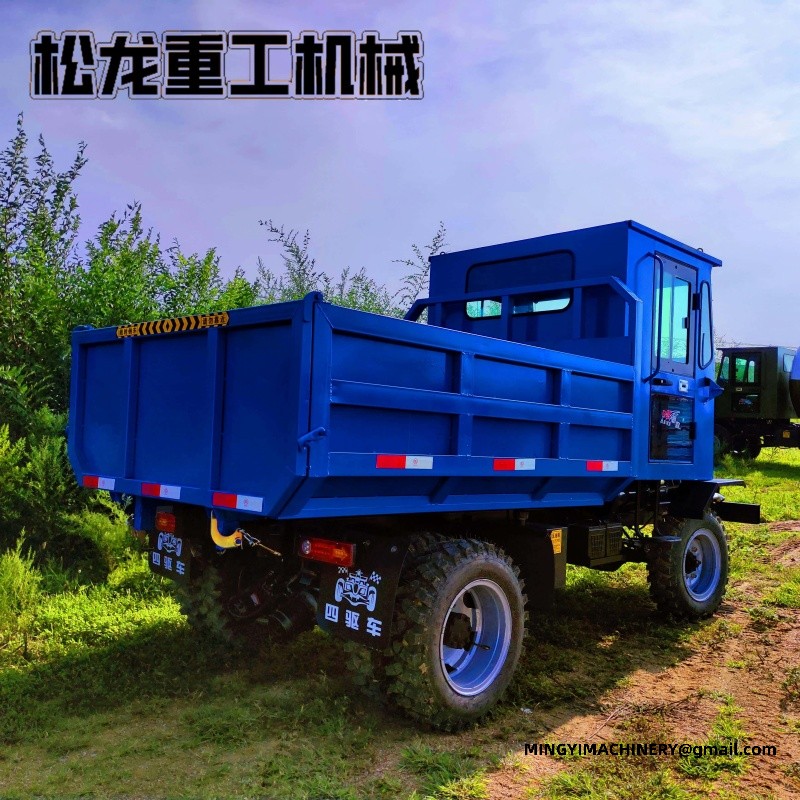
Fitting 4x4 utility transport vehicle for construction site haulage into the wider site plan
Machine productivity depends on what happens around it. Deliveries, other trades and the sequence of work decide how much of the shift the unit on the job spends actually working rather than waiting. Access and storage are worth settling early. Where a machine built for the work will be parked, refuelled and serviced on site affects the working day more than most specification details, and it takes nothing to plan.
Parts, service and support for 4x4 utility transport vehicle for construction site haulage
Support after delivery is a parts question. Filters, belts, hoses and the wearing items specific to the equipment in service are what a buyer should plan to hold before the first service interval rather than order after a failure. Parts availability usually decides the engine and the brand. A machine built around components the local network already carries is serviced from stock, which is the difference between a day lost and a week lost. Remote diagnosis shortens most faults. A walk-around on video with the panels open often identifies the cause on the dumper without waiting for a visit, and avoids shipping a part that turns out not to be needed.
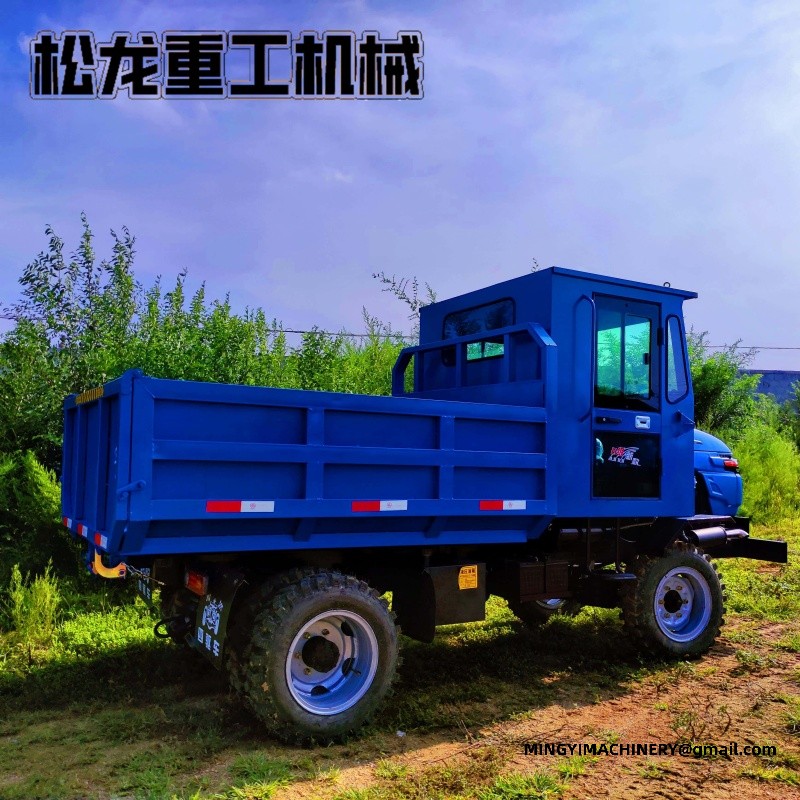
Running 4x4 utility transport vehicle for construction site haulage in a mixed fleet
Standardising where possible simplifies everything downstream. When several units of this class of machine share a service schedule and a parts list, the fleet becomes easier to plan and easier to sell on at replacement time.
Gradient and climbing ability of 4x4 utility transport vehicle for construction site haulage
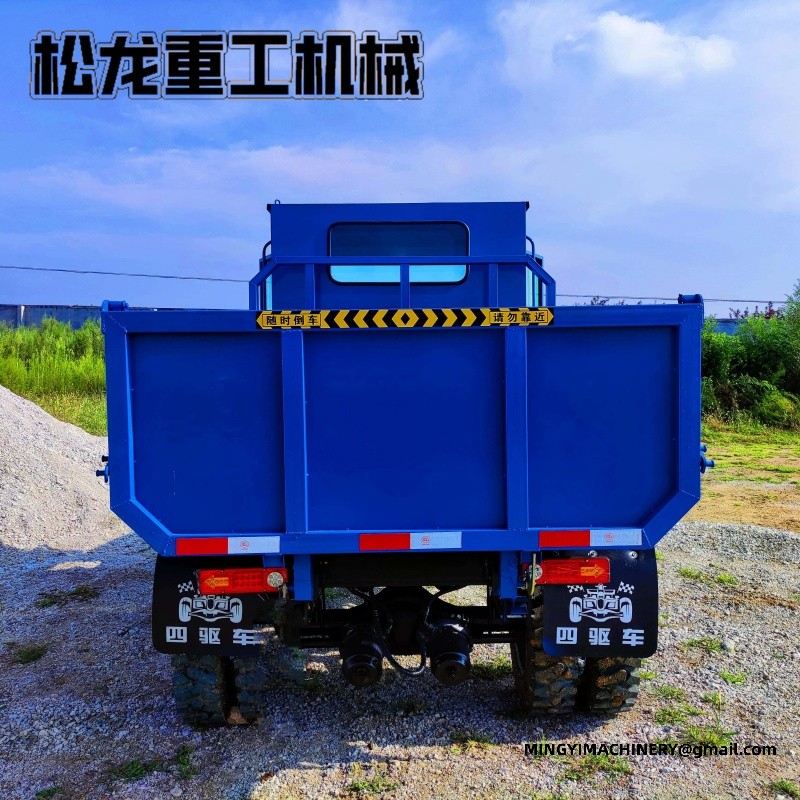
Descending matters as much as climbing. A loaded the unit in daily use on a steep gradient needs engine braking and brakes in good order, and the safe practice is to plan the descent before the load rather than during it.
Operator technique and familiarisation
Familiarisation should cover the limits as well as the controls. Knowing where a machine of this size loses stability, how it behaves at full reach, and what the warning lights mean prevents the incidents that are put down to bad luck.
Load, ballast and stability on the equipment on site
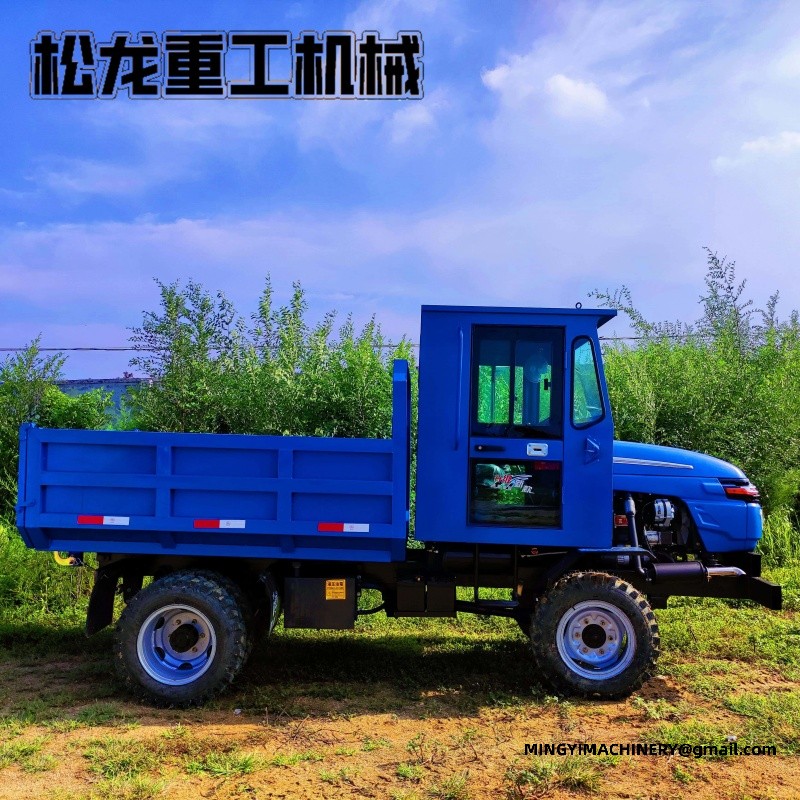
Ballast and attachment weight change the machine. Adding a heavy tool to the machine itself moves the centre of gravity, and the counterweight or configuration should be matched to the tool rather than assumed.
Warranty, commissioning and early checks
Warranty terms are clearer when they are read before purchase. Knowing what is covered, what counts as a wearing item and what documentation is required makes a claim on the model in question straightforward rather than contested. Early faults are usually simple. The machine in that duty that behaves differently in its first few hours is more often mis-set than defective, and a call to the supplier at that point usually resolves it the same day.
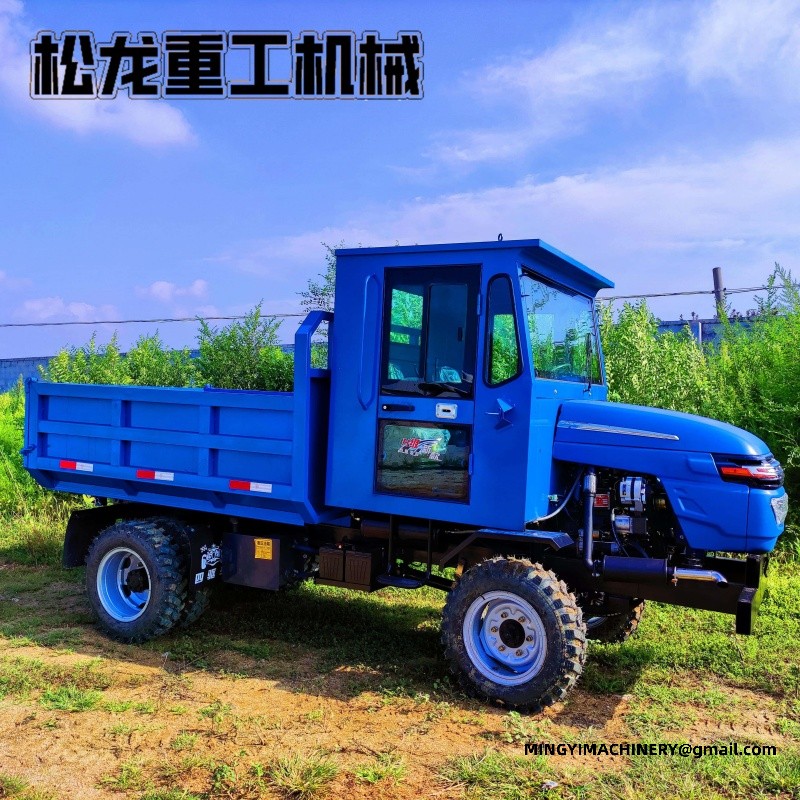
Storage and downtime care for the unit on the job
Standing still is hard on machinery. A machine built for the work left for weeks benefits from a clean, dry, covered space, a charged battery and a fuel system prepared for the layoff, and all three effort very little. A periodic start is better than none. Running the equipment in service to operating temperature during a long layoff keeps seals and the charging system in better condition than leaving it untouched until the next job.
Transporting the dumper to and between sites
Owners who work across several sites should check the transport dimensions before ordering. This class of machine that fits a standard trailer can be moved by any operator with a suitable vehicle, while an over-width machine narrows that choice and complicates every move. Shipping dimensions matter as much on export orders as they do locally. Confirming the packed size of the unit in daily use before booking avoids re-booking freight after the machine is built.
Tipping body and unloading on a machine of this size
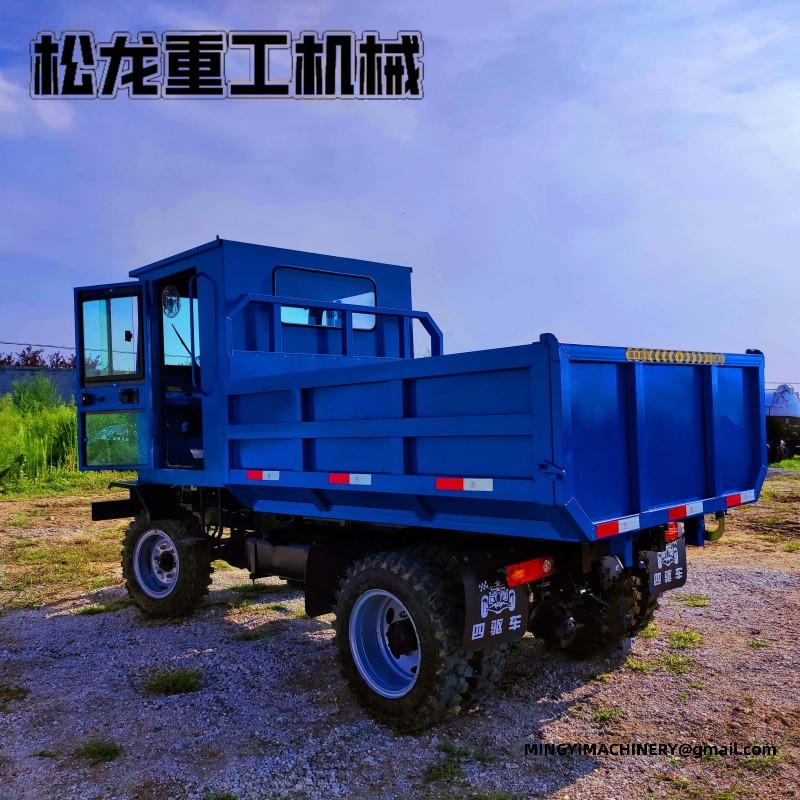
Body size is a compromise with access. A larger body on the equipment on site carries more per trip but needs more room to turn and tip, so the useful question is how many trips the route allows rather than how much it holds.
Configuration data for the machine itself
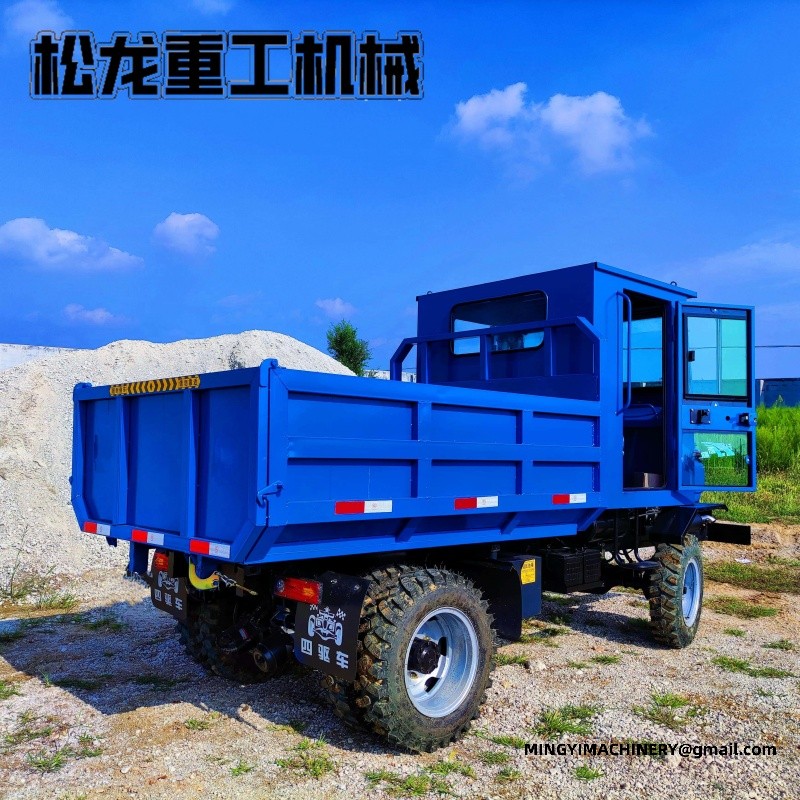
The configurations below are the build sheets most often matched to the model in question. Engine, gearbox, axles, frame and body dimensions are confirmed together, because the body size and the axle rating have to suit the load before the engine rating matters.
| # | 20.Luxury | 23.Upgraded | 3.Standard | 4.Upgraded |
|---|---|---|---|---|
| 1 | Four-cylinder 4102 turbocharged diesel engine | Four-cylinder 4108 turbocharged diesel engine | Single-cylinder diesel engine, 25 hp | Single-cylinder diesel engine, 25 hp |
| 2 | Model 140 part-time gearbox with four-wheel drive | Model 140 part-time gearbox, selectable 2WD/4WD | Full-time gearbox with four-wheel drive | Full-time gearbox with four-wheel drive |
| 3 | High/low range with crawler gear | High/low range with crawler gear | High/low range with crawler gear | High/low range with crawler gear |
| 4 | Fully enclosed cab | Simple cab | Simple cab | Front axle clutch |
| 5 | Six 825R16 steel-belted radial tyres | Six 825R16 steel-belted radial tyres | Oil brakes | Fully enclosed cab |
| 6 | Reinforced ISUZU-pattern front axle | Reinforced ISUZU-pattern front axle | Four 700-16 mountain tyres | Oil brakes |
| 7 | Reinforced 1080 rear axle | Reinforced 1080 rear axle | Front axle 212 | Four 700-16 mountain tyres |
| 8 | Air cut-off brakes | Air cut-off brakes | Rear axle 130 | Front axle 212 |
| 9 | Reinforced 80 x 180 mm square tube frame | Reinforced 80 x 180 mm square tube frame | Reinforced 60 x 140 mm square tube frame | Rear axle 130 |
| 10 | Rear body 3.0 m long x 2.2 m wide x 0.45 m high | Rear body 3.0 m long x 2.2 m wide x 0.45 m high | Rear body 2.2 m long x 1.5 m wide x 0.45 m high | Reinforced 60 x 140 mm square tube frame |
| 11 | Tailgate with self-dumping function | Tailgate with self-dumping function | Tailgate with self-dumping function | Rear body 2.2 m long x 1.5 m wide x 0.45 m high |
| 12 | Side-opening rear body tailgate with cab ladder | Hydraulic power steering | Hydraulic power steering | Tailgate with self-dumping function |
| 13 | Hydraulic power steering | Twin hydraulic rams | Twin hydraulic rams | Hydraulic power steering |
| 14 | Twin hydraulic rams | Two-person comfort seat | Two-person comfort seat | Twin hydraulic rams |
| 15 | Two-person comfort seat | Heavy-duty leaf springs | Twin-battery electric start | Two-person comfort seat |
| 16 | Heavy-duty thickened leaf springs | Twin-battery electric start | Square-nose bonnet | Twin-battery electric start |
| 17 | Twin-battery electric start | Square-nose bonnet | — | Square-nose bonnet |
| 18 | Square-nose bonnet | — | — | — |
| 19 | Four-cylinder 4105 turbocharged | — | — | — |
| 20 | Four-cylinder 4108 turbocharged | — | — | — |
| 21 | Single-cylinder engine, 25 hp | — | — | — |
| 22 | Single-cylinder engine, 28 hp | — | — | — |
| 23 | Single-cylinder engine, 32 hp | — | — | — |
| 24 | Two-cylinder engine, 38 hp | — | — | — |
| 25 | Four-cylinder 490 engine | — | — | — |
| 26 | Four-cylinder 4102 turbocharged engine | — | — | — |
Pre-delivery inspection before the machine in that duty leaves the shop
Inspection is a list, not a glance. Before the unit on the job is released the fluid levels, belt tension, electrical connections and safety decals are each ticked off, and anything that fails stays in the shop rather than travelling with the machine.
Storage and long idle periods for a machine built for the work
The battery and the fuel are the first things to suffer in storage. Preparing the equipment in service properly at the start of the idle period avoids the flat battery and the contaminated tank that greet an unprepared machine.
Planning the season around the dumper
Seasonal work rewards a machine that can change duty. Through the year this class of machine may move from one task to another, and the attachment list should be chosen for the whole year rather than for the first job.
Wear items and spares worth holding for the unit in daily use
A spares list should follow the duty cycle. A machine of this size working every day in abrasive dust consumes filters and cutting edges far faster than the same machine used once a week, and the shelf should be stocked for the harder case.
Handover and getting familiar with the equipment on site
The first day with a new machine sets the pattern for the next five years. Handover for the machine itself covers the control layout, the daily check points and the limits the operator needs to know before the first real load is lifted or carried.
Reading the early symptoms on the model in question
Machines rarely fail without warning. A change in sound, a slower function or a new leak on the machine in that duty is the machine saying something early, and listening then takes a fraction of the time that waiting does.
Later additions and retrofits on the unit on the job
An added function should pay for itself quickly. Whether a machine built for the work gains a different bucket, a hydraulic service or a protection package, the test is the number of days a year it is actually used.
Every line above is a build item rather than an optional extra, and the final sheet for the equipment in service is confirmed against the destination, the ground and the load before production.
E-mail:sales@mingycn.com
LINE(ID):mingyicn
Visibility and blind spots around 4x4 utility transport vehicle for construction site haulage
A machine working in a yard with people on foot needs a rule about who moves first, agreed before the shift rather than during it.
Reverse alarms and beacons fail quietly, and testing them takes a minute whenever the machine changes site.
Dust, low sun and rain all shorten sight lines, and the sensible response is to slow the cycle rather than to work on memory.
Electrical system and battery care on 4x4 utility transport vehicle for construction site haulage
Most electrical faults are connection faults, and a corroded earth strap or a loose terminal produces symptoms that look like a failed component.
Jump starting is a recovery rather than a repair, and the reason for the flat battery is worth finding the same day.
Related pages
4WD cargo carrier for mining and quarry work · off road transport vehicle for mining and quarry work · China Front Tipping Dumper Factory Supplier: Range · Four Wheel Drive Transport Vehicle









