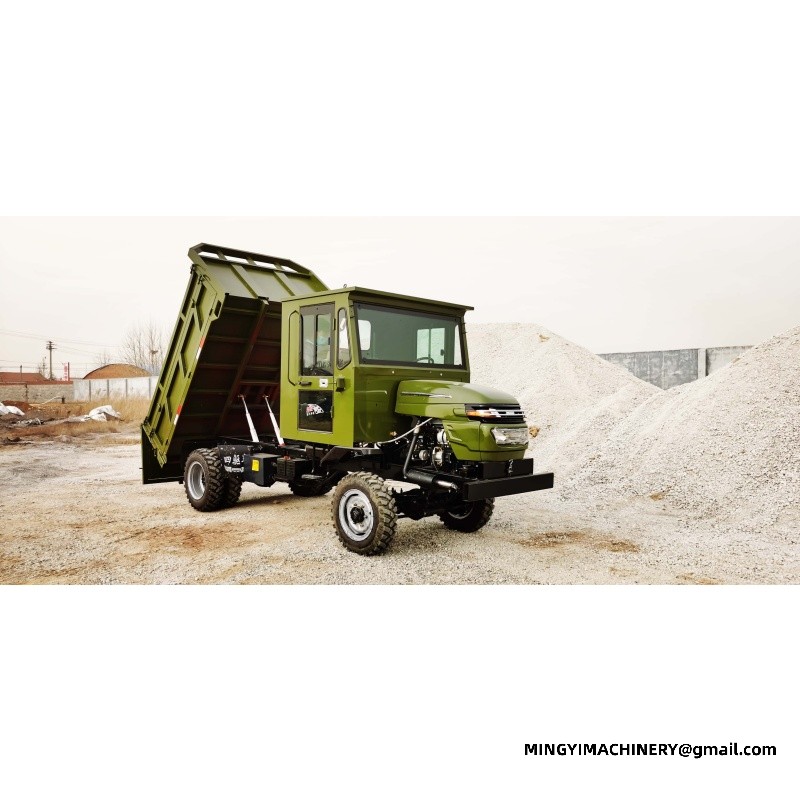
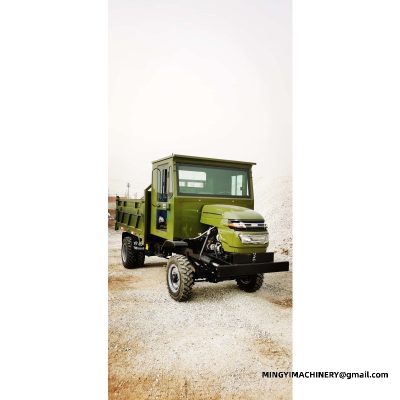
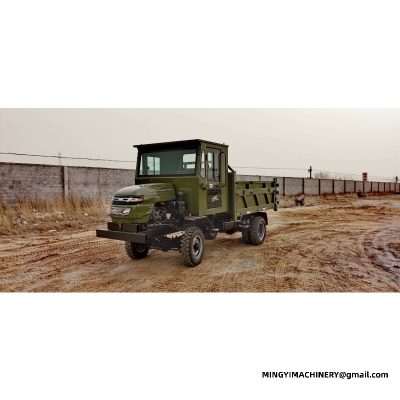
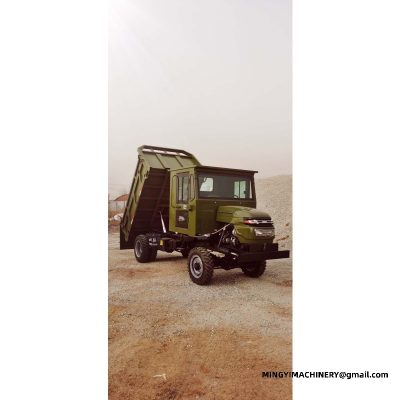
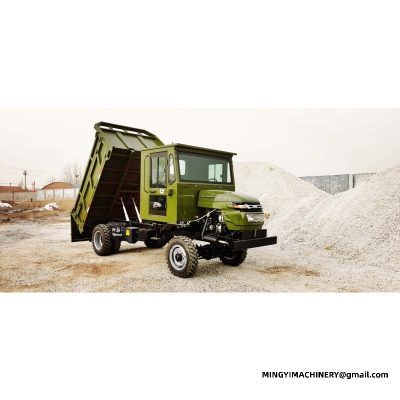
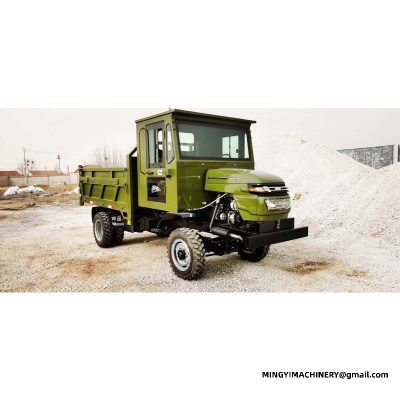
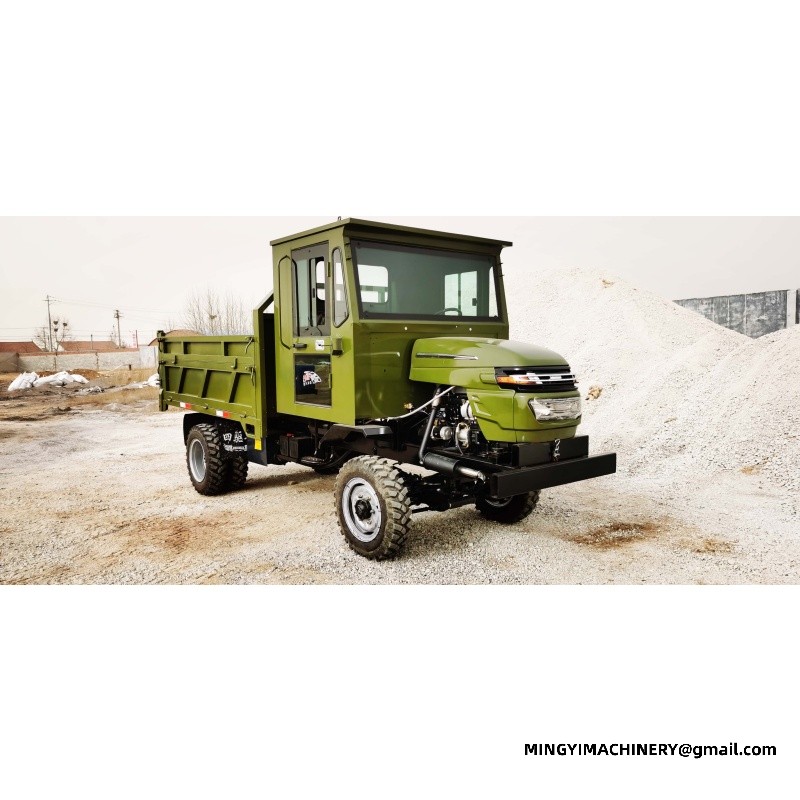
Model MY-4x4-4T · 4 t payload · 58 hp engine
Two buyers can order the dumper for the same nominal job and receive different machines, because the ground and the access decide more than the workload does. The sections below explain which questions separate the two cases.
Crane and grab attachments on articulated off road dumper
A crane or grab turns a haul vehicle into a loading machine. This class of machine fitted with a hydraulic crane loads itself, which removes a second machine from the job and is often the whole reason for specifying one. Adding a crane changes the vehicle specification. Hydraulic capacity, frame strength and braking all need to suit the attachment, and it is simpler to specify them at build than to add them later.
Mixer drum bodies and concrete haulage articulated off road dumper
Drum bodies need power and stability. The unit in daily use set up for concrete has to carry the drum, the load and the water, and the frame and brakes should be specified for that combined weight.
Resale value and replacement planning
Resale starts at purchase. Specification choices, service records and the condition of wearing parts are what a buyer looks at, and a machine of this size that has been maintained on schedule is worth more than one that merely looks clean. Replacement timing is a planning decision. Knowing the intended working life of the equipment on site lets an owner sell while the machine still has value rather than after a major repair becomes due. Records are part of the asset. Keeping the service history and the hour records with the machine itself makes it easier to sell, easier to insure and easier to justify the replacement machine internally.
Matching articulated off road dumper to ground conditions
Ground decides more of the outcome than power does. Soft, wet or loose surfaces call for a wider footprint and lower ground pressure, while hard standing allows a narrower machine that turns in less space and travels faster between tasks.
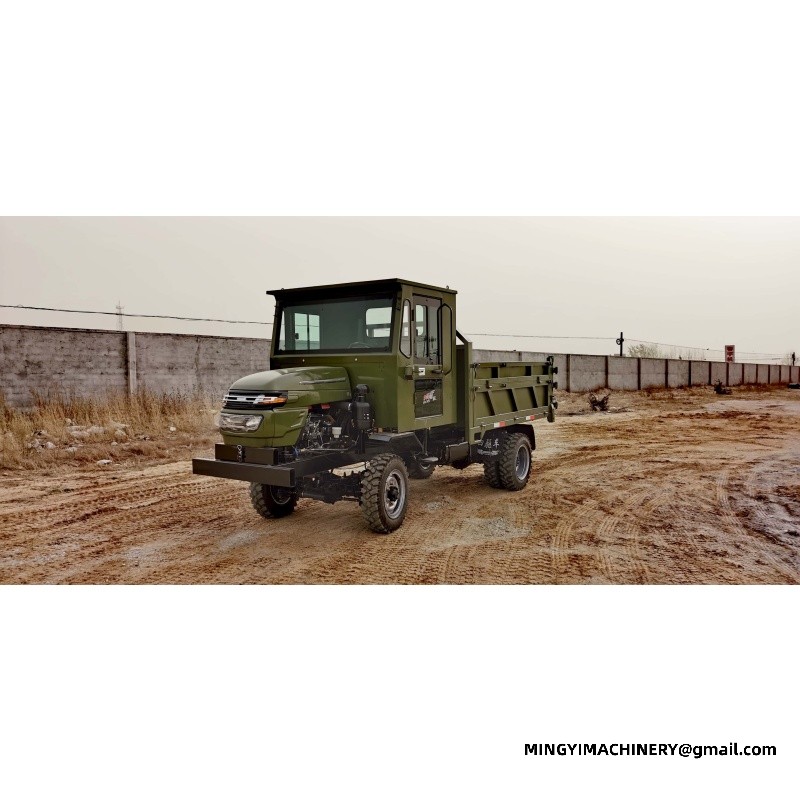
Export packing and shipping of articulated off road dumper
Documentation should be agreed at order stage. The commercial invoice, packing list and any certificate required at destination are part of shipping the model in question, and missing papers delay clearance longer than the voyage takes.
Daily checks and maintenance on articulated off road dumper
Most failures start as something small that a walk-around would have caught. Fluid levels, belt tension, tyre or track condition and any fresh leak are the items worth two minutes at the start of each shift on the machine in that duty. Service intervals exist because wear is predictable. Following the maker schedule on the unit on the job takes far less time than repairing the damage that follows a missed oil change or a filter left in place past its life.
Cold weather and low temperature work with articulated off road dumper
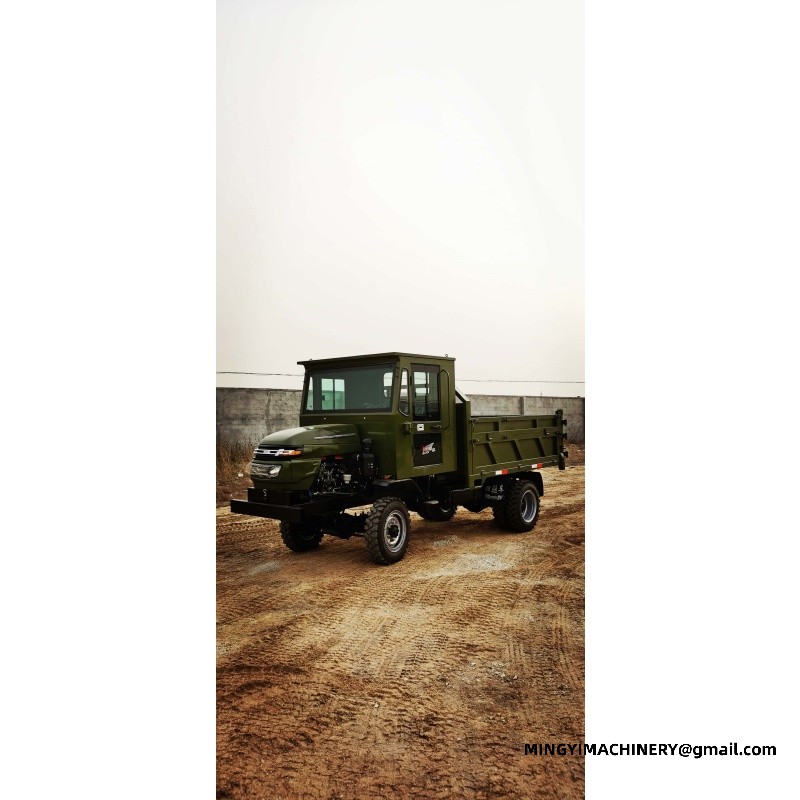
Batteries and fluids are the parts that notice the cold first. A machine built for the work kept on a maintainer through a freezing spell starts on the first turn, while one left standing is the usual cause of a lost morning.
Working hours and duty cycle of articulated off road dumper
Duty cycle is the honest measure of a machine. The equipment in service working a few hours a week has different needs from one working two shifts, and the cooling, filtration and service intervals should follow the hours rather than the calendar.
Farm and estate use of the dumper
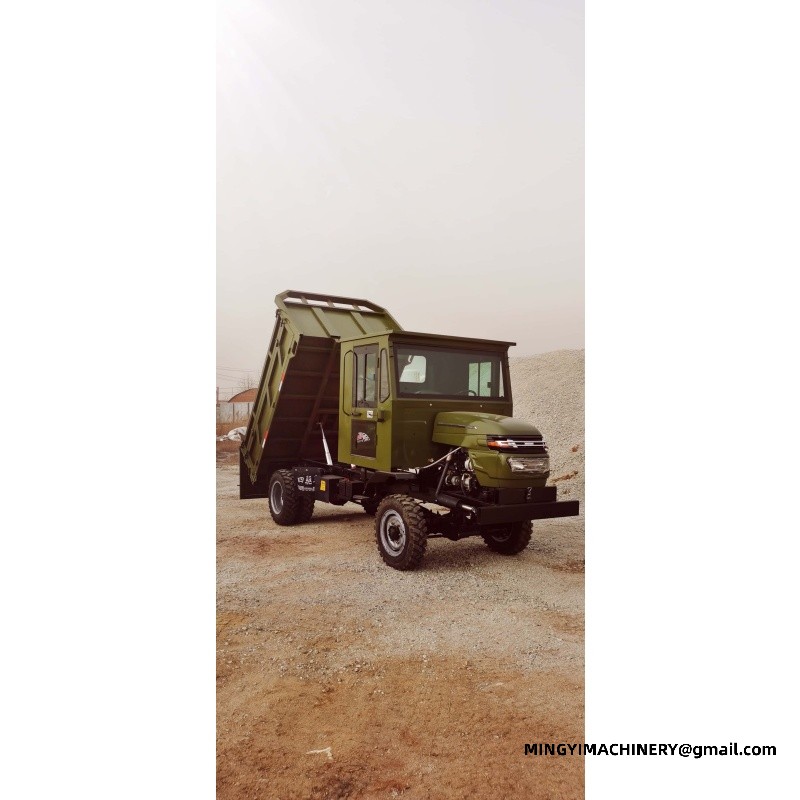
Farm work is seasonal and varied. This class of machine that hauls feed in one month and muck or aggregate in the next earns its place by being usable across the year rather than by being optimised for one task. Ground on farms is often soft and often shared with livestock. The unit in daily use working there needs to cross pasture without rutting it badly, and tyre and weight choices follow from that. Farm users also value simplicity. A machine of this size that can be serviced in the yard with common tools and common parts suits a farm better than one that needs a dealer visit for routine work.
Dust, mud and abrasive conditions around the equipment on site
Abrasive conditions shorten service intervals. Air filters, seals and any exposed sliding surface on the machine itself need attention more often in dusty or muddy work, and the extra checks prevent far more wear than the time they take.
Fitting the model in question into the wider site plan
Access and storage are worth settling early. Where the machine in that duty will be parked, refuelled and serviced on site affects the working day more than most specification details, and it takes nothing to plan. Sequencing avoids rework. Doing the work in the order that suits the ground and the following trades keeps the unit on the job productive and prevents finishing a task that then has to be opened up again.
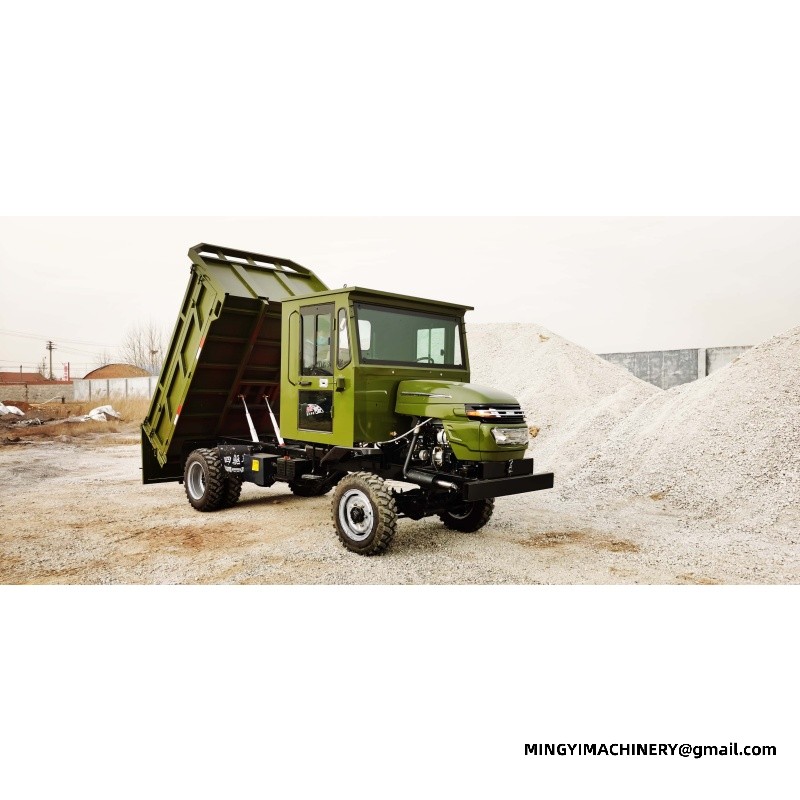
Wear items and life of a machine built for the work
Certain parts are designed to be consumed. Knowing which items on the equipment in service are wearing parts, and roughly how long they last in the duty the machine sees, turns replacement into a plan rather than a breakdown. Wear rate follows conditions far more than hours. The dumper working on abrasive ground or in mud will consume undercarriage or tyre life much faster than the same machine on clean ground.
Soft ground, paddy fields and mud with this class of machine
Four-wheel drive is only part of soft ground capability. Tyre choice, ground clearance and weight distribution decide whether the unit in daily use keeps moving in a paddy field or a marsh, and all three are specified rather than assumed. Soft ground punishes the wrong tyre. Mountain pattern tyres on a machine of this size clear mud that a road pattern would pack with, and the difference is measured in whether the machine finishes the day.
Forestry and timber work with the equipment on site
Timber work changes what the vehicle carries. The machine itself fitted with a log grab loads and unloads without a second machine, which is usually the reason a forestry contractor specifies one over a conventional truck. Access tracks in forestry are narrow, soft and often steep. The model in question chosen for that work is chosen for the track, and the body, cab and tyre specification follow from the route rather than from the load alone.
Water tank and dust control bodies on the machine in that duty
Water is heavy and it moves. Baffles and sensible speeds matter on the unit on the job with a tank body, and the specification should reflect the ground the vehicle will cross rather than only the volume needed.
Operator technique and familiarisation
Familiarisation should cover the limits as well as the controls. Knowing where a machine built for the work loses stability, how it behaves at full reach, and what the warning lights mean prevents the incidents that are put down to bad luck. A short handover pays for itself. Operators who understand why the equipment in service is set up the way it is will report a change in behaviour early, which is usually the point where a repair is simplest.
Fuel use and running demands of the dumper
Fuel is usually the largest controllable running demand. Operating style, correct tyre or track condition and a clean air supply all move consumption on this class of machine by more than most buyers expect. Planning the work to reduce empty movement is free. Fewer repositioning cycles on the unit in daily use means less fuel, less wear on the undercarriage or tyres and more of the shift spent on productive work.
Configuration data for a machine of this size
The configurations below are the build sheets most often matched to the equipment on site. Engine, gearbox, axles, frame and body dimensions are confirmed together, because the body size and the axle rating have to suit the load before the engine rating matters.
| # | 14.Luxury | 17.Luxury | 22.Luxury | 7.Upgraded |
|---|---|---|---|---|
| 1 | Two-cylinder diesel engine, 38 hp | Four-cylinder 490 diesel engine | Four-cylinder 4105 turbocharged diesel engine | Single-cylinder diesel engine, 28 hp |
| 2 | Part-time gearbox, selectable 2WD/4WD | Part-time gearbox, selectable 2WD/4WD | Model 145 part-time gearbox with four-wheel drive | Full-time gearbox with four-wheel drive |
| 3 | High/low range with crawler gear | High/low range with crawler gear | High/low range with crawler gear | High/low range with crawler gear |
| 4 | Enclosed cab | Fully enclosed cab | Fully enclosed cab | Front axle clutch |
| 5 | Six 700-16 mountain tyres | Six 700-16 mountain tyres | Six 825R16 steel-belted radial tyres | Fully enclosed cab |
| 6 | Model 212 front axle | Reinforced 130 front axle | Reinforced ISUZU-pattern front axle | Oil brakes |
| 7 | Reinforced 130 rear axle | Reinforced ISUZU-pattern rear axle | Reinforced 1080 rear axle | Four 700-16 mountain tyres |
| 8 | Air cut-off brakes | Air cut-off brakes | Air cut-off brakes | Front axle 212 |
| 9 | Reinforced 60 x 140 mm square tube frame | Reinforced 60 x 140 mm square tube frame | Reinforced 80 x 180 mm square tube frame | Rear axle 130 |
| 10 | Rear body 2.2 m long x 1.5 m wide x 0.45 m high | Rear body 2.2 m long x 1.8 m wide x 0.45 m high | Rear body 3.0 m long x 2.2 m wide x 0.45 m high | Reinforced 60 x 140 mm square tube frame |
| 11 | Tailgate with self-dumping function | Tailgate with self-dumping function | Tailgate with self-dumping function | Rear body 2.2 m long x 1.5 m wide x 0.45 m high |
| 12 | Side-opening rear body tailgate | Side-opening rear body tailgate | Side-opening rear body tailgate with cab ladder | Tailgate with self-dumping function |
| 13 | Hydraulic power steering | Hydraulic power steering | Hydraulic power steering | Hydraulic power steering |
| 14 | Twin hydraulic rams | Twin hydraulic rams | Twin hydraulic rams | Twin hydraulic rams |
| 15 | Heavy-duty leaf springs | Two-person comfort seat | Two-person comfort seat | Two-person comfort seat |
| 16 | Two-person comfort seat | Heavy-duty leaf springs | Heavy-duty leaf springs | Twin-battery electric start |
| 17 | Twin-battery electric start | Twin-battery electric start | Twin-battery electric start | Square-nose bonnet |
| 18 | Round-nose bonnet | Round-nose bonnet | Square-nose bonnet | — |
Fuel, oil and fluid quality for the machine itself
Fluid quality is a storage problem before it is a machine problem. Water and sediment in a drum will find the injection system of the model in question eventually, and a settling period is nothing compared with a pump.
Keeping a service record for the machine in that duty
Patterns show up in the record before they show up in the machine. Rising oil consumption or a filter that keeps blocking on the unit on the job is obvious on paper long before it becomes a failure on site.
Storage and long idle periods for a machine built for the work
The battery and the fuel are the first things to suffer in storage. Preparing the equipment in service properly at the start of the idle period avoids the flat battery and the contaminated tank that greet an unprepared machine.
Hot, humid and dusty conditions around the dumper
Heat and dust shorten service intervals rather than machine life. In these conditions the filters on this class of machine need attention more often, and the cooling surfaces need to be kept clear to hold the working temperature.
Cold weather and winter care for the unit in daily use
Cold exposes weak batteries, thick oil and water in the fuel. Preparing a machine of this size for winter means the right grade of oil, a battery in good condition and fuel that will not wax in the tank overnight.
Packing, loading and shipment of the equipment on site
The paperwork matters as much as the packing. Serial numbers, dimensions and weights recorded for the machine itself at loading are the same figures the destination needs, and a mismatch here loses more days than the voyage itself.
Handover and getting familiar with the model in question
A good handover covers the awkward cases, not just the easy ones. Starting the machine in that duty on a slope, turning in a confined space and recovering from soft ground are the situations an operator should meet first with someone beside them.
Every line above is a build item rather than an optional extra, and the final sheet for the unit on the job is confirmed against the destination, the ground and the load before production.
E-mail:sales@mingycn.com
LINE(ID):mingyicn
Related pages
small articulated dump truck · off road cargo transporter · Static Hydraulic Front Dump Truck: Site Transport Duties · Four Wheel Drive Transport Vehicle









