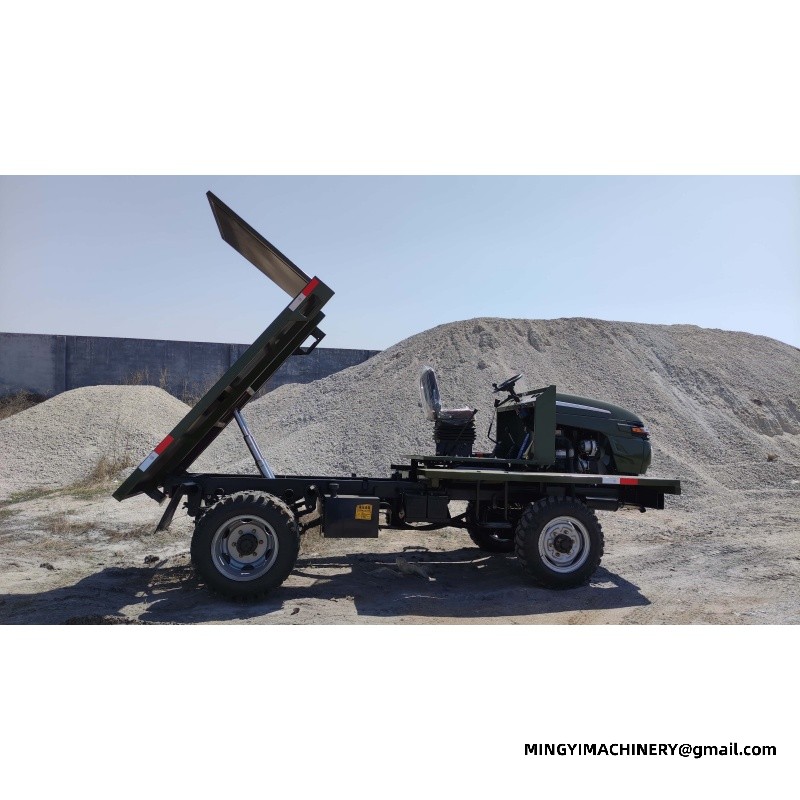
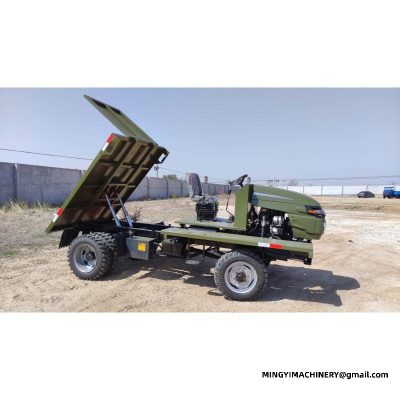
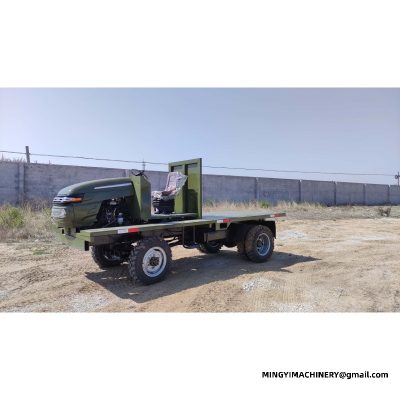
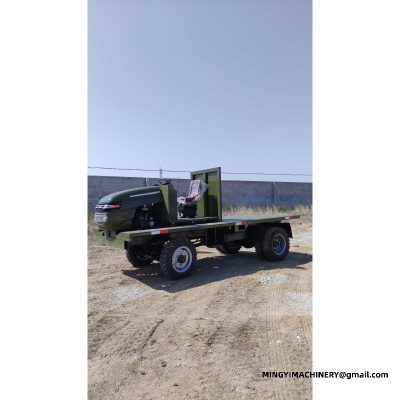
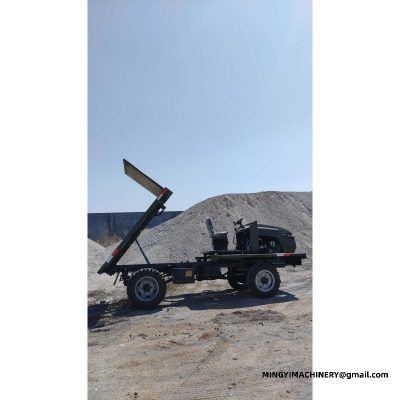
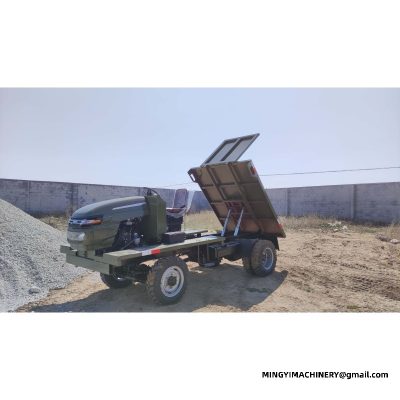
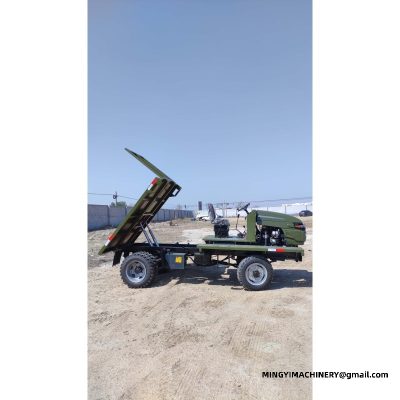
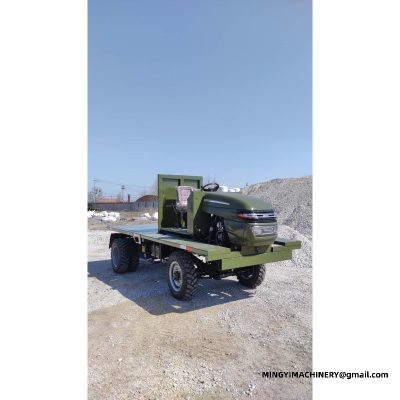
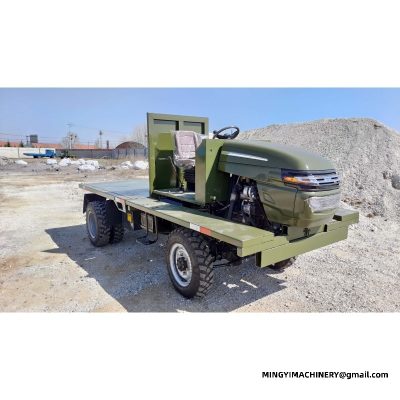
Model MY-4x4-3T
The dumper earns its place by doing one job repeatedly and without fuss. The sections below are written from that angle: what the machine is asked to do each day, what wears, what an operator needs to know and what to confirm before dispatch.
Crane and grab attachments on custom 4WD transport vehicle
A crane or grab turns a haul vehicle into a loading machine. This class of machine fitted with a hydraulic crane loads itself, which removes a second machine from the job and is often the whole reason for specifying one.
Attachments and working tools for custom 4WD transport vehicle
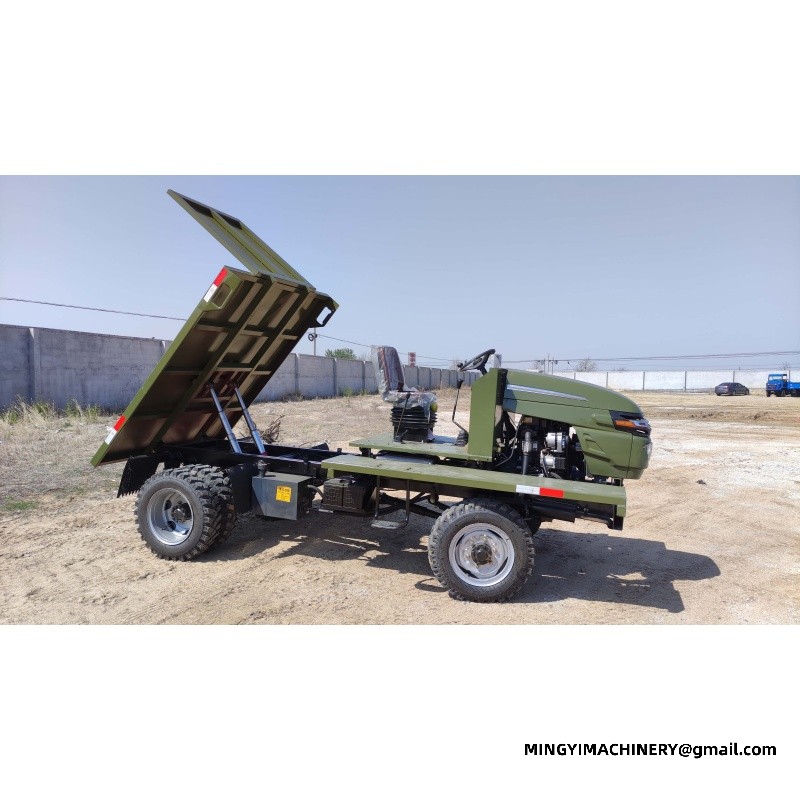
Attachment decisions are best made before delivery. Specifying hydraulics and couplers at build time is simpler than adding them later, and it avoids the downtime of a workshop visit in the first month.
Load, ballast and stability on custom 4WD transport vehicle
Carrying and travelling with a load needs its own plan. Speed, gradient and surface all matter more once the unit in daily use is loaded, and the safe combination is the conservative one.
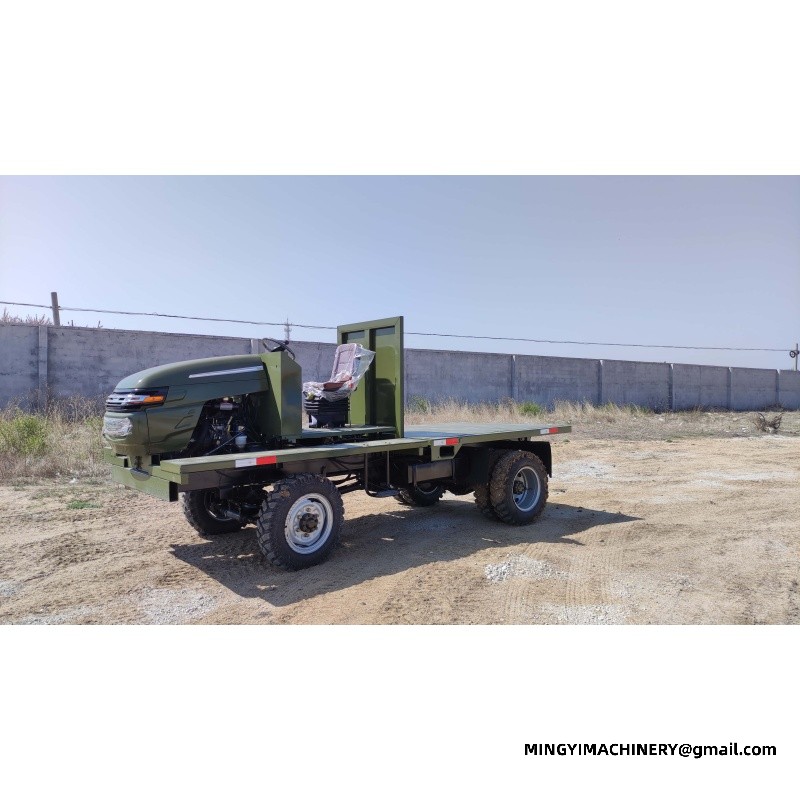
Farm and estate use of custom 4WD transport vehicle
Farm work is seasonal and varied. A machine of this size that hauls feed in one month and muck or aggregate in the next earns its place by being usable across the year rather than by being optimised for one task. Ground on farms is often soft and often shared with livestock. The equipment on site working there needs to cross pasture without rutting it badly, and tyre and weight choices follow from that.
Forestry and timber work with custom 4WD transport vehicle
Access tracks in forestry are narrow, soft and often steep. The machine itself chosen for that work is chosen for the track, and the body, cab and tyre specification follow from the route rather than from the load alone. Protection matters in timber work. Guarding, lighting and a cab that keeps branches out are the items that keep the model in question working through a season rather than being repaired through it.
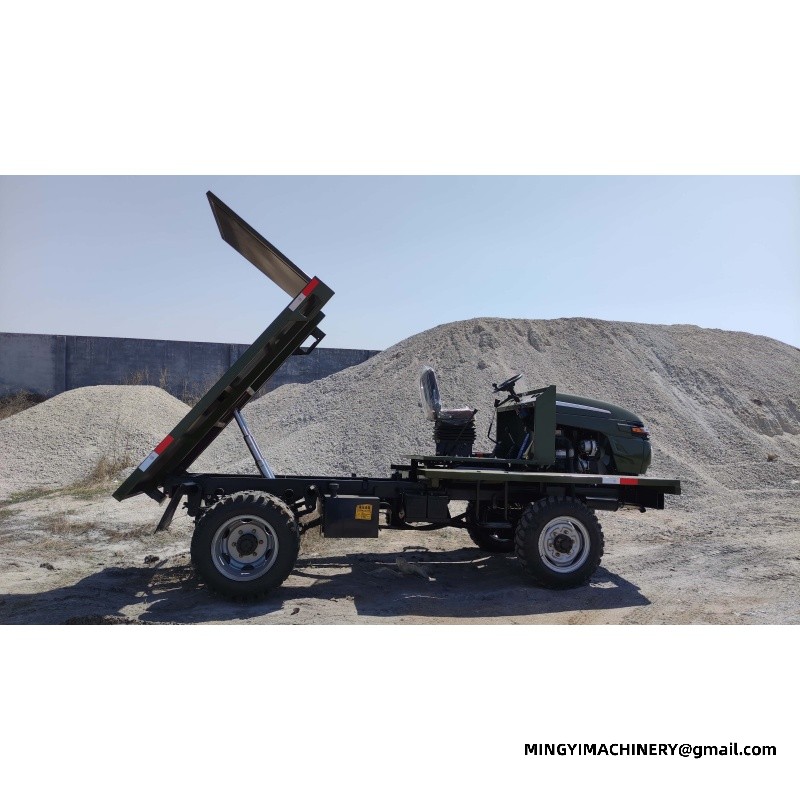
Mixer drum bodies and concrete haulage custom 4WD transport vehicle
Carrying concrete changes the duty entirely. The machine in that duty with a mixer drum is working against the clock, and the specification follows the delivery distance and the site access rather than the load alone. Cleaning and discharge are part of the job. The unit on the job used for concrete is judged on how quickly it can discharge and wash out, because that turnaround is what the site is paying for.
Soft ground, paddy fields and mud with custom 4WD transport vehicle
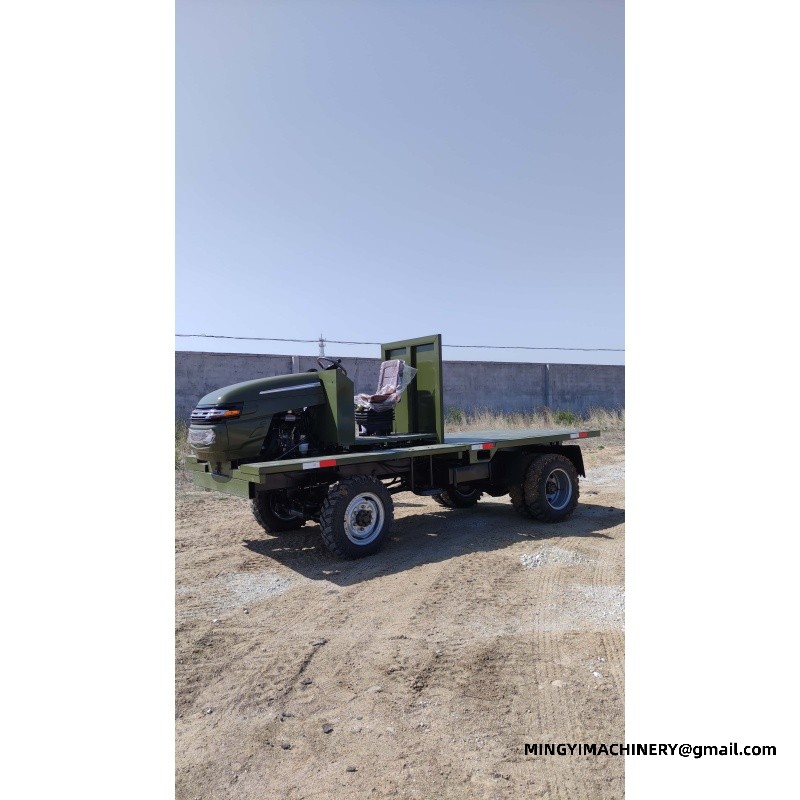
Recovering a stuck vehicle takes longer than preventing it. Planning the route, avoiding the worst ground and knowing where the machine built for the work will turn is what keeps a soft-ground job productive.
Working hours and duty cycle of custom 4WD transport vehicle
Hour planning helps at resale as well. The equipment in service with a recorded service history and a sensible hour count is easier to sell than one with the same hours and no records, whatever its condition.
Customisation and build options for the dumper
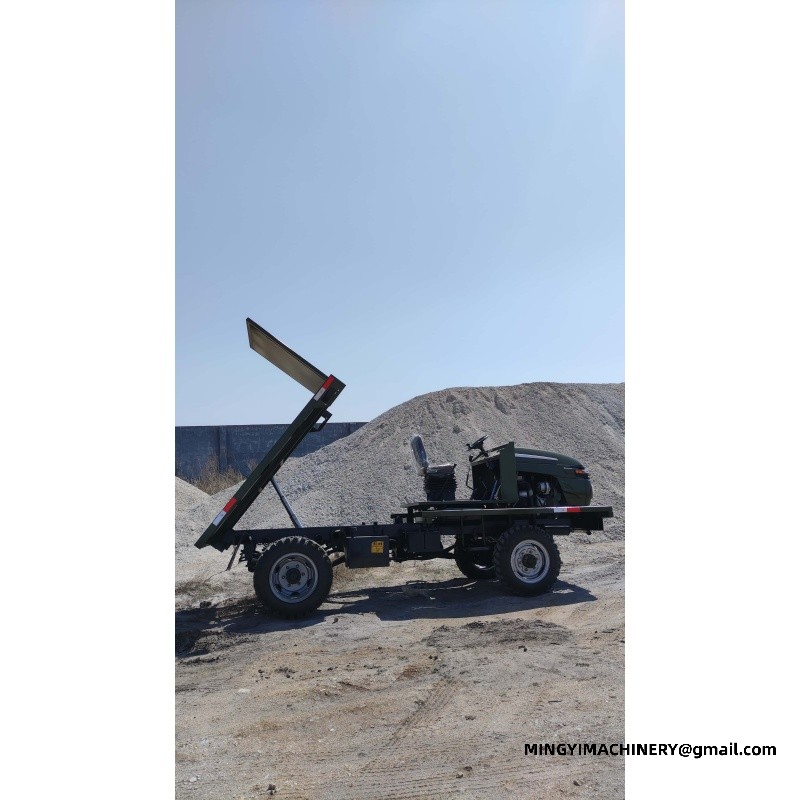
Build options are where a standard machine becomes the right machine. Colour, guarding, lighting, seating and hydraulic provisions can usually be set at build time on this class of machine, and are far simpler then than as a retrofit.
Resale value and replacement planning
Resale starts at purchase. Specification choices, service records and the condition of wearing parts are what a buyer looks at, and the unit in daily use that has been maintained on schedule is worth more than one that merely looks clean. Replacement timing is a planning decision. Knowing the intended working life of a machine of this size lets an owner sell while the machine still has value rather than after a major repair becomes due.
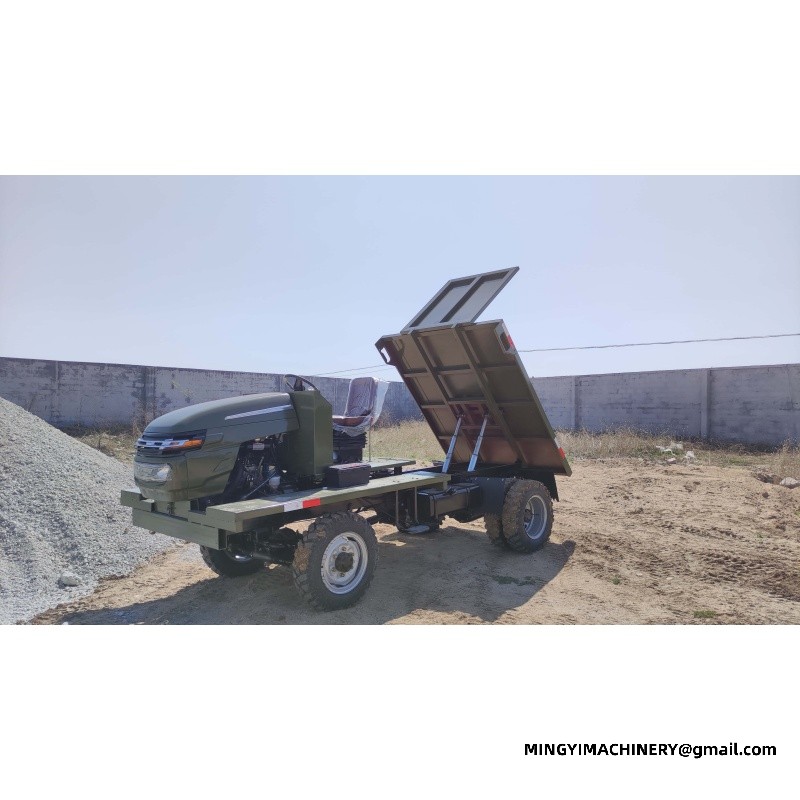
Dust, mud and abrasive conditions around the equipment on site
Sealed points and guarded areas deserve a look in these conditions. The machine itself working in abrasive dust benefits from checked boots, intact guards and clean breathers, all of which are quick to verify.
Cold weather and low temperature work with the model in question
Cold changes how a machine starts and how it warms up. Allowing the machine in that duty to reach operating temperature before loading it, and using the correct grade of oil and fuel for the season, prevents most cold-start problems. Low temperatures also make materials behave differently. Ground that is frozen hard in the morning can be soft by midday, and planning the sequence around that is easier than fighting it with the unit on the job.
Running a machine built for the work in a mixed fleet
Utilisation matters more than the purchase decision over a few years. The equipment in service that sits idle ties up the same yard space standing still as one that earns, so the buying decision should follow the hours the machine will realistically work.
Operator technique and familiarisation
Machine output varies more between operators than between brands. Smooth, planned movements put less load on the structure and use less fuel, and that difference is visible on the hour meter and in the service bills for the dumper. Familiarisation should cover the limits as well as the controls. Knowing where this class of machine loses stability, how it behaves at full reach, and what the warning lights mean prevents the incidents that are put down to bad luck. A short handover pays for itself. Operators who understand why the unit in daily use is set up the way it is will report a change in behaviour early, which is usually the point where a repair is simplest.
Fuel use and running demands of a machine of this size
Consumption is best measured over a full week rather than judged per hour. Idle time, repositioning and waiting for other trades are often the largest share of the fuel the equipment on site burns on a site.
Handover and documentation for the machine itself
Handover should include the documents as well as the keys. Parts list, service schedule and the operator notes for the model in question are what the workshop needs in month six, and they are much harder to obtain later. A short familiarisation session prevents the early faults. Most first-month problems on the machine in that duty come from unfamiliarity with controls, limits or checks rather than from the machine itself. Keeping the manuals where they can be reached matters. The unit on the job whose documents stay with the machine gets serviced on schedule; one whose paperwork was filed elsewhere tends to run on memory instead.
Quarry, tunnel and mining duty for a machine built for the work
Size matters underground. Overall height and width decide whether the equipment in service can work in a tunnel at all, and those dimensions are the first thing to confirm rather than the last. Haul cycles in a quarry are short and repetitive. The dumper specified for that pattern benefits from a body that dumps cleanly and quickly, because the time saved per cycle is the whole allowance.
Wear items and life of this class of machine
Wear rate follows conditions far more than hours. The unit in daily use working on abrasive ground or in mud will consume undercarriage or tyre life much faster than the same machine on clean ground. Replacing wear items early is usually simpler. Worn components on a machine of this size load the parts they run against, so a worn part left too long often becomes a major repair.
Configuration data for the equipment on site
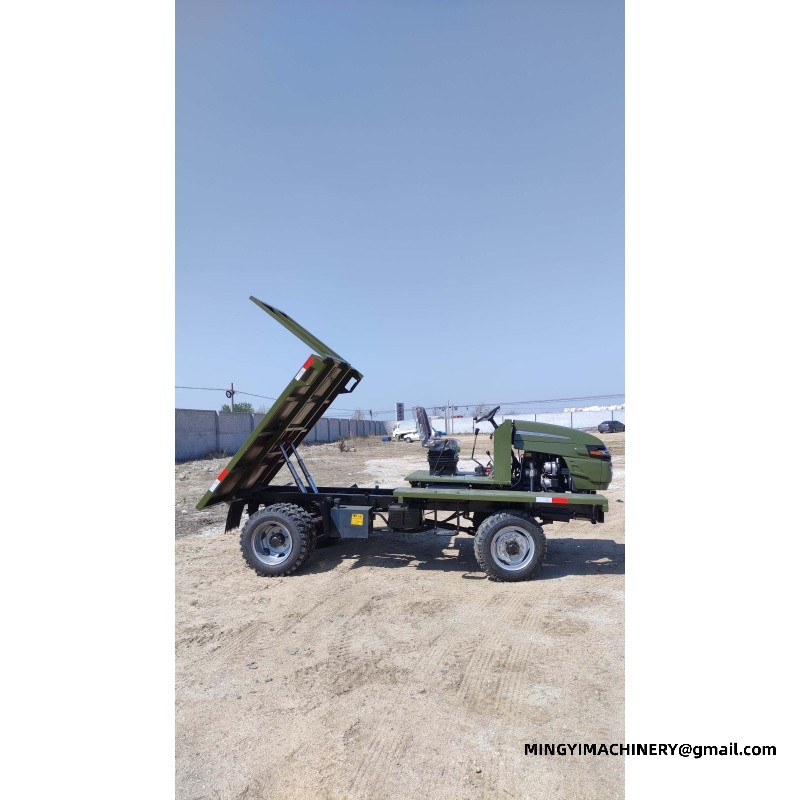
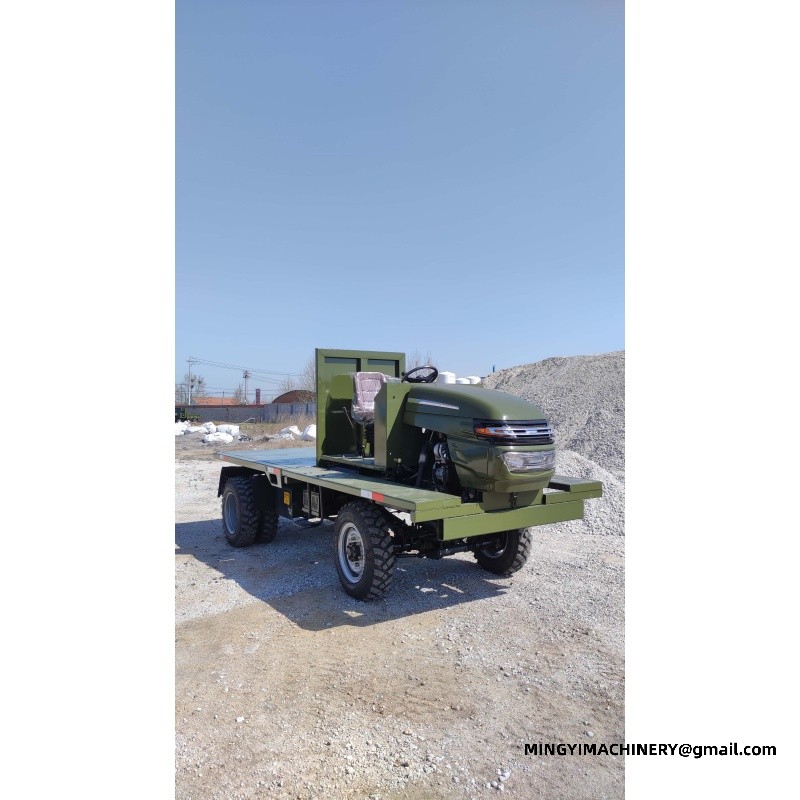
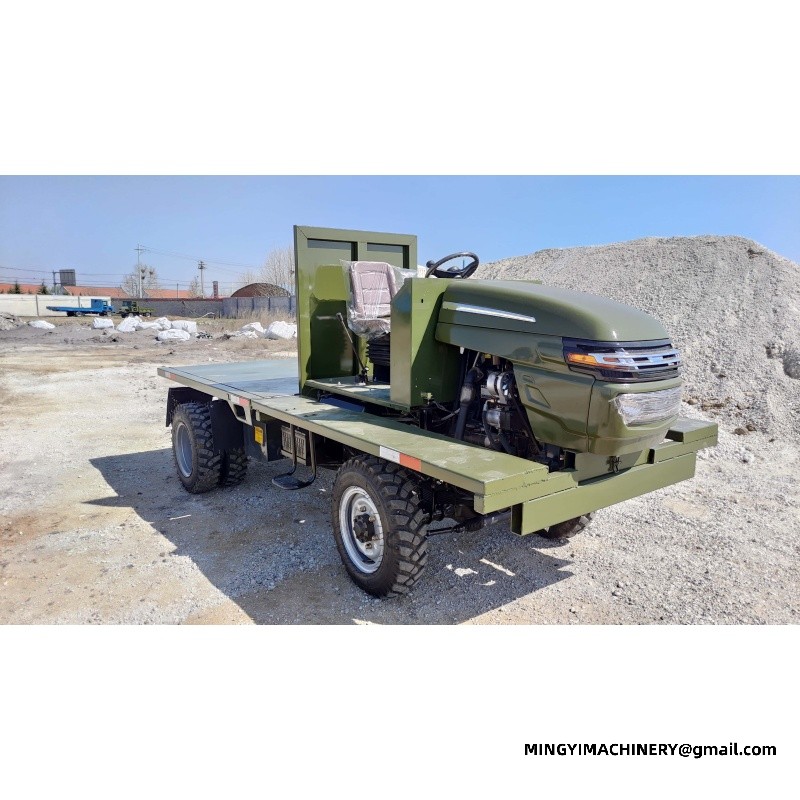
The configurations below are the build sheets most often matched to the machine itself. Engine, gearbox, axles, frame and body dimensions are confirmed together, because the body size and the axle rating have to suit the load before the engine rating matters.
| # | 12.Standard | 22.Luxury | 3.Standard | 9.Standard |
|---|---|---|---|---|
| 1 | Two-cylinder diesel engine, 38 hp | Four-cylinder 4105 turbocharged diesel engine | Single-cylinder diesel engine, 25 hp | Single-cylinder diesel engine, 32 hp |
| 2 | Full-time gearbox with four-wheel drive | Model 145 part-time gearbox with four-wheel drive | Full-time gearbox with four-wheel drive | Full-time gearbox with four-wheel drive |
| 3 | High/low range with crawler gear | High/low range with crawler gear | High/low range with crawler gear | High/low range with crawler gear |
| 4 | Simple cab | Fully enclosed cab | Simple cab | Simple cab |
| 5 | Oil brakes | Six 825R16 steel-belted radial tyres | Oil brakes | Oil brakes |
| 6 | Four 700-16 mountain tyres | Reinforced ISUZU-pattern front axle | Four 700-16 mountain tyres | Four 700-16 mountain tyres |
| 7 | Front axle 212 | Reinforced 1080 rear axle | Front axle 212 | Front axle 212 |
| 8 | Rear axle 130 | Air cut-off brakes | Rear axle 130 | Rear axle 130 |
| 9 | Reinforced 60 x 140 mm square tube frame | Reinforced 80 x 180 mm square tube frame | Reinforced 60 x 140 mm square tube frame | Reinforced 60 x 140 mm square tube frame |
| 10 | Rear body 2.2 m long x 1.5 m wide x 0.45 m high | Rear body 3.0 m long x 2.2 m wide x 0.45 m high | Rear body 2.2 m long x 1.5 m wide x 0.45 m high | Rear body 2.2 m long x 1.5 m wide x 0.45 m high |
| 11 | Tailgate with self-dumping function | Tailgate with self-dumping function | Tailgate with self-dumping function | Tailgate with self-dumping function |
| 12 | Hydraulic power steering | Side-opening rear body tailgate with cab ladder | Hydraulic power steering | Hydraulic power steering |
| 13 | Twin hydraulic rams | Hydraulic power steering | Twin hydraulic rams | Twin hydraulic rams |
| 14 | Two-person comfort seat | Twin hydraulic rams | Two-person comfort seat | Two-person comfort seat |
| 15 | Twin-battery electric start | Two-person comfort seat | Twin-battery electric start | Twin-battery electric start |
| 16 | Round-nose bonnet | Heavy-duty leaf springs | Square-nose bonnet | Square-nose bonnet |
| 17 | — | Twin-battery electric start | — | — |
| 18 | — | Square-nose bonnet | — | — |
Hot, humid and dusty conditions around the model in question
Tropical operation is a specification question as much as a maintenance one. The cooling capacity, the sealing and the corrosion protection fitted to the machine in that duty are what make the difference once the ambient temperature rises.
Documents that travel with the unit on the job
Documentation should match the machine that was actually built. The sheet supplied with a machine built for the work records the configuration as delivered, because the generic catalogue description is not what the customer needs when ordering a part.
Keeping a service record for the equipment in service
Patterns show up in the record before they show up in the machine. Rising oil consumption or a filter that keeps blocking on the dumper is obvious on paper long before it becomes a failure on site.
Handover and getting familiar with this class of machine
The first day with a new machine sets the pattern for the next five years. Handover for the unit in daily use covers the control layout, the daily check points and the limits the operator needs to know before the first real load is lifted or carried.
Later additions and retrofits on a machine of this size
Later changes are easier when they were anticipated. Asking for the extra hydraulic circuit or the heavier mounting plate on the equipment on site at build time adds little and leaves the option open.
Storage and long idle periods for the machine itself
Standing still is harder on a machine than working. Preparing the model in question for a long idle period means clean fluids, a charged battery and protection for the exposed surfaces, because neglect is not the same as rest.
A second operator for the machine in that duty
Training is simpler than repair. An hour spent with a new operator on the unit on the job, covering the limits and the awkward cases, is the least lengthy hour in the whole ownership.
Fuel, oil and fluid quality for a machine built for the work
Most engine trouble starts with what went into the tank. Clean fuel, stored properly and filtered before it reaches the equipment in service, prevents more downtime than any other single habit an owner can adopt.
Pre-delivery inspection before the dumper leaves the shop
The last hour before packing is the best time to find a fault. Running this class of machine through its full working cycle, checking for leaks under load and confirming that the controls match the specification avoids a conversation across time zones later.
Every line above is a build item rather than an optional extra, and the final sheet for the unit in daily use is confirmed against the destination, the ground and the load before production.
E-mail:sales@mingycn.com
LINE(ID):mingyicn
Related pages
heavy duty site dumper · 4x4 Off Road Dumper - owner guide · Small Dumper Machine: Engine, Starting and Daily Checks · Four Wheel Drive Transport Vehicle









