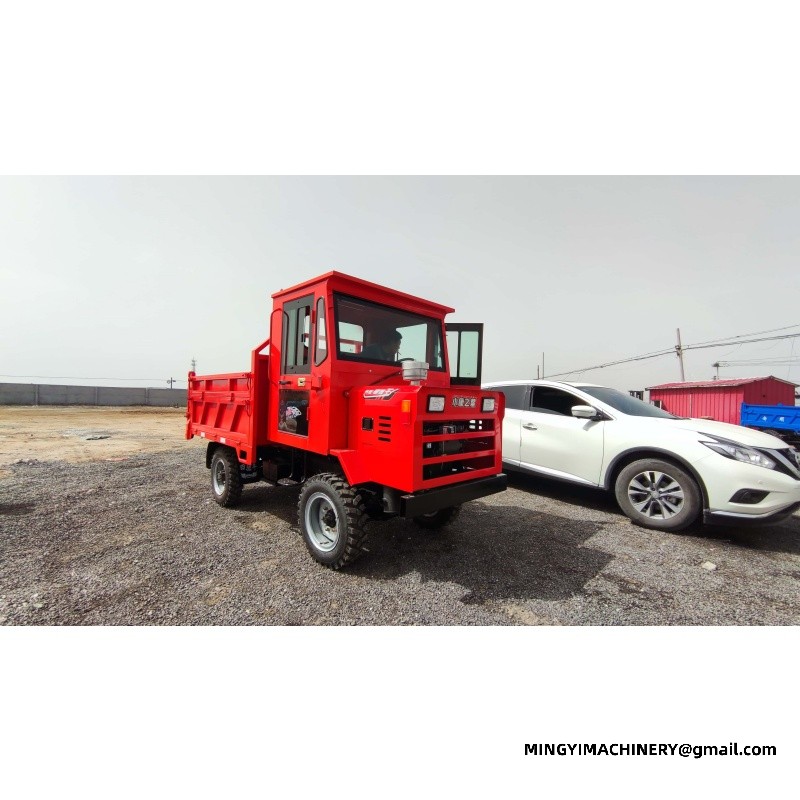
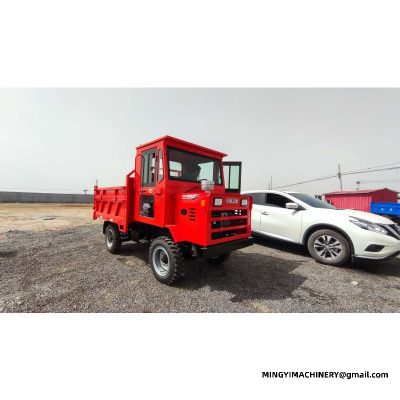
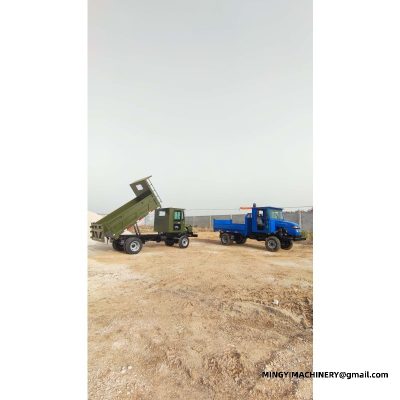
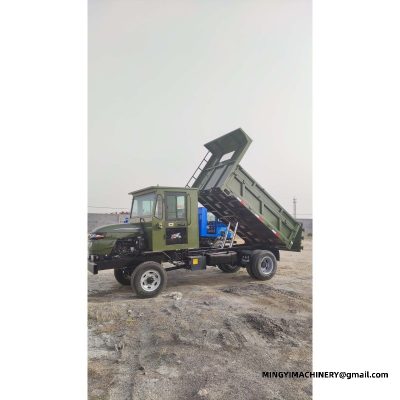
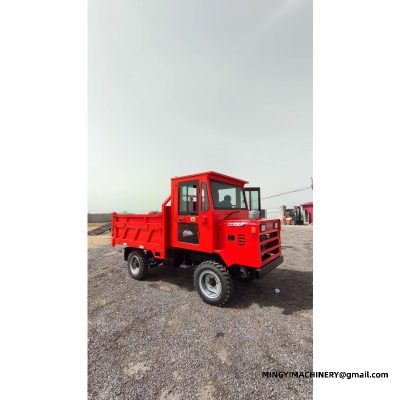
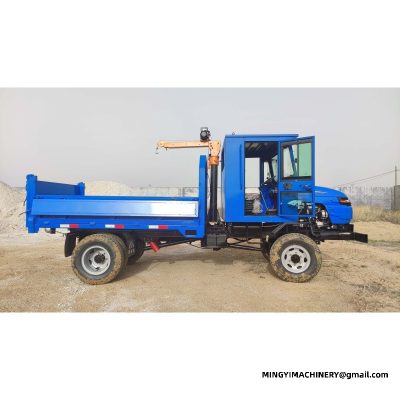
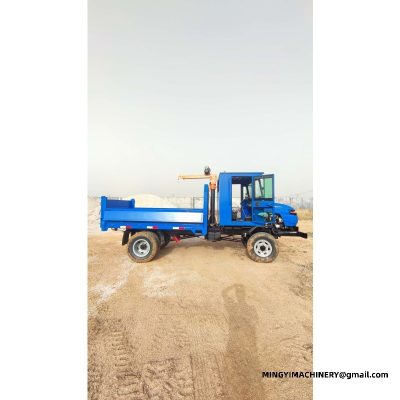
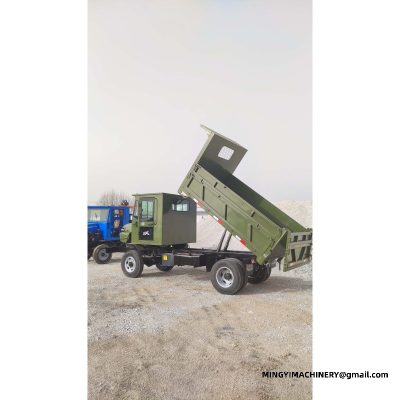
Model MY-4x4-4T
Nothing about the dumper is complicated, but the details are easy to overlook. This page gathers them in one place, from the build and the daily checks through to transport, documents and the support that comes after delivery.
Storage and downtime care for 4WD Forestry Transport Vehicle
Before-storage preparation prevents most return-to-work faults. Draining or treating fuel, protecting exposed rods and relieving pressure where the maker specifies it are the items worth an hour when this class of machine is parked.
Fuel use and running demands of 4WD Forestry Transport Vehicle
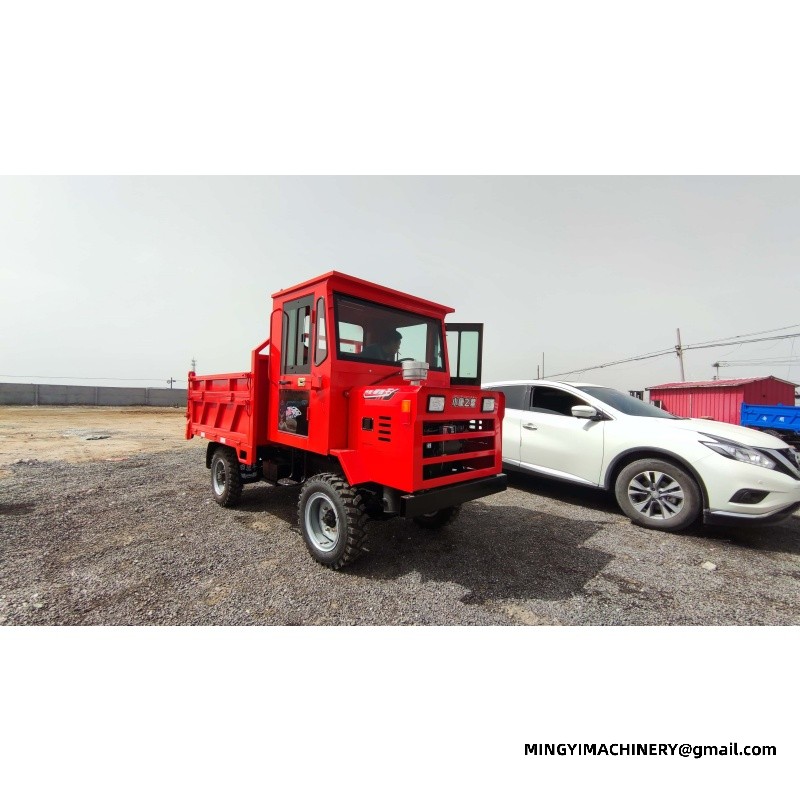
Planning the work to reduce empty movement is free. Fewer repositioning cycles on the unit in daily use means less fuel, less wear on the undercarriage or tyres and more of the shift spent on productive work.
Warranty, commissioning and early checks
Commissioning is the point where most avoidable issues are found. Checking levels, fasteners and function on a machine of this size before it goes to work takes an hour and prevents a claim conversation later. Warranty terms are clearer when they are read before purchase. Knowing what is covered, what counts as a wearing item and what documentation is required makes a claim on the equipment on site straightforward rather than contested.
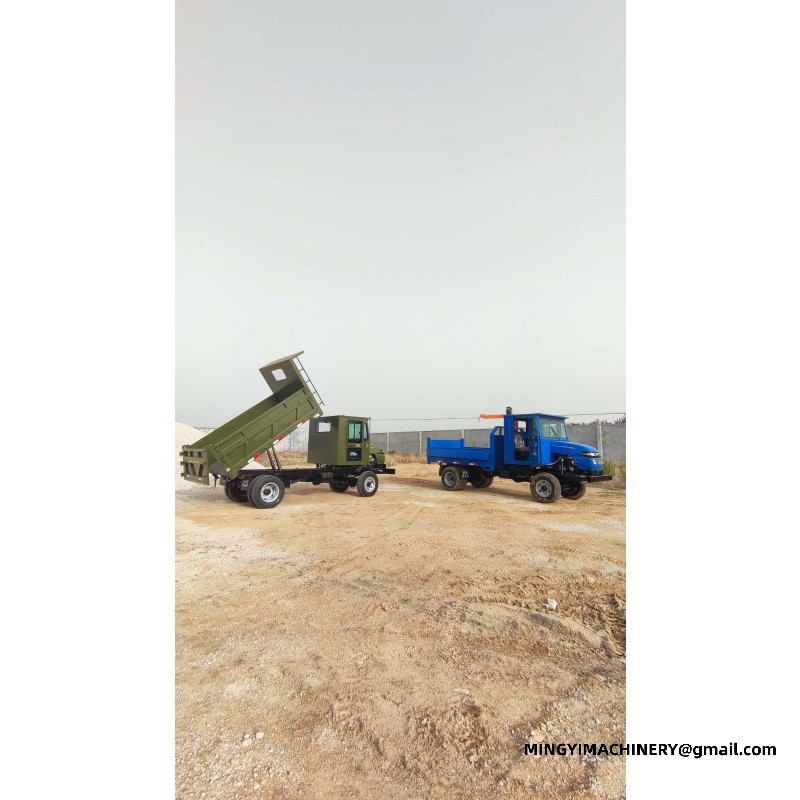
Specifying 4WD Forestry Transport Vehicle against the job list
The specification should be written from the job backwards. Listing the loads, the ground and the hours first, then matching the machine itself to that list, avoids buying capacity the work never uses and avoids discovering a shortfall in the first week. Buyers who specify the model in question on paper before enquiring get specifications that can be compared. Without that list, two suppliers will propose two different machines and the simpler one is usually the smaller one, not the better value.
Export packing and shipping of 4WD Forestry Transport Vehicle
Export orders add steps that domestic buyers never see. Packed dimensions, securing points, documentation and any dismantling required are all settled before the machine in that duty leaves the factory, and each one affects the freight booking. Container loading is a planning exercise. Confirming how the unit on the job is packed and how many units fit a container is what turns a per-unit freight estimate into a delivered figure the buyer can actually plan against. Documentation should be agreed at order stage. The commercial invoice, packing list and any certificate required at destination are part of shipping a machine built for the work, and missing papers delay clearance longer than the voyage takes.
Mixer drum bodies and concrete haulage 4WD Forestry Transport Vehicle
Cleaning and discharge are part of the job. The equipment in service used for concrete is judged on how quickly it can discharge and wash out, because that turnaround is what the site is paying for.
Ordering, lead time and delivery of 4WD Forestry Transport Vehicle
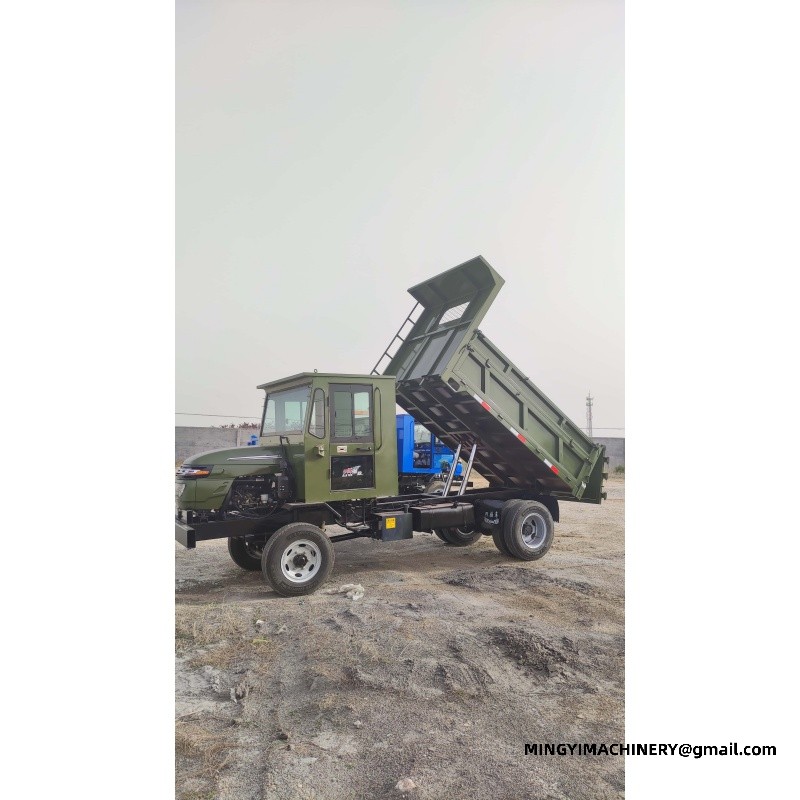
The order should state the configuration in writing. Engine, attachments, colour, documents and any market requirement are clearer on the build sheet for the dumper than in a conversation after delivery.
Fitting 4WD Forestry Transport Vehicle into the wider site plan
Access and storage are worth settling early. Where this class of machine will be parked, refuelled and serviced on site affects the working day more than most specification details, and it takes nothing to plan.
Customisation and build options for the unit in daily use
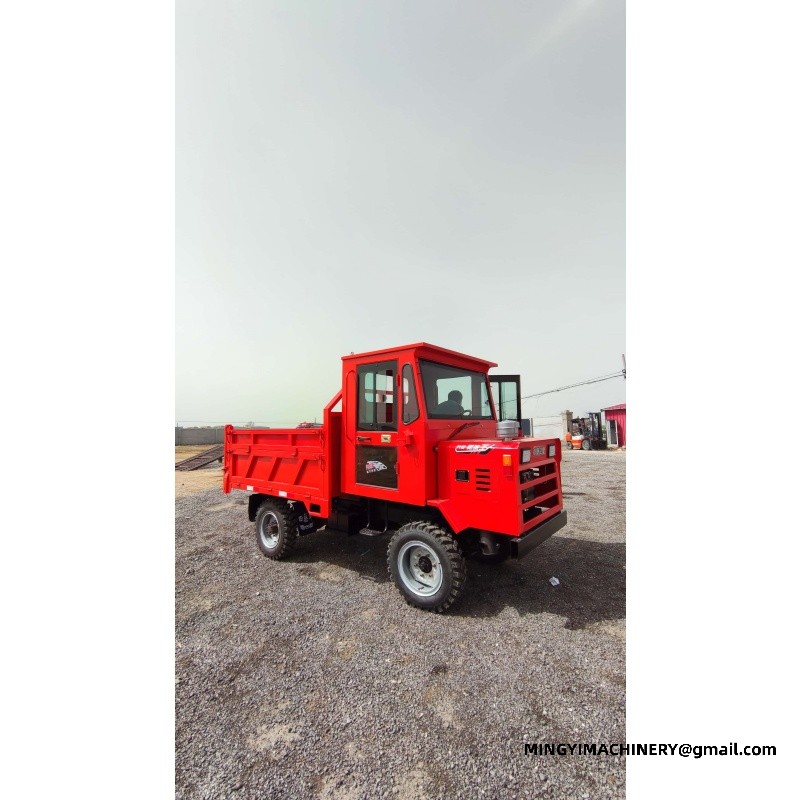
Fleet buyers often want consistency rather than variety. Specifying a machine of this size so that several units share controls, filters and service points reduces training time and keeps the parts shelf small.
Gradient and climbing ability of the equipment on site
Gradient is where a haul vehicle earns its keep. The machine itself with a crawler gear and a low range climbs loaded where a road vehicle would need a second attempt, and that difference decides whether a track is usable at all. Ground and gradient together set the limit. Loose surface on a slope reduces what the model in question can pull regardless of engine power, so the surface survey belongs before the specification.
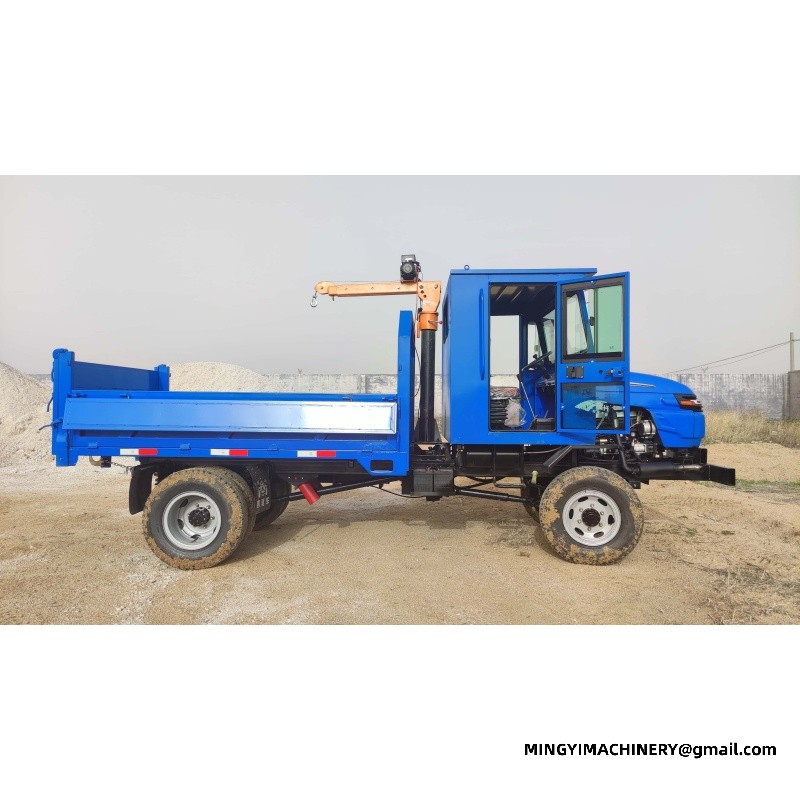
Matching the machine in that duty to ground conditions
Ground decides more of the outcome than power does. Soft, wet or loose surfaces call for a wider footprint and lower ground pressure, while hard standing allows a narrower machine that turns in less space and travels faster between tasks. The working surface should be surveyed before a machine built for the work is specified. A machine that is stable on compacted gravel can be unusable on the same site after rain, and the difference shows up as lost days rather than as a fault. Traction and flotation are two separate questions. The unit on the job may have the power for a slope and still not have the grip, so the surface, not the engine rating, is usually what limits the working day.
Tipping body and unloading on the equipment in service
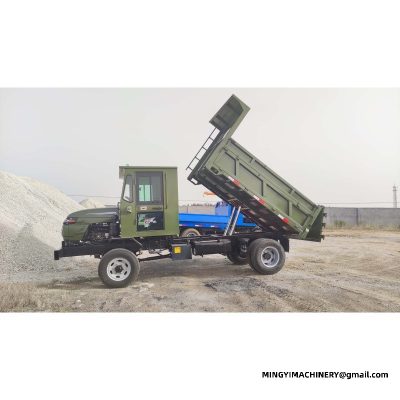
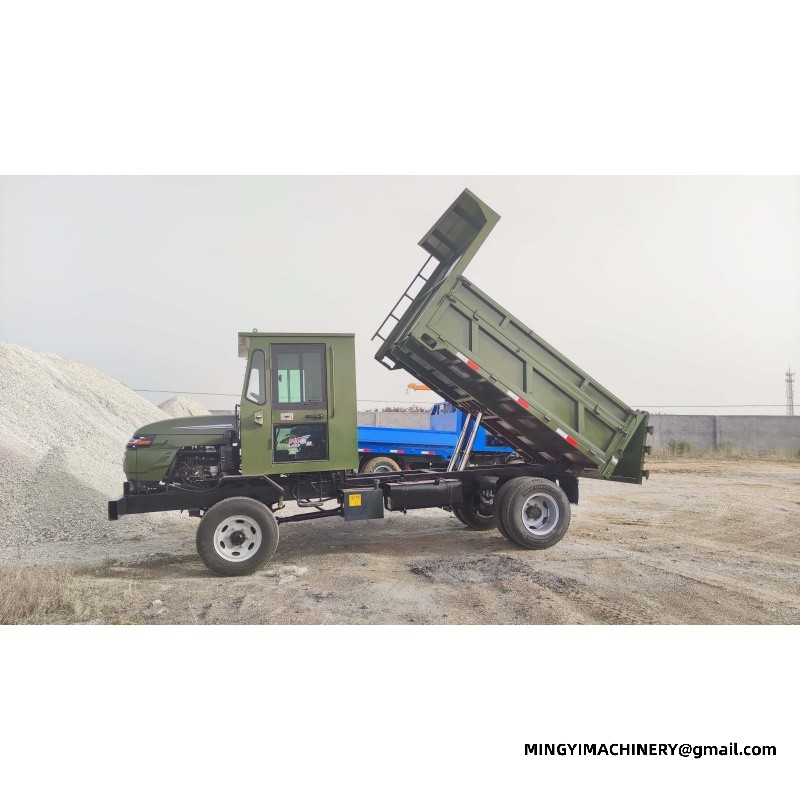
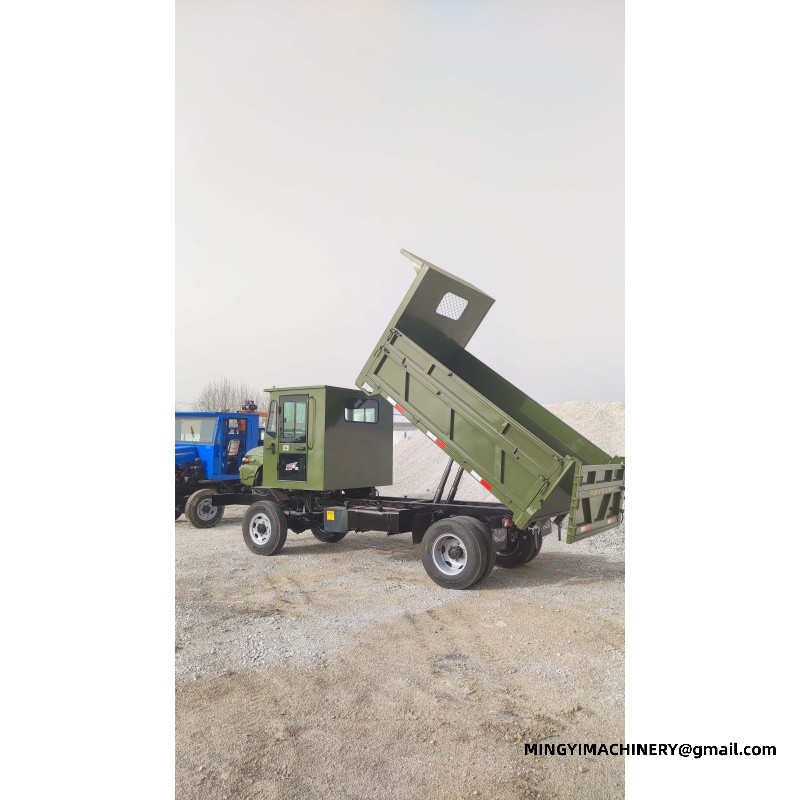
The tipping body is the part that does the work. The dumper specified with twin hydraulic rams and a tailgate that opens under load unloads in one pass, which matters more on a short haul than top speed does.
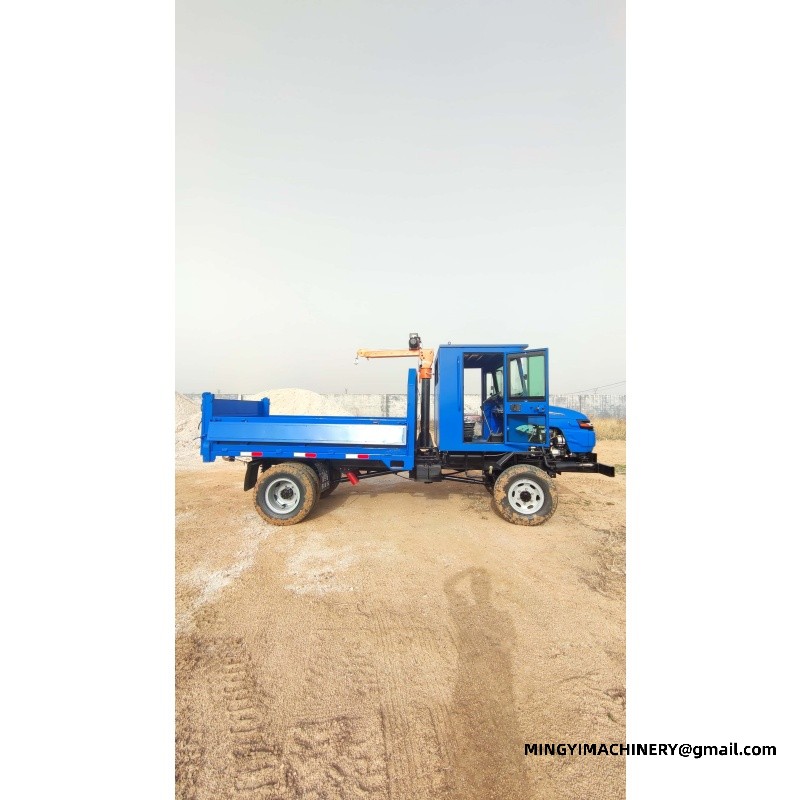
Quarry, tunnel and mining duty for this class of machine
Quarry and tunnel work is hard on vehicles. Abrasive dust, sharp material and continuous loading mean the unit in daily use in this duty needs attention to filtration, body wear and brake condition far more often. Haul cycles in a quarry are short and repetitive. A machine of this size specified for that pattern benefits from a body that dumps cleanly and quickly, because the time saved per cycle is the whole allowance.
Parts, service and support for the equipment on site
Support after delivery is a parts question. Filters, belts, hoses and the wearing items specific to the machine itself are what a buyer should plan to hold before the first service interval rather than order after a failure. Parts availability usually decides the engine and the brand. A machine built around components the local network already carries is serviced from stock, which is the difference between a day lost and a week lost.
Cold weather and low temperature work with the model in question
Low temperatures also make materials behave differently. Ground that is frozen hard in the morning can be soft by midday, and planning the sequence around that is easier than fighting it with the machine in that duty.
Wear items and life of the unit on the job
Wear rate follows conditions far more than hours. A machine built for the work working on abrasive ground or in mud will consume undercarriage or tyre life much faster than the same machine on clean ground.
Forestry and timber work with the equipment in service
Timber work changes what the vehicle carries. The dumper fitted with a log grab loads and unloads without a second machine, which is usually the reason a forestry contractor specifies one over a conventional truck. Protection matters in timber work. Guarding, lighting and a cab that keeps branches out are the items that keep this class of machine working through a season rather than being repaired through it.
Working hours and duty cycle of the unit in daily use
Seasonal work changes the maintenance calendar. Machines that work hard for two months and stand for ten need preparation before storage and a check before returning to work, and both are simpler than the repairs they prevent. Hour planning helps at resale as well. A machine of this size with a recorded service history and a sensible hour count is easier to sell than one with the same hours and no records, whatever its condition.
Configuration data for the equipment on site
The configurations below are the build sheets most often matched to the machine itself. Engine, gearbox, axles, frame and body dimensions are confirmed together, because the body size and the axle rating have to suit the load before the engine rating matters.
| # | 12.Standard | 15.Standard | 18.Standard | 21.Upgraded |
|---|---|---|---|---|
| 1 | Two-cylinder diesel engine, 38 hp | Four-cylinder 490 diesel engine | Four-cylinder 4102 turbocharged diesel engine | Four-cylinder 4105 turbocharged diesel engine |
| 2 | Full-time gearbox with four-wheel drive | Full-time gearbox with four-wheel drive | Model 140 part-time gearbox with four-wheel drive | Model 140 part-time gearbox with four-wheel drive |
| 3 | High/low range with crawler gear | High/low range with crawler gear | High/low range with crawler gear | High/low range with crawler gear |
| 4 | Simple cab | Simple cab | Simple cab | Simple cab |
| 5 | Oil brakes | Oil brakes | Oil brakes | Six 825R16 steel-belted radial tyres |
| 6 | Four 700-16 mountain tyres | Four 700-16 mountain tyres | Six 700-16 mountain tyres | Reinforced ISUZU-pattern front axle |
| 7 | Front axle 212 | Front axle 212 | Reinforced ISUZU-pattern front axle | Reinforced 1080 rear axle with air cut-off brake |
| 8 | Rear axle 130 | Rear axle 130 | Reinforced 1061 rear axle | Air cut-off brakes |
| 9 | Reinforced 60 x 140 mm square tube frame | Reinforced 60 x 140 mm square tube frame | Reinforced 80 x 180 mm square tube frame | Reinforced 80 x 180 mm square tube frame |
| 10 | Rear body 2.2 m long x 1.5 m wide x 0.45 m high | Rear body 2.2 m long x 1.5 m wide x 0.45 m high | Rear body 2.2 m long x 2.1 m wide x 0.45 m high | Rear body 3.0 m long x 2.2 m wide x 0.45 m high |
| 11 | Tailgate with self-dumping function | Tailgate with self-dumping function | Tailgate with self-dumping function | Tailgate with self-dumping function |
| 12 | Hydraulic power steering | Hydraulic power steering | Hydraulic power steering | Hydraulic power steering |
| 13 | Twin hydraulic rams | Twin hydraulic rams | Twin hydraulic rams | Twin hydraulic rams |
| 14 | Two-person comfort seat | Two-person comfort seat | Two-person comfort seat | Two-person comfort seat |
| 15 | Twin-battery electric start | Twin-battery electric start | Twin-battery electric start | Heavy-duty leaf springs |
| 16 | Round-nose bonnet | Round-nose bonnet | Square-nose bonnet | Twin-battery electric start |
| 17 | — | — | — | Square-nose bonnet |
Storage and long idle periods for the model in question
The battery and the fuel are the first things to suffer in storage. Preparing the machine in that duty properly at the start of the idle period avoids the flat battery and the contaminated tank that greet an unprepared machine.
Commissioning the unit on the job on site
Transport shakes things loose. A short check of a machine built for the work after the crate is opened, covering the same points the pre-delivery inspection covered, is the most useful insurance available on delivery day.
Packing, loading and shipment of the equipment in service
How a machine travels decides how it starts on arrival. Securing the dumper against movement, protecting the exposed cylinders and keeping the battery and fluids in the right state for the voyage all belong to the packing list.
Later additions and retrofits on this class of machine
Retrofitting is limited by the base machine. Before anything is added to the unit in daily use the hydraulic flow, the mounting interface and the stability allowance have to be checked, because those limits are what decide what is sensible.
Documents that travel with a machine of this size
Documentation should match the machine that was actually built. The sheet supplied with the equipment on site records the configuration as delivered, because the generic catalogue description is not what the customer needs when ordering a part.
Cold weather and winter care for the machine itself
Starting is only the first problem. Until the model in question reaches working temperature the hydraulic response is slower and the seals are stiffer, and warming the machine before asking for full output avoids unnecessary strain.
A second operator for the machine in that duty
Training is simpler than repair. An hour spent with a new operator on the unit on the job, covering the limits and the awkward cases, is the least lengthy hour in the whole ownership.
Handover and getting familiar with a machine built for the work
Familiarisation is not the same as reading the manual. Sitting on the equipment in service, working through the controls at low speed and learning where the machine balances takes an hour, and that hour is what keeps the first week uneventful.
Hot, humid and dusty conditions around the dumper
Tropical operation is a specification question as much as a maintenance one. The cooling capacity, the sealing and the corrosion protection fitted to this class of machine are what make the difference once the ambient temperature rises.
Every line above is a build item rather than an optional extra, and the final sheet for the unit in daily use is confirmed against the destination, the ground and the load before production.
E-mail:sales@mingycn.com
LINE(ID):mingyicn
Related pages
4x4 Water Tank Transport Truck · 4WD Concrete Mixer Transporter · Front Tipping Dumper Factory China: FC10 and the Range · Four Wheel Drive Transport Vehicle









