4-in-1 Bucket
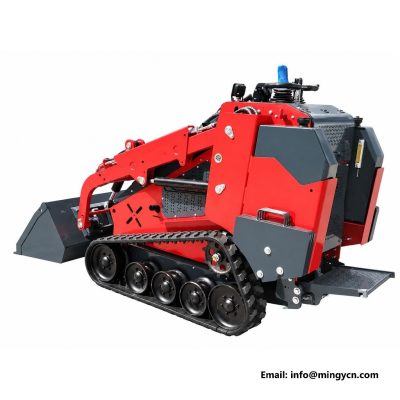
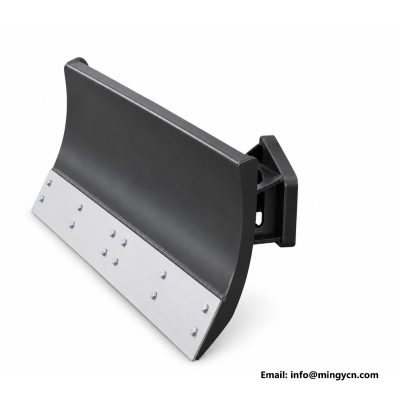
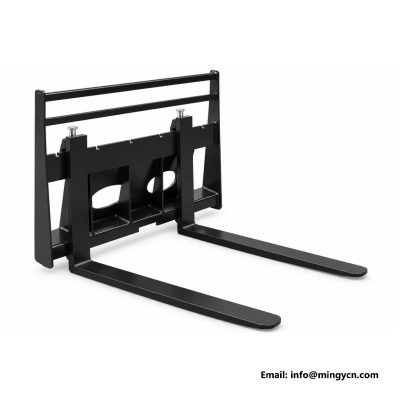
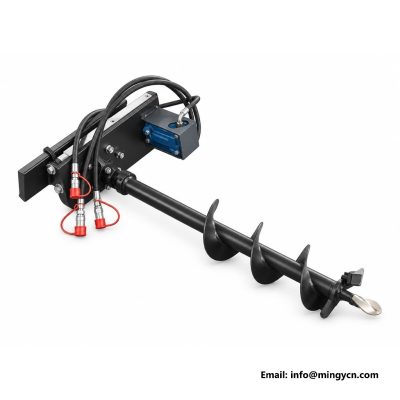
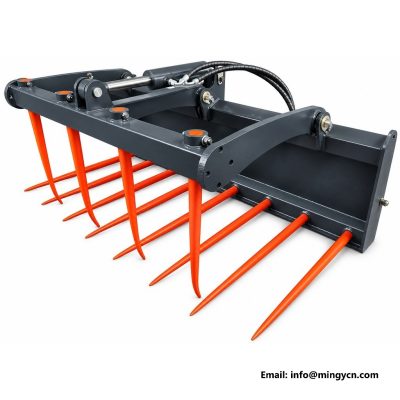
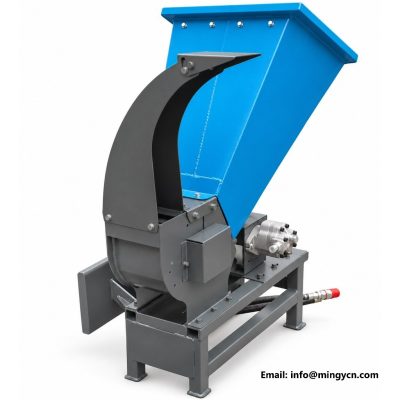
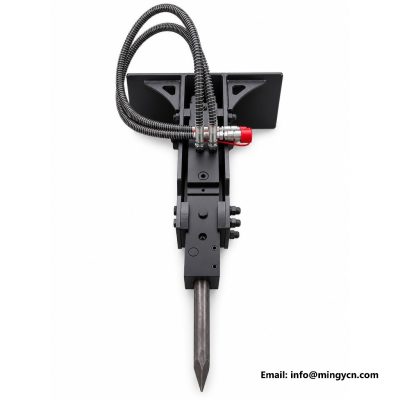
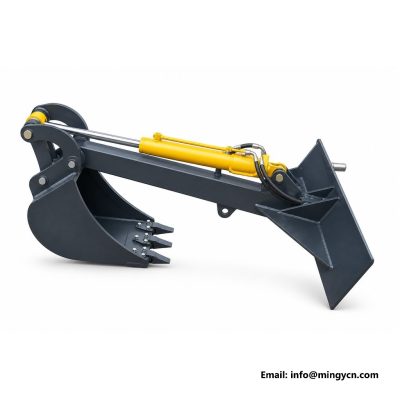
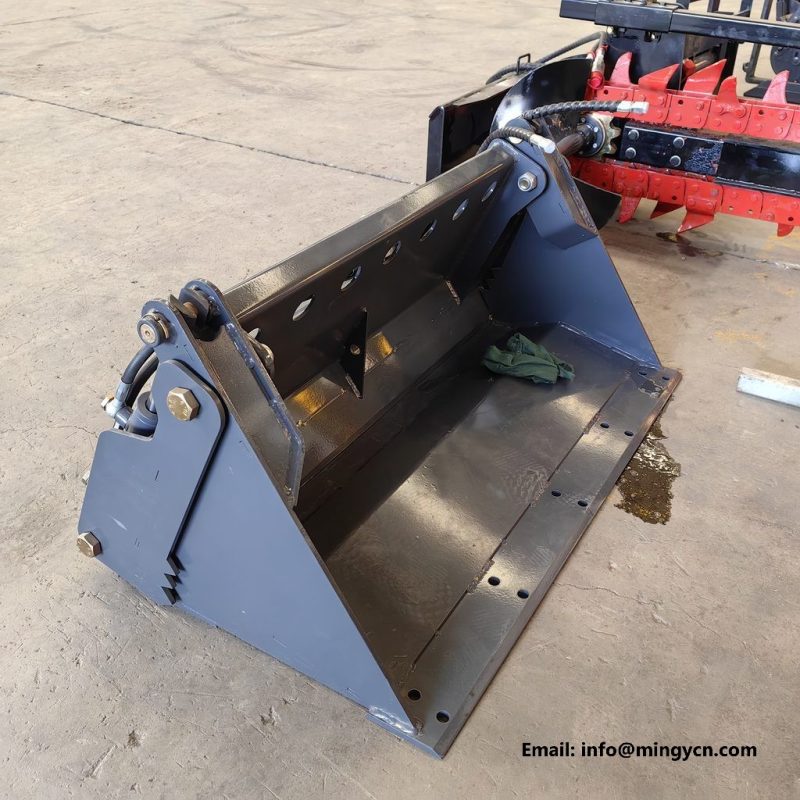
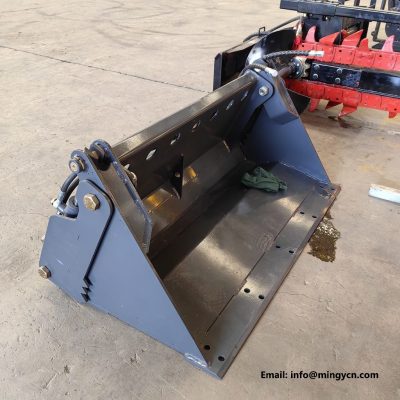
The frames on this page show the attachment as it is built and used, not a styled render. That matters when the tool has to be matched to a machine that is already on work area.
The hinge pins, the clamping cylinders and the bolt-on cutting edges take nearly all the load. Site stripping, backfilling around footings, loading loose aggregate and grabbing broken pallets all suit the same tool.
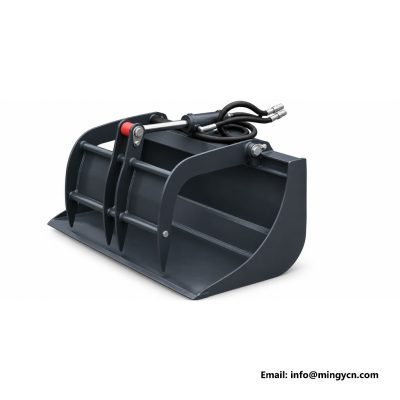
A four-in-one bucket carries four active modes in one welded shell: loading, dozing, grading and clamping. Cylinder guards keep flexible lines out of the pile.
All three need to suit the loader and the job; a specification that only states width leaves the two harder questions unanswered. Then the load chart is read with the tool mass included; a widely used rule of thumb keeps the in-service load at about 50 percent of tipping load once the tool is fitted.
The works sheet lists hydraulic circuit as standard auxiliary, double-acting for this particular implement.
Two halves hinge at the rear, so the person at the controls can open the jaw to grab a pile, close it to carry, or set the floor flat and push substance with the leading edge. Cylinder guards keep hoses out of the pile.
Weight is the other half of the calculation: the further the mass sits ahead of the arms, the smaller the safe load, which is why industry practice keeps the combined tool and load near half of the loader's rated tipping assessing. Wedge engagement, mount flatness and the condition of the lower lip decide whether the tool stays attached under a shock load.
Site stripping, backfilling around footings, loading loose aggregate and grabbing broken pallets all suit the same tool. Cutting edges are reversible, and they are changed before the attrition reaches the parent plate, because a worn floor changes the grading angle.
The universal quick-attach interface is the second review. Attachment mass also matters: a common industry rule keeps the tool plus its load within roughly half of the loader's tipping load, because mass carried far ahead of the arms reduces poise long before the hydraulic limit is reached.
Inspectors compare the shipped unit with the mounting figure of universal quick-attach plate.
Cutting edges are reversible, and they are changed before the wear reaches the parent plate, because a worn floor changes the grading angle. Grease the hinge hinge pins each day and review that both jaws close evenly; one lazy cylinder means the shell is twisting.
Bolted edges, clamped teeth and greaseable bushes are specified for that reason, and the parts list is supplied with the piece of equipment so that a local workshop can identify each item without a photograph. Is the service output within the tool's stated range?
Site stripping, backfilling around footings, loading loose aggregate and grabbing broken pallets all suit the same tool. A four-in-one bucket carries four operating modes in one welded shell: loading, dozing, grading and clamping.
No adjustment, clearing or greasing is attempted with the delivery pressurised, and hose runs are relieved before a coupler is disconnected. Before any hose is connected, the base unit's rated auxiliary output is read from the specification bracket and compared with the tool's requirement.
The works sheet lists working modes as load, doze, grade, clamp for this particular implement.
Cylinder guards keep hose runs out of the pile. Cylinder guards keep flexible lines out of the pile.
The spatial arrangement that matters most is the reach from the mounting plate to the point where the substance is contacted. A maintainable attachment is one where the wearing surfaces can be changed with standard tools.
A rigid rear frame carries the quick-attach interface, while the two moving jaws are plated thicker at the corners where a grabbed load first bears. Grease the hinge hinge pins each day and review that both jaws close evenly; one lazy cylinder means the shell is twisting.
Where a hydraulic motor needs a case-drain line, a third line has to exist, because a blocked drain can destroy a motor within hours. Any one of those four can rule out a tool that otherwise looks correct.
actuation: twin hydraulic clamping cylinders. That line travels with the inspection record.
On a tight pad the machine can spread a windrow with the jaw slightly open, then close and carry the remainder without changing attachments. On a tight pad the piece of equipment can spread a windrow with the jaw slightly open, then close and carry the remainder without changing attachments.
The universal quick-attach interface is the second verify. Different sites punish attachments in different ways.
On a tight pad the machine can spread a windrow with the jaw slightly open, then close and carry the remainder without changing attachments. A rigid rear frame carries the quick-attach mount, while the two moving jaws are plated thicker at the corners where a grabbed load first bears.
Flat-face couplers are wiped before connection, and a tool is set on level site before anyone walks in front of it. Loads stay low during travel, the implement is kept close to the piece of equipment, and turns are made gently on slopes.
The works sheet lists cutting edge as bolt-on, reversible for this particular implement.
A rigid rear frame carries the quick-attach interface, while the two moving jaws are plated thicker at the corners where a grabbed load first bears. A rigid rear frame carries the quick-attach plate, while the two moving jaws are plated thicker at the corners where a grabbed load first bears.
Matching a tool to a loader begins with the data bracket, not with a photograph. Any one of those four can rule out a tool that otherwise looks correct.
Build and interface items are set out row by row below. Where a range appears it describes published compact loader practice rather than a promise about one piece of equipment, and the loader specification plate is read first. All of the rows refer to the 4-in-1 Bucket shown above.
| Specification item | Build / interface detail |
|---|---|
| Working modes | Load, doze, grade, clamp |
| Actuation | Twin hydraulic clamping cylinders |
| Cutting edge | Bolt-on, reversible |
| Hinge | Greaseable pins with replaceable bushes |
| Hydraulic circuit | Standard auxiliary, double-acting |
| Mounting | Universal quick-attach plate |
The recorded value of hinge is greaseable pins with replaceable bushes, taken from the assembled tool.
No. The clamping circuit uses the standard double-acting auxiliary service. On a tight pad the machine can spread a windrow with the jaw slightly open, then close and carry the remainder without changing attachments.
Yes, with the jaws opened flat and the arms held level, the floor plate acts as a grading edge. The hinge pins, the clamping cylinders and the bolt-on cutting edges take nearly all the load.
The rated operating capacity of the carrier and the position of the load ahead of the arms. Cylinder guards keep hoses out of the pile.
Each working day in dusty or wet conditions. The hinge pins, the clamping cylinders and the bolt-on cutting edges take nearly all the load.
The sections above are the checks a factory expects a buyer to make at handover. Photographs of the actual build, the pin positions and the hose routing are supplied with the piece of equipment so that the tool arriving on operation area matches the tool described here.
E-mail: sales@mingycn.com | LINE: mingyicn
Include the machine model, its hydraulic rating and a note on the material handled. Confirmation covers the mounting plate, hydraulic demand and build images for that tool, with workshop answers to any technical point.