Land Leveler
This is an operating description rather than a catalogue summary. The aim is to let a reader decide whether the tool belongs on their machine before any further conversation.
It finishes a pad to a consistent plane rather than digging, which is why it follows a bucket rather than replacing it. It finishes a pad to a consistent plane rather than digging, which is why it follows a bucket rather than replacing it.
Frame welds at the quick-attach tower are checked after operation in rocky fill, and the height skids are reset whenever the piece of equipment is moved to a different piece of equipment. Building pads, arena surfaces, driveway bases and seedbed preparation are the normal jobs.
Pins and bushes are greased on an each day cycle in dusty conditions, cutting edges are reversed before the parent bracket is exposed, and hydraulic lines are inspected where they flex across a pivot. A wider tool is not automatically a better tool on a narrow job area.
hydraulic circuit: none required, passive tool. That line travels with the inspection record.
It finishes a pad to a consistent plane rather than digging, which is why it follows a bucket rather than replacing it. Length is the useful feature: a longer frame bridges small hollows that a short edge simply follows.
Width is then checked against gate openings, transport limits and the machine's own track. A wider tool is not automatically a better tool on a narrow job area.
Length is the useful feature: a longer frame bridges small hollows that a short edge simply follows. It finishes a pad to a consistent plane rather than digging, which is why it follows a bucket rather than replacing it.
The universal quick-attach interface is the second review. The quick coupler accepts a baseline mount, but the locking wedges must seat fully and the mount must not be bent from a previous impact.
Inspectors compare the shipped unit with the mounting figure of universal quick-attach plate.
The first pass is made in one direction with the scarifier down, the second at right angles with it raised, and the final pass is a light skim with the frame level. Length is the useful feature: a longer frame bridges small hollows that a short edge simply follows.
The operator's routine is simple and repetitive: check the joint pins, check the flexible lines, keep the load low, and never stand between the base unit and a suspended tool. Before any hose is connected, the loader's rated service output is read from the specification interface and compared with the tool's requirement.
Building pads, arena surfaces, driveway bases and seedbed preparation are the normal jobs. It finishes a pad to a consistent plane rather than digging, which is why it follows a bucket rather than replacing it.
That distance multiplies every kilogram of load, so a compact construction with the mass held close to the bracket often outperforms a heavier tool with a longer reach. The engine is stopped, pressure is released, the tool is parked level and the locking wedges are visibly seated before the driver leaves the cab.
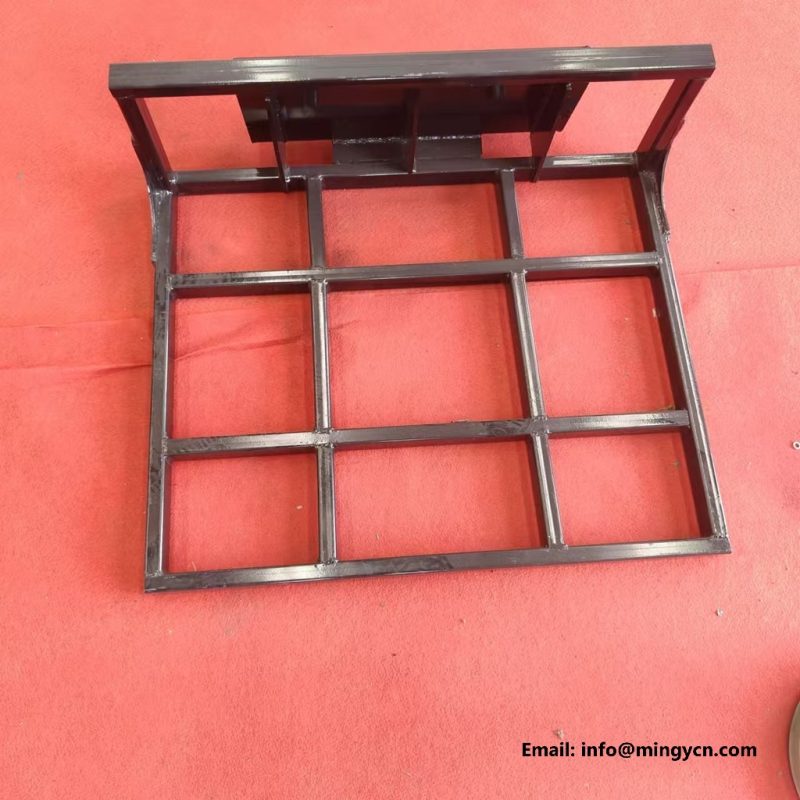
frame appears in the build record as open rectangular box-section lattice, which a buyer can verify on arrival.
Building pads, arena surfaces, driveway bases and seedbed preparation are the normal jobs. The first pass is made in one direction with the scarifier down, the second at right angles with it raised, and the final pass is a light skim with the frame level.
Width is then checked against gate openings, transport limits and the piece of equipment's own track. Flow sets the speed of a rotating tool, pressure sets the force available when that tool meets resistance, and the two cross at the point where the task actually happens.
Building pads, arena surfaces, driveway bases and seedbed preparation are the normal jobs. Keep the leading blade sharp on both edges and flip it when one side rounds through.
Service timing follow the attrition pattern. Is the tool output within the tool's stated range?
The factory build sheet records leading edge as reversible bolt-on blade.
It finishes a pad to a consistent plane rather than digging, which is why it follows a bucket rather than replacing it. It finishes a pad to a consistent plane rather than digging, which is why it follows a bucket rather than replacing it.
That distance multiplies every kilogram of load, so a compact fabrication with the mass held close to the bracket often outperforms a heavier tool with a longer reach. The quick coupler accepts a typical plate, but the locking wedges must seat fully and the plate must not be bent from a previous impact.
A land leveler is a long open frame with a leading cutting bar and a trailing grid that planes high spots and carries the spoil into low ones. It finishes a pad to a consistent plane rather than digging, which is why it follows a bucket rather than replacing it.
Does the combined mass stay inside the load chart with the arms raised? Wedge engagement, plate flatness and the condition of the lower lip decide whether the tool stays attached under a shock load.
Inspectors compare the shipped unit with the rear figure of adjustable scarifier teeth.
The frame is a rectangular lattice of box section, with a replaceable front blade, adjustable rear scarifier teeth and a flat skid or roller that sets the operating height. The first pass is made in one direction with the scarifier down, the second at right angles with it raised, and the final pass is a light skim with the frame level.
The spatial arrangement that matters most is the reach from the mounting mount to the point where the matter is contacted. The field image here is the starting point.
The table below lists the fabrication and interface items that are confirmed with the machine. Figures shown as ranges are industry reference values for compact loaders rather than claims about a particular carrier; the carrier data plate always takes precedence. All of the rows refer to the Land Leveler shown above.
| Parameter | Value on the finished tool |
|---|---|
| Frame | Open rectangular box-section lattice |
| Leading edge | Reversible bolt-on blade |
| Rear | Adjustable scarifier teeth |
| Height control | Skids or roller |
| Hydraulic circuit | None required, passive tool |
| Mounting | Universal quick-attach plate |
Before dispatch, the height control entry is confirmed as skids or roller.
No. It is a passive grading frame. The first pass is made in one direction with the scarifier down, the second at right angles with it raised, and the final pass is a light skim with the frame level.
It removes the ridges left by the first direction and reveals the true plane. A land leveler is a long open frame with a leading cutting bar and a trailing grid that planes high spots and carries the spoil into low ones.
Only after scarifying; compacted fill belongs to a ripper first. It finishes a pad to a consistent plane rather than digging, which is why it follows a bucket rather than replacing it.
Frame length, blade sharpness and keeping the carrier arms level. The frame is a rectangular lattice of box section, with a replaceable front blade, adjustable rear scarifier teeth and a flat skid or roller that sets the working height.
What a buyer receives is an operating implement plus the record of how it was put together. Both are useful when the tool is later serviced by a local workshop.
E-mail: sales@mingycn.com | LINE: mingyicn
State the host machine, the auxiliary rating and the material, and the factory can reply in detail. The reply confirms the coupler geometry, circuit requirement and build photographs, and technical questions go straight to the workshop.