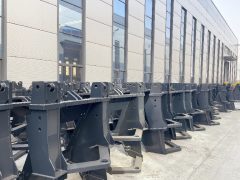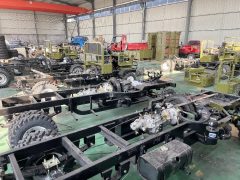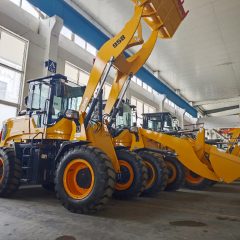
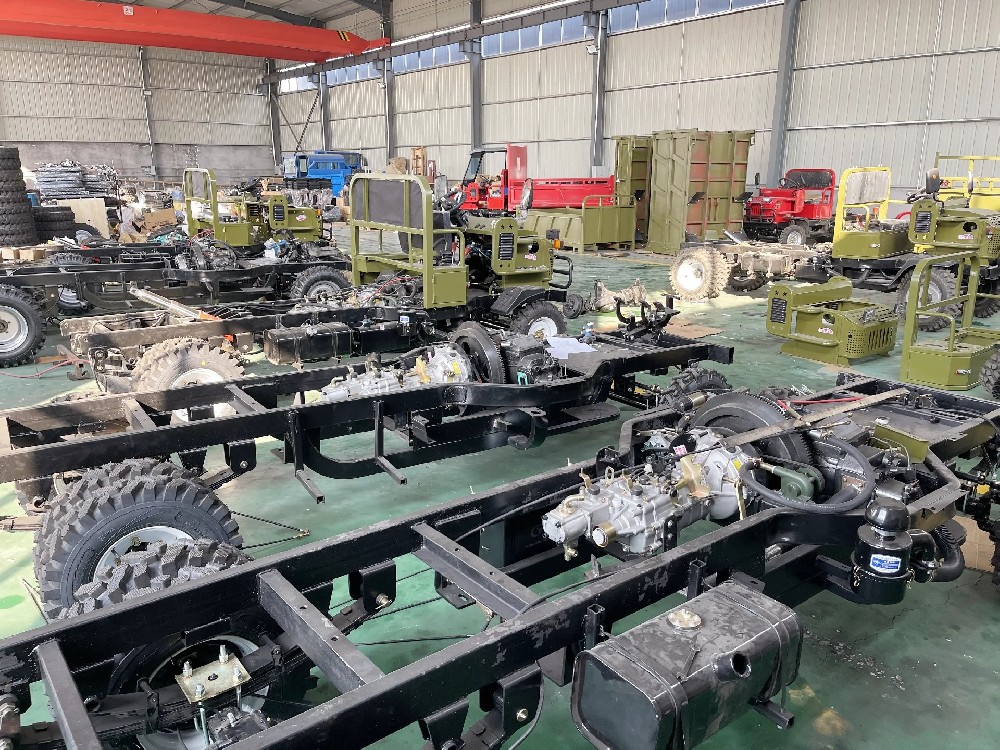
A machine that arrives on time and works on the first day is the result of a sequence that was planned from the shipping date backwards. Production, inspection, testing, packing and paperwork all have to fit inside that sequence.
This page describes how export orders move through the Mingyi Machinery workshop: what is checked on the way in, what is tested before release, how machines are packed for a long voyage, and what a dealer receives at handover.
It is written for dealers and contractors who want to know how the machine was built and what will come with it, before they commit to an order.
Production planning for export orders
An export order is a sequence with a fixed end date. Planning starts backwards from the shipping date, and every stage has to fit inside the time available.
Configuration is the first item settled, because it decides the parts that must be bought in. Once the specification is frozen, the bill of materials can be reserved and the assembly slot allocated.
Orders moving together are grouped where it helps consistency, since a run of similar machines produces a more even result than the same number built in scattered batches.
The plan is shared with the customer in writing, including the points where a decision from their side is needed. Most schedule slips trace back to a choice that was waiting on someone.
Incoming inspection of bought-in components
The quality of a finished machine is bounded by the quality of what goes into it. Bought-in components are checked against the order before they reach the line.
Dimensions, part numbers and condition are verified, and anything that does not match is set aside rather than fitted and dealt with later.
Hydraulic components receive particular attention, since a contamination or a sealing problem introduced at this stage is difficult to trace once the machine is assembled.
Records from incoming inspection are kept against the machine, which makes it possible to answer a later question about where a component came from.
Assembly sequence and in-process checks
Assembly follows a fixed sequence with checks at the points where a mistake would be difficult to find later. Torque figures, hose routing and the alignment of the attachment are confirmed as the machine is built.
Routing is checked against the arrangement agreed for the market, so that a machine built for a hot climate does not leave with the harness path intended for a temperate one.
Fluids are filled by quantity and then confirmed by level, and every fill is recorded so the commissioning team is not guessing at handover.
Any rework is logged and closed before the machine moves on. A unit that passes with an open item tends to deliver that item to the customer instead.
Final performance testing before release
Every machine runs before it is released. The test covers the functions the operator will use on the first day: travel, slew, boom and arm movement, and the attachment circuit.
Pressures, cycle times and the behaviour of the controls are checked against the values recorded for that model, and leaks are dealt with on the spot rather than noted for later.
The machine is run long enough to reach working temperature, because faults that only appear when the oil is hot are exactly the ones worth finding in the workshop.
The test record stays with the machine. If a question comes up after delivery, the condition at release is already known.
Paint, corrosion protection and finishing
Finish is protection as much as appearance, particularly for machines that travel by sea and then work in a coastal yard.
Surface preparation before painting decides how the coating behaves over time, and it is the stage where shortcuts show up a season later as rust under the paint.
Areas exposed to impact are treated to resist chipping, and the underside and the places where water can collect receive attention in their own right.
Decals, nameplates and the agreed brand elements are applied last, checked against the order, and photographed before packing.
Packing, container loading and securing
Most damage in export happens in transit rather than in the factory. Packing is therefore treated as part of the build.
The machine is secured against movement in all directions, contact points are protected, and anything that can be removed is packed separately and labelled.
Container loading is planned with weight distribution and the unloading arrangement at the destination in mind, since a load that cannot be taken out easily is a problem on arrival.
Photographs of the loaded container are kept with the order record, which settles questions about condition and quantity without a long correspondence.
Export documents and shipping paperwork
Documents are prepared alongside the machine, not after it. Packing list, commercial paperwork, certificates required by the destination and the shipping instructions move together.
Serial numbers on the documents match the numbers on the machines, which is the detail that most often delays a customs clearance when it is wrong.
The customer receives the document set before the vessel sails, so their own arrangements at the destination can be made in time.
Where a market requires a specific form or a specific wording, that is confirmed at the ordering stage rather than discovered at the port.
Spare parts and tools shipped with the machine
A machine arrives with the wear parts and the tools needed for its first service, so the dealer is not waiting on a shipment before the first interval falls due.
The list is built around the configuration: filters, seals and the items that belong to the attachment set fitted to that particular machine.
Tools supplied with the unit are the ones the daily checks and the first service actually need, rather than a generic kit that fits nothing on the machine.
The parts list is also the starting point for the stocking recommendation, which is discussed while the machine is still being built.
Handover: what the dealer receives
Handover is the point where the machine, the documents and the training come together. A unit delivered without one of those is not really finished.
The dealer receives the machine tested and photographed, the document set, the parts and tools, and the contact route for technical questions.
Where a technician training session or a remote commissioning call was agreed, it is scheduled to match the arrival rather than offered later.
A short follow-up after the machine starts work catches the questions that only appear once it is doing the job, which is the most useful moment to answer them.
Keeping output steady through busy periods
Demand is not even across the year, and the way a workshop handles the busy months decides whether quality holds.
Components with long lead times are planned ahead against expected orders, so a sudden increase in demand does not turn into a shortage on the line.
The assembly sequence and the in-process checks stay the same when volume rises. Those checks are the reason a machine built in a busy month matches one built in a quiet one.
Where a schedule has to move, the customer is told early with a revised date. A late surprise uses up more goodwill than an early revision.
Traceability of components and batches
Every machine leaves with a record of what went into it. Component batches, the inspection results and the test figures are kept against the serial number.
That record is what makes a later question answerable. If a part from a particular batch proves troublesome, the machines affected can be identified rather than guessed at.
It also helps the dealer. A parts order raised against a serial number is matched to the machine being repaired, not to a general description of the model.
Records are kept simple on purpose. A system that is too elaborate to maintain during a busy month will not be maintained when it matters.
Custom and OEM builds on the same line
A build-to-order machine and a standard model follow the same sequence and the same checks. The difference is the configuration, not the standard of work.
Custom items are identified clearly at the line so that a machine with a non-standard arrangement does not receive the parts intended for the standard one.
The inspection and test stages are the same, which is what allows a machine built to a particular specification to be released with the same confidence as any other.
Documentation for a custom build is prepared alongside the machine, since the standard manual will not describe the arrangement that was actually fitted.
Preparing the machine for a long voyage
A machine travelling by sea meets salt air, condensation and a great deal of movement. Preparation for that journey is part of the build rather than an extra step at the end.
Exposed surfaces are protected, openings are sealed, and the battery and fluids are prepared for the time the machine will stand.
Anything that can be loosened by vibration is checked and secured before the container is closed, because a fitting lost at sea is a fitting found missing on arrival.
The destination climate is considered too. A machine going from a cold workshop to a humid port needs protection against condensation inside the packing.
What the dealer can do before the machine arrives
Good preparation on the receiving side saves more time than anything done at the factory. The dealer who knows what is coming can plan the unloading, the checks and the first service.
The document set is sent in advance so that insurance, registration and any local inspection can be arranged before the container reaches the yard.
The parts stocking list and the tools supplied with the machine are worth checking early, so nothing is missing when the first service interval falls due.
Where training was agreed, scheduling it to match the arrival means the technicians learn on the machine while it is new rather than after it has already been worked.
Test records and what they tell a dealer
The test record is not paperwork for its own sake. It states the condition of the machine at release: the pressures measured, the functions exercised and anything corrected before shipping.
A dealer who receives that record knows the machine was run and what was found, which removes a good deal of uncertainty at handover.
If a question arises months later, the record settles whether the condition was present at release or developed in service. That distinction decides how the matter is handled.
Records are kept brief and specific. A long form filled in without attention is worse than a short one that is accurate.
How questions after delivery are handled
The period after delivery is when most questions arrive, and how they are answered decides whether the relationship continues.
Questions go to the same contact who handled the order, so the history of the machine is available without starting again from the beginning.
Where a fault needs a part, the identification is made from the serial number and the configuration record, which is why those are kept against the machine.
Genuine problems are acknowledged and dealt with rather than argued about. A dealer who sees a problem handled quickly is far more likely to order again.
Planning the next order while the first is working
The best time to plan a second machine is while the first one is earning, because the experience of the first is still fresh and specific.
By then the dealer knows which configuration sold, which documents were actually needed and which parts ran out first. Those three facts shape a better second order.
The configuration record from the first machine is the starting point, so the second one can be built to match unless there is a reason to change it.
Planning ahead also helps the workshop. Components with a long lead time can be reserved before the order is confirmed, which shortens the wait later.
Related pages
Wheel Tractors · Front Tipper Truck · Mini Self-Loading Concrete Mixer · Four Wheel Drive Transport Vehicle · 4WD wheel tractor · 4 wheel drive tractor · Front Tipping Dumper Manufacturer: The FC10 Build · Front Tipping Dumper Factory China: FC10 and the Range · About Mingyi Machinery · Contact Mingyi Machinery