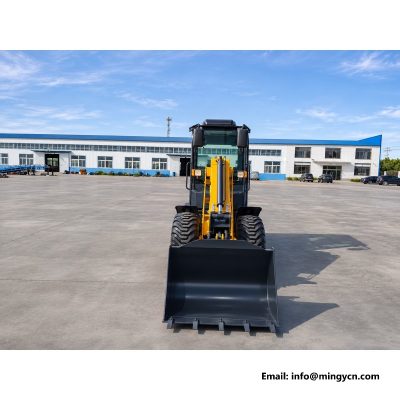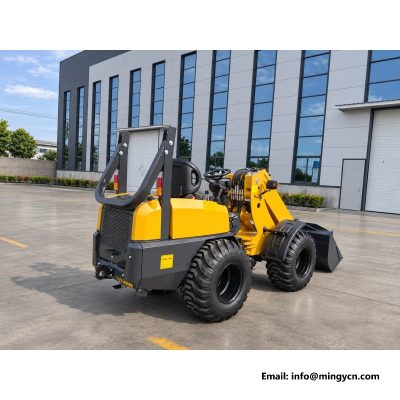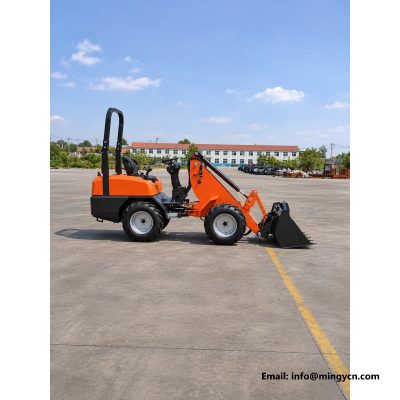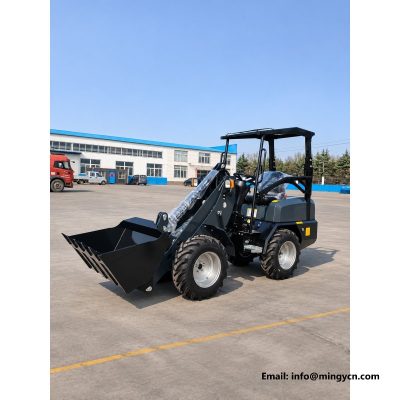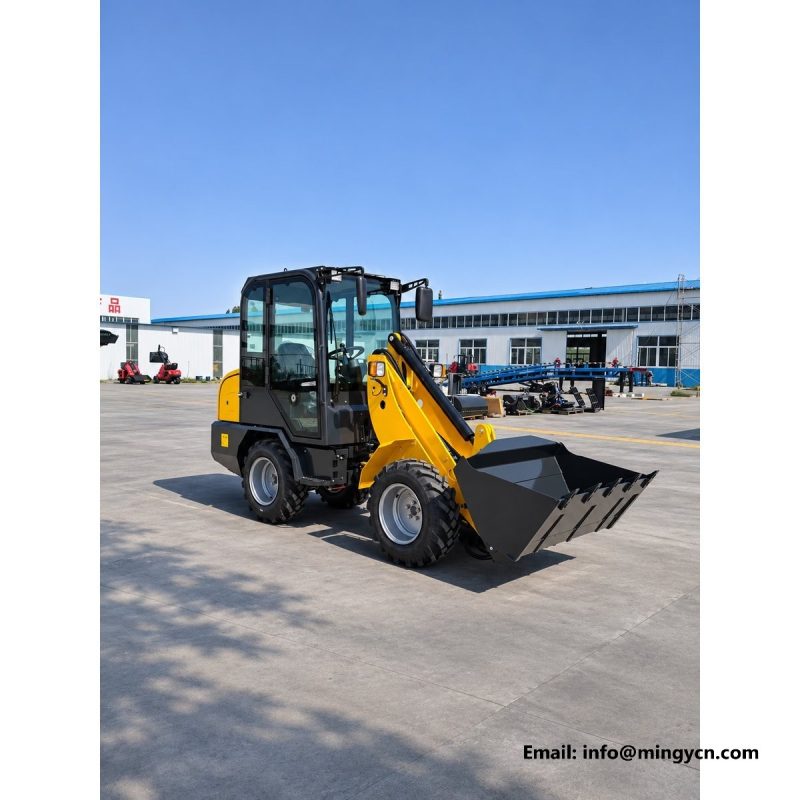
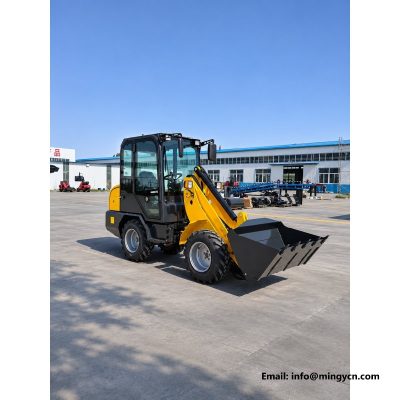
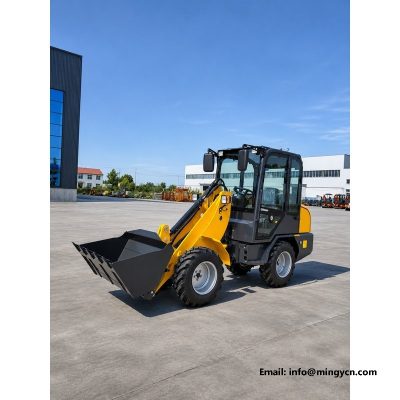
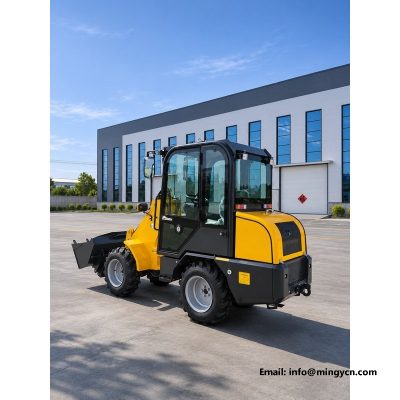
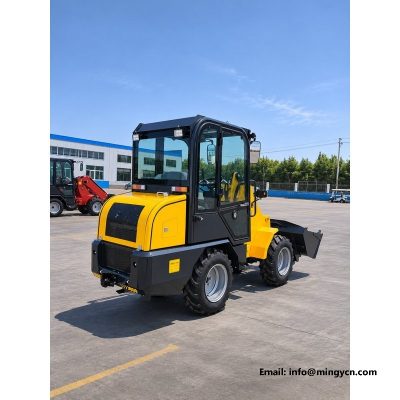
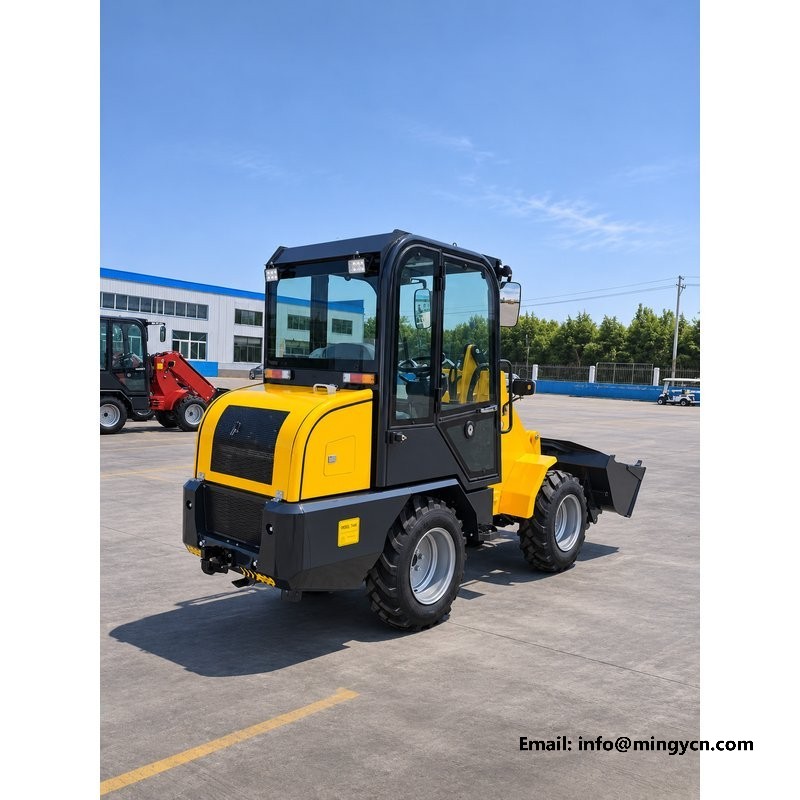
MY180D mini articulated wheel loader with an enclosed cab and pilot hydraulic control.
A compact articulated wheel loader is bought for the spaces it can reach, and the cab is bought for the days it can work. This page looks at the enclosed cab version of the MY180D from the point of view of the people who will run it: landscaping crews, livestock farms and municipal depots. It covers what the cab changes about height and transport, how to keep glass, seals and the heater serviceable, where a canopy still makes better sense, and what to inspect before accepting delivery. The specification is not repeated here; the notes are about decisions a buyer can only make with the machine in front of them.
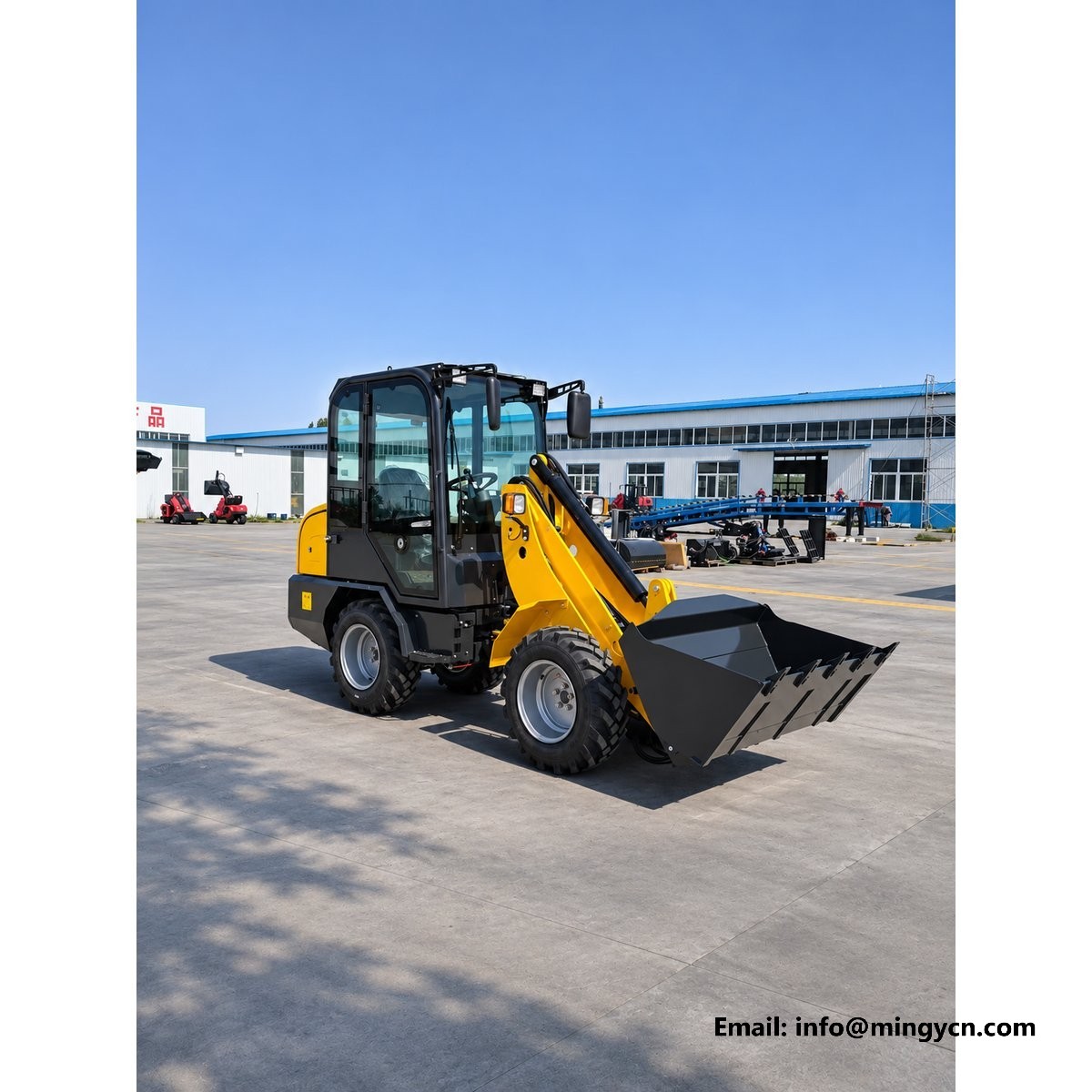
An articulated wheel loader spends its life turning inside spaces that were never laid out for machinery: a nursery aisle between beds, a farmyard gateway, a pavement repair in a housing estate. The machine bends in the middle to get around those corners, but the operator on an open platform is exposed to everything the site throws up. A closed cab changes the number of days the machine can work. In freezing rain, the difference between a glazed enclosure with a heater and a canopy is the difference between finishing a job and parking for a week. In summer dust from a screening operation, it is the difference between a full shift and a headache by noon. The rest of this page deals with the details that decide whether that enclosure is an asset or a liability over five seasons.
Fitting a cab raises the highest fixed point of the machine, and that has consequences beyond the operator's comfort. Transport comes first. A loader that travels on a flatbed or inside a container is planned around its tallest point, and the cab becomes that point. Anyone quoting a cabbed machine for export should confirm the shipping configuration before the booking is made, because removing a canopy is a different task from removing a glazed cab with a heater unit, wiring and a wiper motor. Site access is the second consequence. Height barriers, older farm buildings with low eaves and shared storage sheds all impose a ceiling that a canopy machine may pass and a cabbed one may not. Measure the route, not the brochure, and take the tape measure to the lowest beam on the way in. A site visit with the machine answers the question faster than any specification sheet.
| Model | MY180D (standard boom) / MY180T (telescopic boom) |
| Hydraulic pump | Closed-circuit piston pump, PWG (Italy) |
| Axles | Hydrostatic drive axle, orbit (gerotor) motor drive |
| Control | Pilot hydraulic operation |
| Standard tyres | 10.0/75-15.3 (optional 400/60-15.5) |
| Engine options | Xinchai Euro 5 3B11 (standard) / Kubota D1105 / Kubota V1505 |
| Seat | Deluxe seat |
| Hose | Qingdao Xiangliu hose assemblies |
| Options | Canopy, hydraulic quick coupler, enclosed cab, high/low speed |
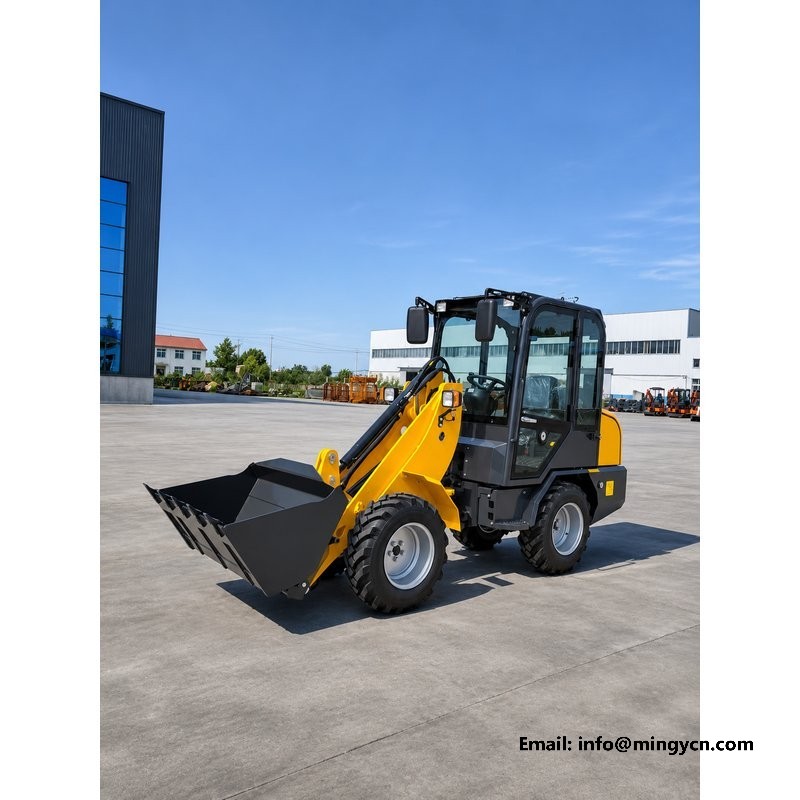
The glazing on a working loader takes more abuse than the glass on a road vehicle, because the machine spends its time close to hedges, branches, brick stacks and the swinging edges of skips. Two habits keep it serviceable. First, wash the panes with clean water and a soft brush rather than a dry rag, since grit dragged across glass in dry weather leaves a haze that no later cleaning removes. Second, keep the wiper blade free of tar and sap, and lift it off the glass when the machine is parked for long periods so the rubber does not set in one position. Door locks, hinges and the latch on a sliding window are small parts that decide whether a cab stays dry through a winter. Replacing them early costs little; replacing a door skin after a season of water ingress does not.
A heater matrix and a fan are simple components, but they only work if the cab can keep dust out in the first place. Door seals compress with age, and the gap that appears along a lower door edge is enough to pull a steady stream of dust inside whenever the fan runs. Check the seals at each service and treat a hardened seal as a replacement item rather than something to adjust. Fresh-air intake filters, where fitted, need cleaning far more often on a screening or demolition site than a service book suggests. In summer, opening the rear window while the fan runs pulls air through the cab instead of letting heat build up behind the glass. Small routines, but they decide whether the operator works with the door shut, and an operator who works with the door shut is an operator who is not breathing the site.
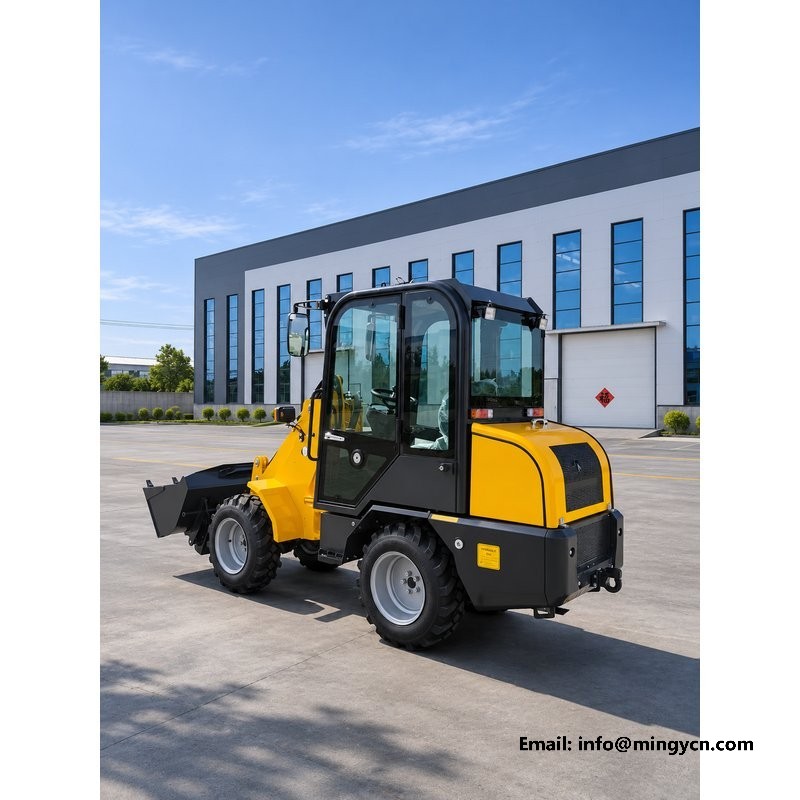
The canopy version costs less and weighs less, and for a buyer whose machine works short days in mild weather it is the sensible order. A canopy also keeps the operator closer to the sound of the machine and to the attachment, which some experienced hands prefer when they are working by feel. The cab earns its price in three situations: a site that operates through winter, a process that generates dust or airborne debris, and a working pattern where the same operator sits in the seat for most of a shift. Rental fleets usually find the cab pays back through utilisation, because a cabbed machine can be sent to any site rather than only to the ones with a fair-weather schedule. Order the version that matches the work rather than the one that looks better in a photograph. Most buyers who hesitate between the two end up ordering the cab on their second machine.
An articulated loader puts the operator forward of the rear axle and close to the articulation joint, so the attachment is nearer to the eye than it is on a rigid frame machine of similar size. That geometry is an advantage, but glass area decides how much of it can be used. Look at the width of the corner pillars, the depth of the roof overhang and the height of the lower edge of the windscreen. A deep roof that shades the operator in summer also cuts the view of a raised bucket, which matters when the machine is loading a truck. Sit in the seat and look at the bucket at ground level and again at full lift before deciding. Ask for the machine to be parked with the bucket down, then look again from the seat, because a yard demonstration rarely shows the view that matters.
Most injuries on a compact loader happen at the step, not in the seat. A cab adds a door sill, a taller first step and a narrower opening, all of which make the routine slightly harder than on a canopy machine. The answer is discipline rather than design: three points of contact every time, no tools carried in the hands, and the engine off before anyone climbs aboard. Keep the steps and the sill free of mud, because a packed layer of clay turns a textured step into a smooth one. The door should be latched open or closed, never left half way, since a door swinging on its hinge in wind is how glass gets broken. Brief every new operator before the first shift. A grab handle that is loose or missing is a repair for the yard, not a job to postpone until the machine comes back.
Noise is cumulative, and a loader working beside a crusher or a mower deck adds its own sound to a site that is already loud. A sealed cab with tight door seals and a lined roof cuts the level at the operator's ear substantially compared with an open platform, and the effect over a long day is greater than the difference suggests. Vibration matters as much. The deluxe seat on this machine is mounted on a suspension base and the cab floor is isolated from the frame, so the operator is not taking every rut through the spine. Neither item is a luxury on a machine that grades a driveway for hours, because fatigue shows in the finish as well as in the operator's back. On a hire machine, a quieter cab also makes the loader easier to place with operators who are used to a different make.
Before a cabbed machine leaves the factory or the dealer yard, a short list of checks prevents most of the complaints that appear in the first month. Open and close the door from inside and outside, and confirm the latch catches on the second stage rather than the first. Run the wiper and the washer, and check that the blade clears the full sweep of the glass. Switch on the heater fan at each speed and confirm that air reaches the windscreen, not only the floor. Look along the door seals for gaps at the corners, where water enters. Check that every light works with the engine running. Then sit inside with the engine off and look for anything that blocks the view of the bucket. Write the results down and photograph anything that is not right, so the conversation with the supplier starts from evidence rather than memory.
A cabbed articulated loader suits three buyers particularly. Landscaping contractors use it to move soil, mulch and paving materials through gardens and nurseries where a larger machine cannot go, and the cab keeps the operator presentable when the machine works beside a client's house. Livestock farms use it for bedding, feed and muck, where dust and winter weather are constant. Municipal crews use it for pavement works, snow clearance and park maintenance, often with a second attachment on the hydraulic quick coupler. In all three cases the machine is small enough to travel on a trailer behind a light truck, and the cab turns a seasonal tool into one that can be scheduled through the year. Ask for the machine to be demonstrated with the attachments actually intended for the work, because a quick coupler and a full bucket change the balance of a small loader.
It is worth it when the machine works through winter, in dust, or for long shifts with the same operator. The cab keeps the working year open and reduces fatigue, which shows in the finish of the work. If the machine only does short jobs in mild weather, a canopy saves money and weight. Decide from the work calendar, not from comfort alone.
Run the heater fan on the windscreen setting before the glass fogs, keep the door seals soft and clean so damp air cannot enter, and replace a tired wiper blade rather than stretching its life. Clear snow and grit from the wiper park area before switching the wiper on, since a blade dragged over grit scratches the pane and smears the view for the rest of the shift.
Ordering and technical support
Email: sales@mingycn.com
LINE (ID): mingyicn
Tell us your working width, ground conditions and the attachment you need, and we will confirm the right configuration and shipping details.