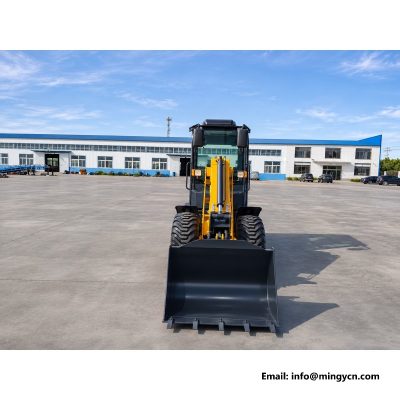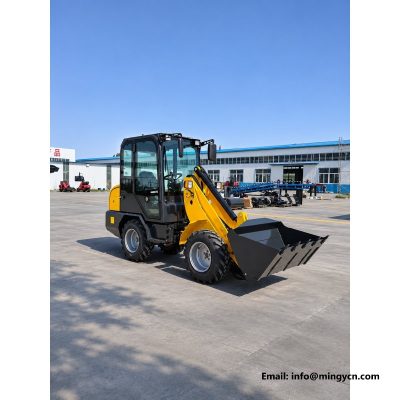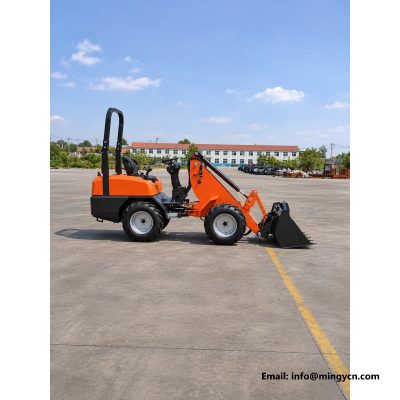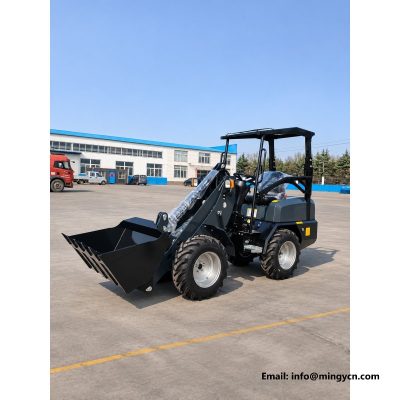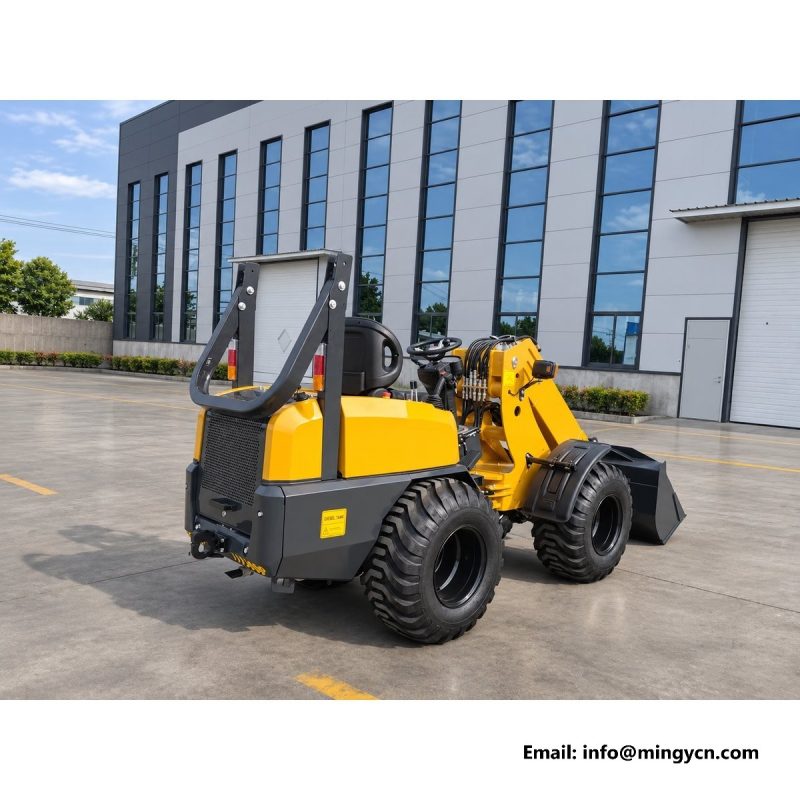
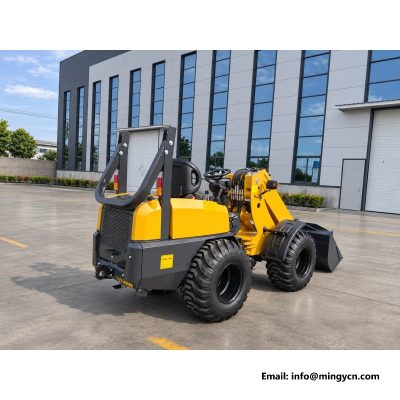
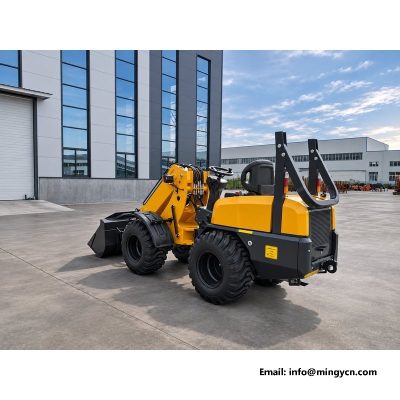
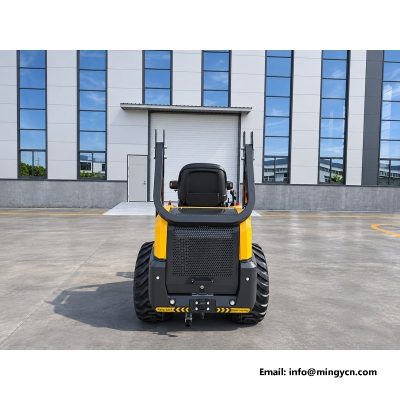
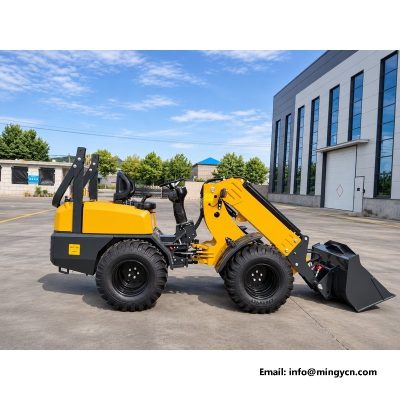
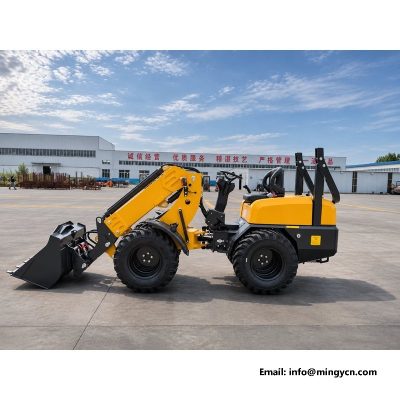
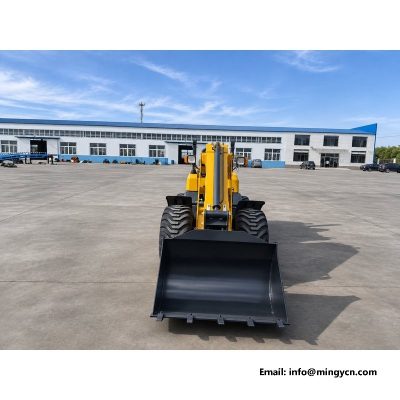
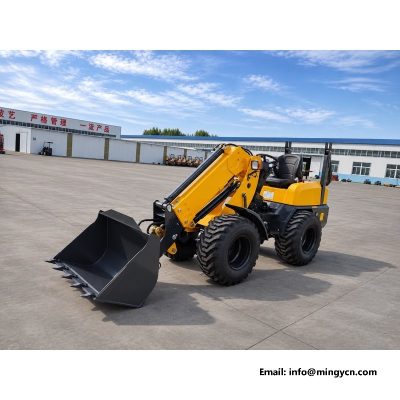
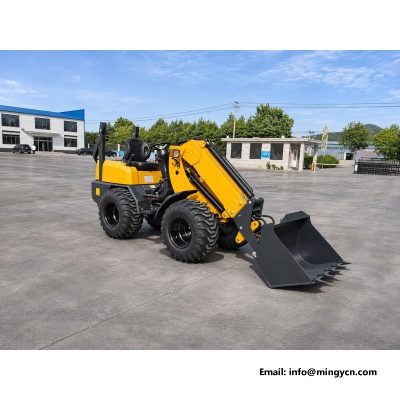
MY180T telescopic mini articulated wheel loader with ROPS frame and hydrostatic drive.
A telescopic boom turns a compact articulated loader into a machine that can place material as well as move it. This page explains how the boom is built, why wear pads and lubrication decide how long it stays accurate, what a ROPS frame does and does not do, and how the load chart changes with extension. It then sets out the work where the extra reach pays for itself, the habits that keep an extended boom safe on slopes and soft ground, and a straight comparison with the standard arm. The aim is to help a buyer decide between the two versions before an order is placed, not after.
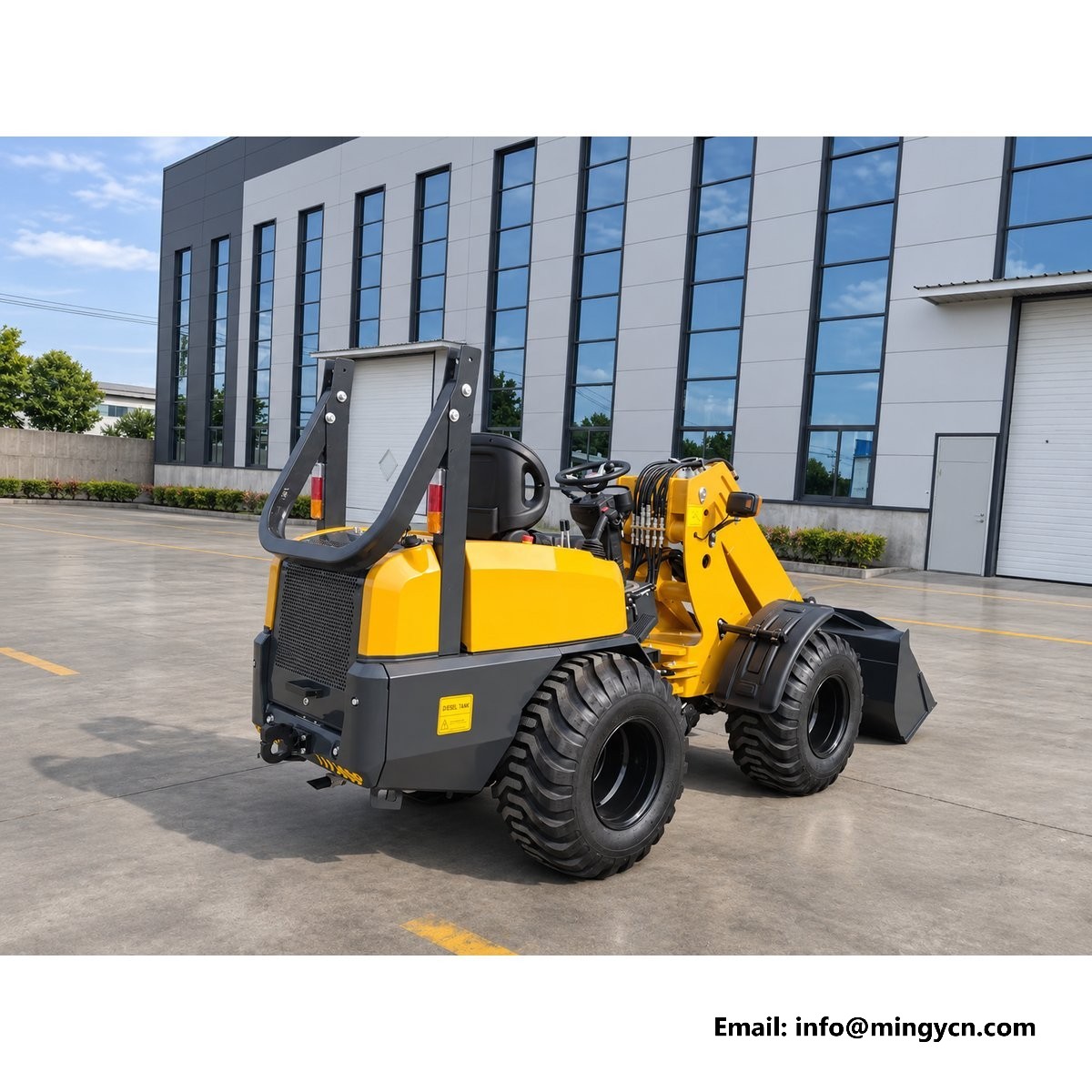
A standard lift arm on a compact articulated loader pivots on a fixed geometry: the bucket rises along an arc and the reach at the top of that arc is whatever the arm length allows. A telescopic boom adds a second motion. The inner section slides out of the outer section, so the attachment can be pushed forward as well as raised, and the combination of the two movements gives a higher discharge point and a longer forward reach than the same machine achieves with a fixed arm. For a buyer, the practical result is a loader that can place material over the side of a truck or into a raised feeder instead of only tipping it onto a stockpile that someone else has to move afterwards. The rest of this page treats the boom as a structure to be maintained, not as a line on a specification sheet.
The boom is a fabricated structure of two sections that slide inside one another. The outer section carries the pivot at the rear and the lift cylinder, and the inner section carries the attachment bracket at the front and the extension cylinder inside it. Between the two sections sit wear pads, usually a low-friction synthetic material backed by steel shims, which take the sliding load and hold the clearance that keeps the sections parallel. The extension cylinder pulls the inner section out and pushes it back, and its rod is the most exposed hydraulic component on the machine when the boom is extended. Good design puts the pads where they can be reached and the grease points where an operator can find them. Ask for a drawing of the pad arrangement if the machine is going to work in sand or in abrasive material.
| Model | MY180D (standard boom) / MY180T (telescopic boom) |
| Hydraulic pump | Closed-circuit piston pump, PWG (Italy) |
| Axles | Hydrostatic drive axle, orbit (gerotor) motor drive |
| Control | Pilot hydraulic operation |
| Standard tyres | 10.0/75-15.3 (optional 400/60-15.5) |
| Engine options | Xinchai Euro 5 3B11 (standard) / Kubota D1105 / Kubota V1505 |
| Seat | Deluxe seat |
| Hose | Qingdao Xiangliu hose assemblies |
| Options | Canopy, hydraulic quick coupler, enclosed cab, high/low speed |
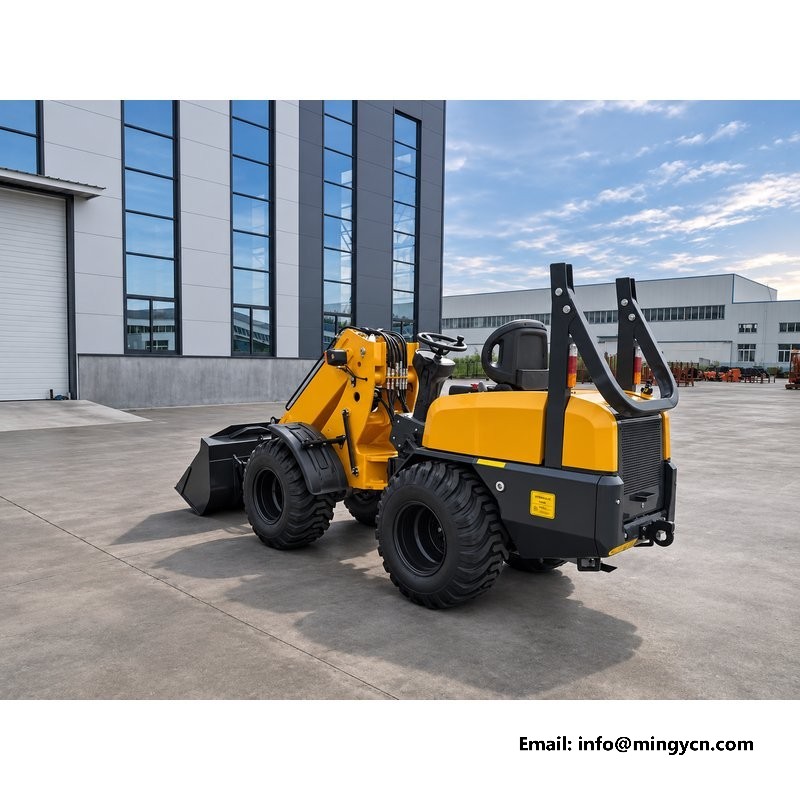
Wear pads decide how long a telescopic boom stays accurate. As the pads wear, the clearance between the inner and outer sections grows, and the first symptom is not a failure but a feel: the bucket rocks slightly when the boom is extended, and the machine loses the tightness it had when new. Left alone, worn pads allow the sections to move out of alignment, and the load then falls on the cylinder rod and on the structure rather than on the pads. Check clearance at the intervals the manual gives, and check it with the boom extended under load rather than parked, because a warm loaded boom shows play that a cold one hides. Shimming or replacing pads is inexpensive; repairing a scored rod is not. A pad worn through its backing has already begun to work on the section it slides against, which is why the inspection is worth doing on time.
Grease is the cheapest maintenance a telescopic boom receives and the most often skipped. The pad surfaces, the pivot pins at both ends of the lift and extension cylinders, the attachment bracket pins and the articulation joint all need grease, and they need it at the frequency the manual states rather than whenever someone remembers. A boom greased on schedule slides smoothly and keeps its pads cool; one that is not develops a stick-slip motion that the operator feels as a judder when extending under load. Wipe each nipple clean before attaching the gun, because pushing grit past a dirty nipple is worse than skipping the job. Keep a record on the machine, and check it at every handover so a new operator knows where the schedule stands. A well greased boom also runs cooler, because friction is the heat source the grease is there to control.
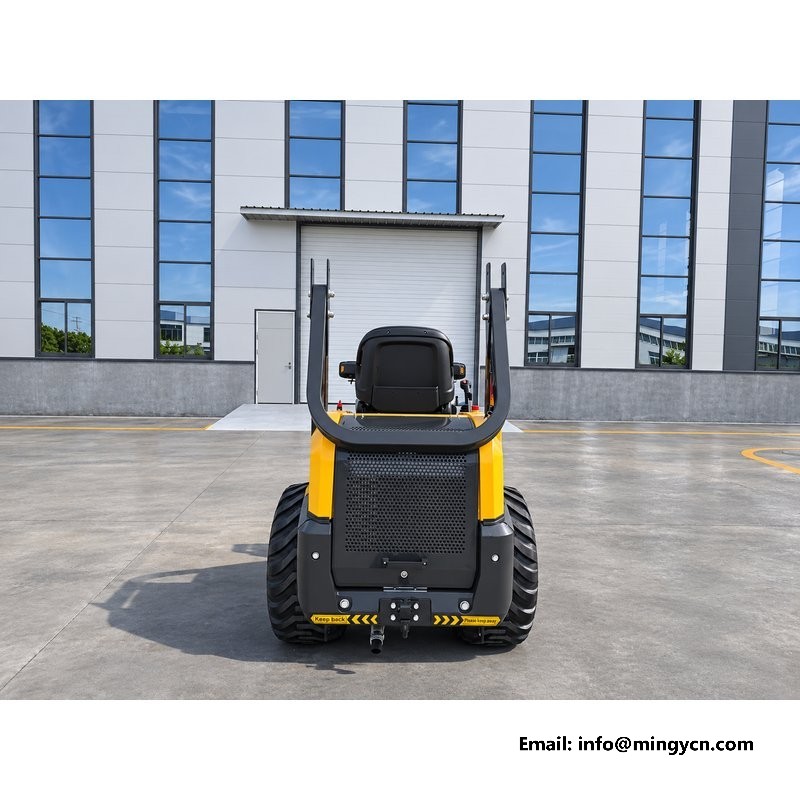
The extension cylinder works in a dirtier position than any other ram on the machine. When the boom is out, the rod is exposed to dust, crop residue and spray from wet ground, and every retraction draws a film of that material back towards the seal. A rod wiper in good condition scrapes most of it off; a worn one lets it pass. Inspect the rod for scoring and for a dry, glazed look near the seal, and replace a weeping seal before it becomes a leak that contaminates the circuit. On a closed-circuit machine the hydraulic oil is shared with the drive system, so contamination is never a local problem. Keeping the rod clean and the wiper intact is the least expensive way to protect the pump. Wipe the rod down at the end of a dusty shift, before the boom is retracted for the night, and the seal sees far less abrasive material.
ROPS stands for roll-over protective structure, and it is a structural frame rather than a heavy roof. Its job is to preserve a survival zone around the operator if the machine turns over, and it only does that job as part of a system: the frame, the seat, and the seat belt used properly. A ROPS frame on a machine whose belt is never fastened is decoration. The structure on this loader is a fabricated frame around the operator station, and it also carries the mounting points for a canopy or a cab, which is why one basic machine can be ordered in several forms. Inspect it after any impact, and never drill or weld on it, because both change the section. Treat the frame as a structural part of the machine, not as a convenient place to mount lights, mirrors or a radio aerial.
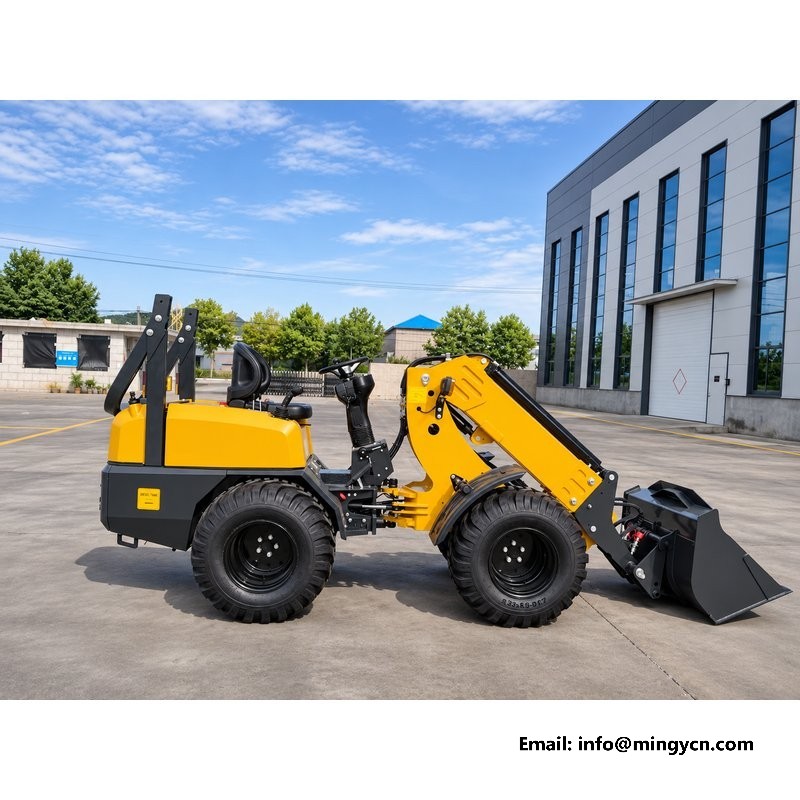
Every telescopic boom has a limit that changes with extension. The machine that lifts a full bucket close in will not lift the same bucket at full reach, and the difference is not a margin to be tested but a line to be respected. The reason is simple mechanics: the further the load sits from the machine's centre of gravity, the greater the moment it applies, and the front axle and the structure can only resist so much. Manufacturers publish a load chart for each boom position, and the operator should read it for the attachment actually fitted, because a bale spike and a bucket of wet gravel do not present the same load. When in doubt, take a partial bucket and make two passes. A load chart kept in the cab, laminated and legible, is worth more than one in a folder in the site office.
The telescopic version earns its extra cost in work that involves height and reach rather than pure breakout force. Loading a lorry or a trailer from one side is the classic case: the boom reaches across the body so the machine stands on firm ground instead of climbing onto the load area. Stacking bales in a barn, filling a mixer or a hopper, placing bags of compost on a raised bed and clearing snow from a bank above the yard all use the same advantage. On a farm or a municipal depot the machine often replaces a small telehandler for those jobs while keeping the bucket work of a loader, which is the argument that usually decides the purchase. The same reach lets the operator work over a wall or a fence without opening a gate, which is useful on farms and in parks.
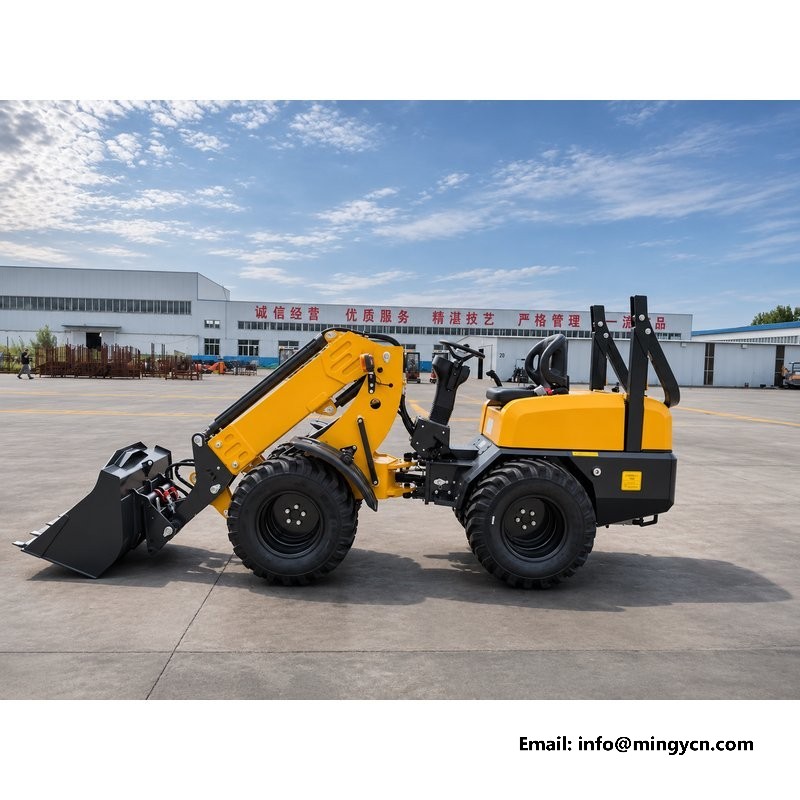
When the boom is extended, the machine's stability changes and so should the operator's habits. Keep the load low while travelling, extend only when the machine is stationary and level, and retract before turning or reversing. Make the extension the last movement before discharging and the first movement after, so the boom spends as little time out as the job allows. Watch the bucket rather than the boom, because the bucket is what has to arrive at the right height. If the machine feels light at the rear, the load is too far out, and hanging extra weight on the frame is not the answer: shorten the reach instead. These habits cost nothing and prevent most incidents. On a windy day a light bucket at full reach behaves like a sail, so wait for the gust to pass before extending.
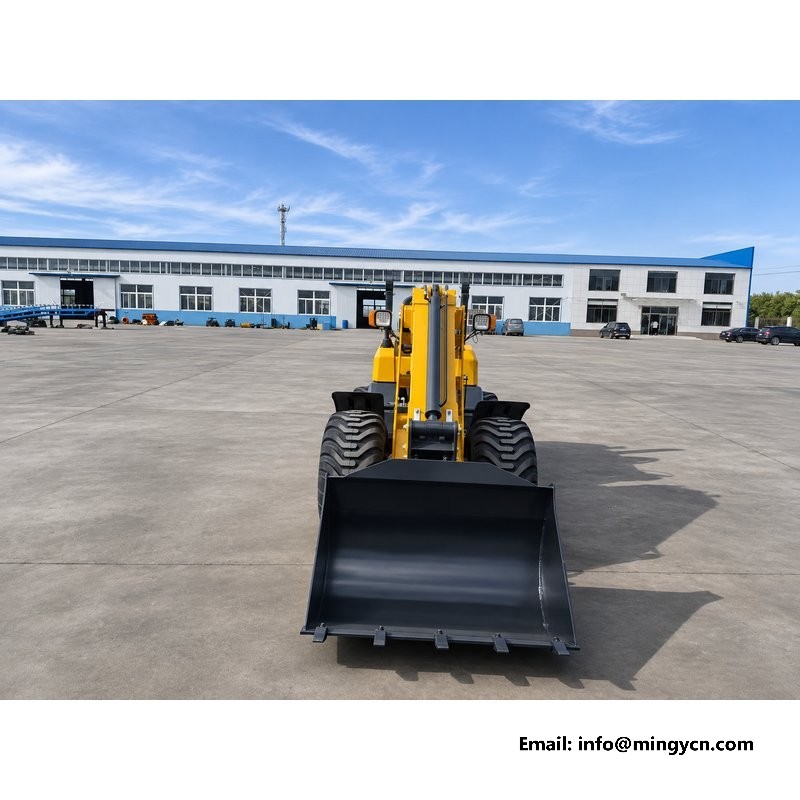
A raised boom on a slope is a combination to treat with respect. The machine's centre of gravity rises with the load, and side slopes reduce the margin further. Work across a slope only when the bucket is low and the machine is empty, and turn uphill rather than downhill where the ground allows. On soft ground the front axle carries most of the load when the boom is out, so the machine can dig in and lose the traction it needs to reverse out. Keep the boom retracted while crossing wet patches, and consider the wider optional tyre fitment if the site is consistently soft. The 400/60-15.5 option spreads the load over a larger footprint than the standard 10.0/75-15.3. Tyres and ballast change the margin, but they do not change the rule that a raised boom belongs on level ground.
The choice between the two booms is usually settled by the tallest and furthest task in the machine's week, not by its average task. If the loader only ever fills a bucket from a stockpile and tips it into a trailer at a height the standard arm already reaches, the telescopic boom adds cost, weight and a maintenance item for no return. If the machine has to place material over a barrier, into a raised hopper or onto a stack that grows through the season, the extra reach pays for itself in labour saved. A useful test is to write down the three jobs the machine will do most often and mark which of them need reach. Whatever the answer, put it in the order so the attachment supplied matches the boom that arrives.
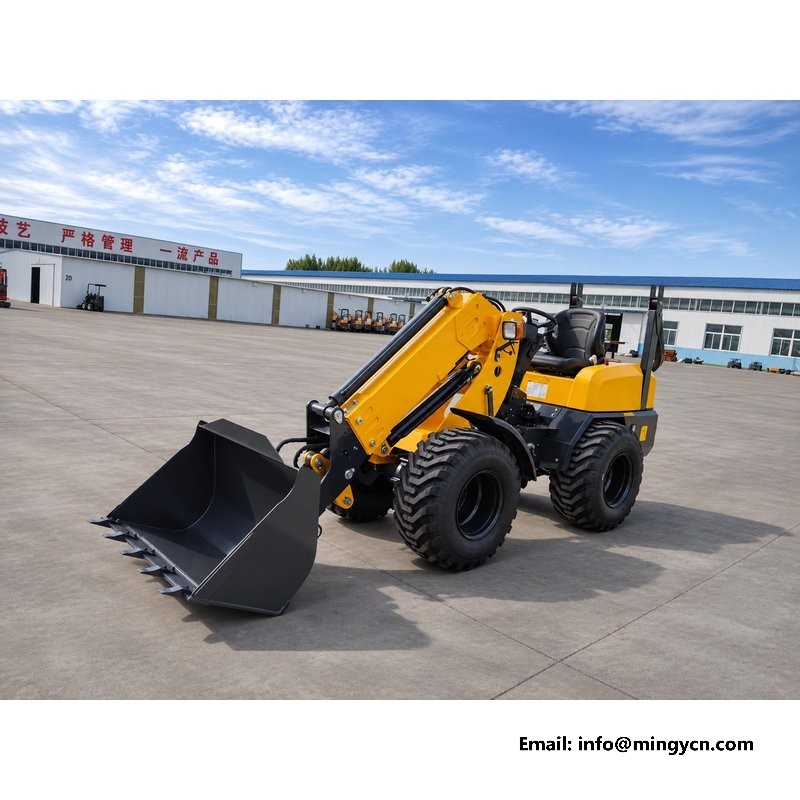
At handover, ask for the boom to be cycled through its full stroke with the attachment fitted, and watch the pads as it moves. There should be no visible rock at the change of direction and no squeal from dry surfaces. Check the ROPS frame for paint damage that might hide a dent, and confirm that every bolt is torqued and marked. Confirm the seat belt anchors and that the belt retracts fully. Ask for the load chart for the attachment supplied, and for the grease schedule in writing. Then operate the machine for twenty minutes on the buyer's own ground before signing, because a boom that feels tight in a yard can feel different on a slope. Photograph the boom retracted and extended at handover, so any later change has a reference to be measured against.
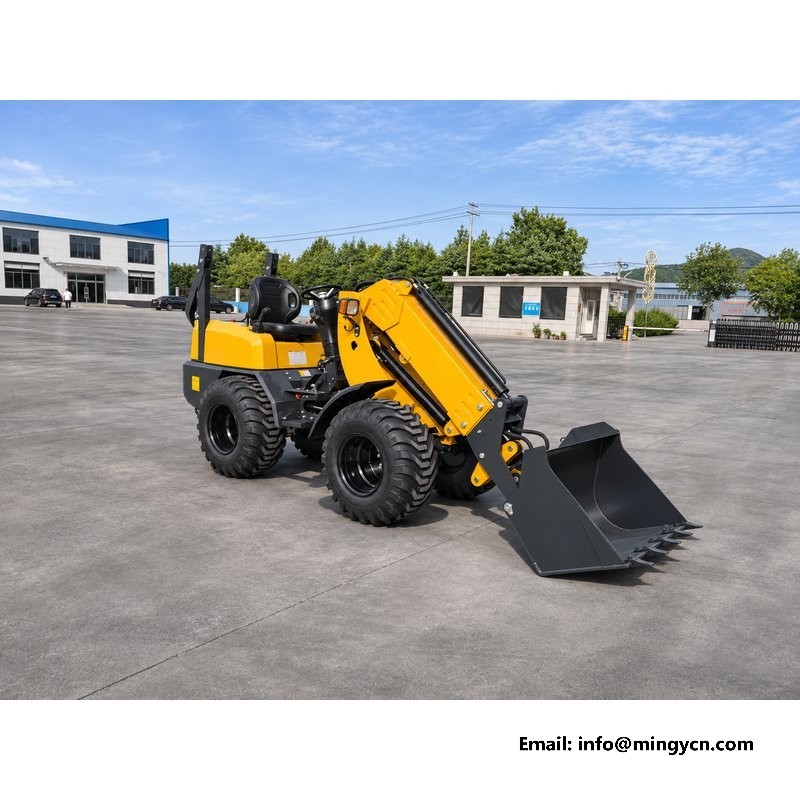
The gain is in reach and discharge height rather than in raw capacity. At full extension the safe load is lower than it is close in, which is why every boom position has its own limit on the load chart. Buyers should compare the two versions on the height and distance the job needs, and on the attachment actually fitted.
Yes. A cab is an enclosure for weather, dust and noise; ROPS is the structure that preserves a survival zone if the machine rolls over. On this loader the frame carries the cab mounting points, so the two work together. The protection only counts when the seat belt is fastened, and the frame must never be drilled, welded or otherwise modified.
Ordering and technical support
Email: sales@mingycn.com
LINE (ID): mingyicn
Tell us your working width, ground conditions and the attachment you need, and we will confirm the right configuration and shipping details.