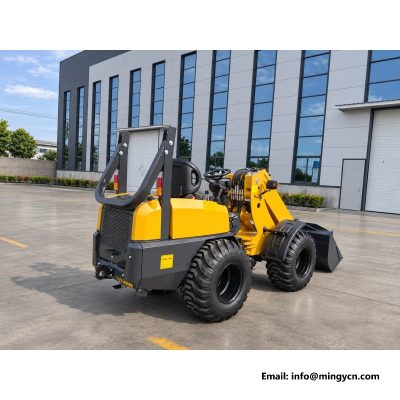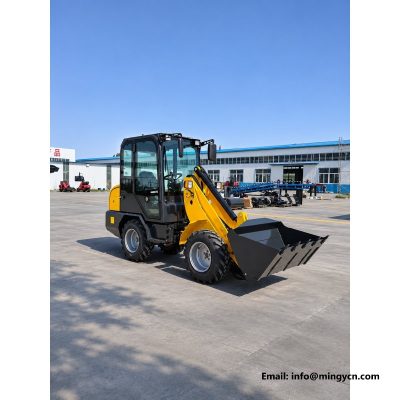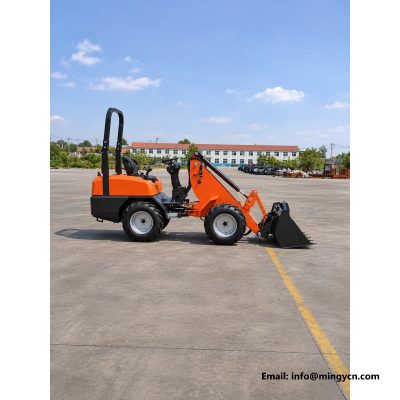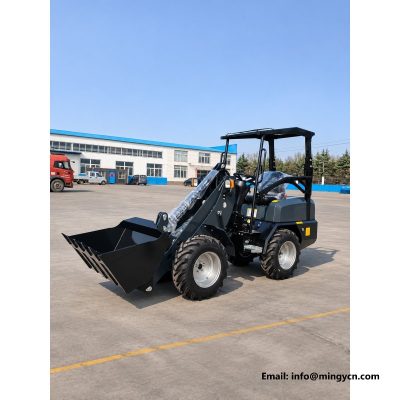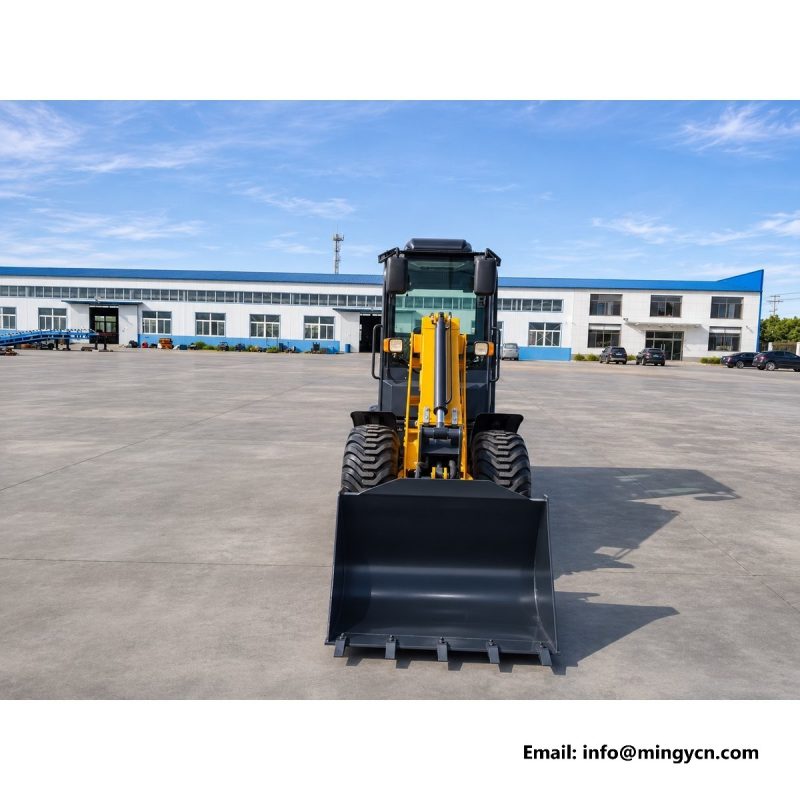
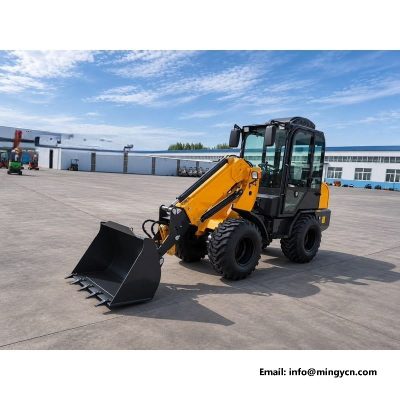
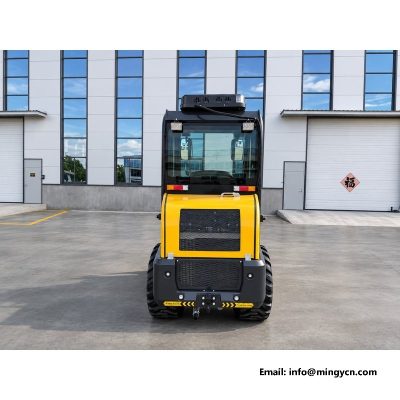
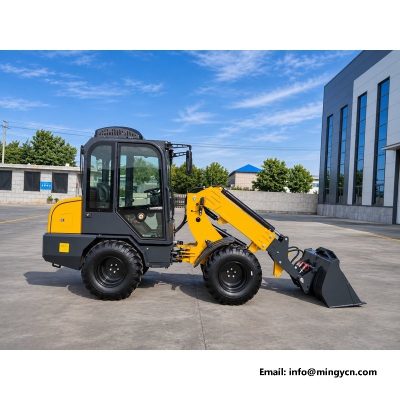
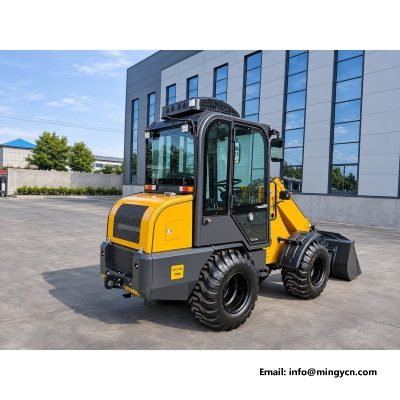
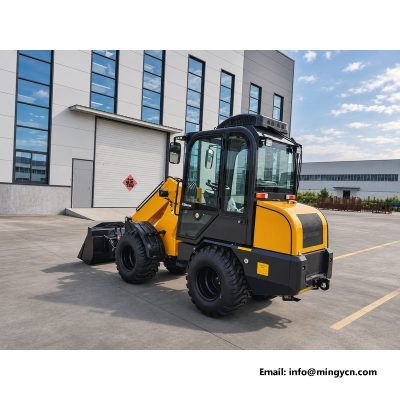
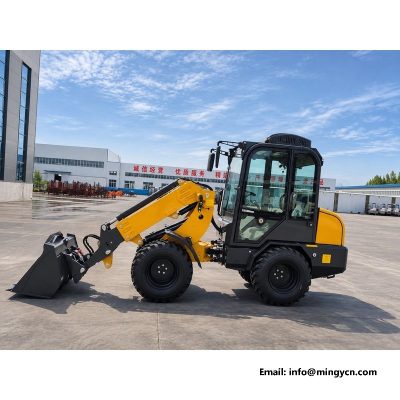
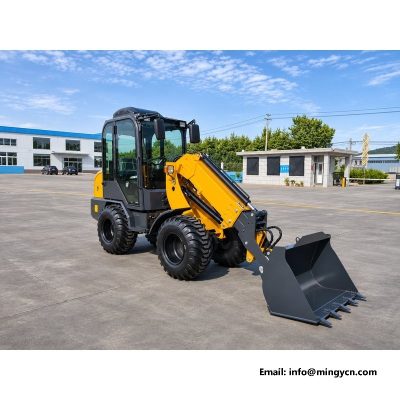
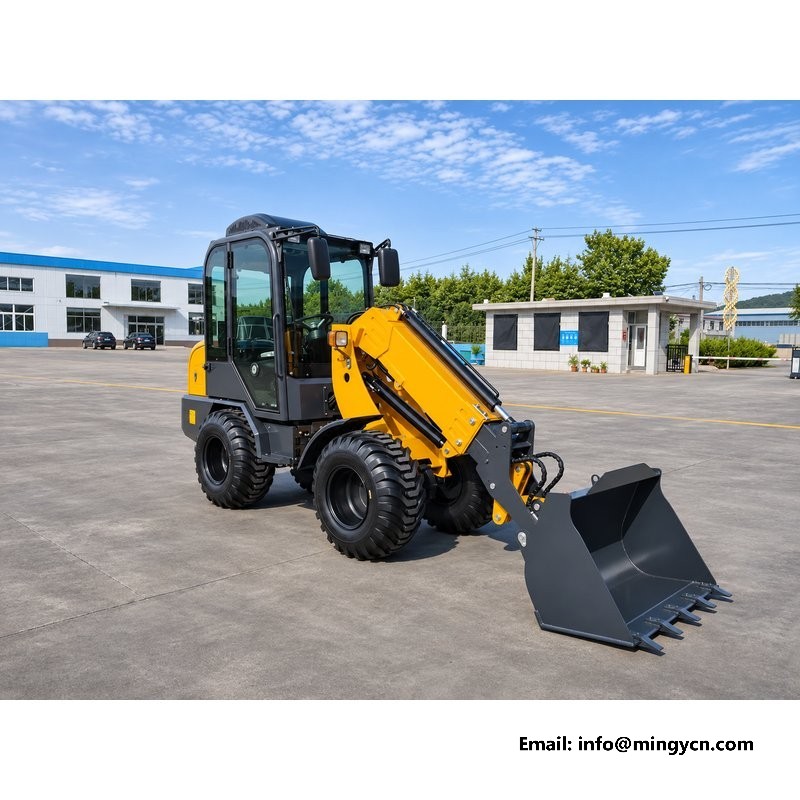
MY180T telescopic mini articulated wheel loader with an enclosed cab and pilot control.
This version combines the two features buyers ask about most often: a telescopic boom for reach and an enclosed cab for year-round work. The notes below cover the operator layout and the view of an extended bucket, the low-speed control that comes from hydrostatic axle drive, the high and low speed option, and how the PWG closed-circuit pump is matched to the rest of the hydraulic system. Engine and tyre choices, daily and seasonal service, export packing and commissioning are covered in the same practical terms. It is written for professional users and rental fleets rather than for occasional buyers.
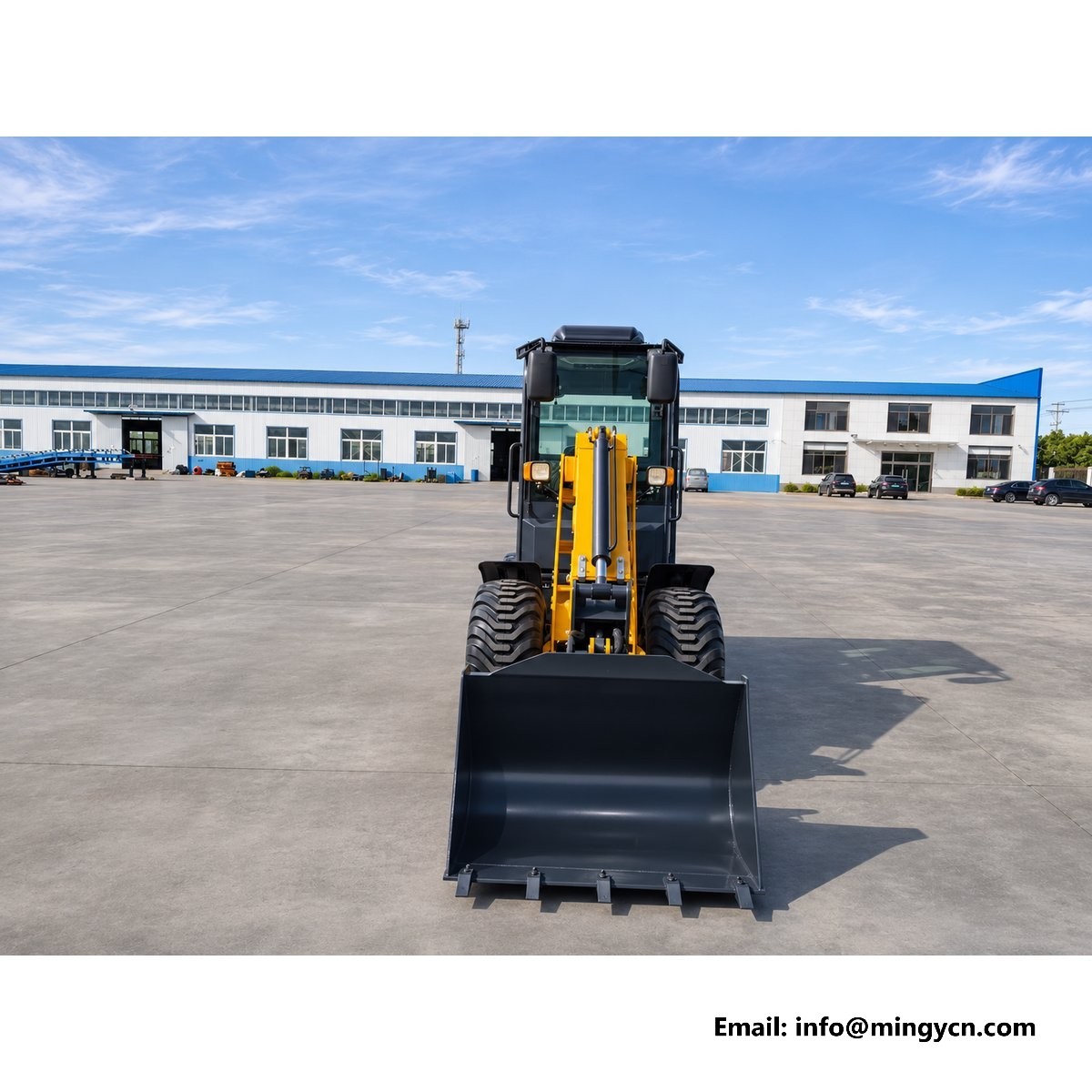
The combination of a telescopic boom and an enclosed cab narrows the buyer list, which is useful, because it means the machine can be specified for a particular kind of work rather than for everyone. It suits the operator who spends most of a shift in the seat: a contractor running a landscaping crew, a farm with a daily feeding and bedding routine, a depot that keeps one machine busy across several sites. It suits a rental fleet, where a cabbed machine can be sent anywhere without a discussion about weather. And it suits cold or dusty regions, where the cab is not a comfort item but the difference between a machine that starts earning in the morning and one that waits for the frost to lift. The rest of this page is about what that combination asks of the owner in return.
Inside the cab the layout is built around the right hand. The joystick that controls the boom and bucket sits where the operator's forearm falls, and the steering wheel and pedals follow the same pattern as the rest of the range, so an operator moving between machines does not have to relearn anything. The view of the bucket when the boom is extended is the point to check before ordering. Sit in the seat, extend the boom fully and look at the attachment: the top of the bucket should stay visible over the lower edge of the windscreen, and the wiper should not cross the line of sight at the moment of discharge. If it does, seat height or glass specification may need attention. When the bucket disappears behind a pillar at any point in the stroke, the operator ends up working by guesswork.
| Model | MY180D (standard boom) / MY180T (telescopic boom) |
| Hydraulic pump | Closed-circuit piston pump, PWG (Italy) |
| Axles | Hydrostatic drive axle, orbit (gerotor) motor drive |
| Control | Pilot hydraulic operation |
| Standard tyres | 10.0/75-15.3 (optional 400/60-15.5) |
| Engine options | Xinchai Euro 5 3B11 (standard) / Kubota D1105 / Kubota V1505 |
| Seat | Deluxe seat |
| Hose | Qingdao Xiangliu hose assemblies |
| Options | Canopy, hydraulic quick coupler, enclosed cab, high/low speed |
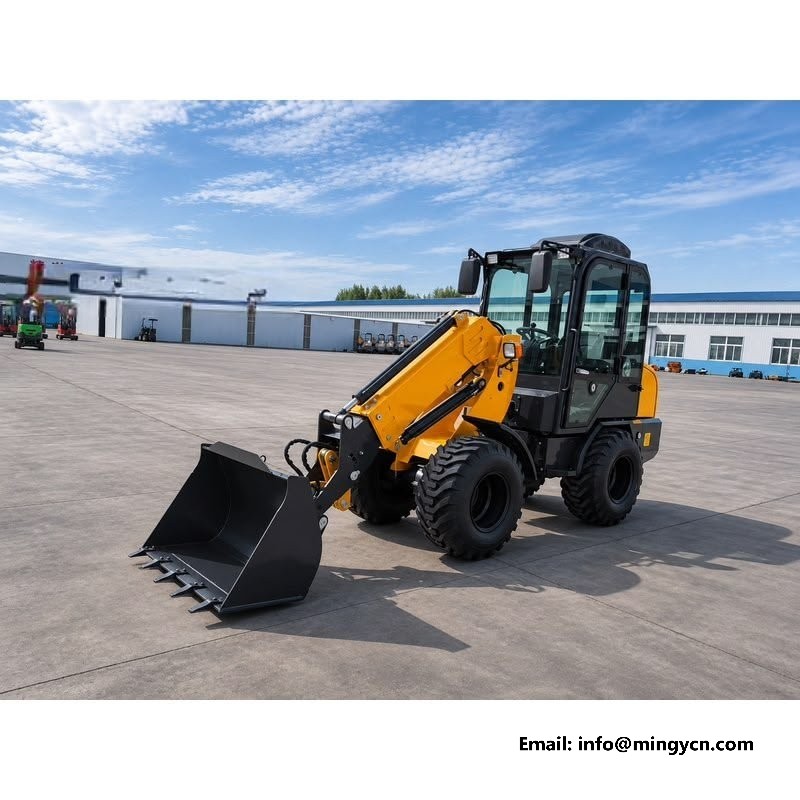
The MY180 range drives through a hydrostatic axle with orbit motor drive, and the characteristic that matters on site is control at very low speed. A hydrostatic transmission does not need a clutch or a torque converter to creep, so the operator can move the machine a few centimetres at a time while the bucket is in a trench or against a wall. That is what makes the machine usable for grading, for placing paving material and for working inside a building where clearance is measured in centimetres. The same system provides braking when the pedal is released, which is reassuring on a ramp. Travel behaviour is set by the pump and motor, not by engine speed alone. For the operator, the result is a machine that behaves predictably at the speeds where most damage to kerbs, walls and plants is done.
The optional high and low speed arrangement gives the machine two travel ranges from the same hydrostatic system. The low range is for work: precise creeping, tight turns in a yard, loading cycles where the machine never travels more than a few metres. The high range is for moving between sites or crossing a large field, where the machine would otherwise hold up traffic or waste time. For a buyer, the question is how much of the machine's day is spent travelling. A municipal machine that works several locations in a morning will use the high range constantly. A nursery machine that never leaves the same acreage will not, and can save the cost of the option. Ask for both ranges to be demonstrated on your own ground, since the difference is easiest to judge on a slope or across a long yard.
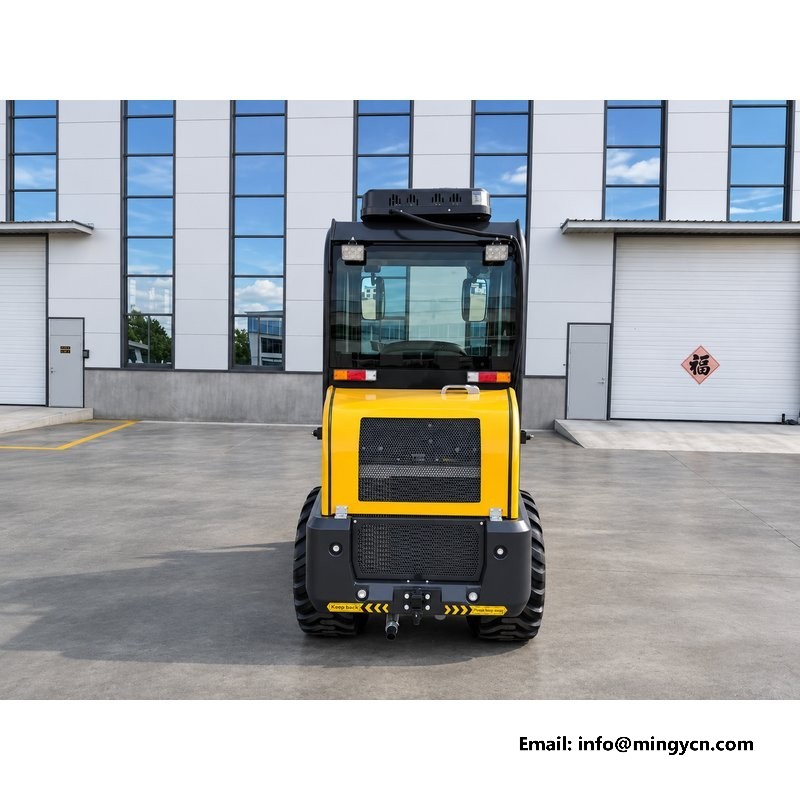
The hydraulic system on this machine is built around a closed-circuit piston pump from PWG in Italy. A closed circuit keeps the return oil inside the pump and motor loop rather than sending it back to a tank on every cycle, which suits a machine that spends its time making small, repeated movements under load. The pump's displacement is matched to the drive motors and to the boom cylinders so that the machine can lift and travel without one function starving the other. That matching is what a buyer pays for when choosing a named pump over an unbranded unit: predictable response at low engine speed, and a service network that can supply parts by model number rather than by guesswork. A pump oversized for the work wastes fuel; one undersized makes every function feel slow when two are used together.
Hose quality is not visible from outside the machine, and it is one of the first things to fail on a loader that works in heat or in constant motion. The assemblies on this machine come from Qingdao Xiangliu, and the detail that matters is the routing rather than the badge: hoses should run in supported loops with a bend radius that does not kink them, away from exhaust heat and away from the articulation joint where they flex every time the machine turns. Ask to see the routing at the boom pivot, because that is where a poorly planned assembly rubs through its outer cover in a season. A hose that fails on a slope costs a day and a spill. Keep a spare length of the two most exposed assemblies on the shelf, because those are the ones a local dealer is least likely to hold.
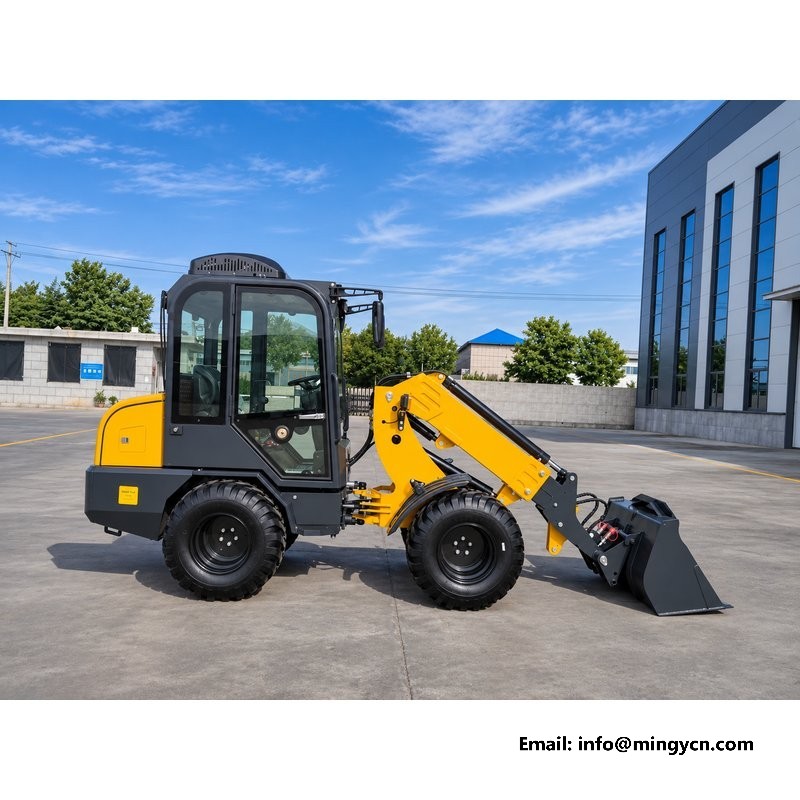
Three engine options are offered, and they suit different buyers rather than different budgets. The Xinchai 3B11 to Euro 5 is the standard fitment, and it is the sensible choice where the machine works in a market that already supplies that engine and where dealer support is close. The Kubota D1105 and V1505 are the alternatives for buyers who want a familiar name under the bonnet, a wide parts network and a known service routine. All three are matched to the same hydraulic package, so the boom and drive behaviour does not change with the engine. Ask which option your local dealer stocks filters and belts for, because that answer matters over five years. Whichever engine is chosen, the bay should be reachable for daily checks without removing panels, and the filters should be listed by part number in the manual.
Standard tyres are 10.0/75-15.3, a size that keeps the machine narrow enough for nursery rows, garden gates and the kind of yards where a compact loader is expected to fit. The optional 400/60-15.5 fitment is wider and softer in its footprint, which helps on turf, on wet ground and on sand, at the cost of a slightly larger machine and a little more steering effort at low speed. The choice usually follows the ground rather than the load: a machine working on finished lawns or a golf course should not be on the narrow tyre, and a machine that has to pass between fence posts should not be on the wide one. Whichever size is ordered, confirm the rim and the load rating match the axle, since a wide tyre on the wrong rim is a failure waiting for a full bucket.
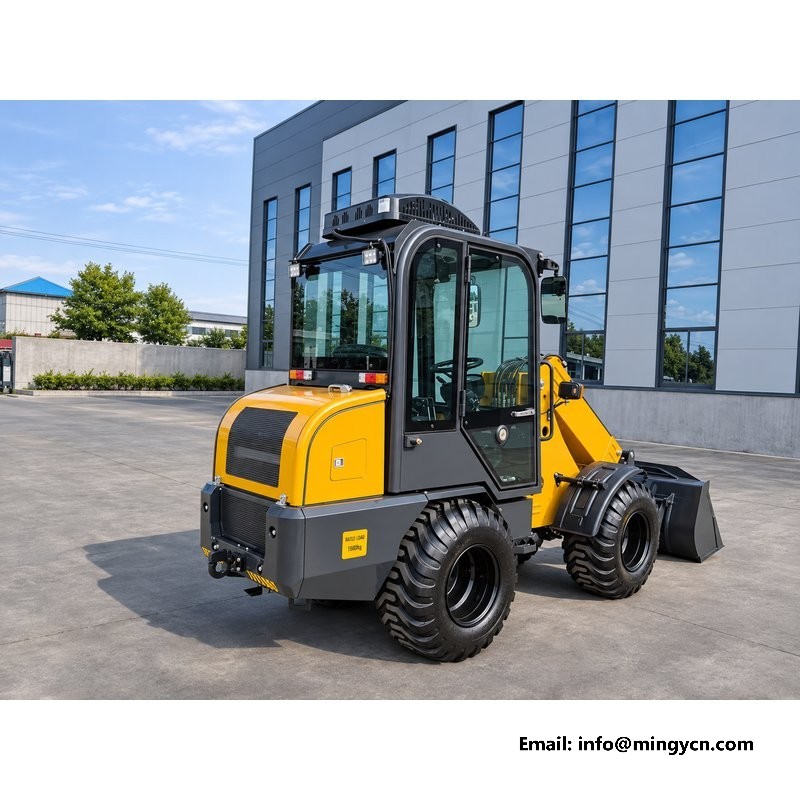
The daily walk-around takes ten minutes and covers most of what goes wrong. Check the engine oil and coolant with the machine level and cold. Look at the hydraulic tank sight glass, and look under the machine for fresh drips rather than old staining. Walk the boom with a torch and look at the pads, the rod of the extension cylinder and the hose loops at the pivot. Check the tyres for cuts and for pressure, and the wheel nuts for looseness. Test the lights, the beacon and the horn. Sit in the seat and confirm the belt latches and retracts. Then start the engine and listen before moving, because a new noise is cheaper to fix in the yard. Record the readings in a notebook kept in the cab, so a slow change becomes visible before it becomes a breakdown.
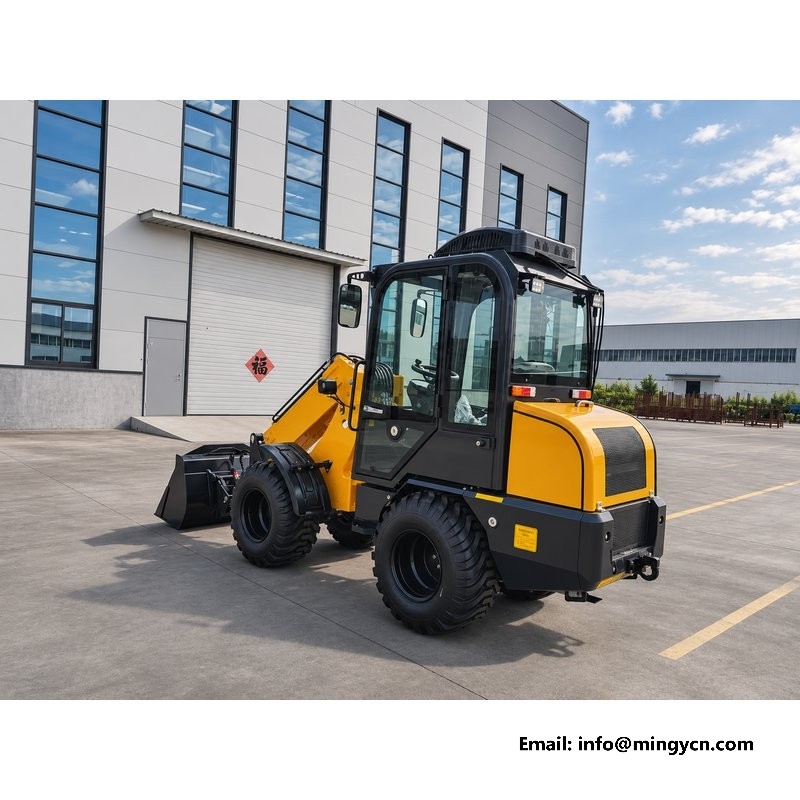
Beyond the daily routine, a weekly check adds the grease schedule, the air filter and the condition of the cab seals. On a machine that works in dust the air filter is the item that decides engine life, and it should be inspected rather than simply replaced at a fixed interval. Seasonally, the cooling pack needs cleaning from the front with low-pressure water, the heater intake needs clearing of chaff, and the door seals should be treated with a rubber conditioner before winter. If the machine works in snow, check the battery and the glow system before the cold arrives rather than after the first hard frost. A written schedule signed at each service is worth more than a good memory. Keep the records with the machine at resale, because a documented history is worth more to a second buyer than clean paint.
Machines shipped for export travel in configurations that differ from the working machine. The boom is usually retracted and secured, the attachment is removed or folded to reduce length, and the cab is protected with film and corner guards rather than left bare. Ask for photographs of the machine in its shipping configuration, because the height and length that matter to the freight forwarder are the packed figures, not the working ones. Confirm that the battery is isolated, that fuel is at the level the carrier allows, and that loose items such as the toolbox, the spare wheel and the manual are packed in a crate rather than left in the cab. Check that lifting points are marked. Photograph the loaded machine and the securing points before the container is closed, and send the images to the buyer with the shipping documents.
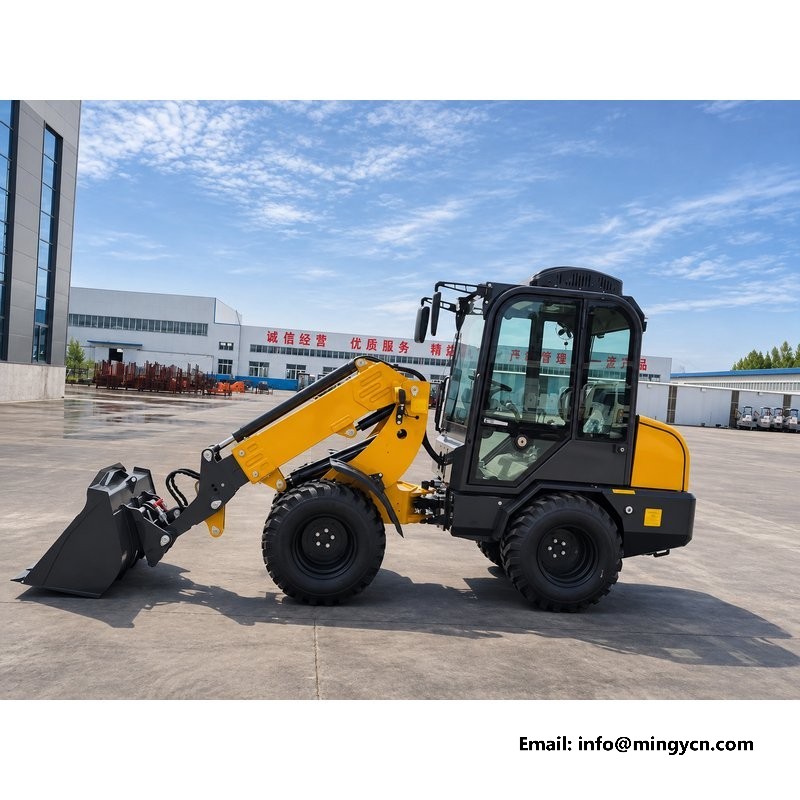
On arrival the machine should be inspected before it is unloaded where possible, and certainly before it is put to work. Check the packing list against what is on the pallet, look for transit damage on the cab glass and the boom, and confirm the engine and hydraulic oil levels after the machine has stood level. Fill the fuel system and bleed it if the machine has been shipped dry. Run every function at low speed for the first hour, with particular attention to the boom extension and the steering, then re-torque the wheel nuts and check for leaks at each joint. Only then put the machine under load. A short commissioning routine protects the warranty conversation as much as the machine. Keep the first inspection report with the machine's documents, and note anything the carrier should see before the machine is cleaned.
Buyers whose work regularly needs height or forward reach: loading trucks from one side, stacking bales, filling hoppers, or placing material over a barrier. Add the cab if the machine works through winter or in dust. If the machine only fills and tips at ground level, the standard arm with a canopy is the better value for the money and the simpler machine to keep.
Clean oil and a clean circuit. Check the tank level and look for leaks daily, keep the extension cylinder rod and its wiper free of grit, and follow the manual for filter changes rather than extending them. Because the drive and boom share the circuit, contamination spreads quickly, so a weeping seal should be repaired before it becomes a leak. A named pump and a clean circuit are what keep the response consistent over the years.
Ordering and technical support
Email: sales@mingycn.com
LINE (ID): mingyicn
Tell us your working width, ground conditions and the attachment you need, and we will confirm the right configuration and shipping details.