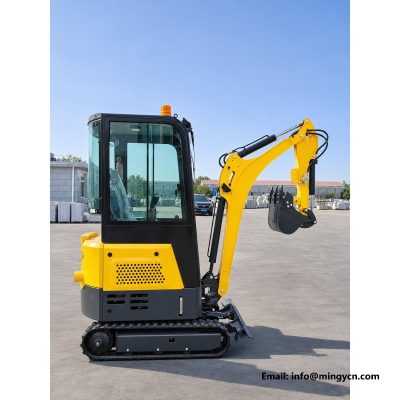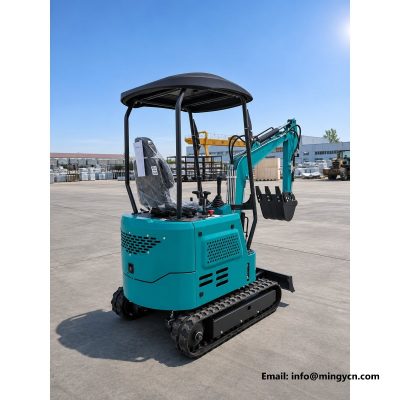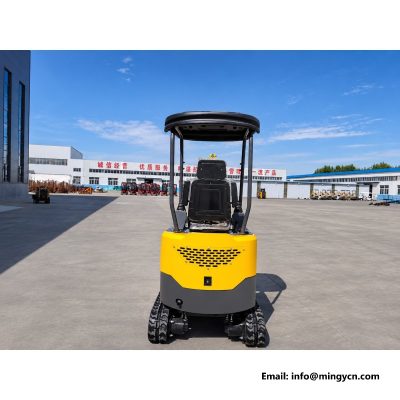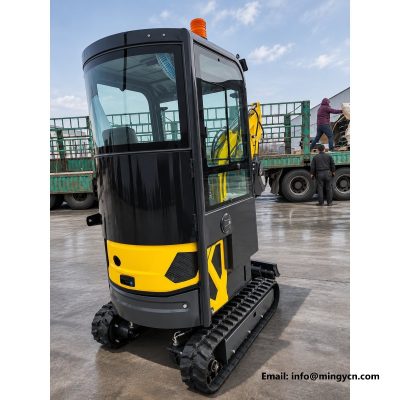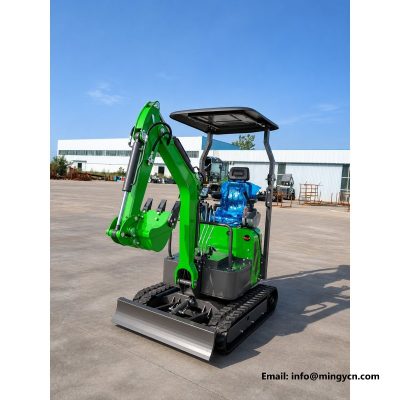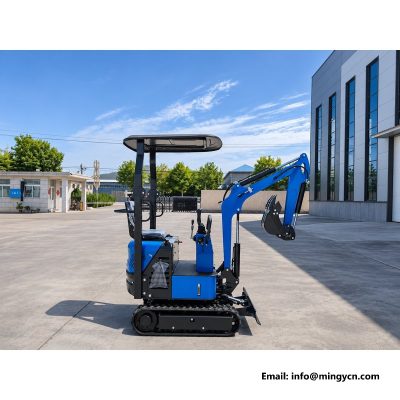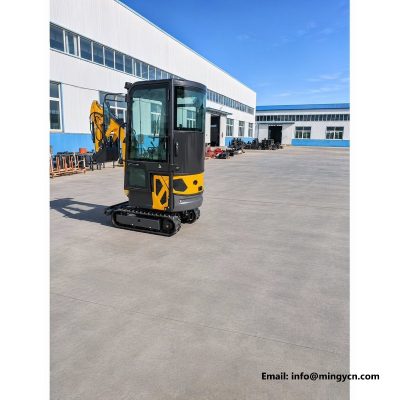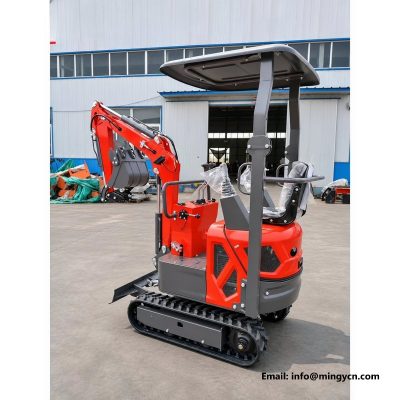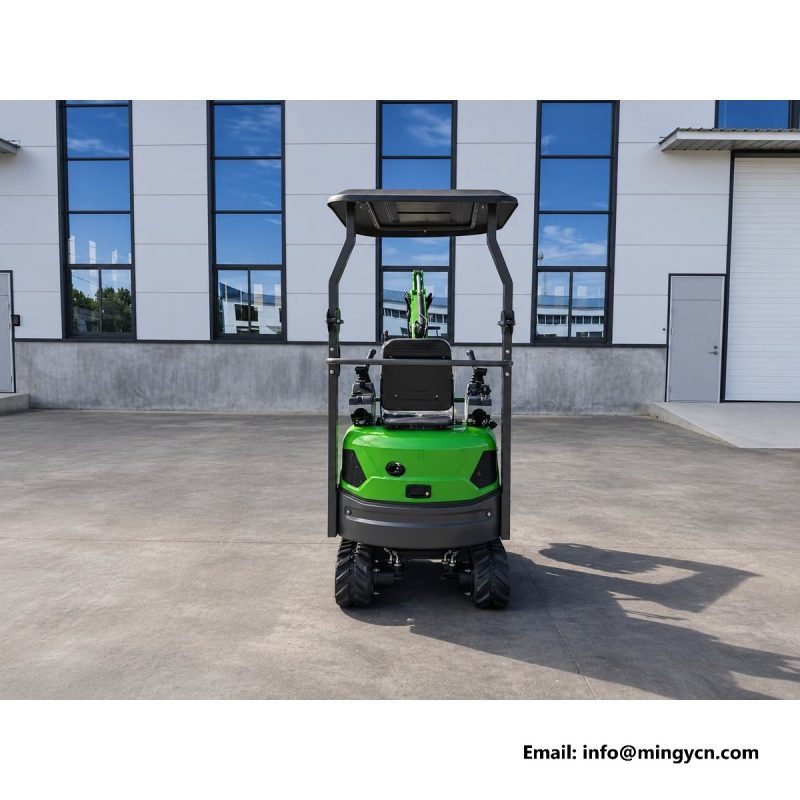
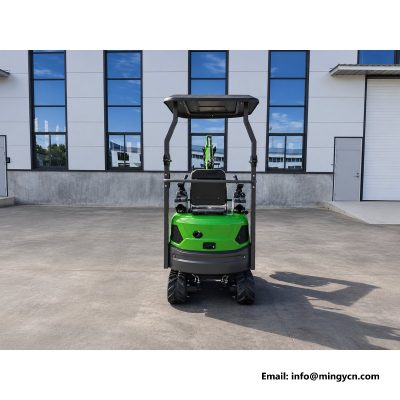
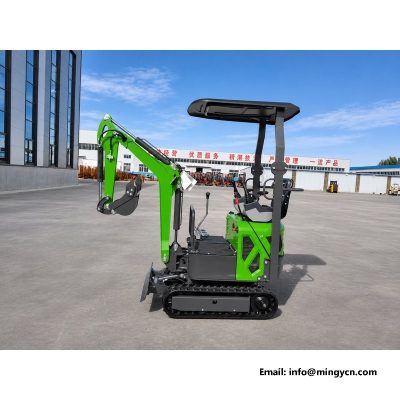
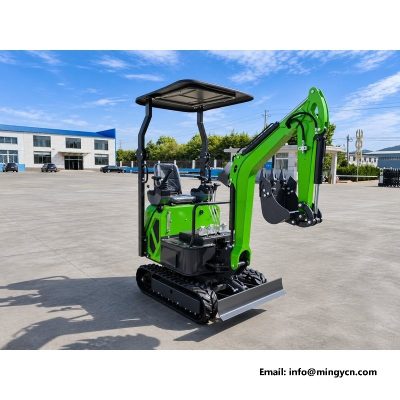
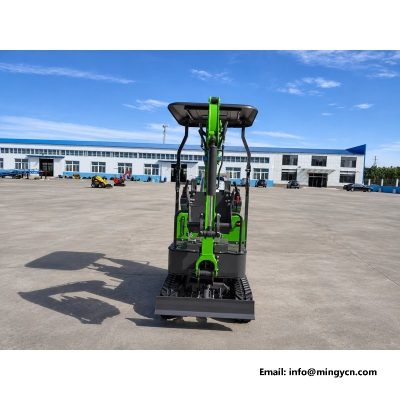
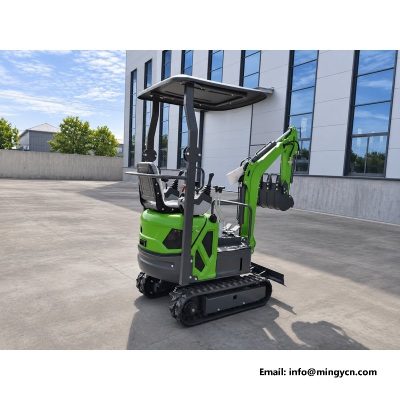
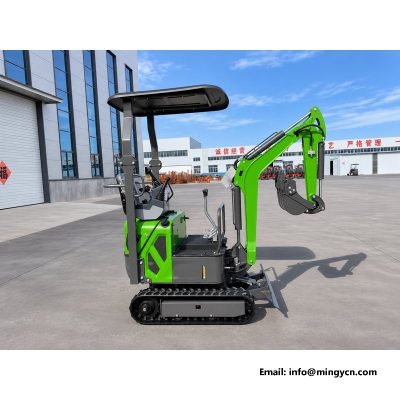
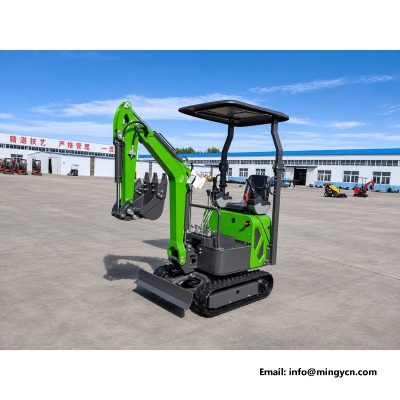
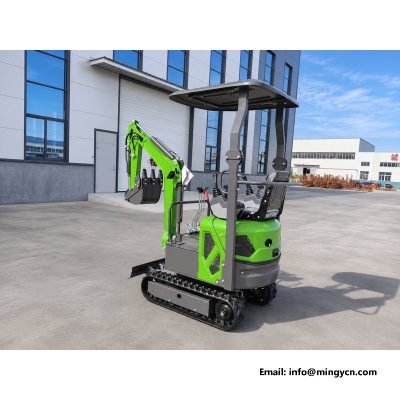
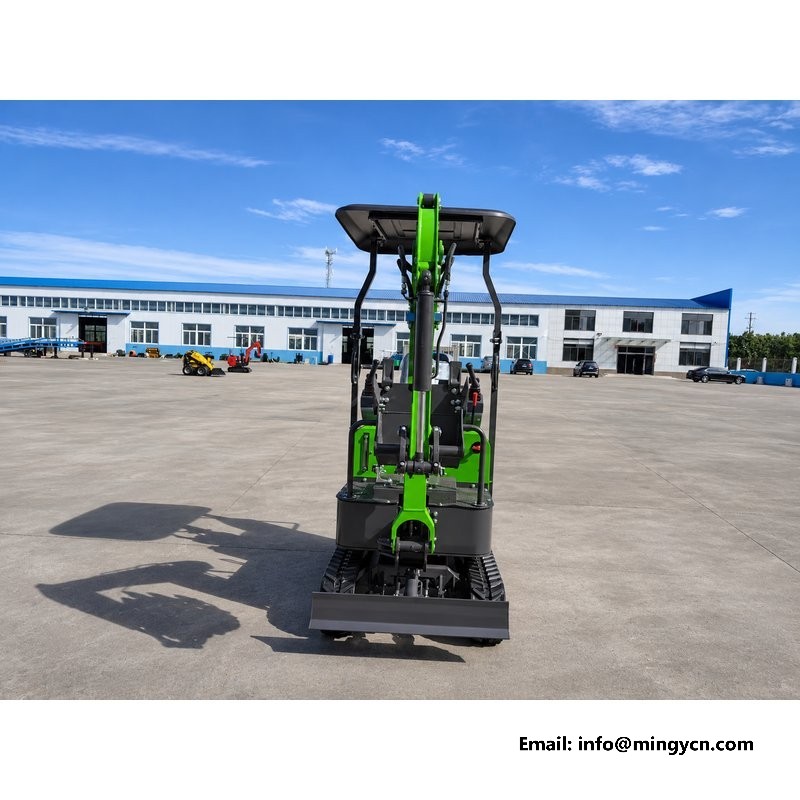
MY10 pilot-controlled mini excavator with grease-tensioned tracks and an oil cooler.
The MY10 sits one step above the entry machine in the MINGYI range and changes the way the operator works. Instead of levers linked to the valve block, the MY10 uses hydraulic pilot control: the joysticks send a small pilot pressure to the spool, the spool moves, and the machine responds. The difference is felt in fine grading, in smooth combined movements, and in how much of a shift the operator can sustain. This page covers the control system, the undercarriage details that separate the MY10 from the cheaper machine below it, and the checks a buyer should make on delivery.
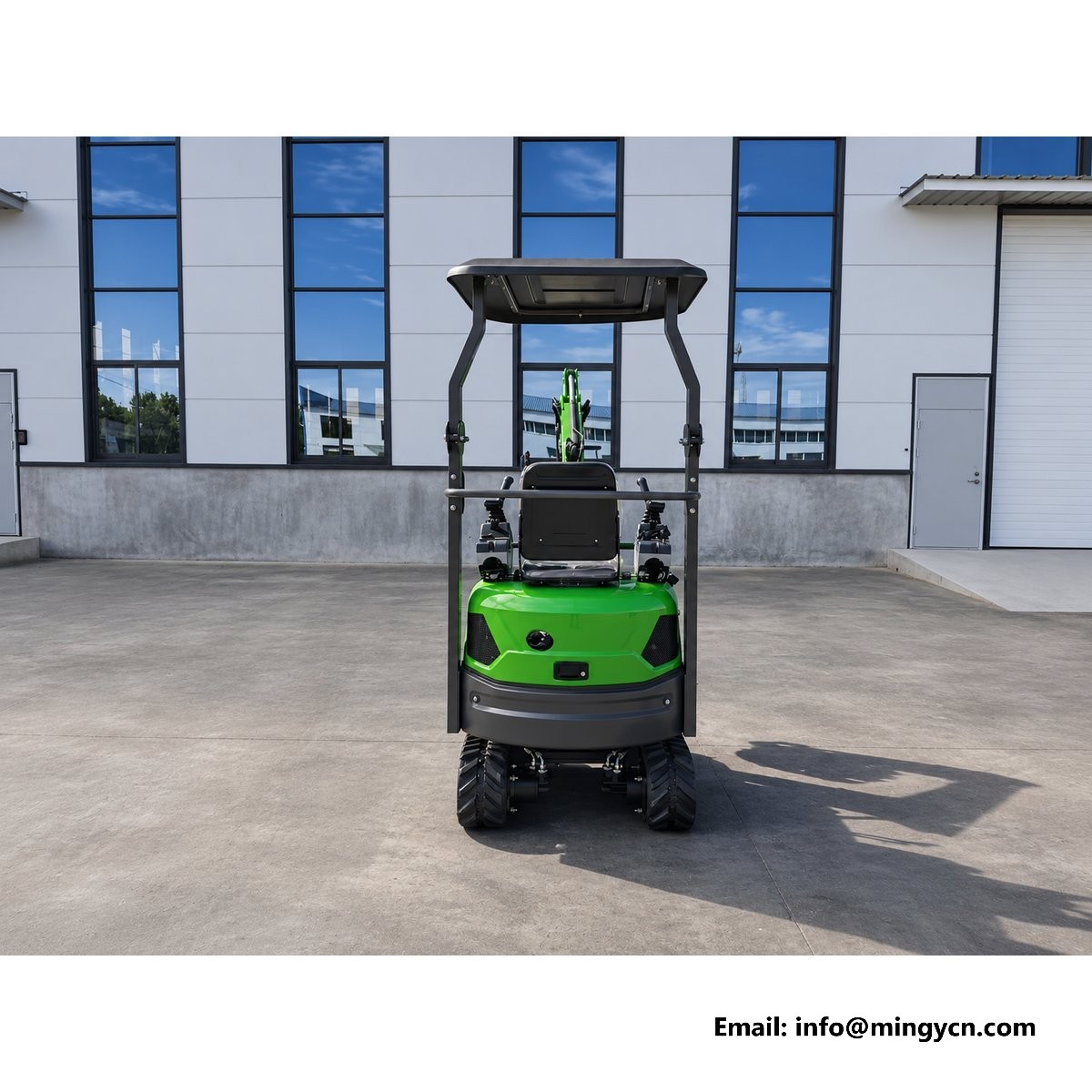
With a lever machine, the force the operator applies is the force that moves the spool. With pilot control, the joystick only meters a small flow of oil, and the spool is moved by pressure. Two consequences follow. First, the joystick travel is light and short, so an operator can work for hours without the arm fatigue that lever machines produce. Second, because the pilot circuit meters proportionally, the operator can feather a function: lower the boom a centimetre at a time, hold the bucket at a grade, or combine slew and arm without the jerking that a direct linkage tends to produce.
This version is built around a horizontally laid out engine, which drops the overall height of the rear of the machine and opens up access around the engine bay. For a buyer who will maintain the machine in the field, that layout is worth more than it sounds: filters, the battery and the hydraulic connections can be reached without lifting a heavy bonnet panel, and the machine can be inspected from both sides. Lower rear height also helps when the machine is loaded into a container or onto a trailer, because it reduces the headroom the loader operator has to judge.
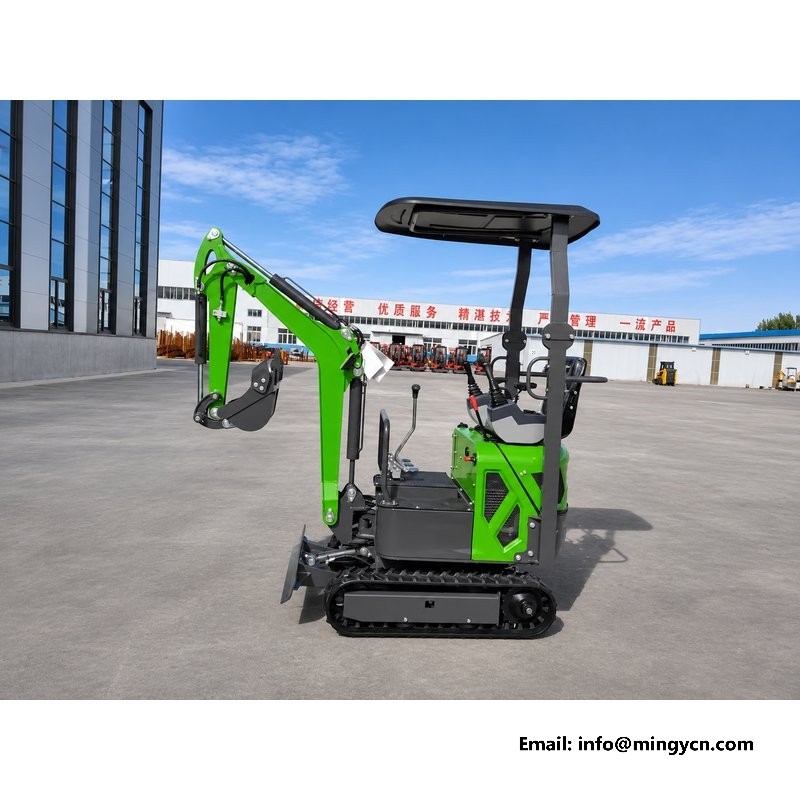
The track on this machine is tensioned with grease rather than with a screw adjuster. A grease tensioner is a small thing that becomes large in the field: one grease gun sets the tension, no wrench is needed, and the adjuster does not seize after a season of mud. The hydraulic oil cooler is fitted as standard rather than left as an option, which matters on a gear-pump circuit that heats under continuous load. There is a separate plastic diesel tank, so a cracked tank is a cheap part rather than a fabricated repair. None of this appears on a comparison table, but all of it decides how the machine behaves in its third year.
The MY10 is the machine for a contractor who digs footings, service trenches and drainage runs in gardens and between existing structures, and who wants the operator to still be productive at the end of the day. It passes through a standard garden gate, works under a carport or inside a shed, and travels on a trailer behind a light commercial vehicle. On farms it handles ditching, fence line clearing and yard maintenance. It is not a mass excavation machine and should not be sold as one; its value is in precision and access, not in tonnes per hour.
| Model | MY10 |
| Control | Hydraulic pilot joystick control |
| Hydraulic system | Gear pump, domestic hydraulic components |
| Engine layout | Horizontal |
| Undercarriage | Rubber track, grease tensioner |
| Cooling | Hydraulic oil cooler fitted as standard |
| Fuel tank | Separate plastic diesel tank |
| Operator station | Simple canopy |
| Standard engine | Kepu 192 |
| Engine options | Kepu 192 Stage V, Briggs & Stratton X2100, Runtong R420D, Kubota D722, Kubota Z482 |
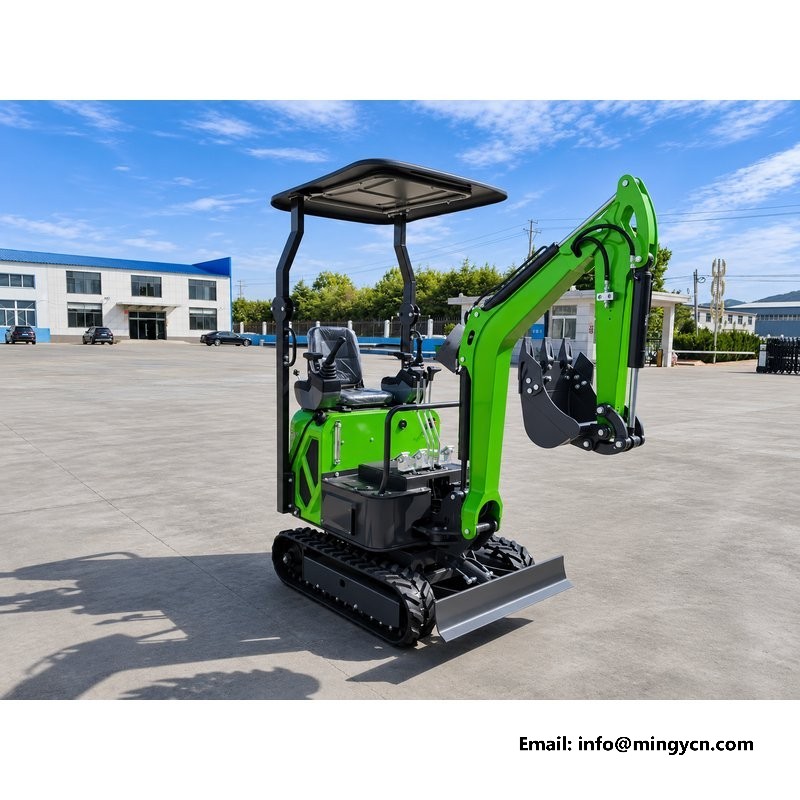
Check tension with the machine parked on level ground and the track cleaned of packed soil. The correct sag is measured at the midpoint between the idler and the first road wheel, and the figure is in the manual for this model. Over-tensioning is the common mistake: it loads the idler bearing and shortens the life of the track. Under-tensioning lets the track walk off the sprocket in a turn. When adjusting, add grease in small amounts and re-measure, and release pressure only through the bleed valve, never by loosening a fitting under load.
Before accepting the machine, start it and let it idle for a few minutes, then work every function to its end of travel. The joysticks should return to centre on their own and every function should stop when they do. Listen for a whistle from the pilot circuit, which usually means air in the line or a loose connection. Check the pilot filter housing for weeping. Confirm the machine tracks straight on level ground in both directions, and that the dozer blade holds position under load without drift. Record the hour meter reading on the delivery note.
Ask which pilot pressure the machine is set to and whether it can be adjusted in the field. Ask for the part numbers of the pilot filter and the track, both of which will be needed first. Confirm the bucket width, the pin diameter and whether a quick coupler is included, because a coupler changes the bucket range the machine can use. Confirm the emission standard against the destination country in writing, and confirm that the machine will be supplied with an English operator manual and a hydraulic schematic.
Ordering and technical support
Email: sales@mingycn.com
LINE (ID): mingyicn
Tell us the trench width, ground conditions and attachments you need, and we will confirm the right configuration and shipping details.