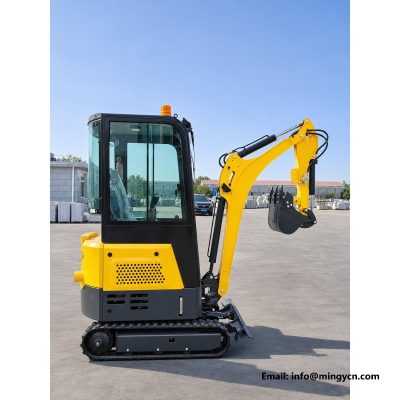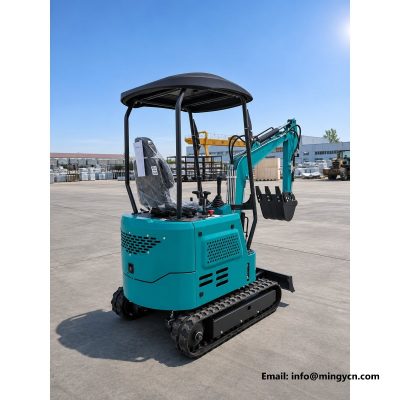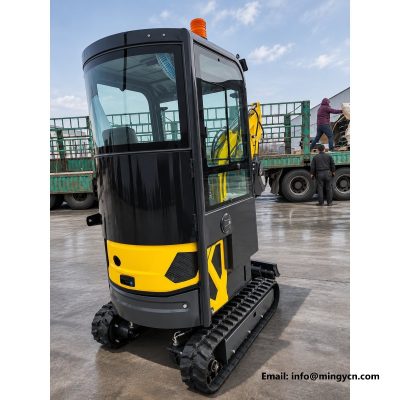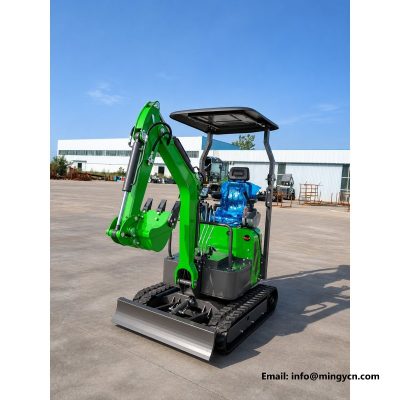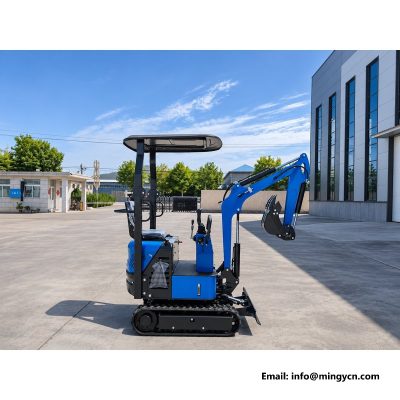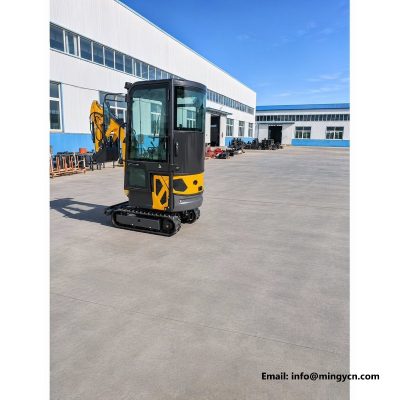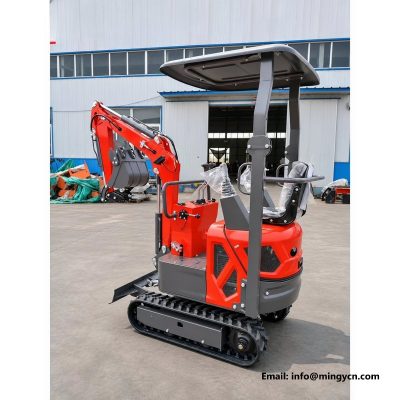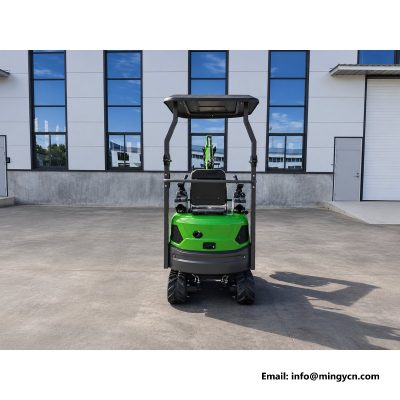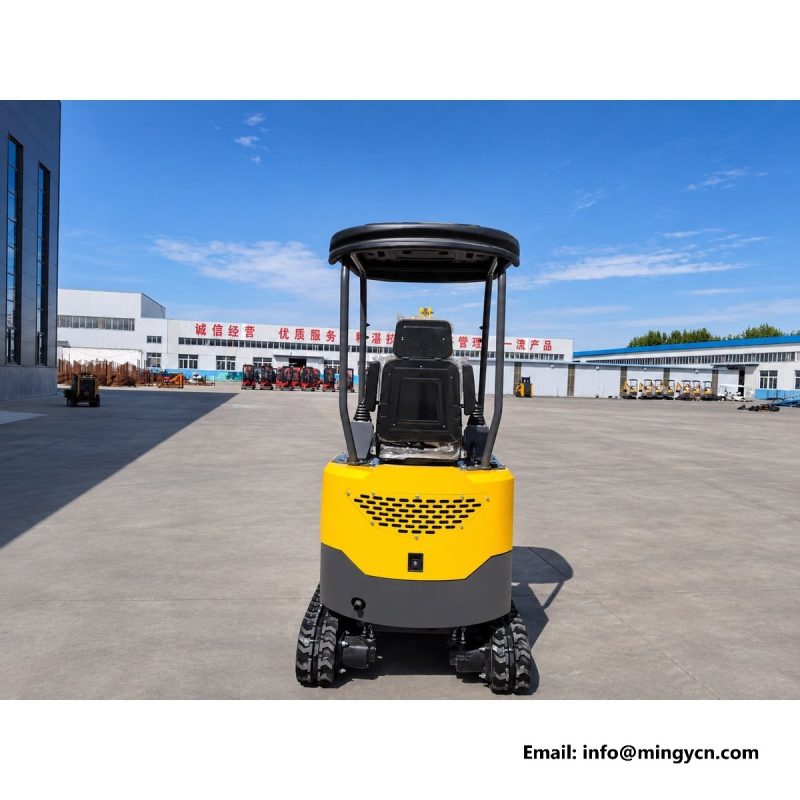
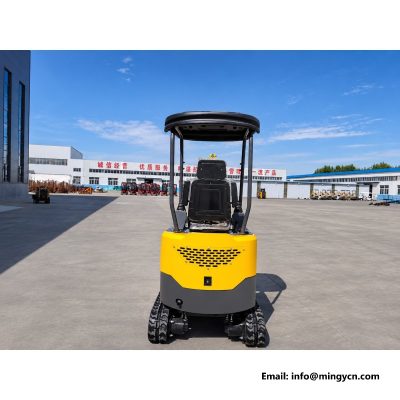
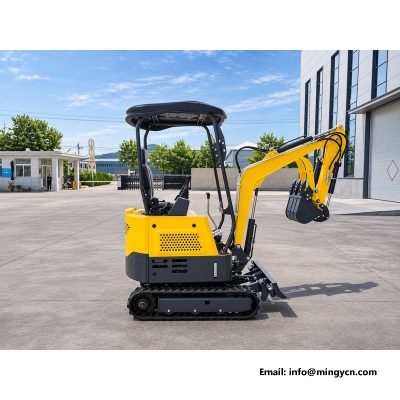
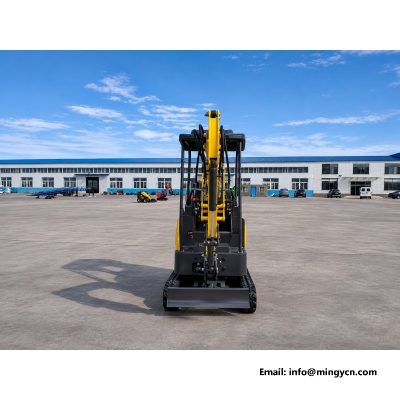
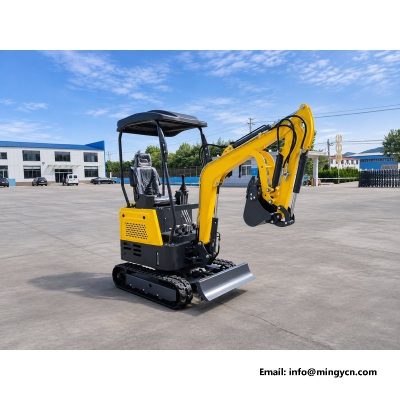
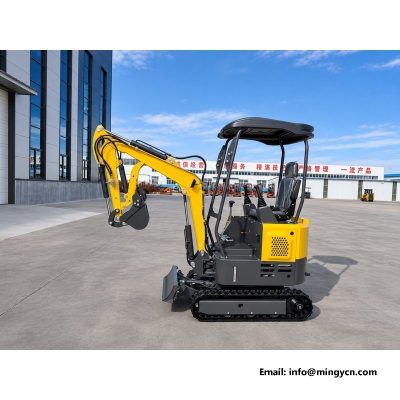
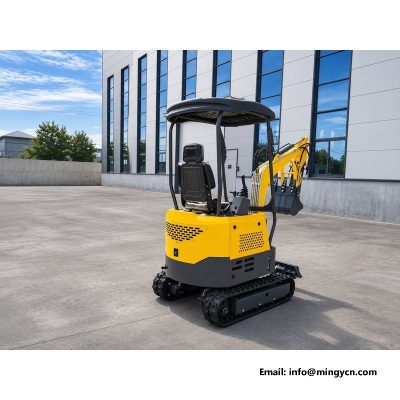
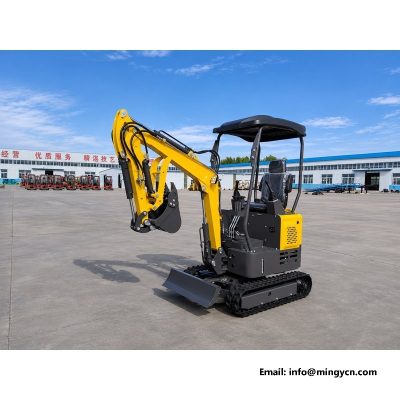
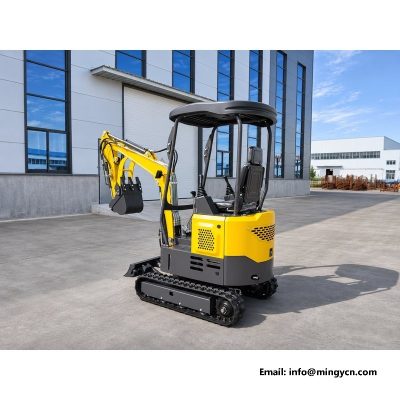
MY17 pilot-control mini excavator with sheet-metal bonnet and 180 mm rubber tracks.
The MY17 is the largest of the pilot-controlled machines below the three-tonne class in the MINGYI range, and it is built differently from the smaller models in one visible respect: the bonnet and the counterweight are fabricated from sheet metal rather than moulded from plastic. That single decision signals what the machine is for. It is designed to be repaired in a workshop rather than replaced in a parts catalogue, and it is aimed at buyers who keep machines for a decade rather than a season. This page covers the build, the 180 mm undercarriage, the control system and the inspection routine.
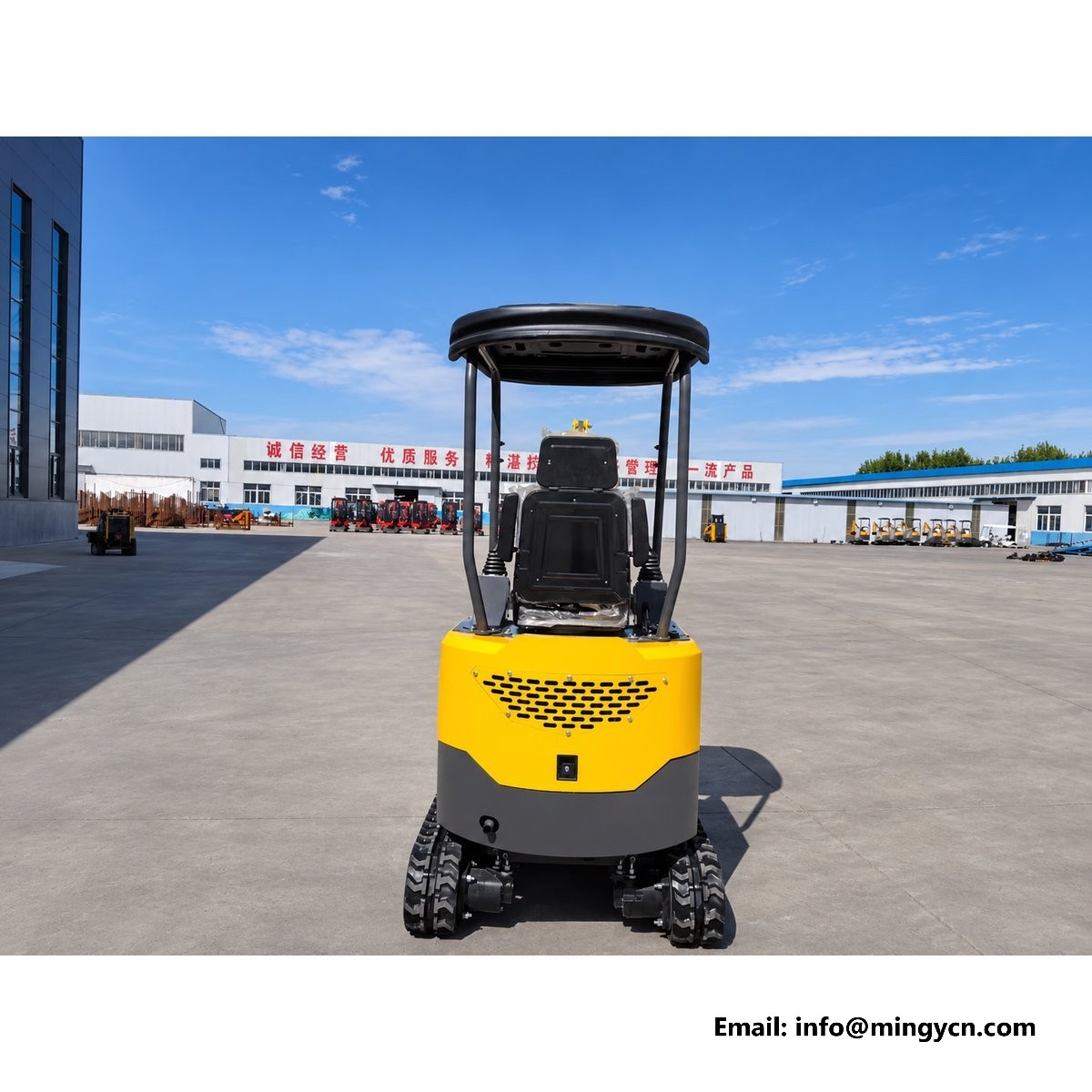
Plastic panels are cheap to make and light, and they crack. A sheet-metal bonnet can be straightened, patched and repainted, and a steel counterweight absorbs impact without splitting. On a machine that will be loaded and unloaded by a third party, towed on a trailer and worked in yards where things get dropped, that robustness is worth real money over a machine life. The trade-off is weight and cost at the factory gate, and a bonnet that will rust if it is scratched and left. The maintenance answer is simple: touch up scratches at the end of the season rather than at the end of the life of the machine.
This model runs a 180 x 41 x 72 mm rubber track. It is narrower than the track on the 15 platform, which makes the machine more compact in tight ground and slightly less forgiving on very soft surfaces. For a buyer deciding between the two, the question is what the machine will spend its time on. If the answer involves wet, soft or freshly disturbed ground, the wider track is the better choice. If the answer is hard standing, paved yards, gateways and tight domestic gardens, the narrower track gets into places the wider one cannot, and the difference in flotation rarely matters.
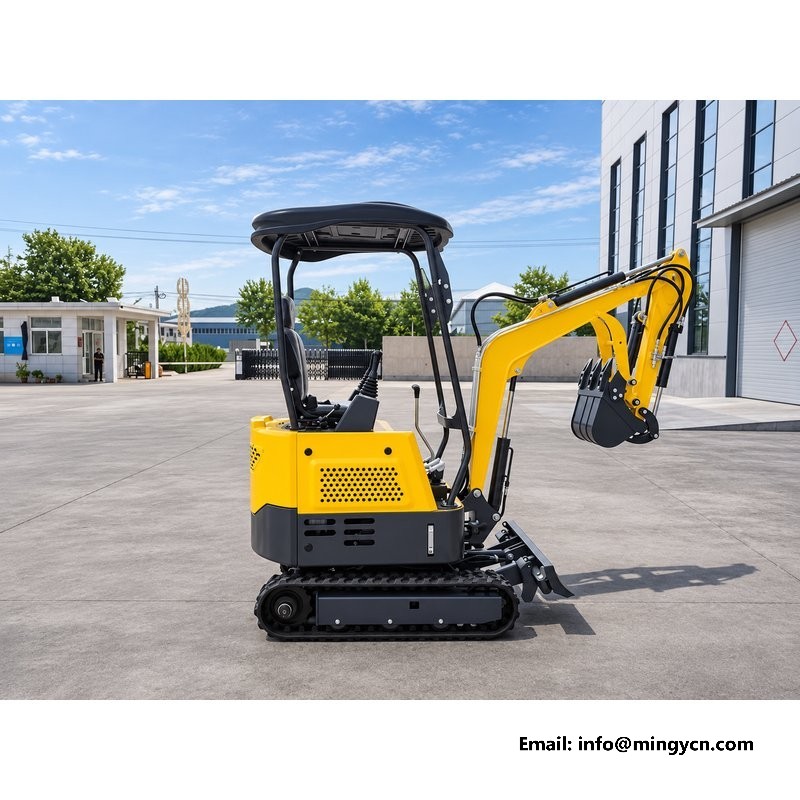
The console that carries the right-hand joystick is fabricated in sheet metal on this model rather than moulded. That matters for two reasons. It holds its shape when an operator leans on it, which keeps the joystick base square and the control response even. And it can be removed and re-fitted without breaking clips, so access to the pilot lines and the wiring underneath is straightforward. Anyone who has tried to trace a chafed pilot hose behind a moulded console will recognise the value immediately.
The control system is hydraulic pilot with joysticks, as on the smaller models, so the operator gets proportional, light control of every function. On a machine of this size the working envelope is large enough that control quality becomes a production issue rather than a comfort one: trenching to a consistent depth, grading a level pad, and loading a trailer accurately all depend on the operator being able to feather the functions. The heavier build also means the machine stays stable with the boom at reach, which lets the operator use more of the envelope without repositioning.
| Model | MY17 |
| Control | Hydraulic pilot joystick control |
| Hydraulic system | Domestic hydraulic components |
| Engine | Water-cooled diesel |
| Undercarriage | 180 x 41 x 72 mm rubber track, grease tensioner |
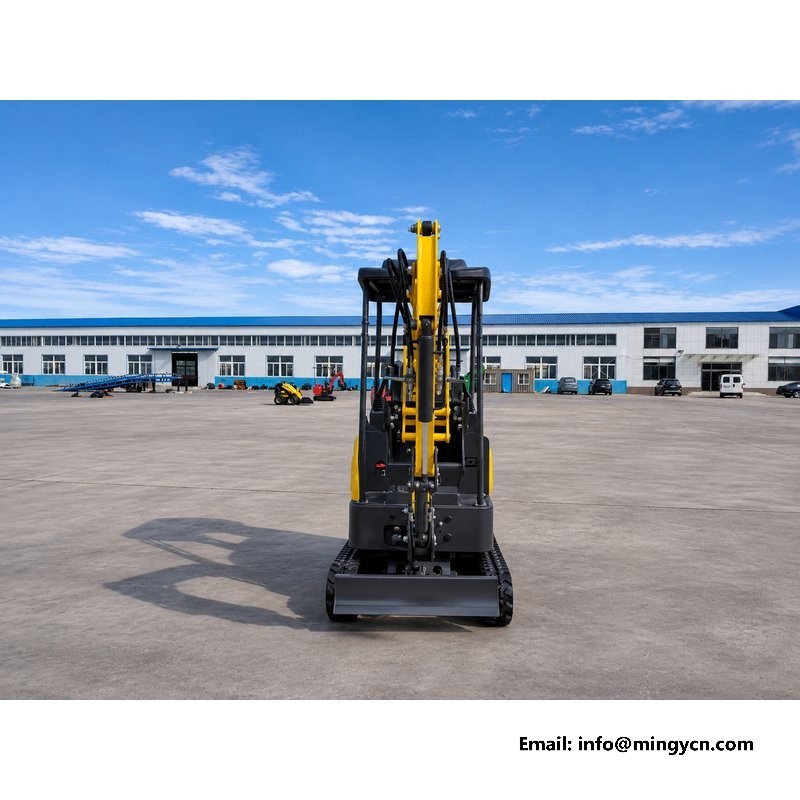
| Bodywork | Sheet-metal bonnet, steel counterweight, sheet-metal armrest console |
| Operator station | Simple canopy |
| Standard engine | Laidong 385 |
| Engine options | Laidong 380, Laidong 385 EU Stage V, Kubota D722, Kubota D902, Yanmar 374 |
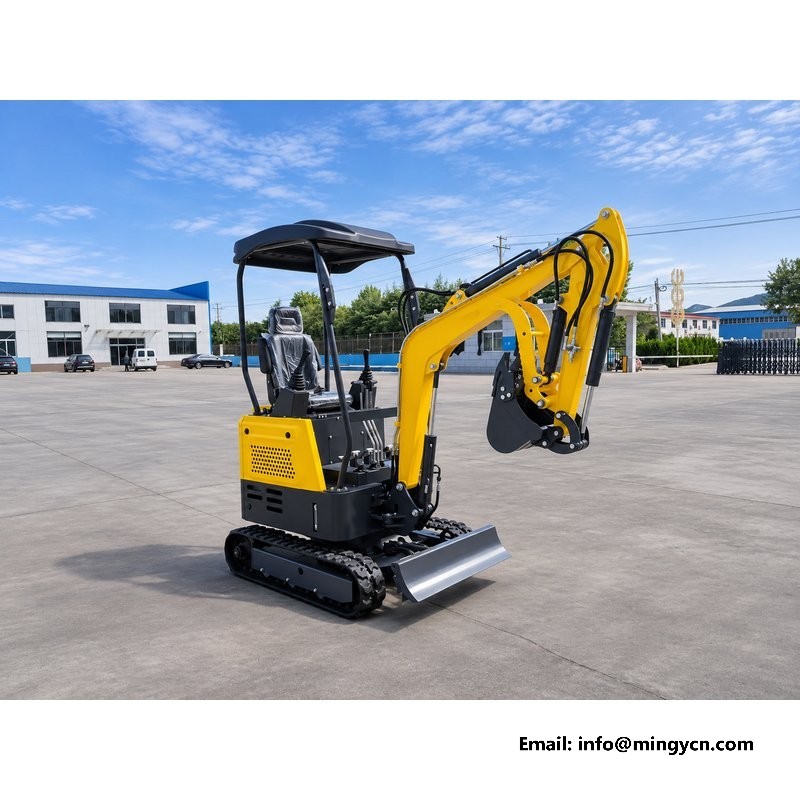
A steel counterweight at the rear changes the balance of the machine for the better when working across a slope or lifting a loaded bucket at reach. It also changes what happens in a collision: steel deforms and absorbs, while plastic splits and exposes whatever is behind it. The caution that remains is the same for every machine of this class: rubber tracks give little warning before they slide, so work up and down slopes rather than across them, and keep the dozer blade low. No counterweight makes a compact excavator a slope machine.
Check the bonnet panels for transit damage and confirm that the paint on the counterweight is intact, because a scratch left unpainted will rust. Measure track tension on both sides with the machine on level ground. Work every function and confirm the joysticks centre and the functions stop. Inspect the hose routing along the boom for chafe points, and look at the pilot lines where they pass through the console. Then, at fifty hours, change the engine oil and filter, inspect the hydraulic filter for metal, and re-torque the track bolts.
The standard engine is the Laidong 385, with the Laidong 380 available as a lower-cost alternative and a Stage V version for the European Union. Kubota D722 and D902, and the Yanmar 374, are offered for buyers who want a widely recognised engine brand with a global service network. Emission standard cannot be changed after the machine is built, so confirm it against the destination country before the order is placed, and put the exact engine model in the purchase order rather than a generic description.
Ordering and technical support
Email: sales@mingycn.com
LINE (ID): mingyicn
Tell us the trench width, ground conditions and attachments you need, and we will confirm the right configuration and shipping details.