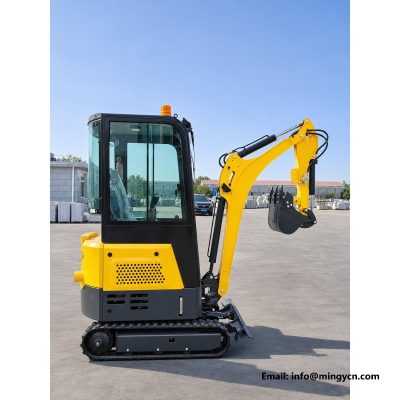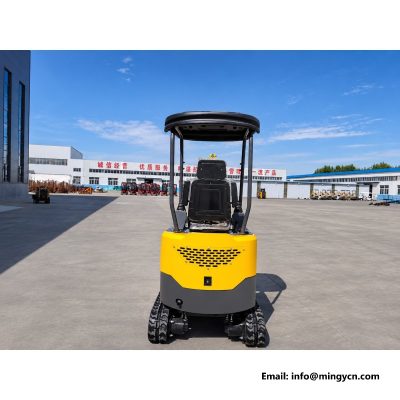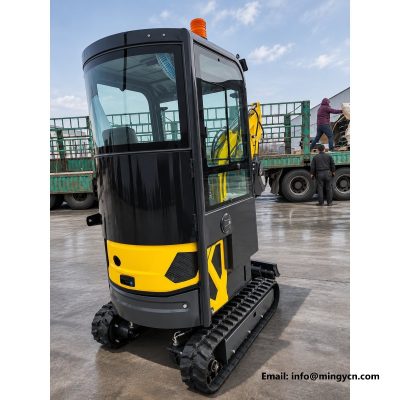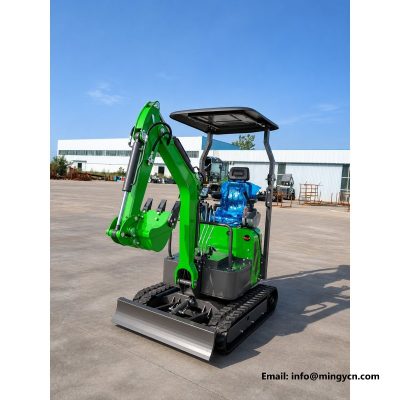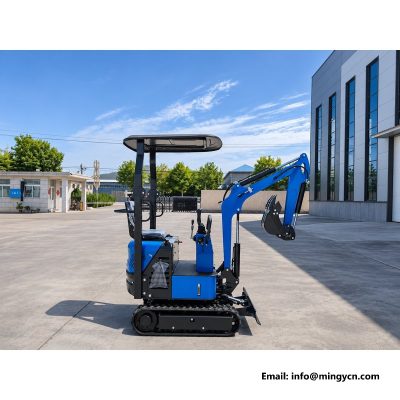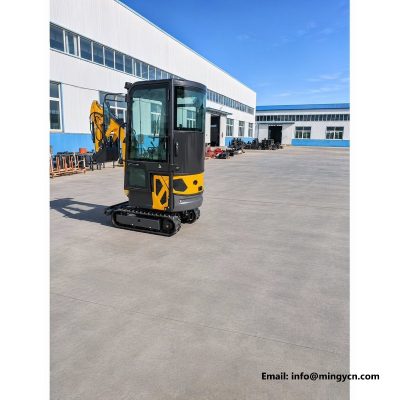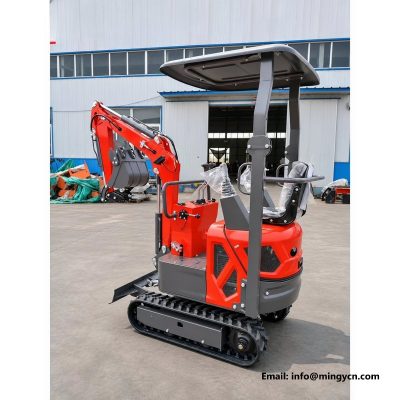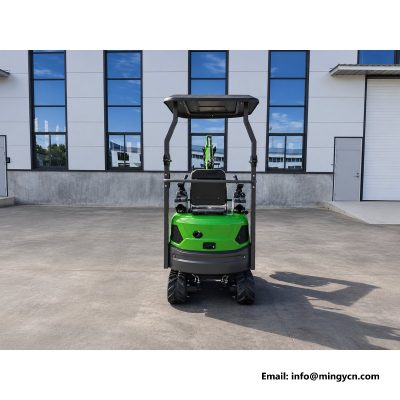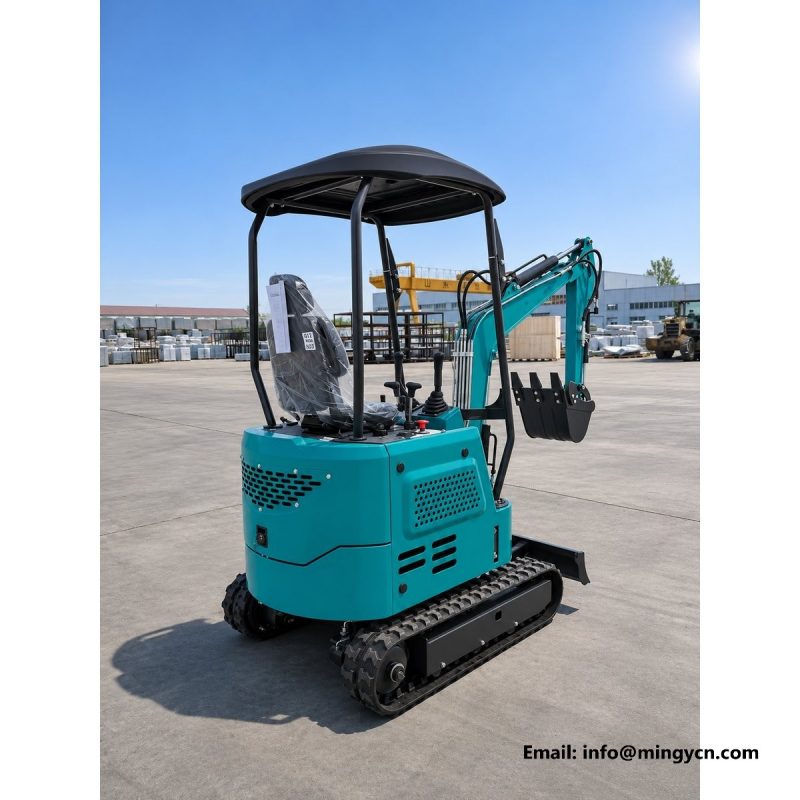
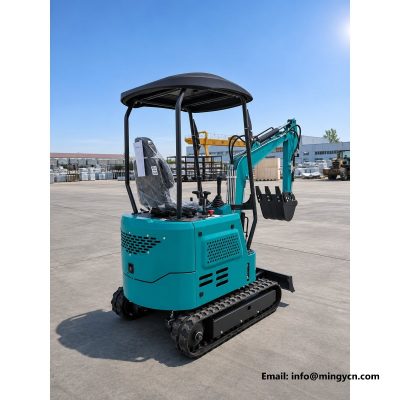
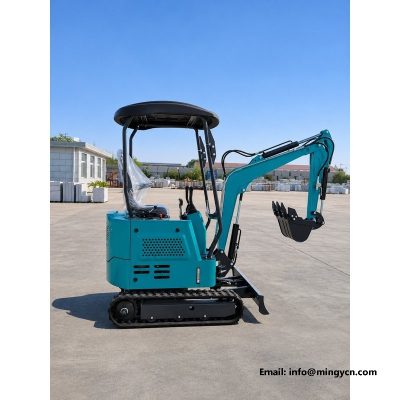
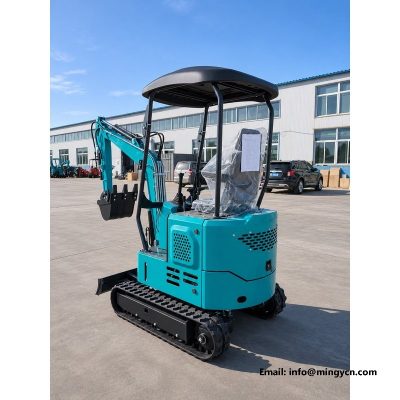
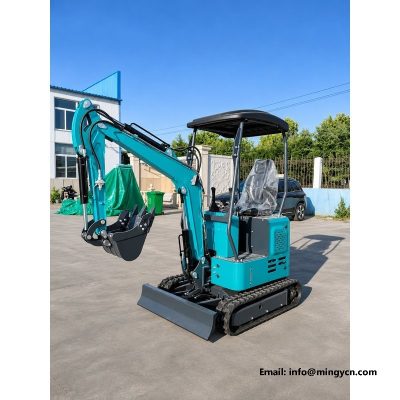
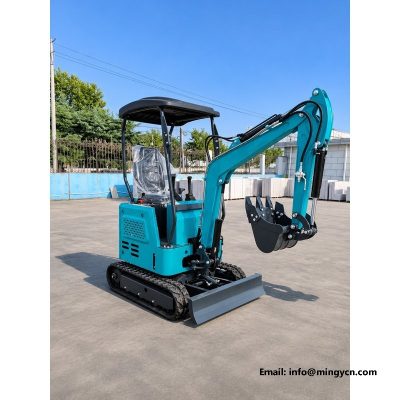
MY17M lever-controlled version of the 17 platform, built on sheet-metal bodywork.
The MY17M is the lever-controlled version of the 17 platform, and it is a deliberate combination rather than a cost-reduced one. The bodywork on this machine is fabricated from sheet metal and the counterweight is steel, which is the expensive part of the build, while the control system is mechanical, which is the cheap part. MINGYI builds it this way for a specific buyer: someone who wants a machine that will still be working in ten years and who intends to maintain it without a dealer network behind them.
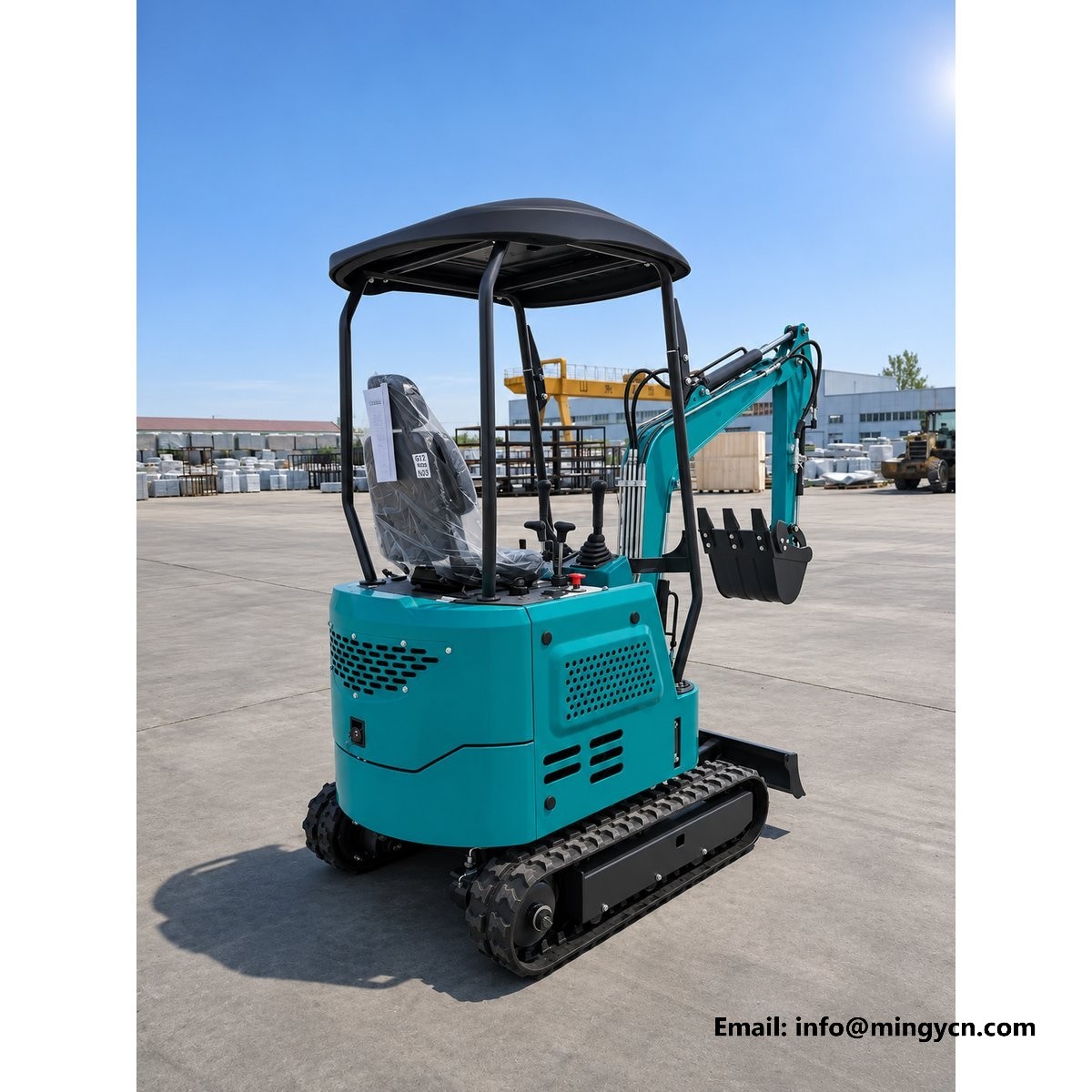
Most low-cost excavators save money in two places at once: a simple control system and light bodywork. That combination produces a machine that is cheap to buy and short-lived. The MY17M takes a different route. The body panels are steel, so a knock is straightened rather than replaced, and the counterweight absorbs impact instead of splitting. Around that structure, the control system is levers and a gear pump, which is the most repairable arrangement available. The result is a machine whose weakest point is the habits of the operator rather than a component that cannot be sourced.
On a mechanical machine, the parts that wear are the ones with moving contact: the lever pivot bushes, the spool centring springs, and the linkage pins. All three are inexpensive and all three give warning before they fail. A lever that has developed side play needs a bush. A lever that no longer returns to centre by itself needs a spring. A function that becomes vague under load usually has a worn pin or an ovalised hole in the linkage. Knowing this list means a fault can be diagnosed from the operator seat rather than from a workshop manual.
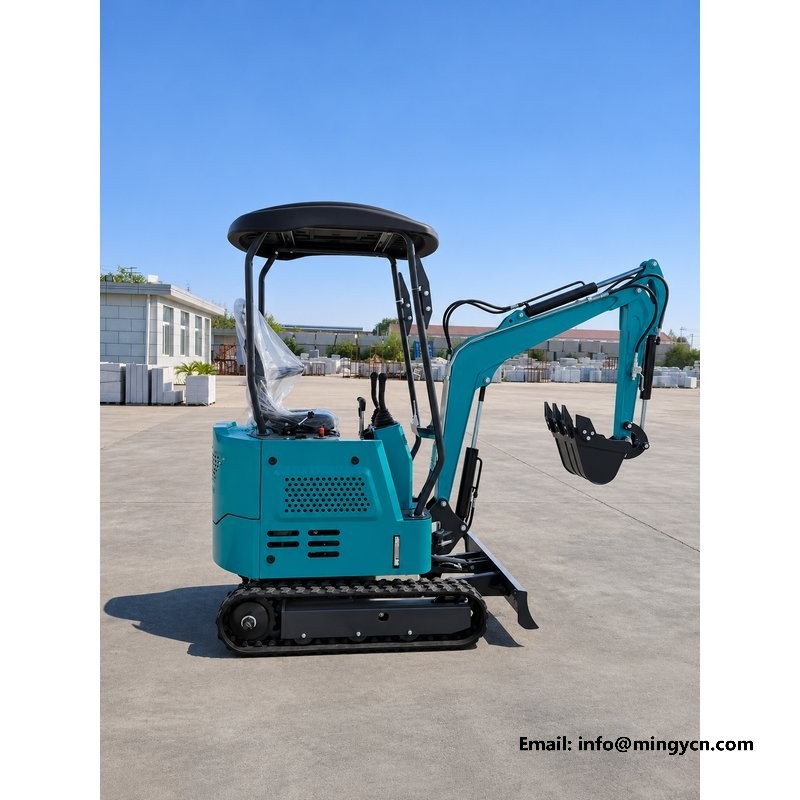
The machine runs on 180 x 41 x 72 mm rubber tracks with a grease tensioner. The narrower track makes the machine compact at ground level, which is an advantage in gateways and domestic gardens and a small disadvantage on very soft ground. For buyers working in wet conditions year round, the wider track on the 15 platform is the better choice; for buyers working on hard standing and finished surfaces, this one is easier to position. Steel track conversion is available for buyers whose work is abrasive and who do not need to protect paved surfaces.
The typical buyer is an owner-operator in a market where dealer support is thin, or a small contractor who runs several machines and does their own servicing. Farms and estates also choose it, because a lever machine can be handed to a seasonal operator without training and because a fault can be fixed on the yard. It is also a common choice for buyers who intend to keep the machine beyond the point where a plastic-bodied machine would have been scrapped.
| Model | MY17M |
| Control | Mechanical lever control, direct linkage |
| Hydraulic system | Gear pump, domestic hydraulic components |
| Engine | Water-cooled diesel |
| Undercarriage | 180 x 41 x 72 mm rubber track, grease tensioner |
| Bodywork | Sheet-metal bonnet, steel counterweight, sheet-metal armrest console |
| Operator station | Simple canopy |
| Standard engine | Laidong 385 |
| Engine options | Laidong 380, Laidong 385 EU Stage V, Kubota D722, Kubota D902, Yanmar 374 |
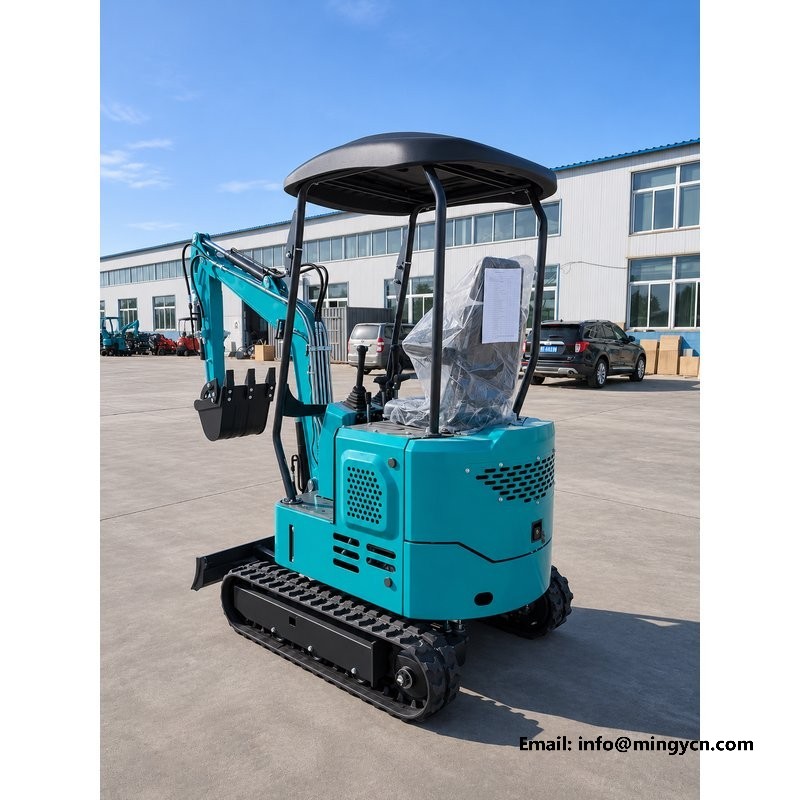
A steel bonnet is repairable, but only if the repair is done before the corrosion starts. Sand the scratch back to bare metal, apply a primer, and repaint rather than touching up over rust. On the counterweight, deep gouges should be filled and painted because a rusting counterweight loses material slowly and looks neglected quickly, which affects resale. The armrest console unbolts, which makes it practical to repaint the machine every few years without disassembling the hydraulic system.
Check every panel for transit damage and confirm the paint is intact on the counterweight. Work each lever through its travel and confirm the function stops cleanly and the lever self-centres. Measure track tension on both sides on level ground. Inspect the hose routing along the boom and where the lines pass the console. Run the machine for a few minutes and check for weeping at the pump and the valve block. Confirm the hour meter reading and record it on the delivery note together with photographs of any defects.
Put the engine model and emission standard in writing, together with the bucket width and pin diameter. Confirm whether the machine is supplied with rubber or steel tracks. Ask for a parts list with numbers for filters, track, bucket teeth and lever bushes, since these are the consumables that keep a mechanical machine running. Confirm the paint specification and whether decals are applied at the factory or shipped loose.
Ordering and technical support
Email: sales@mingycn.com
LINE (ID): mingyicn
Tell us the trench width, ground conditions and attachments you need, and we will confirm the right configuration and shipping details.